Japan has long been recognized as a major source of precision motion-control technology, making Japanese motor manufacturers an important consideration for AGV and AMR developers. Automated guided vehicles and autonomous mobile robots require drive systems that combine high torque density, accurate positioning, speed control, compact dimensions, reliability, and long operating life.
For AGV/AMR applications, the term DC servo motor can cover several related technologies, including brushed DC servo motors, brushless DC servo motors, compact servo systems, geared servo motors, and integrated motor-drive solutions. The most appropriate manufacturer therefore depends on the vehicle architecture, wheel diameter, payload, operating speed, duty cycle, battery voltage, encoder requirements, braking requirements, and communication interface.
What Is a DC Servo Motor for AGV/AMR?
A DC servo motor for AGV/AMR is a closed-loop electric motor designed to provide precise speed, torque, and position control for Automated Guided Vehicles (AGVs) and Autonomous Mobile Robots (AMRs).
Unlike a conventional DC motor that typically operates with open-loop control, a DC servo motor uses feedback from an encoder or other position sensor. The controller continuously compares the actual motor movement with the target command and adjusts the motor accordingly.
How Does a DC Servo Motor Work in an AGV/AMR?
A typical AGV/AMR drive system can be structured as:
DC Servo Motor → Gearbox → Drive Wheel
with the control loop including:
Encoder → Servo Driver → Motion Controller → DC Servo Motor
During operation:
The AGV/AMR controller sends a target speed, position, or torque command.
The servo driver supplies controlled current to the motor.
The encoder measures actual motor rotation.
The driver compares actual movement with the target value.
The controller continuously corrects the motor output.
The drive wheels maintain accurate speed and synchronization.
This closed-loop operation is particularly useful when an AMR needs to start smoothly, travel at low speed, turn accurately, stop at a precise location, or synchronize multiple drive wheels.
Why Are DC Servo Motors Used in AGVs and AMRs?
DC servo motors offer several characteristics that are valuable for mobile robots:
Precise speed control
Accurate position feedback
High starting and peak torque
Fast dynamic response
Smooth low-speed operation
Good wheel synchronization
Compact drive-system design
Closed-loop error correction
For example, in a two-wheel differential-drive AMR, the controller can independently regulate the left and right motors. This allows the robot to control forward motion, rotation, turning radius, and positioning accuracy.
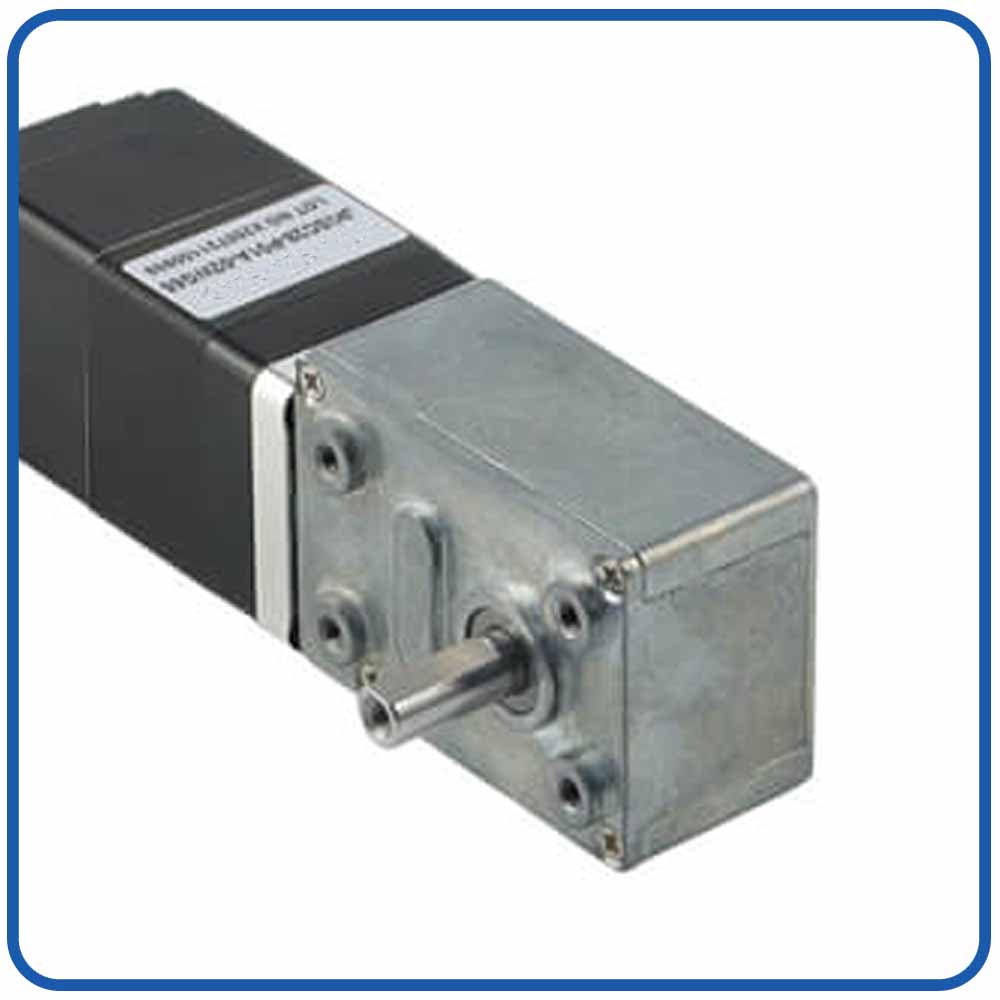
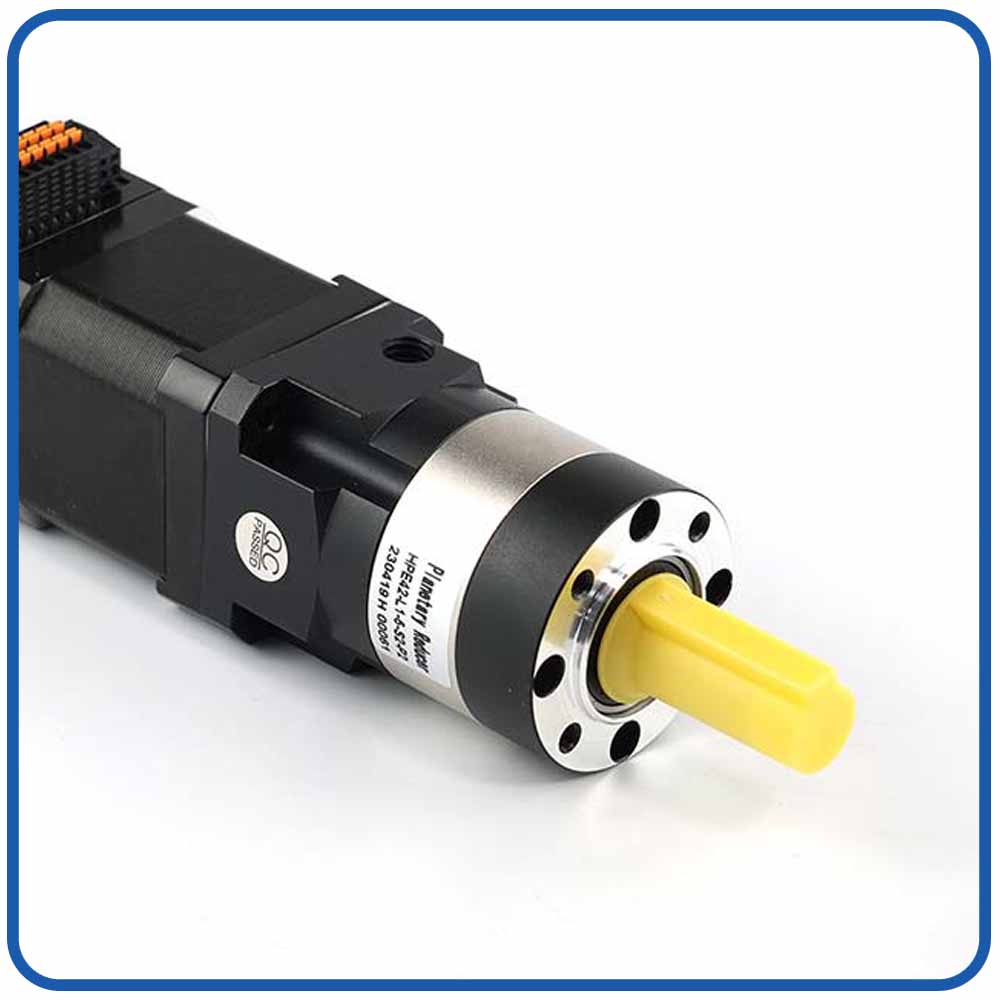
For modern AGVs and AMRs, an integrated DC servo motor can combine several components into one compact drive unit:
Motor + Encoder + Gearbox + Brake + Servo Driver + DSP + Motion Controller + Communication Interface
Depending on the product architecture, features such as CAN/CANopen, EtherCAT, digital I/O, and STO (Safe Torque Off) may also be integrated.
This can reduce external wiring, simplify installation, save cabinet space, and make the drive system easier to integrate into an AGV or AMR platform.
Typical Applications
DC servo motors can be used in:
AGV drive wheels
AMR differential-drive systems
Warehouse transport robots
Autonomous forklifts
Automated pallet trucks
Mobile inspection robots
Service robots
Logistics robots
Manufacturing material-handling vehicles
In short, a DC servo motor for AGV/AMR is a closed-loop motor drive solution that converts electrical power into accurately controlled wheel motion, enabling mobile robots to achieve reliable speed regulation, torque control, wheel synchronization, and positioning.
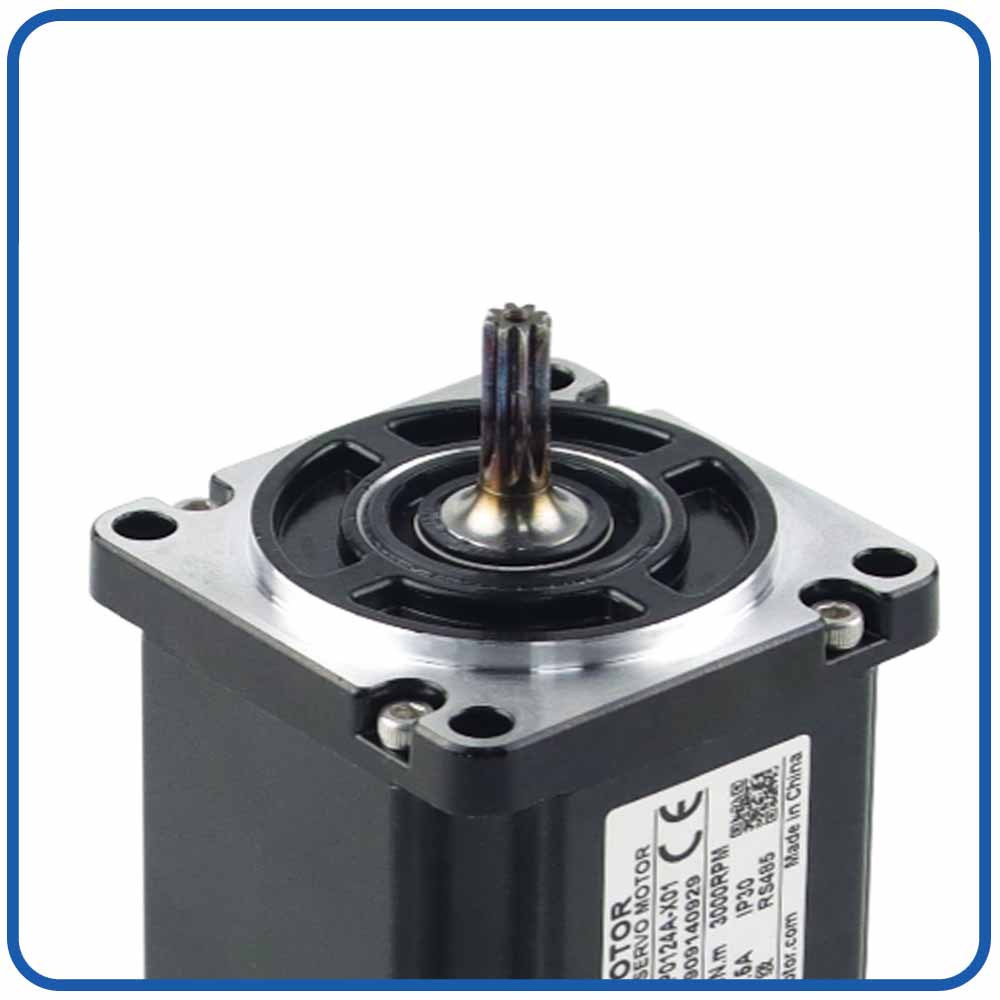
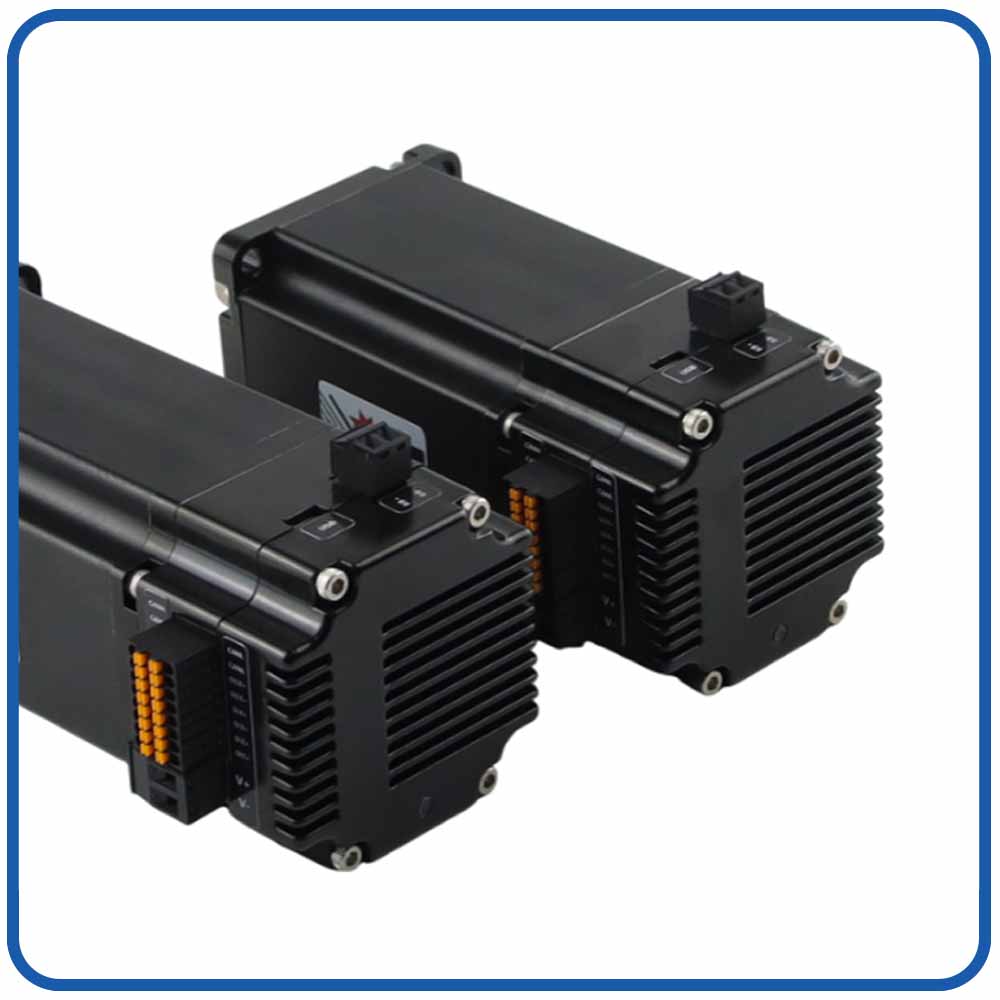
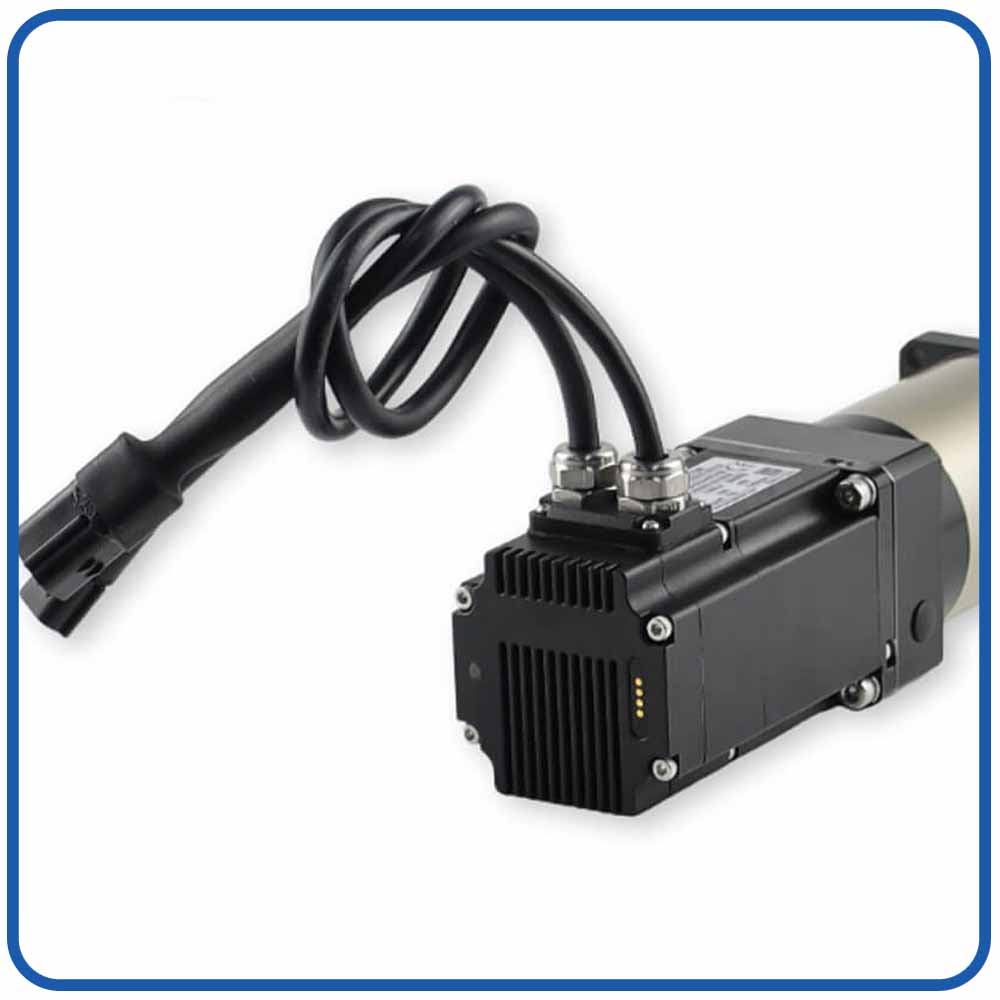
IDC60 Integrated BLDC Servo Motor — High-Efficiency, Compact, and Smart Closed-Loop Motion Control Solution
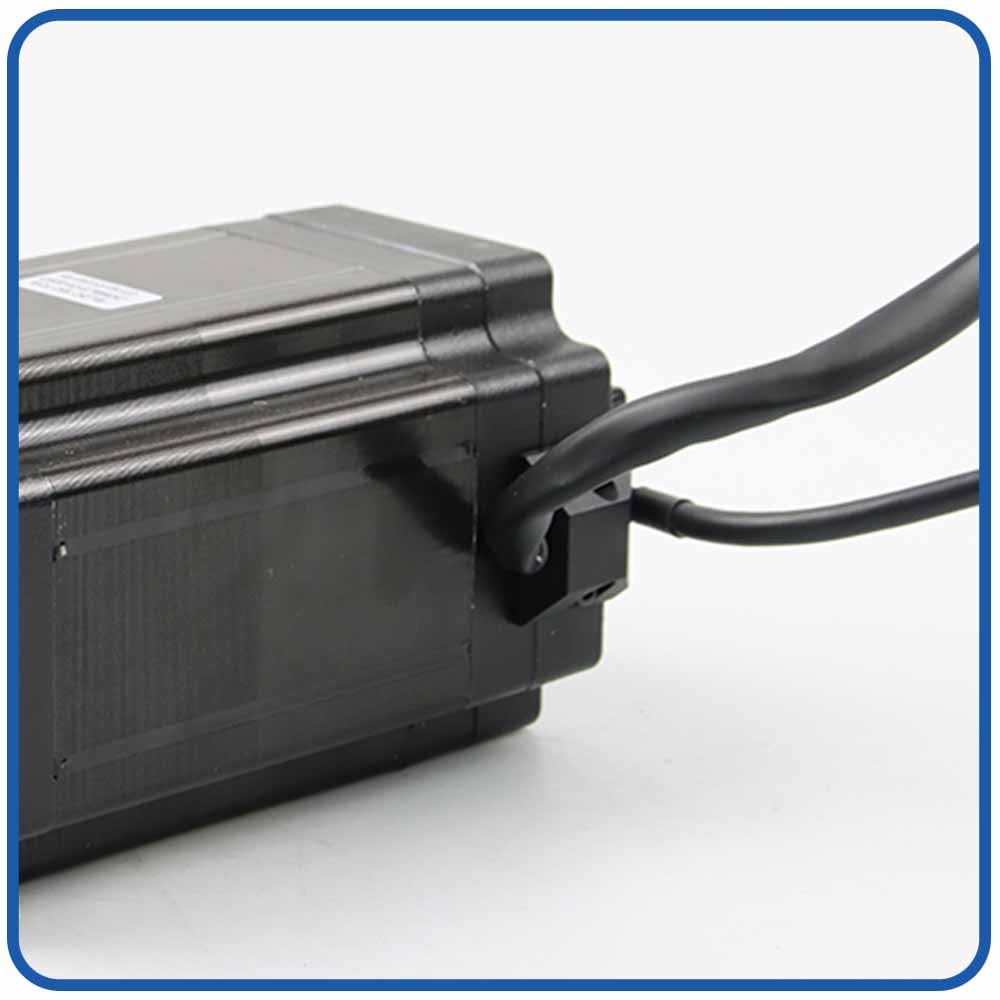
Product Overview:The IDC60 integrated BLDC servo motor from Besfoc is a compact NEMA 24 solution combining motor, drive, and encoder in one unit. It provides precise closed-loop control, stable torque, and fast response. Its integrated design reduces wiring, saves space.
Key Technical Highlights
Integrated All-in-One Design Combines BLDC motor, servo drive, and encoder in a compact unit, reducing wiring complexity and improving installation efficiency.
High-Precision Closed-Loop Control Ensures accurate position, speed, and torque regulation with real-time feedback for stable and smooth motion performance.
Powerful Modular Customization (OEM/ODM) Supports flexible customization options, including voltage, torque, communication protocols, and encoder resolution to meet diverse application requirements.
High Efficiency & Compact Structure Delivers strong torque density with optimized thermal performance, making it ideal for space-limited automation and robotics systems.
Typical Applications
Pipeline Inspection Robots Provides stable low-speed torque and precise motion control for navigating narrow, curved, and complex pipeline environments.
Automated Guided Vehicles (AGVs) Ensures smooth acceleration, accurate positioning, and reliable operation in logistics and smart warehouse systems.
Robotic Automation Systems Ideal for robotic arms, grippers, and compact motion modules requiring high precision and fast response.
Smart Manufacturing Equipment Supports high-accuracy motion control in assembly lines, packaging machines, and precision industrial automation devices.
IDC60 Series Key Specifications for AGV Applications
Top 15 DC Servo Motor Manufacturers for AGV/AMR in Japan
1. BESFOC
Company Profile
Besfoc specializes in precision motion products including stepper motors, dc servo motors, and customized motor solutions for automation applications.
The company focuses on providing compact motor solutions for industrial automation and robotics.
Main Products
Besfoc portfolio includes:
DC servo motors and servo drives
Motion controllers
Industrial robots
Motion-control systems
Inverters
Automation components
Advantages for AGV/AMR
BESFOC major advantage is its strong integration of Servo motor, servo drive, feedback, and motion-control technology. This is valuable for AGV and AMR manufacturers requiring precise wheel synchronization, acceleration control, deceleration control, and repeatable positioning.
For high-performance mobile platforms, servo technology can also support coordinated control of multiple drive wheels.
2. JKongmotor
Company Profile
JKONGMOTOR is a professional motor manufacturer specializing in AGV motors, BLDC motors, integrated servo motors, and customized motion solutions. The company provides OEM and ODM solutions for global automation equipment manufacturers.
With extensive experience in robotics and industrial automation, JKONGMOTOR develops compact, high-efficiency motor solutions for AGV and AMR application
Main Products
Key product areas include:
Servo motors
Servo drives
AGV Hub motors
Motion-control equipment
Sensors
Automation components
Advantages for AGV/AMR
JKONGMOTOR offers strong advantages where compactness, positioning accuracy, speed regulation, and control integration are important. Its servo technology can be considered for AGV drive mechanisms, robotic transport platforms, and automated production equipment.
3. LeanMotor
Company Profile
Besfoc is a leading automation company with extensive expertise in servo motors, servo amplifiers, PLCs, industrial networks, and motion controllers.
Main Products
Its motion-control portfolio includes:
Servo motors
Servo amplifiers
Motion controllers
PLCs
Industrial communication systems
Automation controllers
Advantages for AGV/AMR
The primary advantage is the company's integrated automation ecosystem. AGV manufacturers can combine servo motors with controllers, drives, feedback systems, and industrial communications.
This makes Leanmotor attractive for applications where the AGV is part of a larger automated warehouse or manufacturing system.
4. Mabuchi Motor Co., Ltd.
Company Profile:
Mabuchi Motor is a Japanese motor manufacturer best known for its compact and high-volume motor technologies. Its expertise covers small motors for automotive, consumer, and industrial applications.
Main Products:
DC motors
Brushless DC motors
Automotive motors
Small precision motors
Customized motor solutions
Advantages for AGV/AMR:
Mabuchi's strengths include compact motor design, high-volume manufacturing, efficiency, and customization. Its small-motor expertise can be useful for compact AMRs, robotic mechanisms, and auxiliary drive functions.
5. Maxon Japan K.K.
Company Profile:
Maxon is headquartered in Switzerland but has a significant Japanese operation and is widely recognized in Japan's precision motion-control market. Its products are designed for applications requiring accurate and dynamic motor control.
Main Products:
DC servo motors
Brushless DC motors
Gearheads
Encoders
Servo controllers
Positioning systems
Advantages for AGV/AMR:
Maxon's key strengths are high power density, precise motion control, compact dimensions, and extensive configuration options. Its motor + gearbox + encoder architecture is particularly suitable for robotics and precision mobile platforms.
6. NPM Motor Co., Ltd.
Company Profile:
NPM Motor specializes in small and precision motor technologies and develops customized motors for various industrial and electronic applications.
Main Products:
DC motors
Brushless DC motors
Stepper motors
Geared motors
Customized motor assemblies
Advantages for AGV/AMR:
NPM Motor can be considered when an AGV/AMR requires compact dimensions, customized specifications, and application-specific motor design. Its smaller-scale manufacturing approach can also be useful for OEM projects requiring customized configurations.
7. Tohoku Microtec Co., Ltd.
Company Profile:
Tohoku Microtec is a Japanese precision technology company associated with miniature motor and electronic manufacturing technologies.
Main Products:
Micro DC motors
Precision motors
Small actuators
Customized motor components
Advantages for AGV/AMR:
Its main advantage is its focus on miniaturized motion components. Such motors can be appropriate for small robotic mechanisms, sensor positioning, grippers, steering mechanisms, and compact AMR subsystems.
8. Japan Servo Co., Ltd.
Company Profile:
Japan Servo has a long history in motor manufacturing and has developed technologies covering small motors and motion-control products. It is associated with the Nidec group.
Main Products:
DC motors
Brushless DC motors
AC motors
Stepping motors
Geared motors
Motor assemblies
Advantages for AGV/AMR:
Its broad motor portfolio makes it possible to select different technologies according to torque, speed, size, efficiency, and control requirements. This flexibility can benefit customized robotic drive systems.
9. Miki Pulley Co., Ltd.
Company Profile:
Miki Pulley is a Japanese manufacturer specializing in power transmission and motion-control technologies. Although better known for mechanical transmission components, its products can form an important part of servo-driven motion systems.
Main Products:
Electromagnetic brakes
Clutches
Couplings
Servo-related transmission components
Power transmission products
Advantages for AGV/AMR:
Miki Pulley's strength lies in motion transmission and braking technology. For AGV drive units, integrating a suitable servo motor with a brake, coupling, and transmission system can improve the overall drive architecture.
10. Sanyo Denki Co., Ltd.
Company Profile:
SANYO DENKI is a Japanese manufacturer specializing in cooling, power supply, and motion-control products. It has extensive experience in industrial servo systems and motor technologies.
Main Products:
AC servo motors
Servo amplifiers
Stepper motors
DC/brushless motor technologies
Motion-control products
Advantages for AGV/AMR:
SANYO DENKI offers strong expertise in precision motion control, thermal management, and industrial reliability. Its technologies can be considered for AGVs operating under demanding continuous-duty conditions.
11. Haydon Kerk Motion Solutions Japan
Company Profile:
Haydon Kerk is known for precision motion technologies and has a presence in Japan serving automation and motion-control markets.
Main Products:
DC motors
Brushless motors
Linear actuators
Linear motion systems
Stepper motor systems
Precision positioning components
Advantages for AGV/AMR:
The company is particularly relevant to AMRs requiring compact actuators and precise auxiliary motion. Its technology can be useful beyond the main traction motor, including lifting, positioning, and mechanism-control functions.
12. Namiki Precision Jewel Co., Ltd.
Company Profile:
Namiki Precision Jewel is a Japanese manufacturer specializing in miniature precision motors and motion components. Its products are used in applications where small size and precise movement are important.
Main Products:
Coreless DC motors
Brushless DC motors
Gearheads
Encoders
Micro actuators
Advantages for AGV/AMR:
Namiki's major advantage is miniaturization and precision. Its motors can be useful for compact robotic mechanisms, steering systems, sensor positioning, and other applications where installation space is limited.
13. Tsubakimoto Chain Co.
Company Profile:
Tsubakimoto Chain is a major Japanese power-transmission manufacturer with extensive experience in mechanical drive systems and industrial automation components.
Main Products:
Chains
Gearboxes
Power transmission systems
Linear actuators
Industrial drive components
Mechanical transmission products
Advantages for AGV/AMR:
Although not primarily a DC servo motor manufacturer, Tsubakimoto can be relevant when an AGV requires motor-to-wheel power transmission, gearing, linear movement, or customized mechanical drive mechanisms.
14. Harmonic Drive Systems, Inc.
Company Profile:
Harmonic Drive Systems is a Japanese precision motion manufacturer particularly recognized for high-precision reduction gears and robotic actuators.
Main Products:
Harmonic gear reducers
Servo actuators
Gearboxes
Precision actuators
Robotic drive components
Advantages for AGV/AMR:
Its key advantage is high reduction ratio, compact packaging, low backlash, and precision torque transmission. A servo motor combined with a Harmonic Drive reducer can be useful when an AMR or robotic platform requires high torque in a limited installation space.
15. Tsukasa Electric Co., Ltd.
Company Profile:
Tsukasa Electric specializes in compact motor and geared-motor technologies and provides motor solutions for industrial and automated equipment.
Main Products:
DC motors
Geared DC motors
Brushless DC motors
Gearboxes
Customized motor assemblies
Advantages for AGV/AMR:
Tsukasa Electric is particularly interesting for OEMs seeking compact geared motor solutions with application-specific specifications. Its products can be considered for small AGVs, service robots, mobile platforms, and automated material-handling equipment.
How to Select a Japanese DC Servo Motor for AGV and AMR Applications
Selecting a motor based only on rated power is insufficient for an AGV or AMR. We recommend evaluating the complete drive system according to the vehicle's actual operating conditions.
1. Rated and Peak Torque
The motor must provide enough torque to overcome:
Vehicle weight
Payload
Rolling resistance
Floor friction
Inclines
Acceleration requirements
Wheel diameter
Peak torque is especially important during starting, acceleration, turning, and climbing slopes.
2. Motor Speed and Gear Ratio
AGV drive wheels generally require relatively high torque and controlled rotational speed rather than extremely high motor speed.
A gearbox can convert high motor speed into increased wheel torque. Therefore, we should evaluate the complete combination of:
Motor speed + gearbox ratio + wheel diameter + vehicle speed
rather than selecting the motor independently.
3. Encoder Resolution
Encoder feedback is fundamental to servo-controlled AGV drive systems.
A suitable encoder enables the controller to monitor:
Wheel speed
Motor position
Rotation direction
Distance traveled
Wheel synchronization
Higher feedback resolution can improve low-speed control and positioning performance, although the complete control architecture determines the actual system accuracy.
4. Battery Voltage
Battery-powered AGVs commonly operate from DC power sources. Motor selection must therefore match the vehicle's available DC bus voltage.
Important parameters include:
Nominal voltage
Maximum voltage
Continuous current
Peak current
Regenerative voltage
Driver compatibility
5. Communication Interface
Modern AGV and AMR systems frequently require communication between the motor drive and the main controller.
Depending on the architecture, interfaces can include:
CAN
CANopen
EtherCAT
RS-485
Ethernet-based communication
Digital I/O
Analog control
The motor itself may not provide the communication interface; in many systems, the servo drive or integrated motor controller handles communication.
6. Braking and Safety
AGV drive systems often need controlled stopping and parking.
Depending on the application, the complete drive unit may require:
Electromagnetic brake
Dynamic braking
Regenerative braking
Emergency stop functionality
Safe Torque Off (STO)
Safety-rated drive control
For industrial AMRs operating around people, functional safety should be evaluated at the system level rather than treating the motor as an isolated component.
7. Thermal Performance
AGV motors can experience repeated acceleration, deceleration, stopping, and starting. Consequently, the motor should be evaluated according to its continuous and intermittent duty cycle, not simply its nominal output power.
Thermal considerations include:
Continuous current
Peak current
Motor winding temperature
Ambient temperature
Gearbox temperature
Enclosure
Cooling conditions
Why Japanese Motor Manufacturers Are Attractive for AGV/AMR Development
Japanese manufacturers have built strong reputations in precision manufacturing, motion control, reliability, sensors, motors, gearboxes, and industrial automation.
For AGV and AMR developers, the most important advantage is often not simply the motor itself. A complete drive solution can combine:
DC/BLDC Servo Motor + Encoder + Gearbox + Brake + Servo Drive + Controller + Communication Interface
This integrated architecture can significantly simplify vehicle design.
For example, an AMR drive wheel may need to accelerate smoothly from a standstill, maintain constant speed at low velocity, synchronize with the opposite wheel, detect changes in load, stop accurately, and communicate status information to the vehicle controller.
A properly designed servo drive system can support these requirements through closed-loop feedback and real-time motor control.
Japanese DC Servo Motor Manufacturers vs. Integrated AGV Motor Suppliers
Large Japanese automation manufacturers are excellent choices when an AGV project needs sophisticated servo control and integration with an existing industrial automation ecosystem.
However, OEMs may also want a more specialized AGV wheel motor solution.
An integrated AGV motor can combine:
Motor
Encoder
Gearbox
Brake
Servo drive
Digital input
DSP
Motion controller
CAN/CANopen or other communication
STO safety function
This architecture reduces wiring and can simplify the mechanical and electrical design of the AGV.
For OEM developers, comparing a conventional separate motor-and-drive architecture with an integrated DC servo motor is therefore an important part of the selection process.
Final Selection Checklist for AGV/AMR Servo Motors
Before selecting a Japanese motor manufacturer or AGV motor supplier, we recommend confirming the following specifications:
Parameter
Key Requirement
Motor Type
DC, BLDC, or servo
Rated Voltage
Match AGV battery/DC bus
Rated Torque
Suitable for continuous operation
Peak Torque
Sufficient for acceleration and slopes
Rated Speed
Compatible with wheel speed
Gear Ratio
Match wheel torque and vehicle speed
Encoder
Appropriate resolution and feedback type
Brake
Required for parking/safety?
Communication
CAN, CANopen, EtherCAT, etc.
Safety
STO or other safety functions if required
Protection
Appropriate IP rating
Duty Cycle
Continuous/intermittent operation
Thermal Capacity
Suitable for actual load profile
Wheel Size
Compatible with drive mechanism
Installation
Suitable flange, shaft, and mounting
Operating Environment
Temperature, dust, vibration, moisture
Conclusion
The Japanese motion-control industry provides a broad range of technologies for AGV and AMR drive systems, from compact DC and brushless motors to sophisticated servo motors, encoders, gearboxes, drives, and complete automation platforms.
Manufacturers such as Yaskawa, Panasonic Industry, Mitsubishi Electric, Oriental Motor, Nidec, MinebeaMitsumi, Tamagawa Seiki, Shinano Kenshi, Sanyo Denki, Harmonic Drive Systems, and Tsukasa Electric represent different strengths across motor technology, feedback, gearing, servo control, and precision automation.
For a modern AGV or AMR, the best choice should not be based on motor brand alone. We should evaluate the complete drive system, including torque, speed, wheel diameter, gearbox, encoder, battery voltage, communication protocol, braking, thermal performance, safety functions, and expected duty cycle.
When these factors are correctly matched, a DC servo motor or integrated servo drive system can provide the precise speed regulation, wheel synchronization, torque control, and reliable operation required by next-generation AGV and AMR platforms.
FAQ
1. What is a DC servo motor for AGV and AMR applications?
A DC servo motor for AGV and AMR applications is a closed-loop motor system that uses encoder feedback to provide precise control of speed, torque, and position. It is commonly used for drive wheels and other motion-control functions requiring accurate and responsive movement.
2. Why are DC servo motors used in AGVs and AMRs?
DC servo motors provide accurate speed regulation, high torque, fast response, and closed-loop feedback. These characteristics help AGVs and AMRs achieve smooth acceleration, precise stopping, reliable wheel synchronization, and controlled navigation.
3. Which Japanese companies manufacture servo motors for AGVs and AMRs?
Japanese companies involved in servo motors, DC/BLDC motors, motion control, and related technologies include Yaskawa, Panasonic Industry, Mitsubishi Electric, Oriental Motor, Nidec, MinebeaMitsumi, Tamagawa Seiki, Shinano Kenshi, SANYO DENKI, and Harmonic Drive Systems, among others.
4. What should we consider when selecting a DC servo motor for an AGV?
Important specifications include rated and peak torque, motor speed, battery voltage, gearbox ratio, wheel diameter, encoder resolution, duty cycle, braking requirements, communication protocol, IP rating, and operating temperature.
5. Do AGV DC servo motors need encoders?
Yes. Encoder feedback is commonly used in servo-controlled AGV drive systems to monitor motor speed and position. The feedback allows the controller to correct motion errors and improve wheel synchronization and positioning accuracy.
6. Can a DC servo motor be integrated with a gearbox for AGV drive wheels?
Yes. A DC servo motor can be combined with a gearbox to increase output torque and reduce wheel speed. The appropriate gear ratio depends on the AGV's payload, wheel diameter, target speed, acceleration, and operating environment.
7. What communication interfaces are commonly used with AGV servo motor systems?
Depending on the servo drive and system architecture, AGV motor systems may support CAN, CANopen, EtherCAT, RS-485, Ethernet, digital I/O, or analog control. The communication interface should be compatible with the AGV's central controller.
8. Do AGV DC servo motors require brakes?
A brake may be required when an AGV needs to remain stationary after power is removed, hold a load on an incline, or meet specific safety requirements. The need for a brake depends on the vehicle's mechanical design and application.
9. What is the difference between a DC servo motor and a conventional DC motor for an AGV?
A conventional DC motor can operate without closed-loop feedback, while a DC servo motor typically uses an encoder and controller to regulate speed, position, and torque. Servo systems therefore provide better control and are more suitable for AGVs requiring precise motion.
10. Can an integrated DC servo motor simplify AGV/AMR design?
Yes. An integrated servo motor can combine the motor, encoder, gearbox, brake, servo drive, DSP, motion controller, and communication interface into one drive solution. This can reduce wiring, save installation space, and simplify system integration.

 English
 العربية
 Français
 Русский
 Español
 Português
 Deutsch
 italiano
 日本語
日本語 한국어
한국어 Nederlands
 Tiếng Việt
 ไทย
ไทย Polski
 Türkçe
 ພາສາລາວ
 ភាសាខ្មែរ
 Bahasa Melayu
 ဗမာစာ
ဗမာစာ Filipino
 Bahasa Indonesia
 magyar
 Română
 Čeština
 Монгол
 қазақ
қазақ Српски
 हिन्दी
 فارسی
فارسی Slovenčina
 Slovenščina
 Norsk
Norsk Svenska
 українська
 Ελληνικά
 Suomi
Suomi Հայերեն
 עברית
עברית Latine
 Dansk
Dansk Shqip
Shqip বাংলা
বাংলা Hrvatski
 Afrikaans
 Gaeilge
 Eesti keel
 Oʻzbekcha
 latviešu
 Azərbaycan dili
 Български
 Català