Introduction: The Importance of STO Function in Modern AGV Motor Systems
With the rapid development of smart factories, automated warehouses, and intelligent logistics, Automated Guided Vehicles (AGVs) have become essential equipment for improving production efficiency and reducing manual handling operations. As AGVs operate closer to humans and interact with complex industrial environments, functional safety has become a critical requirement for AGV motion systems.
The motor system is one of the most important components of an AGV because it directly controls movement, acceleration, braking, and positioning accuracy. However, simply stopping the motor through traditional control commands is not always sufficient to guarantee safety. Communication delays, software failures, controller faults, or unexpected system errors may cause the motor to continue generating torque even when a stop command has been issued.
This is why modern AGV motor solutions increasingly integrate the STO (Safe Torque Off) function. STO provides a reliable safety mechanism that immediately prevents the motor from producing torque while maintaining system integrity and meeting international functional safety standards.
For AGV manufacturers and automation engineers, understanding why AGV motors need STO function is essential for designing safer, more reliable, and more efficient autonomous mobile robot systems.
What Is STO (Safe Torque Off) Function?
Introduction
STO (Safe Torque Off) is a functional safety feature used in modern motor drives, servo motors, and AGV motor systems to prevent unintended motor movement.
When STO is activated, the motor drive immediately stops generating torque, preventing the motor from producing rotational force while keeping the main power supply connected.
For AGV (Automated Guided Vehicle) applications, STO provides an additional safety layer to protect operators, equipment, and the surrounding environment during emergency situations or maintenance operations.
STO vs Traditional Motor Stop
A normal motor stop command relies on the control system to tell the motor to stop.
For example:
Controller → Communication Network → Motor Drive → Motor Stop
However, this method may be affected by:
Software errors
Communication failures
Controller faults
STO provides a separate safety channel:
Safety Device → STO Input → Motor Drive → Torque Disabled
This independent path improves reliability during critical situations.
Key Advantages of STO Function
1. Improved AGV Safety
AGVs often operate alongside workers in factories and warehouses. STO helps prevent unexpected movement caused by:
Control system failures
Incorrect commands
Electrical faults
2. Fast Emergency Response
Because STO works directly at the motor drive level, it can disable torque faster than standard software-based stopping methods.
This helps reduce:
Collision risks
Equipment damage
Safety hazards
3. Compliance With Safety Standards
STO is widely recognized in industrial safety standards, including:
IEC 61800-5-2
IEC 61508
ISO 13849-1
Using STO-enabled motors helps AGV manufacturers design systems that meet international safety requirements.
4. Reduced Maintenance Risk
During maintenance or inspection, STO prevents accidental motor activation while allowing the system to remain electrically powered.
This improves technician safety and reduces downtime.
Conclusion
STO (Safe Torque Off) is a critical safety function that prevents AGV motors from generating unintended torque.
By disconnecting the torque-producing function without removing the main power supply, STO provides fast, reliable, and standards-compliant protection for modern automation systems.
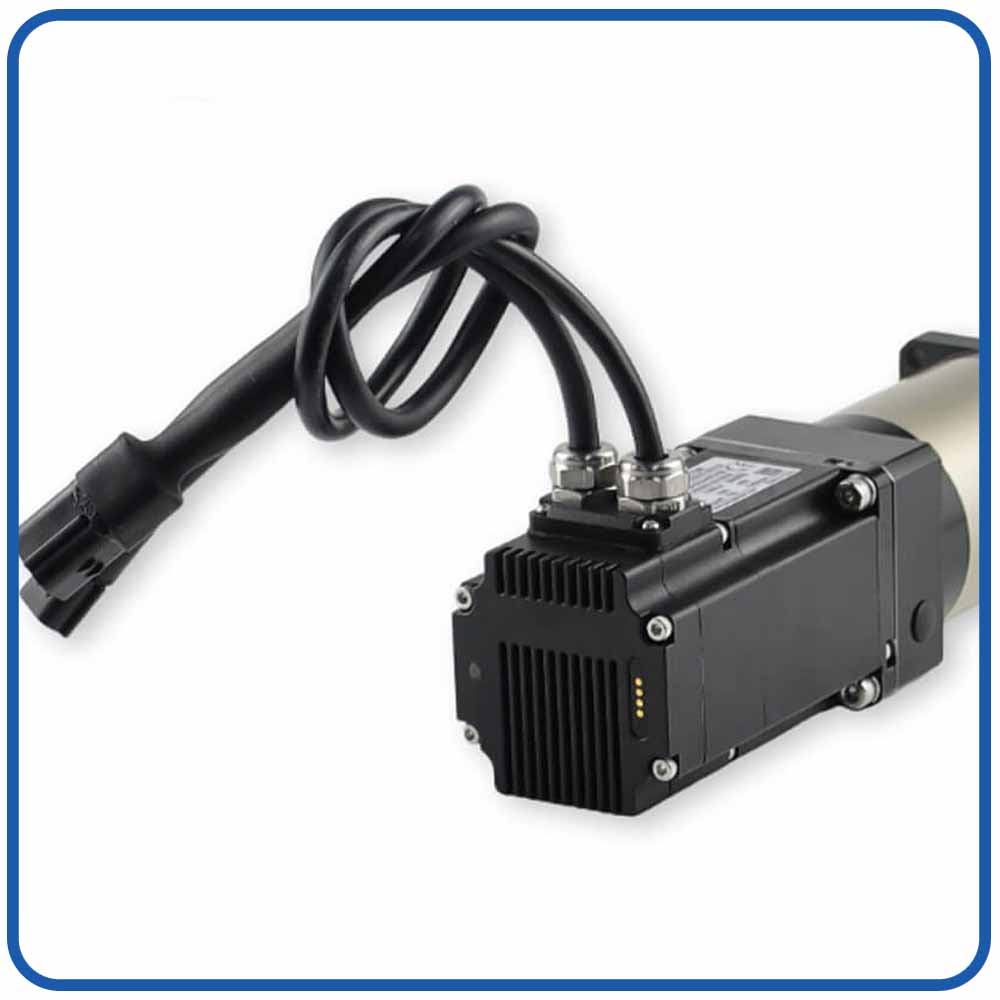
IDC60 Integrated BLDC Servo Motor — High-Efficiency, Compact, and Smart Closed-Loop Motion Control Solution
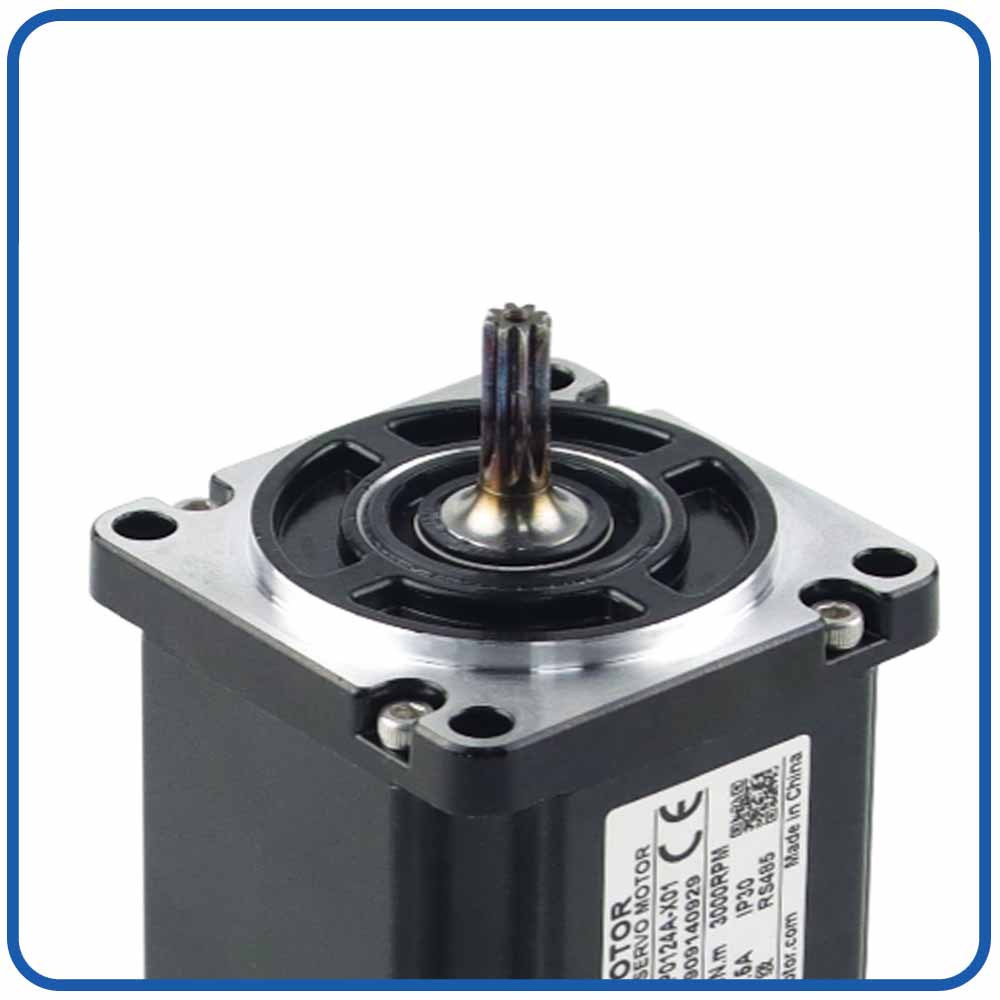
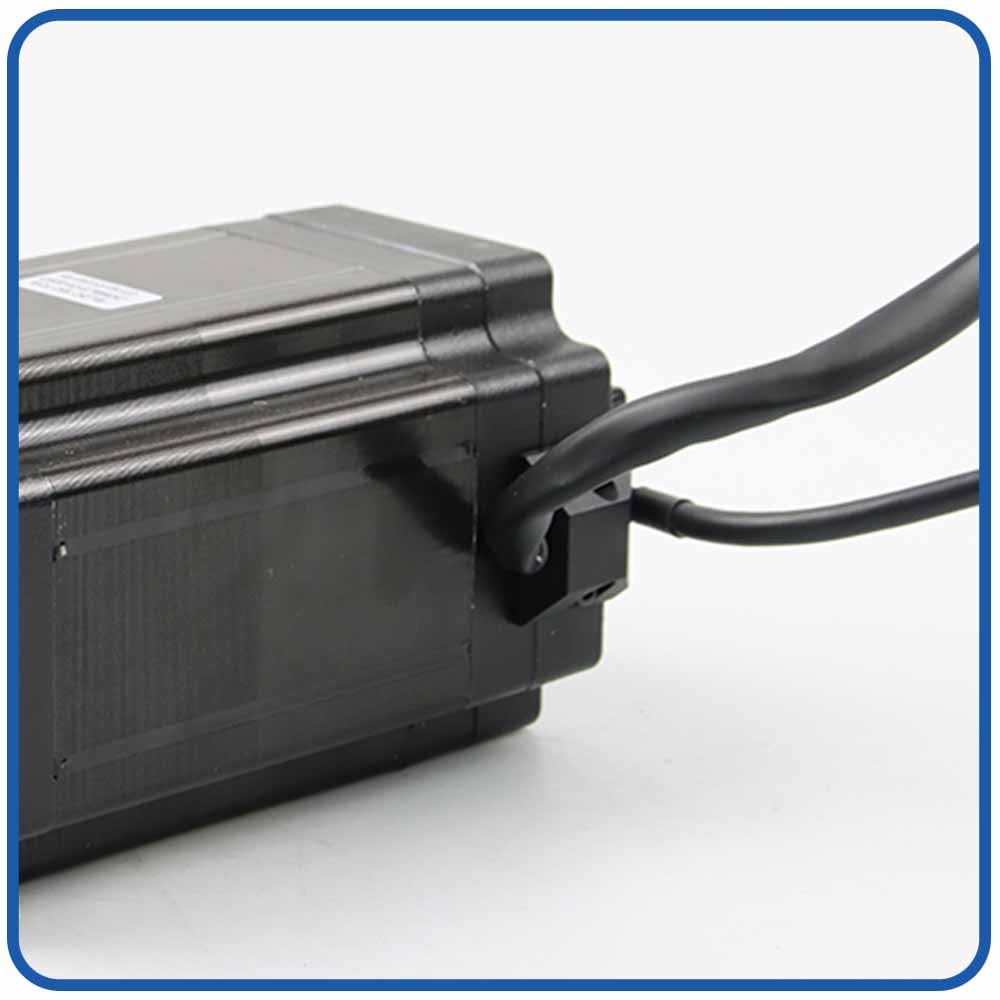
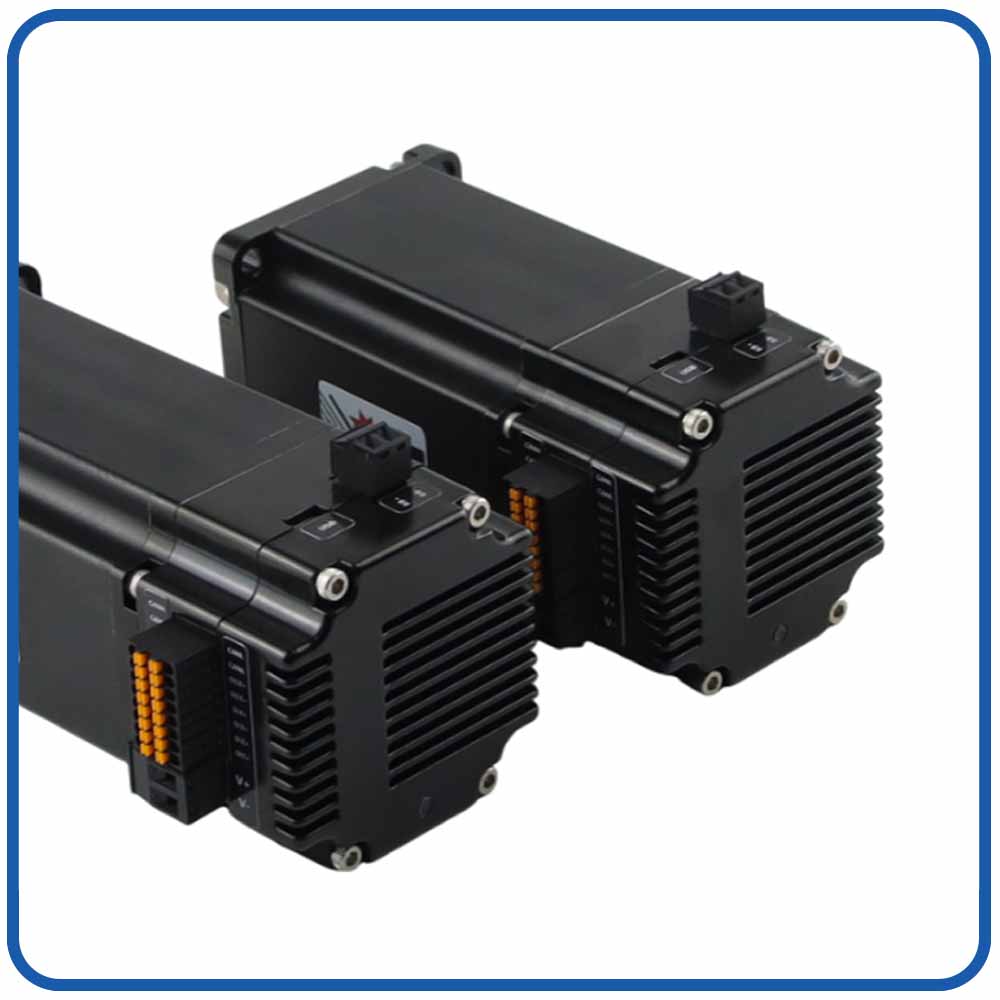
Product Overview:The IDC60 integrated BLDC servo motor from Besfoc is a compact NEMA 24 solution combining motor, drive, and encoder in one unit. It provides precise closed-loop control, stable torque, and fast response. Its integrated design reduces wiring, saves space.
Key Technical Highlights
Integrated All-in-One Design Combines BLDC motor, servo drive, and encoder in a compact unit, reducing wiring complexity and improving installation efficiency.
High-Precision Closed-Loop Control Ensures accurate position, speed, and torque regulation with real-time feedback for stable and smooth motion performance.
Powerful Modular Customization (OEM/ODM) Supports flexible customization options, including voltage, torque, communication protocols, and encoder resolution to meet diverse application requirements.
High Efficiency & Compact Structure Delivers strong torque density with optimized thermal performance, making it ideal for space-limited automation and robotics systems.
Typical Applications
Pipeline Inspection Robots Provides stable low-speed torque and precise motion control for navigating narrow, curved, and complex pipeline environments.
Automated Guided Vehicles (AGVs) Ensures smooth acceleration, accurate positioning, and reliable operation in logistics and smart warehouse systems.
Robotic Automation Systems Ideal for robotic arms, grippers, and compact motion modules requiring high precision and fast response.
Smart Manufacturing Equipment Supports high-accuracy motion control in assembly lines, packaging machines, and precision industrial automation devices.
IDC60 Series Key Specifications for AGV Applications
Why Traditional Motor Stop Methods Are Not Enough for AGVs
Many conventional AGV systems rely on software-based stopping methods. For example, the main controller sends a command such as:
"Stop motor."
The motor controller receives this command and gradually reduces speed until the vehicle stops.
Although this method works during normal operation, it has limitations in safety-critical situations.
1. Software Commands May Fail
AGVs depend heavily on communication between multiple devices, including:
Industrial computers
Motion controllers
Motor drives
Sensors
Navigation systems
If communication errors occur, the stop command may not reach the motor drive correctly.
Possible causes include:
Communication interruption
Network failure
Controller malfunction
Software bugs
Incorrect programming
STO provides an independent safety channel that does not rely on normal motion control software.
2. Motor Braking Does Not Always Remove Torque
A standard braking command reduces motor speed but does not necessarily eliminate torque production.
For example, during an emergency situation:
The motor may still produce holding torque.
The vehicle may continue pushing against an obstacle.
Unexpected movement may occur during maintenance.
STO ensures that the motor cannot generate driving torque, creating a safer condition for operators and equipment.
Key Benefits of STO Function in AGV Motors
1. Enhanced AGV Safety Protection
The primary advantage of STO is improving personnel and equipment safety.
AGVs often operate in environments where humans and machines share the same workspace, including:
Manufacturing workshops
Warehouses
Assembly lines
Distribution centers
Pharmaceutical facilities
If an operator enters the working area or an unexpected obstacle appears, STO can quickly disable motor torque and prevent dangerous movement.
This makes AGVs safer for collaborative industrial environments.
2. Compliance With Functional Safety Standards
Modern industrial automation systems must comply with strict safety regulations.
AGV motors with STO function help manufacturers meet requirements from international standards such as:
IEC 61800-5-2: Adjustable speed electrical power drive systems – Functional safety
IEC 61508: Functional safety of electrical/electronic systems
ISO 13849-1: Safety-related parts of control systems
STO is commonly classified as a basic safety function with high reliability when properly implemented.
For AGV manufacturers targeting global markets, STO capability can significantly improve product competitiveness.
3. Faster Emergency Response
Traditional stopping methods depend on software processing time:
Sensor detection → Controller decision → Communication → Motor command → Motor response
This process may introduce delays.
STO reduces the response time because the safety signal directly affects the motor drive's torque generation path.
For high-speed AGVs, this rapid response can reduce:
Stopping distance
Collision risk
Equipment damage
Operator hazards
4. Reduced Mechanical Wear
Emergency braking frequently can create stress on mechanical components.
Traditional emergency stops may involve:
Sudden motor braking
Gearbox impact
Wheel slipping
Mechanical vibration
By combining STO with controlled braking strategies, AGV systems can achieve both:
Smooth stopping during normal operation
Immediate torque removal during safety events
This helps extend the service life of:
Gearboxes
Drive wheels
Couplings
Mechanical transmission components
How Does STO Work in an AGV Motor System?
STO (Safe Torque Off) is an important safety function used in modern AGV motor systems to prevent unintended movement. It disables the motor's ability to generate torque while keeping the main power supply connected.
For AGVs operating around people, machines, and complex environments, STO provides a reliable safety layer to reduce risks caused by motor faults, control errors, or emergency situations.
1. Safety Event Detection
A safety device detects a potential hazard, such as:
Emergency stop button activation
Safety scanner detection
Door or protection device opening
Controller safety signal interruption
The safety controller then sends an STO signal to the AGV motor drive.
2. STO Signal Activation
The STO input receives the safety signal through a dedicated safety circuit.
Common safety devices include:
Safety PLC
Safety relay
Emergency stop system
Safety sensors
The STO circuit operates independently from normal motor control communication.
3. Motor Torque Is Disabled
After receiving the STO command, the motor drive immediately blocks the energy required for torque generation.
The motor:
Stops producing electromagnetic torque
Cannot accelerate or maintain driving force
Enters a safe state
The motor power supply does not necessarily need to be disconnected.
4. AGV Returns to Safe Operation
After the safety issue is resolved:
The STO signal is released
The motor drive performs a safety check
Torque output is enabled again
The AGV resumes operation
Restart conditions depend on the AGV safety design.
STO Control Structure in AGV Motors
A typical AGV motor system includes:
Safety Sensor
      ↓
Safety PLC / Relay
      ↓
STO Input
      ↓
Motor Drive
      ↓
AGV Motor
This independent safety path ensures that the motor can be stopped even if the main control system has problems.
Why AGV Motors Need STO
1. Prevents Unexpected Movement
AGVs often work near operators. STO helps prevent accidental motor torque caused by:
Software failures
Communication errors
Controller faults
2. Faster Safety Response
Traditional stopping methods rely on:
Controller → Communication → Motor Command → Stop
STO directly disables torque at the drive level, reducing response time.
3. Improves Safety Compliance
AGV motors with STO help meet industrial safety requirements, including:
IEC 61800-5-2
ISO 13849-1
IEC 61508
4. Protects Equipment
STO reduces risks caused by unexpected motor movement, protecting:
Operators
AGV loads
Mechanical components
Production equipment
STO vs Normal Motor Stop
Function
Normal Stop
STO
Control Method
Software command
Safety circuit
Torque Removal
Not guaranteed immediately
Directly disables torque
Communication Dependency
Required
Independent
Safety Level
Standard control
Functional safety
Application
Daily operation
Emergency situations
STO Application in AGV Motors
STO is commonly used in:
Warehouse AGVs
Autonomous Mobile Robots (AMRs)
Factory transportation robots
Heavy-load mobile robots
Collaborative automation systems
It is especially valuable for AGVs using integrated servo motors, where the motor, drive, encoder, and communication system are combined into one compact unit.
Summary
STO is a key safety function in AGV motor systems that prevents unintended torque generation and improves operational safety.
By creating an independent safety control path, STO allows AGVs to quickly enter a safe state during emergencies while maintaining system reliability.
For modern AGV and AMR applications, selecting motors with integrated STO capability helps achieve safer operation, easier compliance, and more reliable automation performance.
STO vs Emergency Stop: What Is the Difference?
Although STO and emergency stop systems are related, they serve different purposes.
Function
Emergency Stop
STO
Purpose
Stop hazardous machine operation
Remove motor torque
Operation method
Safety command
Drive-level safety function
Power disconnection
May disconnect power
Normally keeps power connected
Response speed
Depends on system design
Very fast
Application
Complete machine emergency shutdown
Motor safety control
In AGV applications, STO is usually part of a complete safety architecture rather than a replacement for emergency stop devices.
Why Integrated AGV Servo Motors Require STO Function
Why Does an Integrated AGV Servo Motor Need STO?
1. Prevents Unexpected AGV Movement
AGVs operate in dynamic environments where humans, machines, and robots often share the same workspace.
Without STO, unexpected movement may occur due to:
Controller errors
Communication failures
Software faults
Incorrect motion commands
The STO function directly disables torque generation inside the motor drive, ensuring the AGV cannot continue producing driving force.
2. Provides an Independent Safety Layer
Integrated servo motors rely heavily on communication systems such as:
CANopen
EtherCAT
Modbus RTU
RS485
Although these protocols provide accurate motion control, they are not always sufficient for safety-critical functions.
STO operates independently from the normal control network:
Safety Device → STO Input → Integrated Motor Drive → Torque Disabled
This separation improves system safety and reliability.
3. Improves Emergency Stop Performance
Traditional emergency stopping usually depends on software commands:
AGV Controller → Motor Command → Motor Deceleration
This process may experience delays.
With STO:
Emergency Signal → STO Activation → Torque Removed
The motor quickly stops producing torque, reducing the risk of:
Collision
Load damage
Operator injury
Benefits of STO for Integrated AGV Servo Motors
Compact Safety Design
Because integrated servo motors already combine multiple functions, adding STO eliminates the need for additional external safety hardware.
Benefits include:
Reduced cabinet size
Fewer cables
Simplified wiring
Easier installation
Higher System Reliability
Fewer components mean fewer potential failure points.
An integrated motor with STO reduces dependence on:
For AGV manufacturers selling to global markets, STO capability is becoming an important requirement.
How STO Works in an Integrated AGV Servo Motor
A typical STO operation includes:
Normal Operation
Safety circuit is active.
STO inputs remain enabled.
Motor drive controls torque normally.
AGV performs movement commands.
Safety Event
Safety sensor detects danger.
STO signal is activated.
Motor drive blocks torque generation.
AGV enters a safe state.
Restart
Safety condition is removed.
STO is reset.
Motor torque is enabled.
AGV resumes operation.
STO vs Software Stop in Integrated Servo Motors
Feature
Software Stop
STO Function
Control Method
Motion command
Safety circuit
Safety Level
Standard control
Functional safety
Communication Dependency
Required
Independent
Torque Removal
Controlled stop
Direct torque disable
Emergency Application
Limited
Suitable
Final
The STO function is an essential safety feature for integrated AGV servo motors. As AGVs become more intelligent and widely used in industrial environments, preventing unintended motor torque is critical for safe operation.
By integrating STO into servo motors, AGV manufacturers can achieve:
Faster emergency response
Improved operator safety
Simplified system design
Better compliance with international standards
For next-generation AGV and AMR systems, integrated servo motors with STO capability provide a safer, more reliable, and more efficient motion control solution.
Applications of STO-Enabled AGV Motors
STO-equipped AGV motors are widely used in:
Automated Warehouses
AGVs transport goods between storage areas and picking stations. STO helps prevent unexpected movement when workers enter operating zones.
Manufacturing Lines
In automotive, electronics, and machinery factories, AGVs operate near production workers. STO improves human-machine collaboration safety.
Medical and Pharmaceutical Logistics
Precise and safe transportation is required for sensitive materials. STO helps ensure reliable operation in controlled environments.
Heavy Load Transportation
For high-payload AGVs, uncontrolled movement can create significant risks. STO provides an additional protection layer.
Future Development of STO in AGV Motor Technology
As AGVs evolve toward higher autonomy and intelligence, safety requirements will continue to increase.
Future AGV motor systems will likely integrate:
Higher SIL-rated safety functions
Advanced diagnostic feedback
Safety communication protocols
Predictive fault detection
AI-based safety monitoring
STO will remain one of the fundamental safety technologies for autonomous mobile robots because it provides a simple, reliable, and internationally recognized method to prevent unintended motor torque.
Conclusion: STO Is Essential for Safe and Reliable AGV Motor Systems
The STO (Safe Torque Off) function is a critical safety feature for modern AGV motors. It ensures that motors cannot generate unintended torque during emergency situations, maintenance operations, or safety events.
Compared with traditional software-based stopping methods, STO provides faster response, higher reliability, improved safety compliance, and better protection for operators and equipment.
As AGVs continue expanding into smart factories, automated warehouses, and intelligent logistics systems, selecting AGV motors with integrated STO capability will become increasingly important for achieving safe, efficient, and future-ready automation solutions.
FAQ
FAQ 1: What is STO (Safe Torque Off) function in AGV motors?
Answer: STO (Safe Torque Off) is a functional safety feature that disables the motor’s ability to generate torque without disconnecting the main power supply. In AGV motors, STO prevents unintended movement by stopping torque production at the drive level, improving safety during emergencies, maintenance, and abnormal operating conditions.
FAQ 2: Why do AGV motors need STO function?
Answer: AGV motors need STO function because AGVs operate in environments where humans and machines work together. STO provides a reliable safety mechanism to prevent unexpected motor movement caused by software errors, communication failures, controller faults, or incorrect commands.
FAQ 3: How does STO work in an AGV motor system?
Answer: STO works by receiving a safety signal from devices such as emergency stop buttons, safety scanners, or safety PLCs. Once activated, the motor drive immediately blocks torque generation, preventing the AGV motor from producing driving force while keeping the power supply connected.
FAQ 4: What is the difference between STO and a normal motor stop command?
Answer: A normal motor stop command relies on software control and communication between the controller and motor drive. STO uses an independent safety circuit to directly disable torque generation, providing faster response and higher safety reliability during emergency situations.
FAQ 5: Is STO required for AGV and AMR applications?
Answer: STO is not required for every AGV system, but it is highly recommended for AGVs and AMRs operating in industrial environments where functional safety is important. STO helps manufacturers meet safety requirements and reduce risks associated with unexpected motor movement.
FAQ 6: What safety standards does STO comply with?
Answer: STO is defined in international functional safety standards, including IEC 61800-5-2, IEC 61508, and ISO 13849-1. AGV motor systems with STO capability help manufacturers design safer automation equipment that meets global safety requirements.
FAQ 7: Can an AGV motor restart automatically after STO activation?
Answer: No. After STO activation, the AGV motor must complete a safety reset process before torque can be enabled again. The restart method depends on the AGV safety design and control system configuration.
FAQ 8: What are the benefits of integrated AGV servo motors with STO function?
Answer: Integrated AGV servo motors with STO provide a compact and reliable motion solution by combining the motor, drive, encoder, communication interface, and safety function into one system. Benefits include reduced wiring, easier installation, improved safety, and better system reliability.
FAQ 9: Does STO disconnect power from an AGV motor?
Answer: No. STO does not normally disconnect the main power supply. Instead, it disables the motor drive’s ability to generate torque. This allows the system to remain powered while preventing unintended motor rotation.
FAQ 10: Why is STO important for future AGV motor technology?
Answer: As AGVs and AMRs become faster, smarter, and more widely used in smart factories and automated warehouses, safety requirements continue to increase. STO provides a reliable safety layer that supports safer human-machine collaboration and advanced automation systems.

 English
 العربية
 Français
 Русский
 Español
 Português
 Deutsch
 italiano
 日本語
日本語 한국어
한국어 Nederlands
 Tiếng Việt
 ไทย
ไทย Polski
 Türkçe
 ພາສາລາວ
 ភាសាខ្មែរ
 Bahasa Melayu
 ဗမာစာ
ဗမာစာ Filipino
 Bahasa Indonesia
 magyar
 Română
 Čeština
 Монгол
 қазақ
қазақ Српски
 हिन्दी
 فارسی
فارسی Slovenčina
 Slovenščina
 Norsk
Norsk Svenska
 українська
 Ελληνικά
 Suomi
Suomi Հայերեն
 עברית
עברית Latine
 Dansk
Dansk Shqip
Shqip বাংলা
বাংলা Hrvatski
 Afrikaans
 Gaeilge
 Eesti keel
 Oʻzbekcha
 latviešu
 Azərbaycan dili
 Български
 Català