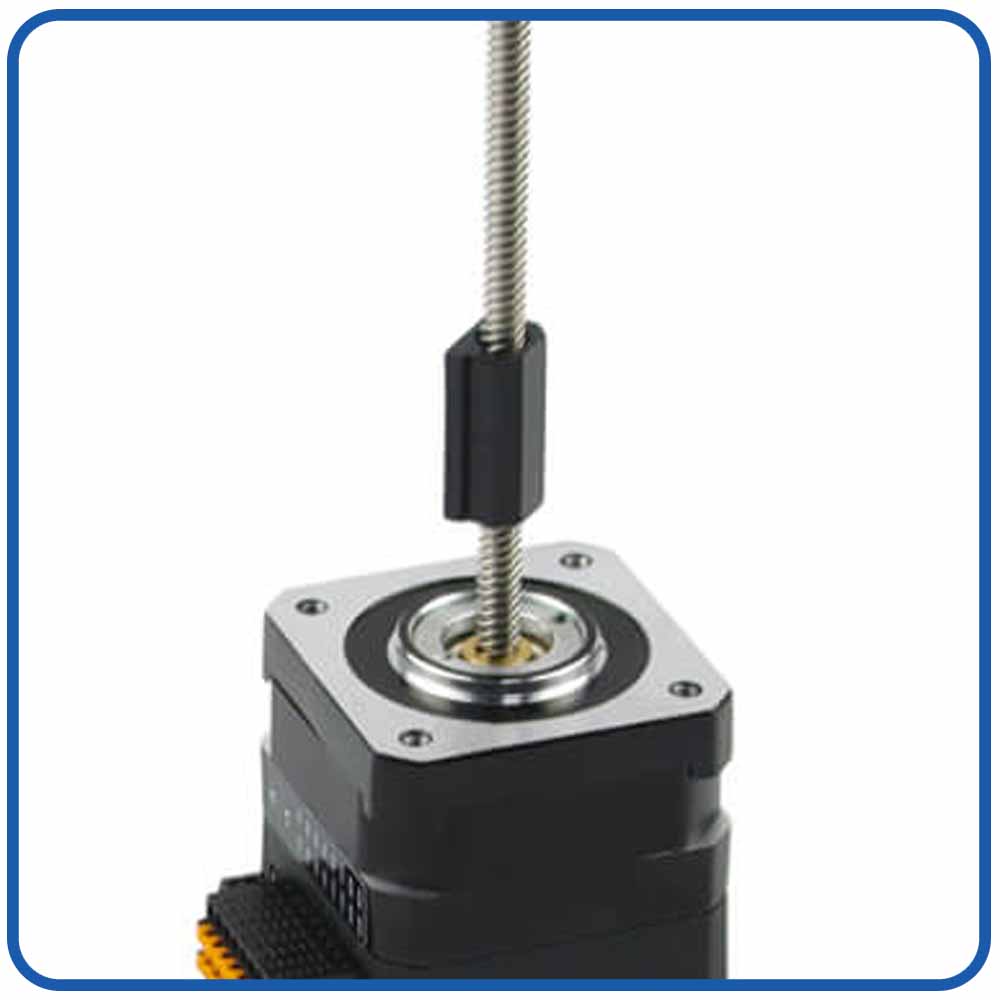
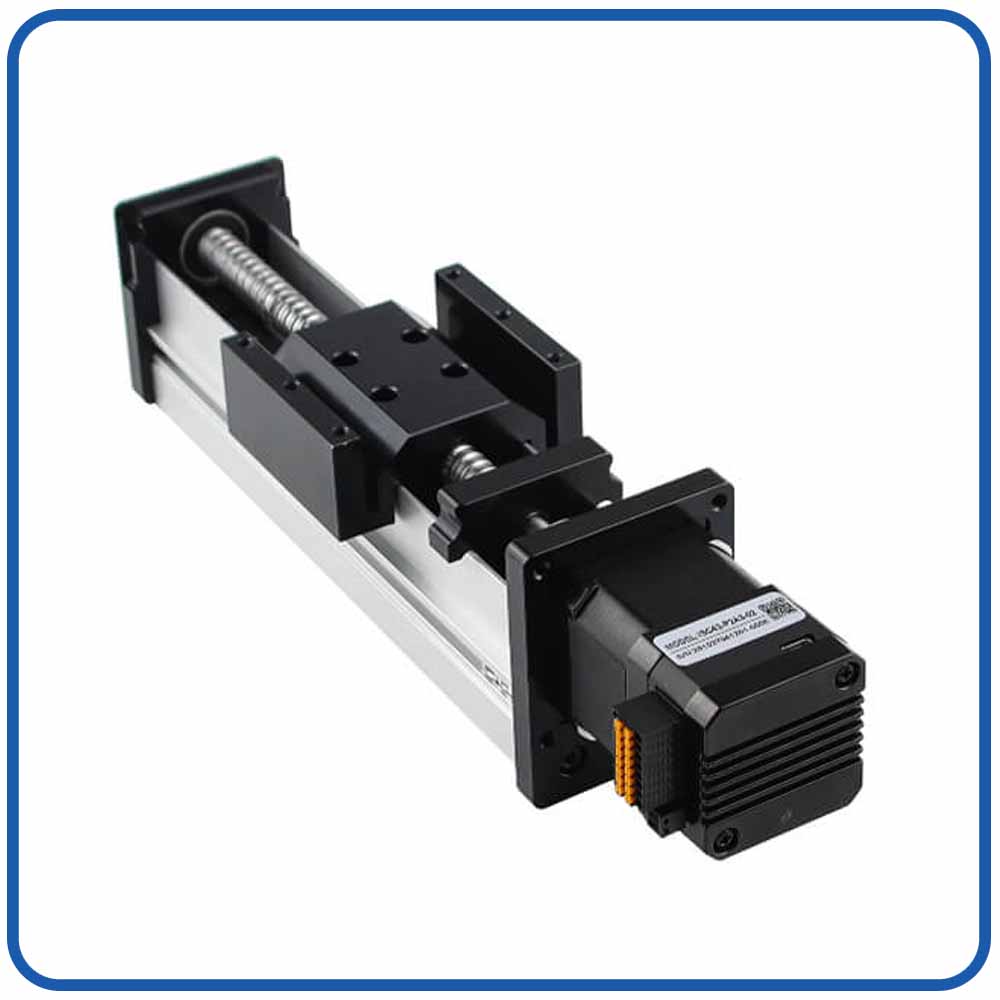
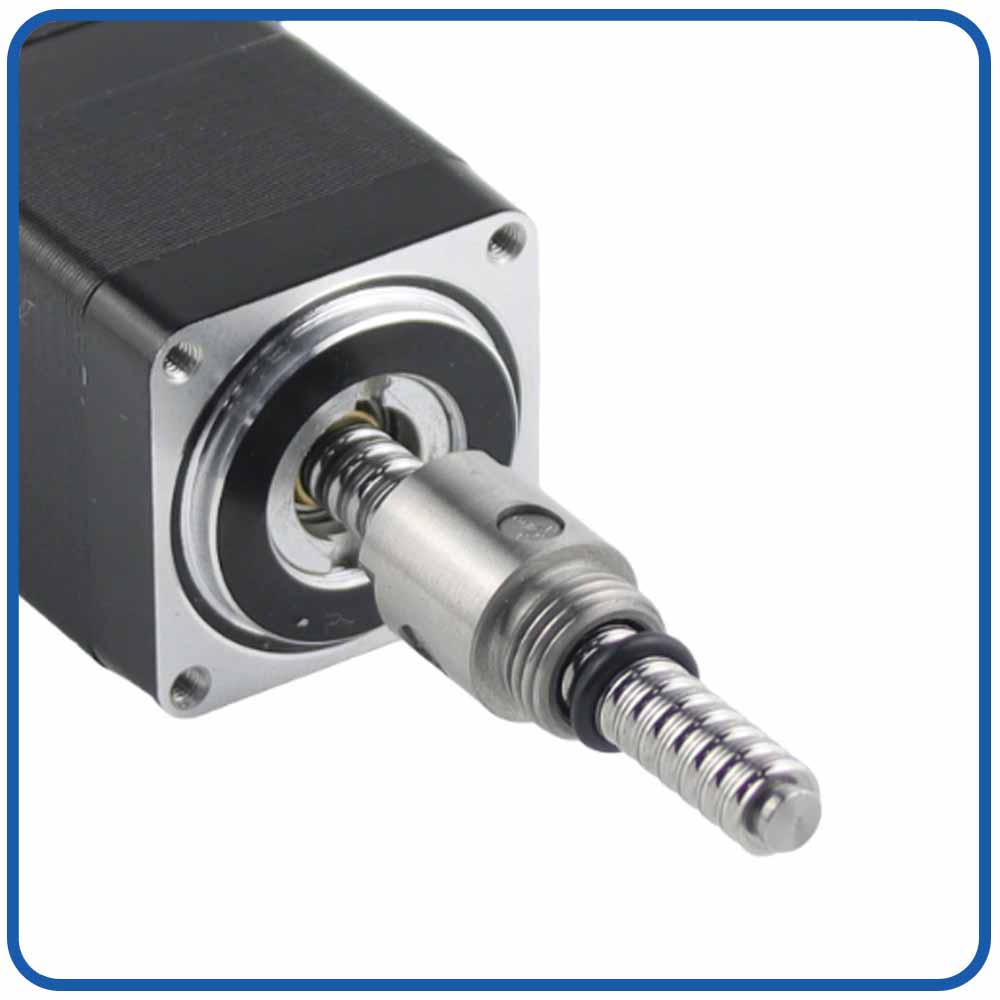
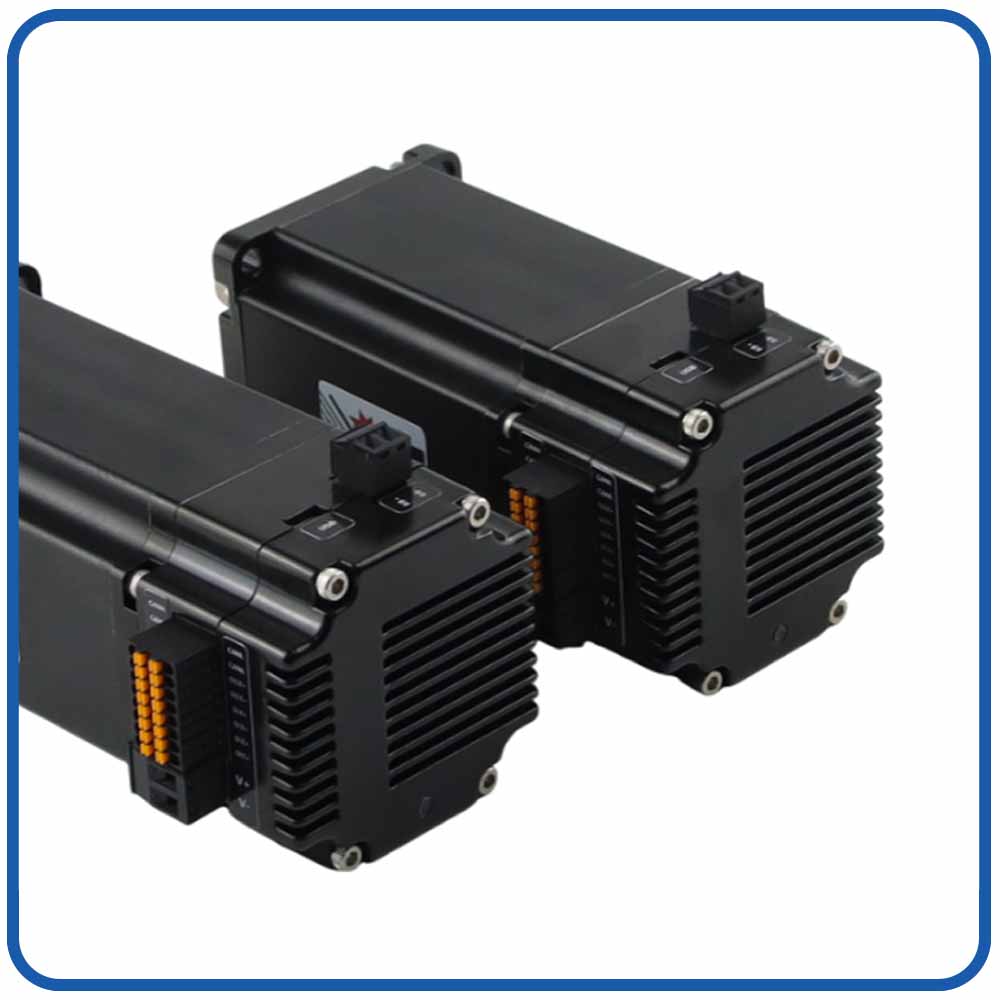
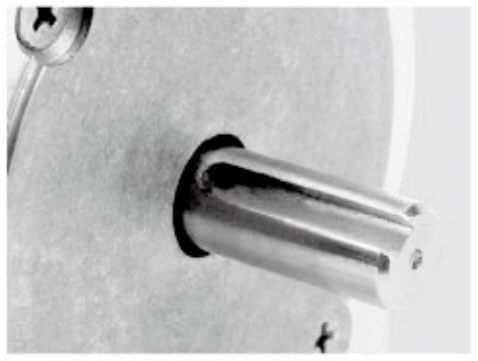
In precision manufacturing, press-fit operations require more than simply applying enough force to assemble two components. The pressing process must deliver consistent force, controlled displacement, and repeatable positioning to ensure reliable product quality. Even small variations in insertion force can cause component deformation, dimensional deviations, loose connections, or mechanical damage.
This is particularly important in applications such as automotive component assembly, bearing installation, electronic connector insertion, precision shaft fitting, and industrial automation.
Integrated DC servo motors improve press-fit force consistency in servo press systems by providing precise motion control, responsive torque regulation, accurate positioning, and coordinated closed-loop operation. By combining the motor and drive electronics into a compact unit, they can also simplify system integration and reduce wiring complexity.
However, consistent press-fit force depends on more than the motor itself. The performance of the complete system—including the motor, drive, transmission mechanism, force sensor, control strategy, and mechanical structure—determines the final pressing accuracy.
This article explains how integrated DC servo motors contribute to more stable press-fit operations and what manufacturers should consider when selecting a servo motor for precision pressing equipment.
1. Why Is Press-Fit Force Consistency Important in Servo Press Systems?
Press-fit assembly involves inserting one component into another through controlled mechanical force. The required force depends on several factors, including component dimensions, material properties, surface finish, interference tolerances, and assembly geometry.
If the pressing force fluctuates significantly between cycles, manufacturers may encounter several quality problems:
Insufficient insertion force: Components may not reach the required assembly depth, resulting in loose connections or inadequate retention.
Excessive pressing force: Excessive loads can deform housings, damage bearings, crack plastic components, or affect dimensional accuracy.
Unstable insertion depth: Inconsistent force and motion profiles can lead to variations in final component positioning.
Higher rejection rates: Uncontrolled pressing conditions make it difficult to maintain consistent assembly quality across production batches.
Increased inspection costs: Manufacturers may need additional testing and rework to identify defective press-fit assemblies.
For automated production lines, repeatability is particularly important. A servo press must reproduce the specified force and displacement profile across thousands of operating cycles while responding to differences in component and process conditions.
This is why precision motion control and real-time process monitoring are essential.
2. How Do Integrated DC Servo Motors Support Precise Press-Fit Force Control?
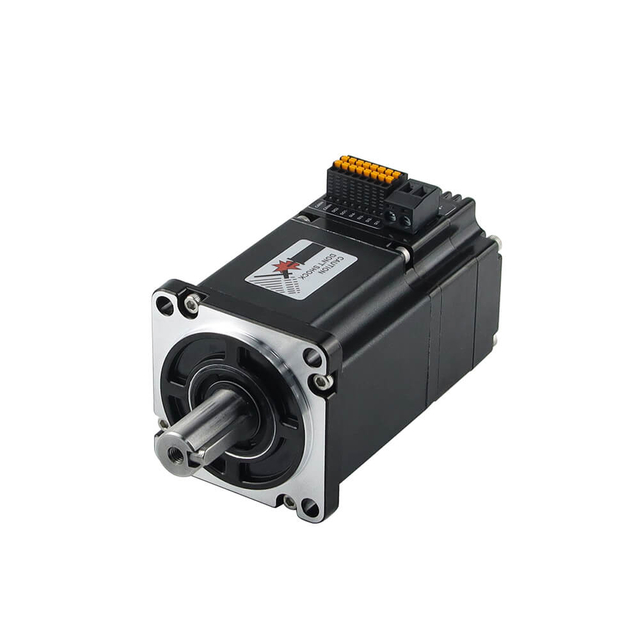
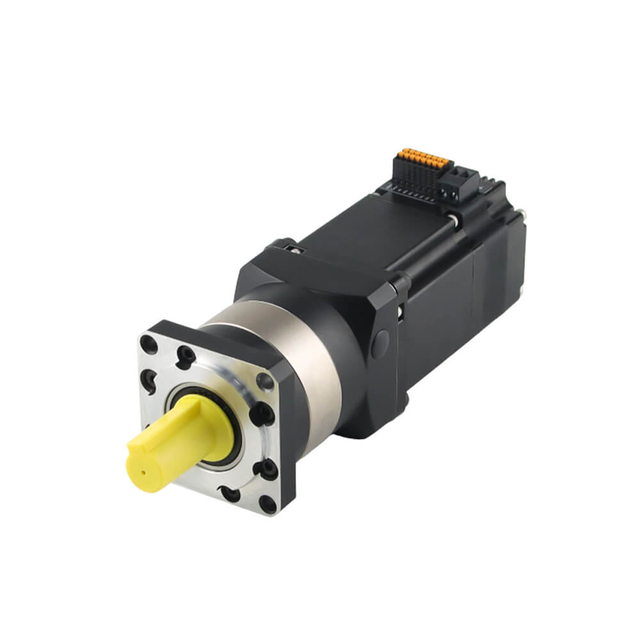
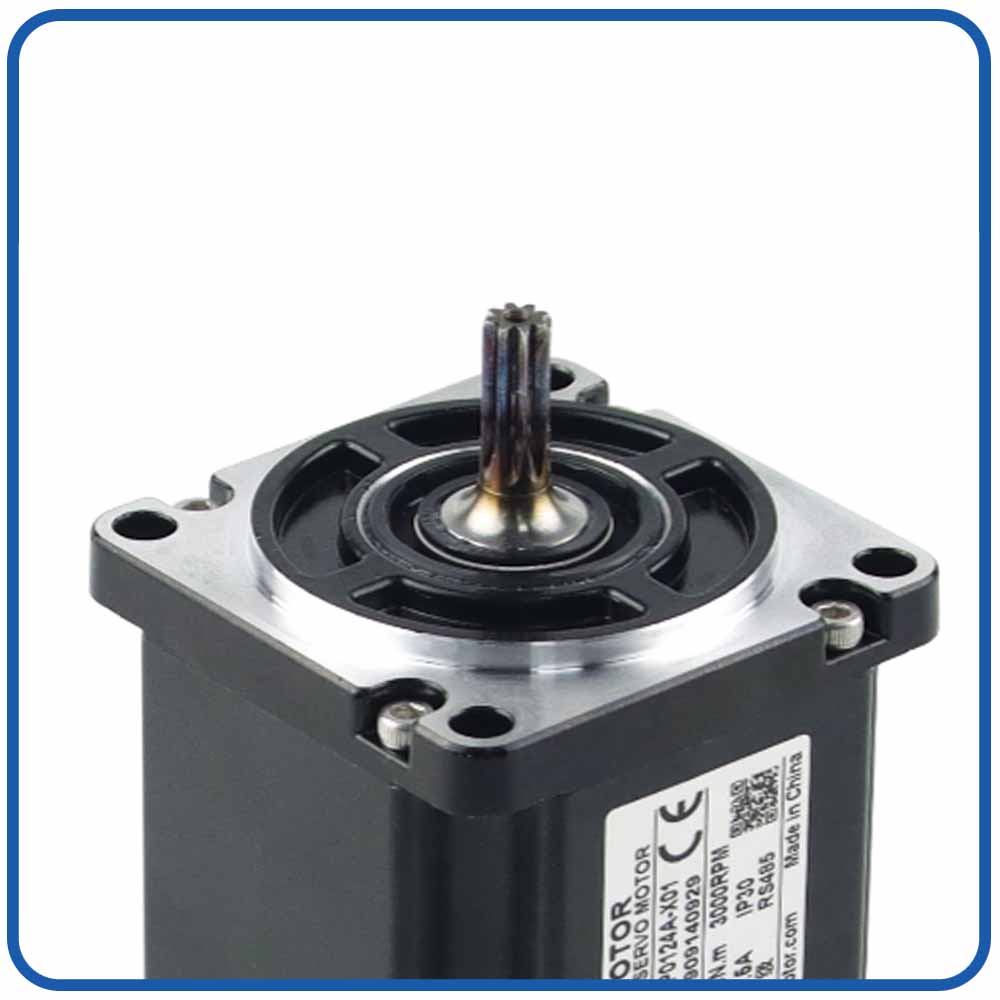
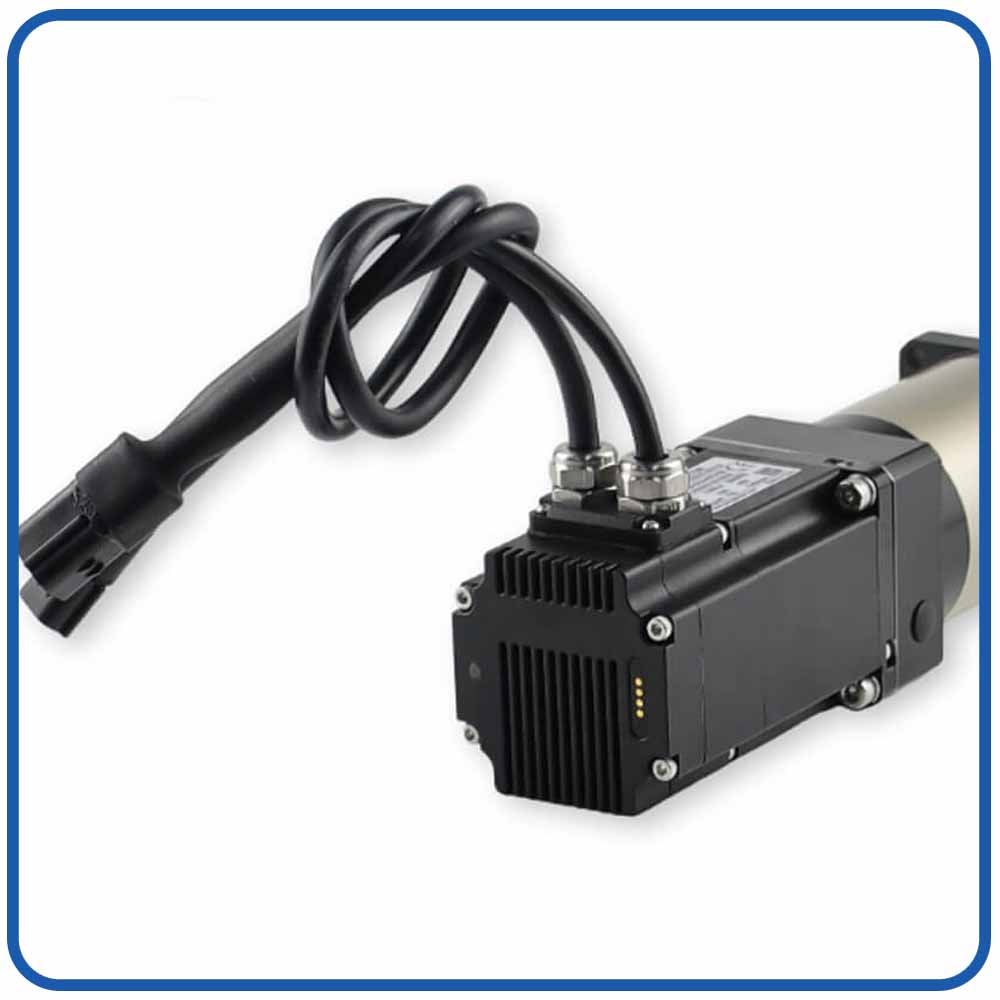
Integrated DC servo motors combine a DC servo motor with drive electronics and, depending on the model, an encoder or other feedback components. This integrated configuration allows the motor to receive motion commands and regulate its operating response within a compact assembly.
In servo press applications, integrated DC servo motors contribute to force consistency through several important control capabilities.
2.1 Accurate Torque Regulation for Stable Pressing Force
Motor torque is directly related to the mechanical force generated by the press mechanism. In a servo press using a ball screw, for example, motor torque is converted into linear thrust through the screw transmission.
A simplified relationship is:
F ≈ (2πηT) / L
Where:
F = Approximate linear pressing force
T = Motor output torque
η = Mechanical transmission efficiency
L = Ball screw lead
π = Mathematical constant
This relationship shows why accurate torque regulation is important for press-fit applications. When motor torque is controlled consistently, the press mechanism can generate more predictable mechanical output under comparable operating conditions.
Integrated DC servo motors with responsive current and torque control can adjust motor output according to the commanded operating conditions. This helps reduce variations caused by unstable motor operation and supports controlled force application.
However, motor torque alone does not provide a complete measurement of actual pressing force. Transmission friction, screw efficiency, mechanical wear, and temperature changes can affect the relationship between motor torque and linear thrust.
For applications requiring high force accuracy, an external load cell or force sensor should be used to measure the actual pressing force.
Position accuracy is another important factor influencing press-fit consistency.
During insertion, the servo press must control the movement of the pressing mechanism and ensure that the component reaches the required assembly position. Poor positioning repeatability can cause variations in insertion depth, even when the motor generates similar torque.
An integrated DC servo motor equipped with an encoder can provide real-time rotor position and speed feedback to the drive.
The controller compares the commanded motion with the feedback signal and corrects deviations during operation.
This closed-loop motion control provides several benefits:
More accurate approach positioning before contact.
Better control of insertion speed.
Reduced positioning errors between pressing cycles.
More repeatable movement during the pressing stroke.
Improved coordination between motion commands and process stages.
For servo press equipment, encoder feedback is particularly valuable when the system must transition smoothly from rapid approach movement to low-speed pressing.
It is important to distinguish position feedback from force feedback: an encoder measures motor movement, not the actual force applied to the workpiece. A load cell or suitable force-sensing system is needed when direct force measurement is required.
2.3 Responsive Speed and Acceleration Control Reduces Impact Loads
A sudden change in pressing speed can generate mechanical impact loads when the press tool contacts the workpiece.
These impact loads may cause force overshoot, component deformation, vibration, and inconsistent contact conditions.
Integrated DC servo motors support programmable speed and acceleration control, allowing the press to operate through different motion stages.
A typical press-fit cycle may include:
Rapid approach: The pressing mechanism moves toward the workpiece at a relatively high speed.
Contact detection: The system identifies initial contact through a force sensor, torque threshold, or another suitable detection method.
Controlled insertion: The press reduces its speed and applies force according to the required process profile.
Final positioning: The system reaches the specified insertion depth or force target.
Return movement: The pressing mechanism retracts to its starting position.
By controlling acceleration and deceleration, the servo system can reduce unnecessary mechanical impact and provide a more controlled transition between movement stages.
This is especially useful in applications involving delicate components, tight interference tolerances, and high-speed automated assembly.
3. How Does Closed-Loop Force Feedback Maintain Press-Fit Accuracy in Servo Press Systems?
Maintaining consistent pressing force across repeated assembly cycles requires more than accurate motor positioning or stable torque output. In precision press-fit applications, even minor variations in component dimensions, material hardness, surface conditions, or assembly alignment can change the resistance encountered during insertion. Without real-time force monitoring, these variations may result in incomplete assembly, excessive loading, or damage to critical components.
This is where closed-loop force feedback becomes essential. By integrating an external load cell or force sensor with an integrated DC servo motor and motion controller, manufacturers can continuously monitor the actual force applied during the pressing process and make timely adjustments to motor operation.
A typical closed-loop force control process involves several coordinated stages:
Motion Command Execution: The controller sends predefined speed, position, and torque-related commands to the integrated DC servo motor, driving the pressing mechanism toward the workpiece.
Real-Time Force Detection: Once the pressing tool makes contact with the component, the load cell measures the actual force generated during insertion and transmits the feedback signal to the control system.
Force Deviation Evaluation: The controller compares the measured force against the programmed target or acceptable force range to determine whether the pressing process is operating within the required limits.
Dynamic Output Adjustment: When force deviations occur, the controller modifies the motor command to regulate the pressing movement, helping prevent excessive loading or insufficient insertion force.
Process Completion and Verification: After the specified force or displacement conditions are reached, the system completes the pressing cycle and evaluates the recorded data to determine whether the assembly meets predefined quality criteria.
The main advantage of this approach is its ability to respond to actual mechanical resistance during insertion rather than depending entirely on fixed motor settings. For example, when a shaft encounters greater-than-expected resistance while entering a precision housing, force feedback allows the controller to identify the deviation and take corrective action before the load exceeds the permitted process limits.
It is important to understand that encoder feedback and force feedback perform different functions. The encoder provides motor position and speed information, while the load cell measures the actual pressing force. Combining these two feedback sources enables the servo press to coordinate motion accuracy with force regulation.
For manufacturers handling precision bearings, automotive components, electronic connectors, and other interference-fit assemblies, this integrated control strategy helps improve process repeatability, identify abnormal assembly conditions, and reduce the likelihood of defects caused by uncontrolled pressing loads.
Ultimately, closed-loop force feedback transforms a conventional motor-driven pressing mechanism into a more adaptive assembly system, allowing integrated DC servo motors to work alongside force sensors and motion controllers to achieve more predictable press-fit results.
4. How Do Integrated DC Servo Motors Improve Force-Displacement Monitoring?
Force-displacement monitoring is widely used in precision press-fit applications because it provides information about both the force applied and the movement of the pressing mechanism.
A force-displacement curve records how pressing force changes as the component moves through the insertion process.
By analyzing this curve, manufacturers can identify abnormal assembly conditions that may not be visible through final-position inspection alone.
Integrated DC servo motors support this process by providing controlled motion and encoder-based position feedback. When this position information is synchronized with load-cell measurements, the system can generate a force-displacement profile for each pressing cycle.
Typical process indicators include:
Initial contact position: Identifies when the pressing tool first contacts the component.
Peak pressing force: Records the maximum force during insertion.
Final insertion depth: Confirms whether the component has reached the required position.
Force at a specified displacement: Helps evaluate the resistance encountered during insertion.
Unexpected force changes: May indicate misalignment, component damage, surface defects, or incorrect dimensions.
For example, when installing bearings into precision housings, an abnormal increase in force may indicate excessive interference or misalignment. A force-displacement monitoring system can identify this deviation and trigger an alarm or reject the assembly.
The combination of integrated DC servo motor positioning and external force measurement therefore helps manufacturers move from simple motion control toward more comprehensive assembly quality management.
5. How Does Integrated Motor Design Simplify Servo Press System Integration?
Traditional servo press systems may use separate motor, drive, and feedback components. These configurations can require additional cables, control cabinet space, connectors, and installation work.
Integrated DC servo motors combine several components into one assembly, which can simplify the electrical and mechanical architecture of automated pressing equipment.
For servo press manufacturers, this integration offers several practical advantages.
Reduced Wiring Complexity
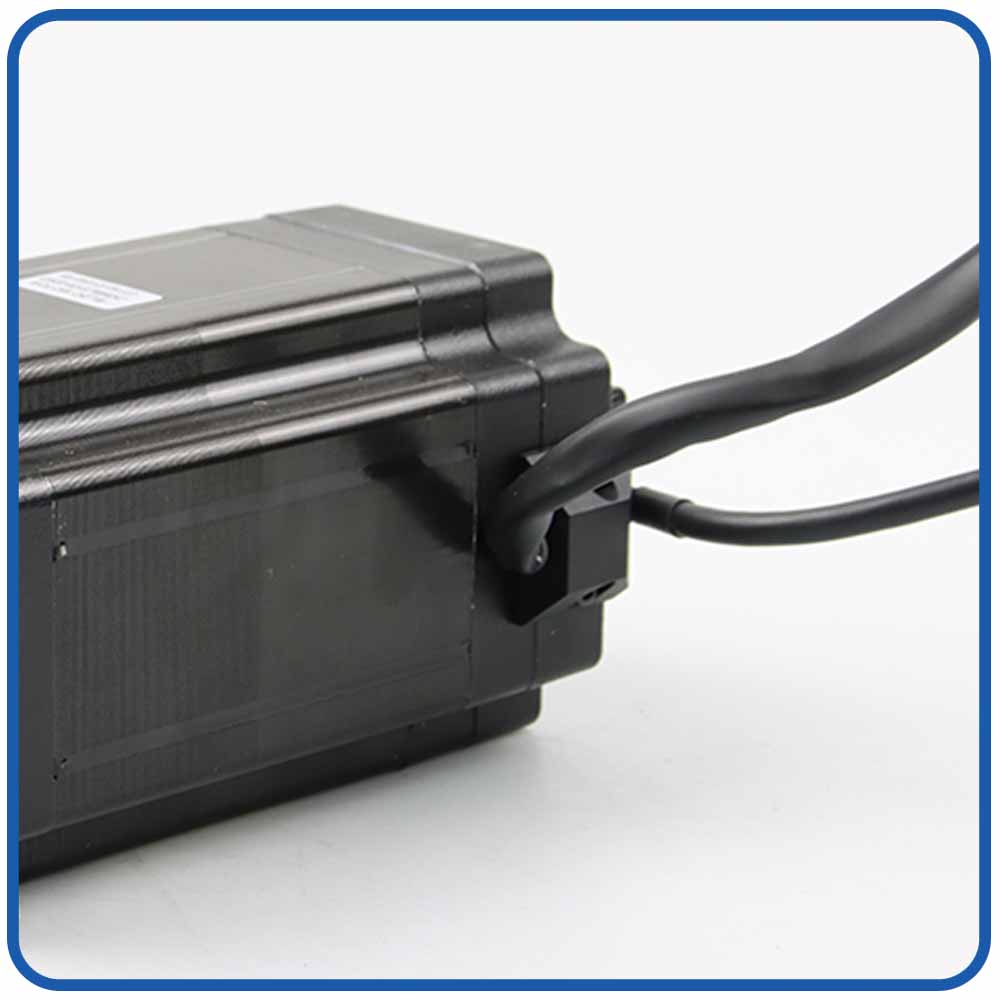
With the drive electronics incorporated into the motor assembly, fewer separate connections may be required between the motor and an external drive. This can simplify machine wiring and reduce installation complexity.
More Compact Equipment Design
Integrated motor solutions can help reduce the space occupied by separate drive components, making them suitable for compact servo press machines and modular assembly stations.
Easier System Configuration
Depending on the product design, integrated DC servo motors may support configurable motion parameters, feedback settings, and communication interfaces. This can make it easier to adapt the motor to different machine configurations.
Improved Machine Modularity
Compact integrated servo units can be incorporated into modular pressing mechanisms, helping equipment manufacturers standardize motion-control designs across multiple machine models.
These advantages do not directly guarantee higher pressing accuracy, but they can simplify the development and maintenance of servo press equipment while supporting reliable motion-control integration.
6. What Factors Affect Press-Fit Force Consistency Besides Motor Performance?
Selecting a suitable integrated DC servo motor is important, but motor selection alone cannot solve every force-control problem.
Manufacturers should evaluate the complete mechanical and control system before finalizing a servo press design.
Key factor
Potential effect on press-fit consistency
Recommended consideration
Motor torque capacity
Insufficient torque may prevent the system from reaching the required pressing force
Calculate peak and continuous torque requirements
Encoder resolution
Limited feedback resolution can affect positioning repeatability
Select suitable feedback resolution for the required positioning accuracy
Ball screw lead
Affects the relationship between motor torque and linear thrust
Select the appropriate screw lead and transmission design
Mechanical stiffness
Structural deformation can affect actual insertion depth and force response
Use a rigid frame and suitable transmission components
Force sensor accuracy
Measurement errors can lead to incorrect force adjustments
Select and calibrate an appropriate load cell
Control response
Slow or unstable feedback correction may cause force overshoot
Optimize control-loop response and motion profiles
Thermal conditions
Temperature changes can influence motor performance and mechanical dimensions
Evaluate thermal behavior during continuous operation
Component tolerances
Variation in workpiece dimensions can change insertion resistance
Monitor force-displacement curves and define acceptable process limits
A well-designed servo press should balance motor sizing, transmission efficiency, sensor accuracy, mechanical stiffness, and control-system response.
For high-precision applications, these factors should be validated together under actual production conditions.
7. How to Select Integrated DC Servo Motors for Servo Press Applications
Choosing an integrated DC servo motor for a servo press requires an understanding of the machine's mechanical structure and pressing requirements.
The following considerations can help equipment manufacturers narrow down their selection.
7.1 Calculate Required Pressing Force and Motor Torque
Start by determining the required pressing force, screw lead, transmission efficiency, and operating conditions.
For a ball screw mechanism, the approximate motor torque requirement can be calculated as:
T ≈ (F × L) / (2πη)
This calculation provides an initial estimate. Additional torque may be required to account for acceleration, friction, mechanical losses, and operating safety margins.
7.2 Evaluate Peak Torque and Continuous Torque
Servo press operations often involve different load conditions throughout the operating cycle.
Peak torque determines whether the motor can handle short-duration high-load requirements, while continuous torque indicates whether it can operate within its thermal limits during repeated production cycles.
Both values should be evaluated using the actual duty cycle.
7.3 Check Position Feedback and Control Compatibility
Consider the encoder type, feedback resolution, supported control modes, and communication interfaces.
The integrated DC servo motor must be compatible with the machine's PLC, motion controller, or industrial automation architecture.
7.4 Consider Operating Speed and Duty Cycle
The required motor speed depends on the approach speed, pressing speed, return speed, and production cycle time.
Manufacturers should also evaluate repeated start-stop operation, thermal performance, and the motor's ability to maintain stable operation under varying loads.
7.5 Verify Force-Control Requirements
Determine whether the application requires torque-based control, external load-cell feedback, or a combination of motion and force control.
For applications with strict force tolerances, direct force measurement is generally preferable to relying solely on motor current or estimated torque.
7.6 Conduct Real-World Performance Testing
Before mass production, test the complete servo press system using representative workpieces.
Evaluate peak force, force repeatability, insertion depth, cycle time, temperature rise, and force-displacement curve stability.
Testing under actual operating conditions is essential because theoretical motor calculations cannot fully account for every mechanical and material variation.
8. Typical Applications of Integrated DC Servo Motors in Precision Press-Fit Equipment
Integrated DC servo motors are suitable for various automated pressing applications where controlled motion, repeatable positioning, and compact system integration are required.
Automotive Component Assembly
In automotive manufacturing, servo presses are used for bearing installation, bushing insertion, shaft assembly, and other precision fitting processes. Integrated DC servo motors help control pressing movement and support repeatable assembly cycles.
Electronic Connector and Terminal Insertion
Electronic components often require controlled insertion force to avoid damaging terminals, housings, or delicate connection structures. Servo-controlled pressing mechanisms can regulate insertion speed and position while force sensors monitor assembly conditions.
Bearing and Bushing Installation
Bearing and bushing assembly requires controlled force to prevent damage to rolling elements, mounting surfaces, and surrounding housings. Combining servo motor positioning with force feedback helps identify abnormal insertion resistance.
Small Precision Mechanical Assembly
In compact mechanical products, excessive or inconsistent pressing force can cause deformation and dimensional errors. Integrated DC servo motors offer a compact motion-control solution for automated precision assembly equipment.
Medical and Instrument Component Assembly
Some medical device and precision instrument manufacturing processes require controlled insertion and repeatable positioning. Servo press systems with suitable force sensing and process monitoring can help maintain consistent assembly conditions.
9. How to Test Press-Fit Force Consistency Before Mass Production
A structured validation process helps manufacturers determine whether an integrated DC servo motor and its associated control system can meet the required pressing performance.
The following tests are particularly important.
1. Repeated Force Testing
Perform multiple pressing cycles using representative workpieces. Record peak force and force at specified displacement points to evaluate cycle-to-cycle variation.
2. Positioning Repeatability Testing
Check whether the pressing mechanism consistently reaches the specified contact and final insertion positions. Verify encoder feedback against an independent position measurement method where necessary.
3. Force-Displacement Curve Analysis
Compare the force-displacement curves from repeated cycles. Investigate significant deviations that may indicate workpiece variation, mechanical instability, or sensor problems.
4. Continuous Operation Testing
Run the servo press under representative production conditions to evaluate motor temperature, drive stability, and force-control performance over time.
5. Abnormal Condition Testing
Test appropriate fault scenarios, such as excessive insertion resistance, misalignment, missing components, and force-limit violations. Confirm that the system responds correctly through alarms, controlled stops, or rejection procedures.
6. Sensor and System Calibration
Verify load-cell calibration, encoder feedback, and the relationship between commanded motion and measured displacement. Recheck the system periodically as part of equipment maintenance.
By combining these tests, manufacturers can establish whether the complete servo press system delivers the required force consistency and assembly repeatability.
10. Why Choose Integrated DC Servo Motors for Modern Servo Press Systems?
As manufacturing processes become increasingly automated, servo press systems must meet higher requirements for pressing accuracy, operational stability, equipment compactness, and production efficiency. Traditional motor configurations may require multiple independent components and complex electrical connections, creating additional challenges for equipment manufacturers developing compact and flexible pressing solutions.
Integrated DC servo motors address these challenges by combining motor technology and drive electronics into a unified motion-control unit. With suitable encoder feedback and control capabilities, they provide a flexible foundation for managing the speed, position, and torque characteristics required in precision press-fit operations.
Several advantages make integrated DC servo motors particularly valuable for modern servo press equipment:
More Precise Motion Regulation: Closed-loop speed and position control help maintain consistent pressing movements, improve insertion-depth repeatability, and support accurate transitions between approach, pressing, and return stages.
Responsive Torque Control: Integrated drive electronics regulate motor output according to operating commands, helping the pressing mechanism respond to changing mechanical loads during assembly.
Compact Equipment Architecture: Combining the motor and drive components reduces the need for separately installed motion-control equipment, providing greater flexibility when designing space-constrained servo press machines.
Simplified Electrical Integration: A more consolidated motor-drive configuration can reduce external wiring and connection complexity, making equipment installation and commissioning more straightforward.
Flexible Automation Compatibility: Depending on the available communication interfaces and control functions, integrated DC servo motors can be incorporated into PLC-based automation systems and synchronized with other production equipment.
Support for Advanced Process Monitoring: When paired with external load cells, force sensors, and suitable motion controllers, these motors can support force-displacement monitoring and closed-loop force regulation, helping manufacturers identify abnormal pressing conditions during production.
Beyond these technical advantages, the selection of an appropriate integrated DC servo motor can also influence the scalability and maintainability of an entire pressing system. Equipment manufacturers should evaluate rated and peak torque, operating speed, encoder resolution, thermal performance, duty cycle, communication protocols, and environmental requirements before finalizing a motor configuration.
For applications involving bearing installation, automotive component assembly, electronic connector insertion, and precision mechanical fitting, the combination of integrated servo motion control and external force feedback offers a practical approach to improving process repeatability and assembly quality.
Ultimately, Integrated DC Servo Motors provide more than a compact alternative to conventional motor-drive arrangements. They establish a flexible motion-control foundation for modern servo press systems, helping equipment manufacturers simplify machine integration, achieve more predictable pressing movements, and build reliable automated assembly solutions.
Conclusion
Integrated DC servo motors improve press-fit force consistency in servo press systems by providing precise positioning, responsive torque control, repeatable speed regulation, and closed-loop motion feedback. Their compact motor-drive configuration also simplifies equipment integration and supports flexible servo press designs.
However, achieving accurate press-fit force requires more than stable motor output. The most reliable solution combines an appropriately sized integrated DC servo motor with a rigid mechanical structure, an efficient transmission system, an accurate load cell, and a well-tuned force-control strategy.
For manufacturers developing precision servo press equipment, evaluating the complete motor and force-control system is essential to achieving stable pressing force, consistent insertion depth, and reliable production quality.
Looking for integrated DC servo motors for precision servo press applications? Evaluate motor torque, speed range, encoder feedback, control interfaces, and integration requirements to identify a solution that matches your machine's pressing force and repeatability targets.
FAQS About Integrated DC Servo Motors for Servo Press Systems
1. How do integrated DC servo motors improve press-fit force consistency in servo press systems?
Integrated DC servo motors improve press-fit force consistency through precise speed and position control, responsive torque regulation, and encoder-based feedback. When combined with external load cells and closed-loop force control, they help servo press systems maintain more consistent pressing conditions, reduce force deviations, and improve assembly repeatability.
2. Why are integrated DC servo motors suitable for precision servo press applications?
Integrated DC servo motors combine motor and drive electronics into a compact unit, simplifying equipment integration and reducing separate wiring requirements. Their closed-loop motion control capabilities support accurate positioning, controlled pressing speeds, and repeatable operation, making them suitable for automated press-fit assembly equipment.
3. Can integrated DC servo motors provide accurate press-fit force control?
Integrated DC servo motors can regulate motor torque and current to control the mechanical output of a pressing mechanism. However, motor torque regulation does not directly measure actual pressing force. For applications requiring precise force control, an external load cell or force sensor should be integrated with the servo drive and motion controller.
4. What role does encoder feedback play in servo press force consistency?
Encoder feedback provides real-time motor position and speed information, allowing the servo drive to correct motion deviations and improve positioning repeatability. In servo press systems, this helps control approach speed, insertion depth, and pressing movement. When combined with force sensor feedback, it supports coordinated position and force control.
5. How does closed-loop force feedback improve press-fit assembly quality?
Closed-loop force feedback measures actual pressing force through an external load cell and compares it with predefined force targets or acceptable limits. The controller can then adjust motor commands according to the measured force deviation. This helps prevent excessive pressing loads, incomplete insertion, and potential component damage.
6. What is force-displacement monitoring in servo press systems?
Force-displacement monitoring records the relationship between pressing force and insertion position throughout an assembly cycle. By analyzing peak force, contact position, final insertion depth, and changes in force during movement, manufacturers can identify abnormal assembly conditions and improve press-fit quality inspection.
7. What factors affect press-fit force consistency besides motor performance?
Press-fit force consistency depends on several factors, including ball screw efficiency, mechanical stiffness, workpiece dimensional tolerances, component material properties, load-cell accuracy, sensor calibration, operating temperature, and control-loop response. A properly matched mechanical and electrical control system is essential for achieving repeatable pressing results.
8. How do integrated DC servo motors simplify servo press equipment design?
Integrated DC servo motors combine the motor and drive electronics into one assembly, reducing the need for separately installed drive components. This can simplify electrical connections, reduce wiring complexity, optimize control cabinet space, and support more compact and modular servo press equipment designs.
9. How should manufacturers select integrated DC servo motors for press-fit applications?
Manufacturers should evaluate required pressing force, motor torque, operating speed, peak and continuous torque capacity, encoder resolution, duty cycle, thermal performance, and communication interfaces. The motor should also be compatible with the selected transmission mechanism, force sensor, PLC, and motion controller.
10. How can manufacturers test press-fit force consistency before mass production?
Manufacturers should conduct repeated pressing tests, positioning repeatability evaluations, force-displacement curve analysis, continuous operation testing, and abnormal-condition simulations. Monitoring peak force, force variation, insertion depth, and motor temperature helps verify whether the complete servo press system meets its production requirements.

 English
 العربية
 Français
 Русский
 Español
 Português
 Deutsch
 italiano
 日本語
 한국어
 Nederlands
 Tiếng Việt
 ไทย
 Polski
 Türkçe
 ພາສາລາວ
 ភាសាខ្មែរ
 Bahasa Melayu
 ဗမာစာ
 Filipino
 Bahasa Indonesia
 magyar
 Română
 Čeština
 Монгол
 қазақ
 Српски
 हिन्दी
 فارسی
 Slovenčina
 Slovenščina
 Norsk
 Svenska
 українська
 Ελληνικά
 Suomi
 Հայերեն
 עברית
 Latine
 Dansk
 Shqip
 বাংলা
 Hrvatski
 Afrikaans
 Gaeilge
 Eesti keel
 Oʻzbekcha
 latviešu
 Azərbaycan dili
 Български
 Català