Autonomous tractors are transforming modern agriculture by improving operational efficiency, reducing labor requirements, and enabling more precise field management. As agricultural machinery becomes increasingly automated, the demand for accurate, responsive, and reliable motion control systems continues to grow. One particularly important function is implement lifting control, which allows tractors to raise, lower, and position agricultural attachments according to changing field conditions and programmed operating instructions.
Traditional hydraulic lifting systems remain widely used in agricultural tractors. However, autonomous farming introduces more demanding requirements for positioning accuracy, automated operation, real-time feedback, and intelligent coordination between tractor control systems and agricultural implements. To meet these requirements, manufacturers are increasingly exploring advanced electric motion control solutions, including integrated servo motors.
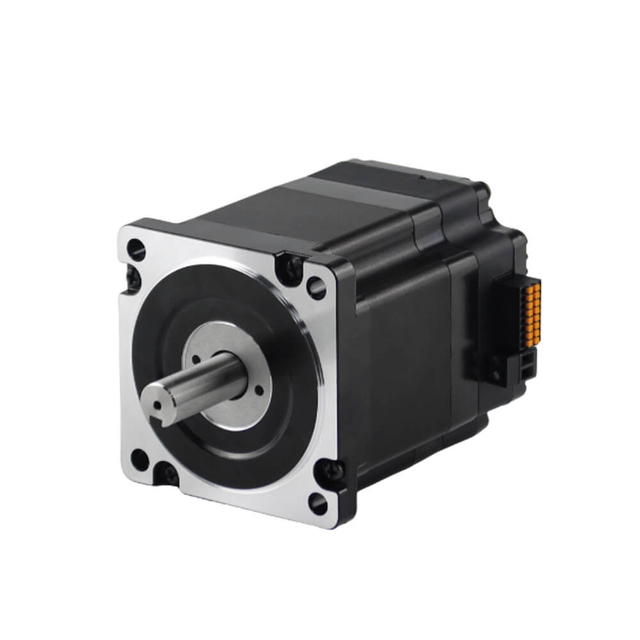
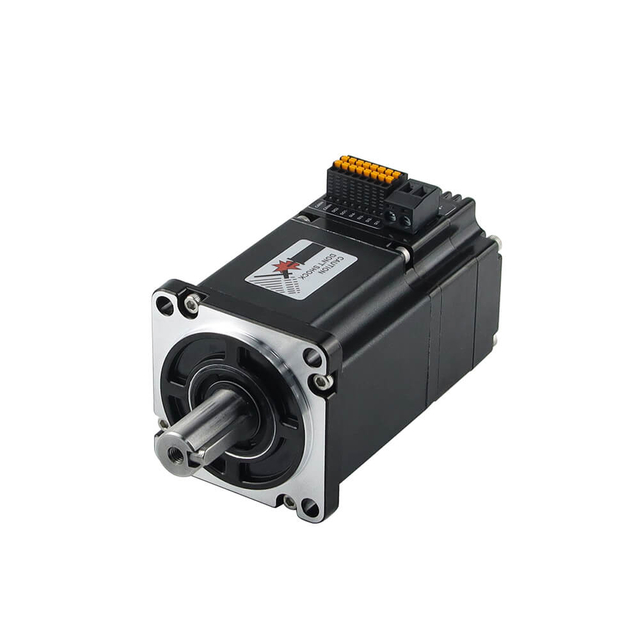
Integrated servo motors combine a motor, drive electronics, and feedback components within a compact assembly. Depending on the configuration, they can provide precise position, speed, and torque control while communicating with the tractor's electronic control system. When properly integrated into an implement lifting mechanism, these motors can improve automated positioning, reduce control complexity, and support more consistent agricultural operations.
In this article, we examine how integrated servo motors improve implement lifting control in autonomous tractors, including their operating principles, technical advantages, application scenarios, system integration requirements, and selection considerations.
1. Understanding Implement Lifting Control in Autonomous Tractors
Implement lifting control is a critical function in autonomous tractors, directly affecting operational efficiency, field precision, and agricultural equipment safety. It refers to the automated process of raising, lowering, and adjusting the position of agricultural implements attached to a tractor, such as precision seeders, plows, cultivators, fertilizer spreaders, and sprayers.
In conventional agricultural tractors, implement lifting is primarily performed through hydraulic systems, typically using hydraulic cylinders, control valves, and three-point hitch mechanisms. Although these systems provide substantial lifting force, autonomous agricultural machinery requires more sophisticated control capabilities, including precise positioning, programmable movement, real-time feedback, and automatic coordination with navigation systems.
For example, when an autonomous tractor reaches the end of a planting row, its control system must determine the appropriate moment to raise the seeder, prevent unnecessary soil contact, and coordinate implement movement with the tractor's turning operation. Once the tractor aligns with the next row, the implement must be lowered to the designated working position to resume planting.
This process involves several interconnected control functions:
Automatic implement lifting and lowering: Raising or lowering agricultural attachments according to predefined operating commands.
Position control: Maintaining the required implement height or working position during different agricultural operations.
Headland operation coordination: Automatically lifting implements before turning and lowering them when entering the next working row.
Working depth adjustment: Supporting controlled implement positioning to accommodate different soil conditions and operational requirements.
Real-time feedback: Monitoring actuator movement and implement position to improve control accuracy and operational consistency.
As autonomous tractors increasingly adopt electric motion control technologies, integrated servo motors offer an additional solution for electrically actuated implement lifting mechanisms. By combining the motor, drive electronics, and encoder feedback into one compact assembly, these motors can execute programmable positioning commands and communicate with the tractor's central electronic control unit.
Unlike conventional open-loop motor systems, integrated servo motors use closed-loop feedback to compare actual motor position with the target position. The controller continuously adjusts motor operation to minimize positioning errors, enabling more repeatable lifting and lowering movements.
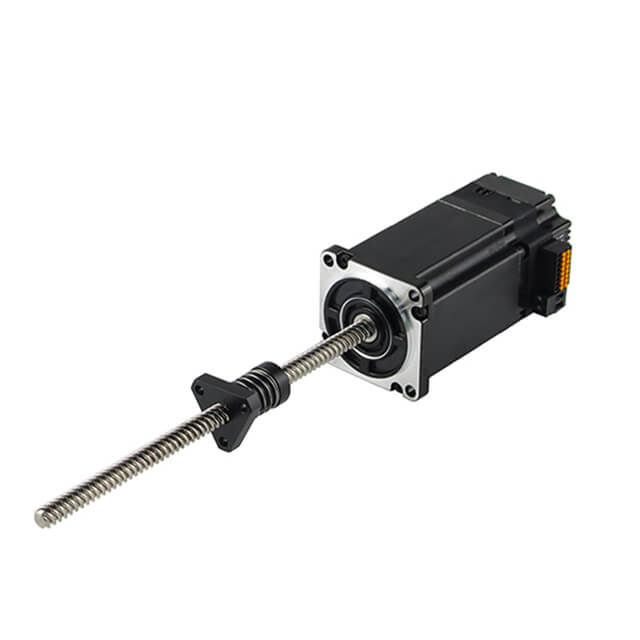
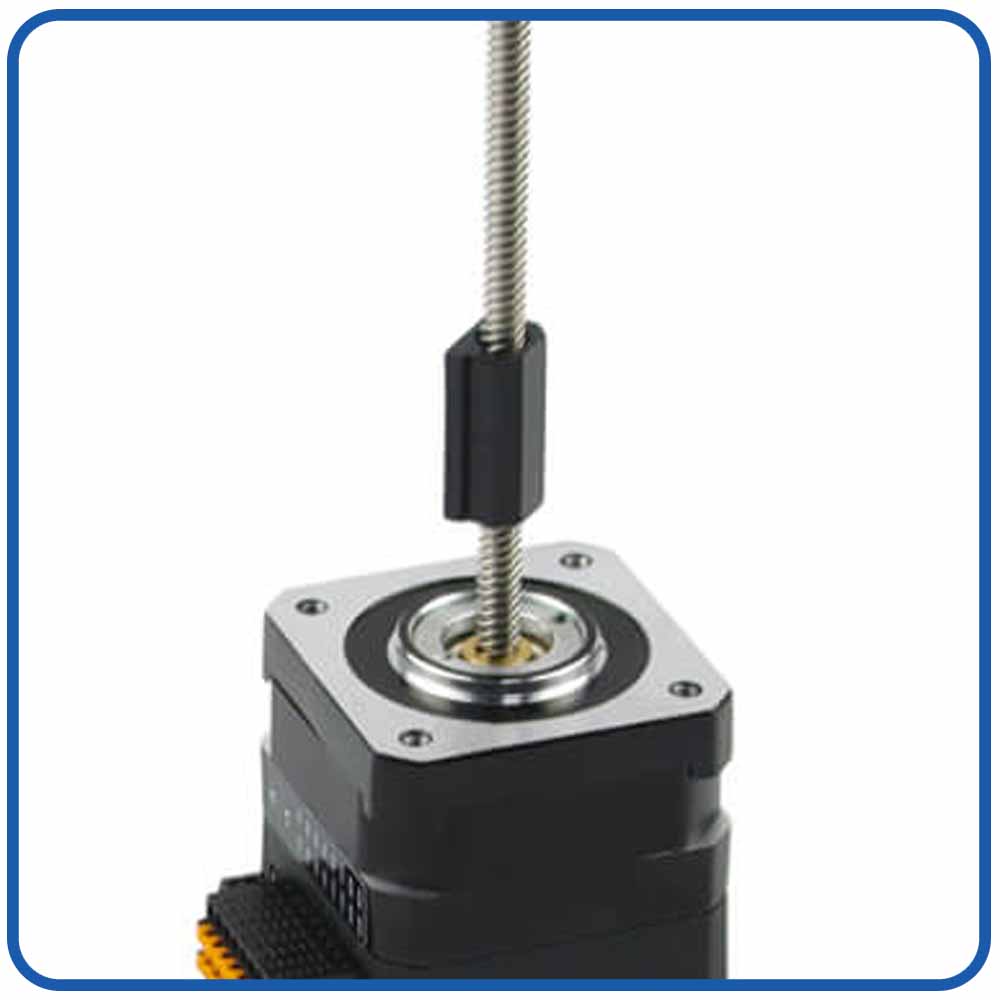
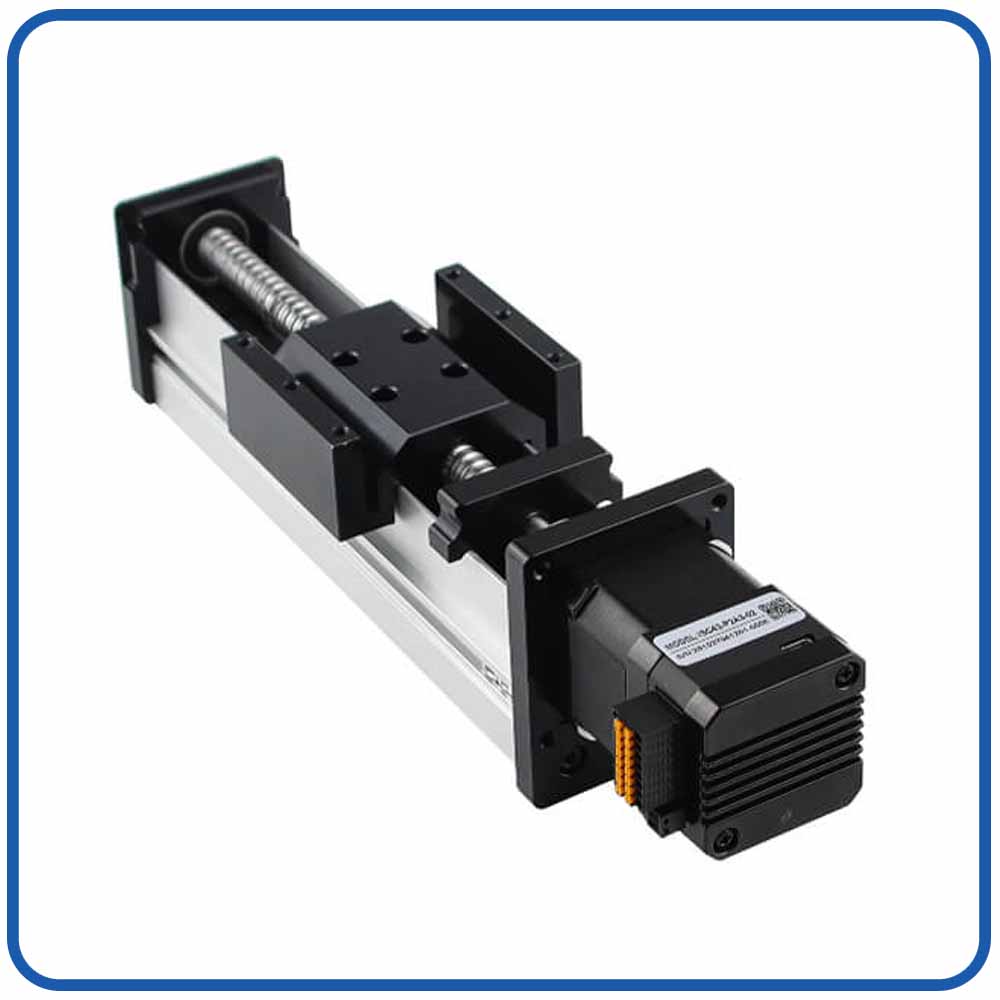
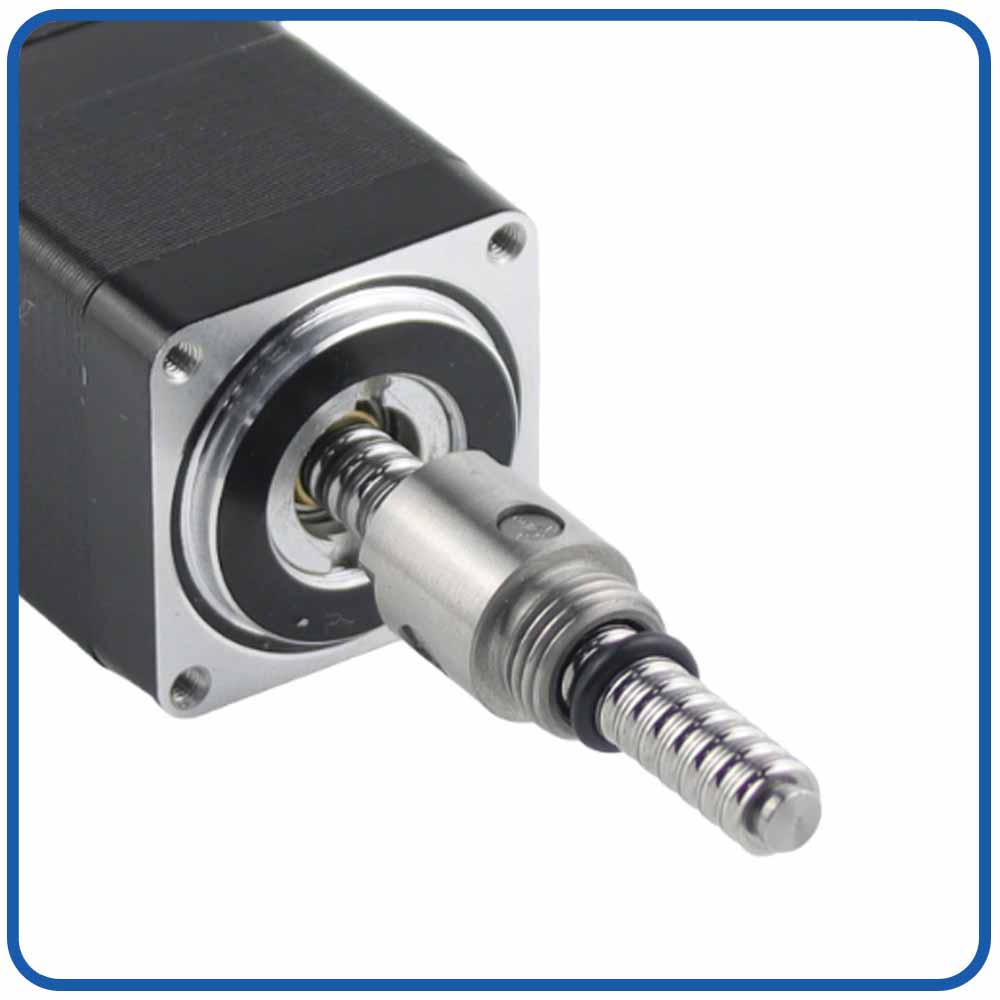
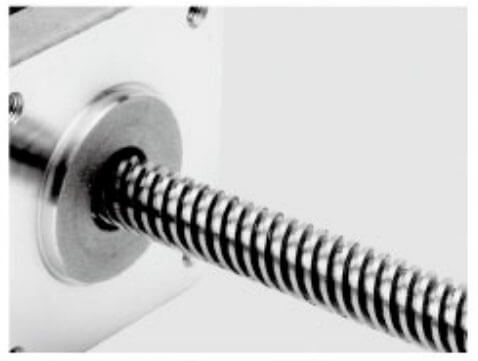
For instance, an integrated servo motor connected to a ball screw actuator or geared lifting mechanism can convert rotational movement into controlled linear displacement. This configuration can be used to adjust the height of compact agricultural implements or operate auxiliary lifting mechanisms. For heavier attachments, the required output torque, transmission ratio, mechanical support, and overall lifting force must be carefully evaluated.
Ultimately, accurate implement lifting control is essential for autonomous tractors to perform consistent agricultural operations without continuous manual intervention. By integrating suitable servo-driven actuators with navigation systems, position sensors, and intelligent control units, agricultural machinery manufacturers can develop more flexible, responsive, and automated implement positioning solutions.
2. How Integrated Servo Motors Work in Implement Lifting Systems
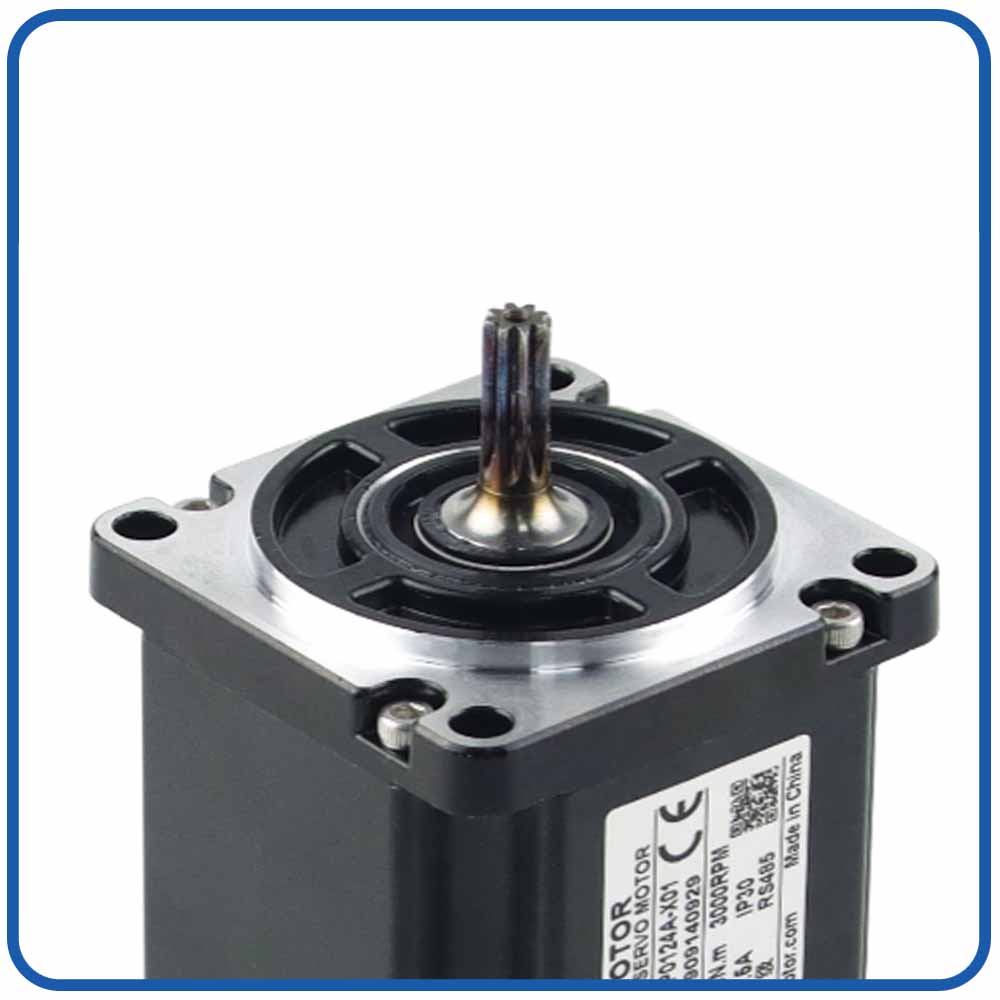
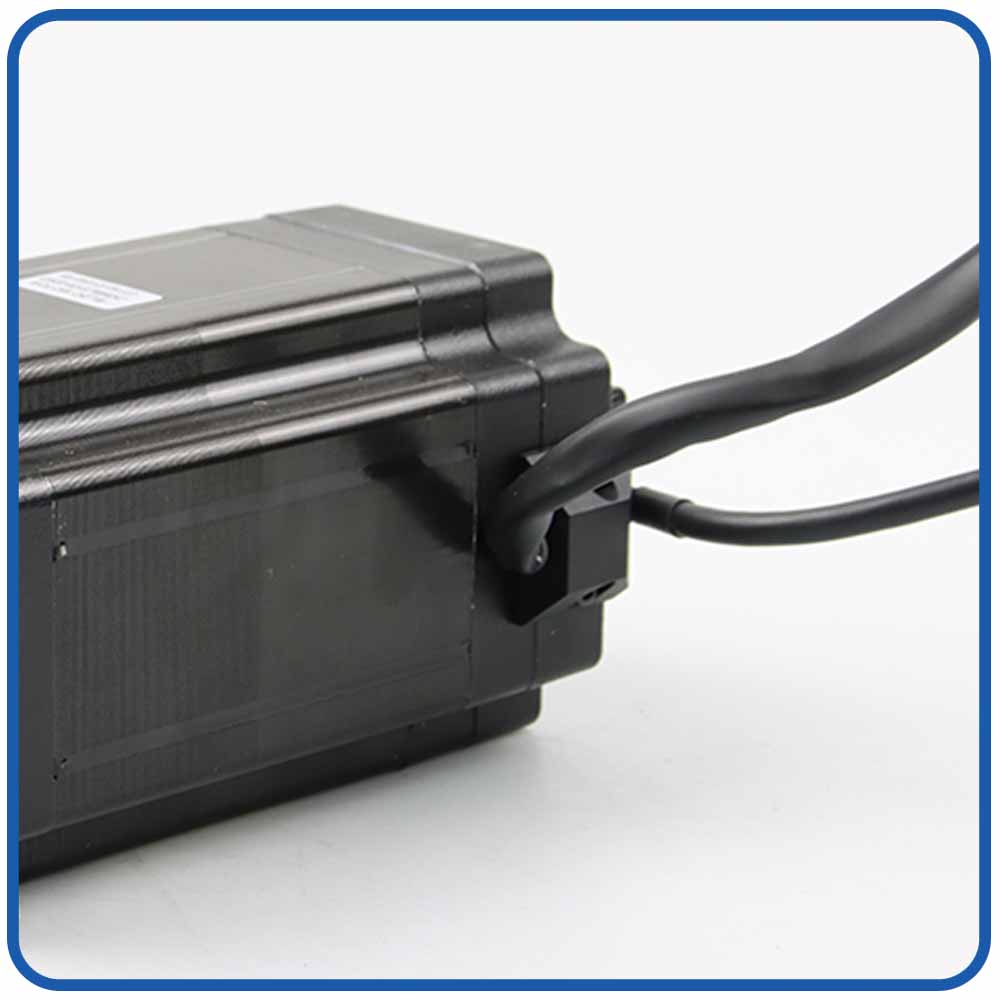
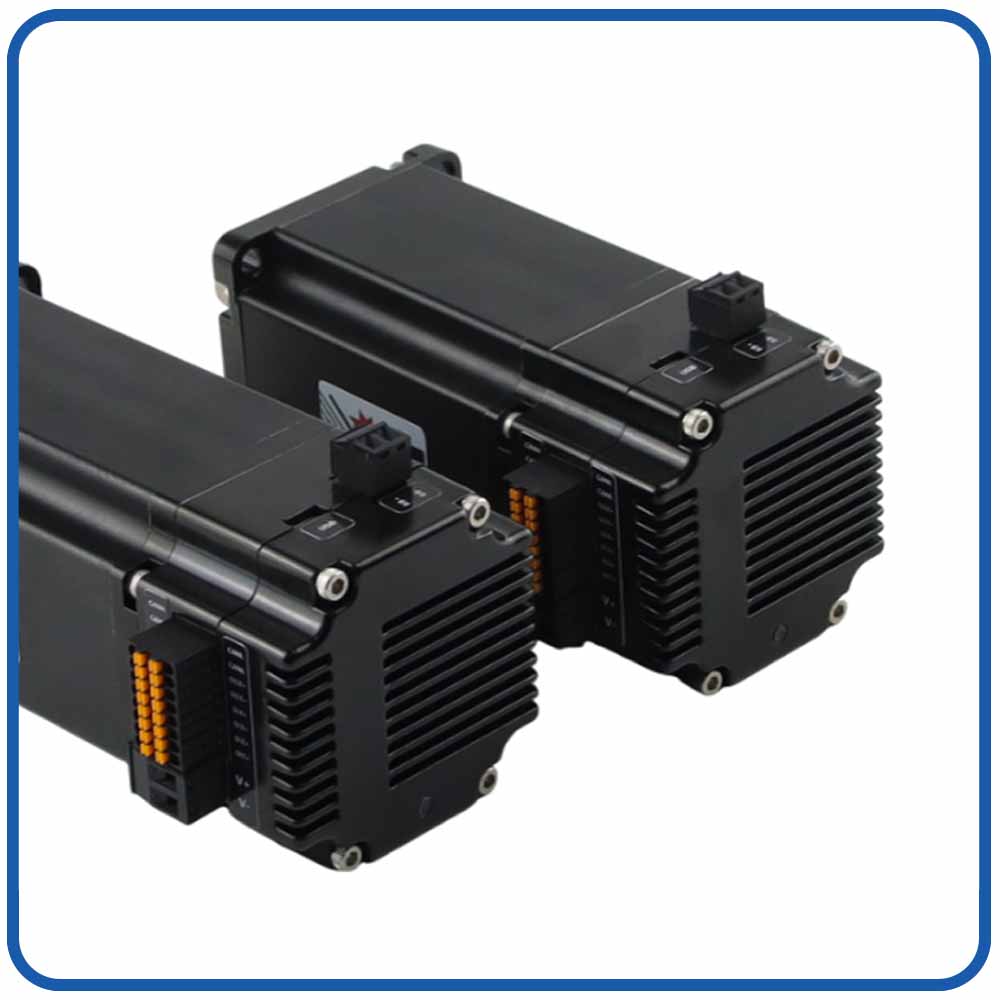
An integrated servo motor combines several motion control components into one compact unit. Instead of requiring a separately installed motor, external servo drive, and independent feedback wiring, the integrated design incorporates key control elements into the motor assembly.
A typical integrated servo motor consists of:
Servo motor: Generates the rotational force required to drive the lifting mechanism.
Integrated servo drive: Regulates motor current, speed, torque, and position.
Encoder or feedback sensor: Provides real-time information about motor position and rotational movement.
Control interface: Receives motion commands from the tractor's main controller.
Communication interface: Supports data exchange through compatible industrial or agricultural communication protocols.
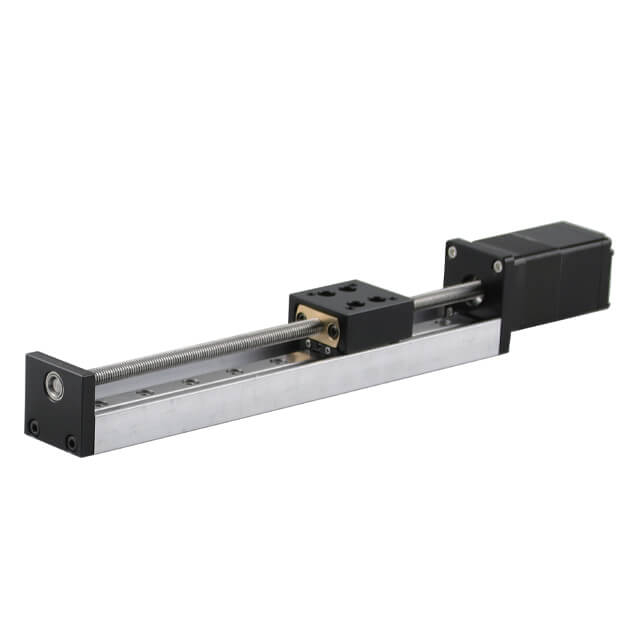
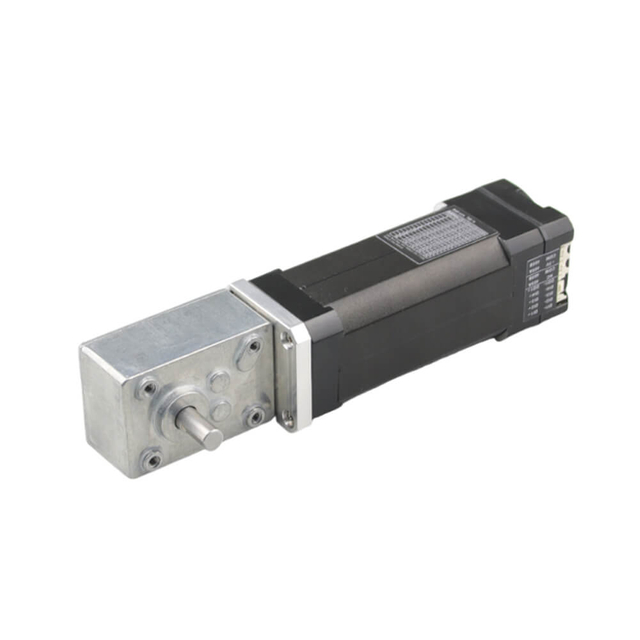
In an implement lifting application, the servo motor generally drives a mechanical transmission system, such as a ball screw, lead screw, worm gearbox, or linkage mechanism.
The working process can be divided into several stages.
2.1 Receiving Position Commands
The autonomous tractor's electronic control unit (ECU) determines the required implement position based on operating instructions and sensor information.
For example, the controller may issue a command to raise the implement to a predefined transport position or lower it to a specified working position.
The command is transmitted to the integrated servo motor through a compatible control interface.
2.2 Converting Electrical Commands into Mechanical Movement
After receiving the command, the integrated servo drive regulates the motor according to the required movement profile.
The motor generates rotational torque, which is transferred through a gearbox or mechanical transmission to produce linear or angular movement.
For example, a servo motor connected to a screw-driven actuator can convert rotational movement into controlled vertical displacement.
This arrangement allows the implement lifting mechanism to move between programmed positions.
2.3 Monitoring Position Through Feedback
The encoder continuously monitors motor rotation and provides feedback to the integrated drive.
The servo controller compares the actual position with the target position and adjusts motor operation to reduce the positioning error.
This closed-loop control process helps the lifting mechanism achieve repeatable positioning and respond to changing operating commands.
However, motor encoder feedback measures motor or shaft movement rather than necessarily measuring the actual implement position. Mechanical backlash, linkage deformation, and transmission compliance can affect the final implement position.
For applications requiring accurate implement height or working depth, an additional linear position sensor or implement-mounted feedback sensor may be necessary.
One of the most important advantages of integrated servo motors is their ability to provide controlled and repeatable positioning.
In autonomous farming, inaccurate implement positioning can affect planting depth, soil preparation quality, and operational consistency.
For example, a seeder that does not lower to the correct working position may produce inconsistent seed placement. Similarly, a cultivator that remains too low during headland turning may create unnecessary soil disturbance.
Integrated servo motors support more controlled positioning through encoder feedback and closed-loop motion regulation.
3.1 Repeatable Lifting and Lowering Positions
With programmable position commands, an integrated servo motor can move an implement between predefined positions.
Typical positions may include:
Working position: The implement is lowered to its designated operating position.
Headland position: The implement is raised during tractor turning.
Transport position: The implement is lifted to a suitable height for transportation.
Maintenance position: The mechanism moves to a designated position for inspection or servicing.
The servo drive can store or receive different position commands depending on the system configuration.
This makes it easier for autonomous tractors to execute consistent lifting sequences across repeated field operations.
3.2 Reducing Positioning Errors
Closed-loop feedback enables the motor controller to detect differences between commanded and actual motor positions.
When the actual position deviates from the target, the controller can adjust motor output to correct the movement.
This is particularly useful in applications involving frequent lifting and lowering cycles.
For higher positioning accuracy, engineers should also consider gearbox backlash, actuator stiffness, mounting rigidity, and external mechanical loads.
3.3 Supporting Adjustable Implement Height
Different agricultural operations require different implement positions.
For instance, a cultivator may require adjustable working depth depending on soil conditions, while a seeder may need consistent positioning to maintain the desired planting configuration.
Integrated servo motors can support programmable positioning profiles, allowing the tractor controller to adjust implement movement according to the selected operation.
When combined with suitable position sensors, this capability can support more advanced implement height and depth management.
Headland turning is one of the most important operating scenarios for autonomous tractors.
At the end of each field row, the tractor must coordinate its steering, speed, navigation, and implement positioning to prepare for the next working pass.
Implement lifting must occur at the appropriate time to prevent equipment damage, unnecessary soil disturbance, or interference with the turning maneuver.
Integrated servo motors can support this process by executing programmed lifting and lowering movements.
4.1 Automatic Implement Raising
When the tractor approaches a predefined headland boundary, its navigation system sends a lifting command to the implement control system.
The integrated servo motor then drives the lifting mechanism toward the designated raised position.
The lifting operation can be coordinated with tractor speed and turning commands.
4.2 Controlled Lowering After Turning
After completing the turn, the autonomous tractor aligns itself with the next working row.
The control system can then command the implement to return to its working position.
Using programmable motion profiles, the servo motor can control acceleration, deceleration, and target position during the lowering process.
This helps reduce sudden mechanical movement and supports smoother engagement with the soil.
4.3 Improving Operational Consistency
Repeated headland operations require consistent timing and positioning.
Integrated servo motors allow the tractor controller to execute predefined movement sequences rather than relying entirely on manual intervention.
As a result, autonomous tractors can achieve more consistent implement handling across repeated field passes.
5. Supporting Precision Seeding and Fertilization
Precision seeding and fertilization require accurate coordination between tractor movement, implement positioning, and material delivery.
An integrated servo motor can contribute to these operations through two different functions: implement lifting control and auxiliary motion control.
5.1 Maintaining Consistent Seeder Position
The position of a seeding implement influences how its openers interact with the soil.
A controlled lifting mechanism can help maintain the designated working position and raise the implement when planting should stop.
When combined with appropriate depth sensors and implement control algorithms, servo-driven actuators can support more consistent planting operations.
5.2 Coordinating Fertilizer Application
Fertilizer application systems may require coordinated implement positioning to prevent unnecessary material delivery outside designated working areas.
For example, when an autonomous tractor reaches a headland, the controller can coordinate implement lifting with fertilizer metering shutdown.
The integrated servo motor handles the commanded mechanical movement, while the fertilizer control system manages material delivery.
These functions work together to reduce unnecessary application and improve operational coordination.
Modern autonomous tractors increasingly rely on prescription maps, positioning data, and field sensors to adjust agricultural operations.
Integrated servo motors can receive position commands generated by the tractor's control system to support automated implement adjustments.
However, variable-rate material delivery generally requires dedicated metering actuators and control algorithms. The implement lifting motor alone does not regulate fertilizer or seed flow.
6. Reducing Wiring and Installation Complexity
Traditional servo systems often require separate motor and drive installations, together with additional feedback cables and control connections.
For agricultural machinery manufacturers, these components can increase installation complexity, occupy valuable space, and create additional wiring requirements.
Integrated servo motors combine multiple motion control components into one assembly, simplifying system architecture.
Their compact design offers several potential benefits.
6.1 Compact Mechanical Installation
Autonomous tractor implements often have limited installation space.
A separate motor, drive cabinet, encoder, and associated wiring may be difficult to accommodate within compact agricultural equipment.
Integrated servo motors reduce the number of separately mounted components and can simplify mechanical layout.
6.2 Simplified Electrical Connections
Depending on the product design, an integrated servo motor may require fewer external connections than a conventional distributed servo system.
This can reduce wiring complexity and simplify equipment assembly.
6.3 Easier System Integration
Integrated servo motors are available with different communication and control interfaces.
Depending on the model, these may include:
CANopen
Modbus RTU
RS485
Pulse and direction control
Analog speed or torque commands
Other manufacturer-specific communication interfaces
The appropriate interface depends on the tractor's electronic architecture.
For agricultural applications, engineers should verify protocol compatibility, electrical isolation, connector protection, communication reliability, and the availability of diagnostic information before selecting a motor.
CAN-based communication is particularly relevant to distributed vehicle control systems, although compatibility with the tractor's actual control network must always be confirmed.
7. Improving Operational Efficiency Through Programmable Motion Control
Autonomous tractors frequently perform repetitive agricultural operations over extended working periods.
Implement lifting mechanisms may execute hundreds or thousands of movement cycles depending on field size and operating conditions.
Integrated servo motors can improve the controllability of these repetitive operations through programmable motion profiles.
7.1 Adjustable Acceleration and Deceleration
Abrupt acceleration and deceleration can produce mechanical shocks, especially when lifting heavy agricultural attachments.
Servo drives can regulate acceleration and deceleration to achieve smoother movement.
This helps reduce sudden load changes across mechanical transmission components.
7.2 Controlled Speed During Lifting
Different stages of implement movement may require different speeds.
For example, an implement may need relatively rapid movement during initial lifting, followed by slower movement when approaching a specific target position.
Programmable speed profiles allow engineers to configure motion according to the application.
7.3 Coordinated Movement Sequences
The integrated servo motor can execute commands from the tractor's central control system.
This allows implement lifting to be coordinated with other automated functions, including steering, vehicle speed regulation, seeding control, and field navigation.
The result is a more coordinated motion control architecture for autonomous agricultural machinery.
8. Improving Reliability in Agricultural Working Environments
Agricultural equipment operates in challenging environments characterized by dust, mud, vibration, moisture, temperature fluctuations, and mechanical shock.
These conditions place considerable demands on electric motion control components.
When selecting integrated servo motors for implement lifting applications, environmental protection and mechanical durability are essential considerations.
8.1 Protection Against Dust and Moisture
Agricultural machinery frequently operates in environments where dust, rainwater, and soil particles can enter exposed electrical components.
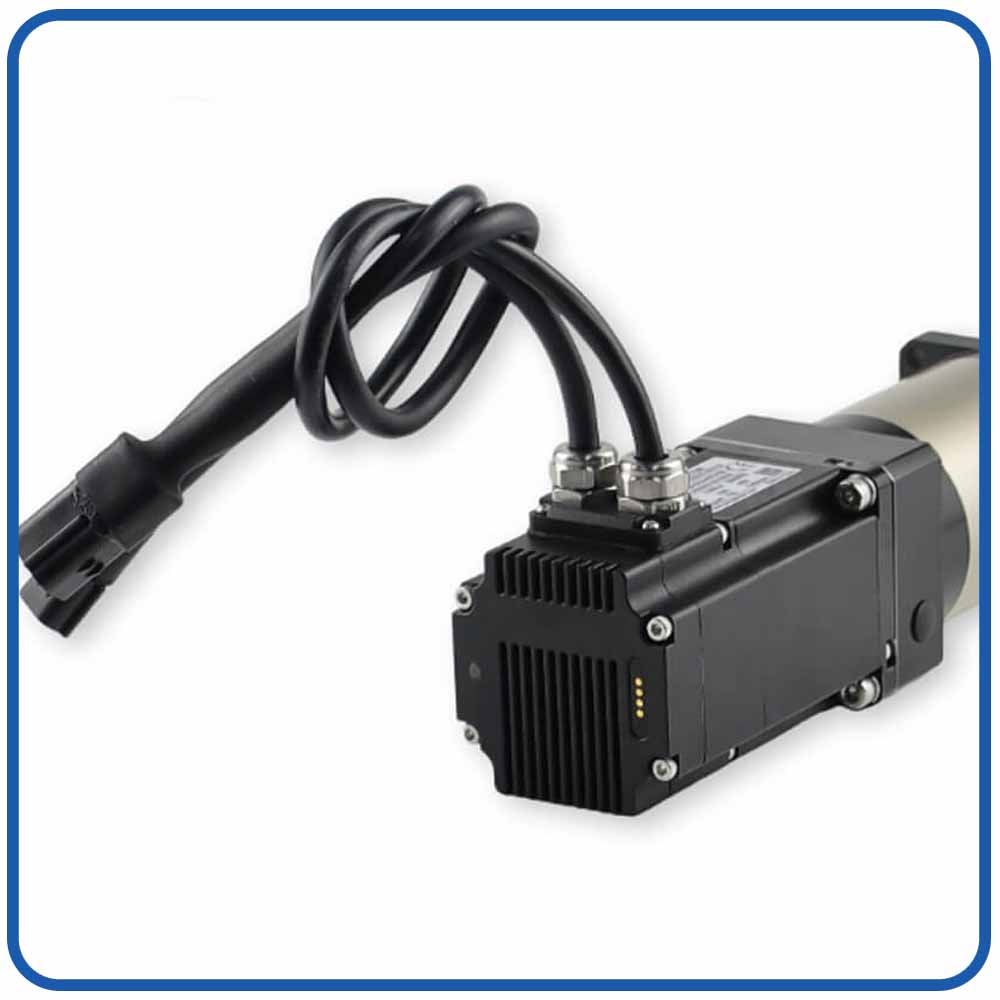
Integrated servo motors should therefore be selected with an appropriate IP protection rating.
For example:
IP54 may be suitable for certain protected installation environments.
IP65 provides protection against dust ingress and water jets.
IP67 provides dust-tight protection and temporary immersion protection under specified test conditions.
The required rating depends on the motor's mounting location and exposure conditions.
It is also important to consider connector sealing, cable glands, shaft seals, and thermal management.
8.2 Vibration and Mechanical Shock Resistance
Tractors experience continuous vibration during field operations.
Servo motors installed on implement lifting mechanisms must withstand these mechanical conditions without losing mounting stability or electrical connection reliability.
A robust housing, suitable bearing arrangement, secure mounting structure, and vibration-resistant connectors can improve long-term reliability.
8.3 Thermal Management
Integrated servo motors contain both motor windings and electronic drive components.
During repeated lifting operations, motor current and internal temperature may increase.
Engineers should evaluate continuous torque, peak torque, duty cycle, ambient temperature, and heat dissipation.
For enclosed installations, additional thermal management may be necessary to maintain reliable operation.
9. Integrated Servo Motors vs. Conventional Hydraulic Implement Lifting
Hydraulic lifting systems remain the established solution for many heavy-duty tractor applications.
However, integrated servo motors provide an alternative approach for selected electric actuator-based lifting mechanisms.
The two technologies have different operating characteristics.
Comparison
Integrated Servo Motor System
Hydraulic Lifting System
Control method
Electronic closed-loop motion control
Hydraulic pressure and valve control
Position feedback
Encoder and optional external sensors
Position sensors or electronic hitch feedback
Motion programming
Programmable position, speed, and acceleration
Controlled through valves and hydraulic regulation
Installation
Compact integrated motor and drive options
Requires hydraulic cylinders, hoses, valves, and power supply
Maintenance
Electrical and mechanical inspection
Hydraulic fluid, seals, hoses, and valve maintenance
Best application
Electric actuators and precision auxiliary mechanisms
Heavy-duty lifting and high-force applications
System integration
Digital communication and motion control
Hydraulic and electronic control integration
An important engineering consideration is lifting force.
Heavy tractor implements can require substantial lifting capacity. Hydraulic cylinders are often more suitable for these high-force applications because of their established power density and mature mechanical design.
Integrated servo motors may be more appropriate for compact implements, electrically actuated lifting systems, adjustable mechanisms, and auxiliary positioning functions.
For larger loads, an integrated servo motor may require a suitable gearbox or mechanical transmission to achieve the necessary output torque.
Therefore, technology selection should be based on actual load requirements rather than assuming that electric servo systems can directly replace hydraulic lifting mechanisms.
10. Key Parameters for Selecting Integrated Servo Motors for Implement Lifting
Choosing an appropriate integrated servo motor requires a detailed evaluation of the mechanical and electrical requirements of the implement lifting system.
An undersized motor may struggle with starting torque or continuous loading, while an oversized motor can increase system cost, weight, and energy consumption.
The following parameters deserve particular attention.
10.1 Rated Torque and Peak Torque
Torque determines the motor's ability to overcome mechanical resistance.
For implement lifting applications, engineers should calculate the required torque based on:
Implement weight.
Mechanical linkage geometry.
Transmission ratio.
Friction and mechanical resistance.
Acceleration requirements.
Dynamic loading during field operation.
Peak torque is important during initial movement and sudden load changes.
Rated torque must be sufficient for the expected continuous operating conditions.
10.2 Motor Speed
Motor speed affects lifting time and overall operational efficiency.
A higher motor speed does not necessarily produce faster implement movement because the transmission ratio and actuator characteristics also determine the final output speed.
Engineers should calculate the required lifting speed according to the desired movement distance and cycle time.
10.3 Gearbox Selection
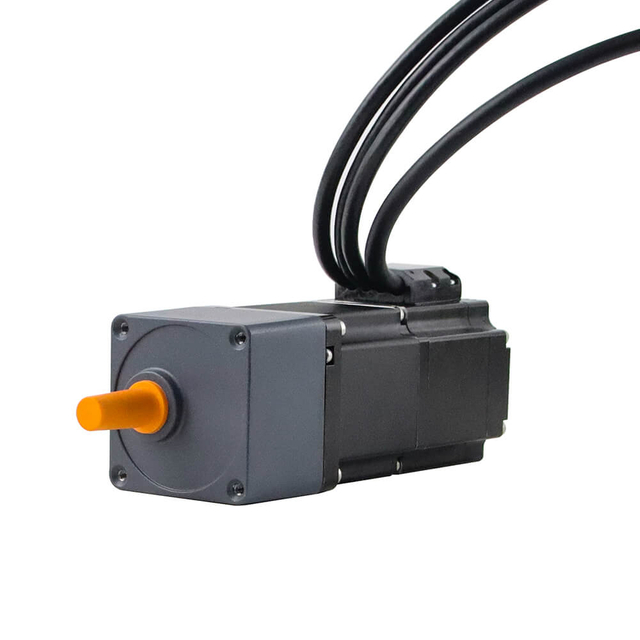
A gearbox can increase output torque while reducing rotational speed.
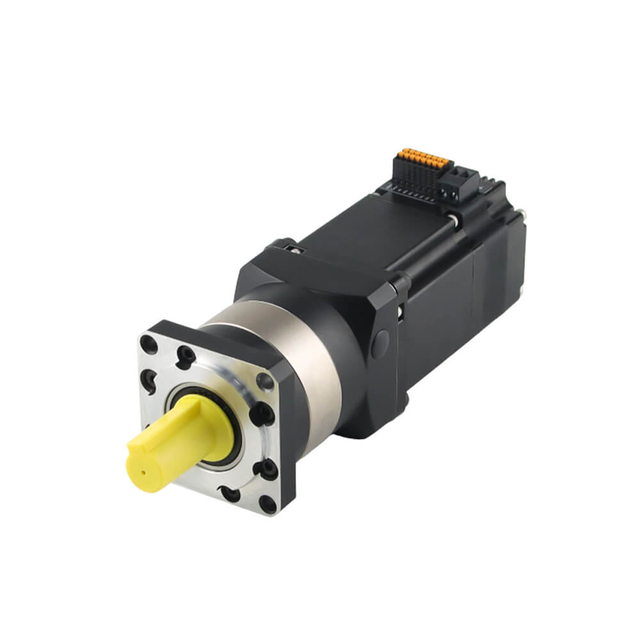
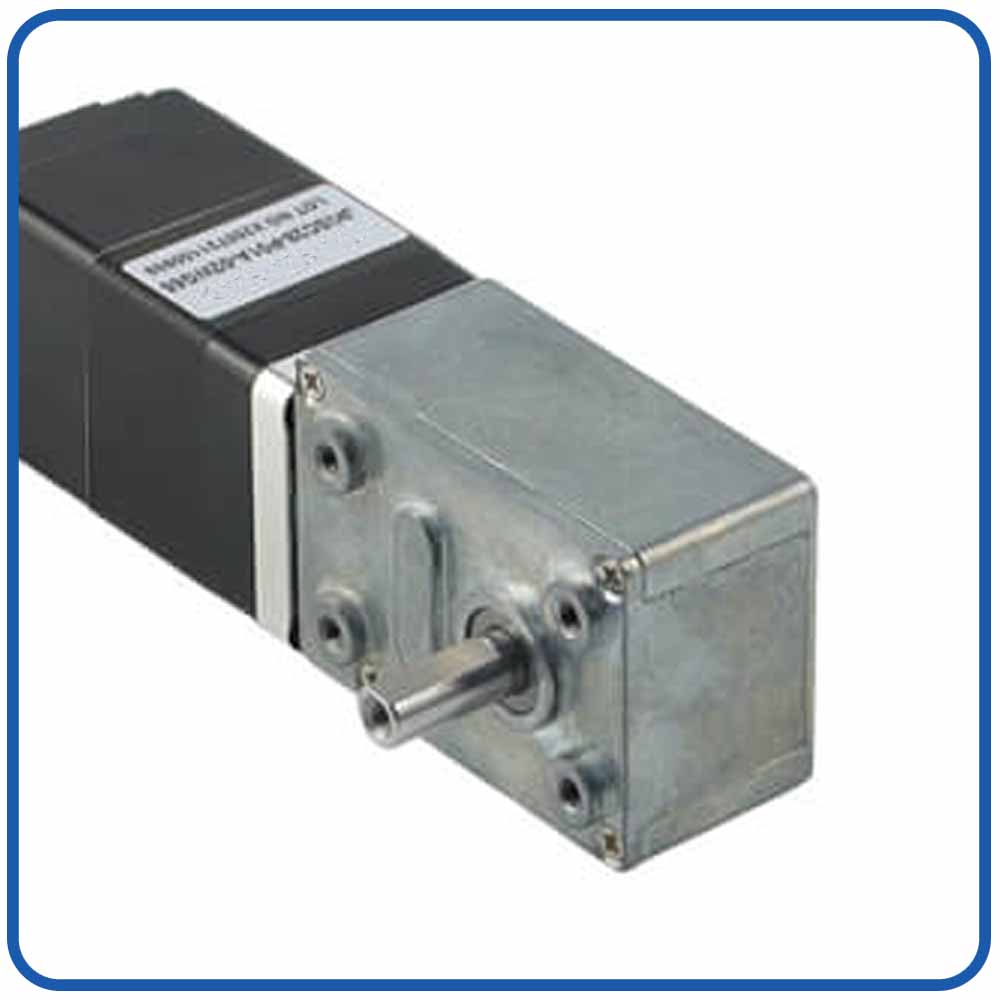
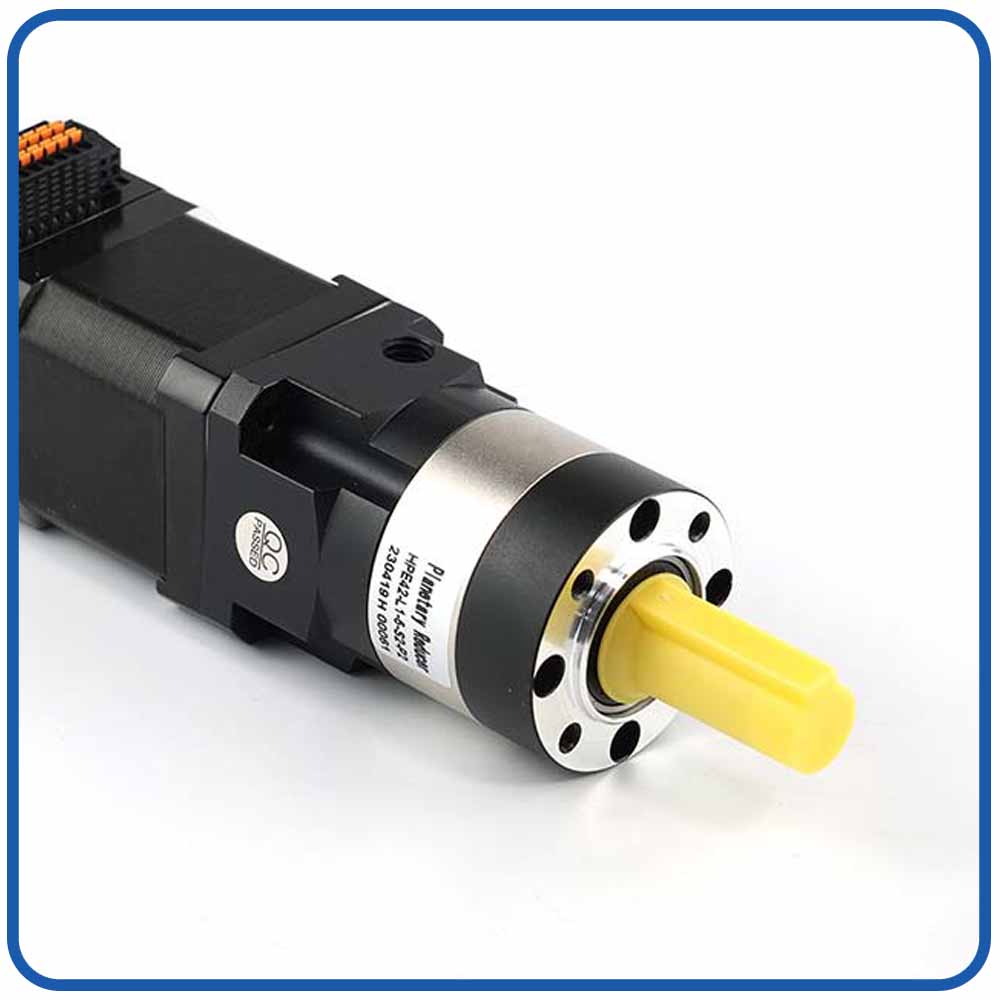
Common options include planetary gearboxes and worm gearboxes.
Planetary gearboxes offer high torque density and good transmission efficiency, making them suitable for many compact servo applications.
Worm gearboxes can provide high reduction ratios and compact right-angle transmission arrangements. However, their efficiency and thermal performance should be evaluated carefully.
The final gearbox selection should consider output torque, reduction ratio, backlash, efficiency, and mechanical holding requirements.
Importantly, a gearbox should not automatically be treated as a fail-safe holding device. Heavy implements may require a mechanical brake, locking mechanism, or independent load-support system to prevent unintended movement when power is removed.
10.4 Encoder Resolution
Encoder resolution affects the feedback precision available to the servo control system.
Higher resolution can improve motor position measurement, but actual implement positioning accuracy also depends on the transmission, actuator stiffness, mechanical backlash, and sensor arrangement.
For applications requiring accurate implement height control, external position feedback may be necessary.
10.5 Communication Protocol
The motor's communication interface must match the tractor's control architecture.
CANopen and Modbus RTU are possible options, while other systems may use pulse-based control or proprietary communication interfaces.
Engineers should verify command structure, feedback data, communication speed, fault reporting, and integration requirements.
10.6 Environmental Protection
The selected motor should be suitable for the actual installation environment.
Important specifications include:
IP protection rating.
Operating temperature range.
Vibration resistance.
Shock resistance.
Connector protection.
Thermal performance.
Corrosion resistance.
These specifications help ensure stable operation throughout the agricultural working cycle.
11. Integrating Integrated Servo Motors with Autonomous Tractor Control Systems
Integrating integrated servo motors with autonomous tractor control systems requires seamless coordination between motion control hardware, electronic control units (ECUs), communication networks, and position feedback devices. In autonomous agricultural machinery, implement lifting is no longer an isolated mechanical operation. It must work in coordination with navigation systems, field sensors, tractor movement, and implement management software to ensure accurate and reliable agricultural operations.
Integrated servo motors simplify this integration by combining the motor, servo drive, and feedback components into a compact unit. This reduces the need for separate drive installations and allows agricultural equipment manufacturers to develop more compact and centralized motion control architectures.
11.1 Establishing Communication Between Integrated Servo Motors and Tractor ECUs
The electronic control unit (ECU) serves as the central controller responsible for coordinating autonomous tractor operations. It processes information from navigation systems, sensors, and implement controllers before transmitting movement commands to the integrated servo motor.
Depending on the motor configuration, communication can be established through different interfaces, including:
CANopen: Supports real-time communication between servo drives and distributed control systems.
Modbus RTU: Provides serial communication for transmitting motion commands and retrieving operating information.
RS485: Offers a reliable physical communication interface for industrial and agricultural equipment.
Pulse and Direction: Allows the tractor controller to issue position and speed commands through pulse signals.
Analog Control: Supports speed or torque references through compatible analog signals.
For autonomous tractor applications, CAN-based communication is particularly useful when multiple electronic devices need to exchange operating information. However, the selected protocol must be compatible with the tractor's existing electronic architecture.
For example, when an autonomous tractor approaches the end of a planting row, the ECU can send a predefined lifting command to the integrated servo drive. The servo motor then activates the lifting mechanism and returns relevant feedback, allowing the control system to monitor the movement process.
11.2 Coordinating Servo Motor Position Feedback with Agricultural Sensors
Accurate implement positioning requires more than simply sending movement commands to the motor. The control system must also determine whether the implement has reached its intended position.
Integrated servo motors typically use encoders to monitor motor shaft rotation and provide position feedback to the servo drive. This information enables closed-loop control and helps maintain repeatable motor positioning.
However, motor position does not always represent the actual position of the agricultural implement. Mechanical backlash, linkage deformation, transmission flexibility, and external loads can introduce positioning differences.
To improve overall accuracy, manufacturers can integrate additional sensors, such as:
Linear position sensors: Measure the actual displacement of an electric lifting actuator.
Angular position sensors: Monitor the rotation angle of implement lifting linkages.
Height sensors: Detect the distance between the implement and the ground.
Load sensors: Monitor mechanical loading and help identify overload conditions.
Ground-following sensors: Provide information for adjusting implement positioning according to field conditions.
By combining motor encoder feedback with external sensor data, the tractor controller can obtain a more comprehensive understanding of implement movement.
For example, when a precision seeder encounters uneven terrain, ground-following sensors can provide information about changing ground conditions. The control system can then adjust the electric actuator position to help maintain the required operating height.
11.3 Integrating Servo Motors with Autonomous Navigation Systems
Autonomous tractors rely on navigation technologies such as GNSS, RTK positioning, inertial measurement units (IMUs), and machine vision to determine their location and movement within agricultural fields.
These technologies can also support automated implement lifting decisions.
For example, an autonomous tractor equipped with RTK-GNSS can identify predefined field boundaries and headland zones. When the tractor approaches a turning area, its control software can initiate a programmed sequence:
Detect the approaching headland boundary.
Send a lifting command to the implement control unit.
Activate the integrated servo motor to raise the implement.
Verify the lifting position through feedback sensors.
Coordinate implement positioning with tractor steering and turning.
Lower the implement after the tractor aligns with the next working row.
This coordinated process helps reduce unnecessary soil disturbance and supports more consistent field operations.
It is important to note that navigation data determines when a lifting operation should occur, while the servo control system manages the actual motor movement. Combining these functions creates a more intelligent automated agricultural control architecture.
11.4 Implementing Real-Time Motion Control and Parameter Adjustment
Different agricultural implements have different lifting requirements. A precision seeder may require controlled engagement with the soil, while a cultivator may need different movement speeds depending on its mechanical structure and operating conditions.
Integrated servo motors allow manufacturers to configure motion parameters according to specific application requirements.
Important adjustable parameters include:
Position: Defines the target lifting or lowering position.
Speed: Determines how quickly the implement moves.
Acceleration and deceleration: Controls the smoothness of movement.
Operating current: Provides useful information for monitoring motor loading.
Position tolerance: Defines the acceptable difference between target and actual motor position.
For example, during implement lowering, the servo drive can use a controlled deceleration profile to reduce mechanical impact when approaching the working position.
This is particularly valuable for agricultural equipment that performs frequent lifting and lowering cycles throughout the working day.
11.5 Establishing Safety Protection and Fault Monitoring
Agricultural implement lifting mechanisms may operate under substantial mechanical loads and continuously changing environmental conditions. Therefore, safety protection must be incorporated into the integrated servo motor control architecture.
Manufacturers should consider implementing several protection functions:
Overload Protection: Monitors motor current or torque to detect excessive mechanical loads and prevent potential motor or transmission damage.
Position Limit Protection: Uses mechanical limit switches or electronic position limits to prevent the lifting mechanism from moving beyond its permitted range.
Overtemperature Protection: Monitors motor and drive temperatures to prevent overheating during continuous operation.
Communication Fault Detection: Identifies communication interruptions between the integrated servo motor and the tractor controller, allowing the system to execute predefined fault-handling procedures.
Emergency Stop Integration: Provides a means of stopping hazardous movement when an abnormal operating condition occurs.
For heavy agricultural implements, additional mechanical brakes, locking devices, or load-support structures may be necessary to prevent unintended movement when electrical power is interrupted. Software-based servo positioning alone should not be considered a substitute for mechanical load-holding protection.
11.6 Testing Communication and System Compatibility Before Deployment
Before integrating integrated servo motors into autonomous tractor production systems, manufacturers should conduct comprehensive compatibility and performance testing.
The testing process should cover both individual motor performance and communication between the motor and the tractor's electronic control architecture.
Important validation procedures include:
Communication testing: Verify that the servo motor can reliably receive commands and transmit feedback through the selected communication interface.
Positioning accuracy testing: Compare commanded motor positions with actual actuator or implement positions.
Load testing: Evaluate motor torque and operating stability under different mechanical loads.
Response time testing: Measure how quickly the motor responds to lifting and lowering commands.
Continuous operation testing: Run repeated movement cycles to evaluate temperature rise and long-term stability.
Fault simulation: Test the system under communication interruptions, encoder failures, overload conditions, and abnormal operating situations.
Environmental testing: Evaluate resistance to agricultural dust, moisture, vibration, and temperature fluctuations.
These tests help identify potential integration problems before mass production and improve the reliability of the complete implement control system.
In summary, integrating integrated servo motors with autonomous tractor control systems involves coordinating electronic communication, closed-loop motion control, navigation data, external sensor feedback, and safety protection. With suitable CANopen, Modbus RTU, RS485, or pulse-based control interfaces, integrated servo motors can provide a flexible solution for automated implement positioning and electrically actuated lifting mechanisms. This integration helps agricultural machinery manufacturers develop more intelligent, precise, and reliable autonomous farming equipment.
12. Practical Applications of Integrated Servo Motors in Autonomous Agricultural Machinery
Integrated servo motors can support different types of agricultural equipment where controlled electric movement is required.
12.1 Autonomous Seeder Lifting Mechanisms
Precision seeders require accurate positioning to ensure that planting mechanisms engage and disengage at appropriate times.
Integrated servo motors can drive electric lifting actuators to raise the seeder during headland turns and lower it when entering the next planting row.
This supports automated planting sequences and more consistent implement handling.
12.2 Automated Cultivator Positioning
Cultivators require suitable working positions to maintain the intended soil engagement.
Servo-driven actuators can support adjustable positioning mechanisms, allowing autonomous equipment to move between predefined working and transport positions.
When combined with external sensors, the system can also support more advanced positioning strategies.
12.3 Autonomous Fertilizer Spreader Control
Fertilizer spreaders need coordinated implement positioning and material delivery.
An integrated servo motor can operate an electric lifting or positioning mechanism while the fertilizer controller manages application timing and metering.
This allows the autonomous tractor to coordinate different equipment functions during field operations.
12.4 Robotic Agricultural Equipment
Compact autonomous agricultural robots often have strict limitations on installation space and electrical power.
Integrated servo motors provide a compact motion control solution for adjustable attachments, lifting mechanisms, and auxiliary positioning systems.
Their integrated construction can simplify the design of smaller agricultural machines.
13. Future Development of Integrated Servo Motor Technology in Autonomous Tractors
As agricultural machinery continues to develop, electric motion control will become increasingly important in precision farming.
Autonomous tractors require coordinated operation across multiple mechanical and electronic subsystems.
Integrated servo motors are well positioned to support this development through improved integration, intelligent feedback, and programmable motion control.
Several technical trends are particularly relevant.
13.1 More Intelligent Motion Control
Future integrated servo motors are expected to offer increasingly sophisticated control and diagnostic functions.
These may include improved fault monitoring, motion profiling, overload detection, and operating condition feedback.
Such capabilities can help tractor manufacturers simplify equipment control architectures.
13.2 Greater Electrification of Agricultural Implements
Agricultural machinery is gradually adopting more electrically controlled mechanisms.
Electric actuators can be used for adjustable tool positions, metering mechanisms, auxiliary lifting systems, and other precision movement applications.
Integrated servo motors provide a practical option for these systems.
13.3 Improved Communication and System Coordination
Communication between autonomous tractors and agricultural implements is becoming increasingly important.
Standardized interfaces and better diagnostic capabilities can improve interoperability between different control components.
Integrated servo motors with suitable communication interfaces can participate in these distributed control architectures.
13.4 Predictive Maintenance
Motor current, temperature, position error, and operating cycle data can provide useful information about equipment condition.
When these parameters are monitored over time, the tractor control system may identify abnormal operating patterns before they develop into serious mechanical problems.
This creates opportunities for condition-based maintenance and improved equipment availability.
14. Testing Integrated Servo Motors Before Mass Production
Before deploying integrated servo motors in autonomous tractor implement lifting systems, manufacturers should conduct systematic testing under representative operating conditions.
Laboratory testing alone may not fully reproduce the mechanical loads, vibration, temperature fluctuations, and environmental exposure experienced during agricultural operations.
A comprehensive validation process should include the following tests.
14.1 Load Testing
Test the motor under different mechanical loads to verify rated torque, peak torque, acceleration, and continuous operating performance.
The test should cover expected working loads and appropriate safety margins.
14.2 Repeated Lifting Cycle Testing
Run repeated lifting and lowering cycles to evaluate motor temperature, positioning consistency, and mechanical transmission durability.
The test cycle should reflect the expected operating frequency of the agricultural application.
14.3 Positioning Accuracy Testing
Compare commanded motor positions with actual actuator or implement positions.
Where necessary, use external measurement sensors to identify errors caused by mechanical backlash, linkage deformation, or transmission compliance.
14.4 Environmental Testing
Evaluate the motor under relevant dust, moisture, vibration, temperature, and mechanical shock conditions.
Testing should reflect the intended mounting location and operating environment.
14.5 Communication and Fault Testing
Verify communication reliability between the integrated servo motor and the tractor controller.
Simulate communication interruption, encoder faults, overload conditions, and other abnormal situations to confirm that the system responds safely.
These tests help manufacturers identify potential design issues before beginning mass production.
Conclusion: Integrated Servo Motors Enable More Precise Implement Lifting in Autonomous Tractors
Integrated servo motors improve implement lifting control in autonomous tractors by combining motor drive electronics, feedback components, and programmable motion control into a compact solution. They can support accurate positioning, repeatable lifting and lowering cycles, adjustable movement profiles, and coordinated operation with autonomous tractor control systems.
Their advantages are particularly valuable in electrically actuated implement mechanisms, compact agricultural equipment, auxiliary positioning systems, and applications requiring frequent automated movement.
For precision seeders, cultivators, fertilizer spreaders, and other agricultural attachments, integrated servo motors can help simplify motion control architecture and improve operational consistency.
However, successful implementation requires careful consideration of torque, lifting force, transmission design, encoder feedback, communication compatibility, environmental protection, and mechanical safety. Heavy-duty hydraulic lifting systems may remain the more appropriate choice for applications involving very high lifting forces.
As agricultural machinery continues moving toward intelligent electrification and autonomous operation, integrated servo motors will play an increasingly important role in the development of precise, reliable, and efficient agricultural motion control systems. Choosing the right motor configuration and integrating it with suitable sensors and control software can help agricultural equipment manufacturers develop smarter next-generation autonomous tractors.
FAQ:
FAQ 1: How do integrated servo motors improve implement lifting control in autonomous tractors?
Integrated servo motors improve implement lifting control by combining the motor, servo drive, and encoder feedback into a compact motion control unit. They provide programmable position, speed, and torque control, enabling autonomous tractors to raise and lower agricultural implements more accurately. When connected to the tractor's electronic control system, they support automated lifting sequences, repeatable positioning, and coordinated headland operations.
FAQ 2: Can integrated servo motors replace hydraulic systems in tractor implement lifting applications?
Integrated servo motors can replace hydraulic systems in selected electrically actuated implement lifting applications, particularly compact mechanisms and auxiliary positioning systems. However, hydraulic systems generally remain suitable for heavy-duty implements requiring substantial lifting force. The choice depends on implement weight, required torque, actuator design, duty cycle, power availability, and mechanical transmission requirements.
FAQ 3: How do integrated servo motors achieve precise implement positioning?
Integrated servo motors use encoder feedback and closed-loop control to monitor motor rotation and compare the actual position with the commanded position. The servo drive automatically adjusts motor output to minimize positioning errors. When combined with external linear or angular position sensors, the system can also monitor actual implement displacement and improve overall lifting accuracy.
FAQ 4: What communication protocols are suitable for integrated servo motors in autonomous tractors?
Common communication options include CANopen, Modbus RTU, RS485, and pulse-and-direction control. CANopen is particularly useful for distributed motion control systems requiring communication between the tractor ECU, implement controller, and servo drive. The appropriate protocol depends on the tractor's electronic architecture, communication requirements, feedback data, and system compatibility.
FAQ 5: How do integrated servo motors support automatic headland turning?
Integrated servo motors support automatic headland turning by executing programmed implement lifting and lowering commands. When the autonomous tractor approaches a field boundary, the navigation system triggers the implement control unit to raise the attachment. After completing the turn and aligning with the next working row, the controller commands the servo motor to lower the implement to its predefined working position.
FAQ 6: What types of agricultural implements can use integrated servo motors for lifting control?
Integrated servo motors can be used in electrically actuated lifting and positioning mechanisms for precision seeders, cultivators, fertilizer spreaders, sprayers, and compact agricultural robots. They are particularly suitable for applications requiring programmable positioning, frequent movement cycles, and compact motion control integration. The required motor torque and mechanical transmission must be evaluated for each implement.
FAQ 7: What factors should be considered when selecting integrated servo motors for tractor implement lifting?
Important selection factors include rated torque, peak torque, motor speed, gearbox ratio, encoder resolution, positioning accuracy, communication protocol, operating voltage, duty cycle, and environmental protection rating. Engineers should also evaluate implement weight, lifting force, transmission efficiency, mechanical backlash, vibration resistance, and thermal performance to ensure reliable operation.
FAQ 8: How do integrated servo motors communicate with autonomous tractor control systems?
Integrated servo motors communicate with autonomous tractor control systems through compatible interfaces such as CANopen, Modbus RTU, RS485, or pulse-and-direction signals. The tractor ECU sends motion commands to the servo drive, while the motor system can return operating information such as position, speed, current, temperature, and fault status, depending on the model.
FAQ 9: Are integrated servo motors suitable for outdoor agricultural environments?
Yes, integrated servo motors can be designed for outdoor agricultural applications when the selected model provides suitable environmental protection. Engineers should consider IP ratings, dust and moisture resistance, operating temperature, vibration resistance, connector sealing, and thermal management. For demanding agricultural environments, an appropriate enclosure and installation design are essential for long-term reliability.
FAQ 10: What tests should manufacturers perform before integrating servo motors into autonomous tractors?
Manufacturers should perform load testing, repeated lifting cycle testing, positioning accuracy testing, thermal testing, environmental testing, and communication compatibility testing. They should also evaluate overload protection, encoder fault detection, emergency stop integration, and mechanical load-holding performance. These tests help verify that the integrated servo motor can meet the operational and safety requirements of the agricultural implement.

 English
 العربية
 Français
 Русский
 Español
 Português
 Deutsch
 italiano
 日本語
 한국어
 Nederlands
 Tiếng Việt
 ไทย
 Polski
 Türkçe
 ພາສາລາວ
 ភាសាខ្មែរ
 Bahasa Melayu
 ဗမာစာ
 Filipino
 Bahasa Indonesia
 magyar
 Română
 Čeština
 Монгол
 қазақ
 Српски
 हिन्दी
 فارسی
 Slovenčina
 Slovenščina
 Norsk
 Svenska
 українська
 Ελληνικά
 Suomi
 Հայերեն
 עברית
 Latine
 Dansk
 Shqip
 বাংলা
 Hrvatski
 Afrikaans
 Gaeilge
 Eesti keel
 Oʻzbekcha
 latviešu
 Azərbaycan dili
 Български
 Català