Warehouse automation is rapidly moving toward more compact, intelligent, and autonomous material-handling systems. Automated Guided Vehicles (AGVs) and Autonomous Mobile Robots (AMRs) are now widely used for pallet transportation, goods-to-person operations, order fulfillment, sorting, picking, and internal logistics. At the center of these mobile platforms is a highly coordinated motion system that must deliver accurate positioning, reliable speed regulation, sufficient torque, and efficient communication.
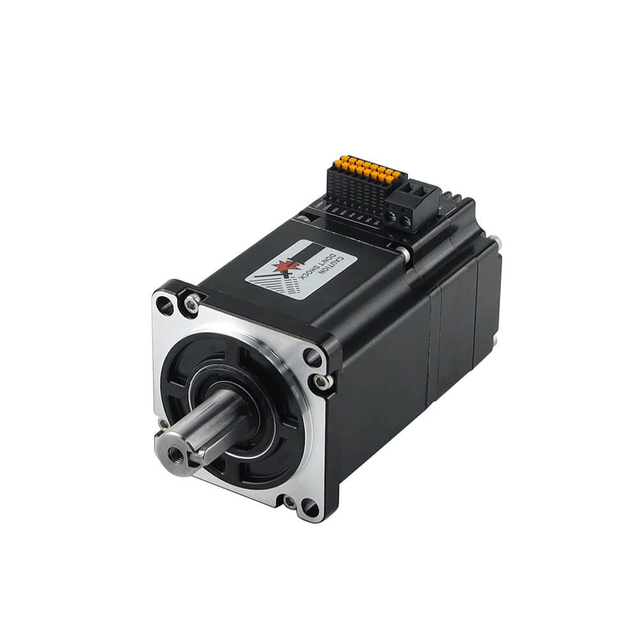
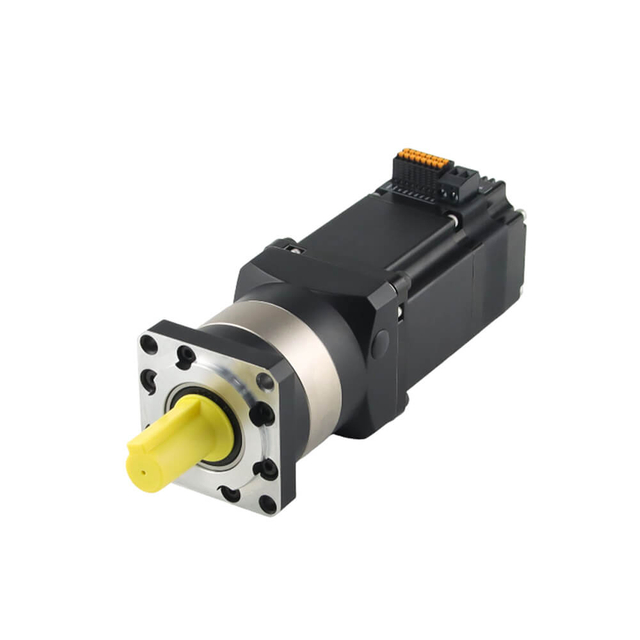
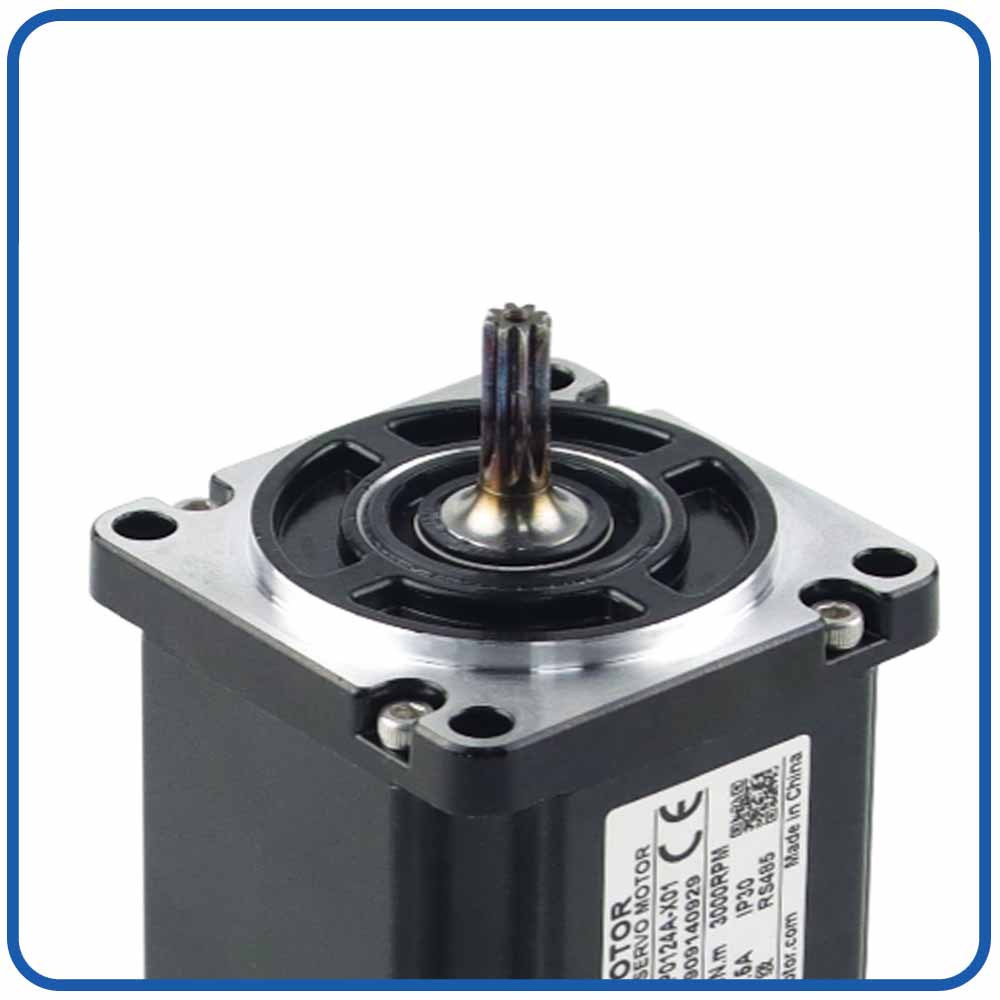
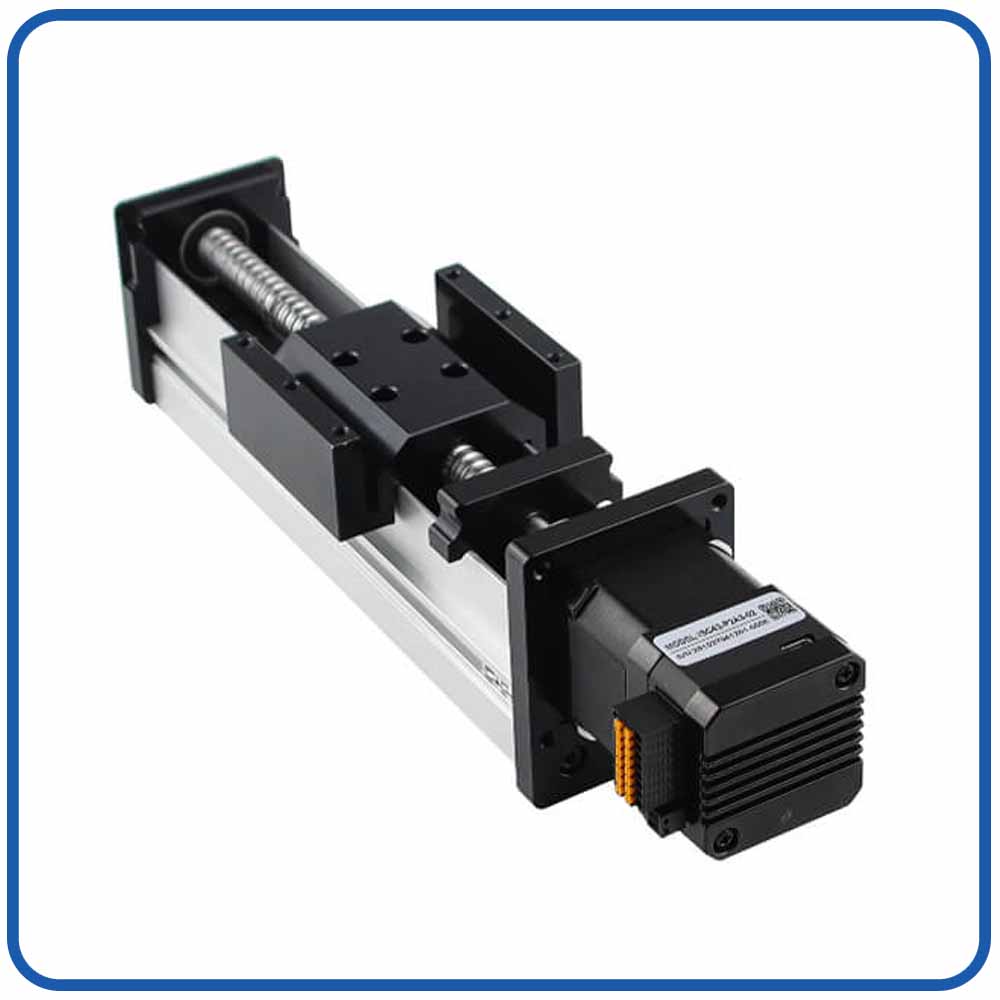
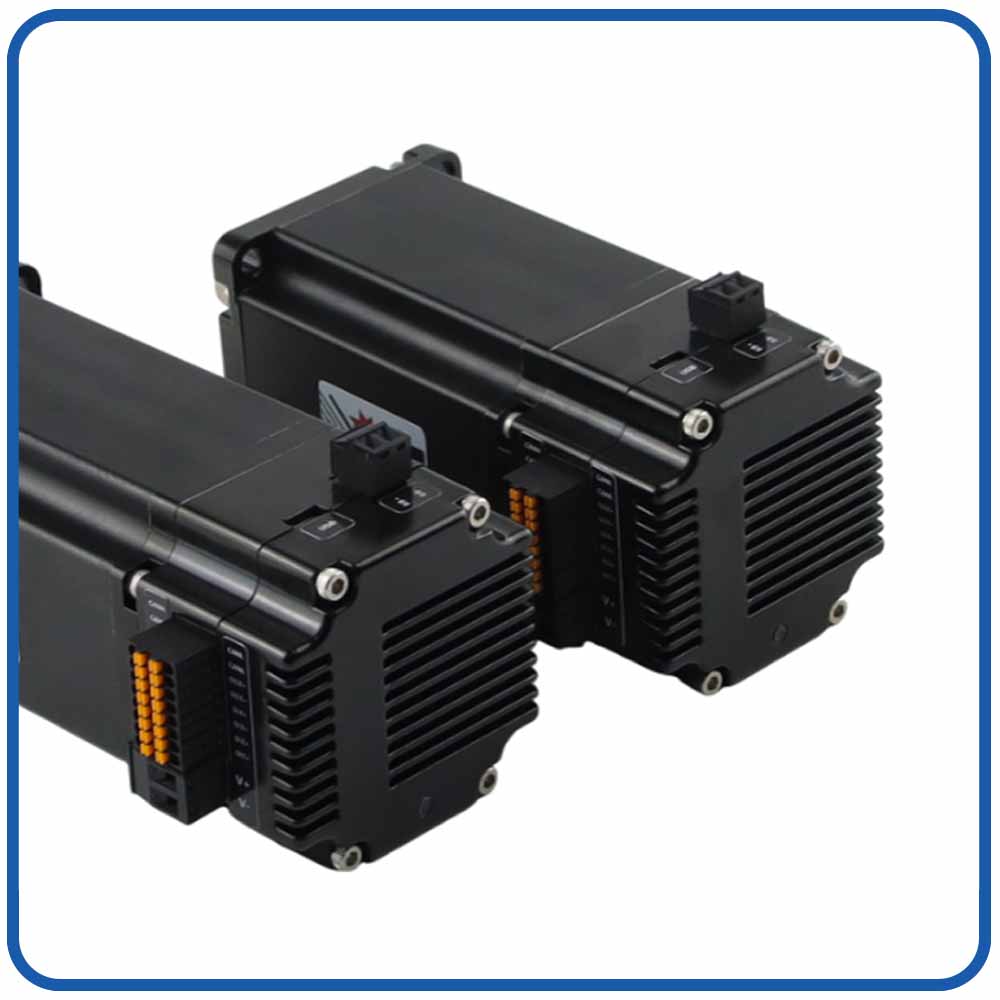
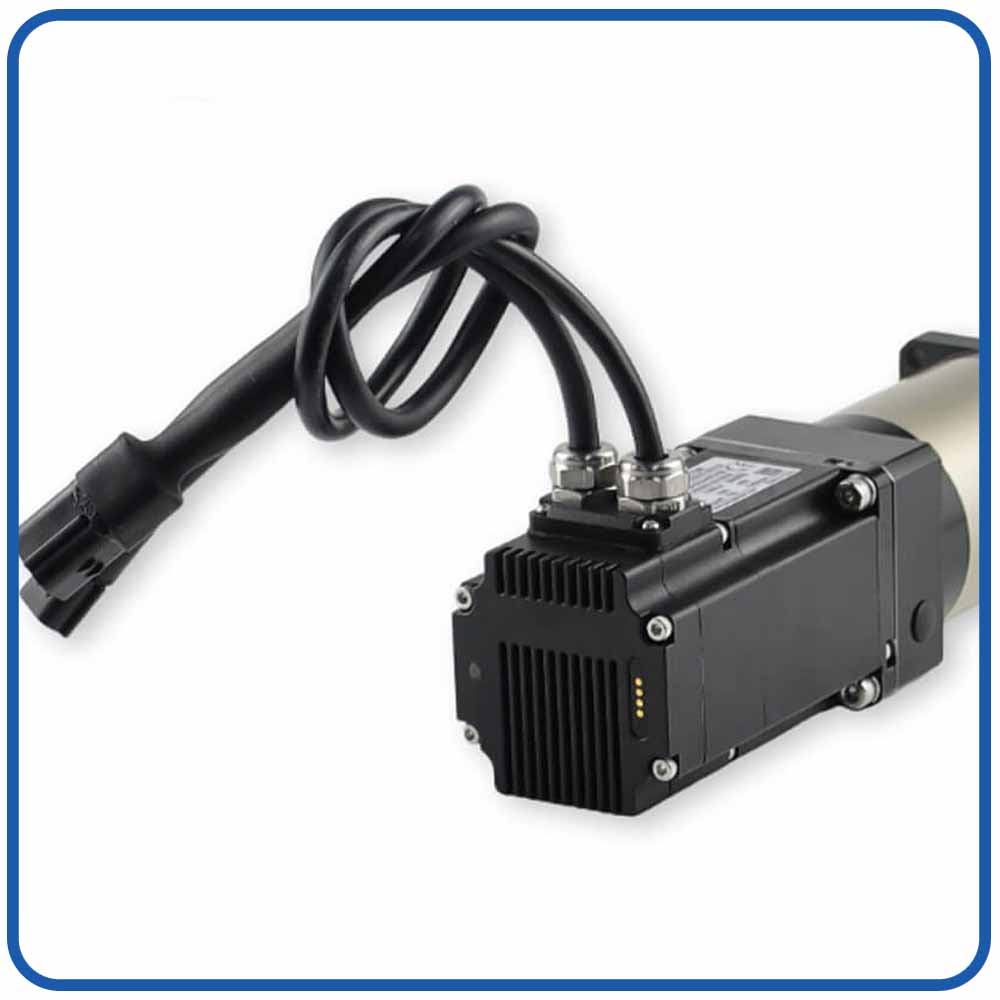
An integrated DC servo motor for warehouse AGVs and AMRs combines the motor, servo drive, feedback system, and control electronics into a compact motorized unit. Instead of using a conventional architecture with a separate DC motor, external servo drive, encoder, and multiple cables, an integrated servo motor places critical motion-control components directly inside or alongside the motor assembly.
This architecture can significantly simplify the mechanical and electrical design of AGVs and AMRs while providing the closed-loop motion control required for autonomous warehouse transportation.
What Is an Integrated DC Servo Motor?
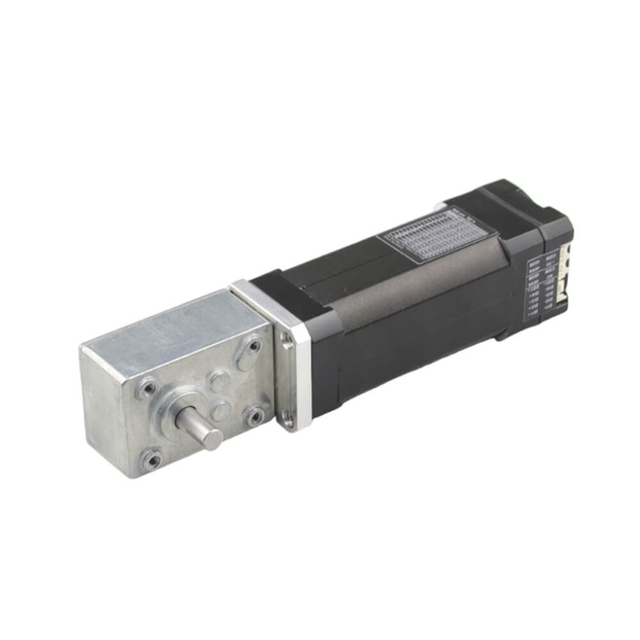
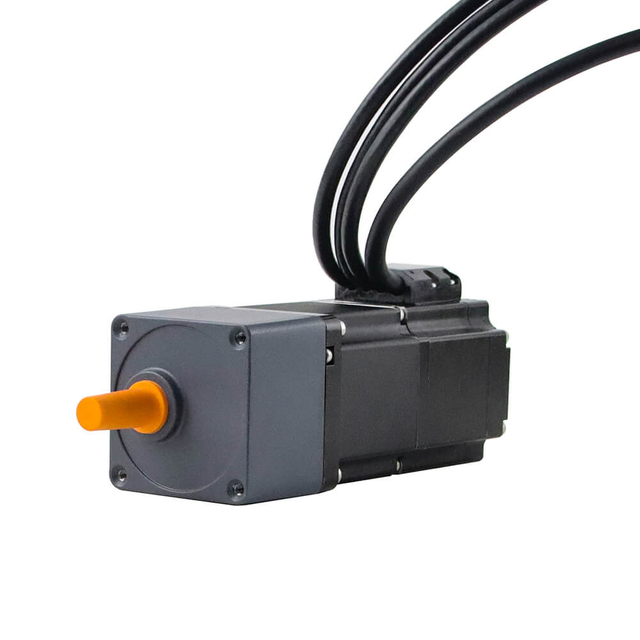
An integrated DC servo motor is a closed-loop motor system that combines a DC motor with an integrated servo controller and position or speed feedback device. Depending on the design, the integrated unit can also include a gearbox, encoder, communication interface, current sensing, protection circuits, and other control electronics.
A conventional servo system generally consists of:
DC or BLDC servo motor
External servo drive
Encoder or Hall feedback device
Motion controller
Power wiring
Encoder wiring
Communication wiring
An integrated DC servo motor consolidates many of these components into one compact solution.
For warehouse AGVs and AMRs, this is particularly valuable because available installation space is limited. The motor can be installed directly at the wheel or drivetrain, reducing the amount of external hardware required.
The basic closed-loop operating principle is straightforward. The controller receives a motion command, the motor produces torque, the feedback device measures actual shaft movement, and the integrated drive continuously adjusts motor output to reduce the difference between commanded and actual motion.
This enables precise speed control, position control, acceleration control, and torque management.
Why Are Integrated DC Servo Motors Suitable for AGVs and AMRs?
Integrated DC servo motors are well suited to AGVs (Automated Guided Vehicles) and AMRs (Autonomous Mobile Robots) because they combine motor power, feedback, and servo control in a compact unit. This design helps mobile robot manufacturers achieve precise motion while reducing system complexity.
Compact and Space-Saving Design
AGVs and AMRs have limited internal space because batteries, controllers, sensors, safety devices, and communication modules must also fit inside the chassis. An integrated DC servo motor combines the motor and servo drive into one unit, reducing the need for separate drive equipment.
This compact architecture makes it easier to design smaller and more flexible mobile robots.
Simplified Wiring
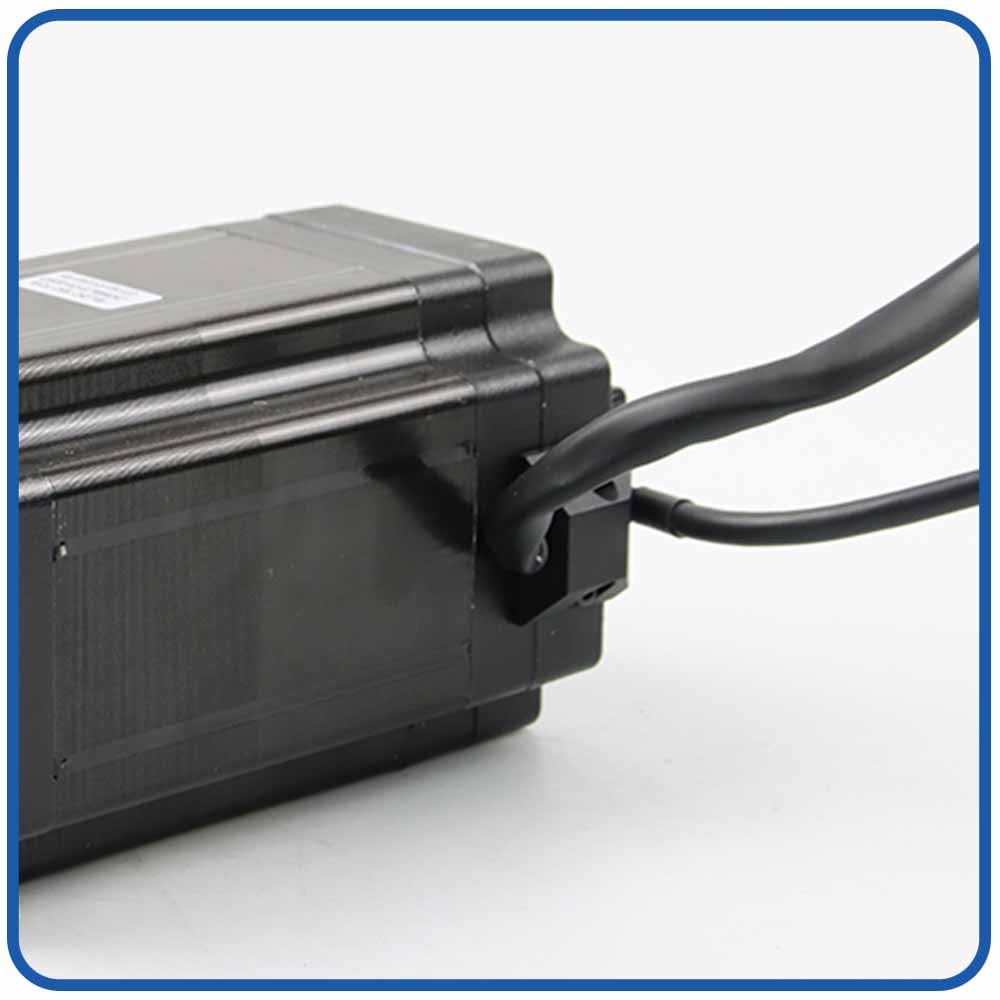
Conventional servo systems typically require separate motor, encoder, and control connections. Integrated servo motors can significantly reduce the number of external cables and components.
The result is:
Simpler electrical design
Fewer cables and connectors
Easier installation
Reduced wiring errors
More convenient maintenance
This is especially useful for mobile robots where cables must withstand continuous movement and vibration.
Precise Closed-Loop Motion Control
AGVs and AMRs require accurate control of speed, position, direction, and torque. Integrated DC servo motors use encoder feedback to continuously monitor motor movement and adjust output according to the commanded motion.
This closed-loop control helps robots achieve:
Accurate starting and stopping
Stable travel speeds
Precise positioning
Smooth acceleration and deceleration
Better wheel synchronization
Suitable for Distributed Drive Systems
Many AGVs and AMRs use differential-drive configurations with independently controlled left and right wheels. Integrated servo motors allow each wheel to have its own intelligent drive unit.
The robot controller can independently regulate each motor, enabling straight-line movement, turning, reversing, and in-place rotation with precise wheel control.
Industrial Communication Capability
Integrated DC servo motors can support communication interfaces such as CAN, CANopen, RS-485, and Modbus RTU, depending on the model.
These interfaces allow the vehicle controller to exchange motion commands, speed information, position feedback, and fault status with individual motor units, making them suitable for distributed AGV and AMR control architectures.
Efficient and Reliable Operation
Warehouse robots often operate continuously for extended periods. Integrated servo motors provide controlled acceleration, deceleration, and torque output, which can help improve drivetrain efficiency and reduce unnecessary mechanical stress.
Protection functions such as overcurrent, overtemperature, overvoltage, and encoder fault protection can further improve system reliability.
Final
Integrated DC servo motors are suitable for AGVs and AMRs because they provide a compact, low-wiring, closed-loop motion solution with precise control and flexible communication. Their combination of motor, servo electronics, and feedback makes them particularly effective for space-constrained and continuously operating warehouse mobile robots.
How Does an Integrated DC Servo Motor Work in an AGV or AMR?
A typical AGV or AMR motion system includes a high-level robot controller, communication network, motor controller, servo motor, encoder, and mechanical drivetrain.
The vehicle controller determines the desired movement based on navigation and control algorithms. For example, it may command the drive wheels to rotate at a specific speed.
The integrated servo motor receives the command through an appropriate control interface. The internal drive then controls the motor current and voltage according to the requested motion.
At the same time, the encoder continuously reports actual motor movement.
The control loop can be represented as:
Motion command → Integrated servo drive → DC servo motor → Gearbox/wheel → Vehicle movement → Encoder feedback → Servo controller
This feedback loop allows the system to continuously correct motion errors.
For example, if one drive wheel experiences additional resistance because of a floor transition or increased payload, the servo controller can compensate by adjusting motor output. This helps maintain more consistent motion than a basic open-loop motor system.
Key Features of Integrated DC Servo Motors for Warehouse AGVs
When selecting an integrated DC servo motor for an AGV or AMR, several technical characteristics deserve attention.
1. Encoder Feedback
Encoder resolution directly affects the system's ability to measure motor position and speed.
Higher-resolution feedback can support more precise motion control, although the appropriate encoder specification depends on wheel diameter, gearbox ratio, vehicle speed, required positioning accuracy, and controller performance.
2. Closed-Loop Speed Control
Warehouse robots frequently operate at different speeds depending on their operating state.
An AGV may accelerate from a stationary position, travel at cruising speed, slow down before an intersection, and stop at a workstation. A servo motor can regulate speed dynamically throughout these transitions.
3. Position Control
Position control is useful when the vehicle must move a specific distance or synchronize wheel rotation.
For differential-drive AMRs, accurate wheel position feedback can also improve turning and trajectory control.
4. Torque Control
The motor must generate sufficient torque to overcome:
Vehicle mass
Payload
Rolling resistance
Floor friction
Inclines
Acceleration requirements
Mechanical transmission losses
A servo system can regulate motor torque through current control, helping the vehicle respond dynamically to changing loads.
5. Communication Interfaces
Modern AGVs and AMRs often require digital communication between the robot controller and motor system.
Depending on the application, an integrated servo motor may support interfaces such as:
CAN
CANopen
RS-485
Modbus RTU
Ethernet-based protocols
Pulse and direction
Analog control
CANopen is particularly relevant to distributed motion-control architectures because it provides standardized communication and device profiles suitable for industrial automation.
Integrated DC Servo Motor vs. Conventional Motor and External Drive
The primary difference between the two architectures is how motion-control components are distributed.
Feature
Integrated DC Servo Motor
Conventional Motor + External Drive
Motor
Integrated
Separate
Servo drive
Built into motor assembly
External
Feedback
Integrated or directly connected
Separate wiring
Installation
Compact
Requires additional space
Wiring
Reduced
More extensive
Maintenance
Centralized motor unit
Multiple components
AGV integration
Highly suitable
More complex
Distributed control
Convenient
Requires additional architecture
The conventional architecture can still be appropriate for large industrial vehicles or systems where external drives are preferred. However, for compact warehouse robots, the integrated architecture can provide a more efficient packaging solution.
How Integrated DC Servo Motors Improve AGV and AMR Drivetrains
The drivetrain is one of the most important subsystems of an autonomous warehouse vehicle. It determines how efficiently electrical energy is converted into controlled mechanical movement.
An integrated servo motor can simplify the drivetrain by bringing the motor and control electronics closer together.
For example, a differential-drive AMR can use two independently controlled integrated servo motors. The left and right motors control the corresponding wheels.
If both motors rotate at the same speed, the vehicle travels approximately straight. If one motor rotates faster than the other, the vehicle changes direction.
This architecture allows the robot controller to independently command each wheel while receiving feedback from each motor.
The result is a highly controllable mobile platform capable of:
Forward movement
Reverse movement
Variable-speed operation
Differential steering
Controlled acceleration
Controlled deceleration
Precise stopping
In-place turning
Important Motor Selection Parameters for Warehouse AGVs
Selecting an integrated DC servo motor should begin with the actual vehicle requirements rather than motor power alone.
Rated Voltage
The motor voltage should be compatible with the AGV or AMR battery system. Common mobile-robot battery architectures may use different DC bus voltages depending on vehicle size and application.
Rated and Peak Torque
Rated torque determines continuous operating capability, while peak torque determines the motor's short-term ability to handle acceleration and demanding loads.
Rated Speed
Motor speed must be considered together with wheel diameter and gearbox ratio.
The relationship between vehicle speed and wheel rotational speed can be approximated by:
The gearbox ratio then determines the corresponding motor speed.
Gear Reduction
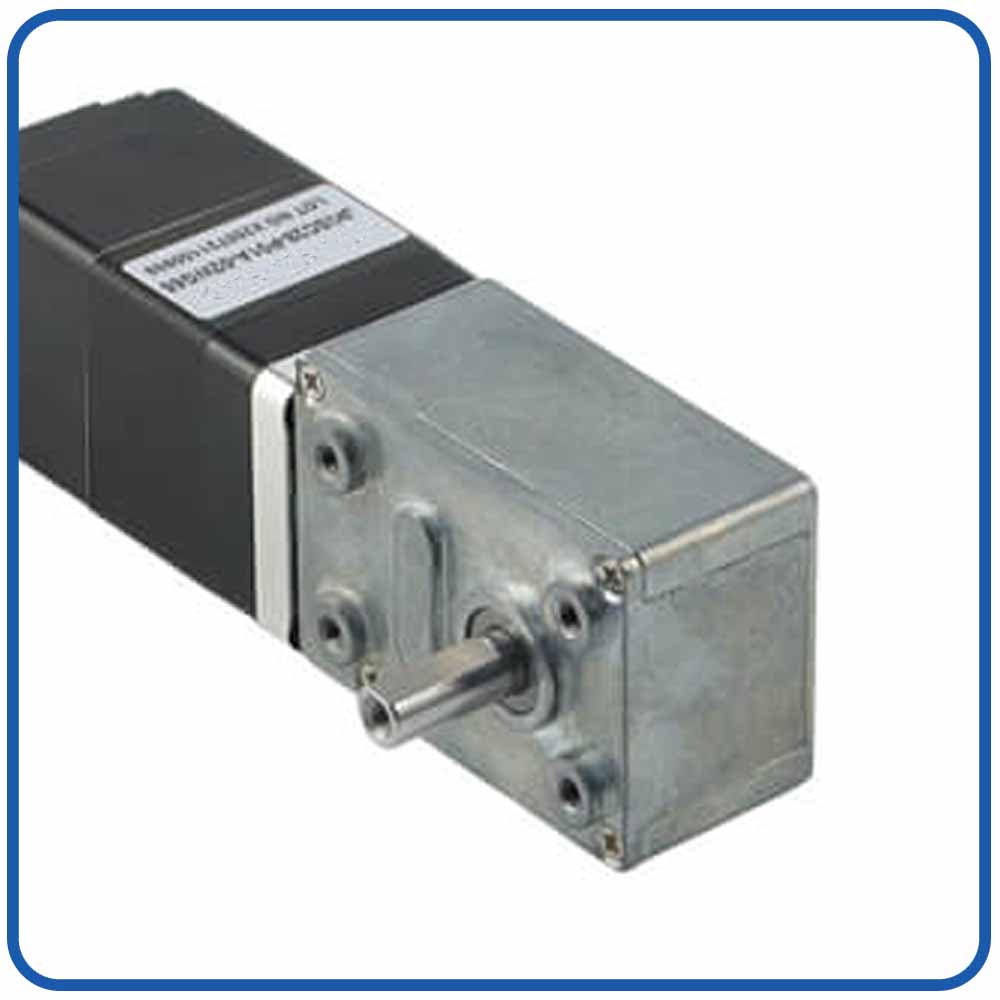
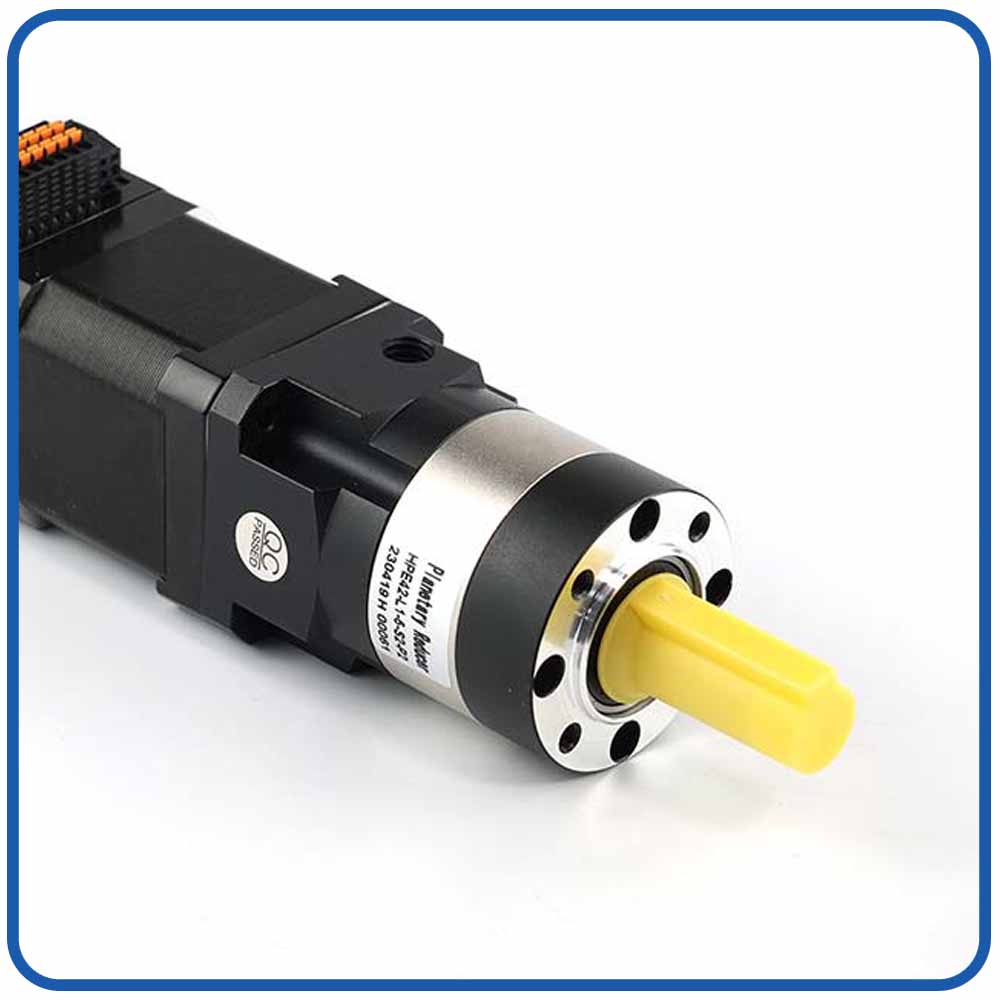
A gearbox can increase wheel torque while reducing output speed. For AGVs and AMRs, the appropriate reduction ratio depends on vehicle weight, wheel diameter, target speed, acceleration, and operating environment.
Encoder Resolution
Encoder selection should match the required positioning and velocity accuracy. Excessively low resolution can limit control performance, while unnecessarily high resolution can increase system complexity and processing requirements.
Peak Current
Peak current determines how much short-term torque the motor can produce. This is particularly important during acceleration, obstacle transitions, ramps, and high-load conditions.
Thermal Management and Continuous Operation
Warehouse robots can operate for many hours per day. Therefore, thermal performance is as important as peak output.
Motor temperature depends on factors including:
Load torque
Operating speed
Duty cycle
Ambient temperature
Motor efficiency
Installation conditions
Heat dissipation
An integrated servo motor should be evaluated according to both continuous and intermittent operating requirements.
A motor that provides high peak torque but cannot dissipate heat effectively during continuous operation may not be appropriate for intensive warehouse applications.
Protection and Reliability Requirements
AGVs and AMRs often operate in environments with dust, vibration, repeated impacts, and frequent acceleration and braking.
The integrated motor should therefore be evaluated for:
Overcurrent protection
Overvoltage protection
Undervoltage protection
Overtemperature protection
Short-circuit protection
Encoder fault detection
Communication fault handling
Appropriate ingress protection
The required IP rating depends on the operating environment. Warehouse applications generally have different environmental requirements from outdoor logistics vehicles, cold-storage robots, or industrial cleaning robots.
What Communication Protocol Should an AGV Servo Motor Use?
The appropriate communication protocol for an AGV servo motor depends on the required motion accuracy, network architecture, controller compatibility, and data transmission requirements. For most industrial AGVs and AMRs, CANopen, Modbus RTU, and industrial Ethernet are common choices.
CANopen for Real-Time Motion Control
CANopen is widely suited to AGV servo systems because it provides reliable communication and supports distributed motion control. It allows the central controller to send speed, position, and torque commands while receiving motor status, feedback, and fault information.
Key advantages include:
Real-time control capability
Reliable communication
Distributed motor control
Standardized device profiles
Suitable for multi-wheel AGV systems
For AGVs using independent servo motors on multiple wheels, CANopen can provide an effective communication architecture.
Modbus RTU for Simple Control Systems
Modbus RTU over RS-485 is another practical option for AGV servo motors. It uses a straightforward register-based communication structure and is relatively easy to integrate with industrial controllers.
It is suitable for applications requiring:
Speed commands
Start/stop control
Direction control
Parameter configuration
Motor status monitoring
Fault information
However, for more demanding synchronized motion applications, CANopen may provide more suitable motion-control functionality.
Industrial Ethernet for High-Performance AGVs
For advanced AGVs and AMRs requiring higher communication bandwidth and more complex coordination, industrial Ethernet protocols can be considered. These solutions can support faster data exchange between the robot controller, servo drives, sensors, and other automation devices.
They are particularly useful for larger or more sophisticated robotic platforms.
How to Choose the Right Protocol
When selecting an AGV servo communication protocol, we recommend considering:
Requirement
Suitable Protocol
Distributed motion control
CANopen
Simple register-based control
Modbus RTU
Higher bandwidth
Industrial Ethernet
Multi-motor coordination
CANopen / Industrial Ethernet
Easy PLC integration
Modbus RTU
For many warehouse AGVs and AMRs, CANopen is a strong choice for servo motion control, while Modbus RTU can be preferable for simpler systems. The final selection should match the AGV's controller, motor architecture, synchronization requirements, and communication performance.
Typical Applications
Integrated DC servo motors can be used across numerous warehouse automation platforms, including:
Warehouse AGVs
Autonomous mobile robots
Goods-to-person robots
Pallet transport vehicles
Autonomous forklifts
Tugger robots
Sorting robots
Warehouse delivery robots
Material-handling platforms
Automated carts
Mobile inspection robots
Industrial AMRs
They are especially attractive where compact dimensions, distributed control, precise speed regulation, and simplified wiring are important.
What Makes an Integrated DC Servo Motor Different from a Basic DC Gear Motor?
A DC gear motor generally provides mechanical rotation through a DC motor and gearbox. It may be controlled simply by changing voltage or PWM duty cycle.
An integrated DC servo motor adds a feedback and closed-loop control system.
This distinction is important for autonomous vehicles.
An AGV does not simply need its wheels to rotate. It needs them to rotate at the correct speed, direction, position, and torque according to the vehicle's navigation commands.
How to Choose an Integrated DC Servo Motor for an AGV or AMR
Choosing the right integrated DC servo motor for an AGV or AMR requires more than comparing rated power. The motor, gearbox, encoder, controller, and communication interface should match the vehicle's load, speed, wheel size, operating environment, and motion requirements.
1. Determine Vehicle Load and Payload
Start with the total vehicle weight, including the chassis, battery, equipment, and maximum payload. A heavier AGV requires greater wheel torque, particularly during acceleration, climbing, and starting.
The selected servo motor should provide sufficient continuous torque and peak torque for the maximum operating load.
2. Calculate Required Speed and Torque
Determine the required vehicle speed and wheel diameter before selecting the motor.
A larger wheel travels farther per revolution but requires greater torque. The required wheel torque can be estimated from:
Wheel Torque = Tractive Force × Wheel Radius
After considering gearbox efficiency and mechanical losses, the required motor torque can be calculated based on the reduction ratio.
3. Select the Appropriate Gear Ratio
The gearbox must provide the appropriate balance between output speed and torque.
A higher reduction ratio generally increases wheel torque while reducing output speed. The correct ratio should therefore be selected according to the AGV's maximum speed, acceleration, payload, wheel diameter, and terrain.
4. Choose the Right Encoder
An encoder provides feedback for closed-loop servo control. Encoder resolution affects the system's ability to measure position and speed accurately.
For AGVs and AMRs requiring precise positioning, smooth movement, and accurate wheel synchronization, an appropriate encoder specification is essential.
5. Check the Communication Interface
The integrated servo motor should be compatible with the AGV's main controller.
Common interfaces include:
CANopen
CAN
Modbus RTU
RS-485
Industrial Ethernet
Pulse and Direction
For distributed multi-wheel motion control, CANopen can be particularly suitable because it supports structured communication between the controller and multiple servo nodes.
6. Consider Voltage and Current Requirements
The motor's rated voltage must match the AGV or AMR battery system. Continuous and peak current should also be checked to ensure the motor can handle acceleration, heavy loads, and frequent starting and stopping without exceeding the drive's limits.
7. Evaluate Thermal Performance and Protection
Warehouse AGVs may operate for long periods, so continuous thermal performance is important. Check the motor's continuous torque, duty cycle, operating temperature, and heat dissipation.
Protection functions such as overcurrent, overtemperature, overvoltage, undervoltage, and encoder fault protection can further improve reliability.
8. Check Mechanical Dimensions
Finally, verify the motor's diameter, length, shaft dimensions, mounting configuration, gearbox size, and overall weight. The integrated servo motor must fit the AGV or AMR drivetrain without interfering with wheels, batteries, sensors, or other components.
Summary
The best integrated DC servo motor for an AGV or AMR should provide the right combination of torque, speed, gearbox ratio, encoder resolution, voltage, communication protocol, thermal performance, and mechanical dimensions. Selecting the motor based on the complete drivetrain requirements helps achieve reliable, precise, and efficient mobile-robot motion.
Conclusion
An integrated DC servo motor for warehouse AGVs and AMRs is a compact closed-loop motion solution that combines motor power, feedback, servo control, and potentially communication functions into a unified package.
For modern warehouse robots, this architecture can reduce wiring, simplify installation, save valuable chassis space, and provide the precise speed, position, and torque control required for autonomous movement.
The most important selection factors include motor voltage, continuous torque, peak torque, speed, gearbox ratio, encoder resolution, communication protocol, thermal performance, protection functions, and mechanical dimensions.
As warehouse automation becomes increasingly decentralized and intelligent, integrated servo motors provide an effective foundation for compact and high-performance AGV and AMR drive systems. By combining efficient motor technology with closed-loop control and industrial communication, they enable mobile robots to achieve more predictable, responsive, and precise motion in demanding warehouse environments.
10 SEO-Friendly FAQs
1. What is an integrated DC servo motor for warehouse AGVs and AMRs?
An integrated DC servo motor for warehouse AGVs and AMRs combines a DC servo motor, servo drive, encoder feedback, and control electronics into a compact unit. It provides closed-loop control of speed, position, and torque while reducing external components and wiring.
2. Why are integrated DC servo motors suitable for AGVs and AMRs?
Integrated DC servo motors are suitable for AGVs and AMRs because they offer compact construction, closed-loop motion control, simplified wiring, and precise speed and position control. These characteristics are valuable for mobile robots operating in space-constrained warehouse environments.
3. What are the main advantages of using integrated servo motors in warehouse robots?
The main advantages include reduced wiring, smaller system size, easier installation, precise motion control, improved drivetrain integration, and simplified maintenance. Integrated electronics also allow servo functions to be distributed closer to individual drive wheels.
4. How does an integrated DC servo motor control an AGV wheel?
The AGV controller sends a motion command to the integrated servo motor. The internal servo drive controls motor output while the encoder continuously provides feedback on actual rotation. The controller uses this feedback to adjust speed, position, and torque in a closed-loop control process.
5. What communication protocols can integrated DC servo motors use in AGVs?
Depending on the motor design, integrated DC servo motors may support CANopen, CAN, Modbus RTU, RS-485, or industrial Ethernet. CANopen is particularly suitable for distributed multi-motor motion control, while Modbus RTU can be used for simpler register-based control.
6. How do I choose an integrated DC servo motor for an AGV or AMR?
Consider the vehicle's total weight, payload, maximum speed, acceleration, wheel diameter, required torque, gearbox ratio, battery voltage, encoder resolution, communication protocol, duty cycle, and mounting dimensions. Both continuous and peak torque should be evaluated to ensure reliable operation.
7. Are integrated DC servo motors suitable for differential-drive AMRs?
Yes. Integrated DC servo motors are well suited to differential-drive AMRs because separate motors can independently control the left and right wheels. Different wheel speeds allow the robot to move straight, turn, reverse, or rotate in place with accurate closed-loop control.
8. What role does the encoder play in an integrated DC servo motor?
The encoder provides feedback about the motor's position, speed, and direction. The servo controller compares this feedback with the commanded motion and makes real-time adjustments. Encoder resolution should be selected according to the required positioning and velocity accuracy.
9. Can integrated DC servo motors improve AGV system integration?
Yes. By integrating the motor, drive electronics, and feedback system into one unit, an integrated DC servo motor can reduce the number of external components and cables. This can simplify mechanical design, electrical integration, installation, and maintenance.
10. Where are integrated DC servo motors used in warehouse automation?
Integrated DC servo motors can be used in AGVs, AMRs, autonomous forklifts, pallet transport robots, goods-to-person robots, warehouse carts, conveyor systems, sorting equipment, and other automated material-handling systems that require controlled and repeatable motion.

 English
 العربية
 Français
 Русский
 Español
 Português
 Deutsch
 italiano
 日本語
日本語 한국어
한국어 Nederlands
 Tiếng Việt
 ไทย
ไทย Polski
 Türkçe
 ພາສາລາວ
 ភាសាខ្មែរ
 Bahasa Melayu
 ဗမာစာ
ဗမာစာ Filipino
 Bahasa Indonesia
 magyar
 Română
 Čeština
 Монгол
 қазақ
қазақ Српски
 हिन्दी
 فارسی
فارسی Slovenčina
 Slovenščina
 Norsk
Norsk Svenska
 українська
 Ελληνικά
 Suomi
Suomi Հայերեն
 עברית
עברית Latine
 Dansk
Dansk Shqip
Shqip বাংলা
বাংলা Hrvatski
 Afrikaans
 Gaeilge
 Eesti keel
 Oʻzbekcha
 latviešu
 Azərbaycan dili
 Български
 Català