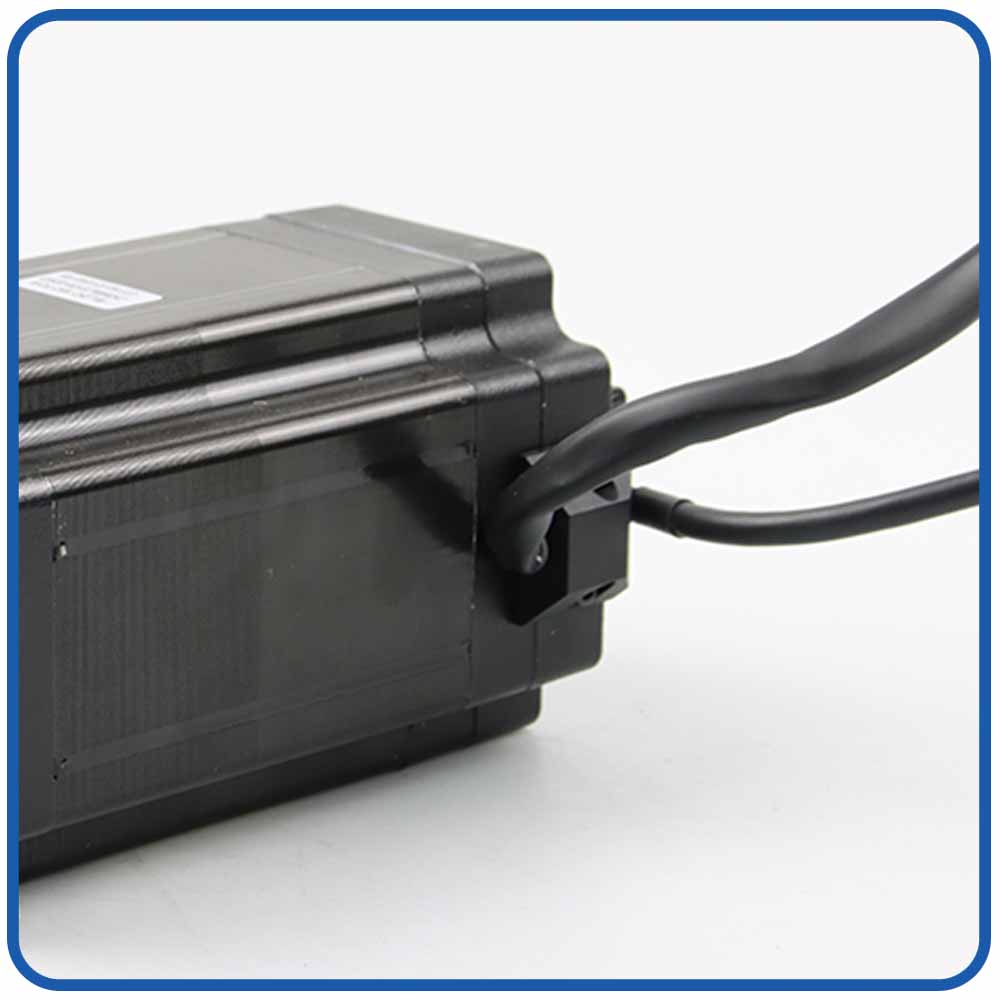
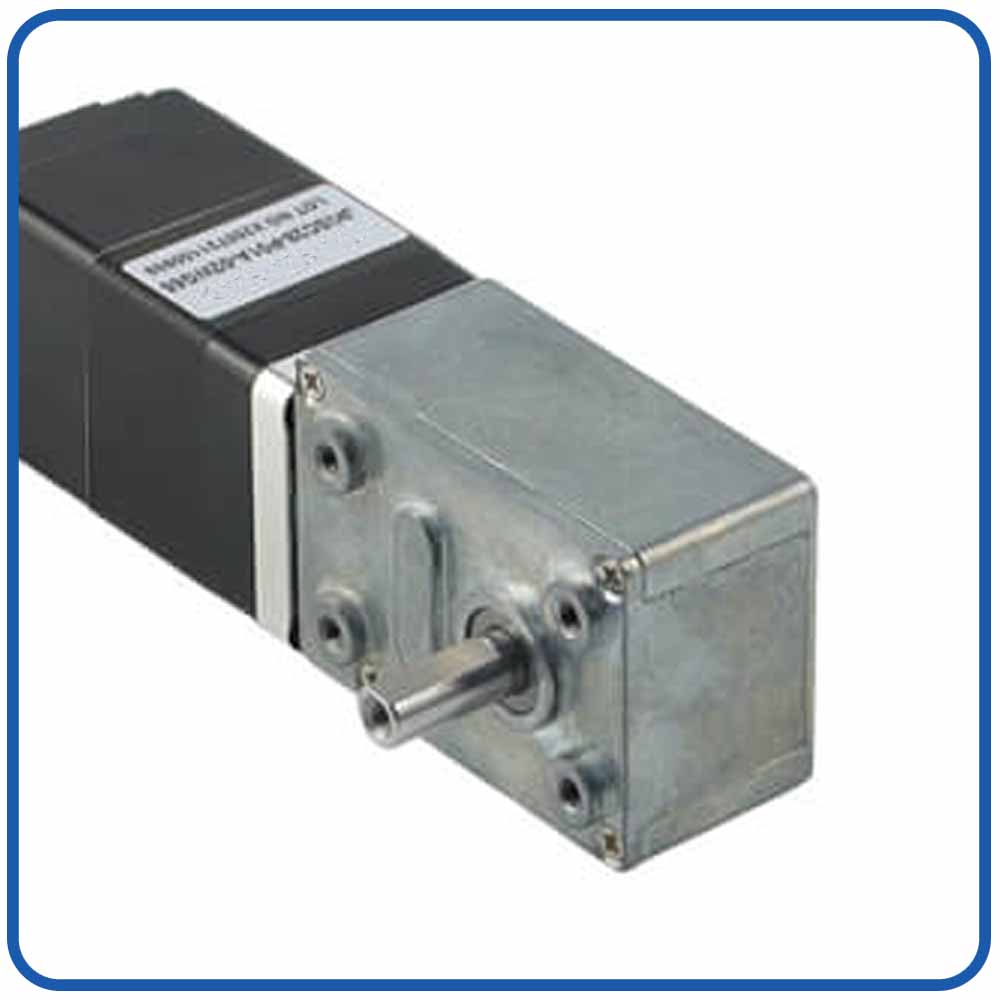
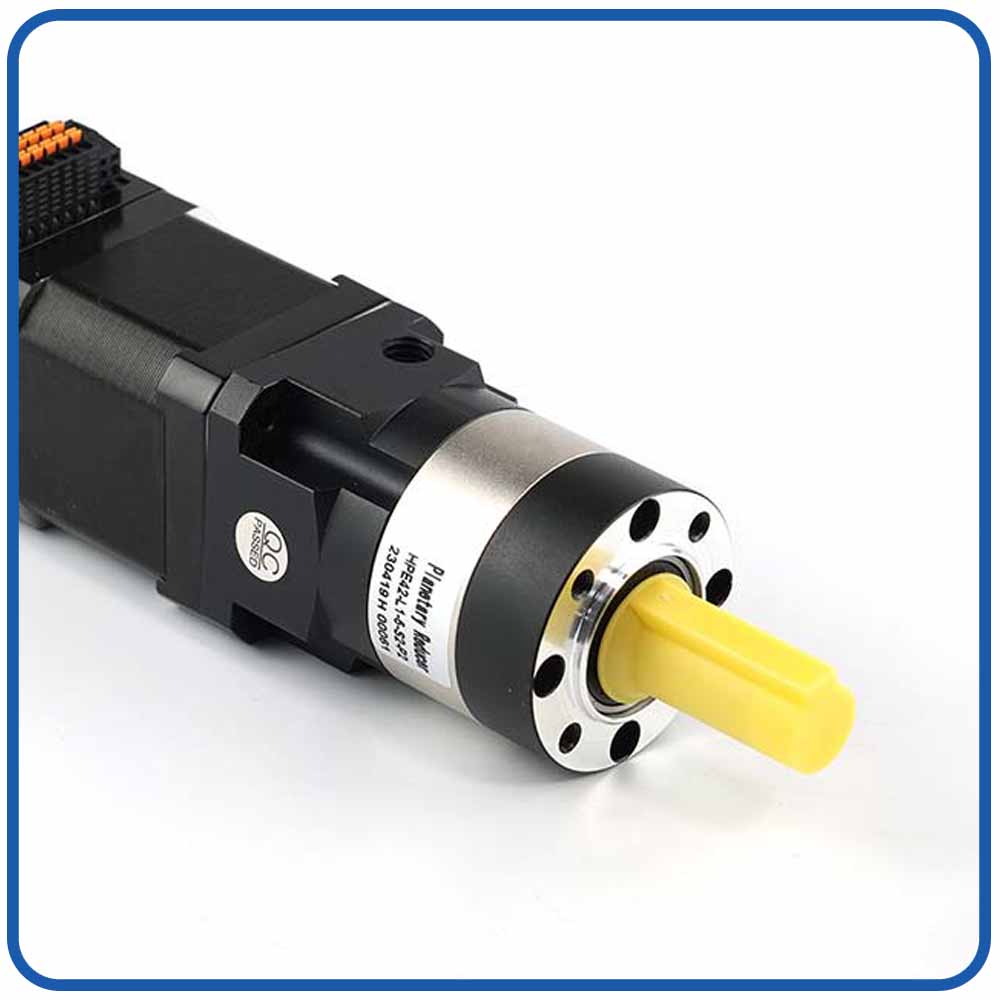
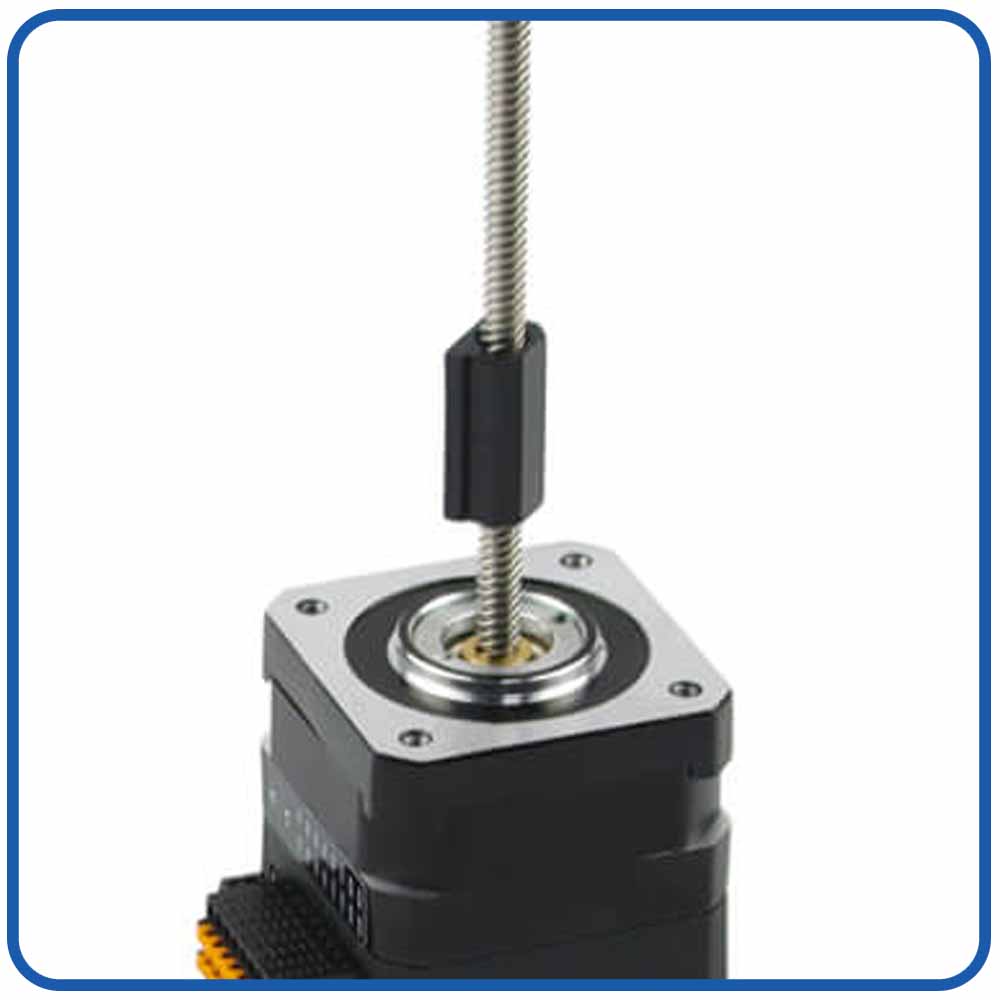
Diamond polishing machines require highly precise motion control to achieve consistent surface finishes, accurate material removal, and stable polishing performance. Among the various motion systems used in diamond processing equipment, oscillating motion control plays an important role in maintaining uniform contact between the polishing tool and the diamond surface. The oscillating mechanism repeatedly moves the polishing head or workpiece along a controlled path, helping distribute polishing pressure and reduce localized wear.
Traditional oscillating drive systems often rely on separate motors, external servo drives, mechanical transmission components, and additional control equipment. Although these configurations can provide basic motion control, they may introduce installation complexity, mechanical backlash, synchronization difficulties, and limitations in dynamic response.
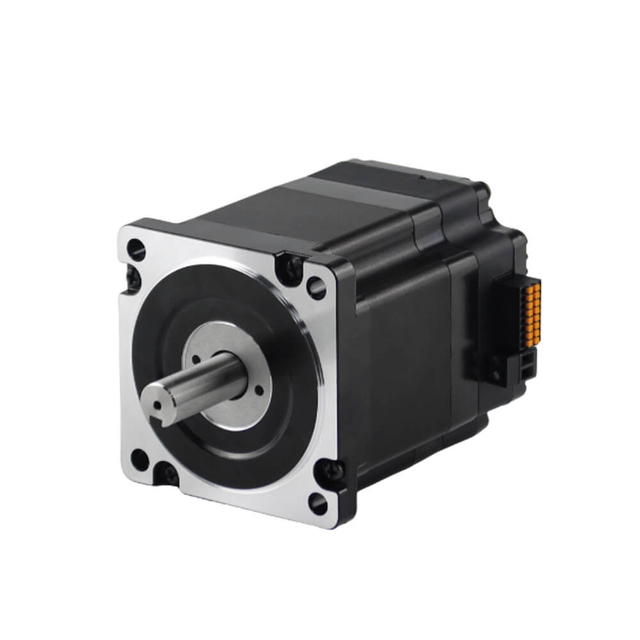
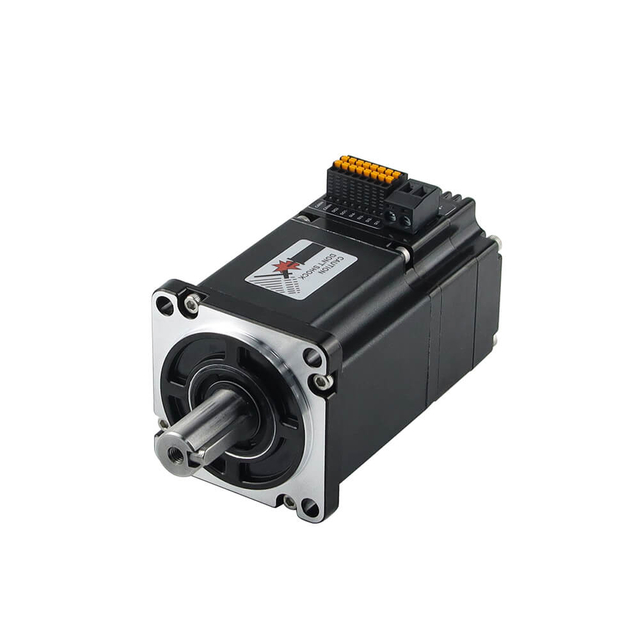
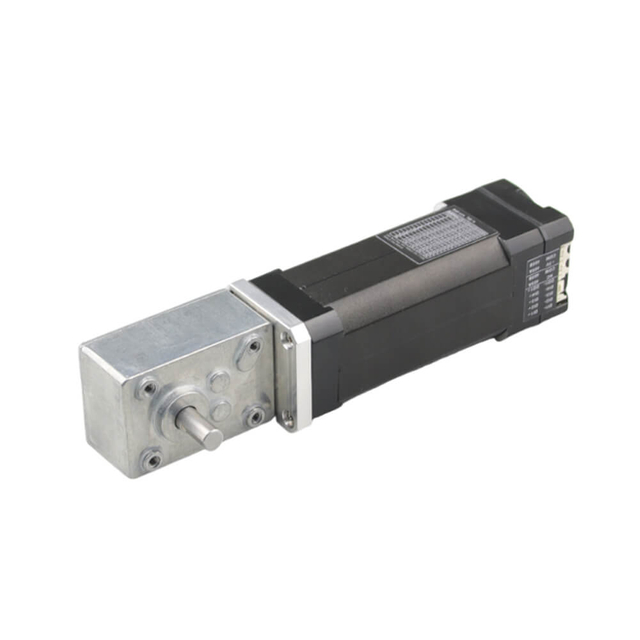
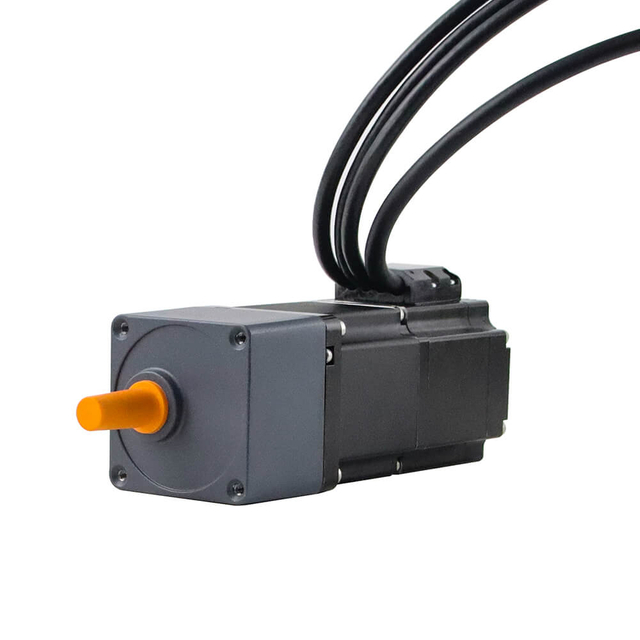
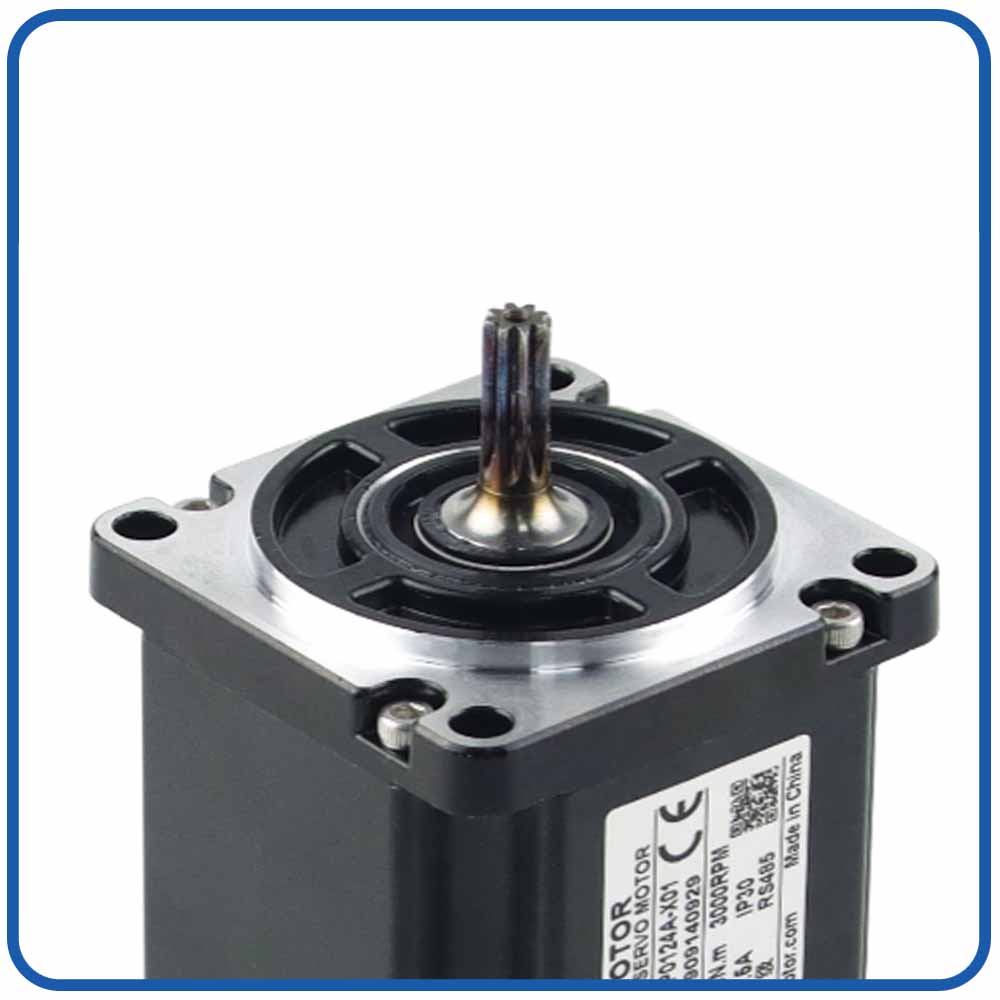
Integrated servo motors offer a more compact and intelligent solution by combining the motor, servo drive, and motion control electronics into one unit. With precise position feedback, adjustable speed control, and responsive torque regulation, integrated servo motors help diamond polishing machines achieve more stable and repeatable oscillating movements.
By improving motion accuracy, reducing mechanical complexity, and supporting flexible operating parameters, integrated servo motors can significantly enhance the performance of modern diamond polishing equipment.
1. Why Is Oscillating Motion Important in Diamond Polishing Machines?
During diamond polishing, the polishing tool and diamond surface must maintain carefully controlled relative movement. Continuous movement along a single direction may result in uneven polishing patterns, localized material removal, and inconsistent surface quality.
Oscillating motion introduces a controlled back-and-forth movement that helps distribute polishing activity across the working area.
In diamond polishing machines, oscillating mechanisms may be used in several applications:
Polishing head oscillation: Moves the polishing head repeatedly across the diamond surface to distribute polishing contact.
Workpiece positioning oscillation: Adjusts the relative position of the diamond workpiece to improve polishing coverage.
Polishing arm reciprocation: Controls the repeated movement of a mechanical arm or support structure.
Auxiliary tool movement: Provides controlled reciprocating motion for specific polishing operations.
The required oscillation frequency, stroke length, acceleration, and positioning accuracy depend on the machine design, diamond geometry, polishing process, and mechanical transmission system.
For these applications, the drive motor must provide stable low-speed operation, accurate position control, and reliable responses to frequent direction changes.
Integrated servo motors are particularly suitable for applications where oscillating movement requires programmable motion profiles and repeatable positioning.
2.How Do Integrated Servo Motors Control Oscillating Motion?
Integrated servo motors control oscillating motion in diamond polishing machines through closed-loop position control, real-time encoder feedback, and precise speed and torque regulation. By integrating the servo motor, drive electronics, and encoder into a compact unit, they provide accurate and repeatable control of reciprocating movements without requiring a separate external servo drive.
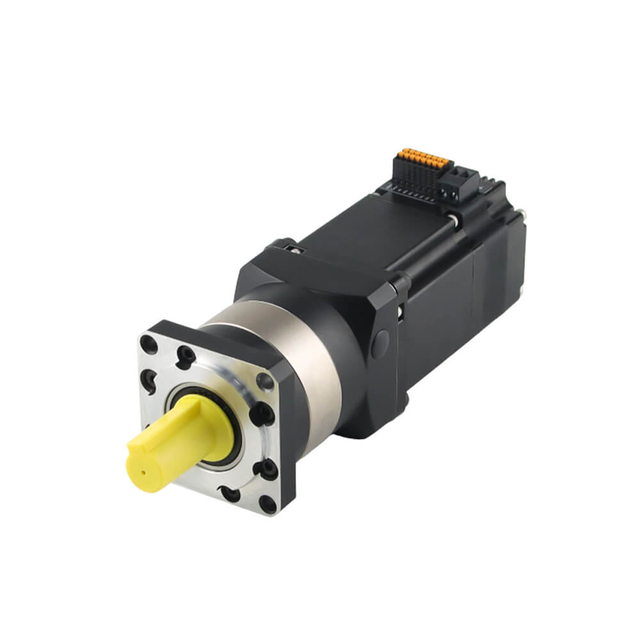
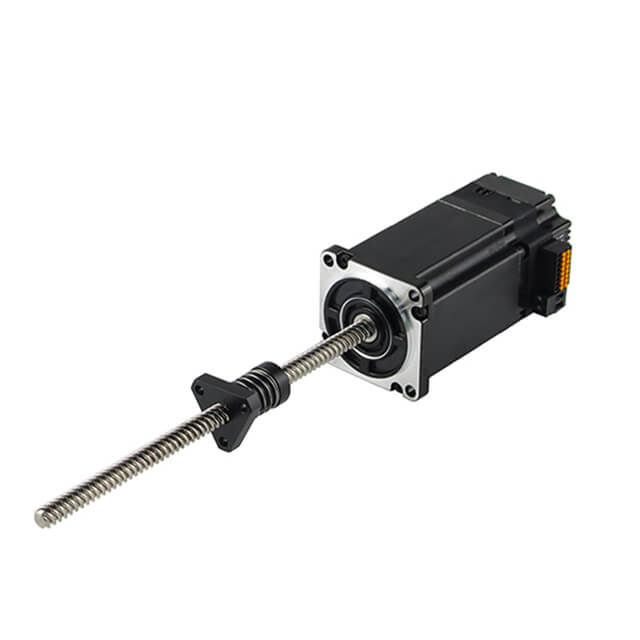
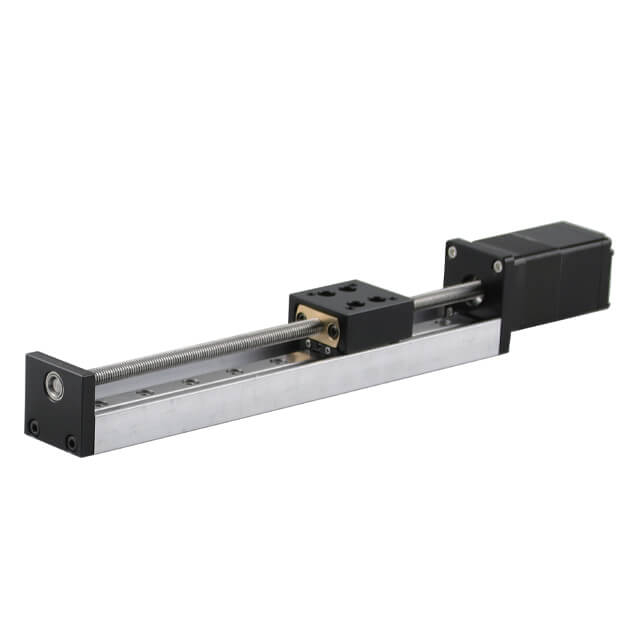
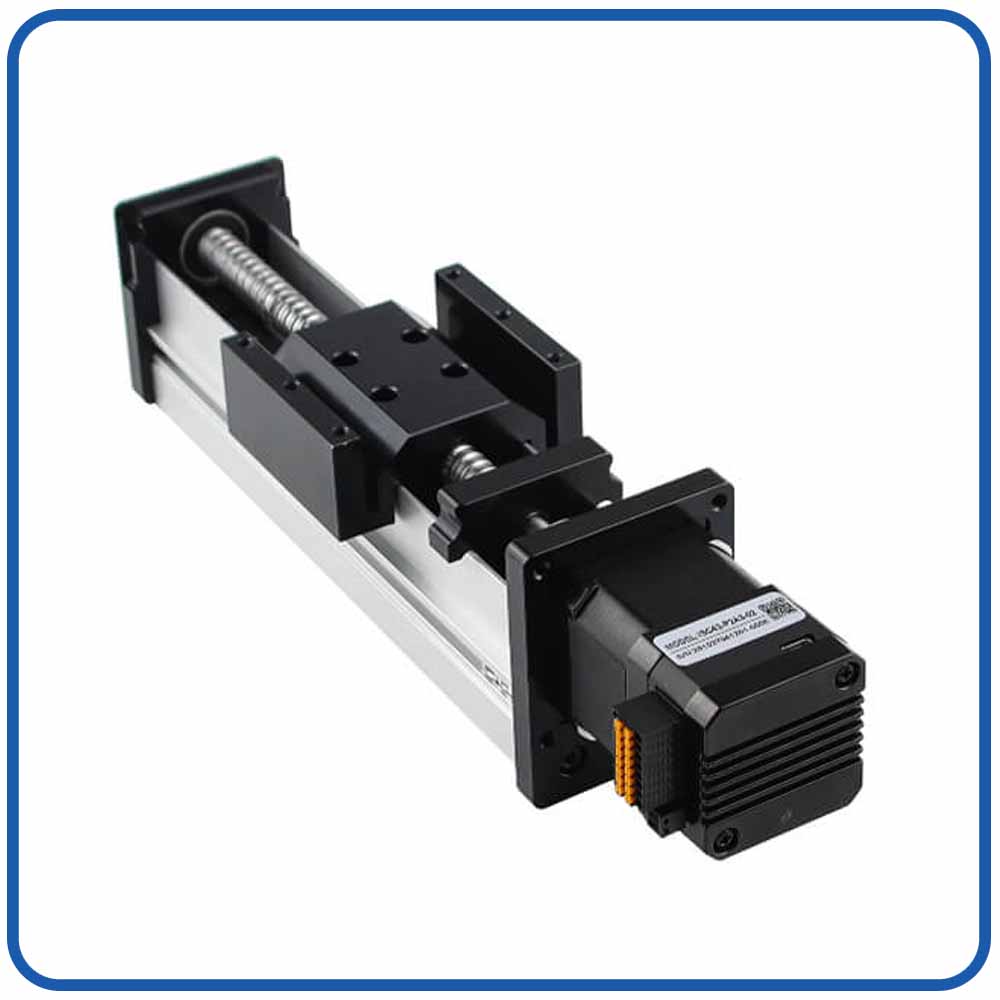
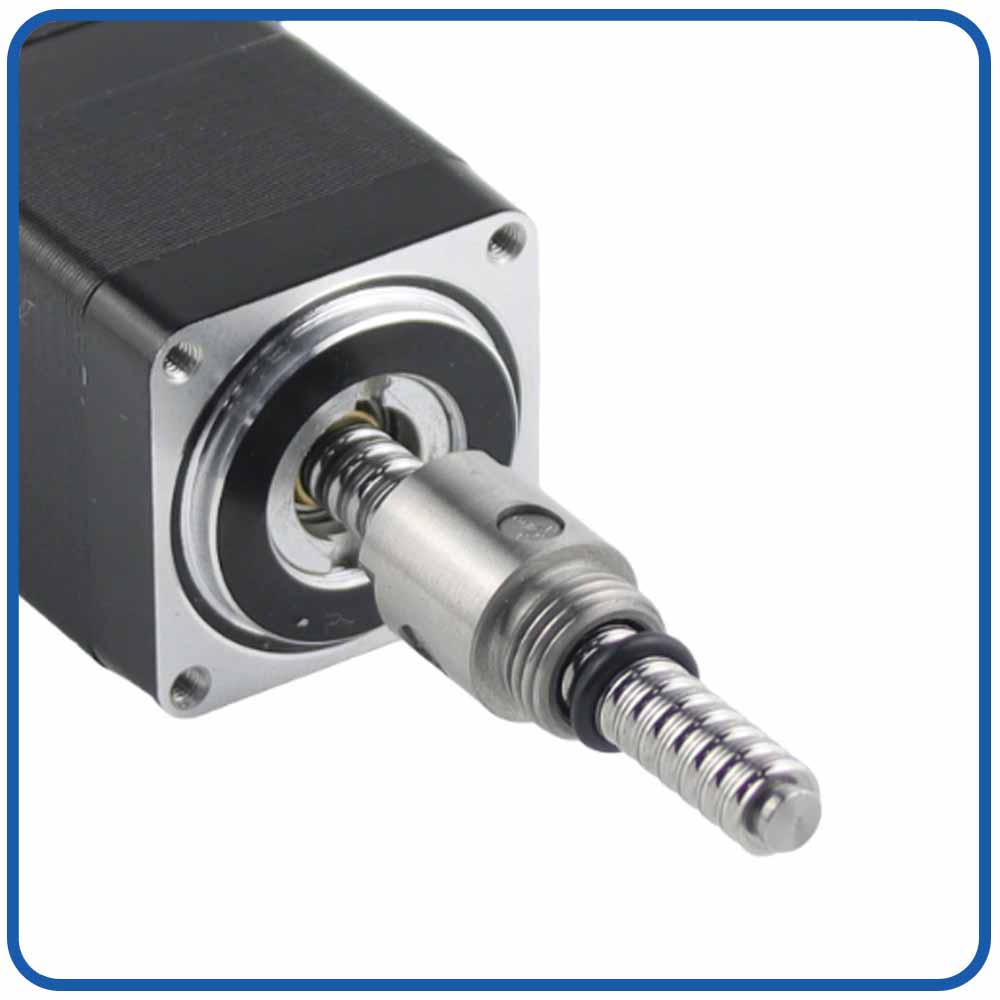
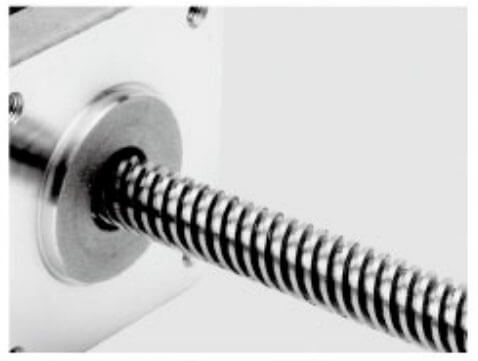
During diamond polishing, the oscillating mechanism typically moves the polishing head or workpiece back and forth along a predefined trajectory. The integrated servo motor receives motion commands from the machine controller and converts them into controlled rotational movement. Through a mechanical transmission system, such as a ball screw, lead screw, or belt drive, this rotation produces the required linear oscillation.
The control process involves three essential stages:
Motion Command Execution: The PLC or motion controller sends predefined position, speed, acceleration, and deceleration commands to the integrated servo motor. These parameters determine the oscillation stroke, movement frequency, and direction of the polishing mechanism.
Real-Time Position Feedback: An integrated encoder continuously detects the motor shaft's actual position and speed. This feedback allows the servo system to monitor whether the motor is following the commanded oscillation trajectory accurately.
Closed-Loop Motion Correction: The integrated servo drive compares the actual motor position with the target position and adjusts the motor current accordingly. This enables the system to compensate for load disturbances, maintain stable movement, and reduce positioning errors during repeated oscillation cycles.
For example, when a diamond polishing machine requires its polishing head to move repeatedly between two preset positions, the integrated servo motor can execute the reciprocating movement according to a programmed motion profile. The controller can adjust acceleration, deceleration, operating speed, and dwell time at each endpoint to achieve smoother direction changes and consistent movement.
In addition, programmable servo control allows manufacturers to modify oscillation parameters for different diamond sizes, polishing tools, and processing requirements. By optimizing the motion profile, the system can reduce sudden mechanical impacts, minimize vibration, and maintain more consistent contact between the polishing tool and diamond surface.
Unlike conventional open-loop motor systems, integrated servo motors continuously monitor actual movement and correct deviations through encoder feedback. This makes them particularly suitable for diamond polishing machines that require high-precision positioning, stable reciprocating motion, and reliable operation during continuous polishing cycles.
Positioning accuracy is a critical performance factor in the oscillating motion system of diamond polishing machines. During the polishing process, the polishing head or workpiece must move repeatedly along a predefined trajectory to ensure uniform polishing coverage and consistent material removal. Even small positioning deviations may cause uneven contact distribution, localized polishing variations, or differences in surface finish quality.
Integrated servo motors improve oscillation positioning accuracy through high-resolution encoder feedback, closed-loop position control, and real-time motion correction. These technologies allow the motor to follow programmed movement commands more precisely and maintain repeatable positioning throughout continuous reciprocating cycles.
3.1 Encoder Feedback for Precise Position Detection
Integrated servo motors typically incorporate an encoder that continuously monitors the actual rotational position of the motor shaft. The encoder converts shaft movement into electrical feedback signals, allowing the integrated servo drive to determine the motor's position and speed.
When the polishing machine controller sends a positioning command, the servo system compares the commanded position with the actual encoder feedback. If a deviation occurs, the drive adjusts the motor current to correct the movement.
This closed-loop feedback process helps the oscillating mechanism achieve more consistent positioning during repeated forward and backward movements.
For example, when a polishing head needs to move between two preset positions, the integrated servo motor can monitor its rotational displacement and control the mechanical transmission to reach the corresponding endpoints.
The encoder resolution, feedback accuracy, and servo control performance should be selected according to the required machine-level positioning accuracy.
Oscillation stroke length determines the distance the polishing head travels during each reciprocating movement. Maintaining a consistent stroke is important for ensuring that the polishing tool covers the intended working area.
Inaccurate stroke control may cause the polishing head to move beyond the desired range or fail to reach the programmed endpoints, potentially resulting in uneven polishing coverage.
Integrated servo motors provide programmable position control that allows manufacturers to define precise movement limits and target positions.
For oscillating mechanisms driven by ball screws, lead screws, or belt transmission systems, the motor's rotational displacement is converted into linear movement.
By accurately controlling motor rotation, the servo system helps maintain the required linear stroke length.
This provides several advantages:
More repeatable oscillation endpoints.
Better control over polishing head travel distance.
Reduced positioning deviations between operating cycles.
Flexible adjustment of stroke length for different workpieces.
Improved consistency of the polishing trajectory.
However, actual linear positioning accuracy also depends on transmission backlash, screw lead accuracy, coupling rigidity, and mechanical installation quality.
3.3 Reducing Positioning Errors During Direction Reversal
Direction reversal is one of the most challenging stages of oscillating motion control.
When the polishing head reaches one endpoint, the motor must decelerate, reverse its rotational direction, and accelerate toward the opposite endpoint. During this transition, mechanical inertia, friction, and transmission backlash may introduce positioning deviations.
Integrated servo motors use encoder feedback and closed-loop torque regulation to improve control during these transitions.
The servo drive continuously monitors the motor's actual movement and adjusts the output according to the commanded motion profile.
Furthermore, programmable acceleration and deceleration settings help reduce abrupt changes in movement.
For diamond polishing machines, properly configured direction-reversal control can help:
Improve endpoint positioning repeatability.
Reduce mechanical impact during reversing movements.
Minimize unwanted oscillation deviations.
Maintain smoother reciprocating movement.
Reduce stress on mechanical transmission components.
For systems with significant mechanical backlash, additional measures such as preloaded ball screws, precision couplings, and backlash compensation may be required.
3.4 Improving Positioning Stability Under Variable Loads
During diamond polishing, the mechanical load on the oscillating mechanism may change because of variations in friction, contact conditions, and movement resistance.
These disturbances can affect motor speed and positioning performance, particularly during frequent acceleration and deceleration.
Integrated servo motors address this issue through closed-loop position and speed regulation.
The encoder continuously provides feedback to the servo drive, allowing it to detect deviations between the commanded and actual motor movement. The drive then adjusts motor current to compensate for disturbances within the available torque and control bandwidth.
This helps maintain more stable oscillation movement under changing operating conditions.
For example, when a polishing head encounters increased mechanical resistance while moving along a guide rail, the servo system can increase motor output to maintain the commanded movement.
This capability is particularly useful for diamond polishing equipment requiring repeatable positioning during extended production cycles.
3.5 Optimizing Servo Parameters for Higher Positioning Precision
The positioning accuracy of an integrated servo motor depends not only on encoder specifications but also on appropriate servo parameter configuration.
Important parameters include:
Position Loop Gain: Determines how aggressively the servo system responds to position errors. Proper adjustment improves positioning response while avoiding excessive vibration or instability.
Speed Loop Gain: Influences the motor's response to speed commands and external load disturbances.
Acceleration and Deceleration Settings: Control how quickly the motor changes speed, helping maintain stable movement during oscillation cycles.
Electronic Filtering: Available filtering functions can help reduce the influence of certain mechanical resonances and unwanted disturbances.
Following Error Limits: Define the acceptable difference between commanded and actual position, allowing the controller to identify abnormal motion conditions.
For diamond polishing machines, engineers should optimize these parameters according to the actual mechanical structure, load inertia, transmission characteristics, and required oscillation frequency.
Excessively aggressive servo settings may introduce vibration or instability, while insufficient gain may result in slower response and larger positioning errors.
3.6 Coordinating Multiple Motion Axes for Consistent Polishing
Some advanced diamond polishing machines use multiple servo-controlled axes to manage polishing head movement, workpiece positioning, and auxiliary mechanical operations.
In these configurations, positioning accuracy depends not only on individual motor performance but also on the coordination between different axes.
Integrated servo motors with compatible communication interfaces can receive motion commands from a centralized PLC or motion controller.
Depending on the selected model, communication options may include pulse/direction, RS485, CANopen, or EtherCAT.
With an appropriate control architecture, manufacturers can coordinate oscillating movement with other machine operations to maintain the required processing sequence.
For example, the polishing head can execute a programmed reciprocating trajectory while the workpiece positioning axis performs controlled adjustments.
This coordinated motion control helps improve polishing coverage and supports more consistent automated processing.
3.7 Mechanical Design and Installation Considerations
Although integrated servo motors provide accurate electronic position feedback, the actual positioning performance of the polishing machine also depends on its mechanical structure.
Several mechanical factors should be considered:
Transmission backlash: Excessive clearance in gears, screws, or couplings can reduce positioning repeatability.
Mechanical rigidity: Insufficient structural stiffness may cause deformation during acceleration and deceleration.
Bearing quality: Poor bearing conditions can introduce friction variations and unwanted movement.
Installation alignment: Incorrect motor and transmission alignment may generate additional mechanical resistance.
Vibration control: Unbalanced moving components can affect the stability of the oscillating mechanism.
For applications requiring high positioning precision, we recommend combining integrated servo motors with precision transmission components, rigid mounting structures, and proper mechanical alignment.
In summary, integrated servo motors improve oscillation positioning accuracy in diamond polishing machines through encoder-based feedback, precise stroke control, closed-loop correction, and optimized servo parameters. When combined with a properly designed mechanical transmission system, these capabilities help maintain repeatable movement trajectories, reduce positioning deviations, and improve the consistency of diamond polishing operations.
4. Maintaining Stable Speed During Continuous Oscillation
Diamond polishing machines frequently operate through repeated acceleration, constant-speed movement, deceleration, and direction reversal.
Maintaining a stable oscillation speed is important because changes in relative movement can influence polishing contact conditions and material removal behavior.
Traditional open-loop motor systems may experience speed fluctuations when the mechanical load changes. This can affect the consistency of the oscillating movement.
Integrated servo motors address this challenge through closed-loop speed regulation.
The encoder provides real-time speed feedback, while the servo drive adjusts motor output to maintain the commanded speed.
Key advantages include:
Stable low-speed operation: Helps maintain controlled movement during precision polishing.
Responsive speed adjustment: Allows the machine to change oscillation frequency according to different processing requirements.
Improved load response: Compensates for disturbances within the available motor torque and control bandwidth.
For diamond polishing applications requiring different oscillation speeds for different processing stages, programmable servo control provides greater flexibility than fixed-speed drive systems.
5. Enhancing Acceleration and Direction-Reversal Performance
Oscillating motion involves frequent changes in movement direction. Every reversal requires the motor to decelerate, stop or pass through zero velocity, and accelerate in the opposite direction.
These transitions place significant demands on the motor and its control system.
An undersized motor may struggle to provide sufficient acceleration torque, particularly when the polishing head, support arm, or transmission mechanism has considerable inertia.
Integrated servo motors provide dynamic torque control that helps manage these acceleration and deceleration processes.
The servo drive can follow programmed motion profiles, including trapezoidal velocity profiles and S-curve acceleration profiles.
S-curve motion control gradually changes acceleration to reduce abrupt changes in mechanical force. This can help minimize vibration, mechanical shock, and stress on transmission components during direction reversals.
For diamond polishing machines, smoother reversal behavior can provide several benefits:
Reduced mechanical impact on the oscillating mechanism.
More stable movement of the polishing head.
Lower risk of exciting mechanical vibration.
Improved repeatability during continuous operation.
Better coordination between oscillation and other machine movements.
However, the actual performance depends on motor sizing, inertia matching, servo tuning, and the rigidity of the mechanical structure.
6. Reducing Mechanical Complexity with Integrated Servo Motor Design
Traditional servo systems often require separate motor units, external drives, encoder cables, power connections, and additional mounting space.
For diamond polishing equipment with multiple motion axes, these components can increase control cabinet dimensions, wiring requirements, and installation complexity.
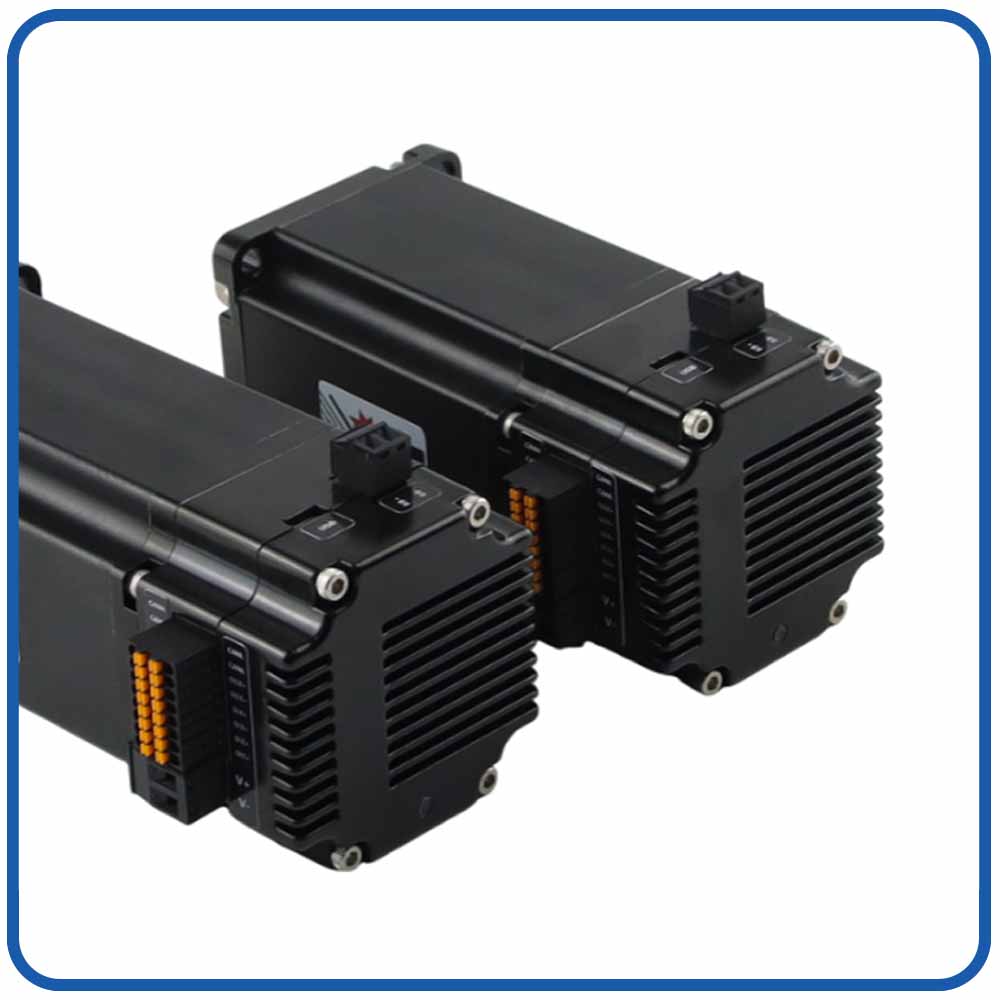
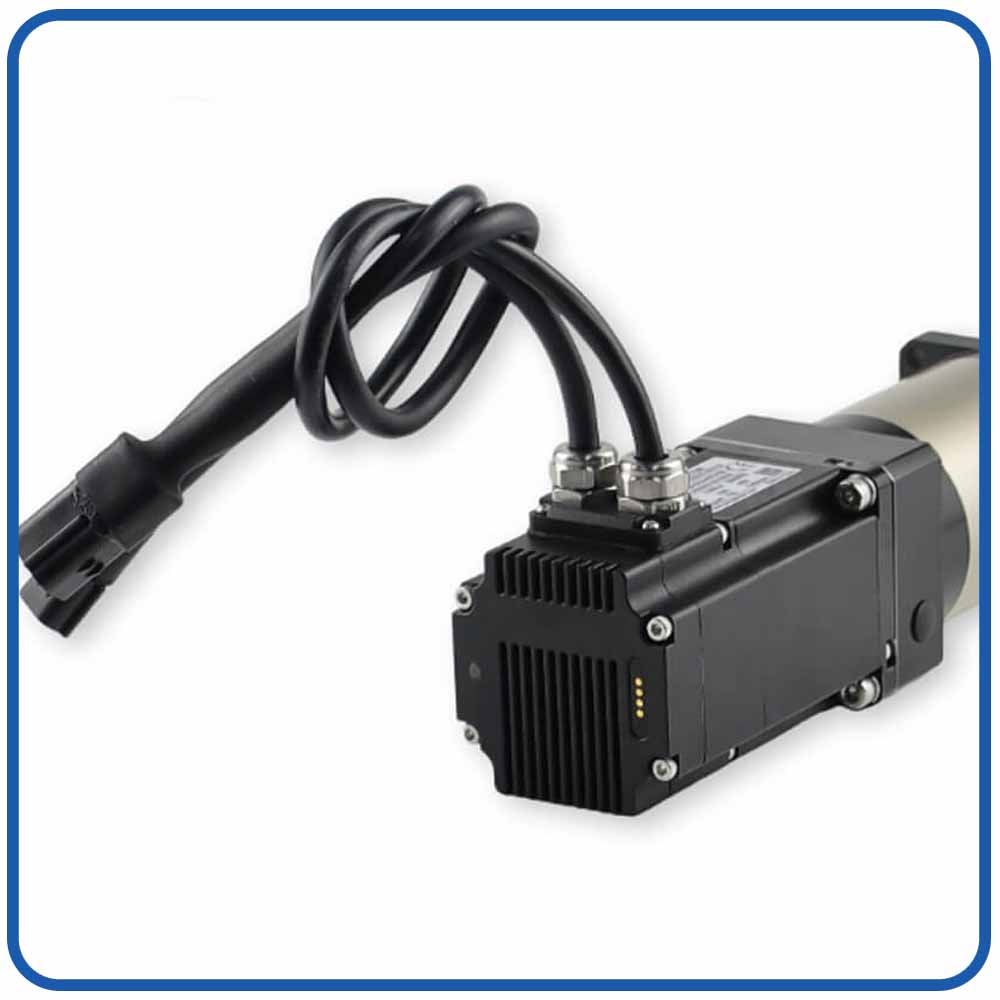
Integrated servo motors combine the motor and drive electronics into one compact assembly, reducing the number of separate components required for each controlled axis.
This design offers several practical advantages.
Simplified Installation
The integrated structure reduces the need to install a separate servo drive for every motor axis. This can simplify machine assembly and reduce control cabinet space requirements.
Reduced Wiring Complexity
Power, feedback, and communication connections can be consolidated according to the motor's electrical interface design.
Fewer external connections can simplify cable routing and reduce potential wiring errors.
More Flexible Machine Layout
The compact configuration provides greater flexibility when designing oscillating mechanisms with limited installation space.
Easier Equipment Integration
Integrated servo motors can support communication interfaces such as pulse/direction, RS485, CANopen, or other industrial communication protocols, depending on the model.
This allows machine manufacturers to select a suitable control architecture based on their PLC, motion controller, and system requirements.
For diamond polishing machine manufacturers, these advantages can help simplify equipment design and improve the overall integration of motion control systems.
7. Improving Polishing Consistency Through Torque Control
Polishing quality is influenced by several interacting parameters, including contact pressure, relative speed, polishing compound, tool condition, and processing time.
Although the servo motor does not directly measure polishing pressure unless an appropriate force-sensing system is integrated, its torque control capabilities can contribute to more stable mechanical movement.
When the oscillating mechanism experiences changes in friction or load, the servo drive can adjust motor current to maintain the commanded motion within its operating limits.
For example, when a polishing head moves across a mechanical guide, variations in friction may create disturbances in the drive system.
An appropriately configured integrated servo motor can compensate for these disturbances and maintain more consistent speed and position tracking.
In applications requiring coordinated control of polishing movement and contact force, servo motors can also work with load cells, pressure sensors, or other external feedback devices.
This makes it possible to develop more advanced polishing systems that coordinate:
Oscillation position.
Movement speed.
Acceleration and deceleration.
Polishing pressure.
Processing cycle timing.
Such coordination helps manufacturers achieve more repeatable processing conditions and improve overall machine performance.
8. Supporting Flexible Oscillation Parameters for Different Diamond Polishing Processes
Different diamond polishing operations may require different oscillation characteristics.
For example, polishing a small diamond component may require a relatively short stroke and carefully controlled movement, while larger workpieces or different polishing configurations may require a longer oscillation range.
A conventional fixed-speed motor system may require mechanical adjustments or additional control components to accommodate these changes.
Integrated servo motors provide programmable motion parameters that allow machine manufacturers to configure different operating profiles.
Typical adjustable parameters include:
Motion Parameter
Function in Diamond Polishing
Oscillation frequency
Determines the number of reciprocating cycles per unit time
Stroke length
Defines the travel distance between oscillation endpoints
Maximum speed
Sets the permitted movement speed
Acceleration
Controls how quickly the mechanism reaches the target speed
Deceleration
Controls how the mechanism slows down
Dwell time
Defines how long the mechanism remains at a programmed position
Position limits
Establishes the permitted movement range
By adjusting these parameters through the motion controller, manufacturers can adapt the oscillation mechanism to different polishing processes without changing the fundamental motor configuration.
This flexibility is particularly valuable for automated diamond polishing equipment designed to process different workpiece specifications.
9. Reducing Vibration and Improving Mechanical Stability
Vibration is a major concern in precision polishing applications.
Excessive vibration can affect polishing contact stability, create unwanted movement deviations, and accelerate wear in mechanical transmission components.
Integrated servo motors can help reduce vibration through accurate feedback control and configurable motion profiles.
Several functions contribute to this improvement:
Closed-loop position control: Continuously corrects deviations between commanded and actual motor positions.
Controlled acceleration: Reduces abrupt changes in mechanical forces during oscillation.
Servo gain adjustment: Allows engineers to optimize the control response according to the mechanical characteristics of the oscillating mechanism.
Electronic filtering: Depending on the servo model, available filtering functions can help suppress certain mechanical resonances.
However, servo control alone cannot eliminate all vibration. Mechanical imbalance, loose mounting structures, insufficient rigidity, worn bearings, and poorly designed transmission systems may still cause instability.
For this reason, integrated servo motor selection should be accompanied by proper mechanical design and system-level commissioning.
10. Improving Automation and Communication in Diamond Polishing Machines
Modern diamond polishing equipment increasingly requires coordinated control of multiple motion axes.
A typical machine may include separate motors for spindle rotation, polishing head movement, workpiece positioning, and oscillating mechanisms.
These axes must operate according to defined motion sequences to maintain consistent processing conditions.
Integrated servo motors can communicate with the machine controller through supported industrial interfaces.
Depending on the selected configuration, communication options may include:
Pulse and direction: Provides straightforward position and speed command interfaces.
RS485: Supports serial communication between the motor and machine controller.
CANopen: Enables standardized communication and control in compatible automation architectures.
EtherCAT or other industrial Ethernet protocols: Available on selected models for applications requiring more advanced real-time coordination.
With suitable communication and motion control architecture, manufacturers can coordinate oscillation movements with spindle operation and other machine functions.
For example, the controller can synchronize the polishing head's reciprocating movement with the operating sequence of the polishing spindle.
This improves process coordination and supports the development of more automated diamond polishing systems.
11. How to Select an Integrated Servo Motor for Diamond Polishing Machine Oscillation
Selecting the right integrated servo motor for diamond polishing machine oscillation is essential for achieving accurate reciprocating movement, stable polishing performance, and long-term operating reliability. The motor must provide sufficient torque for frequent acceleration and deceleration while maintaining precise position and speed control under changing mechanical loads.
Unlike simple continuous-rotation applications, oscillating mechanisms frequently start, stop, and reverse direction. Therefore, motor selection should consider not only rated power and speed but also peak torque, load inertia, oscillation frequency, positioning accuracy, and mechanical transmission characteristics.
The following factors should be evaluated when selecting an integrated servo motor for a diamond polishing machine.
11.1 Calculate Required Torque and Rated Power
Torque is one of the most important parameters when selecting an integrated servo motor for an oscillating mechanism. During operation, the motor must overcome mechanical friction, accelerate the moving components, and maintain the required movement speed.
For diamond polishing machines, the required torque depends on several factors:
Total mass of the polishing head or moving assembly.
Acceleration and deceleration requirements.
Friction in linear guides, bearings, and transmission components.
Transmission efficiency and reduction ratio.
Required oscillation frequency and stroke length.
The motor must provide sufficient continuous torque for normal operation and adequate peak torque during acceleration and direction reversal.
We recommend calculating the actual load torque rather than selecting a motor based exclusively on its rated power. An undersized motor may experience excessive current, overheating, or following errors during frequent reversals. An appropriately sized integrated servo motor provides sufficient torque reserves for reliable dynamic operation.
11.2 Evaluate Load Inertia and Inertia Matching
Load inertia directly affects servo motor responsiveness and oscillation stability.
In diamond polishing machines, the oscillating mechanism may include a polishing head, mounting bracket, transmission components, and other moving structures. These components create a combined mechanical inertia that the motor must accelerate and decelerate repeatedly.
If the load inertia is too high relative to the motor's rotor inertia, the servo system may experience slower response, excessive current demand, or difficulty maintaining stable motion.
When selecting an integrated servo motor, engineers should calculate the equivalent load inertia reflected to the motor shaft and compare it with the motor's rotor inertia.
For applications with frequent direction changes, proper inertia matching is particularly important because the motor must repeatedly overcome the load's resistance to acceleration.
A suitable inertia ratio helps improve servo response, reduce mechanical vibration, and maintain consistent oscillating movement.
11.3 Determine the Required Oscillation Frequency and Operating Speed
The oscillation frequency determines how many reciprocating cycles the polishing mechanism completes within a specific period.
Different diamond polishing processes may require different oscillation frequencies depending on the workpiece dimensions, polishing tool, and processing requirements.
When selecting an integrated servo motor, manufacturers should determine:
Required oscillation frequency.
Maximum linear movement speed.
Total oscillation stroke.
Acceleration and deceleration time.
Required dwell time at movement endpoints.
The motor's rated speed and available torque at the operating speed must satisfy the application's requirements.
It is also important to consider the mechanical transmission ratio. For example, when an integrated servo motor drives a ball screw, the motor's rotational speed determines the linear movement speed of the polishing head according to the screw lead.
Correctly calculating these parameters helps ensure that the motor can achieve the required oscillation frequency without exceeding its operating limits.
11.4 Select Appropriate Encoder Resolution and Positioning Accuracy
Positioning accuracy directly influences the repeatability of the oscillating mechanism.
For diamond polishing machines, the polishing head must follow a consistent movement trajectory to maintain stable polishing coverage and reduce variations between processing cycles.
Integrated servo motors typically use encoder feedback to monitor rotor position and speed. Depending on the motor model, encoder configurations and resolutions may vary.
When evaluating encoder specifications, manufacturers should consider:
Encoder resolution.
Position feedback accuracy.
Speed feedback performance.
Closed-loop control capability.
Compatibility with the servo drive.
Higher encoder resolution can provide finer position feedback, but it does not automatically guarantee higher machine-level positioning accuracy.
Mechanical backlash, coupling flexibility, transmission errors, guide rail accuracy, and structural deformation must also be considered when designing the complete oscillation system.
11.5 Consider Acceleration, Deceleration, and Direction-Reversal Performance
Frequent direction changes are a defining characteristic of oscillating motion.
During each reciprocating cycle, the polishing mechanism must decelerate before reaching its endpoint and accelerate in the opposite direction. This process creates dynamic torque requirements that may be significantly higher than those associated with continuous operation.
Therefore, manufacturers should evaluate the integrated servo motor's:
Peak torque capability.
Maximum acceleration.
Dynamic response.
Servo control bandwidth.
Permitted overload duration.
We recommend considering S-curve acceleration and deceleration profiles for applications requiring smoother direction reversals.
These profiles gradually change acceleration to reduce mechanical shock and vibration. They can also help protect mechanical transmission components and improve the stability of the polishing head.
The selected motor should provide sufficient dynamic performance to complete the required oscillation cycle without excessive current demand or overheating.
11.6 Check Communication Protocol and Control System Compatibility
An integrated servo motor must communicate effectively with the machine's PLC or motion controller.
Different diamond polishing machines may use different control architectures depending on their automation requirements and number of controlled axes.
Common communication and control options include:
Communication Interface
Main Application
Pulse/Direction
Basic position and speed commands
RS485
Serial communication and parameter configuration
CANopen
Coordinated control in compatible automation systems
EtherCAT
High-speed, real-time multi-axis motion control, where supported
The appropriate interface depends on the selected integrated servo motor and the machine controller.
For example, a polishing machine with several synchronized motion axes may benefit from a supported industrial fieldbus that allows coordinated movement and centralized parameter management.
Before purchasing, manufacturers should verify communication compatibility, command modes, supported control functions, and available configuration software.
11.7 Evaluate Motor Size, Mounting Configuration, and Installation Space
The mechanical dimensions of the integrated servo motor are another important consideration.
Diamond polishing machines often contain multiple mechanical assemblies within a relatively compact structure. The motor must fit the available installation space while providing the required torque and speed.
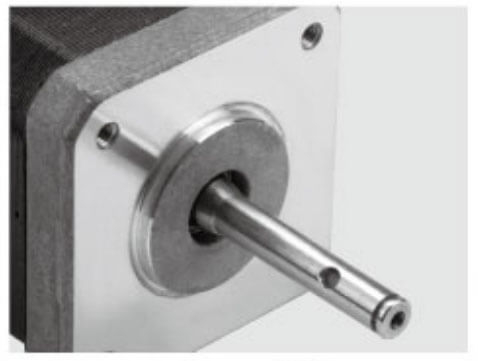
Important mechanical specifications include:
Motor flange dimensions.
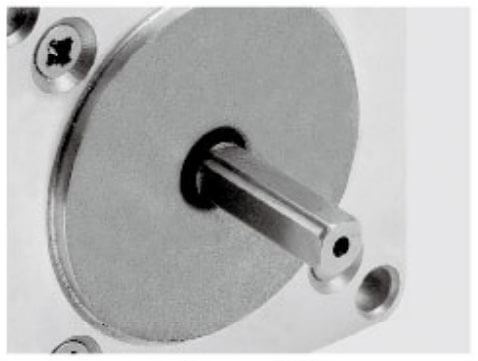
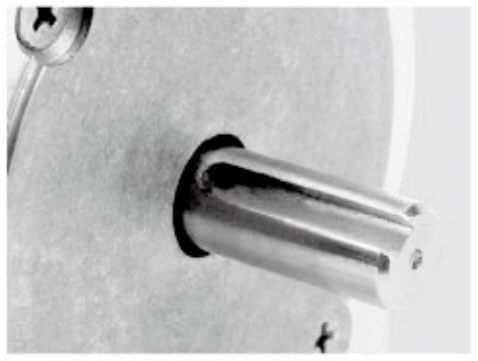
Shaft diameter and length.
Mounting hole configuration.
Overall motor length.
Connector orientation.
Coupling and transmission compatibility.
For example, different flange sizes may be suitable for different oscillating mechanisms depending on their load requirements and installation conditions.
A compact integrated servo motor can reduce the space required for separate drive electronics and simplify machine layout. However, the motor must still provide adequate thermal performance and mechanical strength for continuous operation.
11.8 Consider Environmental Protection and Thermal Management
Diamond polishing environments may expose motors to polishing dust, abrasive particles, coolant, moisture, and temperature variations.
These conditions can affect motor reliability if the selected enclosure and installation arrangement are unsuitable.
When choosing an integrated servo motor, manufacturers should evaluate:
Ingress protection: Select an appropriate IP rating according to the actual exposure to dust, water, and polishing fluids.
Operating temperature: Ensure that the motor can operate within the ambient temperature range specified by the manufacturer.
Heat dissipation: Consider the thermal effects of frequent acceleration, deceleration, and repeated direction changes.
Cable protection: Use suitable connectors and cable routing to protect electrical connections from contamination and mechanical damage.
For applications involving direct exposure to polishing slurry or coolant, additional protective covers or sealed installation arrangements may be necessary.
11.9 Evaluate Continuous Operating Duty and Service Life
Diamond polishing machines may operate for extended periods with repeated oscillation cycles. Therefore, motor selection should account for the actual duty cycle rather than only the motor's peak performance.
The following operating conditions should be evaluated:
Daily operating hours.
Number of oscillation cycles.
Acceleration and deceleration frequency.
Average and peak torque requirements.
Motor temperature during continuous operation.
Mechanical transmission maintenance requirements.
The motor's effective RMS torque should be calculated based on the complete motion cycle and compared with its rated continuous torque.
This helps prevent excessive heating and supports reliable long-term operation.
11.10 Work with an Experienced Integrated Servo Motor Manufacturer
In addition to technical specifications, selecting a reliable integrated servo motor manufacturer is important for developing a suitable oscillation control solution.
An experienced manufacturer should be able to provide technical support for motor sizing, encoder selection, communication configuration, motion control, and mechanical integration.
For diamond polishing machine applications, we recommend discussing the following information with the motor supplier:
Required oscillation stroke and frequency.
Moving load and mechanical transmission type.
Required positioning accuracy.
Maximum operating speed.
Acceleration and deceleration requirements.
Available installation dimensions.
Required communication protocol.
Environmental protection requirements.
Providing these parameters allows the manufacturer to recommend a suitable integrated servo motor configuration rather than relying on general-purpose motor specifications.
Ultimately, the best integrated servo motor for diamond polishing machine oscillation is one that matches the actual mechanical load, dynamic motion requirements, positioning accuracy, and operating environment. Proper motor sizing and system integration help improve oscillation stability, reduce unnecessary mechanical stress, and achieve consistent polishing performance throughout continuous production operations.
12. Why Integrated Servo Motors Are a Practical Choice for Modern Diamond Polishing Equipment
As diamond polishing machines move toward higher automation and more precise processing requirements, their motion control systems must provide greater accuracy, responsiveness, and integration flexibility.
Integrated servo motors address these requirements by combining motor performance and intelligent drive control in a compact configuration.
Their main advantages include:
Accurate oscillation positioning: Encoder feedback improves the repeatability of reciprocating movements.
Stable speed regulation: Closed-loop control helps maintain consistent movement under changing loads.
Responsive direction reversal: Dynamic torque control supports frequent acceleration and deceleration.
Reduced mechanical vibration: Programmable motion profiles help minimize abrupt movement transitions.
Simplified system integration: The integrated design reduces separate drive components and installation complexity.
Flexible motion programming: Adjustable stroke, speed, acceleration, and dwell parameters support different polishing processes.
Improved automation compatibility: Supported communication interfaces enable coordination with PLCs and other machine control systems.
These features make integrated servo motors a valuable solution for the oscillating axes of modern diamond polishing machines.
Conclusion
Integrated servo motors improve oscillating motion control in diamond polishing machines through precise encoder feedback, closed-loop speed regulation, responsive torque control, and programmable motion profiles. These capabilities help maintain consistent reciprocating movement, improve positioning repeatability, and reduce mechanical disturbances during frequent direction changes.
By integrating the motor and drive electronics into a compact unit, they also simplify equipment installation, reduce wiring complexity, and provide greater flexibility for machine manufacturers.
For diamond polishing applications requiring accurate oscillation, stable movement, and reliable automation, selecting an appropriately sized integrated servo motor can significantly improve motion system performance.
When evaluating a solution, manufacturers should consider torque requirements, load inertia, oscillation frequency, stroke length, encoder specifications, communication protocols, and environmental protection.
With proper motor selection and system commissioning, integrated servo motors can provide a reliable foundation for developing more precise, efficient, and intelligent diamond polishing machines
FAQ:
FAQ 1. Why Are Integrated Servo Motors Used for Oscillating Motion Control in Diamond Polishing Machines?
Integrated servo motors are used in diamond polishing machines because they provide precise position control, stable speed regulation, and responsive torque adjustment. Their built-in servo drives and encoder feedback systems enable accurate reciprocating movement, consistent oscillation stroke lengths, and smooth direction reversals. These capabilities help maintain stable polishing conditions, improve movement repeatability, and simplify machine integration.
FAQ 2. How Do Integrated Servo Motors Improve Oscillation Positioning Accuracy?
Integrated servo motors improve oscillation positioning accuracy through encoder-based feedback and closed-loop position control. The encoder continuously monitors motor shaft position, while the servo drive compares actual movement with programmed position commands and corrects deviations in real time. This helps the polishing head reach its target positions more consistently and maintain repeatable oscillation trajectories during continuous polishing operations.
FAQ 3. What Is the Role of Encoder Feedback in Diamond Polishing Machine Oscillation?
Encoder feedback provides real-time information about motor position and rotational speed. In diamond polishing machines, this information allows the integrated servo drive to monitor reciprocating movement, detect positioning deviations, and adjust motor output accordingly. Encoder resolution and feedback accuracy directly influence the available position information, while overall machine accuracy also depends on mechanical transmission precision and system calibration.
FAQ 4. Can Integrated Servo Motors Maintain Stable Speed During Frequent Direction Changes?
Yes. Integrated servo motors use closed-loop speed regulation and dynamic torque control to manage acceleration, deceleration, and direction reversal. During oscillating operation, the servo drive adjusts motor current according to feedback signals to follow the programmed speed profile. Proper motor sizing and servo tuning help maintain stable movement and reduce mechanical impact during repeated reversing cycles.
FAQ 5. How Do Integrated Servo Motors Reduce Vibration in Diamond Polishing Machines?
Integrated servo motors can help reduce vibration through controlled acceleration, smooth deceleration, closed-loop feedback, and optimized servo parameters. S-curve motion profiles gradually change acceleration, reducing abrupt mechanical forces during direction reversal. However, vibration reduction also requires appropriate mechanical rigidity, accurate alignment, balanced moving components, and suitable transmission design.
FAQ 6. What Communication Protocols Are Available for Integrated Servo Motors in Diamond Polishing Equipment?
Depending on the motor model, integrated servo motors may support Pulse/Direction, RS485, CANopen, or EtherCAT communication interfaces. Pulse/Direction is commonly used for basic motion commands, while RS485 and CANopen support compatible serial communication architectures. EtherCAT is suitable for applications requiring real-time coordination of multiple motion axes. The selected protocol should match the PLC or motion controller used in the polishing machine.
FAQ 7. How Do You Calculate the Required Torque for an Oscillating Servo Motor?
The required torque should account for acceleration torque, friction torque, and external load torque. For a rotary oscillating mechanism, the basic relationship is:
T = J × α + Tₗ
Where:
T = Required motor torque.
J = Total equivalent rotational inertia reflected to the motor shaft.
α = Angular acceleration.
Tₗ = Load torque, including friction and other external resistance.
For linear oscillating mechanisms driven by ball screws or belt transmissions, the linear load must first be converted into equivalent motor-side torque. Engineers should also evaluate peak torque during direction reversal and RMS torque over the complete operating cycle to ensure adequate motor capacity and thermal performance.
FAQ 8. What Factors Should Be Considered When Selecting an Integrated Servo Motor for Diamond Polishing Machines?
Important selection factors include rated torque, peak torque, motor speed, load inertia, oscillation frequency, stroke length, encoder specifications, communication protocol, flange dimensions, and environmental protection rating. Manufacturers should also evaluate acceleration requirements, duty cycle, mechanical transmission efficiency, and thermal conditions. Proper motor sizing ensures that the servo system can maintain accurate and stable oscillating movement during continuous polishing operations.
FAQ 9. Can Integrated Servo Motors Support Multiple-Axis Motion Control in Automated Diamond Polishing Machines?
Yes. Integrated servo motors with compatible communication interfaces can operate as part of a multi-axis motion control system. They can coordinate polishing head oscillation, workpiece positioning, and other auxiliary movements through a PLC or centralized motion controller. Depending on the selected communication architecture, manufacturers can implement synchronized motion sequences to improve automation efficiency and processing consistency.
FAQ 10. How Do Integrated Servo Motors Improve the Overall Performance of Diamond Polishing Machines?
Integrated servo motors improve machine performance by providing accurate positioning, stable oscillation speed, responsive direction reversal, and flexible motion programming. Their compact motor-and-drive design also reduces external wiring and simplifies installation. When properly selected and integrated with precision mechanical components, they help improve polishing movement consistency, reduce unnecessary mechanical stress, and support reliable automated diamond processing.

 English
 العربية
 Français
 Русский
 Español
 Português
 Deutsch
 italiano
 日本語
 한국어
 Nederlands
 Tiếng Việt
 ไทย
 Polski
 Türkçe
 ພາສາລາວ
 ភាសាខ្មែរ
 Bahasa Melayu
 ဗမာစာ
 Filipino
 Bahasa Indonesia
 magyar
 Română
 Čeština
 Монгол
 қазақ
 Српски
 हिन्दी
 فارسی
 Slovenčina
 Slovenščina
 Norsk
 Svenska
 українська
 Ελληνικά
 Suomi
 Հայերեն
 עברית
 Latine
 Dansk
 Shqip
 বাংলা
 Hrvatski
 Afrikaans
 Gaeilge
 Eesti keel
 Oʻzbekcha
 latviešu
 Azərbaycan dili
 Български
 Català