Automatic capping machines play an essential role in modern packaging production lines, particularly in industries such as food and beverage, pharmaceuticals, cosmetics, chemicals, and household products. These machines are designed to automatically position, tighten, and secure caps onto bottles, jars, containers, and other packaging products at high production speeds.
As packaging manufacturers increasingly demand higher production efficiency, consistent cap-tightening torque, precise positioning, and reduced equipment maintenance, integrated stepper servo motors have become an attractive motion control solution for automatic capping machines.
Traditional stepper motors and conventional servo motor systems can both provide motion control capabilities. However, integrated stepper servo motors combine a stepper motor, encoder, and drive electronics into a compact unit, offering a practical balance between positioning accuracy, torque performance, system integration, and cost efficiency.
For automatic capping machine manufacturers, this integrated design helps simplify electrical architecture, improve motor control, reduce installation complexity, and support more reliable automated tightening operations.
In this article, we examine why automatic capping machines choose integrated stepper servo motors, how these motors work in different capping mechanisms, and which technical characteristics make them suitable for modern packaging automation.
1. What Is an Integrated Stepper Servo Motor?
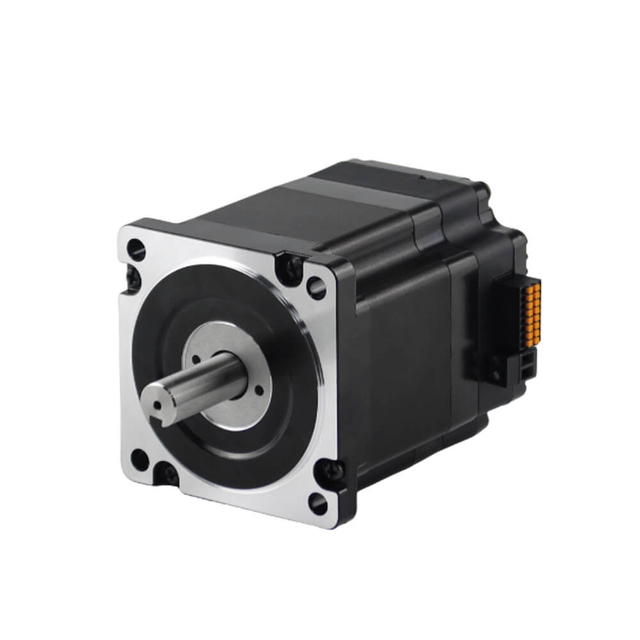
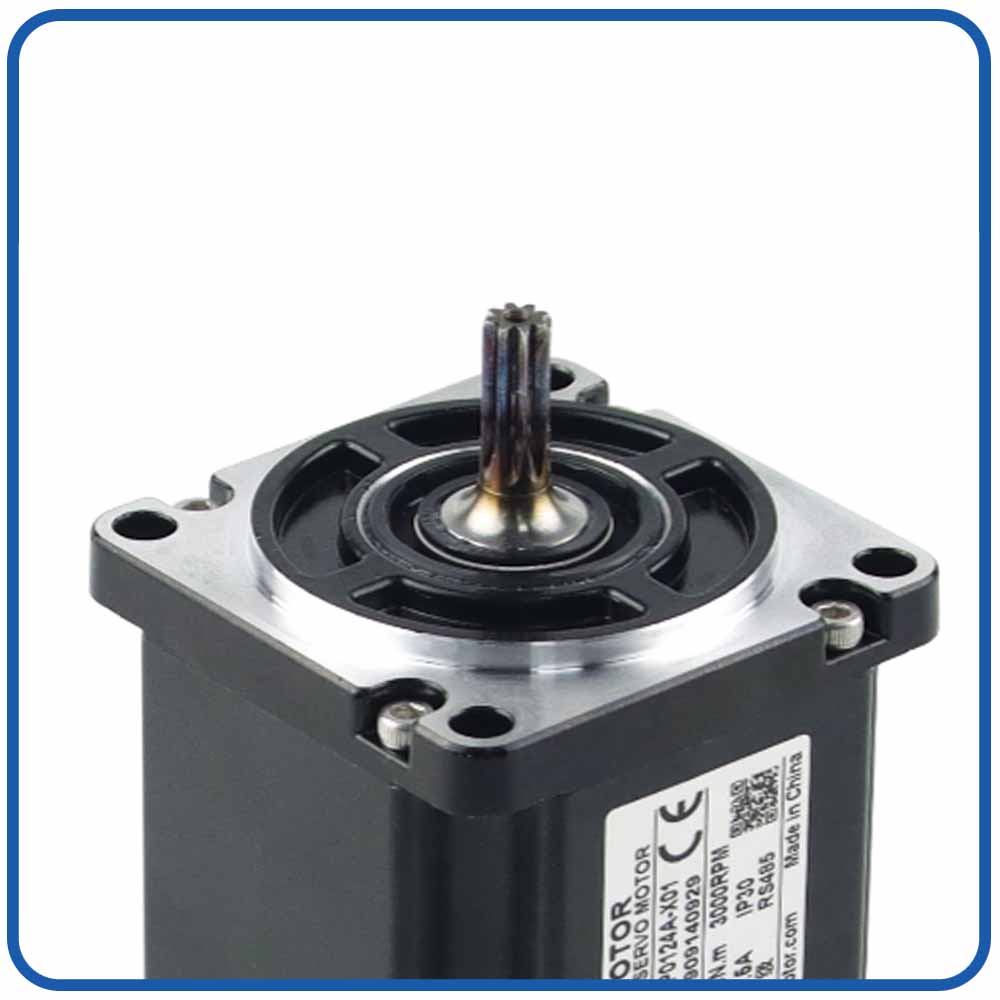
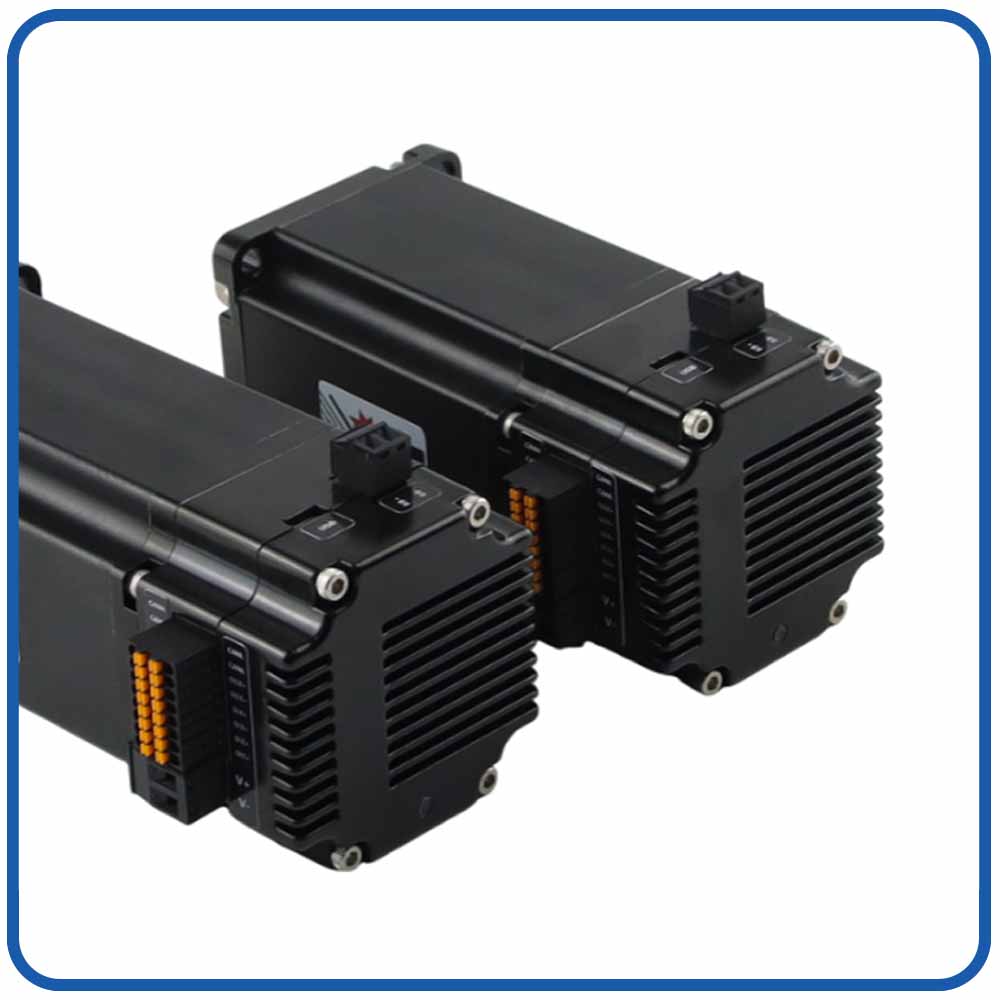
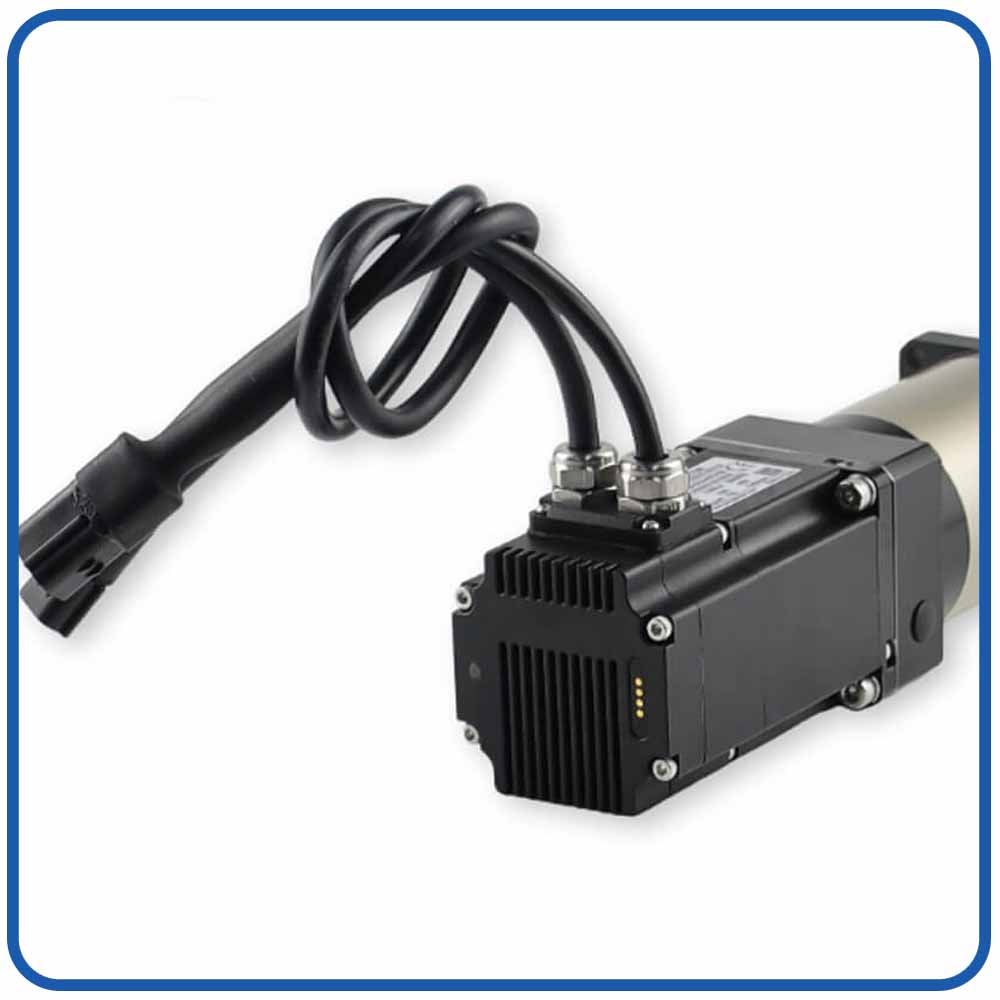
An integrated stepper servo motor is a closed-loop motion control device that combines a stepper motor, an encoder, and a motor driver into a single compact unit. Unlike traditional open-loop stepper motors, which rely on input pulse signals without continuously monitoring actual rotor movement, an integrated stepper servo motor uses real-time encoder feedback to track motor position and detect deviations between commanded and actual movement.
During operation, the integrated drive continuously receives position feedback from the encoder and compares it with the target position. When the motor encounters changing loads or unexpected resistance, the control system can automatically adjust the motor current to maintain stable operation and minimize positioning errors. This closed-loop control mechanism helps reduce missed-step problems, improve positioning consistency, and optimize motor performance under varying operating conditions.
For automatic capping machines, integrated stepper servo motors offer several practical advantages. They provide precise rotational positioning for capping head control, stable motion for bottle indexing mechanisms, and controlled acceleration and deceleration during repetitive start-stop operations. Their compact design also eliminates the need for a separately installed motor driver, reducing wiring complexity and saving valuable installation space inside packaging equipment.
Key technical advantages include:
Closed-Loop Position Control: Encoder feedback continuously monitors actual rotor position, helping detect and correct positioning deviations.
Improved Torque Performance: The integrated drive adjusts motor current according to load requirements, providing more effective torque utilization.
Reduced Motor Heating: Optimized current control helps minimize unnecessary power consumption and heat generation.
Compact Integration: Combining the motor, encoder, and driver into one assembly simplifies machine installation and electrical system design.
Stable Motion Control: Programmable acceleration, deceleration, and positioning profiles support consistent operation during frequent capping cycles.
Fault Detection: Depending on the model, the drive can identify position errors, overload conditions, and other operating abnormalities.
Compared with conventional open-loop stepper motors, integrated stepper servo motors provide an additional layer of motion feedback and operational monitoring. This makes them particularly suitable for automatic packaging equipment requiring repeatable positioning, reliable operation, and flexible motion control.
For automatic capping machine manufacturers, they offer a practical balance of positioning accuracy, torque control capability, compact structure, and cost-effective automation.
2. Why Do Automatic Capping Machines Need Precise Motion Control?
In automatic capping machines, precise motion control is essential for maintaining consistent cap positioning, tightening performance, production speed, and overall packaging quality. During the capping process, multiple mechanical movements must work together, including bottle positioning, cap feeding, capping head rotation, vertical movement, and cap tightening. Any inconsistency in these operations can result in loose caps, damaged threads, bottle misalignment, or production interruptions.
As modern packaging lines increasingly require higher throughput and greater product consistency, manufacturers need motion control systems capable of delivering accurate positioning, smooth acceleration and deceleration, and reliable performance under changing mechanical loads. Integrated stepper servo motors help meet these requirements through closed-loop encoder feedback and programmable motion control.
The following factors explain why precise motion control is important for automatic capping machines.
Cap-tightening consistency directly affects the sealing quality and reliability of packaged products. If the applied tightening torque is insufficient, caps may become loose during transportation or storage, increasing the risk of leakage and contamination. Conversely, excessive tightening force can damage bottle threads, deform plastic caps, or make containers difficult to open.
An integrated stepper servo motor can provide controlled rotational movement and repeatable positioning during the tightening process. When combined with a suitable torque sensor, mechanical clutch, or dedicated torque-control system, it can help maintain consistent tightening conditions across repeated production cycles.
For packaging applications involving different cap diameters, materials, and thread specifications, precise motor control also makes it easier to configure rotational speed, acceleration, and operating sequences according to specific production requirements.
2.2 Improving Capping Head Positioning Accuracy
The capping head must align correctly with the bottle opening before the tightening operation begins. Misalignment can cause the cap to engage improperly with the bottle threads, resulting in cross-threading, damaged packaging components, or incomplete sealing.
Integrated stepper servo motors use encoder feedback to monitor actual motor movement and help maintain accurate rotational positioning. When driving a capping head through an appropriate mechanical transmission, they can support repeatable angular positioning and controlled movement between operating positions.
This capability is particularly valuable in multi-head automatic capping machines, where several capping units must perform synchronized movements to maintain consistent production quality.
2.3 Handling Frequent Start-Stop Operations
Automatic capping machines typically operate through repetitive motion cycles involving acceleration, rotation, tightening, deceleration, and stopping. These frequent start-stop movements place considerable demands on motor response, acceleration torque, and thermal performance.
Traditional open-loop stepper motors may experience missed steps or positioning errors when operating under excessive loads or aggressive acceleration profiles.
Integrated stepper servo motors use closed-loop feedback to monitor rotor movement, allowing the drive to detect position deviations and adjust motor current within its operating limits.
Their programmable acceleration and deceleration profiles also help reduce sudden mechanical impacts, minimize vibration, and improve the smoothness of repetitive capping operations.
2.4 Maintaining Stable Operation Under Variable Loads
The mechanical load of an automatic capping machine is not always constant. Different bottle sizes, cap materials, thread structures, and mechanical friction conditions can influence the resistance encountered by the capping mechanism.
For example, a capping head may experience different rotational resistance when handling plastic screw caps compared with metal closures. Changes in mechanical friction can also affect the torque required during repeated operating cycles.
An integrated stepper servo motor continuously monitors rotor position through encoder feedback. When the actual movement deviates from the commanded position, its drive can respond by adjusting motor current, provided the load remains within the motor's operating capability.
This closed-loop operation helps improve positioning consistency and reduces the risk of undetected missed steps associated with conventional open-loop stepper motors.
2.5 Synchronizing Multiple Motion Mechanisms
Modern automatic capping machines often combine several motion mechanisms, including bottle conveyors, indexing tables, cap-feeding systems, and rotating capping heads. These mechanisms must operate in a coordinated sequence to ensure that each bottle receives the correct cap at the appropriate time.
Precise motor positioning and programmable motion profiles help synchronize these operations with the machine's PLC or motion controller.
For example, the bottle indexing mechanism must position a container beneath the capping head before the tightening sequence starts. Once capping is completed, the mechanism must move the finished bottle to the next production station while preparing the following container.
Integrated stepper servo motors with suitable pulse-control or industrial communication interfaces can support these coordinated movements, helping improve production consistency and reduce unnecessary machine downtime.
2.6 Reducing Mechanical Vibration and Component Wear
Uncontrolled acceleration, sudden stopping, and inconsistent positioning can generate mechanical vibration throughout an automatic capping machine. Over time, excessive vibration may accelerate wear on couplings, gears, bearings, guide rails, and other transmission components.
Integrated stepper servo motors support programmable acceleration and deceleration, allowing machine designers to optimize movement profiles according to the mechanical characteristics of each application.
Smoother motor operation can reduce unnecessary mechanical shocks, improve positioning repeatability, and help extend the service life of related transmission components.
In summary, precise motion control is fundamental to achieving consistent tightening performance, accurate positioning, reliable synchronization, and stable production in automatic capping machines. By combining encoder feedback with integrated drive electronics, integrated stepper servo motors provide a practical solution for packaging equipment manufacturers seeking improved motion control and more reliable automated capping operations.
3. Key Applications of Integrated Stepper Servo Motors in Automatic Capping Machines
Integrated stepper servo motors are not necessarily used for every movement in an automatic capping machine. Their suitability depends on the machine structure, required torque, speed, positioning accuracy, and mechanical transmission design.
Several key mechanisms can benefit from their application.
3.1 Capping Head Rotation Control
The capping head is one of the most important mechanisms in an automatic screw capping machine.
Its primary function is to rotate the cap onto the bottle opening while maintaining controlled rotational movement.
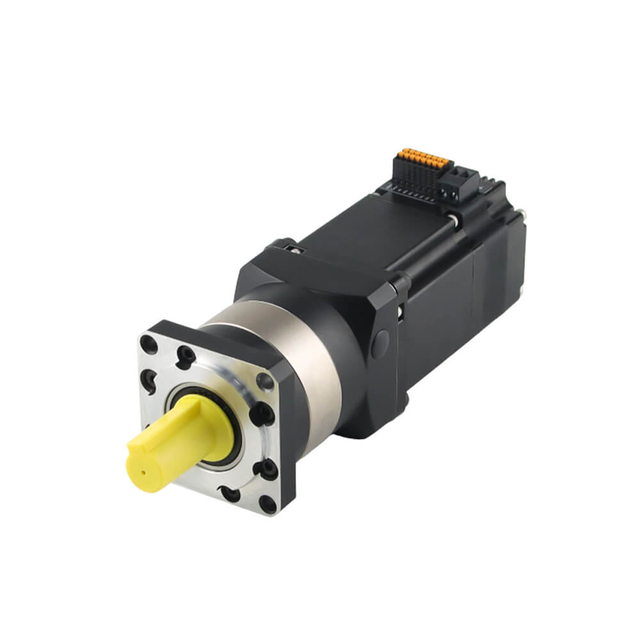
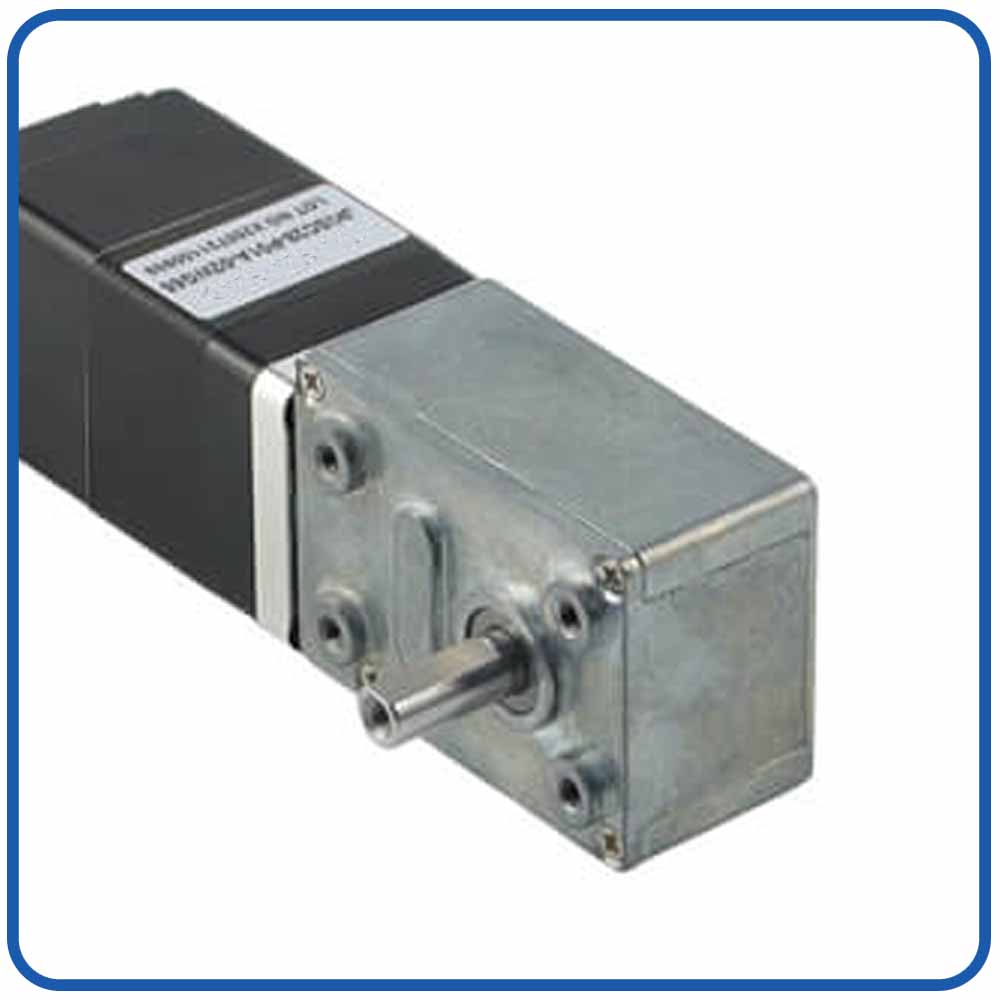
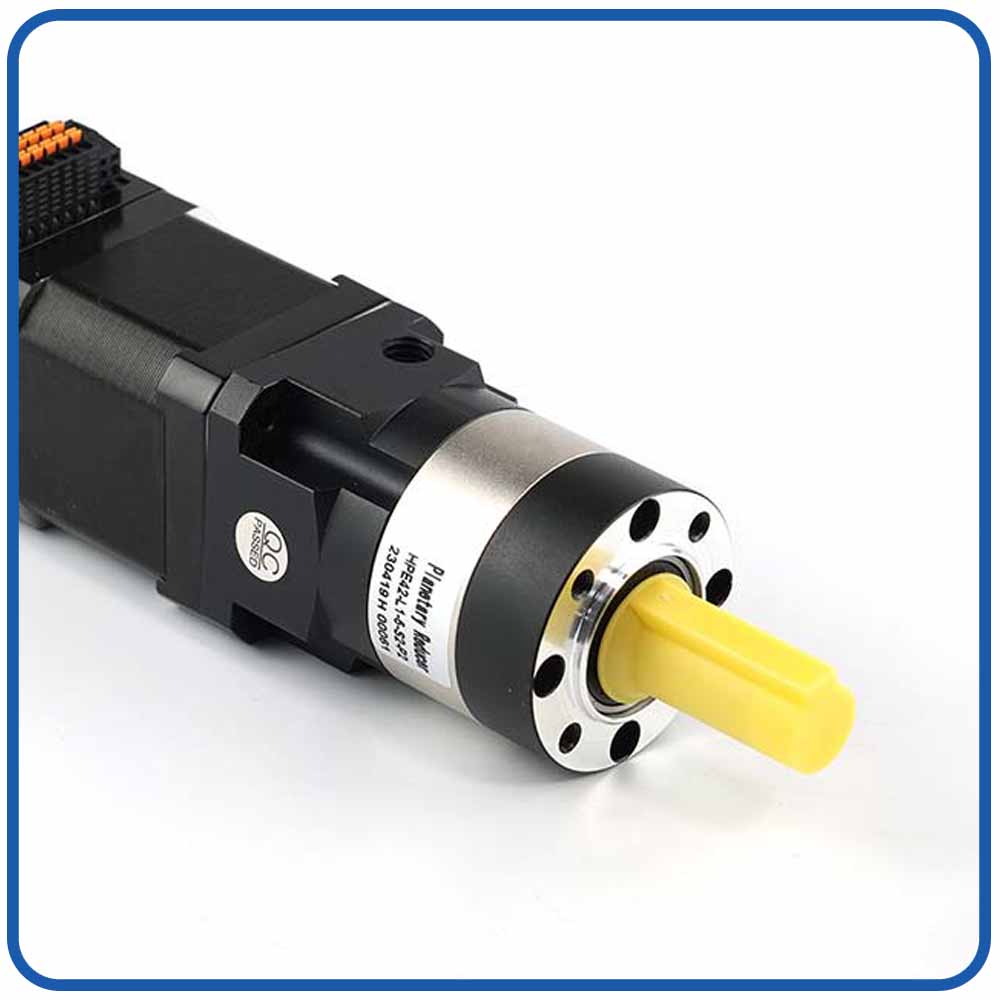
An integrated stepper servo motor can drive the capping head through a suitable coupling, gearbox, or belt transmission.
Its encoder feedback helps monitor rotational position and maintain consistent movement throughout repeated capping cycles.
The main benefits include:
Repeatable rotational positioning.
Controlled acceleration and deceleration.
Improved synchronization with the packaging sequence.
Reduced positioning errors.
More consistent operation under changing mechanical loads.
For applications requiring precise tightening torque, the motor should work with an appropriate torque-control or torque-monitoring mechanism.
3.2 Bottle Positioning and Indexing Mechanisms
Before capping begins, bottles must be accurately positioned beneath the capping heads.
Some automatic capping machines use rotary indexing tables, positioning conveyors, or intermittent feeding mechanisms to move containers between processing stations.
Integrated stepper servo motors can drive these indexing mechanisms when the required torque and speed fall within the motor's operating range.
Their closed-loop positioning capability helps ensure that bottles stop at the correct processing positions.
This is particularly valuable in applications involving multiple capping stations or different bottle diameters.
3.3 Cap Feeding and Sorting Mechanisms
Automatic capping machines often include cap-feeding systems that transport, sort, and orient caps before they reach the capping station.
These mechanisms may include:
Cap sorting discs.
Vibratory bowl feeders.
Cap elevators.
Rotating cap distribution wheels.
Cap transfer conveyors.
Integrated stepper servo motors can drive rotating sorting discs, transfer wheels, or indexing mechanisms where accurate positioning and controlled rotation are required.
For example, a motor-driven cap distribution wheel can use encoder feedback to maintain repeatable rotational movement and coordinate cap delivery with the bottle positioning sequence.
However, vibratory bowl feeders generally require specialized vibration-drive systems rather than conventional rotary stepper servo motors.
3.4 Capping Head Height Adjustment
Different packaging products require different cap heights and bottle dimensions.
Automatic capping machines may therefore incorporate motorized vertical adjustment systems to accommodate different container specifications.
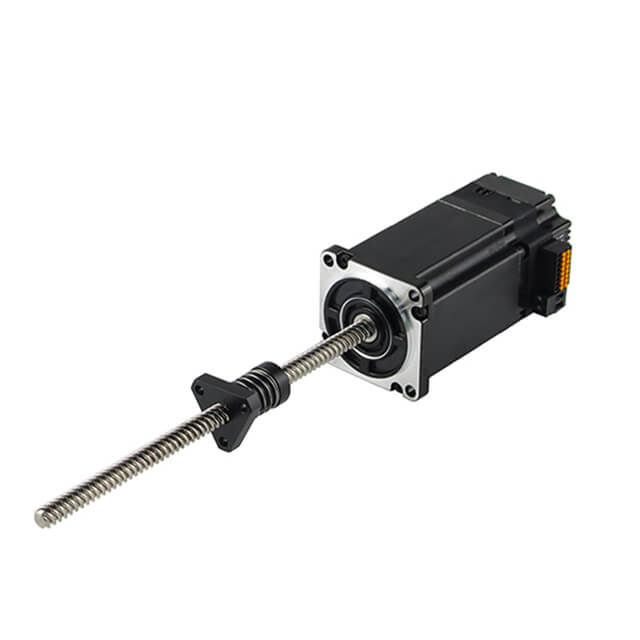
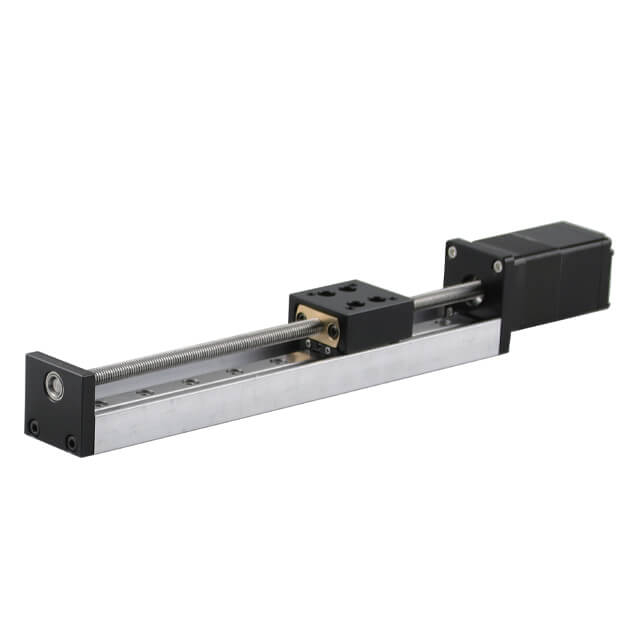
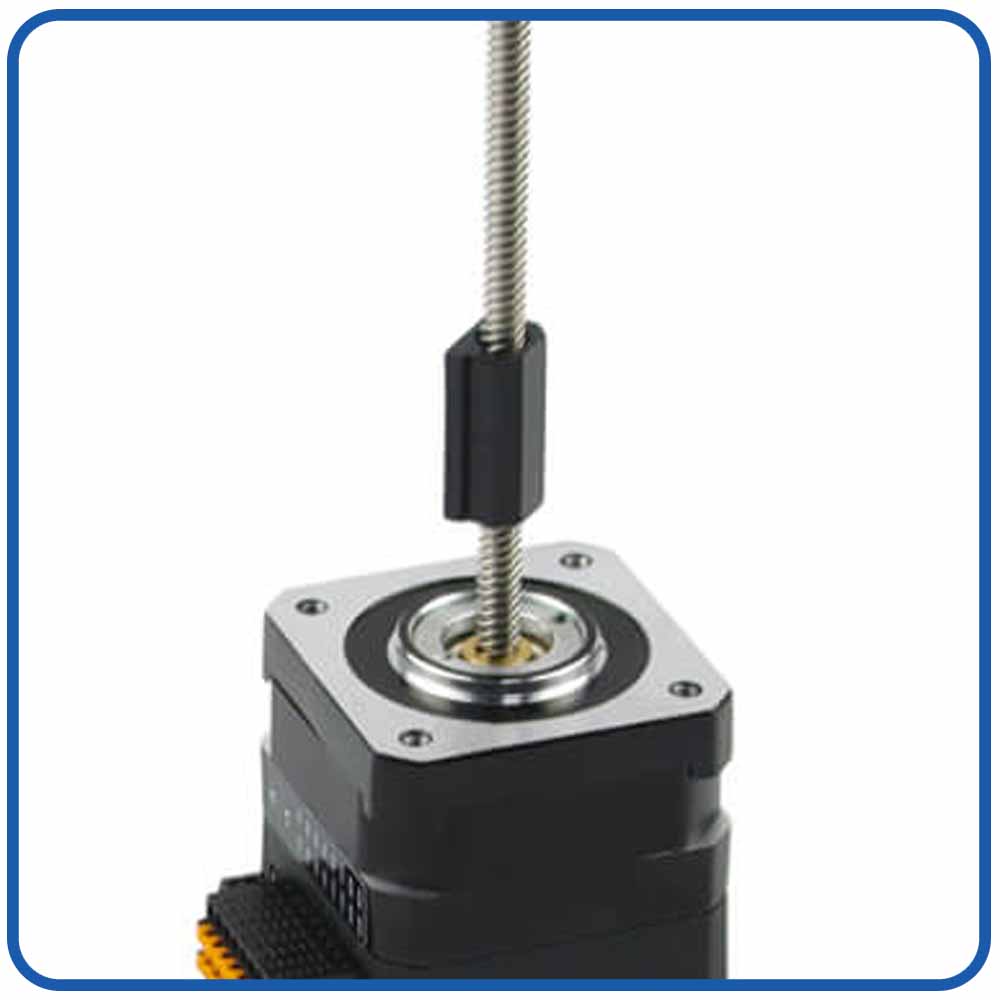
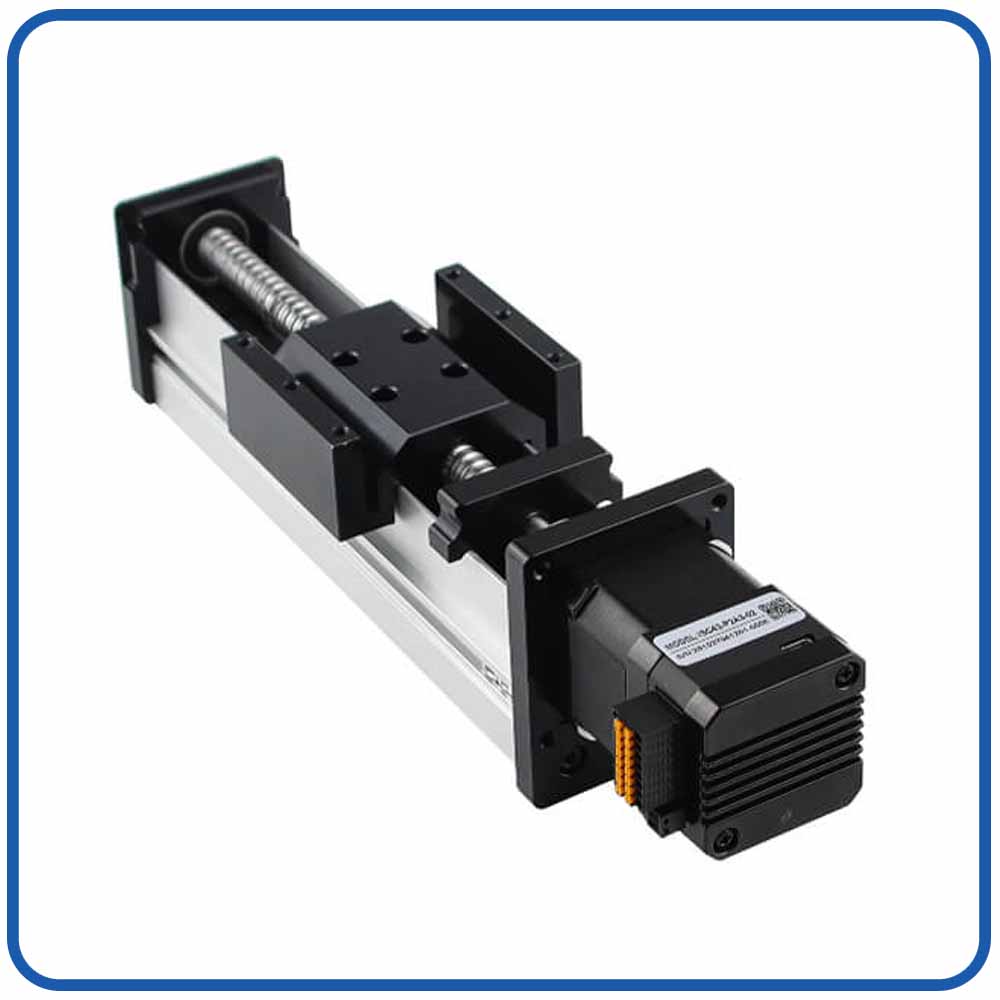
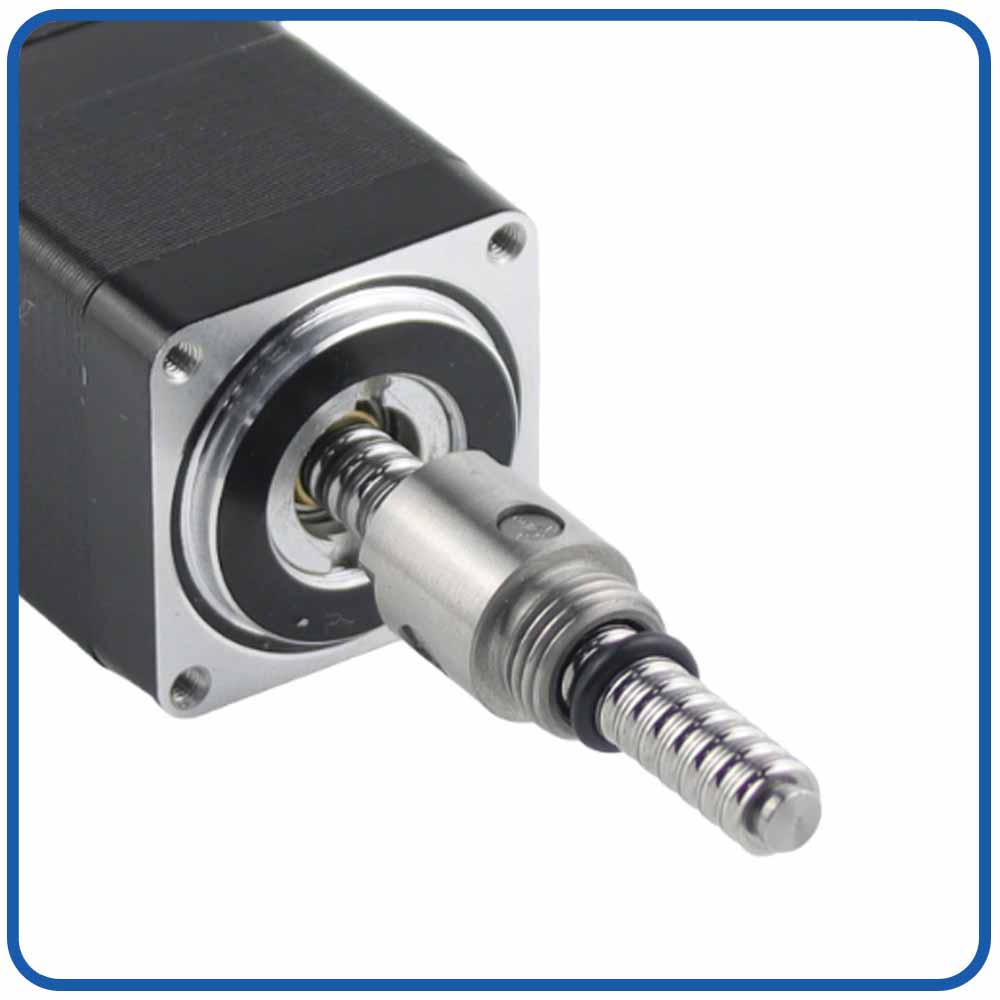
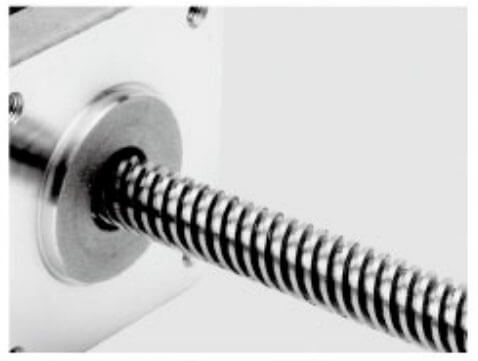
An integrated stepper servo motor can drive a ball screw, lead screw, or linear transmission mechanism to adjust the height of the capping head.
Encoder feedback helps monitor motor position and improve repeatability when switching between production formats.
This makes automated format changes more convenient and reduces dependence on manual mechanical adjustments.
The motor must be selected according to the vertical load, required travel distance, acceleration, screw lead, and holding requirements.
3.5 Conveyor Synchronization
In continuous packaging production lines, bottle movement must be coordinated with the capping process.
An integrated stepper servo motor can drive selected conveyor sections, indexing wheels, or synchronization mechanisms.
Through encoder feedback and coordinated motion commands, the motor can help maintain repeatable movement and positioning.
For machines using electronic synchronization, the motor controller can receive commands from a PLC or motion controller to coordinate conveyor movement with the capping head.
This helps reduce positioning inconsistencies and supports more flexible production sequences.
4. Integrated Stepper Servo Motor vs. Traditional Stepper Motor in Automatic Capping Machines
Traditional open-loop stepper motors are widely used in packaging automation because of their simple control architecture and relatively low cost.
However, their operation can become less predictable when mechanical loads fluctuate or acceleration requirements increase.
The following comparison highlights the differences.
Performance Parameter
Traditional Stepper Motor
Integrated Stepper Servo Motor
Control architecture
Open-loop in typical applications
Closed-loop with encoder feedback
Position monitoring
No standard encoder feedback
Encoder-based feedback
Missed-step detection
Generally unavailable
Available through feedback
Load adaptability
Limited
Improved through feedback and current adjustment
Current control
Depends on driver settings
Can be optimized according to load
Wiring
Separate motor and driver
Integrated motor and driver
Installation
Requires external driver
More compact installation
Motion reliability
Sensitive to excessive loads
Better ability to detect position deviations
Cost
Generally lower
Generally higher
Application flexibility
Suitable for simpler positioning
Suitable for more demanding motion control
For automatic capping machines that require repetitive positioning, frequent acceleration and deceleration, and more reliable operation under variable loads, integrated stepper servo motors offer important advantages.
Nevertheless, traditional stepper motors remain suitable for less demanding auxiliary mechanisms where the load is predictable and positioning requirements are relatively simple.
5. Integrated Stepper Servo Motor vs. Traditional Servo Motor
Another important consideration is the comparison between integrated stepper servo motors and conventional AC servo systems.
Both technologies can provide closed-loop motion control, but their motor structures, torque characteristics, speed ranges, and application costs differ.
Parameter
Integrated Stepper Servo Motor
Conventional AC Servo Motor
Motor technology
Stepper motor with encoder feedback
Servo motor with encoder feedback
Position control
Closed-loop
Closed-loop
Low-speed torque
Generally strong
Depends on motor design
High-speed performance
Limited by stepper characteristics
Generally better for high-speed applications
System integration
Driver integrated into motor
Often requires separate servo drive
Installation space
Compact
Depends on motor and drive configuration
System cost
Often economical for moderate-power applications
Can be higher
Typical application
Indexing, positioning, auxiliary motion
High-speed, high-dynamic motion control
For many automatic capping machines, integrated stepper servo motors provide an effective balance between performance, installation convenience, and cost.
However, high-speed rotary capping heads with demanding torque and acceleration requirements may be better served by conventional AC servo motors.
The final choice should be based on actual motion profiles rather than motor type alone.
6. Important Technical Parameters When Selecting an Integrated Stepper Servo Motor
Selecting the correct motor is essential for ensuring reliable operation and long-term performance.
We recommend evaluating the following technical parameters.
6.1 Rated Torque and Peak Torque
Motor torque is one of the most important selection criteria.
The rated torque determines the motor's continuous torque capability under specified operating conditions, while peak torque indicates the maximum torque available for a limited period.
For automatic capping machines, we need to consider:
Capping head mechanical resistance.
Transmission friction.
Acceleration torque.
Inertial load.
Gearbox efficiency.
Required operating speed.
The motor should provide sufficient continuous torque for normal operation and adequate peak torque for acceleration and transient load conditions.
We should also avoid selecting a motor solely according to its holding torque, because holding torque does not represent the available torque at operating speed.
6.2 Rated Speed and Maximum Speed
Different capping mechanisms require different rotational speeds.
A cap-feeding mechanism may operate at a relatively low speed with frequent indexing, while a rotary capping head may require faster and more continuous rotation.
When selecting an integrated stepper servo motor, we should evaluate its torque-speed curve.
Stepper motors generally experience declining available torque as rotational speed increases because winding inductance and electrical characteristics limit current establishment.
Therefore, the motor must provide sufficient torque at the actual operating speed, not merely at standstill.
6.3 Encoder Resolution
The encoder provides feedback about actual motor movement.
Higher encoder resolution can improve position measurement granularity, although actual positioning accuracy also depends on motor characteristics, control algorithms, mechanical backlash, coupling stiffness, and load conditions.
For automatic capping applications requiring repeatable angular positioning, we recommend selecting an encoder specification appropriate to the required positioning tolerance.
6.4 Flange Size and Installation Dimensions
The motor flange must match the machine's mechanical mounting structure.
Common stepper motor frame sizes include:
NEMA 17: 42 mm flange.
NEMA 23: 57 mm flange.
NEMA 24: approximately 60 mm flange.
NEMA 34: 86 mm flange.
The appropriate flange size depends on torque requirements, available installation space, shaft dimensions, and mounting configuration.
Smaller motors may be suitable for cap-feeding and positioning mechanisms, while larger frame sizes may be required for mechanisms with higher inertia or greater mechanical resistance.
These are general frame-size references, not universal motor selection recommendations.
6.5 Communication and Control Interfaces
Modern automatic capping machines commonly use PLC-based control systems.
The integrated stepper servo motor should therefore support communication interfaces compatible with the machine's control architecture.
Common control methods include:
Pulse and direction.
CW/CCW pulse control.
RS485 communication.
Modbus RTU.
CANopen.
EtherCAT, where supported by the specific motor series.
The appropriate interface depends on the machine's control system, synchronization requirements, and number of motion axes.
For simple positioning, pulse and direction control may be sufficient. For more complex multi-axis equipment, network-based communication can simplify coordination and parameter management.
7. How Integrated Stepper Servo Motors Improve Production Efficiency
Beyond positioning accuracy, integrated stepper servo motors can improve the overall design and operation of automatic capping equipment.
7.1 Reduced Electrical Cabinet Space
Traditional motion control systems often require separate motor drivers installed inside an electrical cabinet.
Integrated stepper servo motors combine the motor and drive electronics, reducing the number of separately mounted components.
This can help packaging machine manufacturers create more compact electrical control systems.
However, installation still requires appropriate power supplies, protection devices, communication wiring, and thermal management.
7.2 Simplified Wiring and Installation
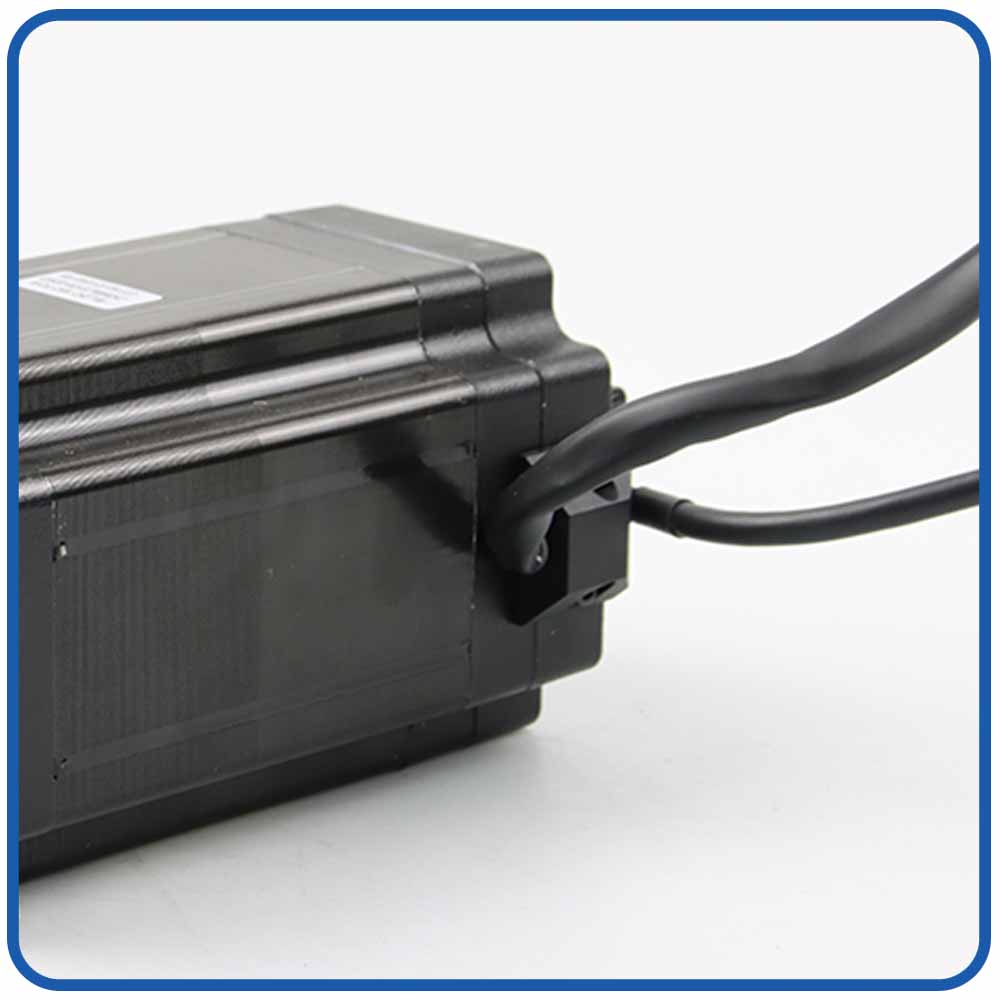
With integrated electronics, the connection between the motor and its dedicated external driver is eliminated.
This can reduce wiring complexity and shorten installation time.
For automatic capping machines containing multiple motion axes, simplified wiring can also make troubleshooting and system maintenance more convenient.
7.3 Reduced Heat Generation Under Suitable Operating Conditions
Integrated stepper servo drives can adjust motor current according to operating requirements.
When the motor does not require maximum torque, the drive may reduce current to limit unnecessary power consumption and heat generation.
This is particularly useful in machines that operate through repeated acceleration, positioning, and holding cycles.
Nevertheless, actual energy savings depend on motor sizing, duty cycle, operating speed, current settings, and mechanical load.
7.4 Improved Fault Detection
Encoder feedback allows the drive to identify certain motion abnormalities.
Depending on the motor model and control configuration, available protection and diagnostic functions may include:
Position deviation alarms.
Overcurrent protection.
Overvoltage protection.
Undervoltage protection.
Overtemperature protection.
Motor stall detection.
Encoder fault detection.
These functions help machine operators identify potential problems before they cause more serious production interruptions.
8. How to Calculate the Required Motor Torque for an Automatic Capping Machine
Proper motor sizing requires more than estimating the weight of the mechanical assembly.
We need to consider rotational inertia, acceleration, friction, transmission efficiency, and operating speed.
The inertia term represents the torque required to accelerate the rotating load, while the friction term represents mechanical resistance.
For example, a capping head with relatively high rotational inertia may require considerable acceleration torque even if its steady-state operating resistance is relatively low.
When a gearbox is used, its reduction ratio and efficiency must be included in the calculation.
We should also verify the motor's available torque at the required operating speed and ensure that its continuous thermal rating is sufficient for the production duty cycle.
For applications involving direct cap tightening, the required output torque should be determined from the actual cap, container, sealing material, and process specifications.
9. Common Challenges When Applying Integrated Stepper Servo Motors
Although integrated stepper servo motors offer advantages such as closed-loop positioning, compact installation, and simplified wiring, their performance in automatic capping machines still depends on proper motor selection, mechanical design, electrical configuration, and operating conditions. Incorrect motor sizing or unsuitable control parameters may lead to positioning deviations, insufficient torque, excessive temperature rise, or unstable machine operation.
For automatic capping machine manufacturers, understanding these potential challenges is essential for achieving reliable motion control, maintaining consistent capping quality, and reducing equipment maintenance requirements.
9.1 Incorrect Motor Torque and Power Selection
One of the most common challenges is selecting an integrated stepper servo motor with insufficient torque for the actual mechanical load.
In automatic capping machines, different mechanisms have different torque requirements. A capping head must overcome rotational resistance during cap tightening, while a bottle indexing mechanism needs sufficient torque to accelerate and position containers accurately. Vertical adjustment mechanisms must also account for the weight of the moving assembly and the resistance of the transmission system.
If the selected motor cannot provide sufficient torque at the required operating speed, several problems may occur:
Positioning errors during acceleration or deceleration.
Motor overload or position deviation alarms.
Unstable operation under changing mechanical loads.
Excessive motor temperature.
Reduced production efficiency.
To avoid these problems, we recommend calculating the required continuous torque, peak torque, rotational speed, load inertia, and acceleration requirements before selecting a motor.
It is also important to evaluate the motor's torque-speed curve, because the available torque of a stepper motor generally decreases as rotational speed increases.
9.2 Improper Acceleration and Deceleration Settings
Automatic capping machines frequently perform repetitive start-stop operations. The capping head must accelerate to the required rotational speed, tighten the cap, decelerate, and return to its designated position.
If acceleration and deceleration parameters are configured incorrectly, the motor may generate excessive vibration, mechanical impact, or position deviation.
For example, an excessively short acceleration time can create high inertial torque requirements, particularly when driving a capping head with significant rotational inertia.
Conversely, excessively slow acceleration and deceleration may increase the production cycle time and reduce packaging throughput.
We recommend configuring acceleration and deceleration profiles according to the motor's torque capability, mechanical inertia, transmission ratio, and actual production cycle.
Optimized motion profiles help balance operating speed, positioning accuracy, and mechanical stability.
9.3 Mechanical Backlash and Transmission Errors
Encoder feedback improves motor position monitoring, but it does not automatically eliminate mechanical backlash or transmission inaccuracies.
In automatic capping machines, integrated stepper servo motors may drive capping heads, indexing tables, or vertical adjustment mechanisms through gearboxes, belt drives, couplings, ball screws, or lead screws.
If these transmission components have excessive backlash, clearance, or mechanical deformation, the actual movement of the driven mechanism may differ from the motor's measured position.
This can affect capping head alignment, bottle positioning accuracy, and the repeatability of mechanical movements.
To minimize these problems, we recommend:
Selecting low-backlash gearboxes where positioning accuracy is important.
Using suitable shaft couplings with sufficient torsional stiffness.
Maintaining proper mechanical alignment.
Checking transmission clearance during installation.
Selecting appropriate bearings and mechanical support structures.
For applications requiring high positioning accuracy, the complete mechanical transmission system must be evaluated rather than relying solely on encoder resolution.
9.4 Improper Encoder and Control Parameter Configuration
The encoder is a critical component of an integrated stepper servo motor because it provides feedback about actual rotor movement.
However, encoder resolution, feedback compatibility, and drive parameter settings must match the requirements of the application.
Incorrect configuration may cause unstable positioning, excessive position deviation alarms, or unexpected motor responses.
For example, an inappropriate position deviation threshold may trigger unnecessary alarms during normal acceleration, while an excessively permissive threshold may prevent the system from identifying certain abnormal operating conditions promptly.
We recommend verifying encoder specifications, electronic gearing, pulse input settings, control modes, and position deviation limits during commissioning.
The selected control parameters should be tested under actual mechanical loads and operating speeds.
9.5 Excessive Motor Temperature During Continuous Operation
Automatic capping machines often operate for extended periods with repetitive acceleration, deceleration, and holding cycles. These operating conditions can generate heat in the motor windings and integrated drive electronics.
Although integrated stepper servo motors can optimize current according to operating requirements, excessive mechanical loads or unsuitable current settings may still result in temperature rise.
High operating temperatures can affect motor performance, electronic component reliability, and long-term equipment stability.
To address this challenge, we recommend considering:
Motor rated current and peak current.
Continuous operating torque.
Actual duty cycle.
Ambient temperature.
Installation ventilation.
Drive thermal protection.
Mechanical load conditions.
We should also avoid selecting a motor based only on its maximum holding torque. Continuous operating requirements and thermal performance must be evaluated together.
9.6 Communication and PLC Compatibility Issues
Modern automatic capping machines commonly use PLCs and motion controllers to coordinate bottle feeding, cap positioning, capping head rotation, and conveyor movement.
Integrated stepper servo motors may support different control interfaces, including pulse and direction, RS485, Modbus RTU, CANopen, or other industrial communication protocols, depending on the model.
If the motor's communication interface is incompatible with the machine's control architecture, additional hardware or communication configuration may be required.
Potential problems include:
Incorrect pulse signal settings.
Communication interruptions.
Incompatible baud rates or communication parameters.
Incorrect command scaling.
Delayed motion commands.
Improper synchronization between multiple axes.
Before purchasing an integrated stepper servo motor, we recommend confirming its control interface, supported communication protocols, input and output functions, and compatibility with the existing PLC system.
9.7 Unsuitable Environmental Protection
Automatic capping machines may operate in environments exposed to water splashes, cleaning agents, dust, oil, and product residues.
This is particularly important in food, beverage, pharmaceutical, and chemical packaging applications, where equipment may require frequent cleaning.
If an integrated stepper servo motor does not provide adequate environmental protection, moisture or contaminants may enter the motor or electronic housing, potentially causing electrical faults, corrosion, or premature component failure.
We recommend evaluating the motor's IP protection rating, connector sealing, cable protection, and installation position according to the actual working environment.
For applications involving frequent washdown, the motor may require additional protective measures or a specialized washdown-rated design.
9.8 Inadequate Maintenance and Troubleshooting
Although integrated stepper servo motors simplify system installation by combining the motor and driver, regular inspection remains important.
Mechanical looseness, damaged cables, poor electrical connections, excessive vibration, and abnormal temperature rise can all affect long-term operating stability.
Without appropriate maintenance procedures, minor problems may gradually develop into more serious equipment failures.
We recommend establishing a routine inspection program covering:
Motor mounting bolts and mechanical connections.
Encoder and power cables.
Electrical connectors.
Gearbox and coupling conditions.
Operating temperature.
Position deviation and alarm records.
Abnormal vibration or noise.
Drive diagnostic functions can also help maintenance personnel identify operating abnormalities and improve troubleshooting efficiency.
Summary
Applying integrated stepper servo motors to automatic capping machines requires careful consideration of motor sizing, motion profiles, mechanical transmission, encoder configuration, thermal management, and communication compatibility.
Although closed-loop feedback helps improve positioning reliability and detect abnormal motor movement, it cannot compensate for every mechanical or electrical design problem.
For the best results, we recommend evaluating the complete motion control system, including the motor, integrated drive, transmission mechanism, PLC, and actual operating load.
By addressing these common application challenges, automatic capping machine manufacturers can achieve more stable motor operation, consistent positioning, reduced mechanical stress, and improved packaging production efficiency.
10. How to Choose the Right Integrated Stepper Servo Motor for Automatic Capping Machines
Before selecting an integrated stepper servo motor, we recommend evaluating the following factors.
Selection Factor
Key Considerations
Application
Capping head, bottle indexing, cap feeding, or height adjustment
Rated torque
Continuous mechanical load
Peak torque
Acceleration and transient loads
Operating speed
Actual rotational speed and torque-speed curve
Positioning accuracy
Required angular or linear positioning tolerance
Encoder
Resolution and feedback compatibility
Flange size
Available mounting dimensions
Shaft configuration
Diameter, length, keyway, and coupling
Communication
Pulse, RS485, CANopen, or other supported protocols
Protection rating
Dust, moisture, and cleaning environment
Duty cycle
Continuous operation or intermittent motion
Transmission
Direct drive, gearbox, belt, or screw mechanism
For machine builders, we recommend testing the selected motor under actual operating conditions.
A practical evaluation should include continuous operation, repeated start-stop cycles, maximum load, acceleration and deceleration, and temperature rise.
This helps verify whether the selected motor can satisfy the machine's production requirements.
The packaging industry is moving toward higher automation, flexible production, and intelligent manufacturing.
Automatic capping machines are increasingly expected to accommodate different bottle sizes, cap specifications, and production speeds with minimal manual intervention.
Integrated stepper servo motors can support these developments through compact construction, encoder feedback, and flexible motion control.
Several trends are particularly relevant.
Flexible production: Motorized positioning and programmable motion profiles make it easier to adapt machine settings to different packaging formats.
Intelligent diagnostics: Encoder feedback and drive alarms can provide useful information for machine monitoring and maintenance.
Modular machine design: Integrated motors reduce the need for separate drive installations, supporting more compact modular equipment.
Networked motion control: Communication interfaces allow motors to exchange operating commands and status information with PLCs and other automation devices.
Improved energy management: Load-dependent current adjustment can help reduce unnecessary motor heating and electrical consumption.
As packaging equipment becomes more sophisticated, integrated stepper servo motors are likely to remain an important option for manufacturers seeking practical and economical motion control solutions.
Conclusion
Integrated stepper servo motors are an effective motion control solution for many automatic capping machines because they combine stepper motor technology, encoder feedback, and integrated drive electronics into a compact unit.
Their closed-loop positioning capability helps improve motion consistency, while integrated construction simplifies installation, reduces external wiring, and supports compact machine design.
They are particularly suitable for capping head positioning, bottle indexing, cap distribution mechanisms, vertical adjustment systems, and selected conveyor synchronization applications.
However, successful implementation depends on selecting the correct rated torque, operating speed, encoder specification, flange size, communication interface, and protection rating.
For automatic capping machine manufacturers, choosing an appropriately configured integrated stepper servo motor can help improve equipment reliability, simplify motion control architecture, and support more efficient packaging production.
The most effective solution is one that matches the motor's actual performance characteristics to the mechanical requirements and operating conditions of the complete capping system.
FAQS:
FAQ 1: Why do automatic capping machines use integrated stepper servo motors?
Automatic capping machines use integrated stepper servo motors because they combine a stepper motor, encoder, and driver into one compact unit. Their closed-loop feedback improves positioning reliability, detects missed steps, and supports stable acceleration and deceleration. These features make them suitable for capping head rotation, bottle indexing, cap positioning, and other repetitive motion control applications.
FAQ 2: How do integrated stepper servo motors improve capping accuracy?
Integrated stepper servo motors improve capping accuracy through encoder feedback, which continuously monitors actual rotor position and compares it with the commanded position. This helps detect positioning deviations and maintain repeatable rotational movement. When combined with suitable mechanical positioning and torque-control mechanisms, they help improve cap alignment and capping consistency.
FAQ 3: Can integrated stepper servo motors control cap-tightening torque?
Integrated stepper servo motors can provide controlled rotational movement and adjustable motor current, but motor current is not automatically equivalent to actual cap-tightening torque. For accurate tightening torque control, the system may require a torque sensor, mechanical clutch, or dedicated torque-control mechanism. The appropriate solution depends on cap specifications, mechanical transmission, and sealing requirements.
FAQ 4: Where are integrated stepper servo motors used in automatic capping machines?
Integrated stepper servo motors can be used in several automatic capping machine mechanisms, including capping head rotation, bottle indexing tables, rotary cap distribution systems, motorized capping head height adjustment, and selected conveyor synchronization mechanisms. Their suitability depends on the required torque, rotational speed, positioning accuracy, and mechanical load.
FAQ 5: What is the difference between an integrated stepper servo motor and a traditional stepper motor?
A traditional open-loop stepper motor operates primarily through commanded pulse signals without continuously monitoring actual rotor position. An integrated stepper servo motor combines encoder feedback with motor control electronics to detect position deviations and adjust current according to operating requirements. This improves motion monitoring, positioning reliability, and load adaptability.
FAQ 6: What is the difference between an integrated stepper servo motor and an AC servo motor?
An integrated stepper servo motor uses a stepper motor with encoder feedback and an integrated driver, while an AC servo motor uses a servo motor and corresponding feedback-based drive system. Integrated stepper servo motors are often suitable for moderate-speed positioning and indexing applications with compact installation requirements. AC servo motors generally offer advantages in demanding high-speed, high-dynamic, and continuous motion applications.
FAQ 7: How do you select the right integrated stepper servo motor for an automatic capping machine?
Motor selection should consider rated torque, peak torque, operating speed, load inertia, acceleration requirements, encoder resolution, flange size, and communication interfaces. We also recommend evaluating the transmission ratio, mechanical efficiency, duty cycle, and installation environment. The selected motor must provide sufficient torque at the actual operating speed rather than relying only on its holding torque specification.
FAQ 8: Which flange sizes are commonly used for integrated stepper servo motors in capping machines?
Common integrated stepper servo motor frame sizes include NEMA 17 (42 mm), NEMA 23 (57 mm), NEMA 24 (approximately 60 mm), and NEMA 34 (86 mm). Smaller motors may be suitable for auxiliary positioning and cap-feeding mechanisms, while larger motors may be required for higher-load indexing or capping mechanisms. The final selection depends on the actual torque requirements and available installation space.
FAQ 9: Can integrated stepper servo motors support PLC control in automatic capping machines?
Yes. Depending on the motor model, integrated stepper servo motors can support pulse and direction signals, RS485, Modbus RTU, CANopen, and other industrial communication interfaces. These connections allow the motor to receive motion commands and exchange operating information with a PLC or motion controller. Protocol compatibility and synchronization requirements should be confirmed before installation.
FAQ 10: How do integrated stepper servo motors reduce maintenance requirements in automatic capping machines?
Integrated stepper servo motors can simplify maintenance by combining the motor and driver into one assembly, reducing separate components and external wiring. Encoder feedback and available diagnostic functions can also help identify position deviations, overload conditions, and other operating abnormalities. Proper motor sizing, electrical protection, mechanical alignment, and regular inspection remain essential for long-term reliability.

 English
 العربية
 Français
 Русский
 Español
 Português
 Deutsch
 italiano
 日本語
 한국어
 Nederlands
 Tiếng Việt
 ไทย
 Polski
 Türkçe
 ພາສາລາວ
 ភាសាខ្មែរ
 Bahasa Melayu
 ဗမာစာ
 Filipino
 Bahasa Indonesia
 magyar
 Română
 Čeština
 Монгол
 қазақ
 Српски
 हिन्दी
 فارسی
 Slovenčina
 Slovenščina
 Norsk
 Svenska
 українська
 Ελληνικά
 Suomi
 Հայերեն
 עברית
 Latine
 Dansk
 Shqip
 বাংলা
 Hrvatski
 Afrikaans
 Gaeilge
 Eesti keel
 Oʻzbekcha
 latviešu
 Azərbaycan dili
 Български
 Català