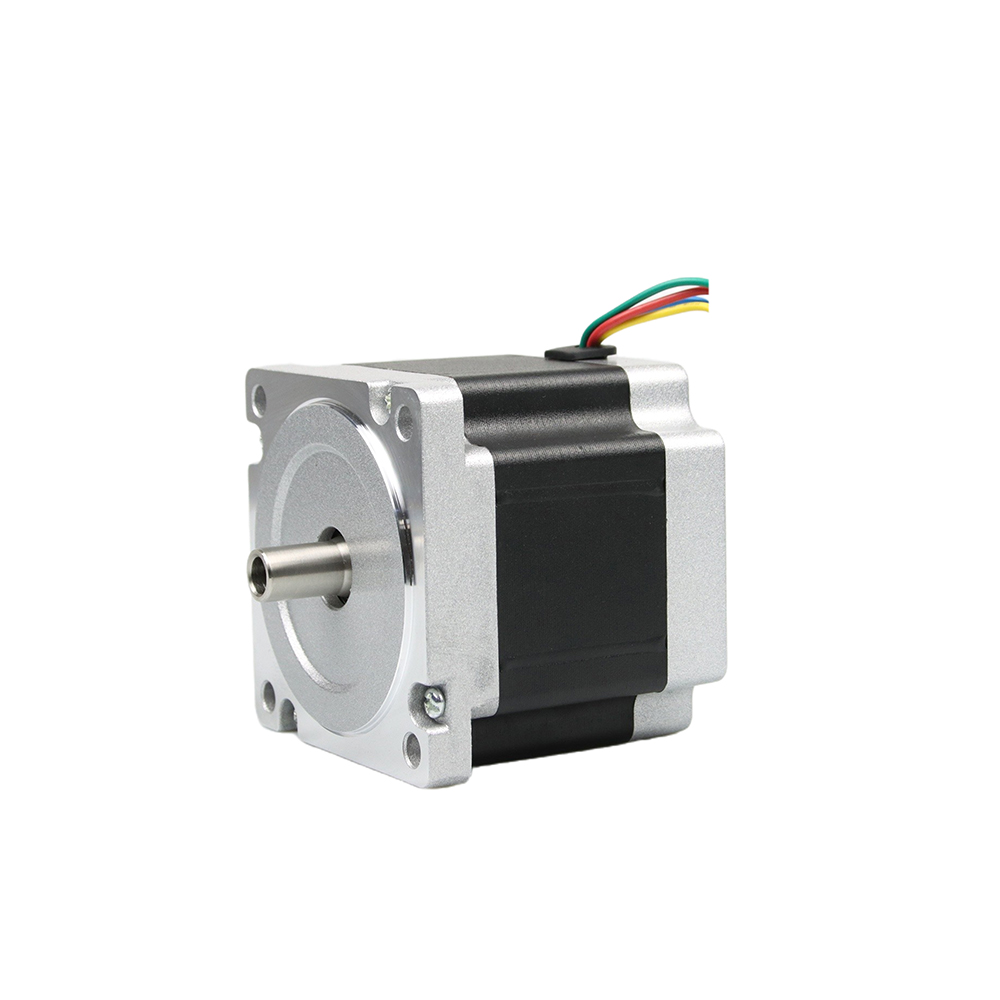
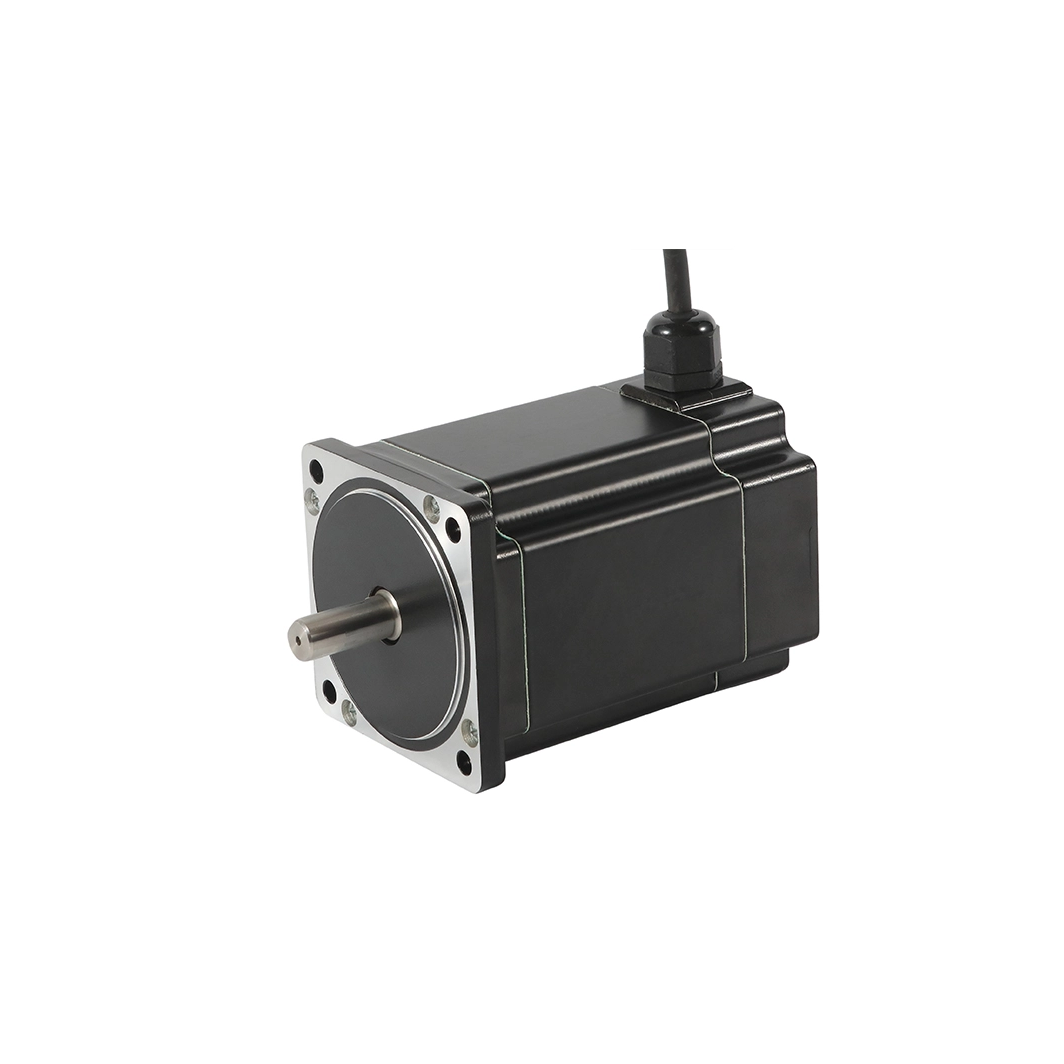
Torque, Accuracy & Reliability Explained
Choosing the right stepper motor for a CNC machine is a critical engineering decision. The motor directly affects positioning accuracy, repeatability, surface finish, and long-term system reliability. Unlike general automation applications, CNC systems demand stable torque, precise motion control, and consistent performance under load.
This guide explains how engineers should select a stepper motor for CNC machines based on real application requirements, not marketing specifications.
1. Understand the CNC Axis Requirements First
Before selecting a stepper motor, define the operating conditions of each CNC axis:
Load type: linear stage, ball screw, belt-driven axis
Required torque: cutting force + friction + acceleration margin
Speed range: low-speed positioning vs rapid traverse
Duty cycle: intermittent vs continuous operation
Accuracy & repeatability: microstepping resolution and mechanical backlash
For CNC applications, motors are typically used on X, Y, and Z axes, each with different torque and speed demands.
2. Torque Is More Important Than Speed (Up to a Point)
A common mistake is selecting a stepper motor based only on holding torque.
Key engineering rule:
Usable torque at operating speed matters more than static holding torque.
When selecting a stepper motor for CNC machines, engineers should focus on:
Torue-speed curve
Typical recommendations:
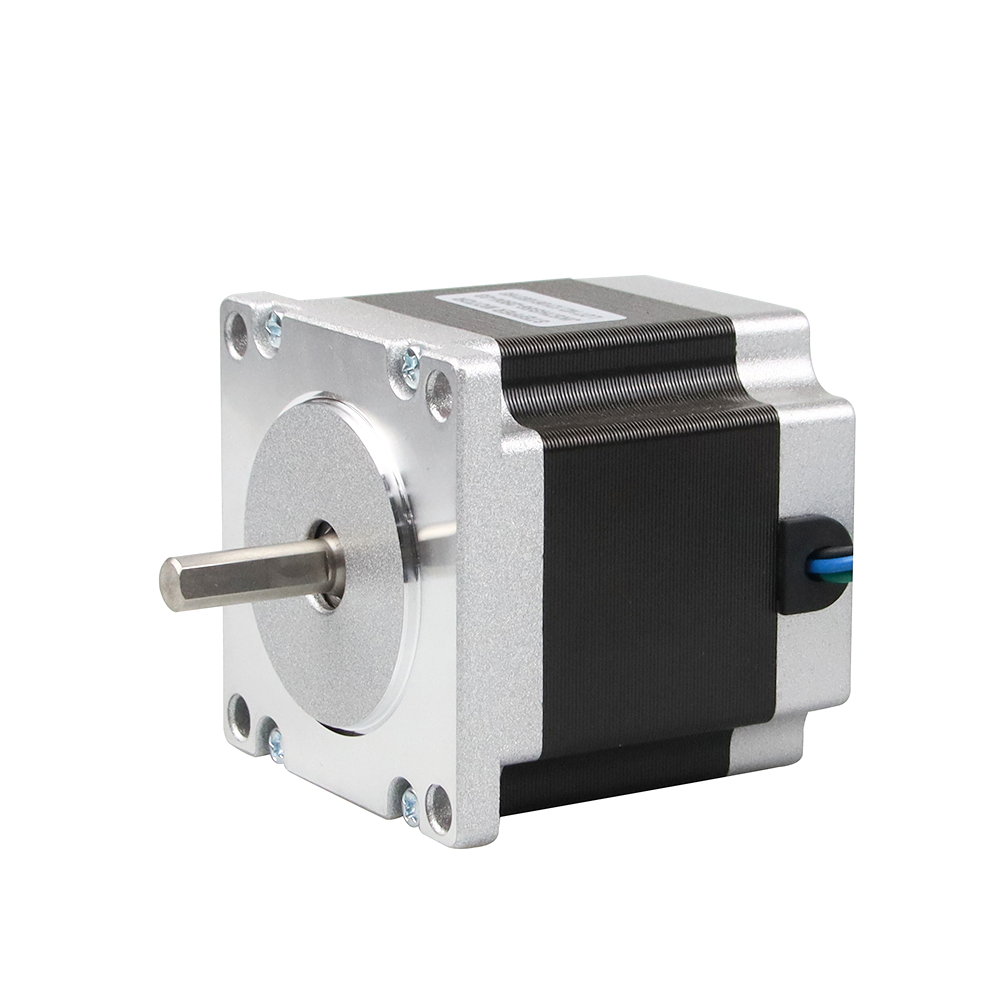
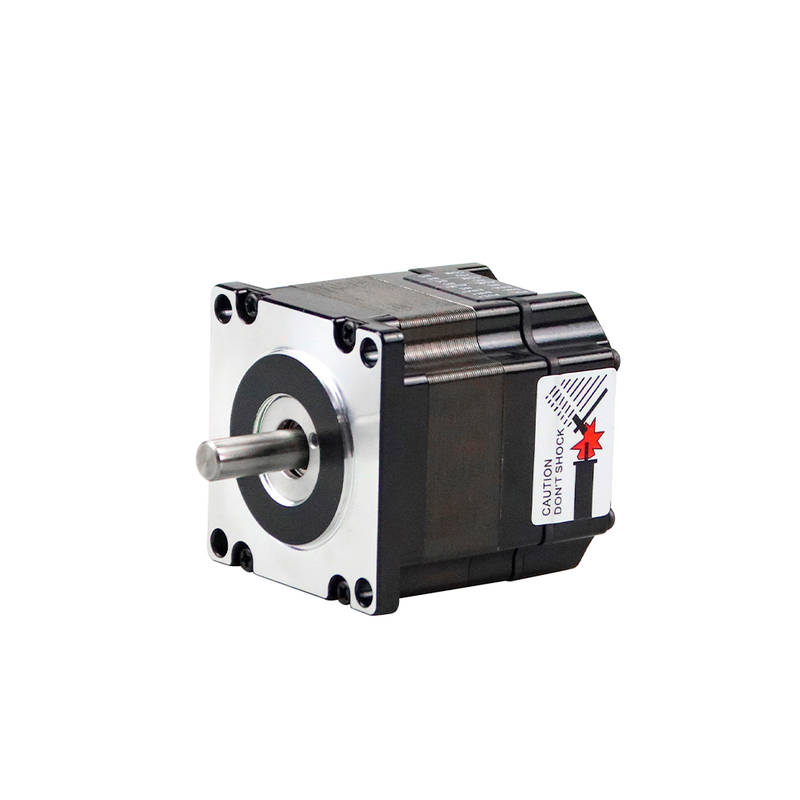
Besfoc's Stepper Motors
3. Accuracy Depends on the Entire Motion System
Stepper motor accuracy is not defined by the motor alone.
Factors affecting CNC positioning accuracy:
Step angle (1.8° or 0.9°)
Microstepping capability of the driver
Mechanical transmission (ball screw vs lead screw)
Motor resonance and vibration
For higher precision CNC machines, 0.9° hybrid stepper motors or closed-loop stepper systems are often preferred.
4. Open-Loop vs Closed-Loop Stepper Motors for CNC
Open-Loop Stepper Motors
Advantages:
Limitations:
Closed-Loop / Integrated Stepper Servo Motors
Advantages:
Encoder feedback prevents step loss
Higher usable torque at speed
Improved reliability during aggressive machining
Best suited for:
Many modern CNC designs now use integrated stepper servo motors to balance performance and cost.
5. Thermal Performance and Reliability Matter in CNC Applications
Stepper motors in CNC machines often run for long hours. Poor thermal design leads to:
Reduced torque
Demagnetization
Shortened motor life
Engineering considerations:
Proper current setting
Motor frame size with sufficient thermal margin
Ventilation or heat dissipation design
High-quality winding and insulation materials
Industrial-grade stepper motors are designed for stable continuous operation, not just short test cycles.
6. Integrated Stepper Servo Motors: A Compact CNC Solution
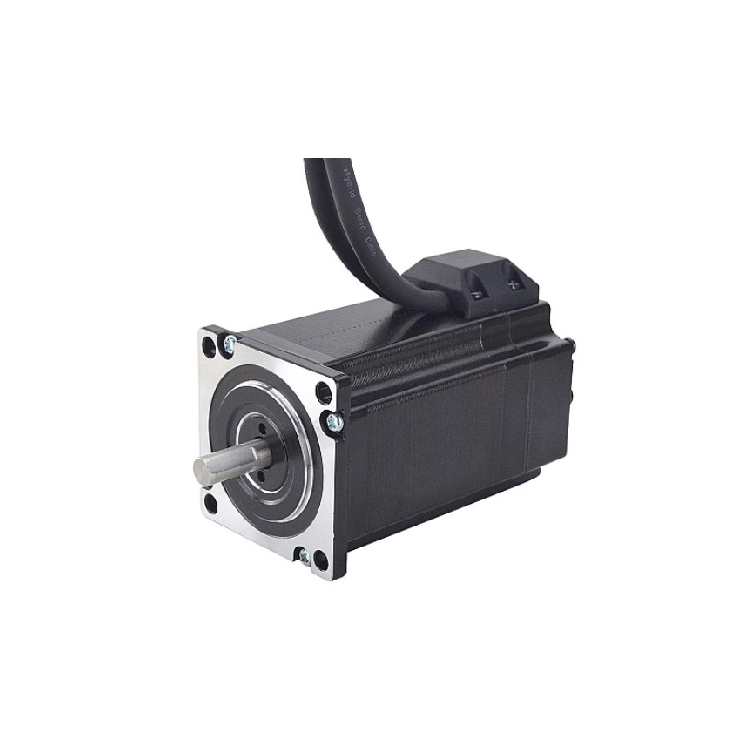
Integrated stepper servo motors are increasingly adopted in modern CNC machine designs due to their balance between performance, system simplicity, and cost efficiency. Unlike traditional stepper motor systems that require separate drivers and external encoders, integrated solutions combine multiple components into a single compact unit.
An integrated stepper servo motor typically includes:
A high-torque hybrid stepper motor
A built-in closed-loop driver
An encoder for real-time position feedback
Control electronics optimized for motion stability
Why Integrated Solutions Perform Better in CNC Systems
In CNC machining, sudden load changes, aggressive acceleration, or tool wear can easily cause open-loop stepper motors to lose steps. Integrated stepper servo motors continuously monitor rotor position through the encoder and automatically compensate for load variations. This ensures:
No step loss during cutting operations
Consistent positioning accuracy
Improved surface finish
Higher usable torque at mid-to-high speeds
Unlike traditional servo systems, integrated stepper servo motors do not require complex tuning procedures. This makes them especially suitable for CNC manufacturers and system integrators who want servo-like reliability with simpler commissioning.
Additional Benefits for CNC Machine Builders
From a system integration perspective, integrated stepper servo motors offer several practical advantages:
Reduced wiring complexity, lowering the risk of electrical noise and installation errors
Smaller control cabinets due to integrated electronics
Faster assembly and commissioning time
Improved electromagnetic compatibility (EMC) performance
For compact CNC machines or multi-axis systems, integrated stepper servo motors help achieve a cleaner mechanical and electrical design without sacrificing motion performance.
CNC machines rarely operate under identical conditions. Differences in machine structure, cutting force, speed requirements, and installation space often make standard off-the-shelf stepper motors insufficient. Customization plays a critical role in achieving optimal performance and long-term reliability.
Common CNC-Specific Customization Requirements
Shaft Customization
Extended shafts for belt or pulley systems
Double-shaft designs for encoder or handwheel mounting
Custom diameters and tolerances for couplings and bearings
Encoder Integration
Incremental encoders for basic closed-loop control
High-resolution encoders for precision machining
Encoder signal compatibility with CNC controllers
Brake and Safety Features
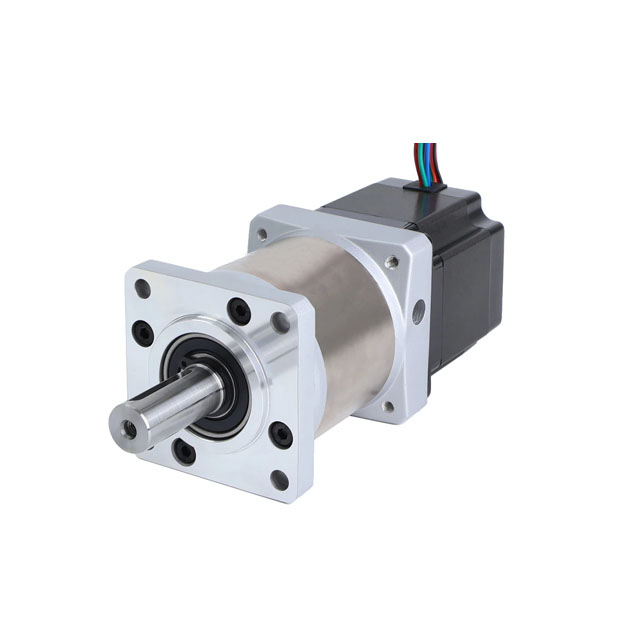
Gearbox Matching
Electrical and Thermal Customization
Stepper motors for CNC machines often operate continuously under load. Electrical and thermal customization can significantly improve performance:
Custom winding designs for higher speed or lower current
Optimized insulation materials for high-temperature environments
Reduced temperature rise to extend motor service life
Custom-designed stepper motors allow CNC manufacturers to:
Increase system efficiency
Reduce mechanical stress on components
Improve axis responsiveness
Minimize long-term maintenance issues
For CNC applications, a stepper motor that is customized for the specific machine design will always outperform a generic motor selected only by catalog parameters.
Working with a manufacturer that offers both standard and customized stepper motor solutions ensures better machine performance, scalability, and long-term production stability.
Real-World CNC Application Example: NEMA 23 Integrated Stepper Servo Motor
In many CNC applications, engineers face a common challenge: achieving higher reliability and speed without moving to a full servo system. This is where integrated stepper servo motors become a practical solution.
Example Configuration for a CNC X/Y Axis
A typical CNC router using a NEMA 23 integrated stepper servo motor includes:
Frame size: NEMA 23
Closed-loop control with encoder feedback
Integrated driver and control electronics
Rated torque suitable for ball screw-driven axes
Stable operation at both low-speed positioning and higher traverse speeds
By integrating the motor, driver, and encoder into a single unit, system complexity is significantly reduced while maintaining precise motion control.
Why Integrated Stepper Servo Motors Perform Better in CNC Machines
Compared with traditional open-loop stepper systems, integrated stepper servo motors offer several technical advantages in CNC environments:
No step loss under variable cutting loads
Consistent positioning accuracy during long machining cycles
Higher usable torque at medium to high speeds
Reduced wiring and electrical noise
For CNC machines that experience frequent acceleration, deceleration, or fluctuating loads, closed-loop feedback improves stability without requiring the tuning complexity of AC servo systems.
Typical CNC Scenarios Where This Solution Is Preferred
NEMA 23 integrated stepper servo motors are commonly selected for:
Medium-size CNC routers
Desktop and industrial hybrid CNC machines
Engraving and milling systems requiring improved reliability
Upgrades from open-loop stepper systems without mechanical redesign
This makes them especially suitable for CNC manufacturers seeking better performance while controlling system cost.
Customization Options for CNC Integration
To match specific CNC machine designs, integrated stepper servo motors can be customized with:
Shaft length and diameter for direct coupling or pulley systems
Encoder resolution optimized for positioning accuracy
Integrated brake for Z-axis holding
Electrical connectors matched to the control cabinet layout
Torque optimization through customized winding design
These customization options help CNC manufacturers achieve better mechanical compatibility and long-term operational stability.
Engineering Summary
For CNC machines requiring higher reliability, stable torque at speed, and simplified system integration, a NEMA 23 integrated stepper servo motor offers an effective balance between traditional stepper systems and full servo solutions.
This approach is increasingly adopted in modern CNC designs focused on performance consistency and ease of integration.
8. Final Recommendation
For most CNC machines, a NEMA 23 or NEMA 34 hybrid stepper motor with sufficient torque margin and proper driver matching offers the best balance of accuracy, reliability, and cost.
For higher performance and reliability, integrated stepper servo motors provide closed-loop control without the complexity of traditional servo systems.
Selecting a stepper motor based on real operating conditions—not just catalog torque—ensures stable CNC performance and reduces long-term maintenance risks.

 English
 العربية
 Français
 Русский
 Español
 Português
 Deutsch
 italiano
 日本語
日本語 한국어
한국어 Nederlands
 Tiếng Việt
 ไทย
ไทย Polski
 Türkçe
 ພາສາລາວ
 ភាសាខ្មែរ
 Bahasa Melayu
 ဗမာစာ
ဗမာစာ Filipino
 Bahasa Indonesia
 magyar
 Română
 Čeština
 Монгол
 қазақ
қазақ Српски
 हिन्दी
 فارسی
فارسی Slovenčina
 Slovenščina
 Norsk
Norsk Svenska
 українська
 Ελληνικά
 Suomi
Suomi Հայերեն
 עברית
עברית Latine
 Dansk
Dansk Shqip
Shqip বাংলা
বাংলা Hrvatski
 Afrikaans
 Gaeilge
 Eesti keel
 Oʻzbekcha
 latviešu
 Azərbaycan dili
 Български
 Català