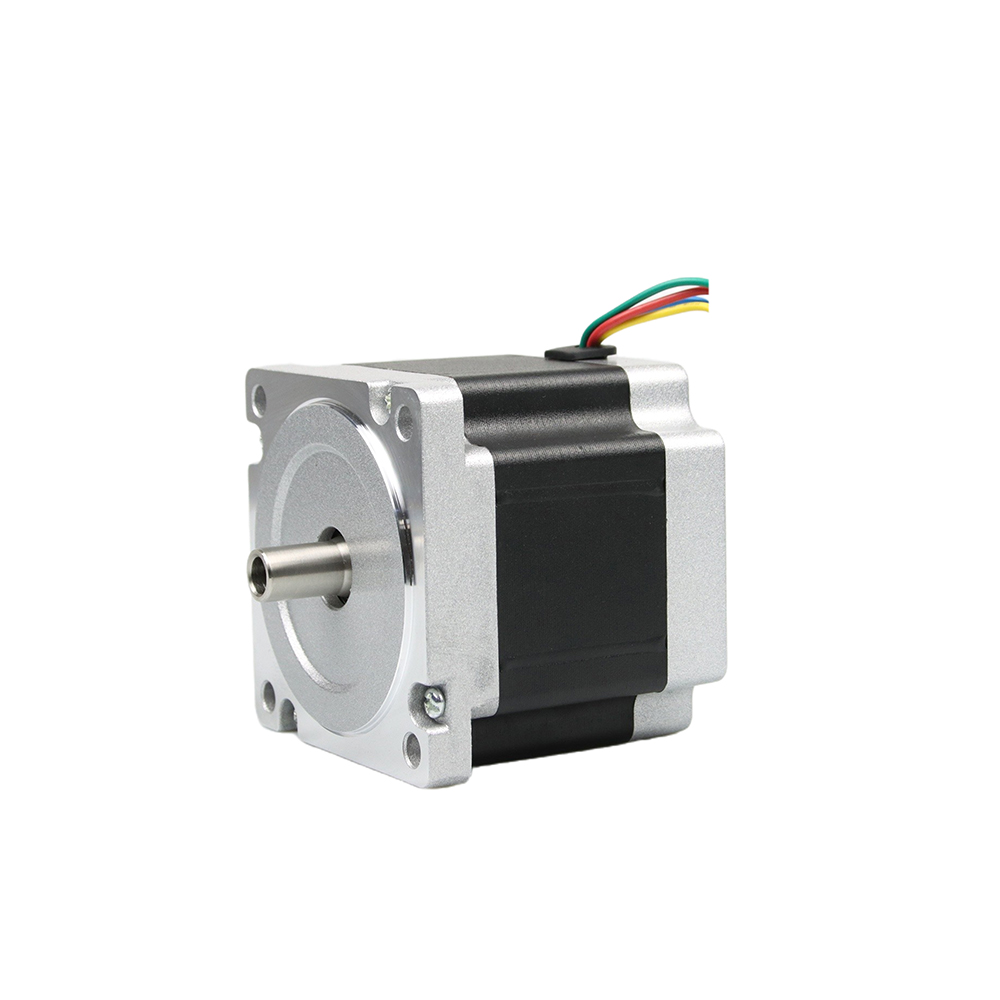
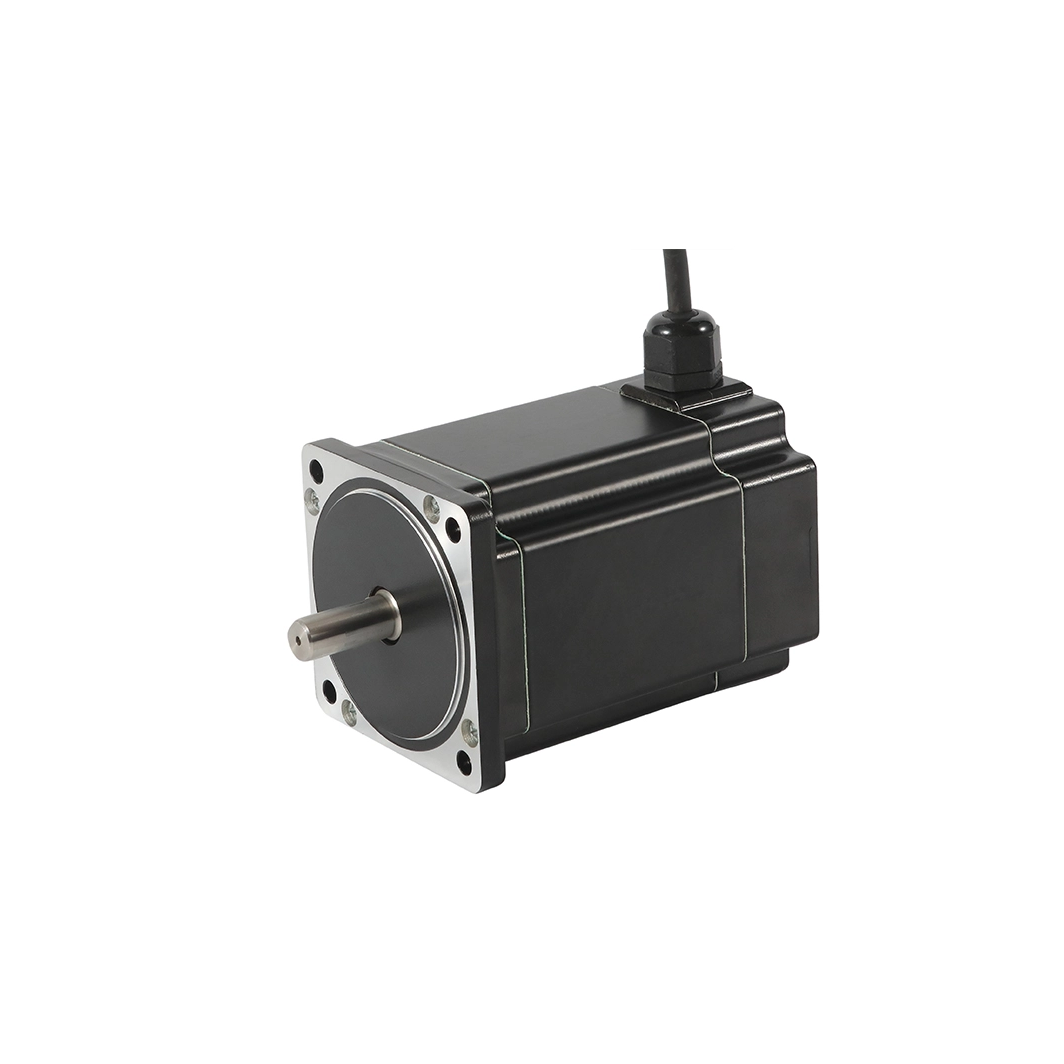
Introduction to Modern Motion Control Technologies
In today's precision-driven automation landscape, motion control systems are no longer judged solely by torque output or step angle. Accuracy, reliability, integration level, and system intelligence have become decisive factors. As manufacturers and system integrators pursue higher efficiency and tighter control, the comparison between Integrated Stepper Servo Motors and Traditional Stepper Motors has emerged as a critical decision point.
We provide a comprehensive, technically grounded comparison to clarify where each solution excels, how they fundamentally differ, and which applications benefit most from each motor architecture.
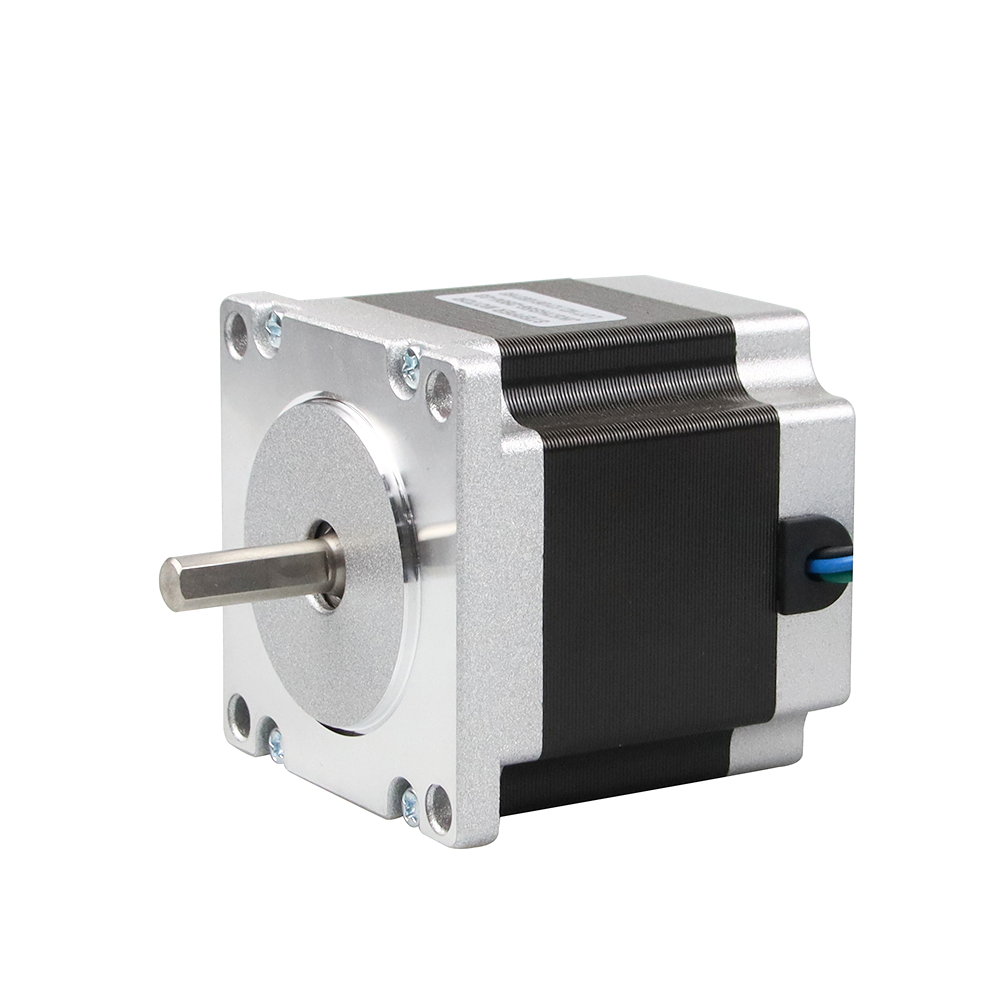
What Defines a Traditional Stepper Motor
Structural Simplicity and Open-Loop Control
A traditional stepper motor operates using a straightforward electromagnetic principle. The rotor moves in discrete steps as stator windings are energized in sequence. Most systems rely on open-loop control, meaning position is inferred from command pulses rather than verified by feedback.
Key characteristics include:
Fixed step angles (commonly 1.8° or 0.9°)
External driver and controller required
No native position feedback
Torque decreases rapidly at higher speeds
This architecture has long been favored for its low cost, predictable behavior, and ease of implementation, particularly in low-to-medium performance environments.
What Is an Integrated Stepper Servo Motor
Closed-Loop Intelligence in a Compact Form
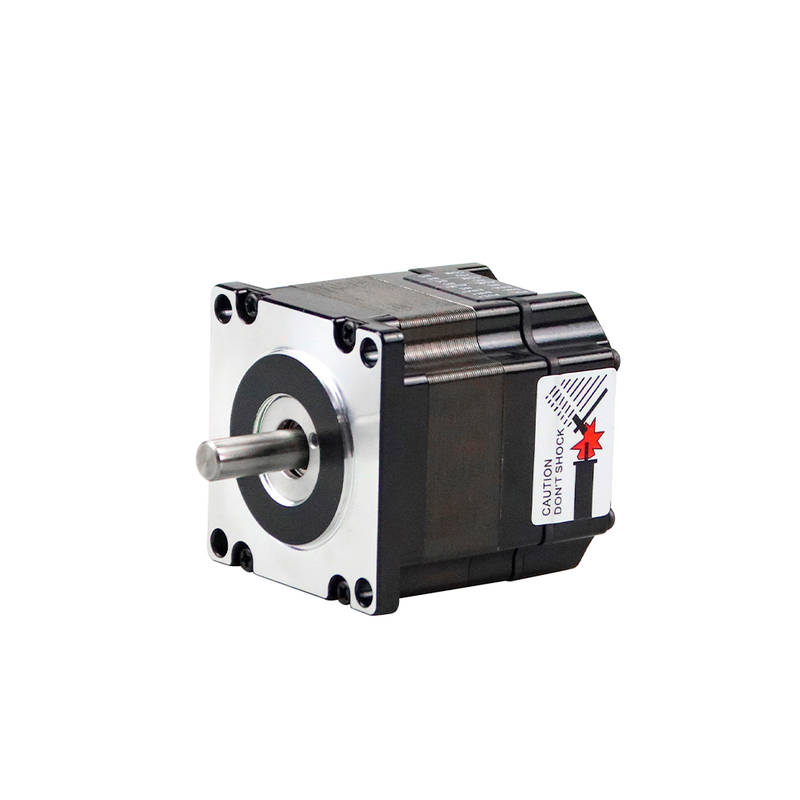
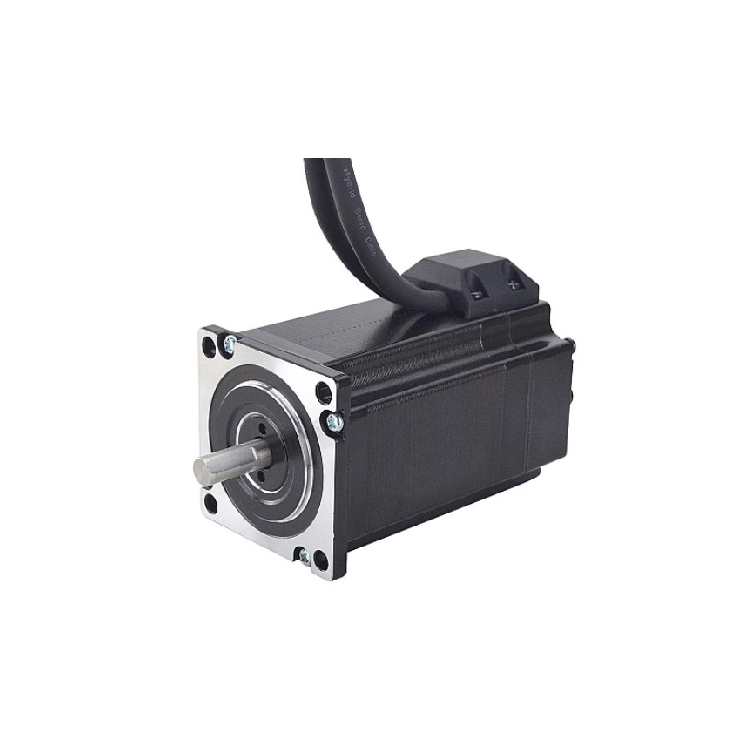
An Integrated Stepper Servo Motor combines the stepper motor, encoder, drive electronics, and control logic into a single compact unit. Unlike traditional steppers, this system operates in closed-loop mode, continuously monitoring rotor position and dynamically correcting errors.
Core attributes include:
Built-in high-resolution encoder
Integrated servo drive and controller
Real-time position and speed feedback
Automatic error correction and fault detection
The result is a hybrid solution that merges the high torque density of stepper motors with the accuracy and reliability of servo control.
Control Architecture: Open Loop vs Closed Loop
Traditional Stepper Motor Control Limitations
Open-loop control assumes that commanded steps are always executed. Under variable loads or acceleration spikes, this assumption fails, leading to:
Once steps are lost, the system has no inherent mechanism to recover without homing.
Integrated Stepper Servo Motor Control Advantage
Closed-loop control fundamentally changes system behavior. The encoder provides constant position feedback, allowing the motor to:
Compensate for load variations instantly
Maintain commanded position without step loss
Trigger alarms or corrections when deviations occur
This control intelligence dramatically improves process reliability and repeatability.
Position Accuracy and Resolution
Step Angle vs Encoder Resolution
Traditional steppers rely on mechanical step angles and microstepping to improve smoothness. However, microstepping does not guarantee absolute positioning accuracy under load.
Integrated stepper servo motors leverage encoder feedback, achieving:
Sub-step positioning accuracy
Repeatable motion regardless of load fluctuation
True position verification rather than estimation
For applications requiring precise indexing, synchronized axes, or consistent accuracy over long cycles, integrated solutions offer a measurable advantage.
Torque Characteristics and Speed Performance
Torque behavior across varying speeds is a defining factor when comparing Integrated Stepper Servo Motors with Traditional Stepper Motors. The way torque is generated, maintained, and controlled directly influences acceleration capability, positioning accuracy, and overall machine throughput.
Torque Delivery in Traditional Stepper Motors
Traditional stepper motors are known for delivering high holding torque at low speeds, which makes them suitable for static positioning and low-speed indexing tasks. Torque is generated through discrete step excitation, and maximum torque is available only when the motor operates at or near standstill.
As rotational speed increases, traditional steppers experience a rapid torque drop-off due to inductive effects and limited current rise time. This decline restricts usable speed ranges and forces conservative acceleration profiles to avoid stalling or step loss. At higher speeds, torque margins narrow significantly, reducing system stability under variable or dynamic loads.
Speed Limitations and Resonance Effects
In traditional stepper systems, mid-range resonance can further degrade torque performance. Mechanical vibration and oscillation reduce effective torque output and may require additional damping or complex motion tuning. These constraints limit the suitability of traditional steppers for high-speed or high-inertia applications.
Optimized Torque Control in Integrated Stepper Servo Motors
Integrated stepper servo motors utilize closed-loop control with real-time encoder feedback, enabling dynamic current regulation and torque optimization. Instead of delivering fixed torque regardless of conditions, the motor supplies exactly the torque required to maintain commanded motion.
This intelligent control allows integrated motors to:
Maintain higher usable torque across a broader speed range
Achieve faster acceleration and deceleration without stalling
Compensate instantly for load changes and external disturbances
High-Speed Performance and Stability
At elevated speeds, integrated stepper servo motors outperform traditional steppers by preserving torque consistency and motion stability. Feedback-driven control eliminates resonance issues and prevents torque collapse, allowing smooth, reliable operation even in demanding motion profiles.
The result is superior performance in applications requiring rapid positioning, continuous motion, or high-speed indexing, where traditional stepper motors reach their operational limits.
Impact on Machine Productivity
Enhanced torque utilization and extended speed capability directly increase machine productivity. Integrated stepper servo motors enable shorter cycle times, higher throughput, and improved process consistency—all without sacrificing positioning accuracy or mechanical reliability.
In torque-critical and speed-intensive environments, integrated stepper servo motors deliver a decisive advantage by combining high torque density, wide speed range, and intelligent control into a single, optimized motion solution.
System Integration and Wiring Complexity
Multi-Component Architecture of Traditional Systems
A traditional stepper setup typically requires:
Separate motor
External driver
Motion controller
Power supply
Extensive wiring
This increases cabinet space requirements and introduces more potential failure points.
All-in-One Design of Integrated Stepper Servo Motors
Integrated motors consolidate all essential components into a single housing, resulting in:
For OEMs and machine builders, this translates into lower assembly time and higher system reliability.
Energy Efficiency and Thermal Management
Constant Current Draw in Traditional Steppers
Traditional stepper motors often draw full current even at standstill, generating excess heat and reducing energy efficiency.
Adaptive Power Control in Integrated Motors
Integrated stepper servo motors adjust current dynamically based on real-time demand, leading to:
This efficiency is especially valuable in 24/7 industrial environments or compact enclosures with limited cooling.
Noise, Vibration, and Smoothness
Mechanical Resonance in Traditional Stepper Motors
Open-loop stepping and fixed excitation patterns can produce resonance, audible noise, and vibration—particularly at mid-range speeds.
Servo Algorithms for Ultra-Smooth Motion
Integrated stepper servo motors use advanced control algorithms to:
This performance is essential in medical devices, laboratory automation, and precision manufacturing.
Reliability, Diagnostics, and Maintenance
Limited Fault Detection in Traditional Systems
Without feedback, traditional steppers cannot detect:
Missed steps
Overload conditions
Mechanical binding
Problems often surface only after product defects occur.
Built-In Diagnostics in Integrated Motors
Integrated stepper servo motors provide:
Position error monitoring
Overcurrent and overtemperature protection
Fault outputs and communication feedback
These features significantly reduce downtime and simplify preventive maintenance strategies.
Application Suitability Comparison
Best Use Cases for Traditional Stepper Motors
Cost-sensitive projects
Low-speed positioning
Light, predictable loads
Simple indexing tasks
Best Use Cases for Integrated Stepper Servo Motors
High-precision automation
Variable or dynamic loads
Multi-axis coordinated motion
Space-constrained machine designs
High reliability and uptime requirements
Application Field Comparison
Different application fields impose distinct requirements on motion control systems. The choice between Integrated Stepper Servo Motors and Traditional Stepper Motors should be based on precision, speed, reliability, and system complexity.
CNC equipment demands high accuracy, consistent torque, and reliable high-speed operation. Integrated stepper servo motors excel by providing closed-loop control, preventing step loss, and maintaining stable torque during rapid acceleration and deceleration. Traditional stepper motors are generally limited to auxiliary axes or low-load CNC applications where speed and precision demands are lower.
Packaging machines require fast cycle times, smooth motion, and high repeatability. Integrated stepper servo motors support dynamic load changes and high-speed indexing without vibration, improving throughput and reducing product defects. Traditional stepper motors are suitable for simple, low-speed packaging tasks but struggle in high-speed or multi-axis systems.
Medical and laboratory equipment prioritize precision, low noise, smooth motion, and reliability. Integrated stepper servo motors deliver quiet operation, accurate positioning, and built-in fault detection, making them ideal for imaging systems, pumps, and diagnostic devices. Traditional stepper motors may be used in cost-sensitive, non-critical medical applications with predictable loads.
Industrial Automation and Robotics
In automation lines and robotic subsystems, integrated stepper servo motors offer better scalability, higher efficiency, and reduced downtime. Traditional stepper motors remain effective for simple pick-and-place tasks or fixed-position mechanisms with minimal load variation.
Summary of Application Suitability
Traditional Stepper Motors: Best for simple, low-speed, cost-driven applications
Integrated Stepper Servo Motors: Best for high-precision, high-speed, and reliability-critical systems
Selecting the appropriate motor technology ensures optimal performance, efficiency, and long-term operational value across diverse application fields.
Cost Considerations and Total Cost of Ownership
When evaluating Integrated Stepper Servo Motors versus Traditional Stepper Motors, cost must be assessed beyond initial purchase price. A comprehensive Total Cost of Ownership (TCO) analysis reveals substantial long-term differences that directly impact operational efficiency, maintenance budgets, and system scalability.
Initial Investment vs System-Level Cost
Traditional stepper motors typically offer a lower upfront motor cost, making them attractive for budget-sensitive projects. However, they require multiple external components, including drivers, controllers, power supplies, feedback add-ons (if any), and extensive wiring. These additional elements increase system-level cost, assembly time, and integration complexity.
Integrated stepper servo motors consolidate the motor, encoder, drive electronics, and control logic into a single unit. While the unit price is higher, the elimination of external drivers, reduced cabling, and simplified control architecture significantly lower overall system expenditure.
Installation, Commissioning, and Engineering Time
Traditional stepper systems demand careful tuning, wiring verification, and conservative motion profiling to avoid missed steps. Engineering time increases as systems scale or become multi-axis.
Integrated stepper servo motors are typically pre-tuned at the factory and support plug-and-play installation. Faster commissioning, fewer configuration errors, and simplified diagnostics translate into lower engineering and labor costs during deployment.
Operational Efficiency and Energy Consumption
Traditional stepper motors often draw constant current regardless of load, resulting in higher energy consumption and excess heat generation. Over time, this leads to increased power costs and thermal management requirements.
Integrated stepper servo motors dynamically regulate current based on real-time load conditions. This adaptive control reduces power usage, minimizes heat, and improves overall system efficiency—delivering measurable energy savings in continuous-duty applications.
Maintenance, Downtime, and Reliability Costs
Open-loop traditional stepper systems lack position verification, making missed steps difficult to detect until product defects or system failures occur. Troubleshooting is reactive, often resulting in unplanned downtime and production losses.
Integrated stepper servo motors feature built-in diagnostics, fault monitoring, and real-time feedback. Early error detection and automatic correction reduce unplanned stoppages, lower maintenance intervention frequency, and enhance equipment uptime—dramatically improving lifecycle reliability.
Scalability and Long-Term Value
As automation systems expand, traditional stepper architectures become increasingly complex and costly to maintain. Integrated solutions scale more efficiently, offering consistent performance, simplified upgrades, and compatibility with modern digital control environments.
solutions scale more efficiently, offering consistent performance, simplified upgrades, and compatibility with modern digital control environments.
From a long-term perspective, integrated stepper servo motors consistently deliver a lower total cost of ownership, despite higher initial investment. Reduced component count, lower energy usage, minimal downtime, and extended service life make them the economically superior choice for performance-driven and industrial-grade applications.
Future Trends in Motion Control
As Industry 4.0 accelerates, demand is shifting toward smart, compact, and network-ready motion solutions. Integrated stepper servo motors align perfectly with this trend, offering:
Traditional stepper motors will remain relevant for basic tasks, but intelligent integrated solutions are clearly shaping the future of precision motion control.
Conclusion: Making the Right Choice
The decision between an Integrated Stepper Servo Motor and a Traditional Stepper Motor depends on performance expectations, system complexity, and long-term operational goals. Traditional steppers remain effective for simple, cost-driven applications. However, when accuracy, reliability, efficiency, and system integration are critical, integrated stepper servo motors deliver a decisive technical and economic advantage. BESFOC also offers custom motor solutions tailored to specific mechanical, electrical, and application requirements.

 English
 العربية
 Français
 Русский
 Español
 Português
 Deutsch
 italiano
 日本語
日本語 한국어
한국어 Nederlands
 Tiếng Việt
 ไทย
ไทย Polski
 Türkçe
 ພາສາລາວ
 ភាសាខ្មែរ
 Bahasa Melayu
 ဗမာစာ
ဗမာစာ Filipino
 Bahasa Indonesia
 magyar
 Română
 Čeština
 Монгол
 қазақ
қазақ Српски
 हिन्दी
 فارسی
فارسی Slovenčina
 Slovenščina
 Norsk
Norsk Svenska
 українська
 Ελληνικά
 Suomi
Suomi Հայերեն
 עברית
עברית Latine
 Dansk
Dansk Shqip
Shqip বাংলা
বাংলা Hrvatski
 Afrikaans
 Gaeilge
 Eesti keel
 Oʻzbekcha
 latviešu
 Azərbaycan dili
 Български
 Català