Choosing the right motion control solution is one of the most critical decisions in CNC machine design. The motor system directly affects positioning accuracy, cutting stability, production efficiency, system complexity, and long-term maintenance costs.
Based on BESFOC's product portfolio and real-world CNC applications, this article provides a clear, engineering-oriented comparison between Stepper Motors and Integrated Stepper Servo Motors, helping OEMs, system integrators, and automation engineers make informed decisions.
Understanding CNC Motion Control Requirements
CNC motion control requirements are defined by the need for precision, consistency, speed, and long-term operational stability. In modern CNC machines, the motion control system is responsible not only for positioning the tool or workpiece, but also for ensuring repeatable machining accuracy across thousands of cycles. Any weakness in motion control directly translates into dimensional errors, surface defects, reduced throughput, and increased maintenance costs.
High Positioning Accuracy and Repeatability
CNC machines rely on motion systems capable of achieving micron-level positioning accuracy. This requires motors to respond precisely to control commands and maintain consistent movement over time. Repeatability is especially critical in batch production, where identical parts must be produced with minimal deviation. Even small positioning errors can result in scrap, rework, or tool wear.
Stable Torque Output Across Operating Speeds
During CNC operations, motors must deliver smooth and stable torque at both low and medium speeds. Low-speed torque is essential for precise contouring, tapping, and Z-axis positioning, while mid-speed stability ensures efficient material removal. Torque fluctuation can cause chatter, uneven cutting, and premature tool failure.
Smooth Acceleration and Deceleration Control
CNC machines frequently change direction and speed. Effective motion control systems provide controlled acceleration and deceleration to minimize mechanical shock. Smooth motion profiles reduce vibration, protect ball screws and linear guides, and improve overall machining quality.
Vibration Suppression and Resonance Control
Vibration is a major challenge in CNC motion systems. Poorly controlled motors can introduce resonance, leading to noise, surface ripples, and reduced dimensional accuracy. Advanced motion control solutions are designed to minimize vibration and resonance, ensuring smoother tool paths and better surface finishes.
Reliability in Continuous Industrial Operation
Industrial CNC machines often operate for long hours under heavy load. Motion control components must withstand continuous duty cycles, temperature variations, and mechanical stress without losing accuracy. Reliability directly impacts machine uptime, productivity, and total cost of ownership.
Ease of Integration and System Diagnostics
Modern CNC manufacturers demand motion systems that are easy to integrate, configure, and maintain. Simplified wiring, standardized interfaces, and built-in diagnostics help reduce installation time and troubleshooting complexity. Systems that provide real-time status feedback enable faster fault detection and preventive maintenance.
By meeting these core CNC motion control requirements, manufacturers can ensure higher machining accuracy, improved production efficiency, and long-term system stability, forming the foundation for reliable and competitive CNC machine performance.
What Is a Stepper Motor in CNC Applications?
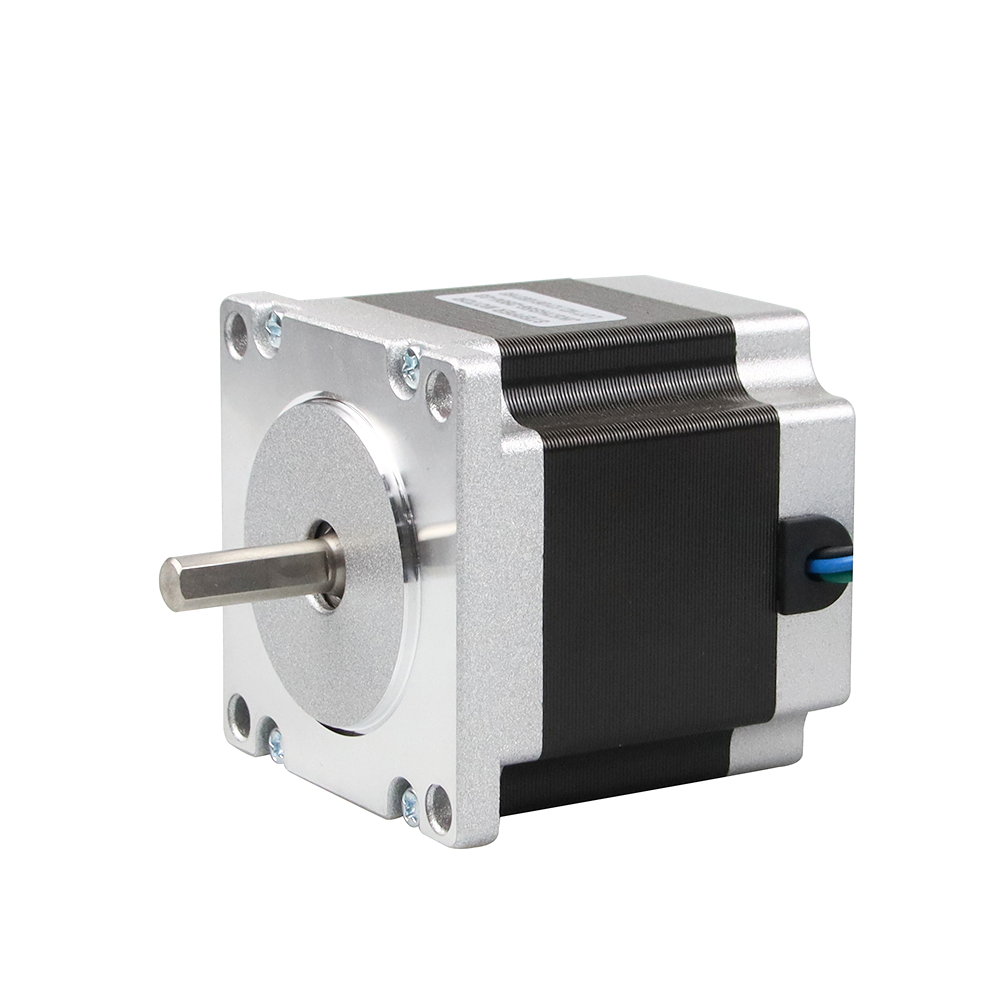
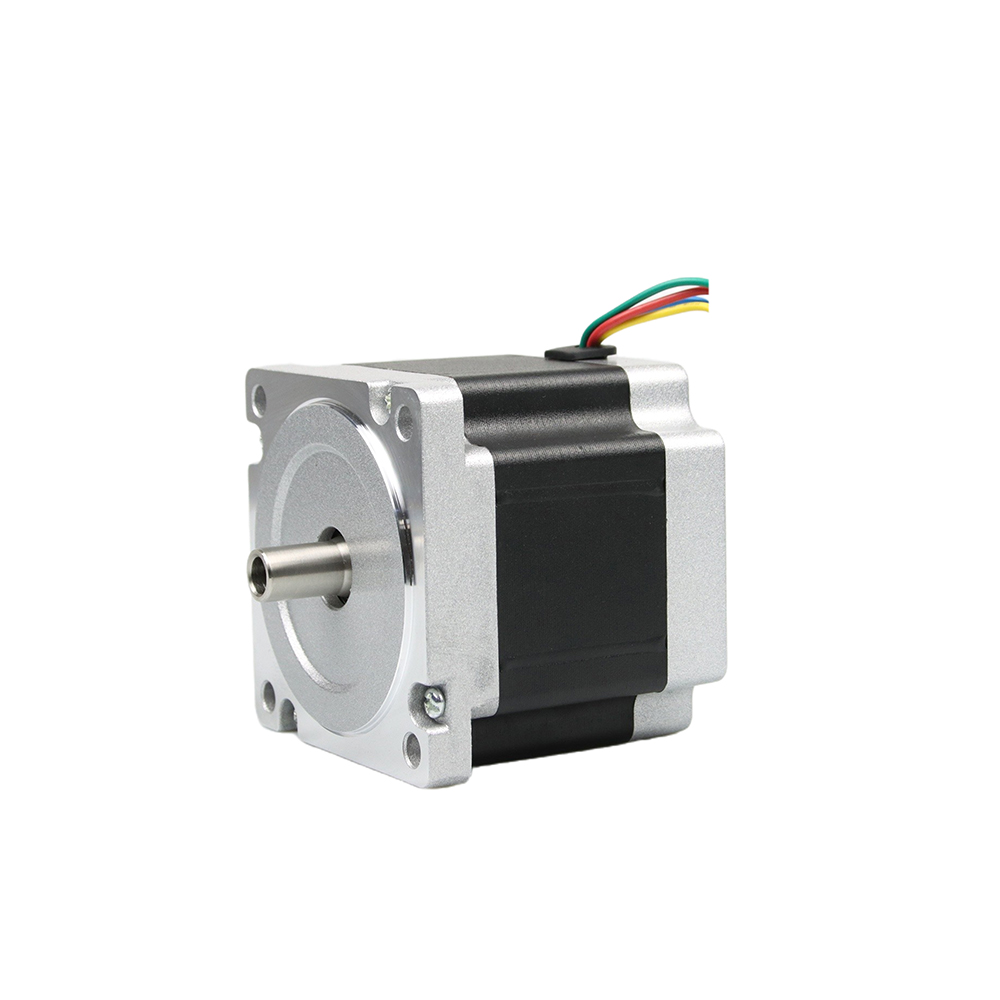
A Stepper Motor is an open-loop motion device that moves in discrete steps. In CNC machines, stepper motors are commonly paired with external stepper drivers and controlled via pulse signals.
Key Characteristics of CNC Stepper Motors
Open-loop control (no position feedback)
High holding torque
Simple wiring and control logic
Cost-effective for entry-level CNC machines
Predictable step-by-step positioning
Advantages of Stepper Motors for CNC Machines
Low system cost: Ideal for budget-sensitive CNC routers and desktop machines
Simple control architecture: No encoder tuning required
Strong low-speed torque: Suitable for Z-axis and light-load axes
Wide size availability: NEMA 17 STEPPER MOTOR, NEMA 23 STEPPER MOTOR, NEMA 34 STEPPER MOTOR options available at BESFOC
Limitations of Stepper Motors
Risk of lost steps under overload
Torque drops significantly at high speeds
Mechanical resonance and vibration
No real-time position correction
Stepper motors are best suited for light-duty CNC machines, woodworking routers, engraving machines, and educational CNC platforms.
What Is an Integrated Stepper Servo Motor?
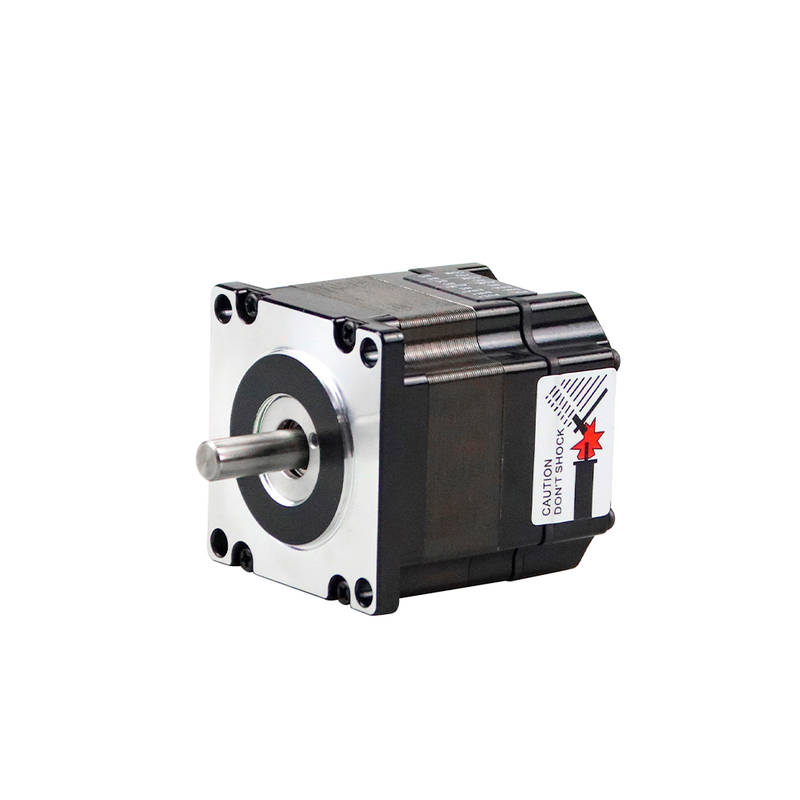
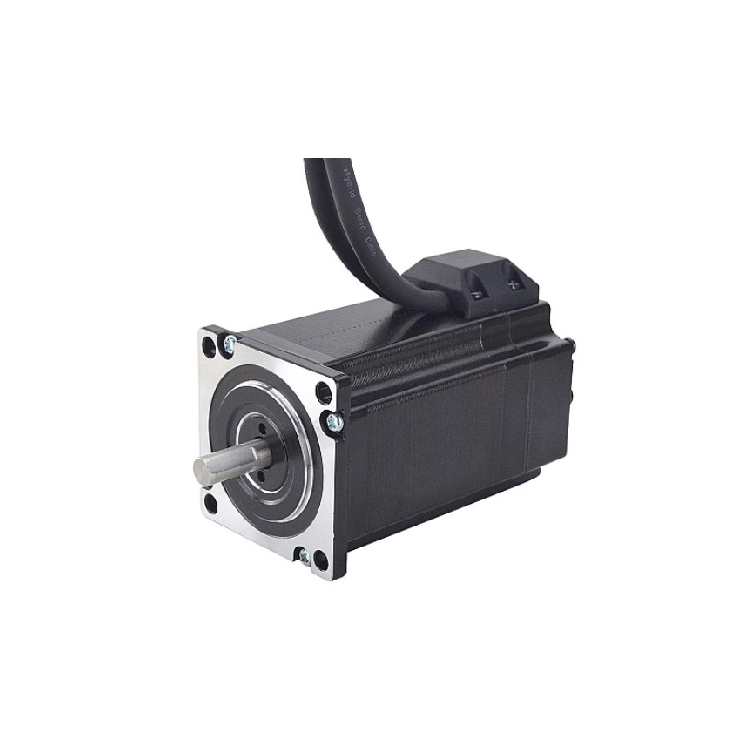
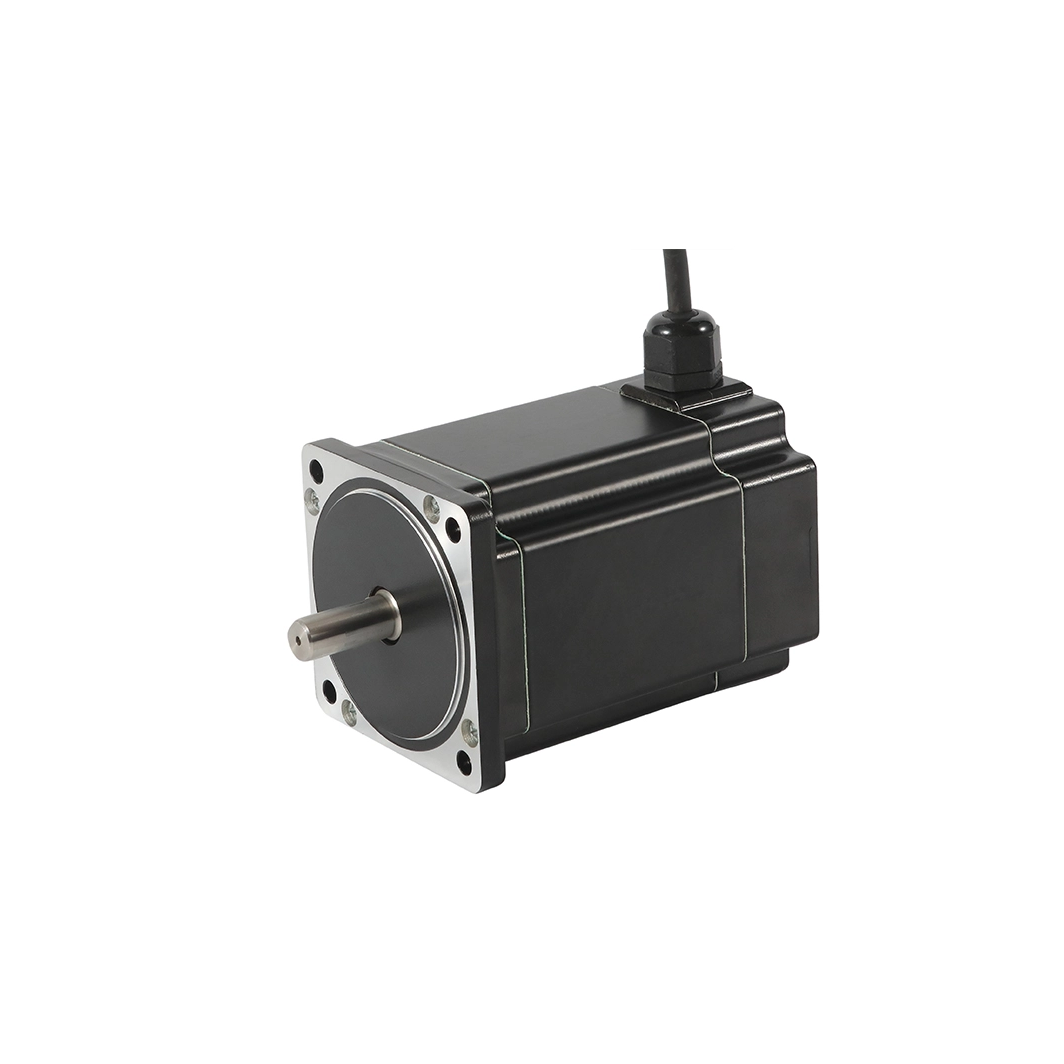
An Integrated Stepper Servo Motor combines a stepper motor, servo driver, and encoder into a single compact unit. This design creates a closed-loop control system that bridges the gap between traditional stepper motors and AC servo motors.
Core Features of Integrated Stepper Servo Motors
Closed-loop feedback control
Automatic error correction
Higher usable torque at speed
Integrated driver and encoder
Reduced wiring and cabinet space
BESFOC's integrated Stepper Servo Motors are designed specifically for industrial CNC environments, focusing on reliability, compactness, and simplified commissioning.
Performance Comparison: Stepper Motor vs Integrated Stepper Servo Motor
Position Accuracy and Reliability
Stepper Motor: Accurate under normal load, but cannot detect missed steps
Integrated Stepper Servo Motor: Encoder feedback ensures zero step loss, even under sudden load changes
Winner: Integrated Stepper Servo Motor
Speed and Torque Characteristics
Winner: Integrated Stepper Servo Motor
Vibration and Noise
Winner: Integrated Stepper Servo Motor
System Integration and Wiring
Winner: Integrated Stepper Servo Motor
Cost Considerations
Winner: Depends on project budget and performance goals
Typical CNC Application Scenarios
When to Choose a Stepper Motor
When to Choose an Integrated Stepper Servo Motor
Industrial CNC routers
Metal milling and cutting machines
High-speed engraving systems
Multi-axis CNC machines
Applications requiring high reliability and zero step loss
Why CNC Manufacturers Choose BESFOC Motion Solutions
BESFOC provides a complete CNC motor ecosystem, including:
Hybrid Stepper Motors
Integrated Stepper Servo Motors
Closed-Loop Stepper Systems
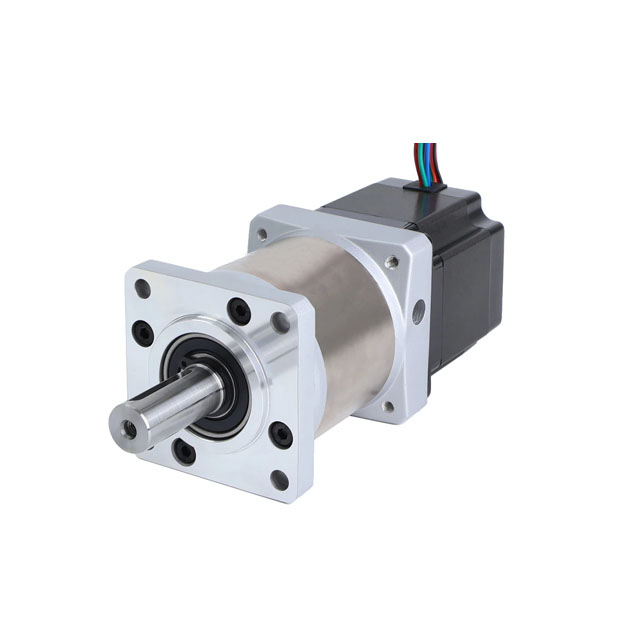
Planetary Gear Stepper Motors
Worm Gear Stepper Motors
Key BESFOC Advantages
In-house motor and driver manufacturing
Custom torque, voltage, and encoder options
Compact integrated designs
Global OEM support
Stable supply for mass production
Selection Guide: Stepper vs Integrated Stepper Servo for CNC
| CNC Requirement | Recommended Solution |
| Low cost | Stepper Motor |
| High positioning reliability | Integrated Stepper Servo |
| High-speed operation | Integrated Stepper Servo |
| Simple control system | Stepper Motor |
| Industrial continuous duty | Integrated Stepper Servo |
| Compact machine design | Integrated Stepper Servo |
Conclution
For CNC machines, the choice between a Stepper Motor and an Integrated Stepper Servo Motor is not simply about price—it is about performance stability, production efficiency, and long-term operational reliability.
Stepper motors remain a practical solution for entry-level and light-duty CNC machines.
Integrated stepper servo motors offer a future-ready solution for industrial CNC systems requiring precision, speed, and zero step loss.
By aligning motor selection with actual CNC application demands, manufacturers can significantly enhance machine value, reliability, and customer satisfaction.

 English
 العربية
 Français
 Русский
 Español
 Português
 Deutsch
 italiano
 日本語
日本語 한국어
한국어 Nederlands
 Tiếng Việt
 ไทย
ไทย Polski
 Türkçe
 ພາສາລາວ
 ភាសាខ្មែរ
 Bahasa Melayu
 ဗမာစာ
ဗမာစာ Filipino
 Bahasa Indonesia
 magyar
 Română
 Čeština
 Монгол
 қазақ
қазақ Српски
 हिन्दी
 فارسی
فارسی Slovenčina
 Slovenščina
 Norsk
Norsk Svenska
 українська
 Ελληνικά
 Suomi
Suomi Հայերեն
 עברית
עברית Latine
 Dansk
Dansk Shqip
Shqip বাংলা
বাংলা Hrvatski
 Afrikaans
 Gaeilge
 Eesti keel
 Oʻzbekcha
 latviešu
 Azərbaycan dili
 Български
 Català