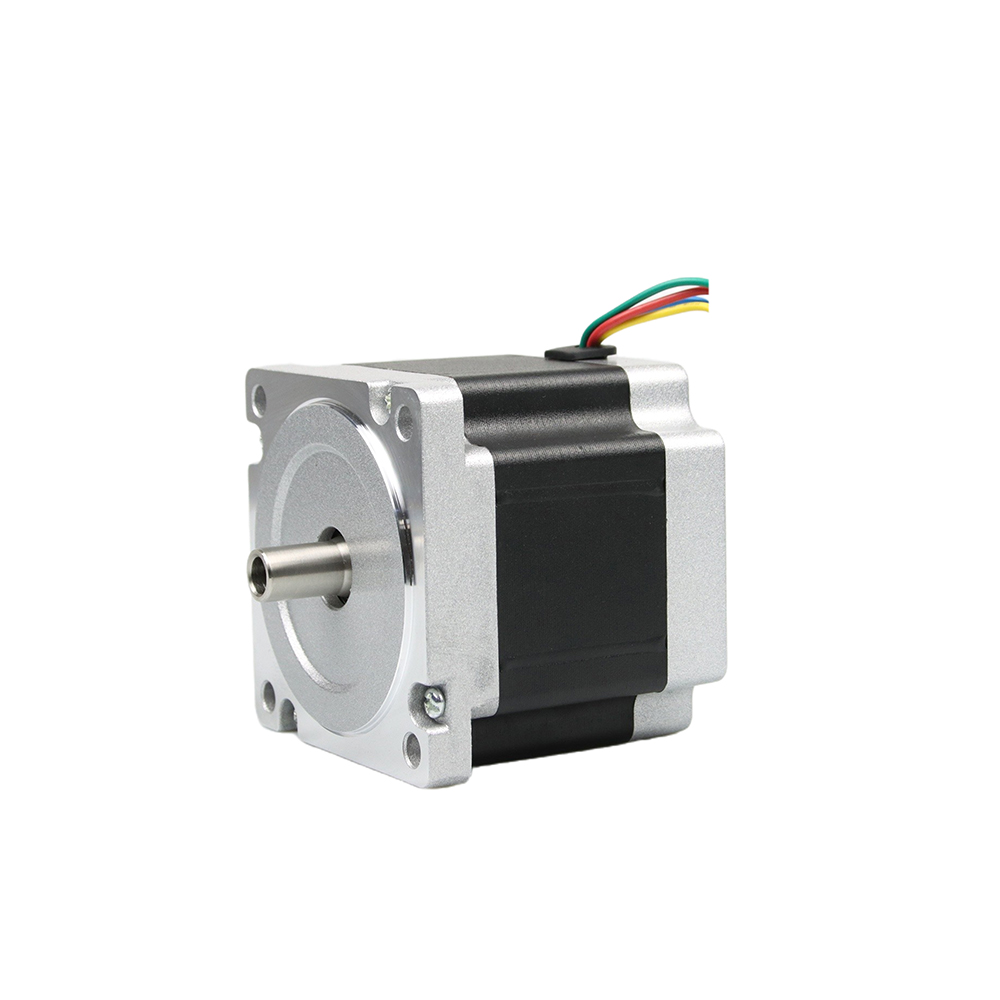
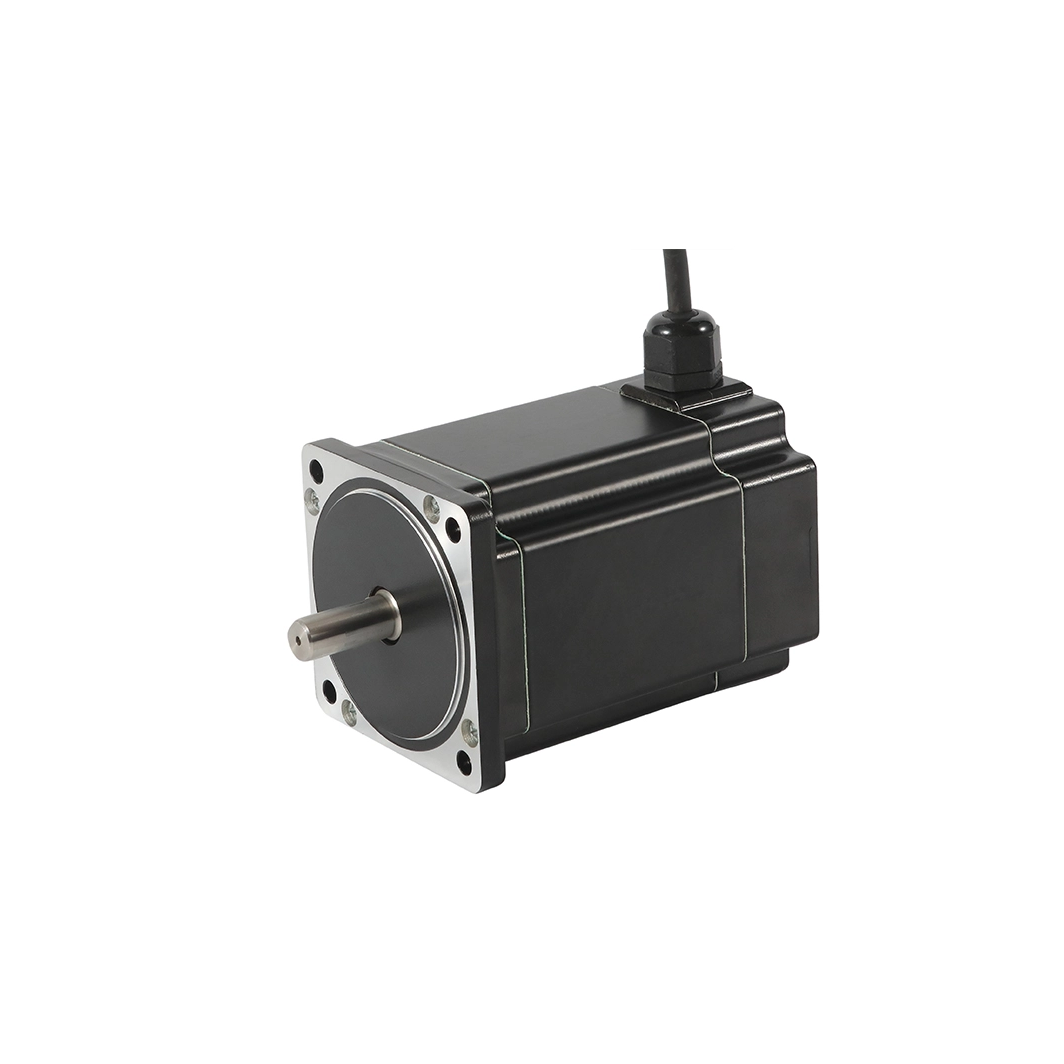
Stepper motor losing steps under load is one of the most common yet costly problems in motion control systems. It leads to positioning errors, process instability, product defects, and in severe cases, complete system failure. We address this issue from an engineering and application-driven perspective, providing actionable, proven solutions used in industrial automation, CNC machinery, robotics, medical devices, and precision equipment.
This guide delivers deep technical clarity, practical optimization strategies, and system-level fixes that eliminate missed steps under load conditions.
Stepper motor step loss under load is primarily caused by torque mismatch, control settings, and system design. Proper motor selection, optimized parameters, and customized factory solutions—such as closed-loop control or integrated stepper servo motors—can effectively eliminate missed steps and improve system reliability.
Understanding Step Loss in Stepper Motors
Stepper motors operate in an open-loop control system, meaning they execute commanded steps without position feedback. When the required torque exceeds available torque, the motor fails to rotate to the next step, resulting in lost steps.
Under load, this issue is amplified by mechanical resistance, inertia, electrical limitations, and dynamic operating conditions.
Insufficient Available Torque
When the applied load torque exceeds the motor's instantaneous torque capability, the rotor stalls or slips.
Key contributors include:
Undersized motor selection
High acceleration demands
Operating beyond the motor's torque-speed curve
Excessive Acceleration or Deceleration
Rapid acceleration requires significantly higher torque than constant-speed operation. If acceleration ramps are too aggressive, the motor cannot follow the step commands.
Low current limits reduce holding and dynamic torque, while excessive current leads to thermal saturation, reducing torque over time.
Power Supply Voltage Limitations
Stepper motors rely on high voltage to overcome inductive impedance at speed. Low voltage causes:
Mechanical Load and Inertia Mismatch
High inertia loads, poor coupling alignment, and mechanical friction dramatically increase torque demand during motion transitions.
Resonance and Vibration Effects
Mid-range resonance causes oscillations that disrupt rotor synchronization, especially under partial load.
Effective Solutions to Prevent Step Loss Under Load
1. Select the Correct Stepper Motor Size
Proper motor sizing is the foundation of reliable motion control.
Best practices include:
Ensure 30–50% torque margin above maximum load torque
Evaluate torque at operating speed, not holding torque
Consider frame size upgrades (e.g., NEMA 17 to NEMA 23)
A larger motor with adequate torque reserve prevents step loss during load spikes and acceleration events.
2. Optimize Acceleration and Deceleration Profiles
Reducing acceleration stress is one of the fastest fixes.
Recommended actions:
Use trapezoidal or S-curve motion profiles
Lower initial acceleration and ramp gradually
Match acceleration to motor torque-speed capabilities
Controlled ramps significantly reduce inertial torque demands.
3. Increase Power Supply Voltage (Within Drive Limits)
Higher voltage improves current response at speed.
Benefits include:
Always ensure voltage remains within driver-rated limits.
4. Correct Drive Current Configuration
Proper current tuning ensures optimal torque without overheating.
Guidelines:
Set RMS current to motor rated current
Enable dynamic current reduction only when stationary
Avoid conservative undercurrent settings
Thermal monitoring is essential to prevent torque degradation over time.
5. Improve Mechanical System Efficiency
Mechanical losses often cause hidden torque overloads.
Critical checks:
Reducing friction directly increases available torque margin.
6. Reduce Load Inertia or Add Gear Reduction
High inertia is a major cause of step loss during acceleration.
Solutions:
Reduce rotating mass where possible
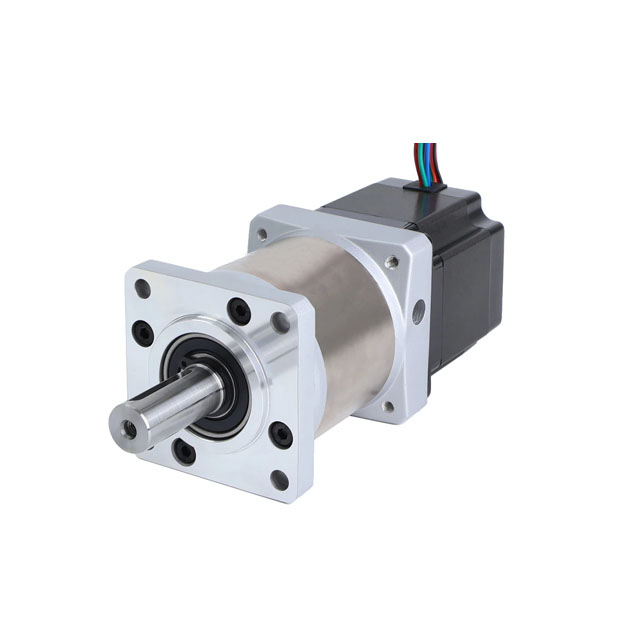
Add planetary gearboxes to increase output torque
Use belt reduction for inertia matching
Gear reduction improves torque while lowering reflected inertia.
7. Implement Microstepping Correctly
Microstepping improves smoothness but reduces incremental torque per microstep.
Best practices:
Use microstepping for smooth motion, not torque increase
Avoid excessive microstep resolutions under heavy load
Balance resolution with torque requirements
For heavy loads, lower microstep settings often improve reliability.
8. Eliminate Resonance with Damping Techniques
Resonance is a silent contributor to step loss.
Mitigation methods:
Modern digital stepper drives dramatically reduce resonance-related issues.
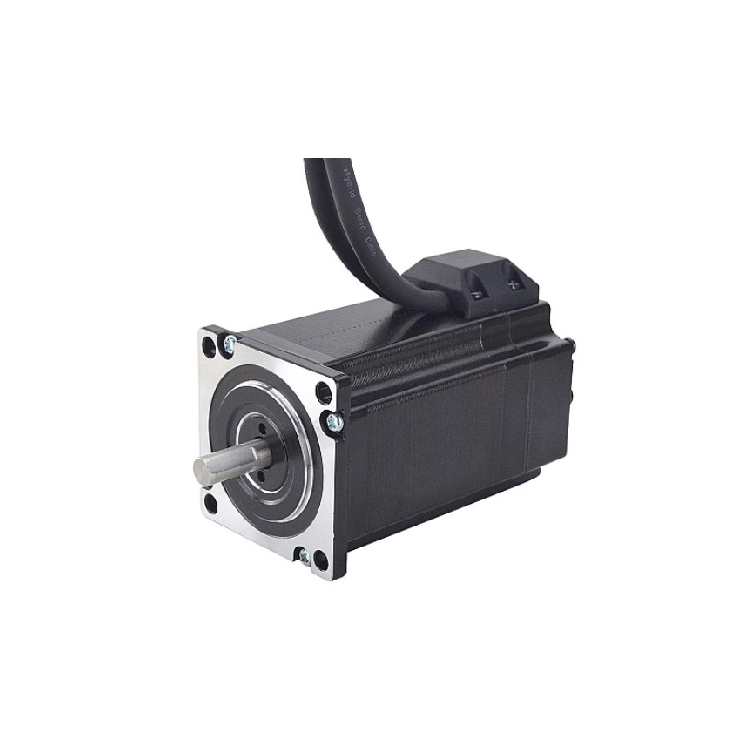
9. Upgrade to Closed-Loop Stepper Systems
When step loss cannot be tolerated, closed-loop control provides guaranteed positioning.
Advantages include:
Real-time position correction
Stall detection and recovery
Higher dynamic torque utilization
Closed-loop steppers bridge the gap between traditional steppers and servo systems.
10. Monitor Thermal Conditions Continuously
Temperature rise reduces winding resistance efficiency and magnetic strength.
Recommendations:
Maintain ambient temperature within specifications
Ensure adequate ventilation
Avoid continuous holding torque at high current
Thermal stability ensures consistent torque output over long duty cycles.
Advanced Diagnostic Techniques
Dynamic Load Testing
Measure torque performance under real operating loads to identify overload conditions during acceleration and peak demand.
Current and Voltage Analysis
Monitor phase current and supply voltage to detect insufficient current rise, voltage drops, or driver saturation at speed.
Thermal Monitoring
Track motor and driver temperatures to identify torque loss caused by overheating or thermal derating.
Motion Profile Verification
Analyze acceleration, deceleration, and speed curves to confirm they align with the motor’s torque-speed capability.
Resonance Detection
Identify vibration or audible noise in mid-speed ranges that may indicate resonance-induced step loss.
Mechanical Inspection
Check couplings, bearings, belts, and lead screws for misalignment, backlash, or excessive friction.
These targeted diagnostics quickly isolate the root cause of step loss and guide precise corrective actions.
Common Application-Specific Considerations
Stepper motor performance and the risk of step loss vary significantly depending on the application environment, motion profile, and load characteristics. Understanding application-specific requirements allows us to apply targeted design and tuning strategies that ensure stable operation under real-world conditions. Below are the most common application categories and the critical considerations associated with each.
CNC systems place heavy and highly variable loads on stepper motors, particularly during cutting operations. Axes are subjected to fluctuating cutting forces, rapid direction changes, and high inertia loads from lead screws and spindles.
Key considerations include:
High dynamic torque demand, especially on Z-axis and gantry systems
The need for conservative acceleration and deceleration profiles
Oversizing motors to maintain torque margin during peak cutting loads
Implementing gear or belt reduction to improve torque and inertia matching
Avoiding excessive microstepping that can reduce usable torque
In precision machining, even a single missed step can compromise dimensional accuracy, making torque margin and motion tuning critical.
Industrial Automation and Assembly Lines
Automation systems typically operate continuously with repetitive motion cycles. Reliability and thermal stability are often more important than peak speed.
Important factors include:
Continuous duty cycles that can cause thermal buildup
Consistent positioning accuracy over long production runs
Variable payloads depending on the production stage
Mechanical wear over time increasing friction and torque demand
Proper thermal management, conservative current settings, and regular mechanical maintenance help prevent gradual step loss in these environments.
Robotics and Pick-and-Place Systems
Robotic applications involve rapid acceleration, deceleration, and frequent directional changes. Load inertia can vary significantly depending on arm extension and payload.
Critical considerations:
Inertia mismatch between motor and load
Dynamic torque spikes during fast moves
The need for smooth motion to prevent oscillations
Using S-curve acceleration to reduce inertial shock
In high-speed robotics, closed-loop stepper systems are often preferred to detect and correct step loss in real time.
Medical and Laboratory Equipment
Medical devices require extremely high positioning accuracy, smooth motion, and quiet operation. Loads are usually light, but precision is non-negotiable.
Key priorities include:
Low vibration and acoustic noise
Stable microstepping for smooth motion
Strict thermal limits to protect sensitive components
Long-term positional repeatability
Microstepping optimization, low-resonance drivers, and controlled current reduction during idle states are essential in these applications.
3D Printers and Desktop Manufacturing
3D printers rely heavily on stepper motors for consistent layer positioning. Step loss leads directly to layer shifts, print failure, and wasted material.
Important considerations:
Rapid acceleration on lightweight gantries
Belt tension and pulley alignment
Motor heating during long print cycles
Power supply voltage stability
Reducing acceleration, increasing motor current within safe limits, and maintaining mechanical alignment significantly reduce step loss risks.
Packaging systems often require high-speed motion with frequent start-stop cycles. Loads may vary based on product size and packaging material.
Key challenges:
High cycle rates increasing inertial stress
Variable friction due to material contact
Precise synchronization between multiple axes
Proper torque margin, synchronized motion profiles, and robust mechanical design are essential to prevent cumulative step loss.
Textile, Printing, and Conveyor Systems
These systems typically operate at constant speed with long run times, but may experience load fluctuations.
Considerations include:
Belt and roller tension consistency
Wear-related friction increase over time
Resonance at steady operating speeds
Designing for long-term torque stability and implementing preventative maintenance routines are crucial for reliability.
Summary
Each application presents unique mechanical, electrical, and dynamic challenges that influence stepper motor performance. Step loss is rarely caused by the motor alone; it emerges from the interaction between load behavior, motion profiles, thermal conditions, and mechanical design. By addressing application-specific considerations early in the design process, we can build stepper motor systems that deliver consistent, accurate, and failure-free operation across diverse industrial and precision environments.
Preventive Design Checklist
Motor torque margin ≥ 30%
Acceleration tuned to load inertia
Voltage optimized for speed
Current correctly configured
Mechanical losses minimized
Resonance actively suppressed
Applying these principles during system design eliminates step loss before it occurs.
Product & Technical FAQs
1. Why does a stepper motor lose steps under load?
Stepper motors lose steps when the applied load torque exceeds the available holding or dynamic torque, often due to improper motor sizing or acceleration settings.
2. How does load torque affect stepper motor accuracy?
Higher load torque increases the risk of missed steps, especially at higher speeds where available torque drops significantly.
3. Can increasing motor current prevent step loss?
Increasing current can improve torque, but excessive current may cause overheating and shorten motor lifespan.
4. What role does the torque-speed curve play in step loss?
The torque-speed curve shows how torque decreases with speed, helping engineers avoid operating points where step loss is likely.
5. Does acceleration setting impact stepper motor stability?
Yes, overly aggressive acceleration can cause the motor to stall or skip steps under load.
6. Is microstepping effective in reducing missed steps?
Microstepping improves smoothness and vibration control but does not significantly increase maximum torque.
7. When should a closed-loop stepper motor be used?
Closed-loop stepper motors are recommended when load variations are unpredictable and step accuracy is critical.
8. How does encoder feedback help prevent losing steps?
Encoder feedback detects position errors in real time and corrects them before step loss occurs.
9. Can a larger frame size motor solve step loss issues?
A larger frame size usually provides higher torque, reducing the risk of losing steps under heavy loads.
10. Are integrated stepper servo motors better for high-load applications?
Yes, integrated stepper servo motors combine high torque, feedback, and compact design for demanding applications.
Factory Customization & OEM FAQs
11. Can stepper motors be customized for higher load capacity?
Yes, torque can be increased through custom winding, optimized magnetic circuits, or larger motor frames.
12. Is it possible to customize motor current ratings?
Factories can adjust winding parameters to match specific voltage and current requirements.
13. Can you customize stepper motors for continuous heavy-load operation?
Thermal design, insulation class, and cooling options can be customized for long-duty cycles.
14. Do you offer integrated motor and driver solutions?
Yes, integrated solutions reduce wiring complexity and improve system reliability under load.
15. Can encoder type be customized for closed-loop stepper motors?
Different encoder resolutions and types can be selected based on accuracy and budget needs.
16. Is gearbox integration available for load-heavy applications?
Planetary or worm gearboxes can be integrated to increase output torque.
17. Can stepper motors be optimized for low-speed high-torque output?
Yes, custom pole design and winding optimization support low-speed, high-torque performance.
18. Do you support OEM or ODM stepper motor projects?
Factories provide full OEM/ODM services including mechanical, electrical, and performance customization.
19. Can vibration and noise be reduced through customization?
Damping design, rotor balancing, and drive tuning help minimize vibration and noise.
20. How does factory testing help prevent step loss issues?
Load testing, thermal testing, and dynamic motion simulation verify performance before delivery.
Conclusion
Stepper motor losing steps under load is not a single-parameter failure—it is a system-level imbalance between torque demand and torque availability. By addressing electrical, mechanical, and dynamic factors together, step loss can be fully eliminated.
Correct motor sizing, optimized motion profiles, proper power delivery, mechanical efficiency, and advanced control strategies form a robust and reliable motion system capable of handling demanding loads with absolute precision.

 English
 العربية
 Français
 Русский
 Español
 Português
 Deutsch
 italiano
 日本語
日本語 한국어
한국어 Nederlands
 Tiếng Việt
 ไทย
ไทย Polski
 Türkçe
 ພາສາລາວ
 ភាសាខ្មែរ
 Bahasa Melayu
 ဗမာစာ
ဗမာစာ Filipino
 Bahasa Indonesia
 magyar
 Română
 Čeština
 Монгол
 қазақ
қазақ Српски
 हिन्दी
 فارسی
فارسی Slovenčina
 Slovenščina
 Norsk
Norsk Svenska
 українська
 Ελληνικά
 Suomi
Suomi Հայերեն
 עברית
עברית Latine
 Dansk
Dansk Shqip
Shqip বাংলা
বাংলা Hrvatski
 Afrikaans
 Gaeilge
 Eesti keel
 Oʻzbekcha
 latviešu
 Azərbaycan dili
 Български
 Català