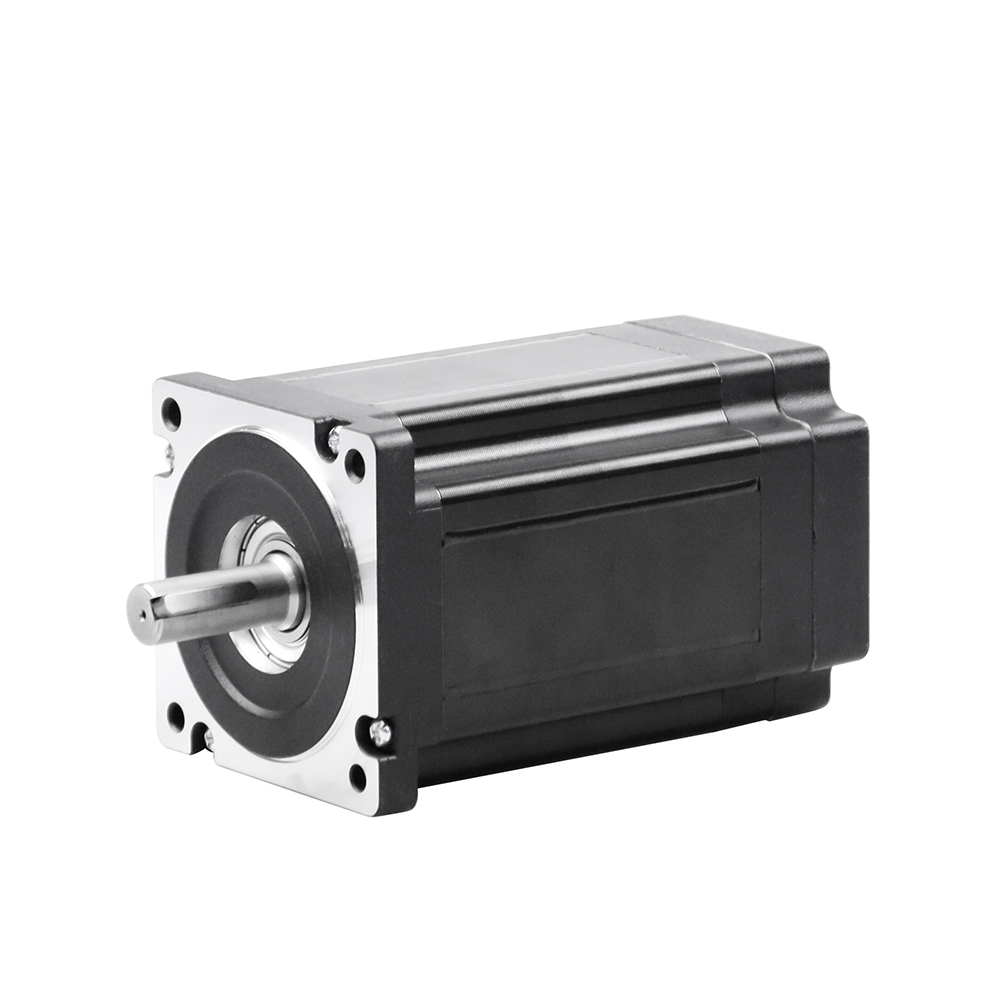
Understanding Overheating Risks in Agricultural BLDC Motor Use
In modern agriculture, Brushless DC (BLDC) motors have become essential components in irrigation systems, harvesting machinery, autonomous tractors, greenhouse automation, and precision farming equipment. While these motors are valued for high efficiency, low maintenance, and long operational life, overheating remains a persistent challenge in agricultural environments. Overheating not only shortens motor lifespan but also leads to unexpected downtime, yield loss, and increased maintenance costs.
We examine the core technical and environmental reasons BLDC motors overheat in agricultural applications, focusing on real-world operating conditions rather than theoretical assumptions.
Harsh Environmental Conditions in Agricultural Operations
Agricultural operations expose BLDC motors to some of the most demanding environmental conditions found in any industrial sector. Unlike controlled factory environments, farmland presents unpredictable, abrasive, and chemically aggressive surroundings that significantly increase thermal stress on motor systems. These conditions directly impair heat dissipation, accelerate component degradation, and create persistent overheating risks.
Extreme Ambient Temperature Exposure
Agricultural machinery frequently operates in open fields under intense solar radiation and elevated ambient temperatures. During peak seasons, motors may run continuously in environments exceeding 40 °C, with localized temperatures around the motor housing rising even higher due to radiant heat from soil and equipment structures.
High ambient temperatures reduce the temperature gradient required for effective heat transfer, meaning internally generated heat cannot dissipate efficiently. As a result, stator windings and power electronics reach critical thermal limits faster, even when operating within nominal electrical ratings.
Dust, Soil, and Particulate Ingress
Agricultural environments are saturated with fine dust, sand, soil particles, and organic debris. These contaminants accumulate rapidly on motor housings, cooling fins, and ventilation openings.
Dust-related overheating occurs through:
Formation of insulating layers on motor surfaces
Obstruction of airflow paths and cooling channels
Increased thermal resistance between internal components and ambient air
In severe cases, dust ingress penetrates the motor interior, contaminating windings and bearings, which further elevates internal friction and heat generation.
Moisture, Humidity, and Condensation
BLDC motors in agriculture are routinely exposed to rainfall, irrigation spray, dew formation, and high humidity levels. Moisture ingress compromises insulation integrity and reduces dielectric strength, leading to leakage currents and increased electrical losses.
Condensation inside the motor housing causes:
Corrosion of laminations and conductors
Degraded thermal conductivity
Uneven heat distribution within the stator
These factors collectively accelerate overheating and reduce long-term reliability.
Chemical Exposure from Fertilizers and Pesticides
Agricultural chemicals such as fertilizers, herbicides, and pesticides introduce corrosive agents that attack motor housings, seals, and protective coatings. Chemical residue accumulation increases surface roughness and impairs heat dissipation efficiency.
Chemical exposure results in:
Seal degradation allowing contaminant ingress
Accelerated bearing corrosion
Increased thermal resistance of external surfaces
Over time, these effects intensify thermal buildup even under moderate load conditions.
Mechanical Shock and Vibration from Terrain
Uneven terrain, rocks, and repetitive impact loads generate constant vibration and mechanical shock. These stresses loosen fasteners, degrade bearing alignment, and increase mechanical losses within the motor.
Vibration-induced overheating occurs due to:
Increased bearing friction
Rotor imbalance leading to uneven magnetic loading
Micro-movements that elevate resistive losses
Mechanical stress indirectly contributes to higher operating temperatures and faster thermal aging.
Long-Duration Outdoor Exposure
Agricultural BLDC motors are often deployed outdoors for extended periods without shelter. Continuous exposure to UV radiation, temperature cycling, and environmental contaminants gradually degrades insulation materials and housing finishes.
Thermal cycling causes:
Expansion and contraction of internal components
Micro-cracks in insulation systems
Progressive reduction in heat transfer efficiency
This long-term exposure compounds short-term thermal stress, making overheating a cumulative failure mechanism.
Summary of Environmental Thermal Impact
Harsh agricultural environments impose simultaneous thermal, mechanical, and chemical stresses on BLDC motors. These conditions significantly reduce cooling effectiveness while increasing internal heat generation, making overheating a systemic issue rather than an isolated fault. Without environmental hardening, enhanced sealing, and application-specific thermal design, BLDC motors in agricultural operations remain highly vulnerable to premature thermal failure.
Excessive Mechanical Load and Torque Demands
Irregular Load Profiles
Agricultural machinery rarely operates under constant loads. BLDC motors in seeders, conveyors, and harvesters experience frequent torque spikes, caused by uneven terrain, varying crop density, and mechanical obstructions.
Sudden torque demand increases:
Raise phase current instantly
Increase copper losses in windings
Elevate internal heat generation
When motors are not sized for peak load conditions, thermal runaway becomes inevitable.
Continuous Operation Under High Load
Unlike industrial applications with scheduled downtime, agricultural equipment often runs continuously during planting or harvesting seasons.BLDC motors operating near maximum torque for extended periods accumulate heat faster than it can be dissipated.
This sustained stress accelerates:
Inadequate Cooling System Design
Passive Cooling Limitations
Many BLDC motors used in agricultural machinery rely on passive air cooling. In environments with stagnant air, high dust density, or enclosed motor compartments, passive cooling becomes ineffective.
Without forced airflow or heat sinks:
Stator heat remains trapped
Rotor temperature increases rapidly
Motor efficiency declines progressively
Blocked or Poorly Designed Ventilation Paths
Motor cooling channels are often compromised by mud, straw, or chemical residue. Even partial blockage significantly reduces heat dissipation capacity.
Poor ventilation design fails to account for:
Directional airflow resistance
Field debris accumulation
Long-term exposure to moisture
Electrical Supply and Control Issues
Electrical supply quality and control system design play a decisive role in BLDC motor thermal performance within agricultural applications. Unlike industrial facilities with regulated power infrastructure, agricultural environments often rely on unstable, long-distance, or generator-based electrical supplies, creating conditions that significantly increase electrical losses and heat generation inside both the motor and its controller.
Voltage Fluctuations and Power Instability
Agricultural power networks are frequently affected by voltage drops, surges, and phase imbalance, especially in remote or rural locations. Long cable runs, shared loads, and aging infrastructure introduce resistance and inductance that destabilize supply voltage.
When voltage fluctuates, BLDC controllers compensate by drawing higher current to maintain torque output. This results in:
Increased copper losses in stator windings
Elevated switching losses in power semiconductors
Rapid temperature rise under otherwise normal mechanical load
Persistent voltage instability pushes motors beyond their thermal design limits, accelerating insulation aging and component failure.
Harmonic Distortion and Electrical Noise
The use of variable frequency drives, inverters, and non-linear agricultural equipment introduces harmonic distortion and electrical noise into the power supply. Harmonics disrupt smooth current flow and increase RMS current levels within the motor.
Thermal consequences of harmonic distortion include:
Additional iron losses in stator laminations
Eddy current heating in conductors
Increased controller heat dissipation requirements
These hidden losses often go undetected until chronic overheating becomes evident.
Improper Controller Selection and Configuration
BLDC motors rely on precise electronic commutation. Using an undersized, poorly matched, or incorrectly configured controller leads to inefficient current control and excessive heat generation.
Common controller-related issues include:
Inadequate current rating for peak torque demands
Incorrect commutation timing parameters
Insufficient thermal protection and derating logic
These misconfigurations cause current ripple and switching inefficiencies that directly elevate motor and controller temperatures.
High Switching Losses in Power Electronics
Agricultural BLDC systems often operate at high switching frequencies to achieve precise speed and torque control. In poorly optimized systems, this increases switching losses in MOSFETs or IGBTs, generating significant heat within the controller enclosure.
High internal controller temperatures:
Reduce overall system efficiency
Transfer heat to the motor through mounting structures
Compromise long-term electronic reliability
Without adequate heat sinking or forced cooling, controller heat becomes a major contributor to motor overheating.
Long Cable Lengths and Voltage Drop Effects
Agricultural equipment commonly requires extended cable runs between power sources, controllers, and motors. Long cables introduce voltage drop, inductive reactance, and reflected wave phenomena.
These electrical effects lead to:
Reduced effective motor voltage
Increased current draw to maintain output torque
Additional thermal stress on both motor windings and drive electronics
Improper cable sizing further magnifies these losses, accelerating overheating under continuous operation.
Sensor and Feedback Signal Degradation
BLDC motors depend on accurate rotor position feedback from Hall sensors or encoders. Agricultural environments expose signal cables and connectors to dust, moisture, and vibration, degrading signal integrity.
Faulty feedback signals cause:
Incorrect commutation timing
Torque ripple and oscillations
Localized heating in stator windings
Even minor signal distortion can significantly increase thermal load over time.
Inadequate Electrical Protection and Monitoring
Many agricultural systems lack comprehensive electrical protection mechanisms such as overcurrent limiting, thermal shutdown, and real-time diagnostics. Without these safeguards, motors continue operating under abnormal electrical conditions until overheating causes irreversible damage.
Effective protection systems are essential to:
Prevent prolonged overcurrent operation
Detect abnormal temperature rise early
Ensure safe motor shutdown before thermal failure
Summary of Electrical and Control-Related Thermal Risks
Electrical supply instability and control system inefficiencies are major contributors to BLDC motor overheating in agricultural applications. Voltage fluctuations, harmonic distortion, poor controller matching, and inadequate protection collectively increase electrical losses and thermal stress. Addressing these issues through robust power infrastructure, optimized control strategies, and reliable monitoring is critical to maintaining thermal stability and long-term motor performance.
Suboptimal Motor Selection and Specification Errors
Undersized Motors for Agricultural Duty Cycles
Selecting a BLDC motor based solely on nominal power ratings often ignores real agricultural duty cycles. Motors designed for light industrial use may lack sufficient thermal headroom for agricultural demands.
Common selection mistakes include:
Ignoring peak torque requirements
Underestimating duty cycle severity
Overlooking ambient temperature derating
Incorrect Winding and Insulation Class
Motors with low thermal insulation classes struggle under high-temperature agricultural conditions. Insulation breakdown leads to short circuits, increased resistance, and accelerated heating.
High-performance agricultural BLDC motors require:
Class F or Class H insulation
Optimized copper fill factor
Enhanced thermal conductivity materials
Ingress of Moisture and Chemical Exposure
Water and Humidity Penetration
Irrigation systems, rainfall, and condensation expose BLDC motors to persistent moisture. Moisture ingress compromises insulation resistance and promotes corrosion in stator laminations.
This results in:
Increased dielectric losses
Reduced heat dissipation efficiency
Progressive thermal degradation
Chemical Fertilizers and Pesticides
Agricultural chemicals are highly corrosive. When these substances contact motor housings or penetrate seals, they degrade protective coatings and increase thermal resistance.
Chemical exposure accelerates:
Bearing Friction and Mechanical Wear
Bearing friction and progressive mechanical wear are often underestimated contributors to BLDC motor overheating in agricultural applications. While electrical and environmental factors receive primary attention, mechanical losses originating from bearings and rotating components convert directly into heat, significantly elevating motor operating temperatures over time.
Increased Radial and Axial Loads
Agricultural machinery operates on uneven terrain and frequently experiences shock loads, misalignment, and fluctuating mechanical forces. These conditions impose excessive radial and axial loads on motor bearings beyond standard design assumptions.
Excessive bearing load leads to:
Higher rolling resistance and frictional torque
Increased heat generation at the bearing interface
Elevated shaft temperature transferred into the rotor and stator
As heat migrates inward, overall motor thermal balance deteriorates.
Dust and Contaminant-Induced Bearing Degradation
Agricultural environments are heavily contaminated with dust, soil particles, crop fibers, and organic matter. When these contaminants infiltrate bearing seals, they degrade lubricant quality and abrade bearing surfaces.
Contaminated bearings exhibit:
These effects significantly increase mechanical losses and sustained heat generation during operation.
Lubrication Breakdown and Maintenance Limitations
Continuous operation combined with environmental contamination accelerates lubricant breakdown in bearings. High temperatures further reduce lubricant viscosity, creating a feedback loop that amplifies friction and heat.
Inadequate lubrication results in:
Metal-to-metal contact within bearings
Rapid temperature escalation
Shortened bearing service life
In many agricultural systems, limited maintenance access exacerbates this issue, allowing bearing friction to increase unchecked.
Shaft Misalignment and Assembly Tolerances
Vibration, impact, and structural deformation cause shaft misalignment between the motor and driven load. Even minor misalignment increases bearing stress and uneven load distribution.
Misalignment-related thermal effects include:
Over time, this contributes to both mechanical inefficiency and higher internal motor temperatures.
Vibration-Induced Wear and Rotor Imbalance
Persistent vibration from rough terrain and reciprocating loads leads to rotor imbalance and bearing seat wear. Imbalanced rotation increases dynamic loads on bearings and causes cyclical friction spikes.
Thermal consequences of vibration include:
Fluctuating frictional heating
Increased noise and mechanical loss
Progressive degradation of bearing surfaces
These effects compound with operating hours, making overheating more severe during long-duty cycles.
Heat Transfer from Bearings to Motor Core
Bearings are in direct mechanical contact with the motor shaft and housing. Heat generated by bearing friction conducts rapidly into the rotor, stator laminations, and windings.
This thermal transfer:
Raises internal motor temperature even at nominal electrical load
Reduces insulation life expectancy
Compromises overall thermal stability
In extreme cases, bearing-generated heat alone can push the motor beyond safe operating limits.
Secondary Effects on Motor Efficiency
As bearing friction increases, the motor compensates by drawing higher current to maintain speed and torque. This indirect effect amplifies electrical losses, further escalating heat generation throughout the motor system.
The combined impact includes:
Summary of Mechanical Heat Generation Risks
Bearing friction and mechanical wear represent a continuous and cumulative heat source in agricultural BLDC motors. Excessive loads, contamination, lubrication failure, misalignment, and vibration collectively increase mechanical losses that directly translate into overheating. Without reinforced bearing design, effective sealing, and proactive maintenance strategies, mechanical wear becomes a primary driver of thermal failure in agricultural motor applications.
Preventive Design and Operational Strategies
Enhanced Thermal Management Solutions
To mitigate overheating, agricultural BLDC motors should incorporate:
Thermal simulation during design ensures heat paths are optimized under real field conditions.
Application-Specific Motor Customization
Customized BLDC motors designed for agriculture offer:
Customization reduces thermal stress by aligning motor characteristics precisely with application demands.
Predictive Maintenance and Thermal Monitoring
Embedding temperature sensors and real-time monitoring systems enables early detection of overheating trends. Predictive maintenance minimizes catastrophic failures and extends motor service life.
Conclusion: Why Overheating Persists in Agricultural BLDC Motors
BLDC motor overheating in agricultural applications is rarely caused by a single factor. Instead, it results from the combined impact of harsh environments, high mechanical loads, unstable power conditions, and inadequate thermal design. Without application-specific motor selection and advanced cooling strategies, even high-quality BLDC motors are vulnerable to thermal failure.
A comprehensive understanding of agricultural operating conditions, combined with robust motor design and proper system integration, is essential to eliminate overheating risks and ensure long-term reliability.

 English
 العربية
 Français
 Русский
 Español
 Português
 Deutsch
 italiano
 日本語
日本語 한국어
한국어 Nederlands
 Tiếng Việt
 ไทย
ไทย Polski
 Türkçe
 ພາສາລາວ
 ភាសាខ្មែរ
 Bahasa Melayu
 ဗမာစာ
ဗမာစာ Filipino
 Bahasa Indonesia
 magyar
 Română
 Čeština
 Монгол
 қазақ
қазақ Српски
 हिन्दी
 فارسی
فارسی Slovenčina
 Slovenščina
 Norsk
Norsk Svenska
 українська
 Ελληνικά
 Suomi
Suomi Հայերեն
 עברית
עברית Latine
 Dansk
Dansk Shqip
Shqip বাংলা
বাংলা Hrvatski
 Afrikaans
 Gaeilge
 Eesti keel
 Oʻzbekcha
 latviešu
 Azərbaycan dili
 Български
 Català