Views: 0 Author: Site Editor Publish Time: 2026-01-28 Origin: Site


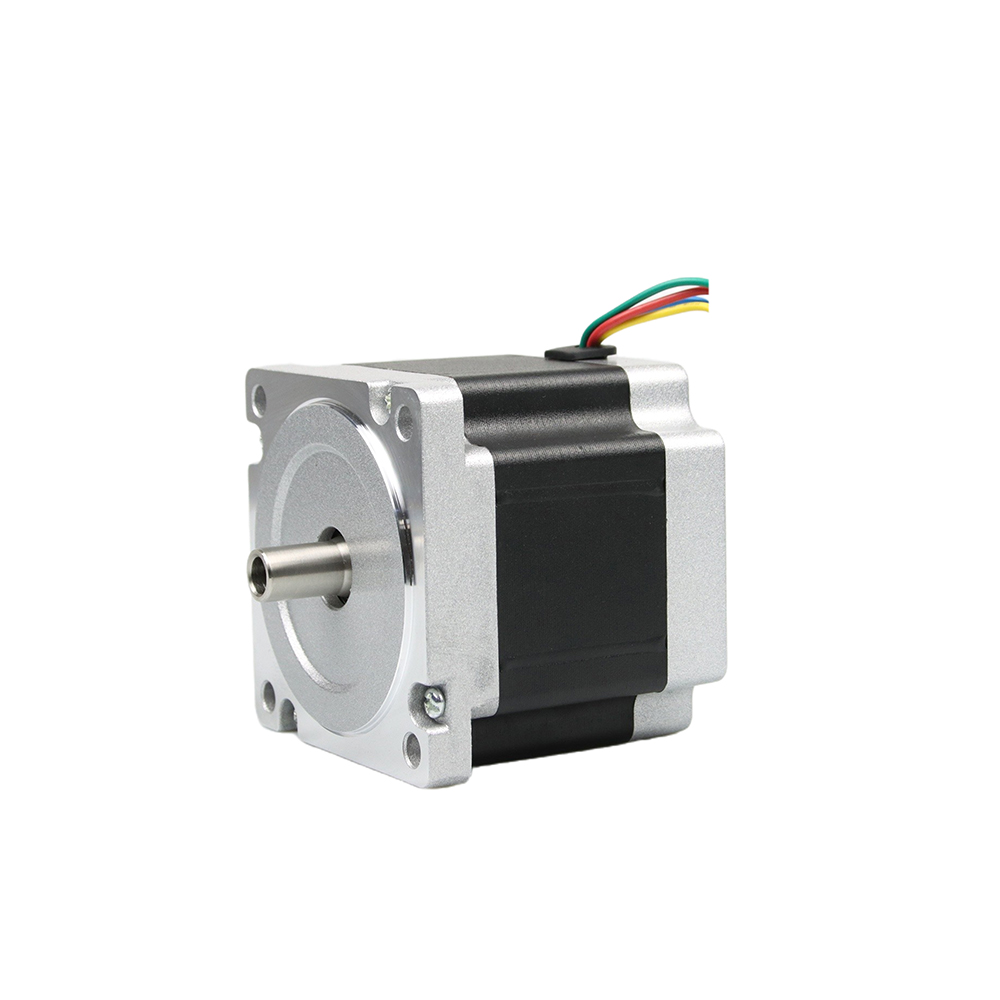
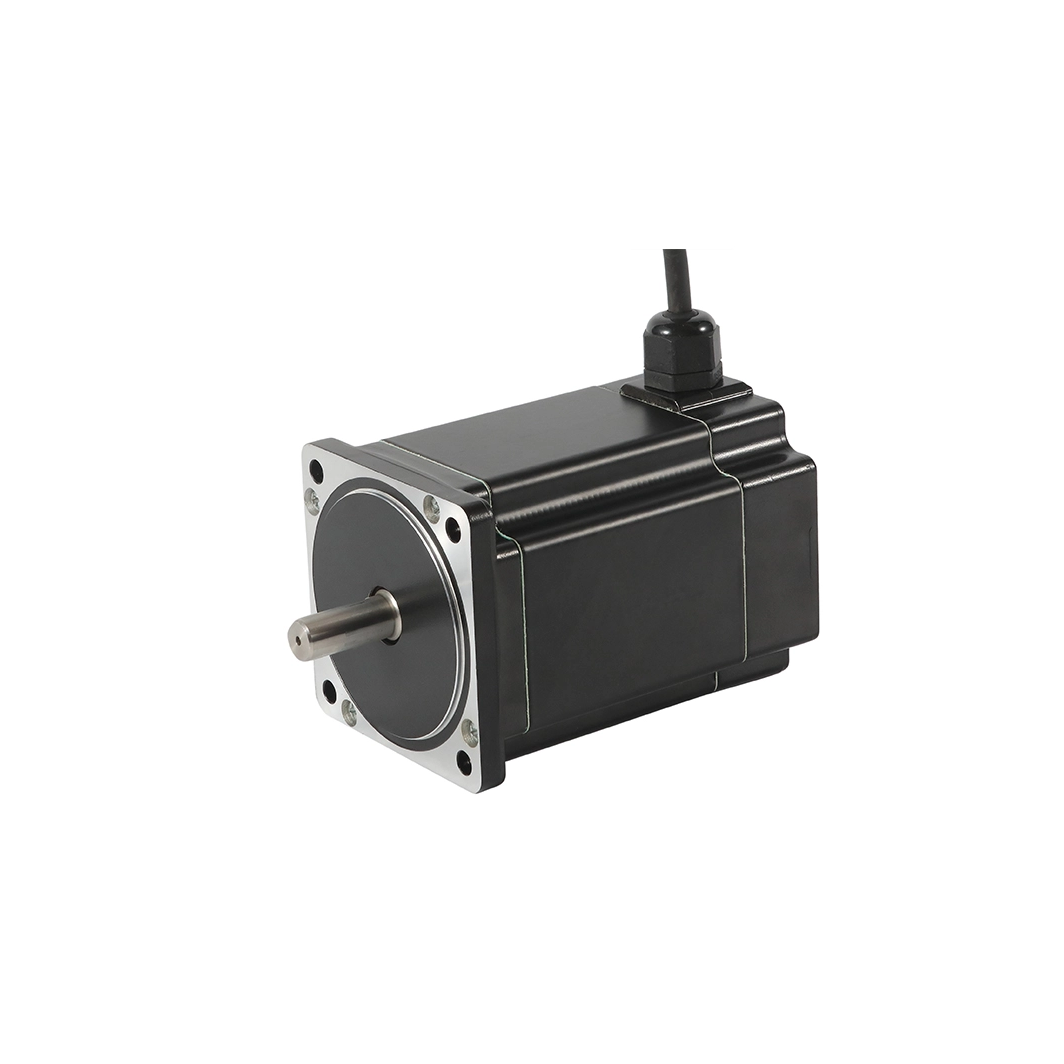
In modern motion control systems, custom stepper motor shaft design is no longer a secondary consideration—it is a core engineering decision that directly impacts performance, reliability, integration efficiency, and long-term system stability. We see daily that applications across automation, robotics, CNC machinery, medical equipment, packaging systems, semiconductor manufacturing, and precision instrumentation demand more than standard off-the-shelf shafts. They require purpose-built shaft solutions engineered to match mechanical loads, torque transmission, alignment tolerances, and environmental conditions.
We focus on shaft customization not as an accessory feature, but as a strategic design advantage that enhances system efficiency, reduces failure risks, and improves lifecycle performance. This article provides a comprehensive breakdown of what can be customized in stepper motor shaft design, how each parameter affects system behavior, and why it matters in real-world industrial applications.
A stepper motor may deliver precise positioning and controlled torque, but the shaft is the mechanical interface that transfers that performance into real motion. Poor shaft design leads to:
Vibration amplification
Bearing overload
Coupling misalignment
Premature wear
Torque loss
Noise generation
Structural fatigue
Custom shaft engineering eliminates these risks by aligning motor output characteristics with application-specific mechanical requirements. We design shafts not as isolated components, but as integrated system elements that support torque stability, axial load distribution, radial force management, and long-term mechanical integrity.
Shaft geometry defines how torque is transmitted, how loads are supported, and how accurately motion is delivered from the stepper motor to the driven mechanism. We engineer shaft geometry as a functional interface—optimized for strength, alignment, vibration control, and seamless integration with downstream components.
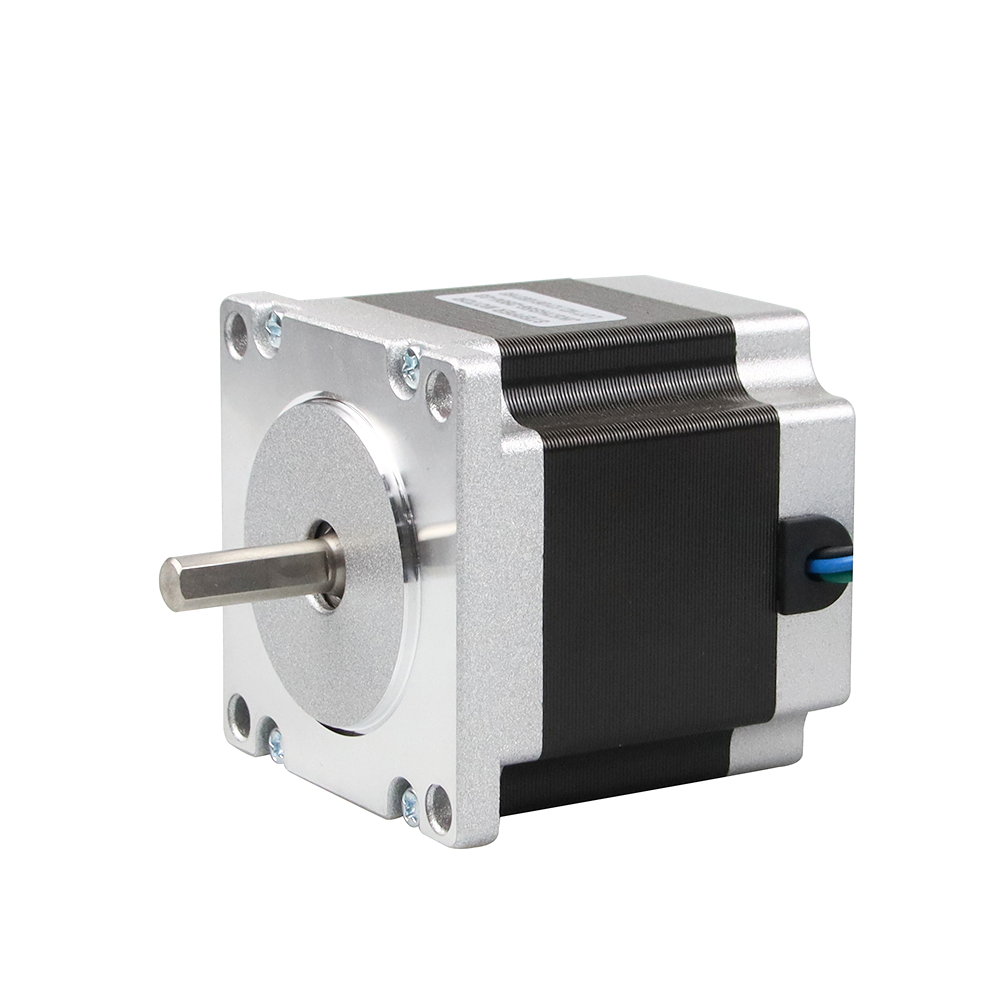
A single-ended shaft is the most common configuration for compact assemblies and direct-drive systems. We customize single-shaft geometry to balance torsional rigidity and rotational inertia, ensuring efficient torque delivery while maintaining fast acceleration and deceleration. This option is ideal for applications where space is limited and mechanical simplicity is required.
A dual-shaft geometry extends the motor shaft from both ends of the rotor. This design enables:
Encoder or resolver mounting for feedback control
Manual override or handwheel integration
Secondary load transmission
Dynamic balancing improvements
Dual-shaft customization enhances system flexibility and supports closed-loop and hybrid stepper systems without compromising structural stability.
A stepped shaft incorporates multiple diameter transitions along its length. This geometry is engineered to:
Improve bearing seating accuracy
Support axial positioning components
Reduce stress concentration at coupling interfaces
Optimize inertia distribution
Stepped shafts are commonly used in high-load and high-precision applications, where mechanical alignment and load isolation are critical.
A uniform straight shaft offers simplicity and broad compatibility with standard couplings, pulleys, and gears. We customize straight shaft geometry with precise diameter control and tight concentricity tolerances to ensure low runout, smooth rotation, and predictable torque transmission.
Hollow shafts reduce rotational inertia while maintaining torsional stiffness. This geometry is ideal for:
High-speed stepper systems
Weight-sensitive applications
Cable or fluid pass-through designs
Hollow shaft customization improves dynamic response, reduces vibration, and enhances energy efficiency without sacrificing structural integrity.
A D-shaped shaft introduces a flat surface that prevents rotational slippage between the shaft and mating components. This geometry improves:
Torque transfer reliability
Anti-slip performance
Assembly repeatability
D-cut shafts are widely used in applications requiring simple, cost-effective torque locking.
A keyway shaft integrates a machined slot to accommodate mechanical keys. This geometry supports:
High torque transmission
Positive mechanical locking
Heavy-duty industrial loads
Keyway customization is essential for applications exposed to shock loads, reversing torque, or continuous high-duty cycles.
Spline shafts distribute torque across multiple contact points, reducing localized stress and improving alignment accuracy. This geometry is suited for:
Precision motion systems
Gearbox integration
High-torque, low-backlash applications
Spline customization delivers superior load distribution and long-term mechanical stability.
Threaded shafts incorporate external or internal threads to support axial retention and mounting security. This geometry enables:
Locknut fixation
Preload adjustment
Secure coupling retention
Threaded customization improves axial load control and vibration resistance in dynamic systems.
A tapered shaft provides self-centering alignment when paired with matching hubs or couplings. This geometry enhances:
Concentricity
Torque capacity
Assembly precision
Tapered shafts are ideal for high-accuracy motion systems where alignment consistency directly affects performance.
Customized shaft geometry transforms the stepper motor shaft from a simple mechanical extension into a precision-engineered performance component. Each geometry option is selected to meet specific torque demands, load conditions, alignment requirements, and system integration goals—ensuring reliable, efficient, and long-lasting motion control performance.
Shaft length directly influences:
Mechanical leverage
Coupling alignment
Load distribution
Bending stress
Resonance frequency
We engineer shaft lengths to match mounting depth, coupling structure, gearbox integration, and actuator geometry. Overextended shafts cause vibration and bending fatigue, while undersized shafts create assembly constraints and torque inefficiencies. Precision length customization ensures structural balance and mechanical stability.
Diameter selection determines:
Torsional strength
Radial load tolerance
Axial force resistance
Bearing compatibility
Coupling fit
We design diameters based on torque transmission requirements, inertia matching, gearbox loads, pulley forces, and linear actuator stress profiles. Larger diameters improve load capacity but increase inertia; smaller diameters improve response but reduce mechanical strength. Custom optimization ensures perfect torque-to-inertia balance.
D-shaft (anti-slip torque transmission)
Round shaft (flexible coupling compatibility)
Keyway shaft (high-torque industrial applications)
Spline shaft (precision torque distribution)
Threaded shaft (axial fixation and mounting security)
Tapered shaft (self-centering coupling systems)
Each end geometry is selected based on torque requirements, coupling type, vibration resistance, and installation stability.
We manufacture shafts with micron-level tolerances for:
Concentricity
Runout
Straightness
Surface roughness
Roundness
High-precision tolerances reduce:
Micro-vibration
Bearing wear
Coupling fatigue
Noise generation
Misalignment stress
Precision machining transforms a stepper motor from a basic actuator into a high-stability motion platform suitable for medical devices, semiconductor tools, optical systems, and precision automation.
We offer full material engineering flexibility:
Carbon steel (cost efficiency + mechanical strength)
Stainless steel (corrosion resistance + hygiene compliance)
Alloy steel (high torque + fatigue resistance)
Hardened steel (wear resistance + long life cycles)
Surface-coated materials (nickel plating, black oxide, anti-corrosion coatings)
Material selection directly affects environmental durability, torque fatigue life, corrosion resistance, and mechanical longevity.
Surface customization improves:
Friction control
Corrosion resistance
Wear durability
Chemical resistance
Thermal stability
We apply:
Hardening treatments
Electroplating
Anodizing
Anti-corrosion coatings
Low-friction treatments
This ensures shaft reliability in high-humidity, chemical exposure, cleanroom, medical, and outdoor industrial environments.
We engineer:
External threads
Internal threads
Retention grooves
Locking shoulders
Mounting steps
Retainer slots
These features support secure coupling integration, anti-slip mounting, axial load control, and vibration resistance, ensuring long-term mechanical reliability.
Custom shafts are dynamically balanced to minimize:
Rotational vibration
Resonance frequencies
Structural oscillation
Harmonic amplification
Balanced shafts improve:
Positioning accuracy
Noise reduction
Motor lifespan
System reliability
This is essential for high-speed stepper systems and precision motion platforms.
We customize shafts for specialized applications including:
Robotics arms (torsional rigidity + feedback integration)
CNC machines (high torque transmission + vibration damping)
Medical devices (hygienic materials + silent operation)
Packaging lines (high-speed stability + low inertia)
3D printers (precision alignment + micro-vibration control)
Semiconductor equipment (ultra-low runout + cleanroom compatibility)
Each application demands a different mechanical logic, and shaft design becomes a functional performance driver, not a passive component.
Custom shaft design is a primary performance driver in stepper motor systems, not a minor mechanical detail. The shaft is the physical link between electromagnetic torque generation and real-world motion output. When shaft design is precisely matched to application requirements, overall system performance improves measurably across accuracy, efficiency, stability, and service life.
A custom-designed shaft ensures that generated torque is transferred with minimal loss. Proper shaft diameter, geometry, and surface finish prevent micro-slip, torsional wind-up, and energy dissipation at the coupling interface. This results in higher usable torque, improved load handling, and consistent motion under varying operating conditions.
Standard shafts often introduce vibration due to mismatched inertia, poor concentricity, or excessive length. Custom shaft design controls:
Rotational inertia
Natural resonance frequency
Dynamic balance
By engineering these parameters, vibration is minimized, leading to smoother motion, lower acoustic noise, and increased positioning accuracy, especially in low-speed and microstepping applications.
Stepper motors rely on mechanical precision to maintain accurate step positioning. Custom shafts manufactured with tight runout, straightness, and concentricity tolerances reduce angular deviation and backlash. This directly enhances repeatability, path accuracy, and synchronization in multi-axis systems.
Incorrect shaft geometry places uneven radial and axial loads on motor bearings. Custom shaft design balances these forces, preventing:
Bearing overload
Premature wear
Shaft deflection
Thermal stress accumulation
Optimized load distribution significantly extends bearing life, motor reliability, and overall system durability.
Every application applies different radial, axial, and torsional forces. Custom shaft design aligns mechanical capacity with real load conditions, ensuring:
Stable operation under continuous loads
Resistance to shock and reversing torque
Consistent performance at high duty cycles
This alignment prevents performance degradation and mechanical failure over time.
Efficient shaft geometry reduces frictional losses and mechanical resistance. With less energy wasted overcoming vibration and misalignment, the motor operates at lower current levels, improving thermal efficiency and reducing power consumption across long operating cycles.
Custom shaft interfaces ensure perfect compatibility with:
Precision couplings
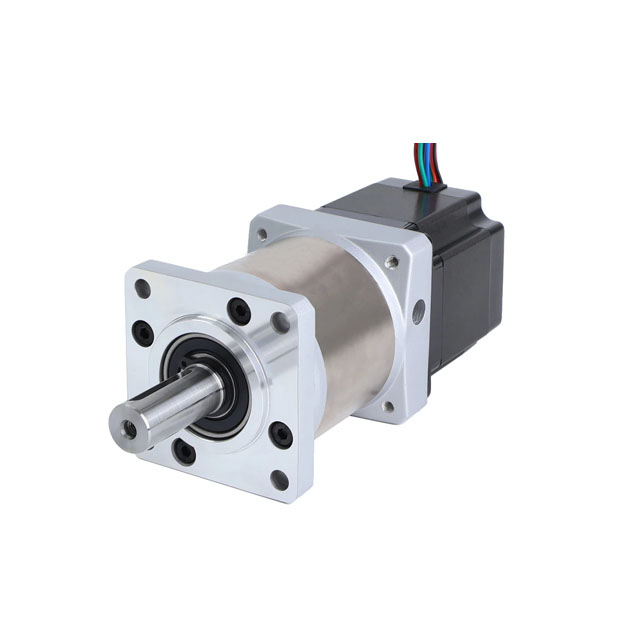
Planetary or harmonic gearboxes
Pulleys, belts, and lead screws
Accurate interface geometry minimizes backlash, misalignment, and assembly stress, leading to faster installation, fewer field issues, and stable long-term operation.
Custom shaft materials and surface treatments enhance heat dissipation and resistance to thermal deformation. Stable shaft behavior under temperature variation preserves mechanical alignment and torque consistency, which is critical in continuous or high-temperature environments.
Mechanical noise is often a result of vibration, imbalance, or poor torque transfer. Custom shaft design suppresses these sources, delivering quiet, controlled motion suitable for medical equipment, laboratory instruments, and precision automation systems.
A properly engineered shaft reduces mechanical stress throughout the drivetrain. This leads to:
Fewer component failures
Longer service intervals
Reduced maintenance costs
Improved uptime
Custom shaft design directly supports predictable system behavior and long-term operational reliability.
Custom shaft engineering enables easy system upgrades, modular expansion, and integration with advanced control architectures. This flexibility supports scalable designs and future performance enhancements without requiring complete system redesigns.
Custom shaft design transforms the stepper motor from a standard actuator into a precision motion platform. By optimizing torque transfer, vibration control, load management, and integration accuracy, it directly eleva
We design shafts for seamless integration with:
Planetary gearboxes
Harmonic reducers
Linear actuators
Servo couplings
Optical encoders
Magnetic encoders
Brake systems
This ensures mechanical compatibility, alignment precision, and long-term system stability without secondary modifications.
Our shaft manufacturing process includes:
CNC precision machining
Multi-stage dimensional inspection
Dynamic balancing verification
Surface roughness measurement
Material composition testing
Load simulation validation
Torque stress analysis
This ensures every custom shaft meets industrial-grade reliability standards and long-term performance requirements.
Custom shaft design enables:
Modular system upgrades
Scalability
Multi-axis integration
Digital twin simulation compatibility
Smart manufacturing alignment
It supports Industry 4.0 architectures, predictive maintenance systems, and intelligent automation platforms.
Custom stepper motor shaft design is not a detail—it is a structural foundation for performance, stability, reliability, and scalability. Every parameter—length, diameter, material, tolerance, geometry, coating, and balance—directly influences system output quality.
We engineer shafts as precision mechanical interfaces that translate electrical control into physical performance with maximum efficiency, minimal loss, and long-term reliability. This approach transforms stepper motors from basic actuators into high-performance motion systems built for industrial precision, automation excellence, and future-ready engineering.
Custom shaft design is where mechanical intelligence meets motion control excellence.
We customize shaft structures based on motion architecture:
Single-ended shafts for direct drive systems, compact assemblies, and enclosed housings
Dual-ended shafts for encoder mounting, secondary feedback systems, manual override mechanisms, or synchronized motion transmission
This flexibility allows seamless integration with closed-loop control systems, brake modules, encoders, and feedback devices without structural compromise.
A custom stepper motor shaft design tailors shaft geometry, length, and features to meet specific mechanical and application requirements.
Proper shaft design ensures accurate torque transmission, mechanical stability, and long-term reliability.
Common options include round shafts, flat shafts, D-cut shafts, keyed shafts, and hollow shafts.
Shaft diameter directly impacts load capacity, torsional strength, and coupling compatibility.
Yes, shaft length can be precisely customized to fit OEM assemblies and space constraints.
Standard materials include carbon steel, stainless steel, and alloy steel, depending on strength and environmental needs.
Yes, optimized shaft alignment reduces backlash and vibration, improving motion accuracy.
Hollow shafts are ideal for routing cables, air lines, or sensors in compact systems.
Heat treatment and surface coatings improve wear resistance and corrosion protection.
Yes, shaft geometry and material can be engineered for demanding load conditions.
Yes, full OEM support is available, from concept design to mass production.
Yes, ODM projects can cover complete stepper motor architecture, including shaft, housing, and winding.
Manufacturers typically require shaft dimensions, tolerances, load data, and application details.
Yes, tight tolerances can be achieved to meet high-precision OEM requirements.
Yes, shafts can be designed to integrate seamlessly with planetary gearboxes or couplings.
Yes, shaft designs are commonly customized for CNC, robotics, and industrial automation systems.
Integrated shaft designs minimize adapters and simplify mechanical assembly.
Yes, prototypes are available for validation before mass production.
Manufacturers apply strict dimensional inspection and load testing throughout production.
Select a manufacturer with proven engineering expertise, OEM/ODM experience, and scalable production capacity.