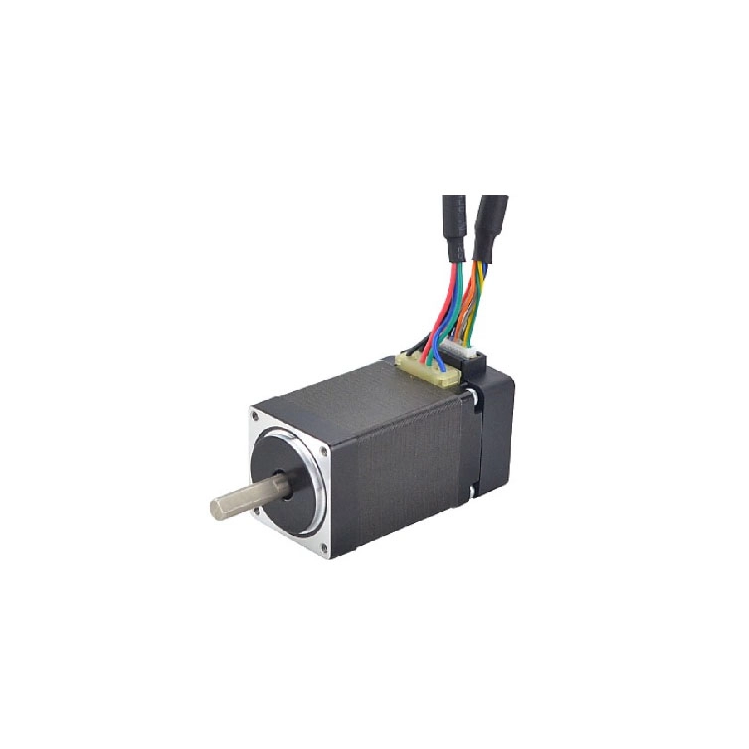
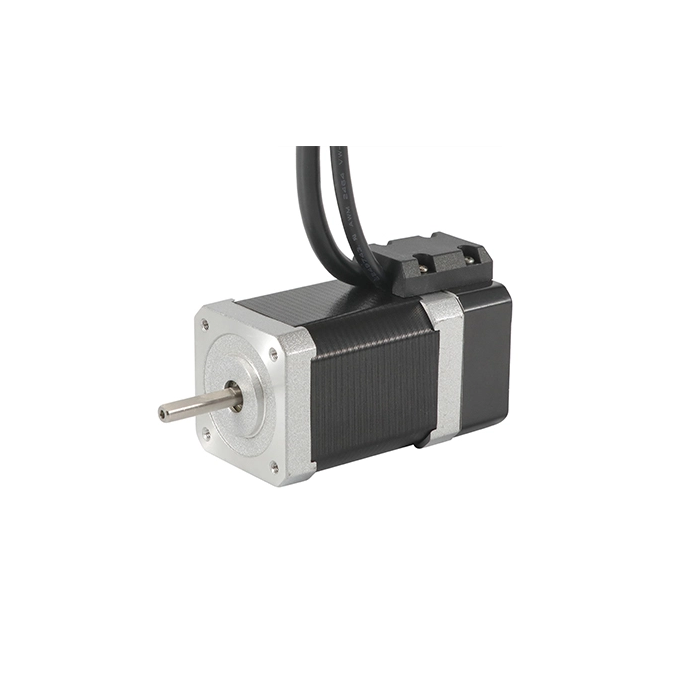
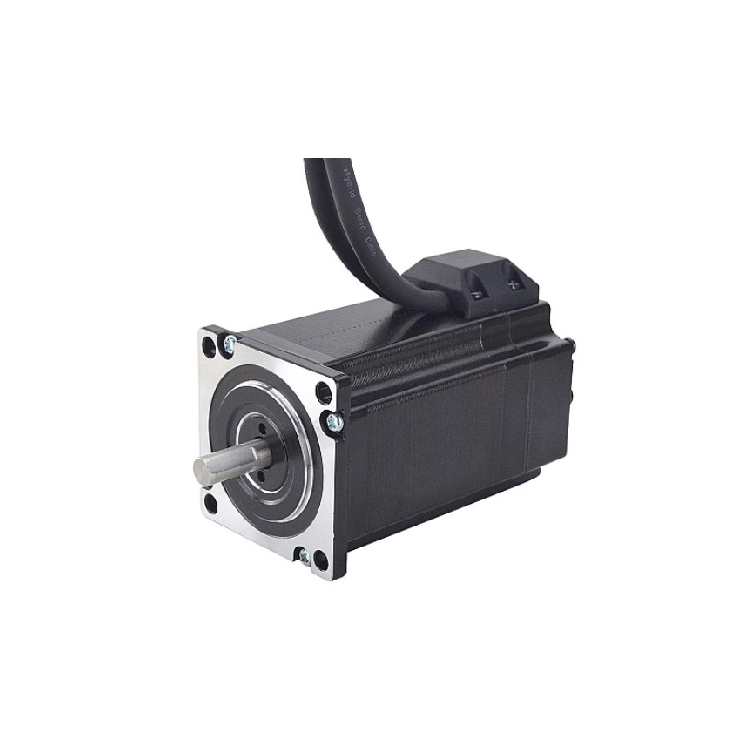
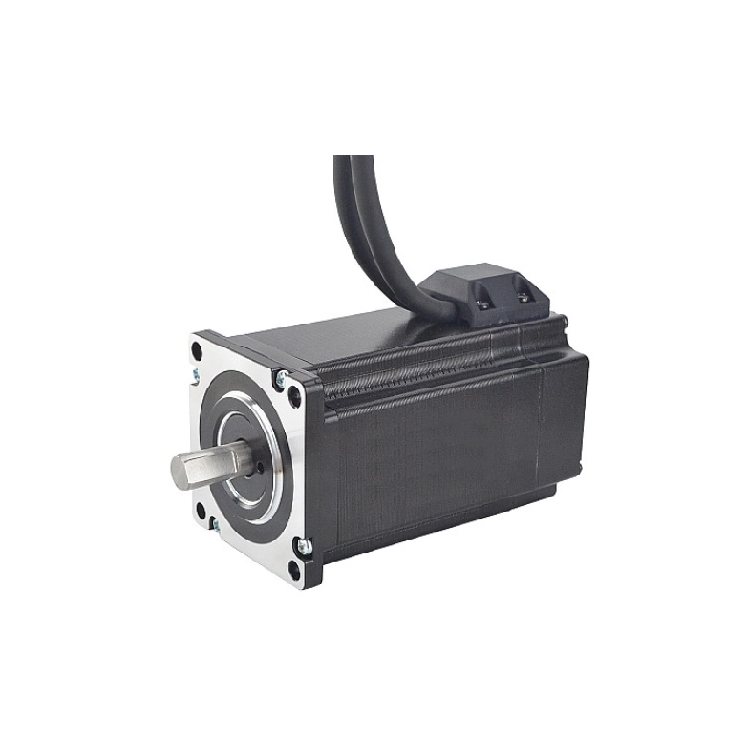
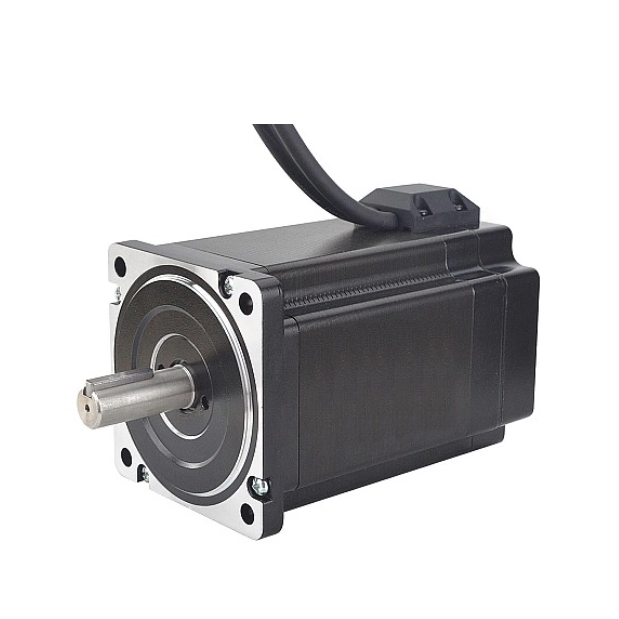
Introduction: Why Closed-Loop Stepper Motors Matter
Stepper motors have long been valued for their precise positioning, simple control, and cost efficiency. However, traditional open-loop stepper systems cannot detect missed steps, load changes, or mechanical disturbances. As automation systems demand higher accuracy, reliability, and energy efficiency, integrating encoders into stepper motors for closed-loop control has become a proven and widely adopted solution.
By adding an encoder, a stepper motor transforms into a closed-loop stepper motor system, combining the simplicity of stepper control with the feedback intelligence of servo systems—without the high cost or tuning complexity of full servos.
What Is Closed-Loop Control in Stepper Motors
Closed-loop control refers to a system where real-time position feedback is used to continuously correct motor operation. In a closed-loop stepper motor:
The controller sends motion commands
The encoder measures actual shaft position or speed
Feedback is compared to the command
Errors are corrected instantly
This feedback loop eliminates step loss, improves torque utilization, and ensures accurate positioning even under variable loads.
Why Integrate Encoders into Stepper Motors
Introduction
Stepper motors are widely used in automation, CNC equipment, robotics, and precision motion systems because of their accurate positioning, repeatable movement, and straightforward control. Traditionally, most stepper motors operate in open-loop mode, assuming that the motor always follows the commanded steps. However, as applications demand higher reliability, efficiency, and performance, integrating encoders into stepper motors has become a strategic and technical necessity.
Encoder integration transforms a standard stepper motor into a closed-loop stepper motor, enabling real-time feedback and intelligent motion correction. Below are the key reasons why encoder integration is increasingly essential in modern motion control systems.
1. Elimination of Missed Steps
In open-loop systems, step loss caused by overload, acceleration spikes, or mechanical interference goes undetected. Once a step is missed, positioning errors accumulate.
By integrating an encoder, the controller continuously monitors the actual motor position. If a deviation occurs, the system automatically compensates, ensuring accurate and reliable positioning at all times.
2. Improved Position Accuracy and Repeatability
Encoders provide real-time feedback on shaft position and movement. This allows the system to correct minor deviations caused by mechanical tolerances, vibration, or load changes.
The result is:
This is especially critical in applications such as CNC machining, semiconductor equipment, and medical devices.
3. Higher Torque Utilization
Open-loop stepper motors often run at full current to prevent step loss, even when full torque is not required. This leads to inefficiency and excessive heat.
Closed-loop stepper motors use encoder feedback to deliver only the necessary current, optimizing torque output and improving overall system efficiency.
4. Reduced Heat Generation
Because current is dynamically adjusted based on load conditions, encoder-integrated stepper motors generate significantly less heat. Lower operating temperatures:
This is particularly beneficial in compact or enclosed systems.
5. Enhanced Reliability Under Variable Loads
Load conditions in real-world applications are rarely constant. Changes in friction, inertia, or external forces can cause open-loop systems to fail.
Encoder feedback allows the motor to adapt instantly to load variations, maintaining stable motion even under demanding conditions.
6. Servo-Like Performance at a Lower Cost
Closed-loop stepper motors combine the advantages of stepper and servo technologies:
They offer servo-like performance without the complexity, tuning requirements, or cost associated with traditional servo systems.
7. Stall Detection and Fault Protection
With an integrated encoder, the system can detect:
Stalls
Overloads
Position errors
This enables built-in alarms, fault handling, and safe system shutdowns, protecting both the equipment and the process.
8. Improved Dynamic Performance
Encoder integration enhances:
The motor runs more quietly, smoothly, and efficiently across a wider speed range.
9. Simplified System Diagnostics
Closed-loop feedback provides valuable diagnostic data, such as:
Position deviation
Speed consistency
Load behavior
This data improves troubleshooting, predictive maintenance, and long-term system optimization.
10. Broader Application Capability
Encoder-integrated stepper motors are ideal for advanced applications including:
Industrial robotics
3D printing and additive manufacturing
Packaging and labeling machinery
Automated inspection systems
Precision medical equipment
Conclusion
Integrating encoders into stepper motors significantly enhances accuracy, efficiency, reliability, and overall system performance. By enabling closed-loop control, encoder-equipped stepper motors eliminate missed steps, reduce heat, adapt to changing loads, and deliver servo-like capabilities at a lower cost. For modern automation and precision motion systems, encoder integration is no longer optional—it is a decisive advantage.
Types of Encoders Used in Stepper Motors
Incremental Encoders
Output A/B quadrature signals
Common resolutions: 400–5000 PPR
Cost-effective and widely used
Ideal for most industrial closed-loop stepper systems
Absolute Encoders
Provide exact position on power-up
Available in single-turn and multi-turn versions
Higher cost but no homing required
Used in high-end automation and robotics
Magnetic vs Optical Encoders
Optical encoders offer higher resolution and accuracy
Magnetic encoders are more robust against dust, oil, and vibration
Mechanical Integration of Encoders into Stepper Motors
Rear-Shaft Mounting
The most common method is mounting the encoder on the rear shaft extension of the stepper motor.
Key considerations:
Hollow Shaft or Embedded Designs
Advanced designs embed the encoder inside the motor housing, improving compactness and protection.
Alignment and Tolerance Control
Precise alignment ensures signal accuracy and long encoder lifespan. Factory integration provides better results than aftermarket mounting.
Electrical Integration and Signal Processing
Encoder Signal Types
Differential A+/A-, B+/B-
Index (Z) signal
SSI, BiSS, or CANopen for absolute encoders
Controller Compatibility
Ensure the stepper driver or motion controller supports:
Encoder input resolution
Closed-loop algorithms
Error correction logic
Noise Suppression
Use shielded cables and proper grounding to maintain signal integrity, especially in industrial environments.
Closed-Loop Stepper Driver Requirements
A closed-loop stepper system requires a dedicated closed-loop driver capable of:
Reading encoder feedback in real time
Performing position comparison
Dynamically adjusting phase current
Triggering alarms on excessive error
Modern drivers often include:
Stall detection
Overload protection
Auto-tuning algorithms
Control Algorithms in Closed-Loop Stepper Systems
Introduction
Closed-loop stepper motors rely heavily on control algorithms to achieve precise, efficient, and reliable motion. Unlike open-loop systems that simply send step pulses without feedback, closed-loop stepper systems continuously monitor motor position and dynamically adjust operation. The combination of encoder feedback and advanced algorithms ensures high accuracy, optimized torque, smooth motion, and system protection.
1. Position Control Loop
At the heart of closed-loop control is the position control loop, which constantly compares the target position with the actual position provided by the encoder.
Key functions:
Detect position errors in real time
Adjust pulse output to correct deviations
Maintain precise step alignment even under varying loads
The result is accurate positioning and elimination of missed steps, ensuring the system follows the commanded trajectory precisely.
2. Velocity (Speed) Control Loop
In addition to position control, a velocity control loop regulates the motor speed. The encoder provides instantaneous speed feedback, and the algorithm adjusts the current and step timing to:
Maintain consistent speed under varying loads
Prevent acceleration-induced step loss
Reduce vibration and resonance
Velocity control is particularly important in applications requiring smooth continuous motion, such as conveyor systems or 3D printers.
3. Current Optimization (Torque Control)
Closed-loop stepper systems often include current control algorithms that regulate the motor’s phase current based on torque demand:
Reduces unnecessary current when load is low
Maximizes torque utilization when load increases
Minimizes heat generation
This approach improves energy efficiency and protects the motor from overheating while maintaining optimal performance.
4. Anti-Resonance and Vibration Suppression
Low-speed resonance and mechanical vibration are common in stepper motors. Closed-loop algorithms include:
These measures significantly reduce noise, vibration, and position overshoot, ensuring smooth operation even at low speeds.
5. Error Detection and Recovery Logic
Closed-loop stepper control algorithms include error monitoring and recovery mechanisms, which:
Detect stalls, overloads, or unexpected deviations
Trigger alarms or automatic corrective action
Safely stop or adjust the motor to prevent damage
This enhances system reliability and safety, particularly in critical industrial or medical applications.
6. Feedforward Control
Some advanced systems employ feedforward algorithms in addition to feedback:
Predicts system behavior based on commanded motion
Preemptively adjusts current or pulse timing
Reduces latency in response to rapid acceleration or deceleration
Feedforward control improves dynamic performance and is especially useful for high-speed or high-precision operations.
7. Adaptive Tuning and Auto-Calibration
Modern closed-loop stepper drivers may feature adaptive tuning algorithms:
Automatically adjust PID parameters or current profiles
Compensate for mechanical variations and load changes
Optimize performance without manual intervention
This ensures consistent performance across different operating conditions and simplifies system setup.
8. Multi-Loop Integration
In complex systems, multiple control loops can work together:
Position loop ensures accurate alignment
Velocity loop maintains smooth speed
Current loop optimizes torque
Anti-resonance loop reduces vibration
These loops operate in real time, using encoder feedback to continuously refine motor operation.
Conclusion
Control algorithms in closed-loop stepper systems are critical to achieving precision, efficiency, and reliability. By combining position, velocity, and current loops with advanced features like anti-resonance, error recovery, and adaptive tuning, closed-loop stepper motors outperform open-loop systems in almost every aspect. These algorithms allow stepper motors to operate smoothly under variable loads, eliminate missed steps, reduce heat, and provide servo-like performance at lower cost.
| Feature | Open-Loop Stepper | Closed-Loop Stepper |
| Missed Step Detection | ❌ | ✅ |
| Position Accuracy | Medium | High |
| Heat Generation | High | Low |
| Torque Utilization | Fixed | Adaptive |
| Reliability | Limited | Excellent |
Applications of Closed-Loop Stepper Motors
Best Practices for Integrating Encoders into Stepper Motors
Select encoder resolution based on application accuracy requirements
Match encoder type with environmental conditions
Use factory-integrated encoder stepper motors when possible
Ensure driver and controller compatibility
Test under full load conditions before deployment
Common Challenges and How to Avoid Them
Integrating encoders into stepper motors for closed-loop control significantly improves performance, but it also introduces technical challenges that must be addressed to ensure reliable, efficient, and precise operation. Understanding these challenges and implementing proper solutions is critical for system success.
1. Signal Noise and Interference
Challenge:
Encoder signals, especially from incremental encoders, are susceptible to electromagnetic interference (EMI) and electrical noise. This can lead to false readings, jitter, or erratic motor behavior.
Solutions:
Use differential encoder signals (A+/A-, B+/B-) for higher noise immunity
Employ shielded and twisted-pair cables to minimize interference
Maintain proper grounding of motor, driver, and controller
Avoid routing encoder cables near high-power motor or switching circuits
2. Mechanical Misalignment
Challenge:
Incorrect alignment between the motor shaft and encoder can cause inaccurate feedback, backlash, or premature encoder wear.
Solutions:
Use precision couplings to connect the encoder to the shaft
Ensure concentric mounting with minimal runout
Prefer factory-integrated encoders over aftermarket attachments
Follow manufacturer tolerance specifications strictly
3. Controller or Driver Mismatch
Challenge:
Not all stepper drivers support encoder feedback. Using an incompatible controller can prevent closed-loop functionality or produce unstable behavior.
Solutions:
Confirm that the driver supports closed-loop operation and encoder input type (incremental or absolute)
Match encoder resolution with controller processing capability
Use drivers with built-in error detection and correction algorithms
4. Overload or Stall Conditions
Challenge:
Even with closed-loop control, sudden mechanical overloads or high-inertia loads can stress the motor and lead to temporary stalls or position deviation.
Solutions:
Select a motor with adequate torque margin for your application
Configure the controller’s stall detection and protective thresholds
Employ soft acceleration/deceleration profiles to reduce mechanical stress
5. Excessive Heat Generation
Challenge:
High-speed or high-load operation can generate heat in the motor or driver, reducing efficiency and shortening lifespan.
Solutions:
Optimize current settings using closed-loop current control
Ensure proper ventilation or cooling for motors and drivers
Monitor temperature via sensors if available, integrating automatic thermal protection
6. Encoder Resolution Limitations
Challenge:
Using an encoder with insufficient resolution can limit position accuracy and velocity control, especially in high-precision applications.
Solutions:
Choose an encoder resolution appropriate for required positioning accuracy
Consider absolute encoders for applications that require power-on exact position
Verify that the controller can handle the encoder resolution without introducing latency
7. System Tuning Complexity
Challenge:
Closed-loop systems require tuning of PID loops, current limits, and acceleration parameters. Improper tuning can cause oscillation, overshoot, or instability.
Solutions:
Use auto-tuning features in modern stepper drivers
Follow manufacturer guidelines for PID and current loop setup
Test under full load conditions to ensure stable performance
8. Environmental Factors
Challenge:
Dust, vibration, moisture, or temperature extremes can affect both encoder and motor performance.
Solutions:
Choose industrial-grade or sealed encoders for harsh environments
Use shock-resistant and vibration-damped mounting
Consider magnetic encoders in high-dust or oil environments
9. Cable Management and Routing
Challenge:
Long or improperly routed encoder cables can introduce signal degradation, latency, or EMI coupling.
Solutions:
Keep encoder cables as short as practical
Use separate cable channels from power lines
Avoid sharp bends or excessive twisting of encoder cables
Conclusion
While closed-loop stepper systems provide precision, reliability, and servo-like performance, their success depends on careful system design. By addressing signal noise, mechanical alignment, controller compatibility, thermal management, and environmental factors, engineers can maximize performance and longevity. Proper planning, high-quality components, and adherence to manufacturer guidelines will ensure that your encoder-integrated stepper motor system operates smoothly and efficiently in any application.
Future Trends in Closed-Loop Stepper Motor Technology
Integrated encoder + driver designs
Higher resolution compact encoders
AI-assisted auto-tuning algorithms
Networked closed-loop motion systems
As Industry 4.0 evolves, closed-loop stepper motors will continue to bridge the gap between affordability and high-performance motion control.
Conclusion
Integrating encoders into stepper motors is a proven and practical way to achieve high-precision, reliable, and efficient closed-loop control. By combining real-time feedback with intelligent drivers, closed-loop stepper motors eliminate missed steps, reduce heat, and deliver consistent performance across demanding applications. For modern automation systems, encoder-integrated stepper motors are no longer an upgrade—they are a competitive necessity
FAQs: Integrating Encoders into Stepper Motors for Closed-Loop Control
Product & Technical FAQs
1.What is a closed-loop stepper motor?
A closed-loop stepper motor uses encoder feedback to actively correct position and reduce missed steps for higher accuracy.
2.How does integrating an encoder improve a stepper motor?
Encoders provide real-time position feedback, enhancing stability, reducing vibration, and enabling precise motion control.
3.Can a closed-loop system reduce stepper motor vibration?
Yes, feedback allows the motor to adjust current and torque dynamically, minimizing resonance and oscillations.
4.How does closed-loop control affect low-speed resonance in stepper motors?
Closed-loop control stabilizes the motor at low speeds, significantly reducing resonance and step loss.
5.What types of encoders are compatible with stepper motors?
Both incremental and absolute encoders can be integrated depending on precision and application requirements.
6.Can integrated stepper servo motors achieve closed-loop performance?
Yes, combining a stepper motor with a driver and encoder creates a compact closed-loop system for smoother operation.
7.Does closed-loop operation increase motor efficiency?
Yes, it optimizes torque and current, reducing heat generation and energy consumption.
8.Can encoder integration improve stepper motor reliability under load?
Yes, feedback helps maintain accuracy and prevent missed steps when the load varies dynamically.
9.Are closed-loop stepper motors suitable for CNC machines?
Yes, they provide high precision and stable motion for CNC applications.
10.Can closed-loop stepper motors improve performance in 3D printers?
Yes, they deliver smoother layer deposition and more accurate positioning.
Factory OEM / ODM Customization FAQs
11.Can a stepper motor manufacturer provide OEM closed-loop solutions?
Yes, BESFOC offers OEM customization including encoder integration and closed-loop tuning.
12.Can ODM services include both encoder integration and motor redesign?
Yes, ODM projects can cover motor design, encoder selection, driver matching, and full system optimization.
13.Can encoder resolution be customized for OEM applications?
Yes, manufacturers can specify high- or low-resolution encoders depending on precision needs.
14.Can closed-loop stepper motors be optimized for specific torque and speed?
Yes, OEM/ODM services allow precise tuning of torque, current, and speed profiles.
15.Do closed-loop stepper motors require special drivers?
Yes, integrated drivers with feedback capabilities are required for proper closed-loop operation.
16.Can manufacturers integrate stepper motors with gearboxes in closed-loop systems?
Yes, precision gearboxes can be combined without compromising feedback stability.
17.Are custom closed-loop motors suitable for automation equipment?
Yes, OEM-designed closed-loop stepper motors can be optimized for industrial automation and robotics.
18.Can a closed-loop stepper motor reduce maintenance for OEM systems?
Yes, feedback ensures accurate motion, reducing mechanical wear and stepper motor misalignment.
19.Do manufacturers provide testing for closed-loop performance?
Yes, load testing, resonance analysis, and motion profiling are part of OEM validation.
20.How should customers select a stepper motor manufacturer for closed-loop solutions?
Choose a manufacturer with engineering expertise, encoder integration capability, and OEM/ODM experience.

 English
 العربية
 Français
 Русский
 Español
 Português
 Deutsch
 italiano
 日本語
日本語 한국어
한국어 Nederlands
 Tiếng Việt
 ไทย
ไทย Polski
 Türkçe
 ພາສາລາວ
 ភាសាខ្មែរ
 Bahasa Melayu
 ဗမာစာ
ဗမာစာ Filipino
 Bahasa Indonesia
 magyar
 Română
 Čeština
 Монгол
 қазақ
қазақ Српски
 हिन्दी
 فارسی
فارسی Slovenčina
 Slovenščina
 Norsk
Norsk Svenska
 українська
 Ελληνικά
 Suomi
Suomi Հայերեն
 עברית
עברית Latine
 Dansk
Dansk Shqip
Shqip বাংলা
বাংলা Hrvatski
 Afrikaans
 Gaeilge
 Eesti keel
 Oʻzbekcha
 latviešu
 Azərbaycan dili
 Български
 Català