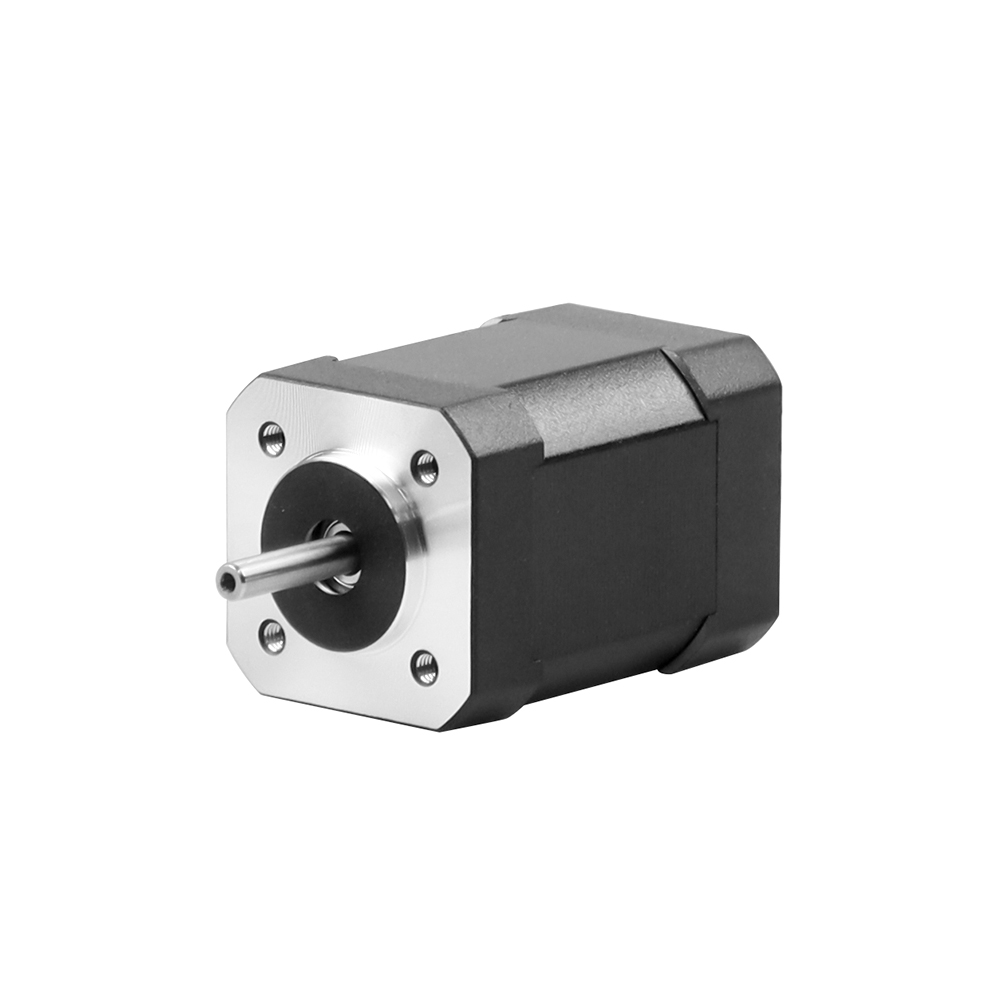
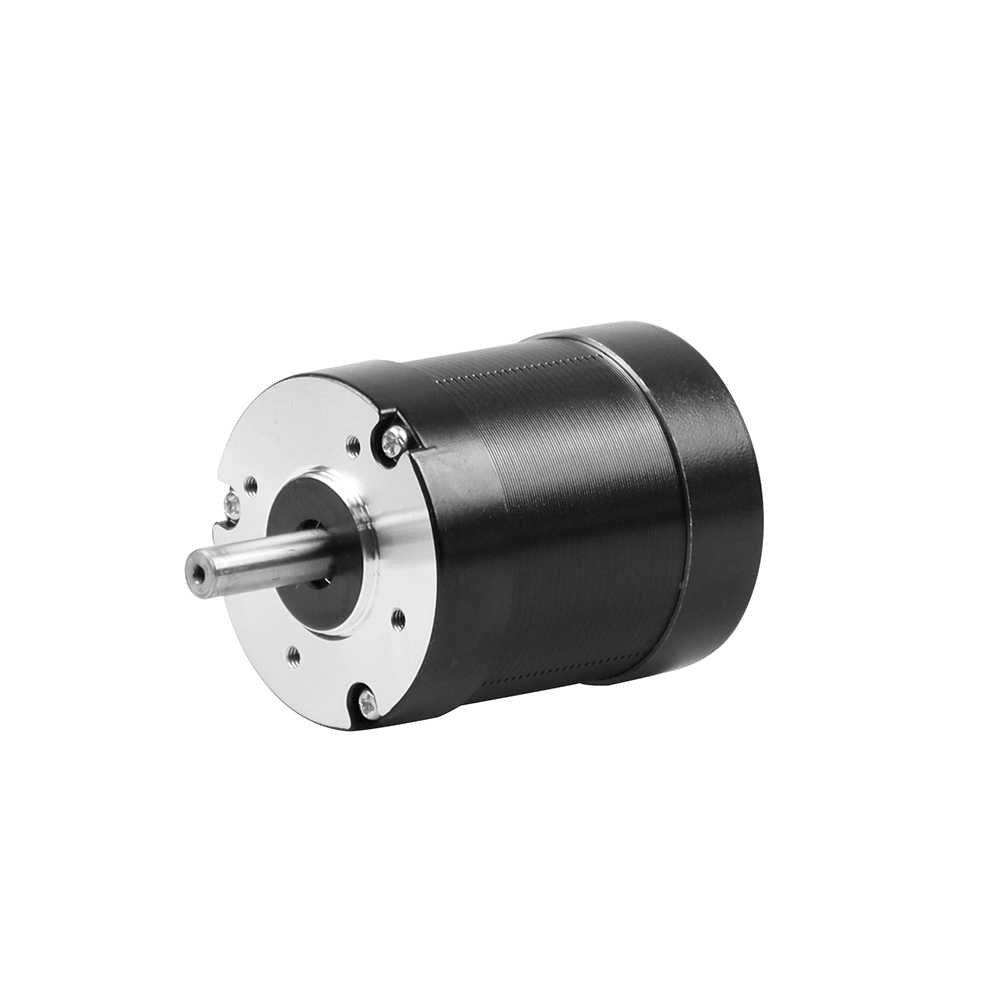
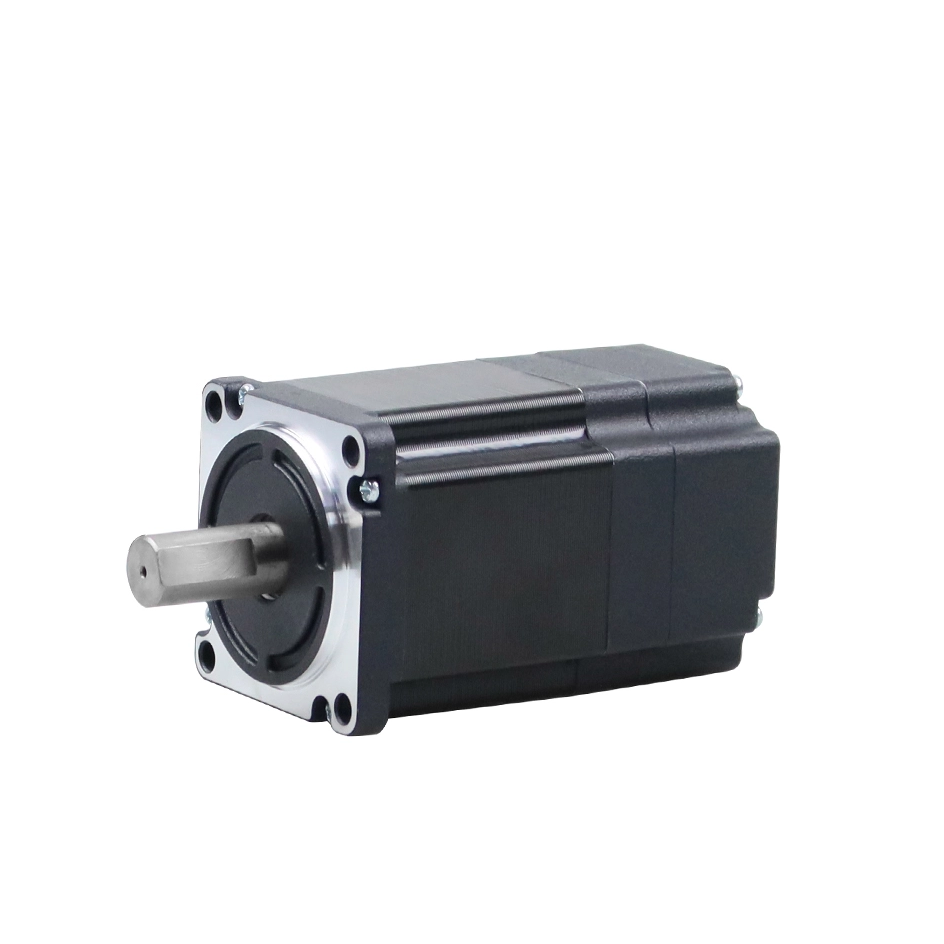
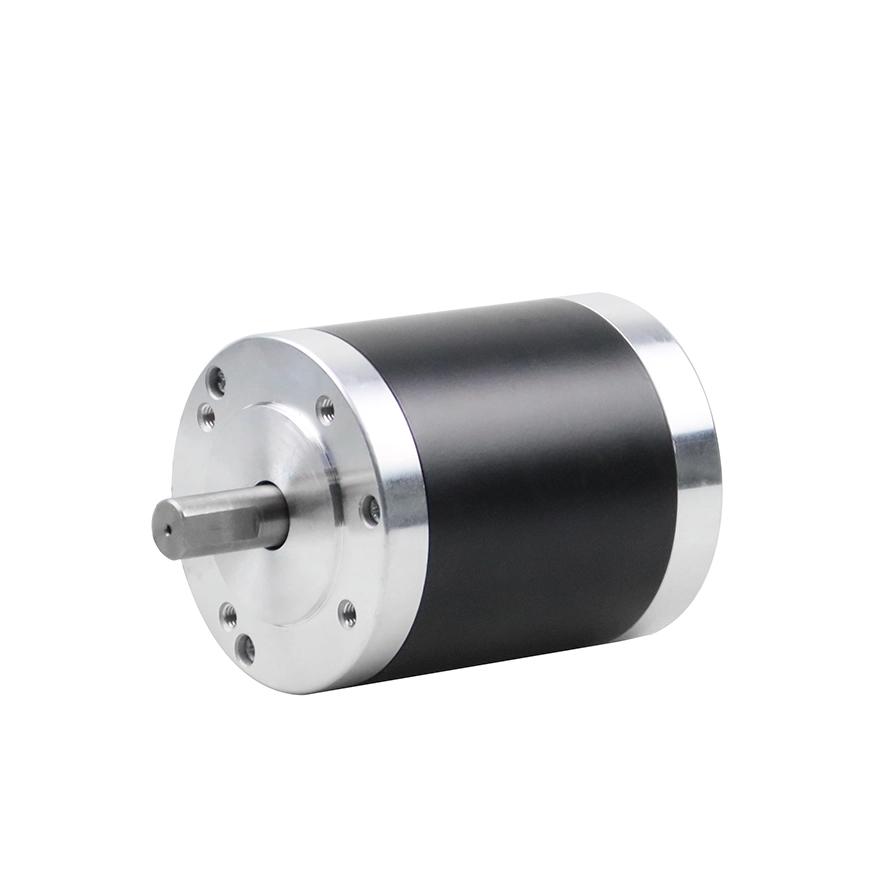
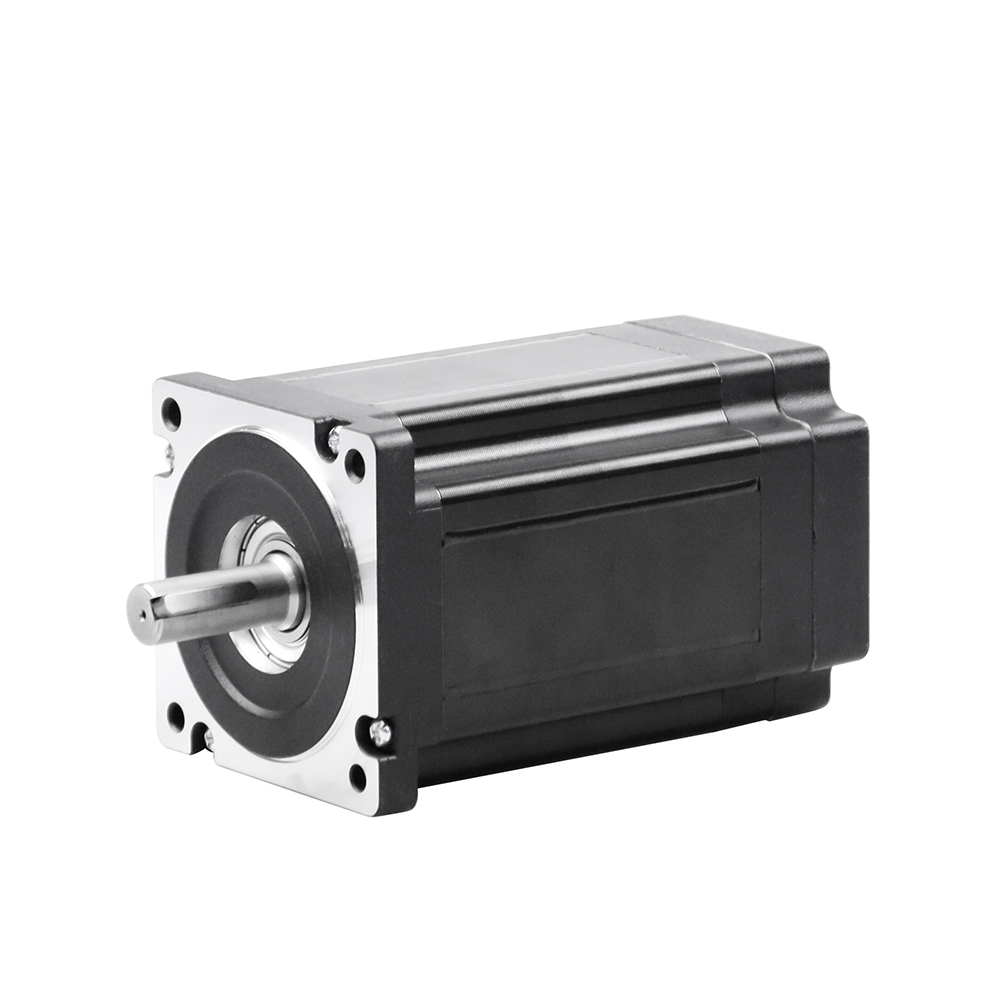
In the rapidly evolving landscape of industrial and logistics automation, Autonomous Guided Vehicles (AGVs) and Autonomous Mobile Robots (AMRs) stand at the forefront. These intelligent machines are revolutionizing material handling, warehouse management, and manufacturing processes. At the very heart of their mobility, precision, and operational efficiency lies a critical component: the brushless DC (BLDC) motor. We recognize that selecting the optimal drive system is not merely a technical specification—it is a foundational business decision that impacts reliability, total cost of ownership, and system performance. This comprehensive analysis delves into the intrinsic advantages of BLDC motors for AGV/AMR applications, providing the detailed engineering and application insights necessary to make an informed choice for your automation solutions.
Understanding the Core Technology: What Are Brushless DC Motors?
The Core Architectural Shift
Brushless DC motors represent a fundamental evolution in direct current motor technology. The key distinction lies in the inversion of the traditional motor anatomy and the elimination of its primary point of failure. Unlike brushed DC motors, where electromagnets (windings) reside on the rotating armature and commutation is performed mechanically via carbon brushes and a commutator, BLDC motors feature a stationary electromagnetic stator and a rotating permanent magnet rotor.
This architectural shift replaces mechanical commutation with sophisticated electronic commutation. An external motor controller or drive precisely sequences the current flow through the stator windings, generating a rotating magnetic field that pulls the permanent magnet rotor. This process requires real-time knowledge of the rotor's position, achieved either through Hall-effect sensors or sensorless back-EMF detection techniques.
Key Components & Function
A functional BLDC system is a triad of integrated components:
| Component | Primary Role | Key Characteristics in AGV/AMR Context |
| Permanent Magnet Rotor | Provides the magnetic field for torque production. | Uses high-grade magnets (e.g., Neodymium) for high torque density and compact size. |
| Wound Stator | Generates the controlled electromagnetic field to drive the rotor. | Lamination design and winding pattern optimize efficiency and thermal performance. |
| Electronic Controller (ESC) | Powers stator windings in sequence based on rotor position. | Implements algorithms (e.g., FOC) for smooth, efficient torque control and dynamic response. |
Fundamental Operational Advantages
This design yields intrinsic benefits critical for robotics:
High Efficiency & Thermal Performance: No brush friction reduces energy loss, extending battery life. Heat is generated in the outer stator, enabling better cooling.
Long Service Life & Reliability: Absence of brush wear eliminates a key failure mode, ensuring longevity with minimal maintenance.
High Power Density: Enables more torque and power in a smaller, lighter package, directly impacting payload and agility.
Precise Controllability: Compatible with advanced feedback devices for exact speed and position regulation, essential for accurate navigation.
In essence, the BLDC motor is not merely a component but an integrated mechatronic system. Its superior architecture provides the foundational performance characteristics that make precise, reliable, and efficient automation in AGVs and AMRs not just possible, but optimal.
Critical Performance Advantages of BLDC Motors for Mobile Robotics
The architectural superiority of Brushless DC motors translates into a suite of definitive performance advantages that directly address the core engineering challenges in designing Autonomous Guided Vehicles and Autonomous Mobile Robots. These benefits are not marginal improvements but foundational requirements for modern, high-availability robotic fleets.
Unmatched Efficiency and Thermal Superiority
The elimination of brush friction and associated voltage drops results in dramatically higher electrical-to-mechanical conversion efficiency, often exceeding 90%. This is the single most critical advantage for battery-powered platforms. Every percentage point of gained efficiency translates directly into extended operational runtime per charge, reducing downtime and increasing daily throughput. Furthermore, reduced electrical losses mean less waste heat generated within the motor. This superior thermal profile allows for more compact designs, simplifies cooling requirements, and significantly enhances the long-term reliability of windings and magnets by operating them at lower temperatures.
Exceptional Durability and Minimal Maintenance
By removing the primary wear components—the brushes and mechanical commutator—BLDC motors achieve a fundamentally higher level of operational longevity. There is no brush arcing to degrade components, no carbon dust to contaminate bearings or electronics, and no scheduled replacement intervals for brushes. This results in dramatically reduced total cost of ownership over the robot's lifespan and enables predictable, high system availability crucial for continuous operations. The robust, sealed construction common in BLDC motors also provides superior resistance to environmental contaminants like dust and moisture.
High Power Density and Superior Controllability
BLDC motors provide exceptional torque and power density, delivering more performance from a smaller, lighter package. This allows designers to increase payload capacity or reduce the robot's overall weight and inertia for greater agility. Crucially, when paired with advanced controllers, they offer precise, rapid, and smooth control of torque, speed, and position. This enables:
Accurate velocity holding for consistent navigation.
Smooth acceleration and deceleration to protect payloads and ensure stability.
High-bandwidth responsiveness to immediate navigation corrections, a necessity for AMRs.
Excellent low-speed performance without cogging, essential for precise docking.
Quiet and Electrically Compatible Operation
The absence of brush-commutator arcing and the potential for sinusoidal drive currents lead to lower acoustic noise emissions, a significant benefit in collaborative workspaces. Moreover, BLDC systems, when properly designed, generate less electromagnetic interference (EMI). This electrical cleanliness is vital for the reliable operation of the robot's sensitive suite of sensors (LiDAR, cameras), communication systems, and control electronics, preventing disruptive interference that could compromise safety or functionality.
In conclusion, the advantages of BLDC technology—spanning efficiency, durability, performance, and operational compatibility—are not merely incremental. They collectively form the essential electromechanical foundation upon which reliable, high-performing, and economically viable mobile robotics are built.
In-Depth Application Analysis: BLDC Motors in AGV vs. AMR Systems
While both AGVs (Automated Guided Vehicles) and AMRs (Autonomous Mobile Robots) utilize BLDC technology for propulsion, their distinct operational paradigms and navigation philosophies impose different priorities on motor performance and system integration. Understanding these nuances is critical for optimal platform design.
AGV Systems: Prioritizing Predictable Endurance
Traditional AGVs follow fixed, predefined paths (e.g., magnetic tape, wires, or inertial-guided lanes) with repetitive point-to-point missions. Their operation is characterized by high cyclic durability and consistent load profiles.
| Performance Priority | BLDC motor & Drive Implication |
| Maximum Uptime & Reliability | Motors are selected for continuous duty thermal performance and robust construction (high IP ratings) to withstand 24/7 operation in harsh environments. |
| Consistent Speed & Torque | Control focus is on steady-state efficiency and smooth speed regulation along known paths, with less emphasis on extreme dynamic response. |
| High Starting Torque | Essential for reliably moving heavy, static loads from rest. Geared BLDC solutions are common to deliver necessary torque at the wheel. |
The BLDC system in an AGV is optimized for relentless, predictable performance, where the motion profile is largely known in advance, and the key metric is mean time between failures (MTBF).
AMR Systems: Demanding Dynamic Agility
AMRs operate in unstructured, dynamic environments using onboard sensors and AI for free navigation. Their motion is inherently variable, requiring instantaneous responses to path changes, obstacles, and congestion.
| Performance Priority | BLDC Motor & Drive Implication |
| Dynamic Response & Control Fidelity | Requires a very high torque-to-inertia ratio and advanced controllers (e.g., with Field-Oriented Control) for millisecond-scale acceleration changes. |
| Precise Low-Speed Control | Smooth "crawling" at near-zero speeds is critical for precise docking, safe human interaction, and delicate maneuvering in tight spaces. |
| Wide Speed Range & Efficiency | Must operate efficiently across a broad spectrum of speeds and torques, from slow precision movements to rapid transit across open spaces. |
For AMRs, the BLDC drive is a key enabler of the navigation stack's commands. It must translate high-level path-planning data into exceptionally smooth, accurate, and responsive physical motion. The emphasis shifts to bandwidth, controllability, and precision over pure cyclic endurance.
Conclusion: A Divergence in Design Philosophy
In summary, while the core BLDC technology is identical, its application diverges:
AGV Applications leverage BLDC motors as highly reliable, efficient workhorses for predictable material transport.
AMR Applications exploit BLDC motors as high-fidelity motion actuators that are integral to the robot's intelligence, requiring dynamic performance that matches the flexibility of its software.
Selecting the correct motor and tuning its controller to align with these distinct operational philosophies is fundamental to achieving peak performance in each robotic platform.
Selecting the appropriate BLDC motor is a multidimensional process. We guide our clients through a detailed evaluation based on these core parameters:
Rated Voltage:
Must align with the robot's DC bus voltage (commonly 24V, 48V, or higher) for optimal efficiency and minimal power conversion losses.
Continuous and Peak Torque:
The motor must supply the continuous torque required for steady-state motion, including gradeability, and the peak torque necessary for acceleration, deceleration, and overcoming transient obstacles. A significant torque margin is recommended for long-term reliability.
Speed Range:
The motor's speed-torque curve must cover the robot's maximum required travel speed (often 1-2 m/s for indoors) and provide stable control at very low speeds for precision tasks.
Efficiency Mapping:
We analyze efficiency maps, not just a single peak value. The motor should operate at high efficiency across its most commonly used torque-speed points during a typical mission cycle to maximize battery life.
Feedback Device Integration:
The choice between optical encoders, magnetic encoders, or sensorless control is crucial. High-resolution encoders provide the best positioning and low-speed control for AMRs, while robust magnetic encoders offer good durability for AGVs. Sensorless techniques can reduce cost and wiring but may compromise low-speed performance.
Mechanical Form Factor and Integration:
This includes the motor's physical dimensions, weight, mounting configuration, shaft type, and required IP rating (e.g., IP54, IP65 for dust and water spray protection). Right-angle gearheads are often employed to save space in the wheel module.
Electromagnetic Compatibility (EMC):
The motor and its controller must be designed to minimize EMI emissions to prevent interference with LiDAR, radio communications, and control electronics, ensuring stable and safe robot operation.
The Critical Role of the Motor Controller (Drive)
A BLDC motor's performance is inseparable from the quality of its electronic speed controller (ESC). We emphasize the selection of a controller that offers:
Advanced Control Algorithms:
Field-Oriented Control (FOC) or sinusoidal commutation for smoother torque production, lower noise, and better efficiency compared to traditional trapezoidal control.
Robust Communication Interfaces:
Support for CANopen, EtherCAT, or Modbus for seamless integration into the robot's higher-level control architecture.
Programmable Parameters:
The ability to tune current limits, PID loops, acceleration ramps, and regeneration settings to perfectly match the robot's dynamics and safety requirements.
Regenerative Braking Capability:
The controller should safely handle energy fed back into the system during deceleration, a key feature for managing bus voltage and improving efficiency.
System Integration and Thermal Design Considerations
Successful implementation extends beyond component selection. We advocate for a holistic system design approach:
Thermal Analysis:
Continuous operation under load generates heat. Proper sizing ensures the motor's internal temperature remains within the limits of its magnet and insulation class. This may involve passive heatsinking, careful mounting to the chassis, or in some cases, forced air cooling.
Power Architecture:
The design must account for inrush currents during startup and the transient loads from the drive motors, ensuring the battery management system (BMS) and wiring can handle these demands without voltage sag.
Redundancy and Safety:
For critical applications, designs may incorporate dual winding motors or redundant controllers. Safety-rated torque-off functionality is often implemented through the drive to meet functional safety standards.
Future Trends: BLDC Motors and the Evolution of Mobile Robotics
The trajectory of AGV/AMR development continues to push the boundaries of BLDC motor technology. We are actively engaged with trends that include:
Further Integration:
The move towards fully integrated mechatronic drives—combining motor, gearbox, controller, and feedback into a single, compact package—simplifies design, reduces cabling, and improves reliability.
Higher Voltage Systems:
Adoption of 96V or higher systems to reduce current for the same power, minimizing copper losses, allowing for thinner cabling, and improving overall system efficiency.
Advanced Materials:
Use of higher-grade permanent magnets (e.g., neodymium) and improved lamination steels to continuously push the limits of power and torque density.
Smart Motors:
Incorporation of condition monitoring sensors (temperature, vibration) within the motor housing, feeding data into predictive maintenance algorithms to foresee potential failures before they cause downtime.
Conclusion: A Strategic Foundation for Robotic Mobility
The selection and integration of brushless DC motor technology is a decisive factor in the performance, reliability, and economic viability of AGV and AMR platforms. Their inherent advantages in efficiency, durability, and controllability make them the undisputed drive solution for modern, intelligent mobile robots. We provide not just components, but comprehensive motion solutions—pairing optimally selected BLDC motors with matched controllers and strategic integration support. By deeply understanding the intricate relationship between motor characteristics and robotic application demands, we enable our clients to build AGVs and AMRs that are not only functional but are superior in performance, endurance, and operational economy, securing a competitive advantage in the fast-paced world of automation.
Investing in the right BLDC drive system is an investment in the foundational mobility of your robotic platform. It is the engineering decision that ensures silent, smooth, and relentless motion—the very motion upon which the promise of autonomous automation is fulfilled. We stand ready to partner in the detailed specification and implementation of these critical systems, leveraging our expertise to power the next generation of intelligent material handling solutions.

 English
 العربية
 Français
 Русский
 Español
 Português
 Deutsch
 italiano
 日本語
日本語 한국어
한국어 Nederlands
 Tiếng Việt
 ไทย
ไทย Polski
 Türkçe
 ພາສາລາວ
 ភាសាខ្មែរ
 Bahasa Melayu
 ဗမာစာ
ဗမာစာ Filipino
 Bahasa Indonesia
 magyar
 Română
 Čeština
 Монгол
 қазақ
қазақ Српски
 हिन्दी
 فارسی
فارسی Slovenčina
 Slovenščina
 Norsk
Norsk Svenska
 українська
 Ελληνικά
 Suomi
Suomi Հայերեն
 עברית
עברית Latine
 Dansk
Dansk Shqip
Shqip বাংলা
বাংলা Hrvatski
 Afrikaans
 Gaeilge
 Eesti keel
 Oʻzbekcha
 latviešu
 Azərbaycan dili
 Български
 Català