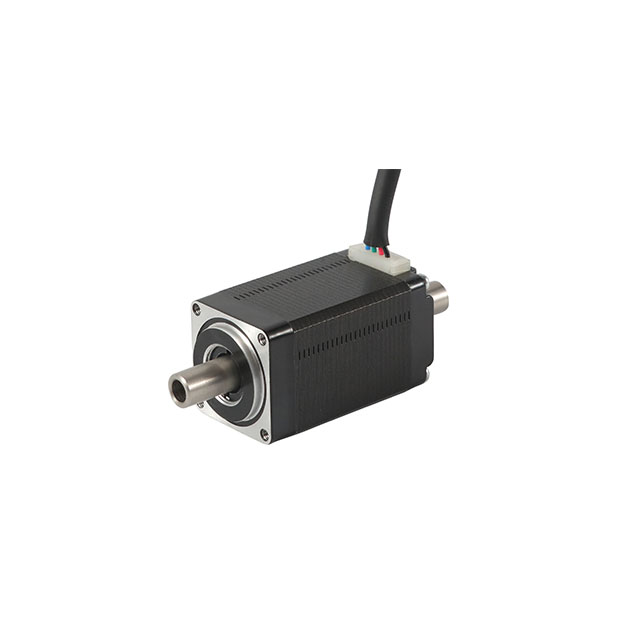
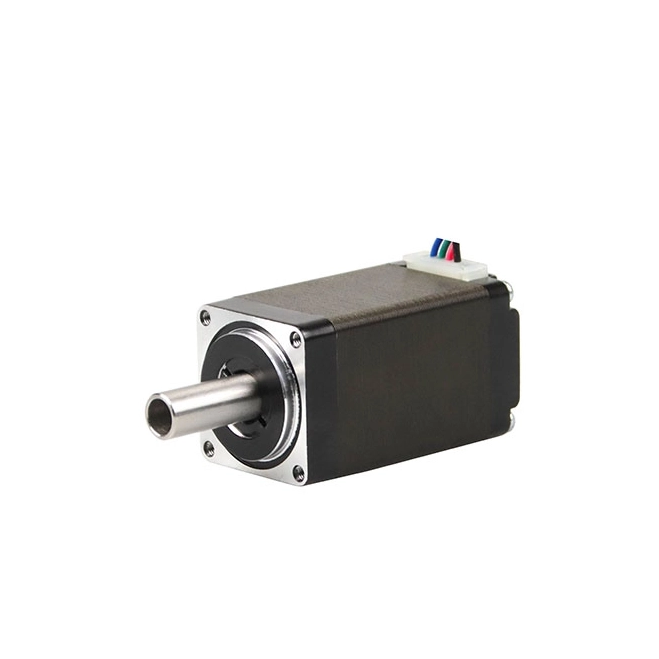
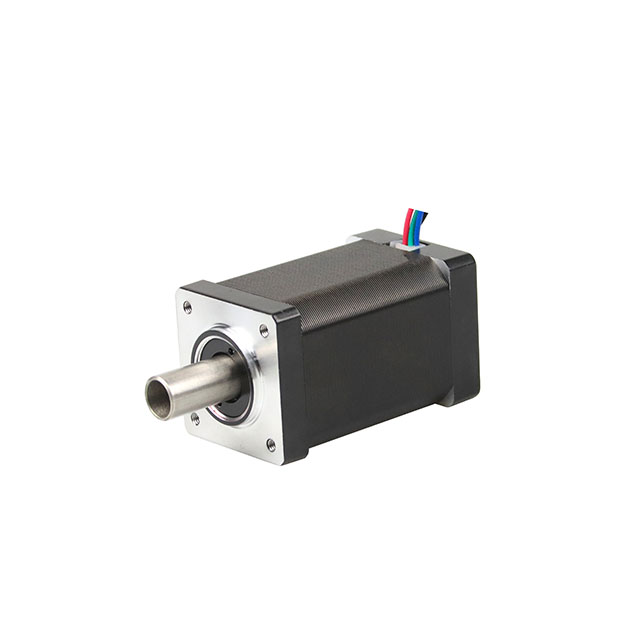
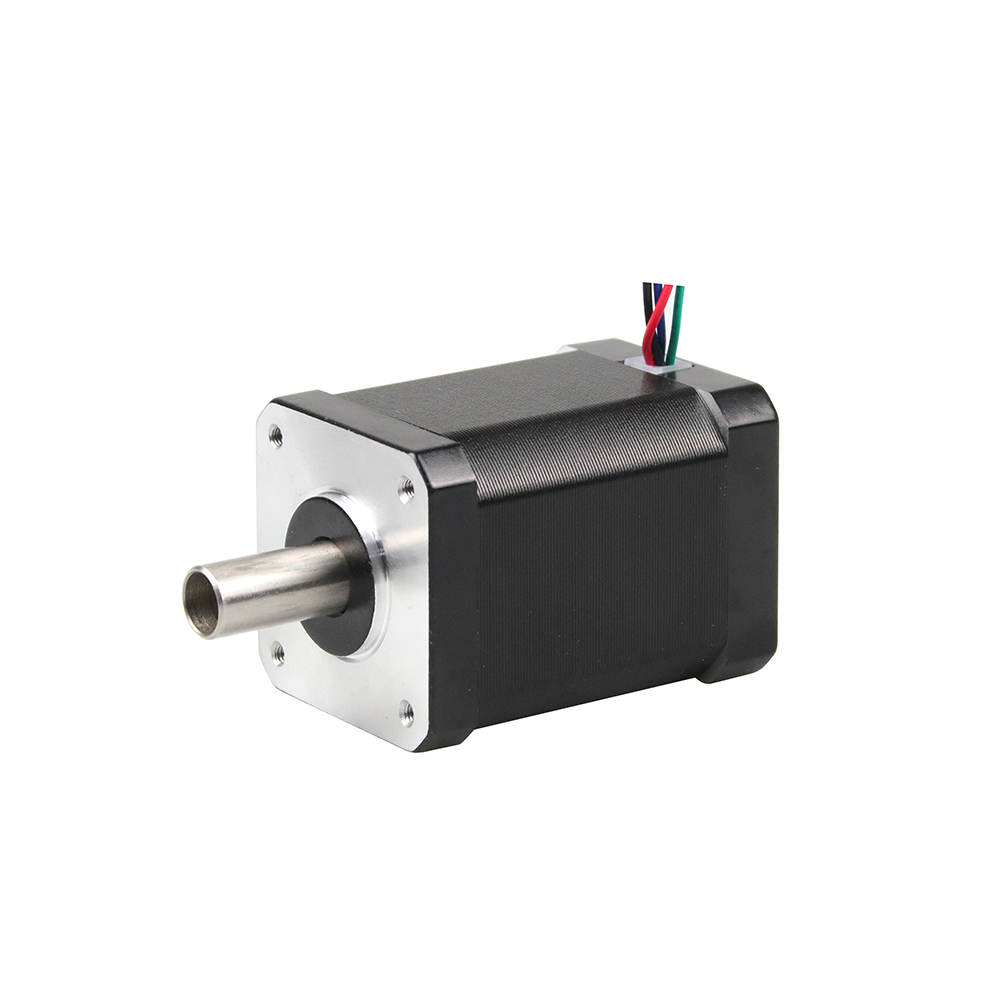
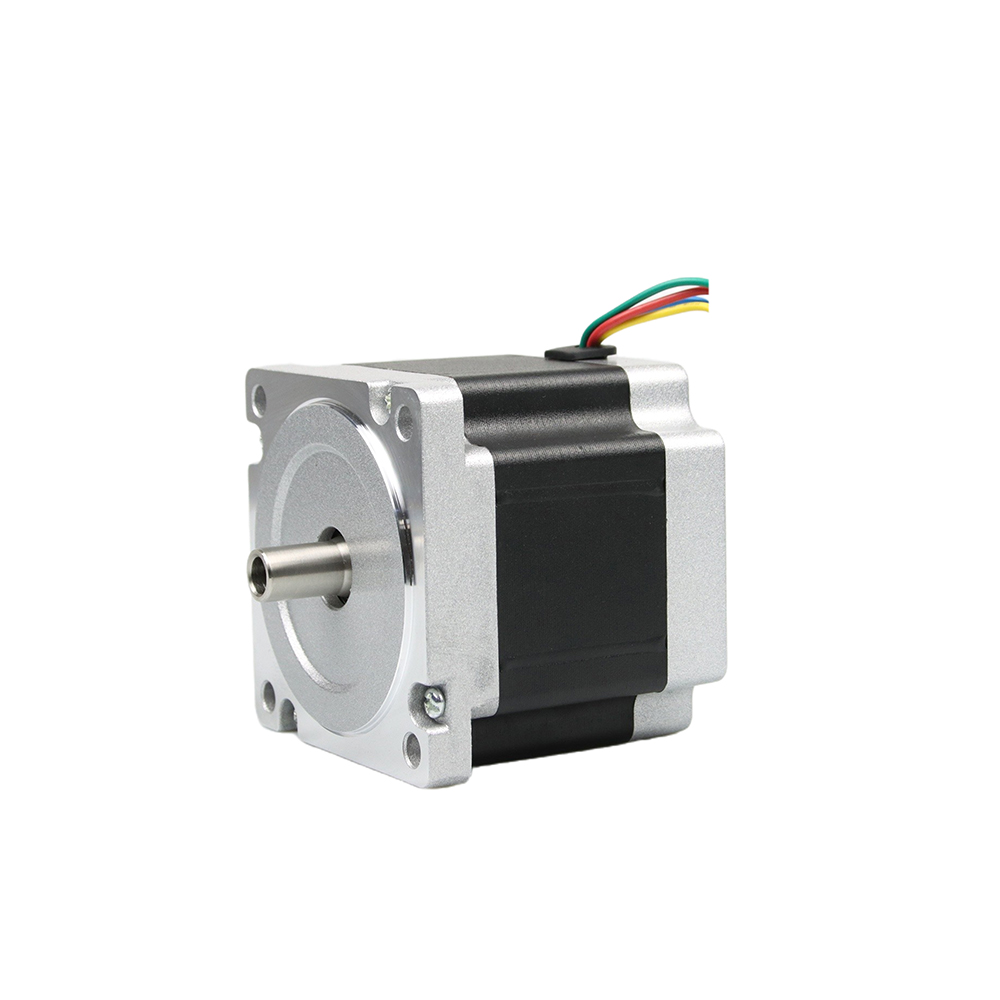
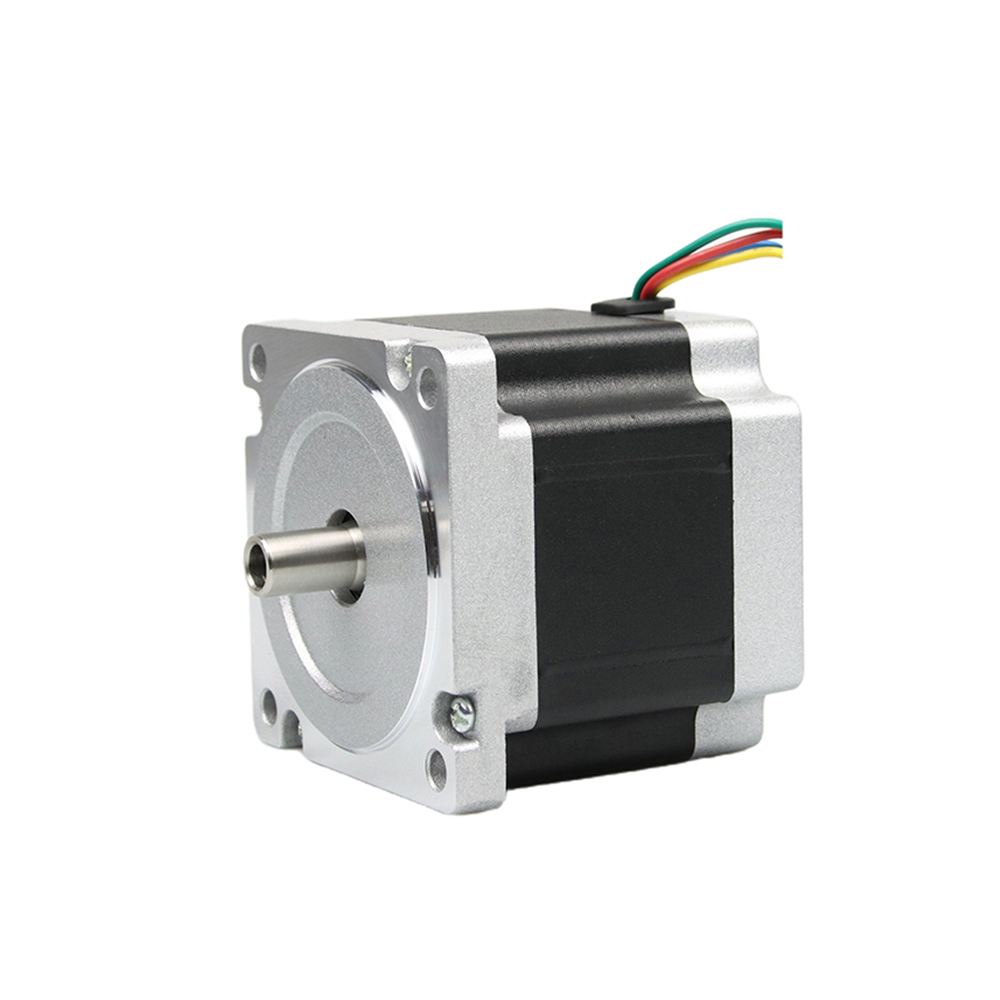
Introduction to Shaft Strength in Motor Design
In modern motion systems, the debate around hollow shaft stepper motors versus solid shaft motors centers on one critical question: strength. Strength, however, is not a single-dimensional attribute. It encompasses torsional rigidity, bending resistance, load capacity, fatigue life, and real-world performance under dynamic conditions. We address this topic from an engineering and application-driven perspective, focusing on how strength is defined, measured, and utilized in industrial motor systems.
Defining “Strength” in Motor Shafts
When evaluating whether a hollow shaft stepper motor is stronger than a solid shaft motor, strength must be interpreted correctly. In mechanical engineering, shaft strength typically includes:
Torsional strength (resistance to twisting)
Bending strength (resistance to deflection under radial loads)
Fatigue strength (durability under cyclic loading)
Power transmission efficiency
Strength-to-weight ratio
Understanding these parameters reveals why hollow shaft designs are widely adopted in high-performance motion control systems.
Torsional Strength: Hollow vs Solid Shafts
Torsional strength is one of the most critical parameters when comparing hollow shaft stepper motors and solid shaft stepper motors. It defines the ability of a shaft to resist twisting under applied torque while maintaining structural integrity and dimensional accuracy. From an engineering standpoint, torsional strength is governed more by shaft geometry than by the total amount of material used.
Fundamental Principles of Torsional Mechanics
When torque is applied to a rotating shaft, shear stress is generated across its cross-section. This stress is not uniformly distributed. Instead:
Shear stress is zero at the center of the shaft
Shear stress increases radially outward
Maximum shear stress occurs at the outer surface
This stress distribution explains why material located near the shaft's outer diameter contributes most significantly to torsional resistance.
Polar Moment of Inertia and Torque Capacity
The torsional strength of a shaft is directly related to its polar moment of inertia (J). For shafts made from the same material:
A larger outer diameter produces a higher polar moment of inertia
Material near the center contributes minimally to torque resistance
Removing central material has a negligible effect on torsional strength
Because hollow shafts retain material at the outer radius, they preserve most of their torque-carrying capability even with a central bore.
Why Hollow Shafts Match or Exceed Solid Shafts in Torsion
When comparing a hollow shaft and a solid shaft with the same outer diameter and material:
The hollow shaft transmits nearly the same maximum torque
Weight is significantly reduced
Torsional efficiency is increased
In practical terms, a well-designed hollow shaft can achieve over 90% of the torsional strength of a solid shaft while using substantially less material. This results in a superior strength-to-weight ratio, which is highly valued in modern motor systems.
Reduced Torsional Stress per Unit Mass
By eliminating low-stress material from the shaft core, hollow shafts achieve:
More efficient stress distribution
Lower average shear stress per unit mass
Reduced likelihood of internal stress concentrations
This optimized stress profile enhances torsional durability under continuous and fluctuating torque loads.
Impact on Dynamic Motor Performance
Torsional strength is closely linked to dynamic behavior. Hollow shafts provide:
In servo motors, robotics, and precision automation, these characteristics translate directly into higher positional accuracy and better control stability without compromising torque capacity.
Fatigue Resistance Under Torsional Loading
Repeated torsional loading can lead to fatigue failure. Hollow shafts demonstrate advantages due to:
Lower cyclic stress amplitudes
Improved heat dissipation
Reduced mass-induced vibration
As a result, hollow shafts often exhibit equal or superior fatigue life compared to solid shafts when subjected to torsional stress over long operating periods.
Engineering Conclusion on Torsional Strength
From a torsional mechanics perspective, hollow shafts are not weaker than solid shafts. By maintaining material where shear stress is highest—at the outer diameter—hollow shafts deliver comparable torque capacity, enhanced efficiency, and improved dynamic performance.
In high-performance motor applications, torsional strength is best evaluated through geometry-driven efficiency rather than material volume, making hollow shaft designs a structurally advanced solution.
Bending Resistance and Structural Rigidity
Bending resistance and structural rigidity are fundamental performance parameters in motor shaft design, directly influencing load capacity, alignment stability, vibration behavior, and service life. In practical applications, motor shafts are frequently subjected to radial forces generated by belts, pulleys, gears, and overhung loads. The ability of a shaft to resist bending under these conditions defines its mechanical reliability and operational accuracy.
Understanding Bending Loads in Motor Shafts
Bending loads occur when forces act perpendicular to the shaft axis, creating bending moments along the shaft length. These forces may result from:
Belt tension in power transmission systems
Gear mesh forces in gear-driven applications
Misalignment between motor and driven equipment
External radial loads from mounted components
Uncontrolled bending leads to shaft deflection, which can compromise bearing performance, increase vibration, and accelerate wear across the drivetrain.
Role of Shaft Geometry in Bending Resistance
Bending resistance is governed primarily by the area moment of inertia, which is strongly influenced by the shaft's outer diameter. From a structural perspective:
Material near the outer surface contributes most to bending stiffness
Internal material contributes comparatively little to resisting deflection
Increasing outer diameter significantly improves rigidity
This geometric principle explains why hollow shaft designs, when maintaining the same outer diameter, can achieve comparable bending resistance to solid shafts.
Deflection Control and Dimensional Stability
Structural rigidity determines how much a shaft deflects under load. Excessive deflection can lead to:
Rigid shafts maintain dimensional stability, ensuring smooth rotation and consistent torque transmission even under continuous radial loading.
Hollow vs Solid Shafts in Bending Applications
When properly engineered:
Hollow shafts maintain bending stiffness while reducing mass
Solid shafts provide uniform material distribution but higher weight
Both designs can meet bending strength requirements if sized correctly
In dynamic systems, reduced mass from hollow shafts lowers inertial forces, indirectly improving bending performance by decreasing secondary loads on bearings and supports.
Impact on Bearing Life and System Reliability
Bending resistance directly affects bearing longevity. A shaft with high rigidity:
By preserving proper shaft alignment, structural rigidity enhances the overall reliability of the motor and connected components.
Vibration Control and Operational Smoothness
Shaft deflection contributes to vibration, especially at higher speeds. Improved bending resistance:
This is particularly important in precision applications such as servo motors, spindles, and automated production equipment.
Design Considerations for Maximum Rigidity
To achieve optimal bending resistance, engineers focus on:
Maximizing effective outer diameter
Optimizing shaft length-to-diameter ratio
Selecting materials with high modulus of elasticity
Ensuring precise bearing support and spacing
These factors collectively define how effectively a shaft resists bending under real-world loads.
Engineering Perspective on Structural Rigidity
Bending resistance and structural rigidity are not determined by material volume alone. They are the result of strategic material placement and geometric optimization. Whether hollow or solid, a motor shaft that maintains high rigidity under radial load ensures mechanical stability, precise motion, and long-term durability across demanding industrial applications.
Weight Reduction and Its Impact on System Strength
One of the most overlooked aspects of strength is system-level performance. A lighter rotating mass delivers:
By removing non-contributing material, hollow shaft stepper motors reduce overall system stress, indirectly increasing operational strength and reliability. In dynamic applications such as robotics, CNC machinery, and servo-driven automation, this advantage is decisive.
Fatigue Life and Long-Term Durability
Fatigue failure is a primary cause of shaft degradation. Hollow shaft designs offer measurable benefits:
Reduced internal stress concentrations
Improved heat dissipation
Lower cyclic stress amplitudes
When manufactured with proper tolerances and surface treatments, hollow shaft stepper motors often exhibit longer fatigue life than solid shaft motors, especially in high-duty-cycle applications.
Load Distribution and Power Transmission Efficiency
Hollow shafts enable direct load coupling, eliminating intermediate components such as couplings, keys, and adapters. This results in:
In contrast, solid shaft motors frequently rely on external transmission elements that introduce stress points. From a system-strength perspective, hollow shaft stepper motors deliver superior mechanical integrity.
Thermal Performance and Strength Retention
Temperature directly affects material strength. Hollow shafts provide:
Increased internal airflow
Enhanced heat dissipation
More stable operating temperatures
Lower thermal stress preserves material properties over time. As a result, hollow shaft stepper motors maintain their mechanical strength under continuous load conditions more effectively than solid shaft motors.
Material Efficiency and Structural Optimization
Modern motor engineering prioritizes optimized material usage. Hollow shaft stepper motors achieve:
By aligning material placement with stress distribution, hollow shafts represent a structurally efficient solution, not a compromise.
Application-Specific Strength Advantages
Servo and Automation Systems
Hollow shaft stepper motors dominate high-precision environments due to their rigidity, responsiveness, and compact strength profile.
Gearbox Integration
Direct mounting through a hollow shaft eliminates cantilevered loads, increasing overall drivetrain strength.
Heavy Industrial Equipment
When designed for high torque, hollow shafts withstand extreme conditions while minimizing mechanical fatigue.
When Solid Shaft Motors Still Make Sense
Although Hollow shaft stepper motors offer significant advantages in many modern motion systems, solid shaft motors remain a practical and effective solution in specific operating conditions. Their continued use is driven by application requirements where simplicity, robustness, and conventional mechanical interfaces take priority over weight reduction and system integration.
High-Impact and Shock-Load Applications
Solid shaft motors are well suited for environments involving sudden impact loads or irregular shock forces. The continuous material cross-section provides inherent robustness, which can be advantageous in applications such as crushers, presses, and heavy-duty mixers. In these cases, the solid shaft's resistance to localized stress from abrupt load changes supports stable operation.
Low-Speed, High-Torque Systems
In applications operating at low rotational speeds with sustained high torque, solid shaft motors perform reliably without the need for advanced geometric optimization. The additional material mass can contribute to rotational stability, making solid shafts suitable for conveyors, hoists, and large industrial drives where dynamic response is not critical.
Legacy and Retrofit Installations
Many industrial systems are designed around traditional solid shaft interfaces, including keyed shafts, couplings, and belt-driven components. In retrofit or replacement projects, solid shaft motors often provide:
This compatibility makes them a practical choice when upgrading existing machinery without altering the drivetrain architecture.
Simplified Manufacturing and Cost Sensitivity
Solid shaft motors typically involve simpler machining processes, which can translate into lower initial production costs for standard configurations. In cost-sensitive applications with moderate performance requirements, this simplicity supports reliable operation without the expense of specialized hollow shaft designs.
Severe Environmental Conditions
In environments exposed to contaminants, moisture, or corrosive substances, solid shafts may offer advantages due to:
Reduced internal exposure
Easier sealing implementation
Simplified surface protection treatments
These characteristics can be beneficial in mining, outdoor equipment, and harsh industrial settings.
Applications Requiring External Transmission Components
When the motor must drive external gearboxes, belts, or pulleys, solid shafts provide a familiar and widely supported interface. Keyways, splines, and standardized couplings are readily available, making solid shaft motors an efficient solution for conventional power transmission layouts.
Structural Conservatism in Heavy Industry
Certain industries favor over-dimensioned mechanical components as a safety margin. In these conservative design environments, solid shaft motors align with established engineering practices where material mass is equated with durability and reliability.
Practical Engineering Perspective
Solid shaft motors continue to make sense where simplicity, compatibility, and mechanical ruggedness outweigh the need for compactness and dynamic efficiency. While Hollow shaft stepper motors represent a more optimized structural solution in many modern systems, solid shaft motors remain a valid and dependable choice for applications with straightforward mechanical demands and established design constraints.
Engineering Conclusion: Which Is Stronger?
From an engineering and performance standpoint, a Hollow shaft stepper motor is not weaker than a solid shaft motor. In most high-performance applications, it is structurally stronger in practice, offering:
Higher strength-to-weight ratio
Improved fatigue resistance
Reduced system stress
Enhanced power transmission efficiency
Strength is not defined by mass alone. It is defined by how effectively material resists real-world forces. On that basis, Hollow shaft stepper motors represent the more advanced and robust solution.
Final Assessment
In modern motion control, automation, and industrial drive systems, Hollow shaft stepper motors deliver superior mechanical strength where it matters most—at the system level. Their optimized geometry, reduced inertia, and enhanced load handling make them the preferred choice for engineers seeking both durability and performance without compromise.

 English
 العربية
 Français
 Русский
 Español
 Português
 Deutsch
 italiano
 日本語
日本語 한국어
한국어 Nederlands
 Tiếng Việt
 ไทย
ไทย Polski
 Türkçe
 ພາສາລາວ
 ភាសាខ្មែរ
 Bahasa Melayu
 ဗမာစာ
ဗမာစာ Filipino
 Bahasa Indonesia
 magyar
 Română
 Čeština
 Монгол
 қазақ
қазақ Српски
 हिन्दी
 فارسی
فارسی Slovenčina
 Slovenščina
 Norsk
Norsk Svenska
 українська
 Ελληνικά
 Suomi
Suomi Հայերեն
 עברית
עברית Latine
 Dansk
Dansk Shqip
Shqip বাংলা
বাংলা Hrvatski
 Afrikaans
 Gaeilge
 Eesti keel
 Oʻzbekcha
 latviešu
 Azərbaycan dili
 Български
 Català