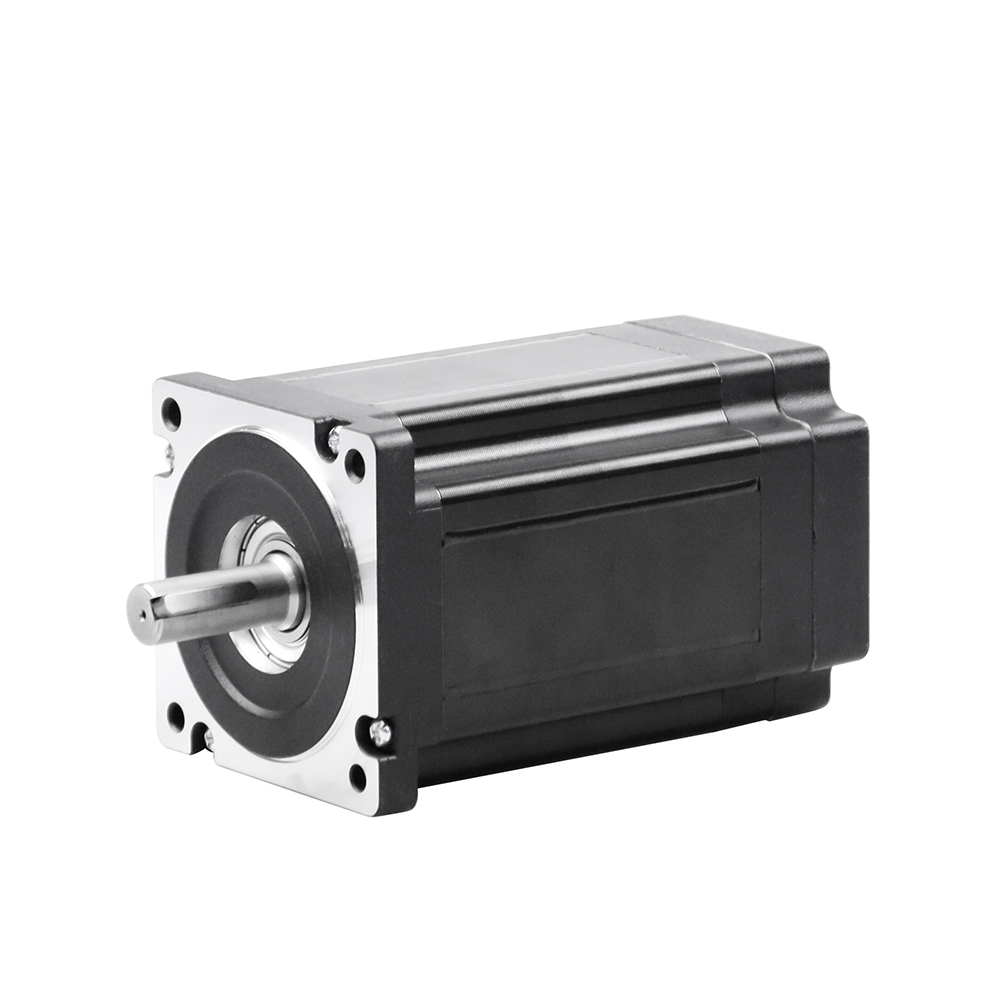
Understanding the Demands of Continuous-Duty Applications
When we engineer systems for continuous 24/7 operation, we confront a fundamentally different set of constraints than intermittent-duty designs. A BLDC motor for continuous operation must sustain thermal equilibrium, electrical stability, and mechanical integrity without degradation over thousands of hours. We prioritize duty cycle rating, thermal class, bearing life, and controller compatibility because any weak link will surface rapidly under nonstop load.
Continuous-duty environments such as industrial automation, HVAC systems, medical devices, server cooling, robotics, and production lines require motors that deliver consistent torque, high efficiency, and minimal maintenance. We therefore select motors explicitly rated for S1 continuous duty, ensuring they are designed to operate indefinitely at rated load without overheating.
Thermal Management: The Decisive Selection Factor
Heat is the primary enemy of longevity in a 24/7 BLDC motor application. We calculate thermal performance by examining:
Winding insulation class (Class B, F, or H)
Maximum winding temperature rise
Thermal resistance path from winding to ambient
Cooling method (natural convection, forced air, liquid cooling)
For continuous operation, we favor Class F or Class H insulation with substantial thermal headroom. A motor that runs cooler will last exponentially longer, preserving magnet strength and insulation integrity.
We also evaluate ambient temperature conditions. If the motor operates in enclosed cabinets or hot industrial spaces, we derate accordingly. Selecting a motor with integrated temperature sensors (NTC/PTC or thermistors) enables real-time monitoring and protective shutdown, preventing catastrophic failure.
Efficiency Optimization for Nonstop Energy Consumption
A motor running continuously accumulates enormous energy costs. We therefore target High-efficiency BLDC motors (often >85–92%) to minimize operational expenditure and heat generation. Efficiency depends on:
Copper losses (I⊃2;R losses)
Core losses (hysteresis and eddy currents)
Switching losses from the controller
Mechanical friction
We prefer motors with optimized stator lamination materials, precision windings, and high-grade permanent magnets (such as NdFeB) to maximize efficiency across the operating speed range. Pairing the motor with a field-oriented control (FOC) driver further improves efficiency and smoothness during continuous operation.
Bearing Selection for Long Service Life
For continuous 24/7 BLDC motor operation, bearing selection directly determines service life and reliability. Bearings must withstand constant radial and axial loads, sustained speeds, and elevated temperatures without degradation.
We prioritize high-quality deep-groove ball bearings for most applications due to their durability and low friction. In higher load conditions, angular contact or roller bearings provide improved axial and radial capacity. For demanding environments, ceramic hybrid bearings reduce heat generation and extend lifespan.
Key selection criteria include:
Dynamic load rating (C value) to meet required L10 life targets
Proper lubrication type and retention method (grease life matched to operating hours)
Sealed or shielded designs to prevent dust and moisture ingress
Temperature compatibility aligned with motor thermal class
Accurate shaft alignment and balanced rotor assembly further reduce vibration and premature wear. By matching bearing specifications precisely to load, speed, and environmental conditions, we ensure maximum mechanical longevity in continuous-duty BLDC motor systems.
Torque and Speed Stability Requirements
For continuous 24/7 BLDC motor operation, stable torque and precise speed control are essential to maintain process consistency, efficiency, and equipment protection. Fluctuations in torque or speed can cause vibration, overheating, mechanical stress, and reduced product quality in automated systems.
We select a motor with a rated torque comfortably above the continuous load requirement, ensuring it operates within its optimal efficiency range rather than at maximum capacity. Adequate torque margin prevents thermal overload and extends service life during nonstop operation.
Key factors for achieving stability include:
Low torque ripple design to minimize vibration and acoustic noise
High-resolution feedback sensors (Hall sensors or encoders) for accurate speed regulation
Field-oriented control (FOC) for smooth commutation and constant torque output
Proper motor-to-load inertia matching to avoid oscillation and hunting
Speed stability depends on the controller's ability to compensate for load variations instantly. We therefore implement closed-loop control systems that maintain constant RPM even under changing mechanical demand.
For precision applications such as conveyors, pumps, robotics, and HVAC systems, a BLDC motor engineered for smooth continuous torque delivery ensures reliable performance, reduced mechanical wear, and consistent operational output over extended periods.
Electrical Reliability and Power Quality
Electrical conditions strongly influence longevity. We ensure the motor and driver can tolerate:
Selecting a BLDC motor with robust winding insulation and surge tolerance prevents insulation breakdown. We also incorporate overcurrent protection, soft start features, and regenerative braking management in the controller.
In mission-critical installations, redundant power supplies and monitoring systems further enhance reliability.
Environmental Protection and Ingress Ratings
For continuous 24/7 BLDC motor operation, environmental protection and appropriate ingress ratings (IP ratings) are critical to ensure reliability in harsh conditions. Exposure to dust, moisture, chemicals, or temperature extremes can rapidly degrade internal components and cause premature failure.
We select motors with IP ratings matched to the operating environment:
IP54–IP55: Protection against dust and light water spray for general industrial use
IP65: Dust-tight and resistant to water jets for outdoor or washdown areas
IP67: Protection against temporary immersion for severe environments
In corrosive or high-humidity settings, we specify sealed housings, stainless steel shafts, anti-corrosion coatings, and gasketed cable entries to prevent contamination. For high-temperature or cold environments, materials and lubricants must remain stable across the full temperature range.
Proper environmental protection also includes sealed bearings, insulated windings, and protected connectors, ensuring the motor maintains performance during nonstop operation. By aligning the motor's enclosure and materials with real-world conditions, we secure long-term durability and uninterrupted service in continuous-duty applications.
Controller Compatibility and Intelligent Monitoring
A BLDC motor system is inseparable from its electronic controller. For 24/7 operation, we select controllers with:
Field-oriented control algorithms
Thermal and current monitoring
Fault diagnostics
Communication interfaces (CAN, Modbus, Ethernet)
Intelligent monitoring allows predictive maintenance. By tracking temperature, vibration, and current trends, we can intervene before failures occur, ensuring uninterrupted service.
Noise, Vibration, and Smooth Operation
Continuous operation amplifies even minor vibration issues. We choose motors designed for low cogging torque, precision balancing, and optimized commutation to minimize noise and mechanical stress. Smooth operation protects adjacent equipment and improves overall system reliability.
Customization for Application-Specific Demands
For continuous 24/7 BLDC motor operation, application-specific customization ensures the motor precisely matches performance, integration, and durability requirements. Standard motors may not address unique load profiles, space constraints, or environmental challenges present in specialized equipment.
We tailor key parameters to the application, including:
Custom winding configurations for exact torque–speed characteristics and efficiency at the target operating point
Shaft design modifications (length, diameter, keyways, splines) for direct mechanical integration
Mounting interfaces and housing geometry to fit confined or nonstandard installations
Integrated gearboxes or brakes for controlled motion and load holding
Enhanced sealing and coatings for harsh or hygienic environments
Electrical customization is equally critical. We specify optimized voltage ratings, connector types, cable lengths, and feedback devices (encoders or resolvers) to ensure seamless compatibility with the control system.
Thermal adaptations such as improved heat dissipation paths, forced cooling options, or higher insulation classes further support nonstop operation under heavy loads.
By implementing targeted customization with an experienced BLDC motor manufacturer, we achieve maximum efficiency, reliability, and service life tailored to the exact demands of the application.
Lifecycle Cost Analysis
Initial purchase price is only a fraction of total cost. Continuous operation magnifies:
Energy consumption
Maintenance expenses
Downtime costs
We therefore evaluate total cost of ownership (TCO). A premium high-efficiency motor typically delivers substantial savings over years of nonstop service.
Proven Selection Workflow for 24/7 BLDC Motors
We follow a structured process:
Define load profile and duty cycle
Calculate torque, speed, and power requirements
Assess thermal conditions and cooling options
Select efficiency class and insulation rating
Verify bearing life and mechanical limits
Confirm controller compatibility
Validate environmental protection
Implement monitoring and safety features
This systematic approach ensures the chosen motor will perform reliably throughout continuous operation.
Industries Relying on Continuous BLDC Motor Operation
Numerous sectors depend on 24/7 BLDC motor performance, including:
Data center cooling systems
Medical life-support equipment
Automated manufacturing lines
Renewable energy systems
Transportation infrastructure
Robotics and autonomous systems
In each case, reliability and efficiency directly impact operational success.
Final Engineering Considerations
Selecting a BLDC motor for continuous 24/7 operation demands rigorous attention to thermal design, efficiency, mechanical durability, and electronic integration. By prioritizing continuous-duty ratings, high-quality materials, advanced control systems, and environmental protection, we ensure stable performance over extended service life.
A meticulously chosen motor becomes a long-term asset, delivering dependable motion with minimal intervention while optimizing energy usage and operational reliability.
FAQs: Selecting a BLDC Motor for Continuous 24/7 Operation
I. Product Perspective: Reliability, Performance & Thermal Management
1. What makes a standard BLDC motor suitable for continuous 24/7 operation?
A standard BLDC motor designed for continuous duty features high efficiency, low heat generation, durable bearings, and optimized cooling to support nonstop operation.
2. Why are BLDC motors preferred over brushed motors for continuous operation?
BLDC motors eliminate brush wear, making them more reliable and maintenance-free for 24/7 applications.
3. How important is thermal management in a continuous duty BLDC motor?
Thermal management is critical because excessive heat reduces lifespan. A well-designed continuous duty BLDC motor maintains stable operating temperatures.
4. What efficiency level should a BLDC motor have for nonstop operation?
Higher efficiency reduces energy loss and heat buildup, making it essential for continuous operation systems.
5. Are standard BLDC motors suitable for industrial 24/7 applications?
Yes, many standard BLDC motors are designed specifically for industrial automation, HVAC, and server cooling systems.
6. How do bearings affect long-term reliability?
High-quality bearings from a reputable BLDC motor manufacturer ensure smooth operation and extended service life.
7. What role does the motor driver play in continuous operation?
A compatible driver ensures stable current control, preventing overheating and improving efficiency.
8. Can BLDC motors handle constant load conditions?
Yes, a properly selected continuous duty BLDC motor can maintain stable performance under constant load.
9. Is a higher-rated motor better for 24/7 use?
Oversizing slightly helps reduce stress and heat, improving reliability in continuous operation.
10. Which applications require 24/7 BLDC motor operation?
Applications include industrial automation, medical equipment, HVAC systems, data centers, and robotics.
II. Factory Customization Capability: Engineering for Continuous Duty
11. Can a BLDC motor manufacturer design motors specifically for 24/7 operation?
Yes, a professional BLDC motor manufacturer can optimize materials, cooling design, and efficiency for continuous duty use.
12. What customization options are available beyond a standard BLDC motor?
Custom BLDC motors may include enhanced insulation, high-temperature magnets, reinforced bearings, and improved cooling structures.
13. Can BLDC motors be customized for harsh environments?
Yes, manufacturers can provide sealed housings, corrosion-resistant materials, and IP-rated protection.
14. Is it possible to integrate sensors for condition monitoring?
Yes, a BLDC motor manufacturer can integrate temperature sensors, encoders, and protection features.
15. Can manufacturers optimize motors for low-noise 24/7 operation?
Yes, custom designs can minimize vibration and acoustic noise for continuous use environments.
16. What is the typical MOQ for a custom BLDC motor for continuous operation?
MOQ depends on customization complexity, but many manufacturers support prototype orders.
17. How does customization affect lead time?
A standard BLDC motor has shorter lead times, while custom continuous duty designs require additional engineering validation.
18. Can a BLDC motor manufacturer provide lifespan testing?
Yes, reputable manufacturers conduct endurance testing to verify 24/7 performance.
Yes, integrated motor-driver units simplify installation and improve system reliability.
20. Why choose a professional BLDC motor manufacturer for 24/7 applications?
A professional BLDC motor manufacturer ensures optimized design, rigorous testing, and dependable performance for continuous operation systems.

 English
 العربية
 Français
 Русский
 Español
 Português
 Deutsch
 italiano
 日本語
日本語 한국어
한국어 Nederlands
 Tiếng Việt
 ไทย
ไทย Polski
 Türkçe
 ພາສາລາວ
 ភាសាខ្មែរ
 Bahasa Melayu
 ဗမာစာ
ဗမာစာ Filipino
 Bahasa Indonesia
 magyar
 Română
 Čeština
 Монгол
 қазақ
қазақ Српски
 हिन्दी
 فارسی
فارسی Slovenčina
 Slovenščina
 Norsk
Norsk Svenska
 українська
 Ελληνικά
 Suomi
Suomi Հայերեն
 עברית
עברית Latine
 Dansk
Dansk Shqip
Shqip বাংলা
বাংলা Hrvatski
 Afrikaans
 Gaeilge
 Eesti keel
 Oʻzbekcha
 latviešu
 Azərbaycan dili
 Български
 Català