
Views: 0 Author: Site Editor Publish Time: 2026-09-01 Origin: Site


An automatic rice transplanter requires precise, repeatable, and reliable motion to maintain consistent planting depth, row spacing, seedling delivery, and machine synchronization. The motor used in the transplanting mechanism directly affects planting accuracy, operating speed, energy consumption, and overall machine reliability.
For modern agricultural equipment, an integrated stepper servo motor can combine the positioning advantages of a stepper motor with closed-loop feedback and integrated drive electronics. This architecture can reduce wiring complexity while providing accurate motion control for demanding rice-transplanting applications.
Choosing the right motor requires more than simply matching a rated torque value. We need to evaluate load torque, speed, acceleration, positioning accuracy, environmental conditions, control interface, power supply, encoder performance, and mechanical installation requirements.
This guide presents a practical method for selecting an integrated stepper servo motor for an automatic rice transplanter.
Before selecting a motor, we first need to identify exactly which mechanism the motor will drive.
Typical automatic rice transplanters contain several motion systems, including:
Seedling feeding mechanisms
Transplanting arms
Planting-spacing mechanisms
Conveyor or seedling delivery systems
Row-spacing adjustment mechanisms
Positioning and indexing mechanisms
Automatic height or depth adjustment systems
Each mechanism has different torque, speed, acceleration, and positioning requirements.
For example, a transplanting arm may require rapid acceleration and deceleration while maintaining accurate synchronization with the machine's travel speed. A seedling-feeding mechanism may instead prioritize smooth, repeatable indexing.
Therefore, the motor should be selected according to the actual motion profile, rather than the motor's nominal specifications alone.
Automatic rice transplanters require precise, repeatable, and reliable motion control for seedling feeding, transplanting arms, conveyors, and positioning mechanisms. Integrated stepper servo motors combine stepper motor technology, servo feedback, and drive electronics into a compact solution.
An integrated stepper servo motor uses an encoder for closed-loop feedback, allowing the controller to monitor actual motor position. This helps reduce positioning errors and maintain consistent seedling spacing and transplanting cycles.
Rice-transplanting mechanisms can experience changing mechanical resistance during operation. Closed-loop control enables the motor to detect position deviations and provide corrective motion, improving reliability compared with conventional open-loop stepper motors.
The motor, driver, and encoder can be integrated into one unit, reducing external components and wiring. This makes the system easier to install while saving valuable space in compact agricultural machinery.
Transplanting mechanisms often require repeated acceleration, deceleration, and directional changes. Integrated stepper servo motors provide controlled acceleration and responsive motion, helping maintain stable operation at different working speeds.
When higher output torque or lower speed is required, the motor can be combined with a planetary gearbox. This provides a compact solution for driving transplanting arms, feeding mechanisms, and other high-load systems.
Depending on the motor model, control options such as pulse/direction, RS-485, or CAN communication can simplify integration with the transplanter's main controller and motion-control system.
Integrated stepper servo motors are well suited to automatic rice transplanters because they combine accurate positioning, closed-loop feedback, compact construction, responsive motion, and simplified wiring. With proper torque, speed, gearbox, encoder, and environmental protection selection, they can provide reliable motion control for modern automated rice-transplanting equipment.
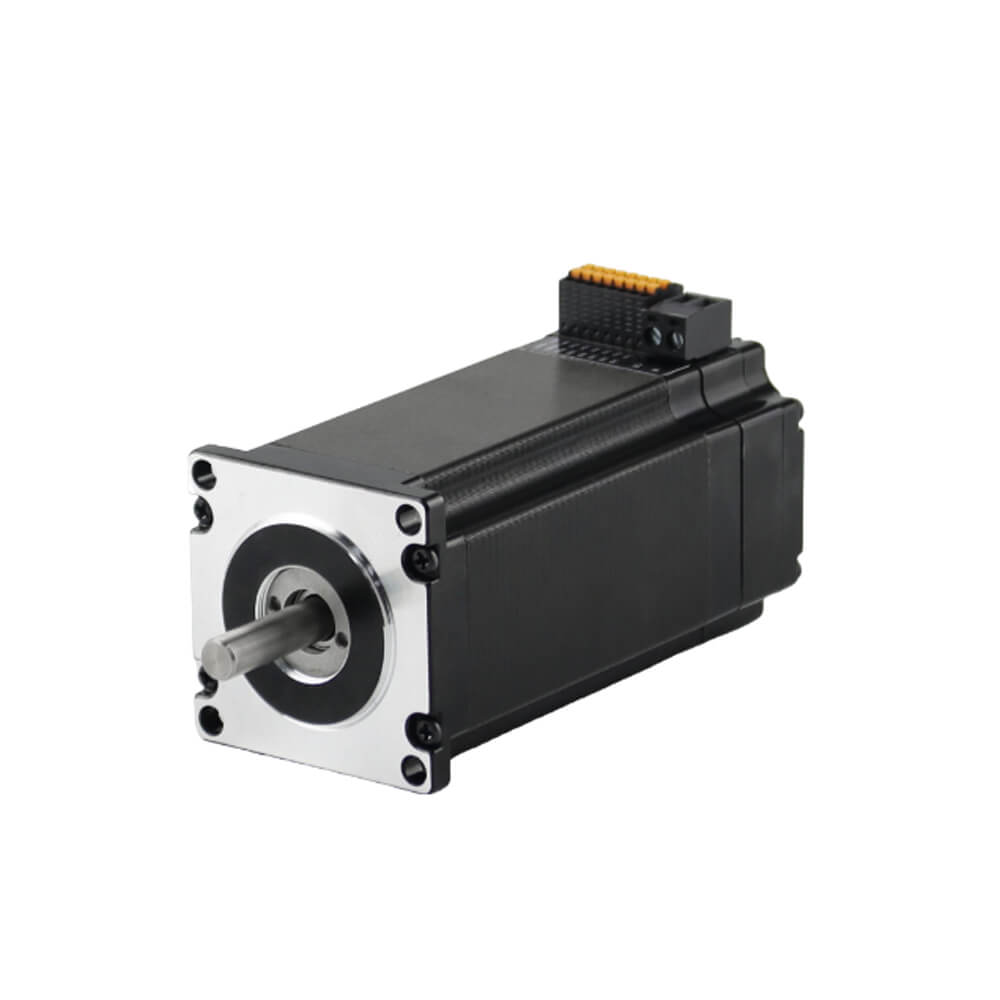
Besfoc ISC57 Integrated Stepper Servo Motors
ISC57 Integrated Stepper Servo Motor — High-Efficiency, Compact, and Smart Closed-Loop Motion Control Solution |
||
|
Product Overview:The NEMA 23 BFISC57-P1A3 integrated stepper servo motor combines 57mm frame size, closed-loop encoder feedback, integrated driver, and precise motion control, delivering reliable, compact, and efficient performance for industrial automation applications. |
|
Key Technical Highlights
|
||
Typical Applications
|
||
Parameter |
ISC57 Specification |
Motor Type |
Integrated Stepper Servo Motor |
Frame Size |
57mm |
Step Angle |
1.8° |
Rated Current |
2.8A/3.0A/4.2A |
Rated Torque |
0.55Nm /1.89Nm/ 2.2Nm/2.8Nm/3.0Nm |
Encoder |
15-bit Single-Turn Absolute Encoder |
Communication |
Pulse / RS485 / CANopen |
Optional Features |
Gearbox, Brake, Cooling Fan |
|
|
|
|
|
|---|---|---|---|---|
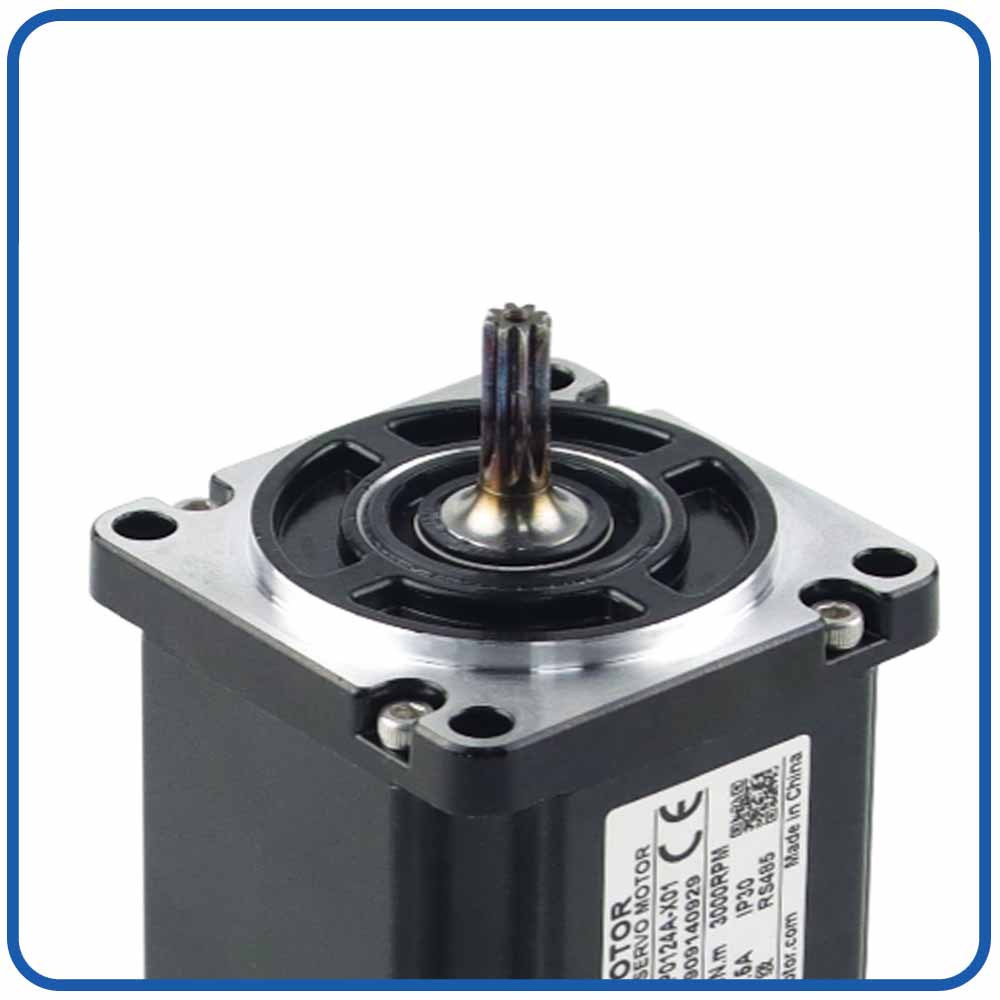
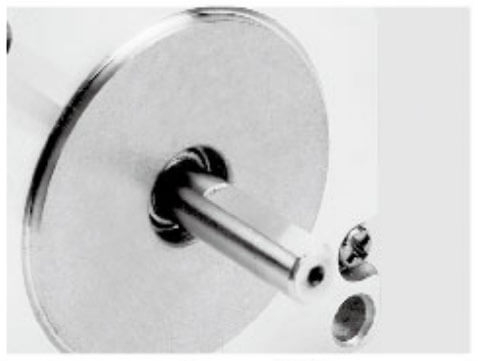
Shaft |
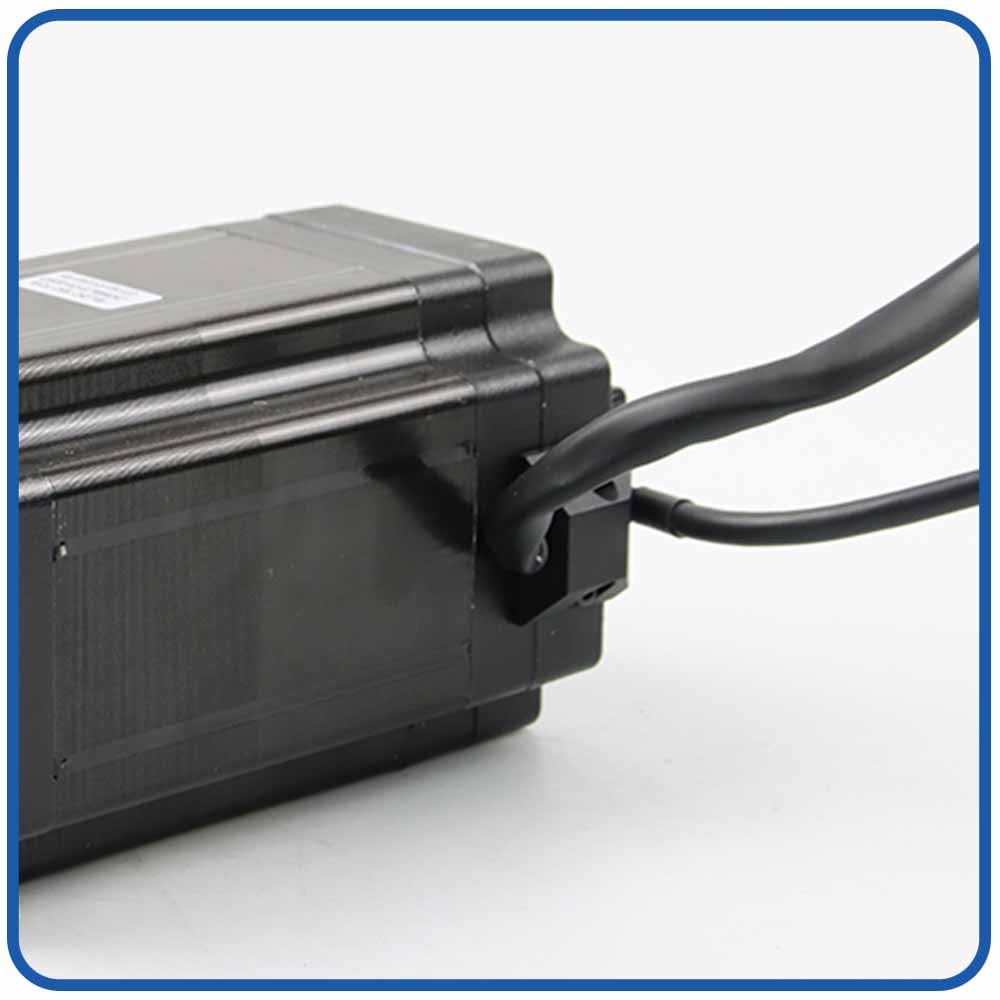
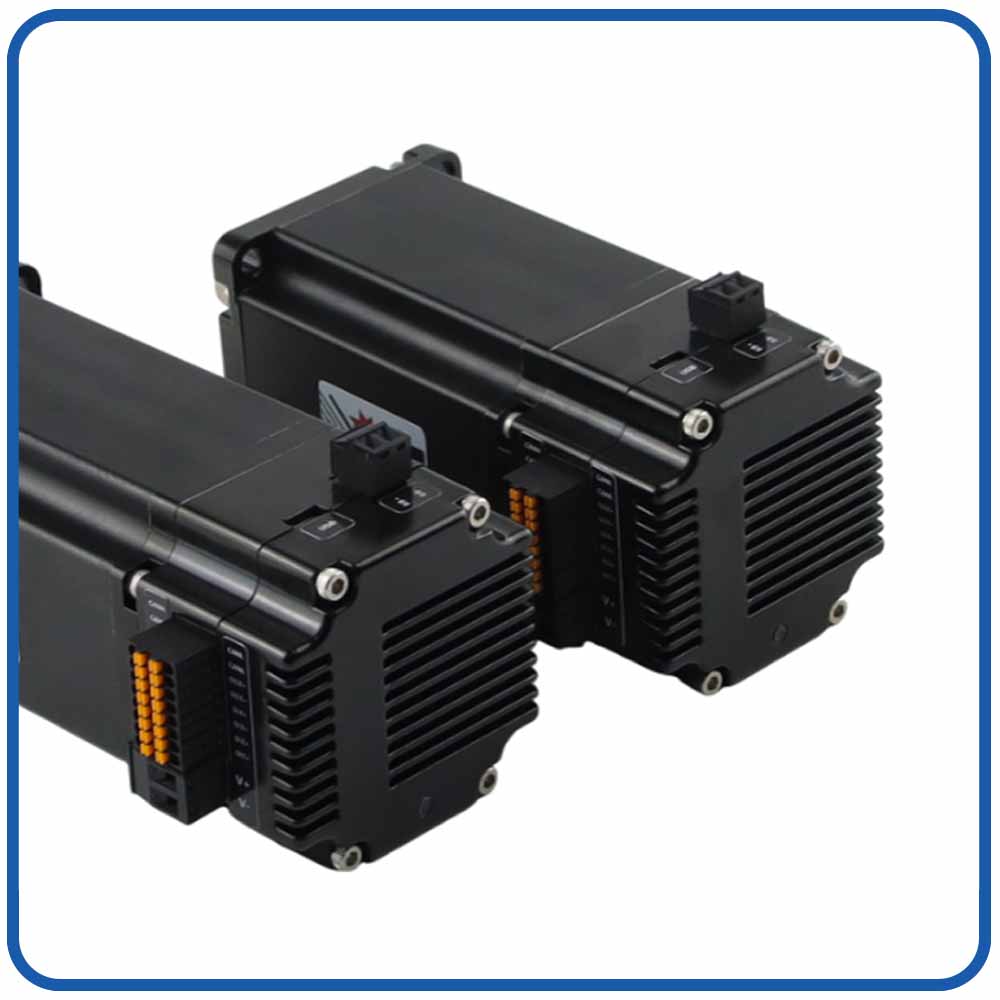
Terminal housing |
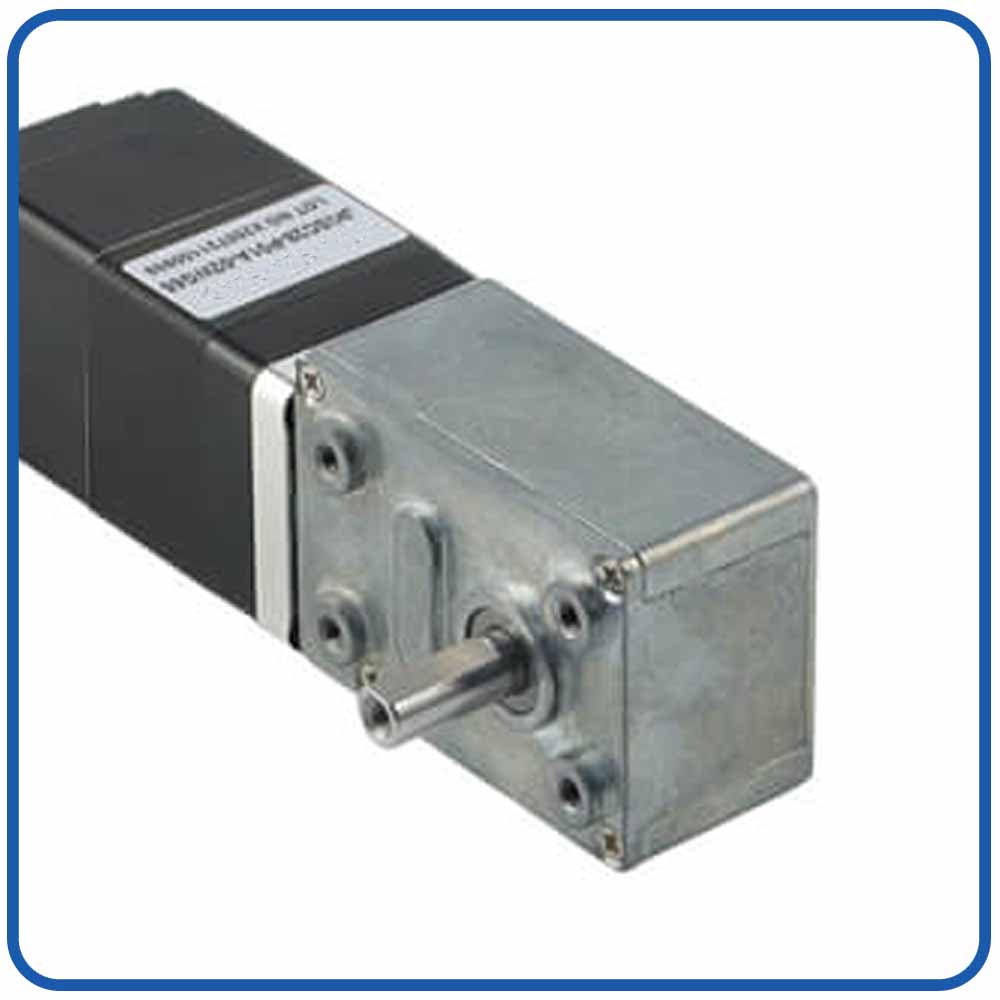
Worm Gearbox |
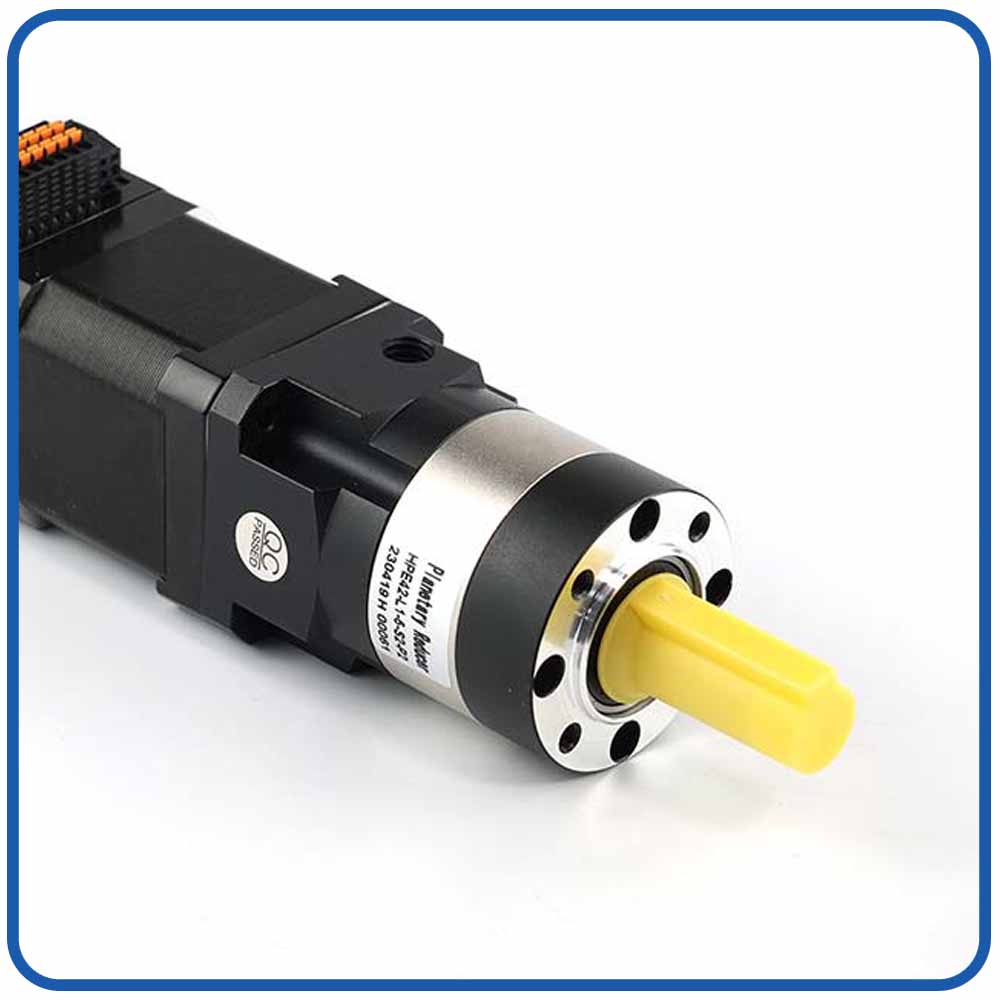
Planetary Gearbox |
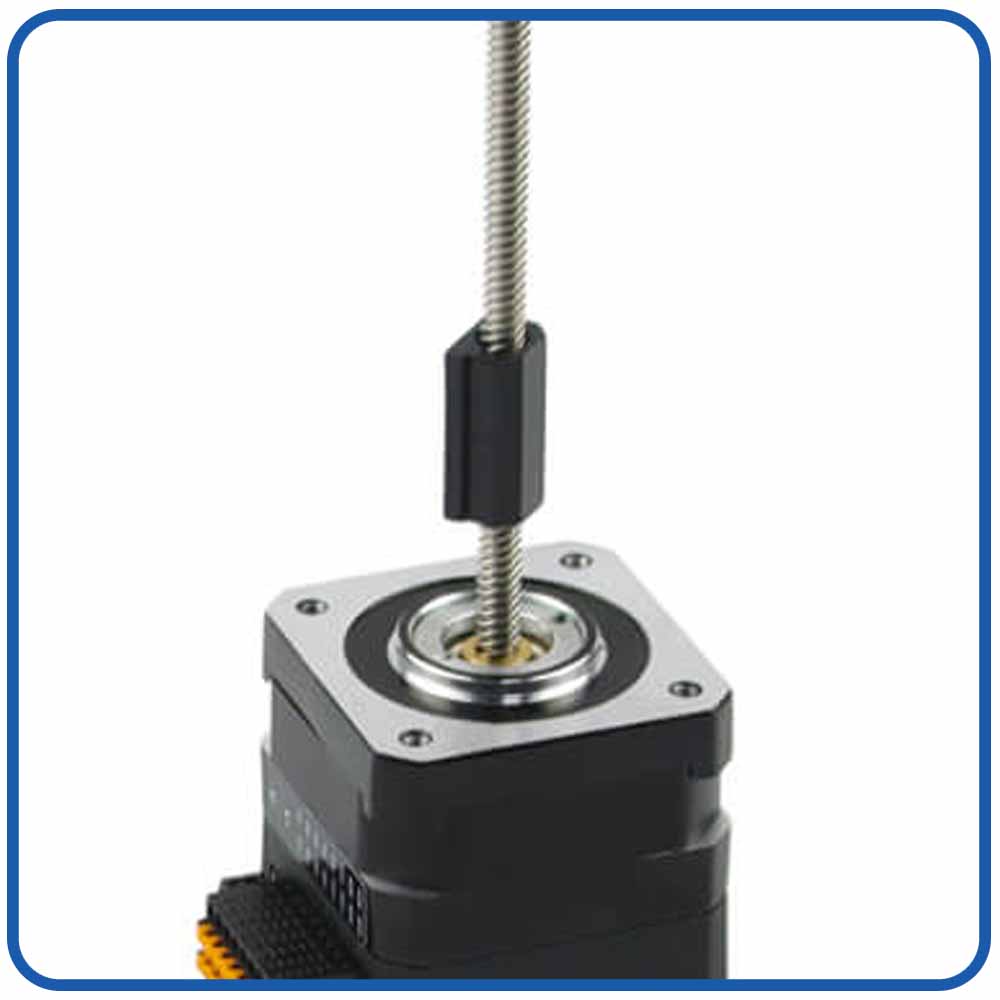
Lead Screw |
|
|
|
|

|
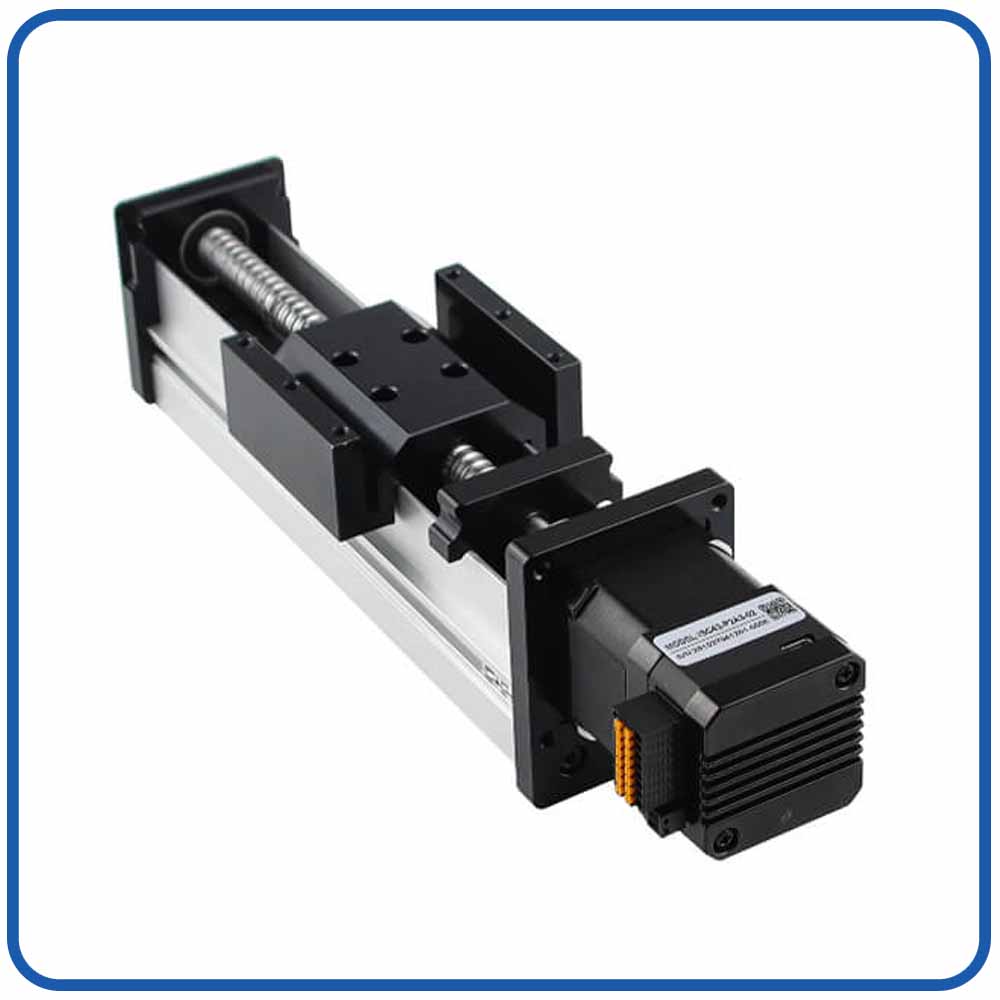
Linear Motion |
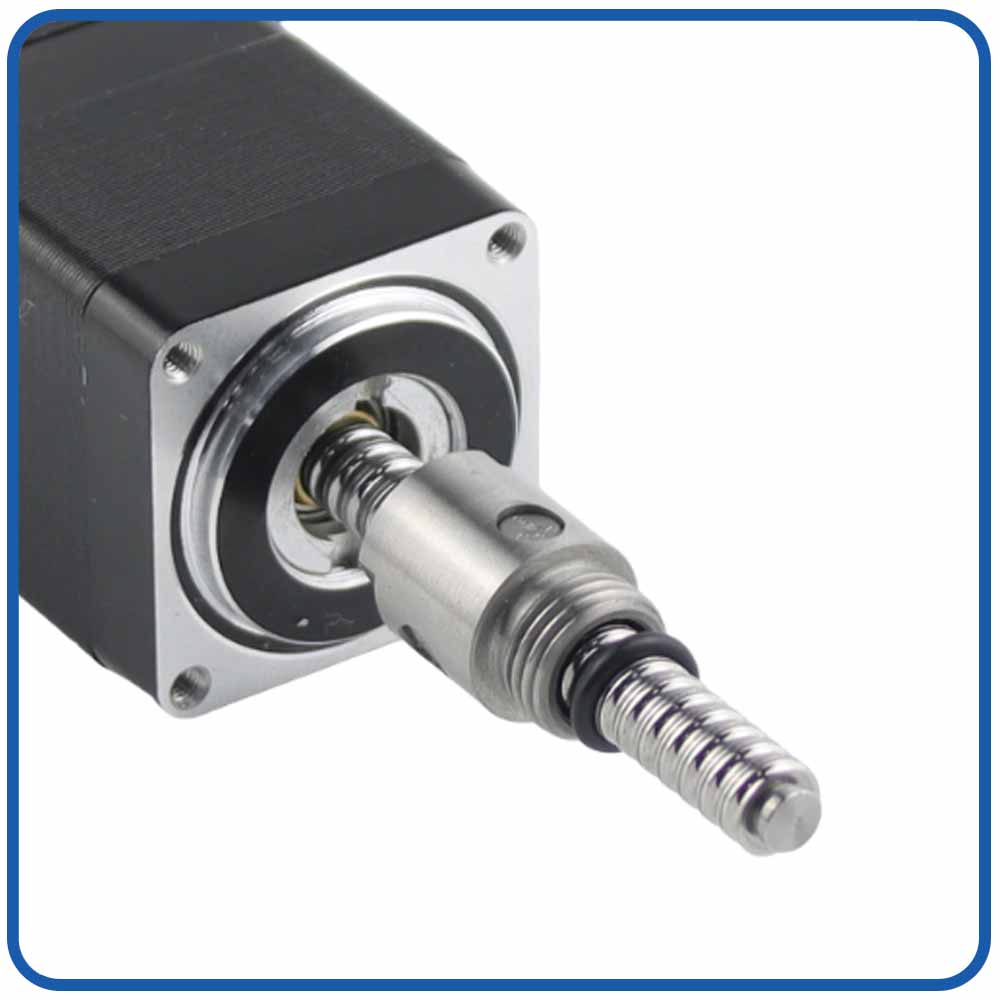
Ball Screw |
Brake |
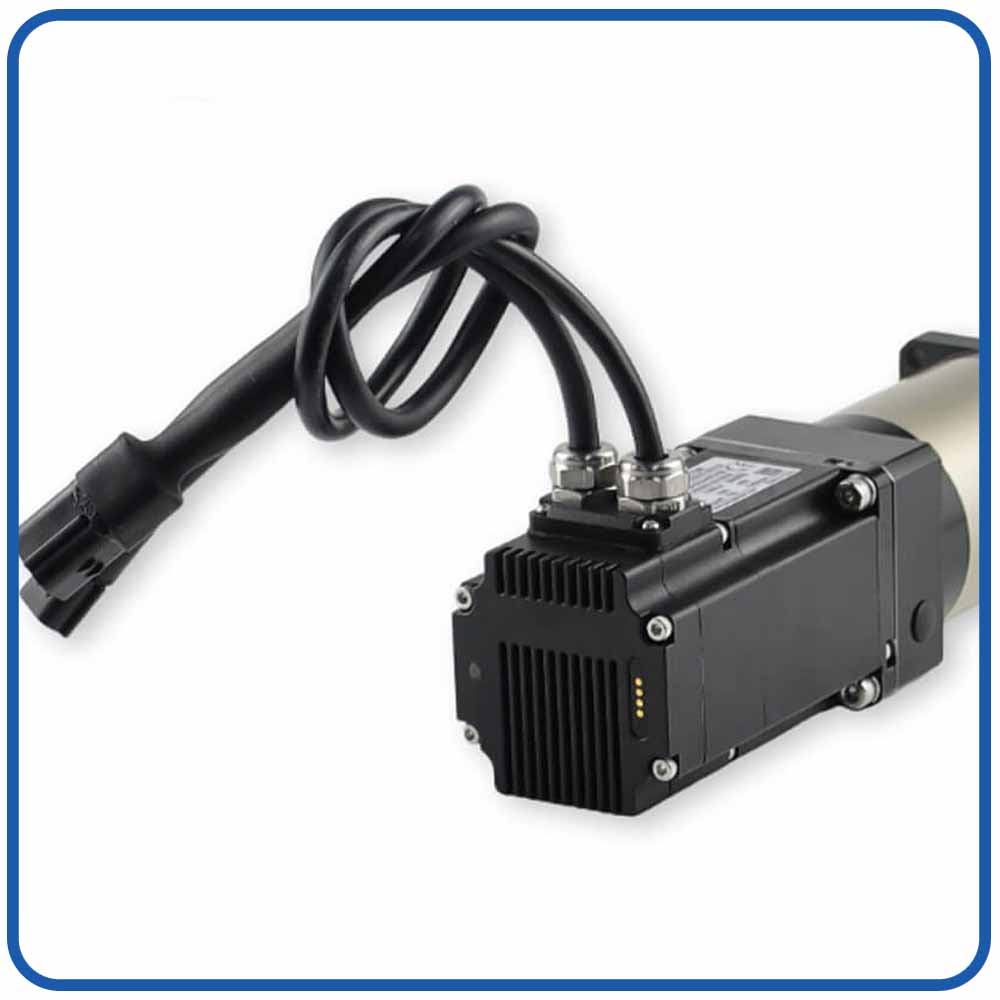
IP-Level |
|
|
|
|
|
|
|---|---|---|---|---|---|
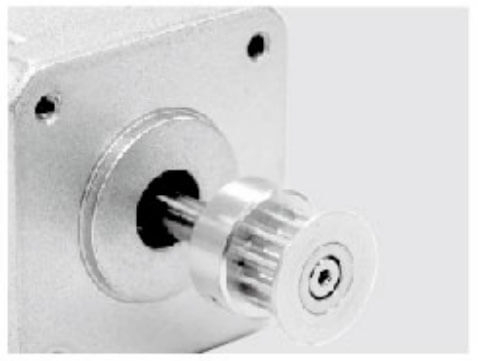
Aluminum Pulley |
Shaft Pin |
Single D Shaft |
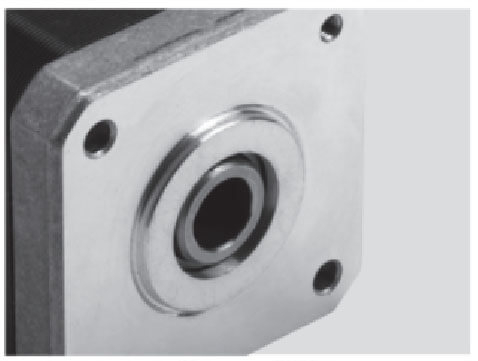
Hollow Shaft |
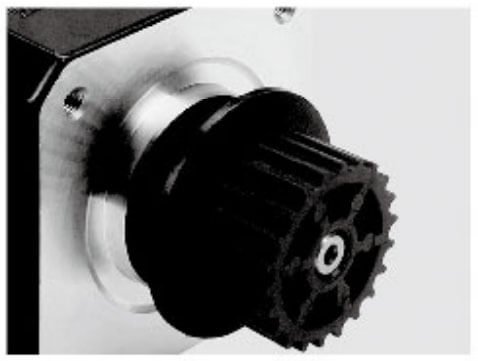
Plastic Pulley |
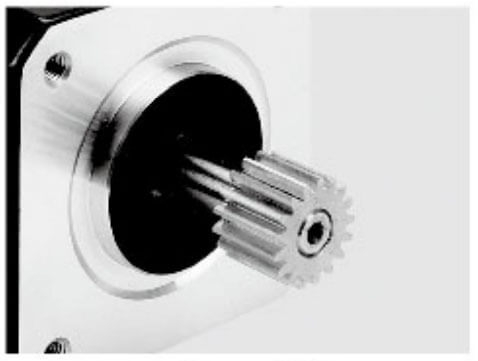
Gear |
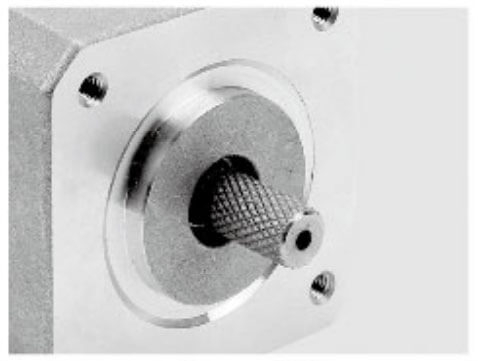
|
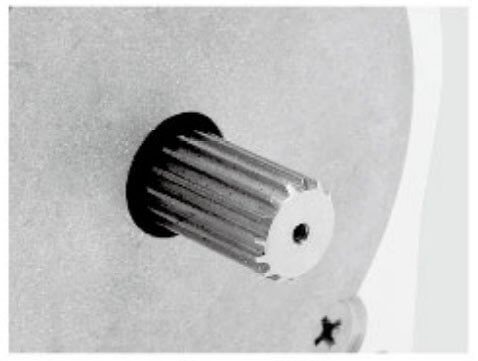
|
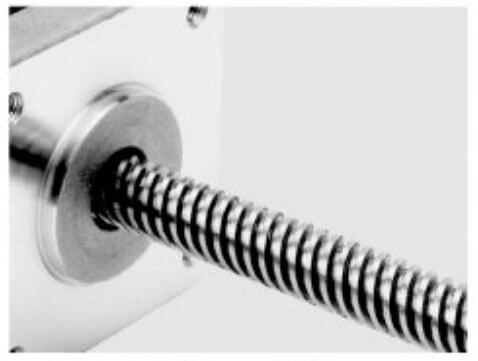
|
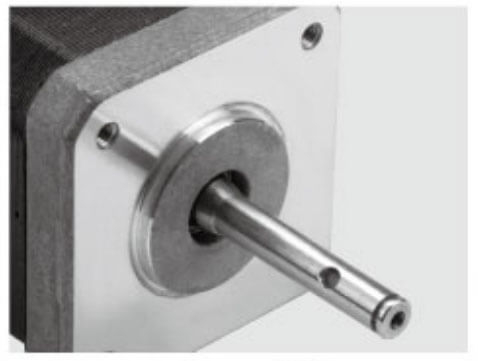
|
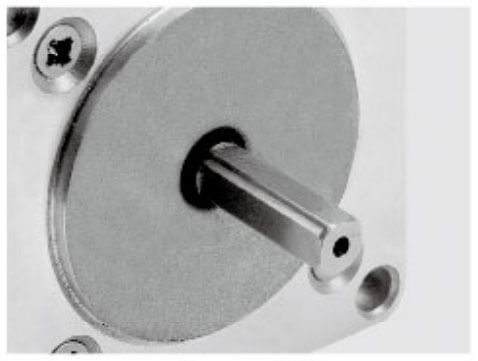
|
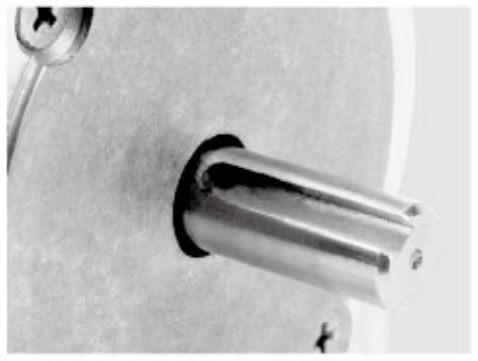
|
Knurling |
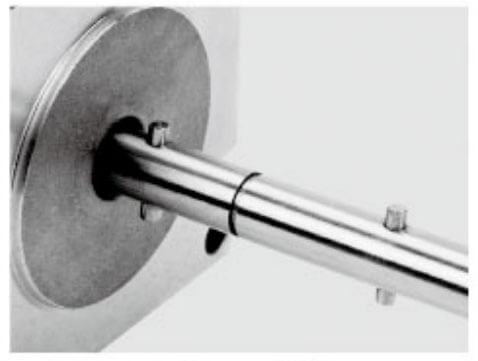
Hobbing Shaft |
Screw Shaft |
Hollow Shaft |
Double D Shaft |
Keyway |
The first major selection parameter is torque.
For a rotary mechanism, the required torque can be estimated from:
Trequired=Tload+Tacceleration+TfrictionT_{required}=T_{load}+T_{acceleration}+T_{friction}
Where:
TloadT_{load} = torque required to move the mechanical load
TaccelerationT_{acceleration} = torque required during acceleration
TfrictionT_{friction} = mechanical friction and resistance
A safety margin should then be included:
Tmotor≥Trequired×KT_{motor} \geq T_{required} \times K
where K is a suitable safety factor determined by the application.
For agricultural machinery, we should avoid operating continuously at the motor's maximum torque. A reasonable design margin helps compensate for:
Variable soil conditions
Mechanical wear
Temperature changes
Sudden load variations
Bearing resistance
Belt or gear transmission losses
Acceleration requirements
An integrated stepper servo motor with insufficient torque may experience position errors, excessive heating, vibration, or unexpected following errors.
Torque alone does not determine whether a motor is suitable.
The required motor speed depends on the mechanism's operating cycle and transmission ratio:
nmotor=nload×in_{motor}=n_{load}\times i
where:
nmotorn_{motor} = motor speed
nloadn_{load} = load speed
ii = transmission ratio
If gears, belts, chains, or planetary gearboxes are used, the transmission ratio must be included in the calculation.
Rice transplanters often perform repetitive high-frequency movements. The motor may repeatedly:
Accelerate
Reach operating speed
Decelerate
Stop or reverse
Repeat the cycle
This means the motor needs sufficient dynamic torque, not merely adequate static holding torque.
A correctly selected integrated stepper servo motor should provide sufficient torque throughout the complete operating speed range.
Integrated stepper servo motors are available in different frame sizes to accommodate different mechanical loads.
Common considerations include:
Parameter |
Selection Consideration |
|---|---|
Motor frame size |
Based on available installation space and required torque |
Rated voltage |
Must match the system power supply |
Rated current |
Must be compatible with the integrated drive |
Rated torque |
Should exceed calculated operating torque |
Peak torque |
Important for acceleration and transient loads |
Speed |
Must meet the required operating cycle |
Encoder resolution |
Determines feedback and positioning capability |
Shaft diameter |
Must match the transmission system |
Mounting dimensions |
Must match the mechanical structure |
For compact agricultural equipment, a smaller integrated motor can reduce system weight and installation space. For heavier transplanting mechanisms, a larger frame size may be necessary.
The optimal selection is therefore a balance between torque capacity, motor dimensions, weight, and installation requirements.
Encoder resolution should be selected according to the required positioning accuracy and control requirements.
A higher-resolution encoder can provide more detailed feedback, but the appropriate resolution depends on the complete motion-control system.
We should consider:
Required positioning accuracy
Motor speed
Control-loop frequency
Transmission backlash
Mechanical compliance
Required repeatability
Controller processing capability
It is important to remember that encoder resolution does not automatically equal system positioning accuracy.
The final accuracy also depends on:
Gearbox backlash
Coupling tolerance
Bearing clearance
Belt elasticity
Mechanical vibration
Structural deformation
Controller tuning
For an automatic rice transplanter, the entire motion system should therefore be optimized rather than focusing only on encoder counts.
An integrated stepper servo motor contains both the motor and electronic control components, so the power supply must satisfy the requirements of the complete system.
Before selecting a model, we should verify:
DC input voltage
Continuous current
Peak current
Power consumption
Voltage fluctuation tolerance
Protection requirements
Agricultural machinery may use battery-based electrical systems, so the motor's input voltage must be compatible with the vehicle's electrical architecture.
For example, a motor designed for a specific DC voltage range should not be connected directly to a substantially different supply voltage without appropriate power conversion.
Stable power delivery is essential for maintaining reliable servo performance during rapid acceleration and load changes.
The motor should support the control method required by the rice transplanter's main controller.
Depending on the integrated stepper servo motor architecture, possible control interfaces may include:
Pulse and direction
CW/CCW pulse control
Analog control
RS-485
CAN-based communication
Other industrial communication interfaces
Pulse/direction control is relatively straightforward for positioning applications.
The controller determines:
Number of pulses → position
Pulse frequency → speed
Direction signal → rotation direction
This makes it suitable for repetitive indexing and positioning mechanisms.
For more advanced agricultural machinery, communication-based control can provide additional diagnostic and parameter-setting capabilities.
A networked architecture can simplify communication between:
Main Controller → Motor → Encoder Feedback → Motion Status
The appropriate interface depends on the transplanter's existing electronic control architecture.
Agricultural machinery operates in considerably harsher environments than typical indoor automation equipment.
A rice transplanter may encounter:
Mud
Water spray
Rain
Dust
Fertilizer residue
Pesticide exposure
Mechanical vibration
Temperature fluctuations
Therefore, environmental protection should be considered when selecting an integrated stepper servo motor.
Important specifications include:
IP protection rating
Operating temperature
Storage temperature
Humidity tolerance
Vibration resistance
Shock resistance
Connector protection
Cable sealing
The actual required protection level depends on where the motor is installed.
A motor mounted close to the planting mechanism may face substantially more moisture and contamination than a motor installed inside a protected electrical enclosure.
Many rice-transplanter mechanisms require higher output torque and lower output speed than the motor can provide directly.
A planetary gearbox can be integrated with the stepper servo motor to increase output torque and reduce speed.
The relationship can be approximately expressed as:
Tout=Tmotor×i×ηT_{out}=T_{motor}\times i\times \eta
where:
ToutT_{out} = gearbox output torque
TmotorT_{motor} = motor torque
ii = reduction ratio
η\eta = transmission efficiency
For example, a planetary gearbox can provide:
Higher output torque
Lower output speed
Compact mechanical integration
Improved load matching
However, gearbox selection must also consider backlash, efficiency, rated torque, peak torque, service life, and radial/axial loads.
A high reduction ratio is not automatically better. The ratio should be selected according to the actual operating speed and torque requirements.
Planting mechanisms require consistent and repeatable movement.
Excessive motor vibration can lead to:
Mechanical noise
Reduced positioning stability
Structural resonance
Faster component wear
Reduced planting consistency
An integrated stepper servo motor can use closed-loop current and position control to improve dynamic behavior.
Motor tuning should consider:
Acceleration/deceleration profiles
Operating speed
Load inertia
Resonance regions
Control-loop parameters
Mechanical transmission characteristics
For repetitive mechanisms, smooth acceleration and deceleration can be just as important as maximum speed.
Load inertia is another important parameter.
If the driven mechanism has excessive inertia relative to the motor, the system may have difficulty achieving the required acceleration.
A simplified inertia relationship is:
Jtotal=Jmotor+Jload+JtransmissionJ_{total}=J_{motor}+J_{load}+J_{transmission}
The control system must be able to accelerate this total inertia within the required time.
When evaluating a motor, we should consider:
Rotor inertia
Load inertia
Gearbox ratio
Coupling inertia
Belt or pulley inertia
Required acceleration
A properly matched inertia ratio contributes to faster response and more stable servo control.
Traditional motion systems may require separate components:
Stepper Motor + Driver + Encoder + Wiring + Controller
An integrated stepper servo motor can combine several of these functions into a compact unit.
This can reduce:
Control cabinet space
Motor-driver wiring
Connector count
Installation complexity
Potential wiring errors
For mobile agricultural equipment, reducing wiring can also simplify machine assembly and maintenance.
However, the integrated architecture must still provide appropriate access to:
Power
Control signals
Communication
Encoder feedback
Alarm signals
Configuration parameters
Motor selection should never be performed independently from the mechanical design.
We should evaluate the complete chain:
Motor → Gearbox → Coupling → Transmission → Mechanism → Agricultural Load
For example, if the motor has adequate torque but the gearbox has excessive backlash, the final positioning accuracy may still be poor.
Similarly, a high-resolution encoder cannot eliminate mechanical clearance in gears or loose couplings.
The best solution comes from matching electrical, mechanical, and control parameters together.
Several common mistakes should be avoided.
Rated torque does not provide a complete picture of dynamic performance. Speed, acceleration, inertia, and duty cycle must also be evaluated.
The motor may produce sufficient torque at its shaft, but transmission losses can significantly affect the final output.
An oversized motor can increase cost, weight, power consumption, and mechanical requirements without providing meaningful benefits.
A motor suitable for indoor automation may not be appropriate for exposure to water, mud, dust, and vibration.
A motor with excellent mechanical specifications may still be unsuitable if its control interface cannot communicate effectively with the transplanter controller.
Continuous agricultural operation can create significantly different thermal conditions compared with short-duration testing.
Selecting the right integrated stepper servo motor requires matching the motor to the machine's mechanical load, motion profile, control system, and operating environment. The following factors should be evaluated before choosing a model.
Calculate the torque required to move the load, including friction, acceleration, and transmission losses. Select a motor with sufficient continuous and peak torque to handle normal and transient loads without operating continuously at its maximum capacity.
Determine the required motor speed based on the application's cycle time and transmission ratio. The motor should provide adequate torque across the entire operating-speed range, not just at low speed.
Compare the motor's rotor inertia with the driven load. A suitable inertia match helps achieve faster acceleration, stable operation, and better servo response, particularly in applications involving frequent starts and stops.
Choose encoder resolution according to the required positioning accuracy and repeatability. Higher resolution can provide more detailed feedback, but the final accuracy also depends on gearbox backlash, coupling precision, and mechanical rigidity.
Verify the motor's input voltage, current, and power requirements against the machine's electrical system. For battery-powered equipment, the motor should tolerate the expected voltage fluctuations during operation.
Make sure the motor is compatible with the machine controller. Common options include pulse/direction, RS-485, and CAN communication. The selected interface should support the required positioning, speed, and diagnostic functions.
If the application requires higher torque or lower output speed, consider an integrated stepper servo motor with a planetary gearbox. Check the reduction ratio, rated torque, efficiency, backlash, and service life before selection.
For agricultural and outdoor machinery, evaluate IP protection, temperature range, humidity, vibration, dust, and water exposure. The motor's protection level should match its actual installation environment.
Check the frame size, mounting holes, shaft diameter, shaft length, and overall dimensions to ensure the motor fits the existing mechanical structure without additional modifications.
For machines operating for extended periods, evaluate thermal performance, duty cycle, operating current, and heat dissipation. The motor should remain within its allowable temperature range during continuous operation.
Before finalizing an integrated stepper servo motor, verify:
Torque and peak torque
Operating speed
Load inertia
Encoder resolution
Power supply
Control interface
Gearbox ratio and output torque
Environmental protection
Mounting dimensions
Continuous-duty capability
A correctly selected integrated stepper servo motor should provide sufficient performance without unnecessary oversizing. Matching the motor, encoder, drive, gearbox, and mechanical load as a complete system helps achieve accurate, reliable, and efficient motion control.
Selecting the right integrated stepper servo motor for an automatic rice transplanter requires a complete evaluation of mechanical, electrical, feedback, environmental, and control requirements.
The most important parameters include torque, speed, acceleration, load inertia, encoder resolution, power supply, control interface, gearbox compatibility, thermal performance, and environmental protection.
For compact agricultural automation, an integrated stepper servo motor can provide an effective combination of closed-loop positioning, compact construction, simplified wiring, reliable motion control, and flexible system integration.
The best motor is not necessarily the one with the highest torque or largest frame size. It is the motor that provides the correct performance throughout the actual operating cycle while fitting the machine's mechanical structure, electrical architecture, and environmental conditions.
By calculating the real load requirements and validating the complete motor–drive–encoder–transmission–mechanism system, we can achieve more consistent transplanting motion, improved machine reliability, and a more compact motion-control architecture.
An integrated stepper servo motor combines a stepper motor, driver, and encoder in one unit, providing precise closed-loop motion control for transplanting and seedling-feeding mechanisms.
They provide accurate positioning, reliable motion, closed-loop feedback, compact installation, and simplified wiring, making them suitable for repetitive agricultural automation.
Calculate the required load, acceleration, friction, and transmission losses, then select a motor with sufficient continuous and peak torque plus an appropriate safety margin.
The required speed depends on the transplanting cycle, mechanism speed, and transmission ratio. Motor torque should also be verified across the complete operating-speed range.
An encoder is highly beneficial because it provides closed-loop position feedback, helping detect position errors and maintain reliable motion under changing loads.
Yes. A planetary gearbox can be paired with an integrated stepper servo motor when the application requires higher output torque, lower speed, or compact mechanical transmission.
Rice transplanters can encounter water, mud, dust, vibration, and temperature fluctuations. The motor should therefore have an appropriate IP protection rating and operating-temperature range.
The appropriate interface depends on the machine controller. Common options include pulse/direction, RS-485, and CAN communication, depending on the motor model and system architecture.
Correctly matching motor torque, speed, encoder feedback, gearbox ratio, and mechanical transmission helps achieve consistent positioning and repeatable seedling placement.
Check torque, speed, inertia, encoder specifications, voltage, current, control interface, gearbox compatibility, mounting dimensions, environmental protection, and continuous-duty performance.


