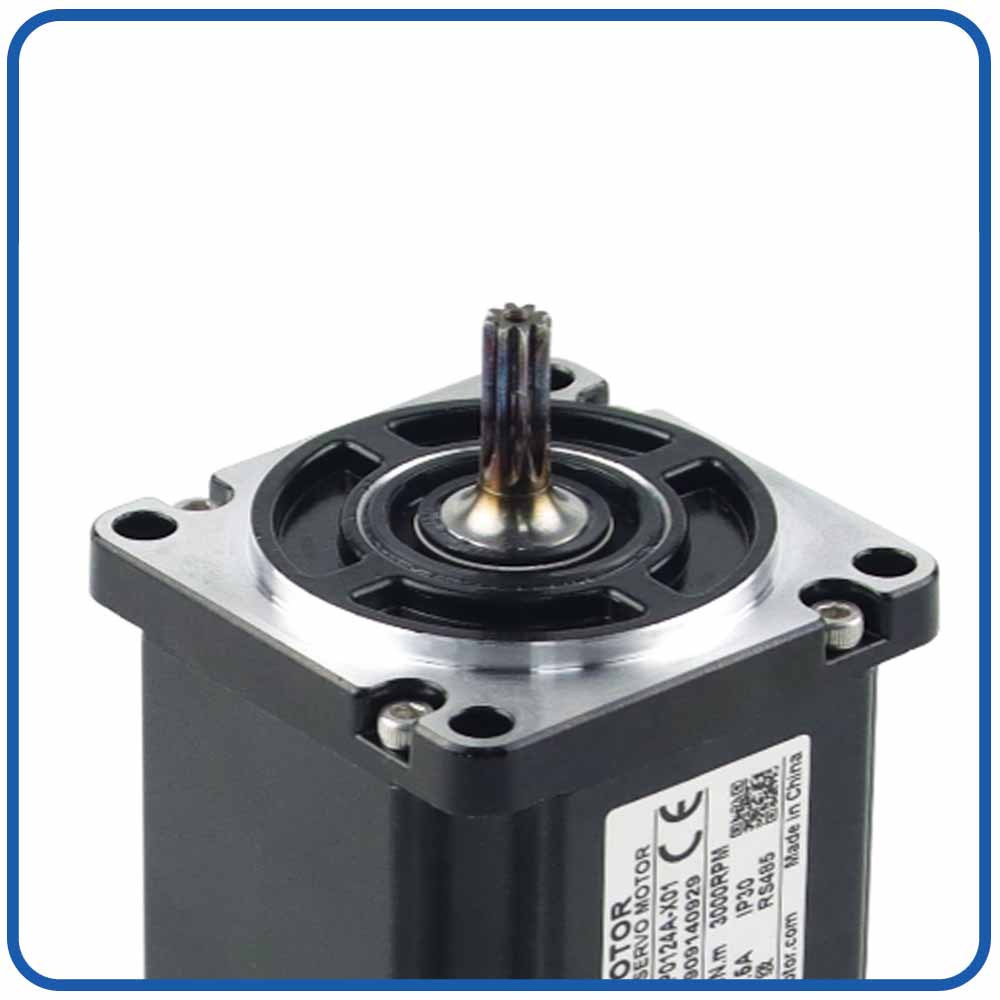
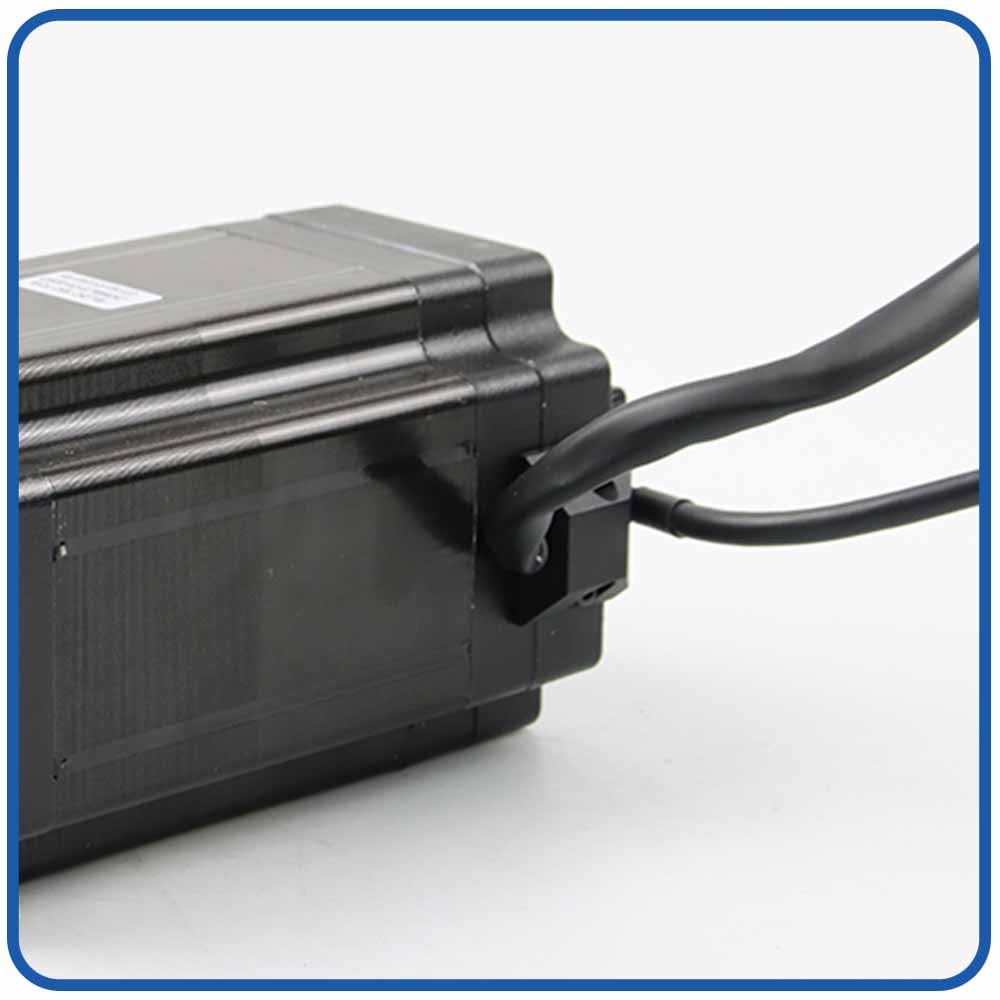
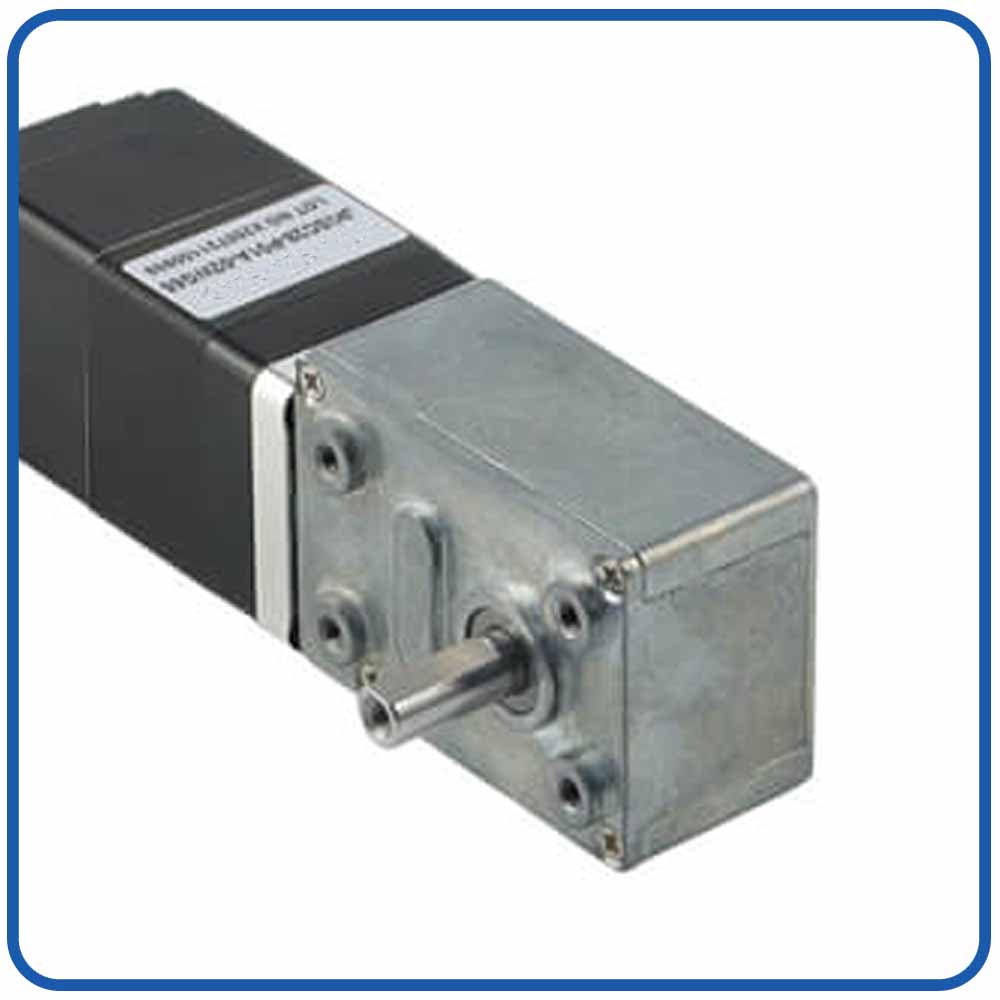
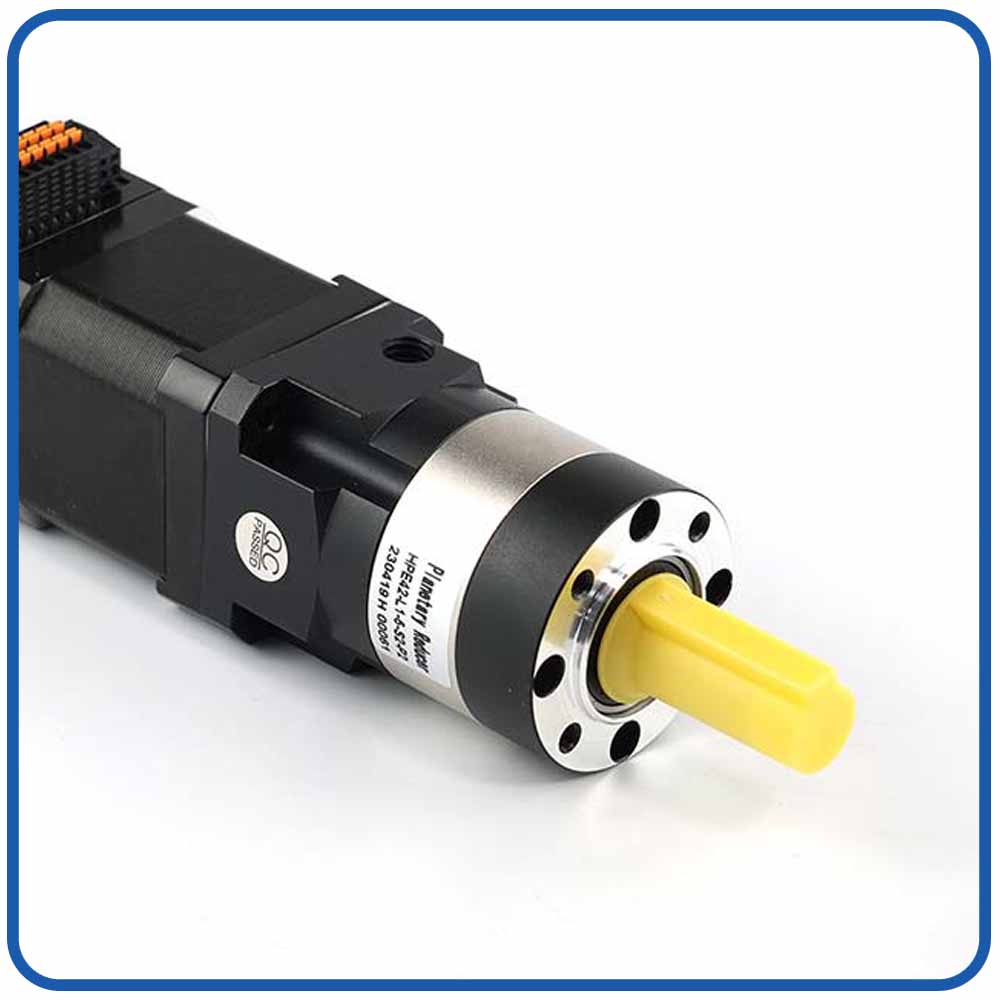
Automated Guided Vehicles (AGVs) are widely used in smart factories, warehouses, logistics centers, and industrial automation systems because they provide reliable, flexible, and efficient material transportation. At the core of an AGV motion system, the DC servo motor plays a critical role in driving wheels, controlling speed, maintaining positioning accuracy, and ensuring smooth movement.
However, during long-term operation, many AGV systems experience a common issue: DC servo motor overheating. Excessive motor temperature not only reduces efficiency but can also cause encoder failures, insulation damage, reduced service life, unexpected shutdowns, and even complete motor failure.
Understanding why an AGV DC servo motor overheats during continuous operation is essential for improving system reliability, selecting the right motor, and optimizing AGV performance. This article explains the major causes of AGV servo motor overheating and provides practical solutions for preventing thermal problems.
What Causes an DC Servo Motor to Overheat During Continuous Operation?
An AGV DC servo motor overheating during continuous operation is a common issue in automated guided vehicle systems. Since AGVs often work for long hours with frequent acceleration, braking, and load changes, the motor must handle continuous thermal stress.
Excessive temperature can reduce motor efficiency, damage internal components, shorten service life, and cause unexpected AGV downtime. Understanding the main causes of overheating helps improve system reliability and optimize motor performance.
1. Excessive Load Torque
One of the most common causes of AGV servo motor overheating is operating under excessive load.
When an AGV carries heavy materials, climbs ramps, or operates on uneven surfaces, the motor requires higher torque. Higher torque requires more current, which increases heat generation inside the motor windings.
Common overload conditions include:
Payload exceeding the motor design capacity
Incorrect gearbox ratio selection
Frequent operation at maximum torque
Increased resistance from wheels or mechanical parts
Solution: Select an AGV DC servo motor with sufficient torque margin and avoid continuous operation near the motor’s maximum capacity.
2. Incorrect Motor Selection
Choosing an undersized motor can cause continuous overheating.
A motor that cannot provide enough torque will operate with high current for extended periods, creating excessive heat and reducing efficiency.
Motor selection should consider:
AGV weight and payload
Required speed
Wheel size
Acceleration requirements
Duty cycle
Operating environment
A properly matched motor can maintain stable temperature during long-term operation.
3. Excessive Current During Operation
Motor current directly affects temperature rise. According to the electrical loss principle:
Heat Loss = I⊃2; × R
Higher current creates significantly more heat inside the motor.
Reasons for excessive current include:
Frequent acceleration and braking
High torque requirements
Poor servo parameter settings
Mechanical resistance
Incorrect control settings
Using servo drives with current monitoring and torque limiting functions can help reduce overheating risks.
4. Poor Heat Dissipation
Even normal motor operation generates heat. If heat cannot be released effectively, temperature will continue increasing.
Common thermal problems include:
Limited airflow around the motor
Compact installation space
High ambient temperature
Poor contact between motor and chassis
To improve cooling performance:
Use motors with aluminum housings
Optimize installation design
Maintain proper ventilation
Select motors with better thermal performance
5. Incorrect Power Supply Voltage
The AGV battery voltage must match the servo motor and controller requirements.
Low voltage conditions may cause:
Higher motor current
Reduced efficiency
Increased heat generation
Voltage fluctuations can also create unstable motor operation and additional thermal stress.
Common AGV power systems include:
24V DC
36V DC
48V DC
72V DC
Proper voltage matching ensures stable motor performance.
6. Mechanical Resistance and Drive System Problems
Mechanical issues can increase the workload on the motor and cause overheating.
Common causes include:
Wheel misalignment
Bearing damage
Gearbox friction
Poor lubrication
Uneven operating surfaces
Regular inspection of the AGV drive system helps reduce unnecessary motor load and improves efficiency.
7. Incorrect Servo Motor Parameter Settings
Servo motors rely on accurate controller settings for smooth operation.
Incorrect tuning may result in:
Excessive current output
Motor vibration
Position correction errors
Unnecessary torque compensation
Proper adjustment of acceleration, speed control, and current limits helps reduce heat generation.
8. Encoder or Feedback Problems
Many AGV servo motors use encoders for accurate speed and position control.
If encoder signals are unstable, the controller may continuously correct motor movement, increasing current consumption and temperature.
Possible causes include:
Encoder damage
Loose wiring
Electrical interference
Incorrect configuration
Integrated encoder motors can improve signal reliability and reduce control-related overheating.
Conclusion
The main causes of AGV DC servo motor overheating include excessive load, incorrect motor selection, high current consumption, poor cooling, unstable power supply, mechanical resistance, and improper control settings.
By selecting a suitable servo motor, optimizing system design, and implementing effective monitoring strategies, AGV manufacturers can improve motor reliability, extend service life, and ensure stable operation in demanding industrial environments.
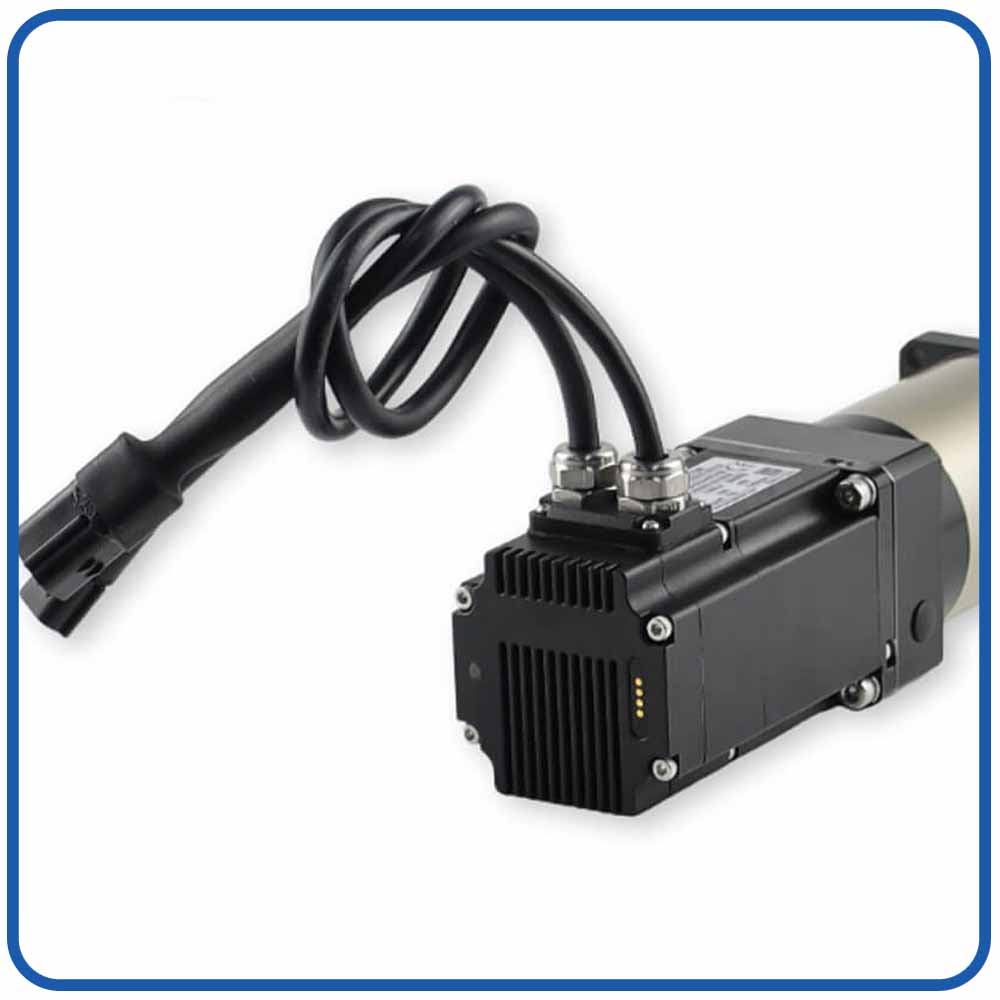
IDC60 Integrated BLDC Servo Motor — High-Efficiency, Compact, and Smart Closed-Loop Motion Control Solution
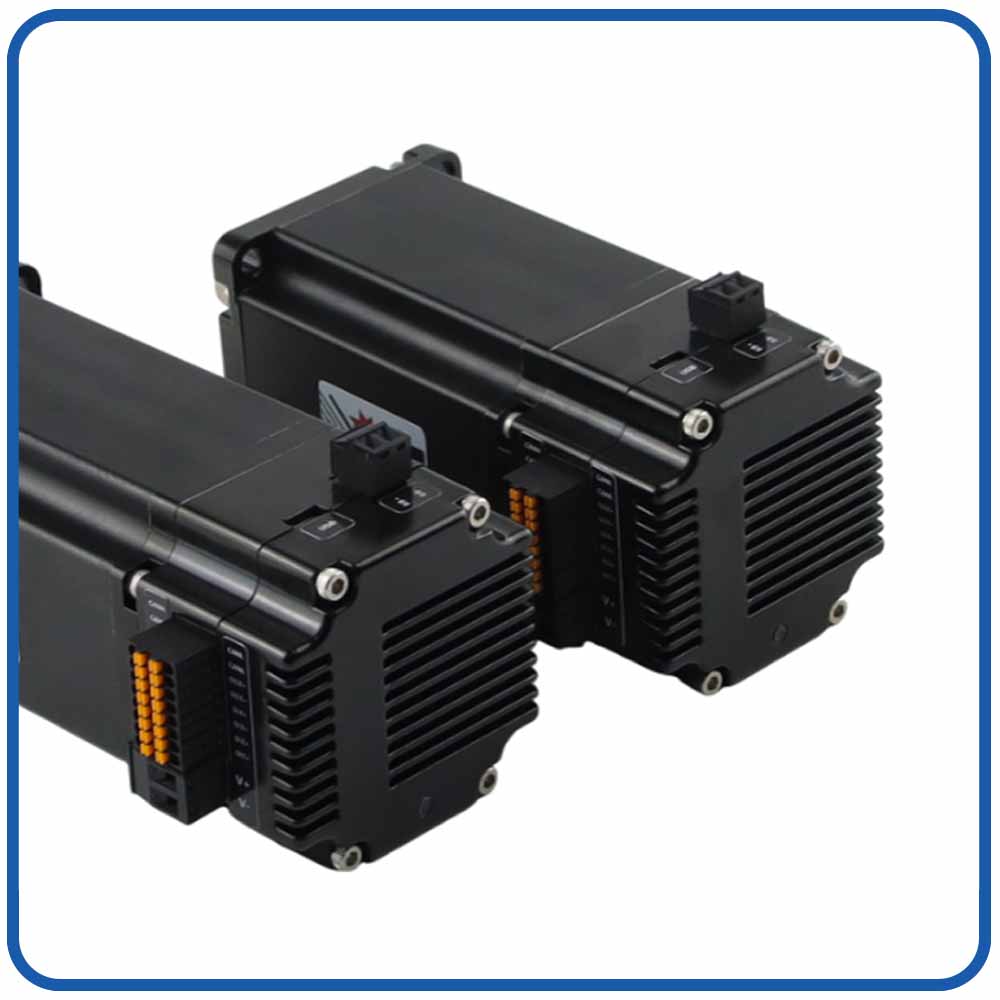
Product Overview:The IDC60 integrated BLDC servo motor from Besfoc is a compact NEMA 24 solution combining motor, drive, and encoder in one unit. It provides precise closed-loop control, stable torque, and fast response. Its integrated design reduces wiring, saves space.
Key Technical Highlights
Integrated All-in-One Design Combines BLDC motor, servo drive, and encoder in a compact unit, reducing wiring complexity and improving installation efficiency.
High-Precision Closed-Loop Control Ensures accurate position, speed, and torque regulation with real-time feedback for stable and smooth motion performance.
Powerful Modular Customization (OEM/ODM) Supports flexible customization options, including voltage, torque, communication protocols, and encoder resolution to meet diverse application requirements.
High Efficiency & Compact Structure Delivers strong torque density with optimized thermal performance, making it ideal for space-limited automation and robotics systems.
Typical Applications
Pipeline Inspection Robots Provides stable low-speed torque and precise motion control for navigating narrow, curved, and complex pipeline environments.
Automated Guided Vehicles (AGVs) Ensures smooth acceleration, accurate positioning, and reliable operation in logistics and smart warehouse systems.
Robotic Automation Systems Ideal for robotic arms, grippers, and compact motion modules requiring high precision and fast response.
Smart Manufacturing Equipment Supports high-accuracy motion control in assembly lines, packaging machines, and precision industrial automation devices.
IDC60 Series Key Specifications for AGV Applications
Preventing AGV DC servo motor overheating requires a combination of proper motor selection, optimized mechanical design, effective thermal management, and intelligent control strategies. Since AGVs often operate continuously in warehouses, factories, and logistics environments, their drive motors must maintain stable temperature performance under frequent acceleration, braking, and variable loads.
Excessive motor temperature can reduce efficiency, shorten service life, damage internal components, and cause unexpected AGV downtime. By implementing the following preventive measures, manufacturers can improve the reliability and operating performance of AGV motion systems.
1. Select the Correct AGV DC Servo Motor Size
The most important step in preventing overheating is selecting a motor that matches the AGV’s actual operating requirements.
A motor that is too small will frequently operate near its maximum capacity, causing high current consumption and excessive heat generation. Even if the AGV can complete its tasks, continuous overload operation will accelerate motor aging.
When selecting an AGV DC servo motor, engineers should consider:
AGV total weight
Maximum payload
Required travel speed
Wheel diameter
Gear reduction ratio
Acceleration and deceleration requirements
Operating duty cycle
Floor conditions
Environmental temperature
A suitable motor should not operate continuously at its maximum torque rating. Maintaining a safety margin allows the motor to handle temporary load changes without excessive temperature rise.
For most AGV applications, selecting a motor with approximately 20–40% torque reserve can significantly improve thermal stability and reliability.
2. Avoid Continuous Operation at Maximum Load
Continuous operation under high torque is one of the main causes of AGV servo motor overheating.
When a DC servo motor produces higher torque, it requires more current. Increased current creates higher copper losses inside the motor windings, resulting in greater heat generation.
The relationship can be expressed as:
Heat Loss = I⊃2; × R
Where:
I = motor current
R = winding resistance
Because current is squared, a small increase in current can create a significant temperature increase.
To reduce thermal stress:
Avoid operating the AGV continuously at maximum payload
Reduce unnecessary acceleration demands
Optimize travel routes
Minimize frequent start-stop cycles
Select suitable speed and torque settings
A properly designed AGV system should operate most of the time within the motor’s efficient working range.
3. Optimize AGV Acceleration and Deceleration Settings
Frequent acceleration and braking cycles are common in AGV applications, especially in warehouses and smart factories.
During acceleration, the servo motor requires high peak current to generate additional torque. If acceleration is too aggressive, the motor experiences repeated current spikes, increasing heat accumulation.
To prevent overheating:
Set reasonable acceleration time
Avoid sudden speed changes
Use smooth motion profiles
Optimize braking parameters
Reduce unnecessary position corrections
A properly tuned servo drive helps maintain smooth operation while reducing current fluctuations.
Advanced AGV servo systems can use:
Current feedback control
Torque limitation
Dynamic speed adjustment
Intelligent motion algorithms
These features reduce unnecessary motor stress during continuous operation.
4. Improve AGV Motor Heat Dissipation
Effective thermal management is essential for long-term AGV operation.
Unlike traditional industrial motors, AGV drive motors are usually installed in compact spaces with limited airflow. Poor heat dissipation can cause normal operating heat to accumulate over time.
Methods to improve cooling performance include:
Use High Thermal Conductivity Materials
Aluminum alloy housings provide excellent heat transfer capability and help release heat from internal components.
Optimize Motor Installation
The motor mounting structure should provide good contact between the motor housing and the AGV chassis, allowing heat to transfer away efficiently.
Maintain Ventilation Space
Avoid installing motors in fully enclosed areas where hot air cannot escape.
Select Motors with Better Thermal Design
AGV-specific servo motors often include optimized electromagnetic structures and improved heat dissipation designs for continuous-duty applications.
5. Monitor Motor Temperature in Real Time
Temperature monitoring is an effective way to prevent unexpected overheating failures.
Modern AGV systems can integrate temperature detection functions to provide early warnings before the motor reaches dangerous levels.
Recommended monitoring parameters include:
Motor temperature
Motor current
Torque output
Operating time
Error conditions
When abnormal temperature increases occur, the control system can:
Reduce speed automatically
Limit motor current
Stop operation safely
Send maintenance alerts
Real-time monitoring improves AGV reliability and reduces unexpected downtime.
6. Ensure Proper Power Supply Voltage
Incorrect voltage supply can increase motor temperature and reduce efficiency.
If the supply voltage is too low:
The motor draws higher current
Torque output decreases
Electrical losses increase
Heat generation rises
If voltage fluctuates:
Servo control becomes unstable
Motor current may increase
Temperature may rise unexpectedly
To maintain stable operation:
Match the motor voltage with the AGV battery system
Use appropriate power cables
Reduce voltage drop
Maintain battery health
Common AGV power systems include:
24V DC
36V DC
48V DC
72V DC
The servo motor, controller, and battery system should be properly matched.
7. Reduce Mechanical Resistance in the AGV Drive System
Mechanical problems can force the motor to produce more torque than expected, resulting in overheating.
Common mechanical causes include:
Wheel Problems
Incorrect wheel installation or excessive wear increases rolling resistance.
Gearbox Issues
A damaged gearbox may create additional friction and reduce transmission efficiency.
Bearing Problems
Poor lubrication or bearing damage increases rotational resistance.
Uneven Ground Conditions
Floor irregularities can increase the load on drive motors.
Regular maintenance should include:
Checking wheel alignment
Inspecting gearbox condition
Lubricating mechanical components
Removing debris from the driving system
Reducing mechanical resistance directly lowers motor workload and temperature.
8. Properly Tune Servo Motor Parameters
Servo motor controllers require accurate parameter settings to achieve efficient operation.
Incorrect settings may cause:
Excessive current output
Motor vibration
Position hunting
Unnecessary torque compensation
Important parameters include:
Speed loop gain
Position loop gain
Acceleration limit
Current limit
Torque control settings
Proper servo tuning ensures:
Stable operation
Lower power consumption
Reduced heat generation
Improved positioning accuracy
For AGV applications, professional commissioning is recommended after installation.
9. Use AGV Motors with Integrated Encoder Systems
Encoder performance directly affects servo motor control accuracy.
A poor encoder signal can cause the controller to continuously correct motor position, increasing current consumption and heat generation.
Integrated encoder motors provide several advantages:
Reduced wiring complexity
Improved signal stability
Better protection against interference
More accurate speed feedback
For AGVs requiring continuous operation, integrated servo motors with high-resolution encoders can improve both control performance and thermal reliability.
10. Choose AGV Servo Motors Designed for Continuous Duty
Standard motors may not always be suitable for AGV applications because AGVs require:
Frequent acceleration
High starting torque
Compact installation
Long operating hours
High reliability
Dedicated AGV DC servo motors are designed with:
Higher overload capability
Optimized thermal structure
Efficient electromagnetic design
Durable bearings
Integrated control options
Selecting a motor specifically designed for AGV applications helps prevent overheating and improves overall system performance.
Final
Preventing AGV DC servo motor overheating requires a complete system approach rather than focusing on a single factor. Proper motor selection, optimized load management, efficient cooling design, accurate servo tuning, and real-time monitoring are all essential for reliable operation.
By maintaining the motor within its recommended operating range and using a properly designed AGV servo motor system, manufacturers can reduce thermal failures, extend motor lifespan, improve energy efficiency, and ensure stable performance in demanding automated logistics environments.
What Is the Recommended Operating Temperature for an AGV DC Servo Motor?
The acceptable temperature depends on motor design, insulation class, and operating environment.
Generally:
Normal temperature rise: 30–60°C above ambient temperature
High-performance servo motors: designed for higher thermal limits
Excessive temperature: may indicate overload or cooling problems
Long-term operation at high temperature accelerates:
Insulation aging
Bearing wear
Magnet degradation
Encoder failure
Maintaining proper temperature significantly extends motor lifespan.
Conclusion: Solving AGV DC Servo Motor Overheating Problems
An AGV DC servo motor overheating during continuous operation is usually caused by a combination of electrical, mechanical, and thermal factors. Excessive load, incorrect motor selection, high current demand, poor cooling, improper settings, and mechanical resistance are the most common reasons.
A reliable AGV motion system requires correct motor sizing, optimized control parameters, effective heat dissipation, and continuous condition monitoring.
By selecting a high-performance AGV servo motor with suitable torque capacity, efficient thermal design, and reliable encoder feedback, manufacturers can achieve longer service life, higher operational efficiency, and improved reliability in automated logistics and smart manufacturing applications.
FAQ:
FAQ 1: Why does an AGV DC servo motor overheat during continuous operation?
Answer: An AGV DC servo motor may overheat during continuous operation due to excessive load, high current consumption, poor heat dissipation, incorrect motor selection, improper parameter settings, or mechanical resistance. When the motor operates beyond its rated torque or current capacity for extended periods, internal electrical losses increase, causing temperature rise and reduced efficiency.
FAQ 2: What is the main cause of AGV servo motor overheating?
Answer: The main cause of AGV servo motor overheating is usually excessive current caused by continuous high torque demand. Heavy payloads, frequent acceleration, incorrect gearbox selection, or mechanical friction can force the motor to draw more current, generating additional heat inside the windings.
FAQ 3: Can an undersized AGV DC servo motor cause overheating?
Answer: Yes. An undersized AGV DC servo motor often operates near or above its rated capacity, requiring excessive current to maintain torque output. Continuous operation under overload conditions increases heat generation and may lead to motor insulation damage, encoder failure, and reduced service life.
FAQ 4: How does load affect AGV motor temperature?
Answer: The load directly affects AGV motor temperature because higher mechanical loads require higher torque output. Since motor torque is proportional to current, increased load causes higher current consumption and greater heat generation. Maintaining an appropriate load margin helps prevent overheating.
FAQ 5: Does poor heat dissipation cause AGV servo motors to overheat?
Answer: Yes. Even when operating within normal conditions, AGV servo motors generate heat. If the motor housing, installation structure, or surrounding environment cannot effectively remove heat, the temperature will continue increasing. Proper ventilation, thermal design, and aluminum motor housings can improve cooling performance.
FAQ 6: How can I prevent an AGV DC servo motor from overheating?
Answer: To prevent AGV DC servo motor overheating, manufacturers should:
Select a motor with sufficient torque margin
Avoid continuous operation at maximum load
Optimize acceleration and deceleration parameters
Ensure correct power supply voltage
Improve mechanical efficiency
Monitor motor temperature and current
Use motors designed for continuous AGV applications
FAQ 7: Can incorrect servo drive settings cause AGV motor overheating?
Answer: Yes. Incorrect servo drive parameters, such as improper speed loop tuning, excessive current limits, or aggressive acceleration settings, can cause unnecessary current consumption. Proper servo tuning helps reduce heat generation while maintaining accurate AGV motion control.
FAQ 8: How does encoder failure affect AGV servo motor temperature?
Answer: A damaged or unstable encoder signal can cause the servo controller to continuously correct motor position and speed errors. This increases motor current demand and may result in vibration, unstable operation, and overheating. High-quality integrated encoder motors improve feedback reliability.
FAQ 9: What operating temperature is normal for an AGV DC servo motor?
Answer: The normal operating temperature of an AGV DC servo motor depends on motor design, insulation class, load condition, and ambient temperature. A moderate temperature rise is normal during operation, but continuous operation at excessive temperatures may accelerate insulation aging, bearing wear, and component failure.
FAQ 10: Why are AGV-specific servo motors better for continuous operation?
Answer: AGV-specific servo motors are designed for demanding applications requiring frequent movement, high starting torque, and long operating hours. They typically feature optimized thermal structures, high overload capability, integrated encoders, compact designs, and improved reliability compared with standard motors.

 English
 العربية
 Français
 Русский
 Español
 Português
 Deutsch
 italiano
 日本語
日本語 한국어
한국어 Nederlands
 Tiếng Việt
 ไทย
ไทย Polski
 Türkçe
 ພາສາລາວ
 ភាសាខ្មែរ
 Bahasa Melayu
 ဗမာစာ
ဗမာစာ Filipino
 Bahasa Indonesia
 magyar
 Română
 Čeština
 Монгол
 қазақ
қазақ Српски
 हिन्दी
 فارسی
فارسی Slovenčina
 Slovenščina
 Norsk
Norsk Svenska
 українська
 Ελληνικά
 Suomi
Suomi Հայերեն
 עברית
עברית Latine
 Dansk
Dansk Shqip
Shqip বাংলা
বাংলা Hrvatski
 Afrikaans
 Gaeilge
 Eesti keel
 Oʻzbekcha
 latviešu
 Azərbaycan dili
 Български
 Català