Introduction: The Growing Demand for Integrated Servo Motors in Medical Robotics and AGV Systems
With the rapid development of smart hospitals, automated logistics, and intelligent manufacturing, medical delivery robots and Automated Guided Vehicles (AGVs) are becoming essential solutions for improving operational efficiency and reducing labor dependency. These robots are required to operate continuously, accurately, and safely in complex environments such as hospitals, laboratories, warehouses, and production facilities.
At the core of these mobile robotic systems is the motion control system, where the motor plays a critical role in determining movement accuracy, reliability, efficiency, and overall performance. Traditional motor solutions usually require separate components, including motors, servo drives, controllers, encoders, and communication modules. However, modern robotic applications increasingly adopt integrated servo motors, which combine the motor, driver, encoder, and control electronics into a single compact unit.
Integrated servo motors are widely used in medical delivery robots and AGVs because they provide higher integration, better motion control, easier installation, improved reliability, and optimized space utilization. These advantages make them an ideal motion solution for autonomous mobile robots that require precise positioning, intelligent control, and stable operation.
What Is an Integrated Servo Motor?
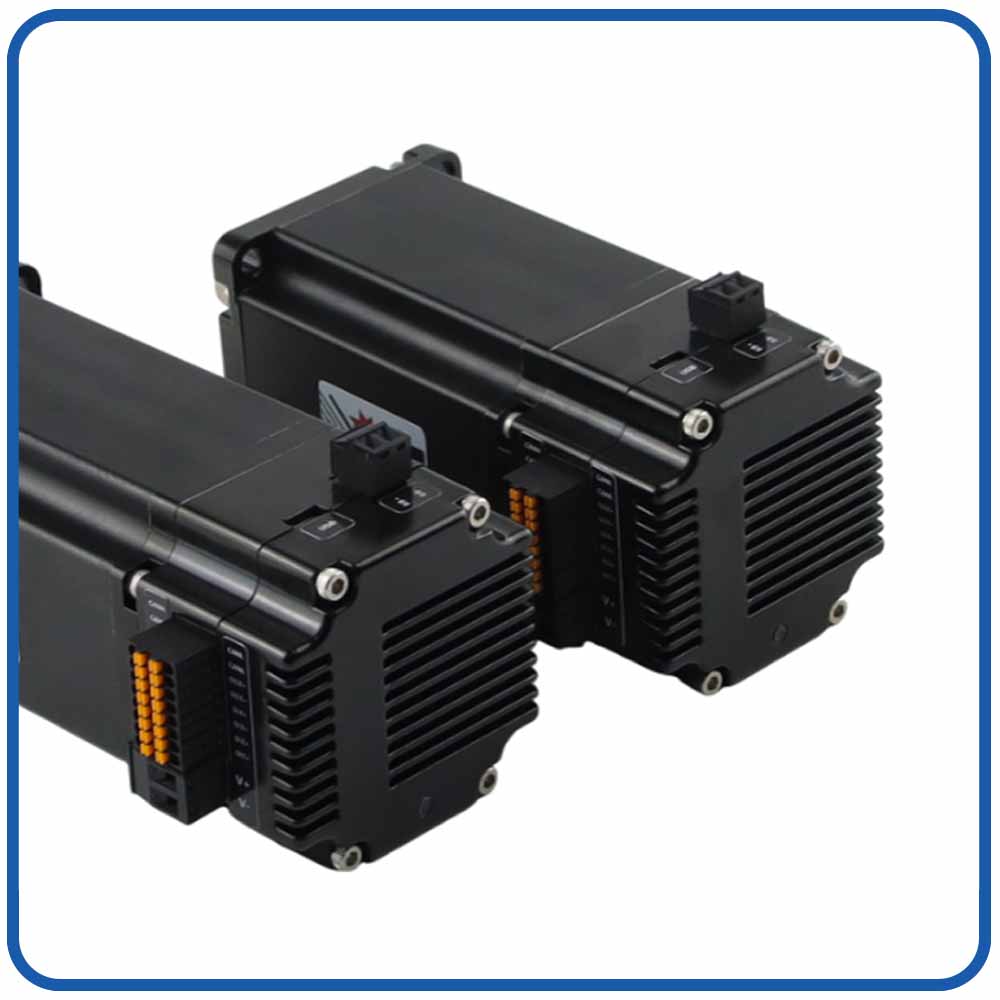
An integrated servo motor is an advanced motor system that integrates multiple motion-control components into one compact assembly. Unlike traditional servo systems where the motor and drive are installed separately, an integrated servo motor combines:
Brushless DC servo motor (BLDC motor)
Servo drive electronics
High-resolution encoder
Motion controller interface
Communication module
Protection functions such as overcurrent, overvoltage, and overheating protection
This integrated design eliminates complicated wiring between multiple components and creates a more compact and efficient drive system.
For medical robots and AGVs, where installation space is limited and reliability is critical, integrated servo motors provide a more flexible and intelligent solution compared with conventional motor systems.
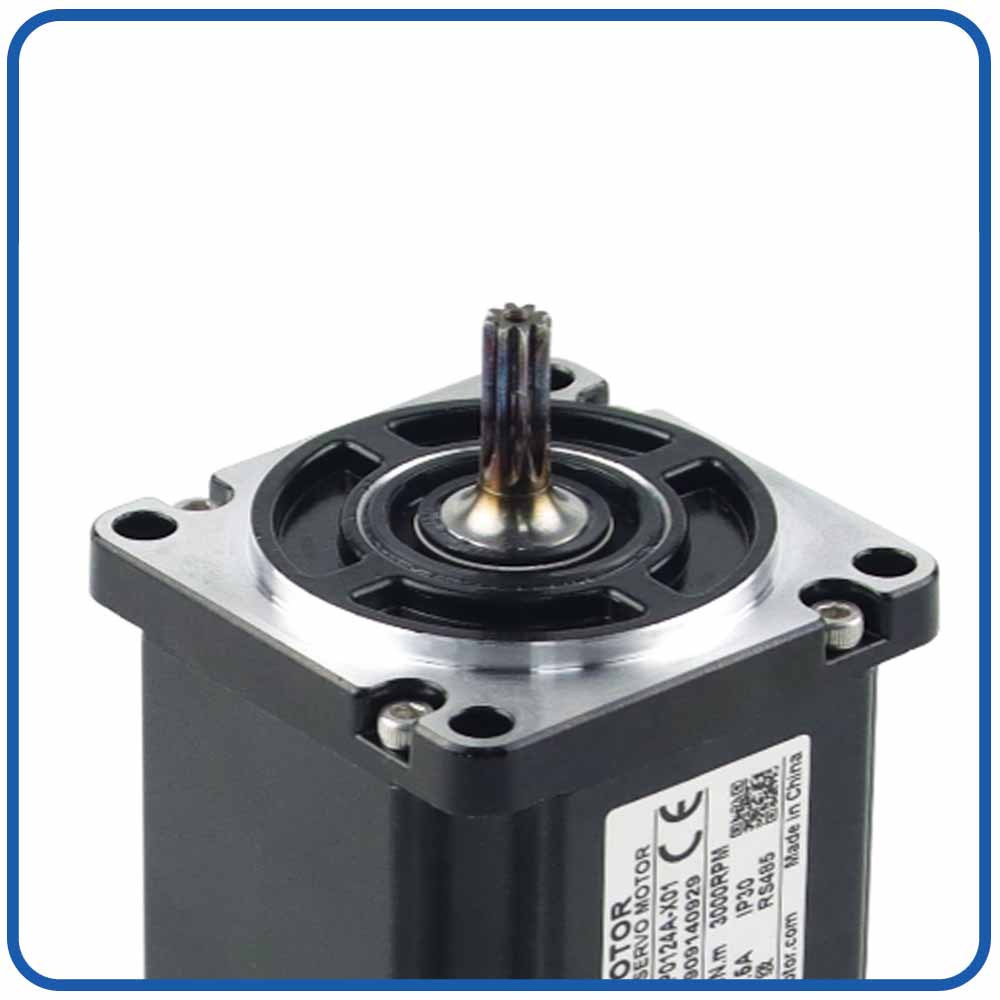
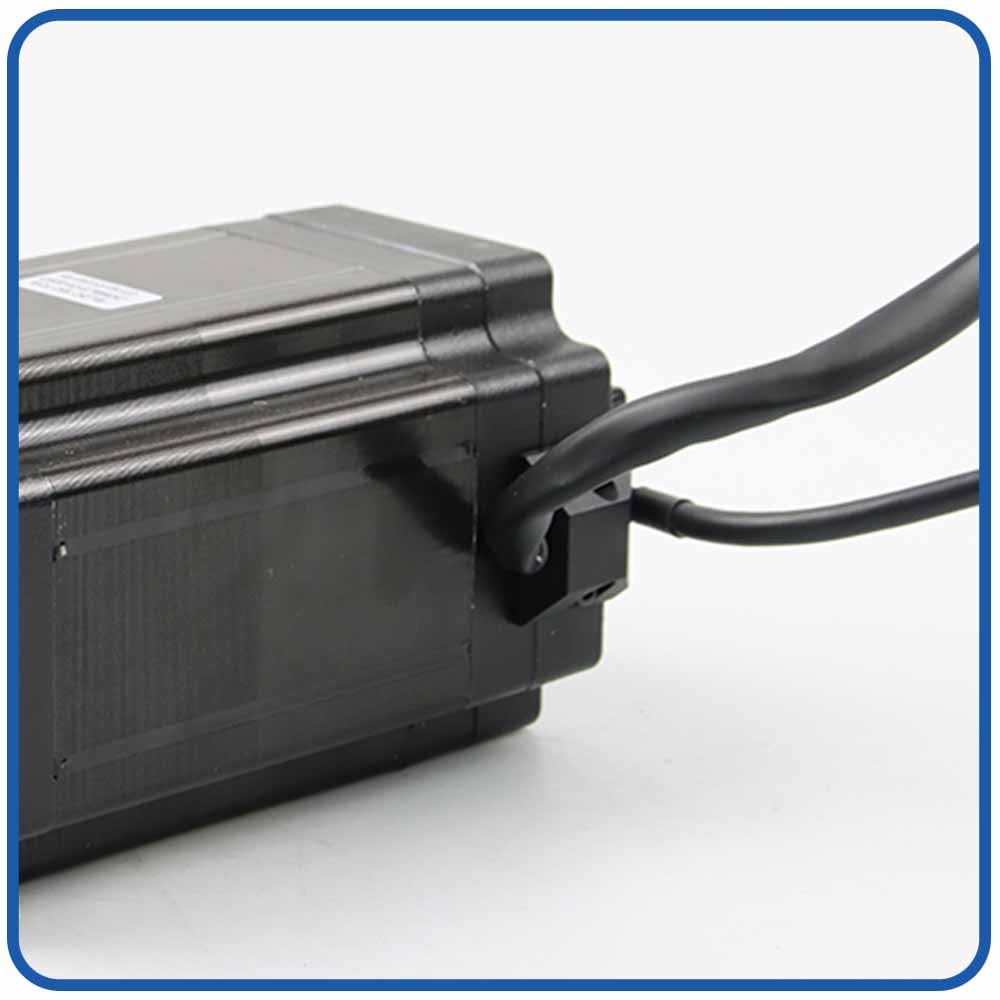
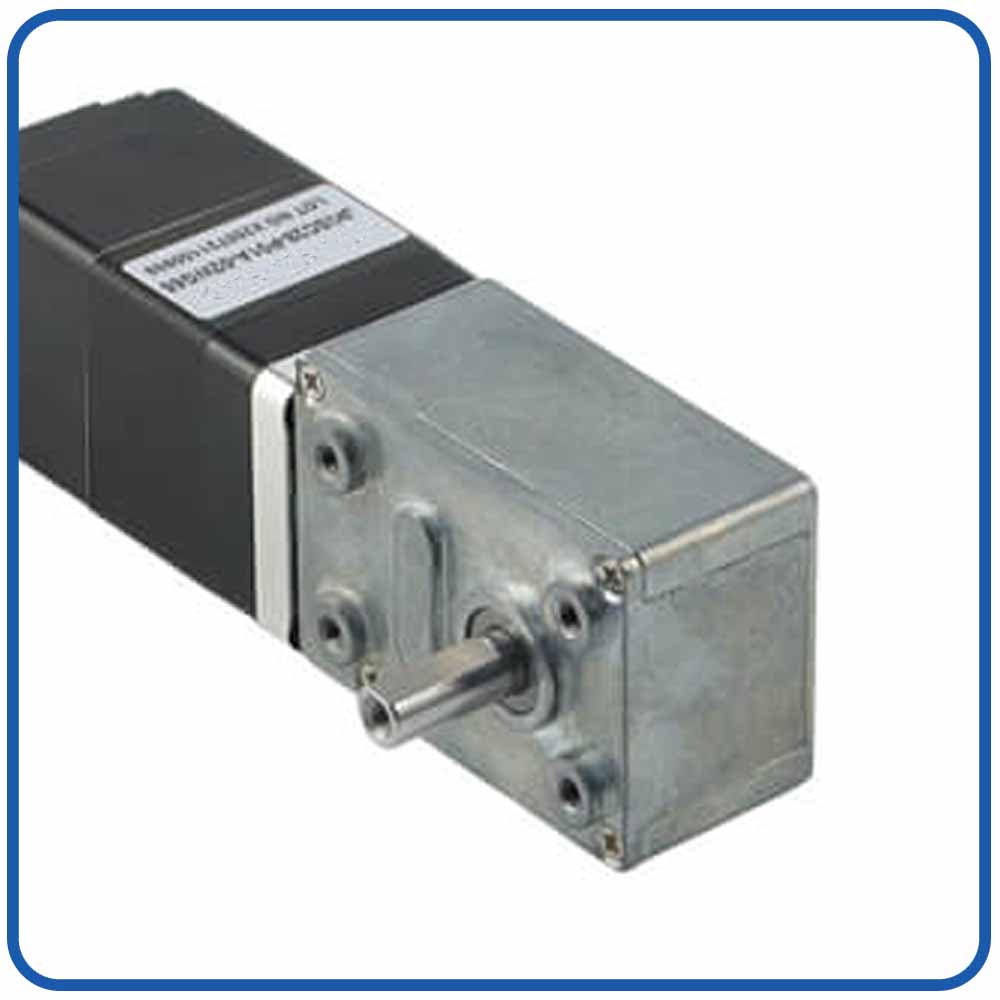
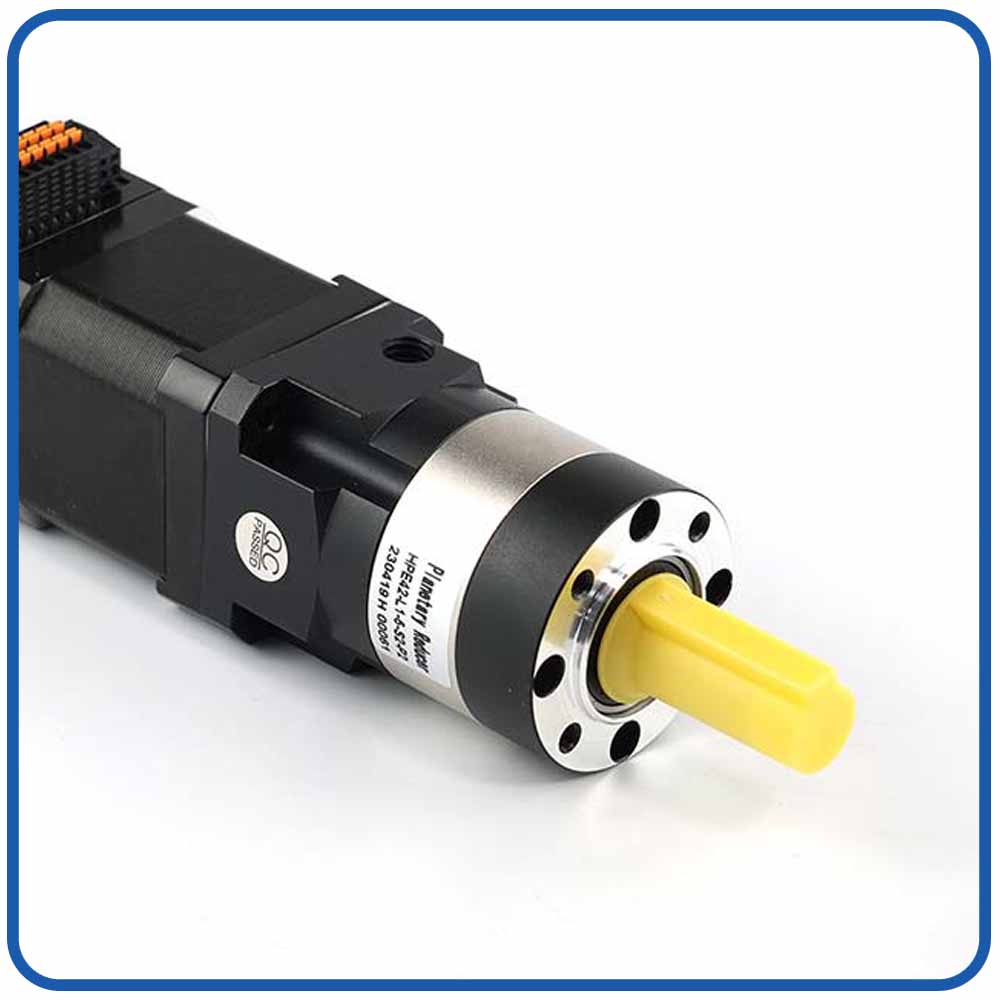
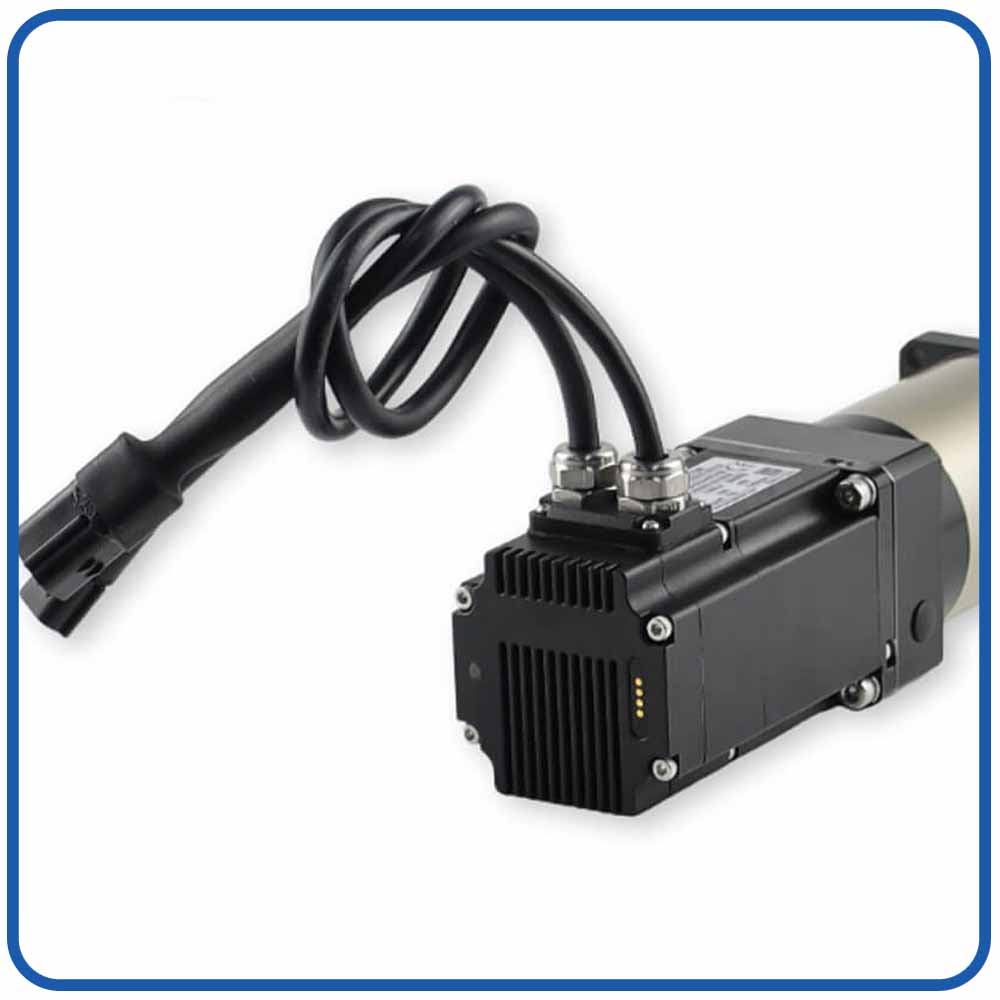
IDC60 Integrated BLDC Servo Motor — High-Efficiency, Compact, and Smart Closed-Loop Motion Control Solution
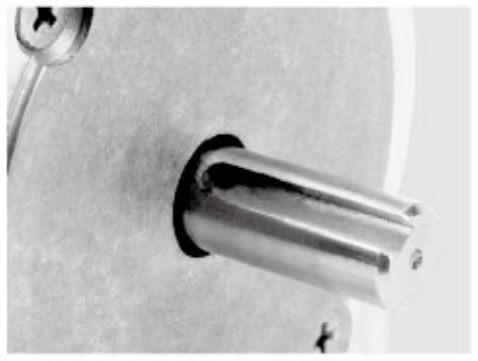
Product Overview:The IDC60 integrated BLDC servo motor from Besfoc is a compact NEMA 24 solution combining motor, drive, and encoder in one unit. It provides precise closed-loop control, stable torque, and fast response. Its integrated design reduces wiring, saves space.
Key Technical Highlights
Integrated All-in-One Design Combines BLDC motor, servo drive, and encoder in a compact unit, reducing wiring complexity and improving installation efficiency.
High-Precision Closed-Loop Control Ensures accurate position, speed, and torque regulation with real-time feedback for stable and smooth motion performance.
Powerful Modular Customization (OEM/ODM) Supports flexible customization options, including voltage, torque, communication protocols, and encoder resolution to meet diverse application requirements.
High Efficiency & Compact Structure Delivers strong torque density with optimized thermal performance, making it ideal for space-limited automation and robotics systems.
Typical Applications
Pipeline Inspection Robots Provides stable low-speed torque and precise motion control for navigating narrow, curved, and complex pipeline environments.
Automated Guided Vehicles (AGVs) Ensures smooth acceleration, accurate positioning, and reliable operation in logistics and smart warehouse systems.
Robotic Automation Systems Ideal for robotic arms, grippers, and compact motion modules requiring high precision and fast response.
Smart Manufacturing Equipment Supports high-accuracy motion control in assembly lines, packaging machines, and precision industrial automation devices.
IDC60 Series Key Specifications for AGV Applications
Why Medical Delivery Robots Need Integrated Servo Motors
Medical delivery robots are becoming increasingly important in hospitals, laboratories, and healthcare facilities for transporting medicines, samples, medical supplies, and equipment. These robots require high precision, quiet operation, reliable performance, and intelligent motion control to safely operate in complex medical environments.
Integrated servo motors provide an ideal motion solution for medical delivery robots by combining the motor, servo drive, encoder, and control electronics into a compact system. This integration improves robot performance while simplifying design, installation, and maintenance.
1. Compact Design for Space-Limited Medical Robots
Medical delivery robots need to navigate through narrow corridors, elevators, and crowded hospital areas. Their internal space is limited, making compact components essential.
Integrated servo motors combine multiple components into one unit, including:
Servo motor
Motor driver
Encoder
Communication interface
This compact structure reduces wiring requirements and saves installation space, allowing manufacturers to design smaller and more flexible medical robots.
2. High Precision Motion Control
Medical robots must accurately deliver items to specific locations such as pharmacies, laboratories, and patient rooms. Precise movement is essential for reliable operation.
Integrated servo motors provide:
Real-time position feedback
Accurate speed control
Smooth acceleration and deceleration
Closed-loop motion control
With high-resolution encoder feedback, robots can achieve stable navigation and precise positioning.
3. Low Noise Operation in Hospital Environments
Hospitals require quiet working environments to avoid disturbing patients and medical staff.
Integrated servo motors use advanced control technologies such as:
Field-oriented control (FOC)
Precise current regulation
Smooth torque control
These technologies reduce vibration, torque ripple, and operating noise, enabling robots to work quietly in sensitive areas.
4. Higher Reliability and Reduced Maintenance
Medical delivery robots often operate continuously, making reliability a critical requirement.
Compared with traditional servo systems, integrated servo motors reduce potential failure points by minimizing:
External wiring
Cable connections
Separate control components
Built-in protection functions, including overcurrent, overvoltage, and overheating protection, further improve system reliability and reduce maintenance needs.
5. Easy Integration with Robot Control Systems
Modern medical delivery robots require communication between motors, sensors, and central controllers.
Integrated servo motors support industrial communication protocols such as:
CANopen
EtherCAT
RS485 Modbus
These communication options simplify system integration and allow real-time monitoring of motor status, speed, and position.
6. Improved Energy Efficiency for Battery-Powered Robots
Most medical delivery robots rely on batteries, so energy efficiency directly affects operating time.
Lower power consumption allows robots to operate longer and reduces charging frequency.
7. Enhanced Safety Performance
Safety is essential when robots operate around patients, doctors, and hospital staff.
Advanced integrated servo motors can include safety features such as:
Safe Torque Off (STO)
Motor fault detection
Overload protection
Emergency stop support
These functions help prevent unexpected movement and improve overall robot safety.
Final
Integrated servo motors are an ideal choice for medical delivery robots because they provide compact design, precise motion control, quiet operation, high reliability, and intelligent communication capabilities.
By simplifying system architecture and improving efficiency, integrated servo motors enable medical robots to operate safely and effectively in modern healthcare environments. As hospitals continue adopting automation technologies, integrated servo motors will play an increasingly important role in the future of medical robotics.
Why AGVs Use Integrated Servo Motors
1. Better Performance for Autonomous Navigation
AGVs rely on accurate movement control to transport materials efficiently in warehouses, factories, and logistics centers.
Common AGV applications include:
Warehouse transportation
Manufacturing material handling
Smart factory logistics
Automotive production lines
Semiconductor manufacturing
The motor system must provide precise control over:
Wheel speed
Steering movement
Position accuracy
Load handling capability
Integrated servo motors provide real-time feedback and intelligent control, allowing AGVs to achieve smooth and accurate navigation.
2. Easy Integration With Industrial Communication Systems
Modern AGVs require communication between motors, controllers, sensors, and fleet management systems.
Integrated servo motors often support industrial communication protocols such as:
CANopen
EtherCAT
RS485 Modbus
RS232
Industrial Ethernet
These communication interfaces allow AGVs to exchange real-time data with the main control system.
For example, an AGV can receive speed commands, monitor motor status, and report operating conditions through a single communication network.
This simplifies system integration and improves overall automation efficiency.
3. Support for Safety Functions Such as STO
Safety is a major concern in AGV applications because robots operate around workers, equipment, and other vehicles.
Advanced integrated servo motors can include safety functions such as:
Safe Torque Off (STO).
The STO function immediately disables motor torque generation while maintaining system safety. This helps prevent unexpected movement during:
Emergency stops
Maintenance operations
Safety door activation
System faults
By integrating STO directly into the servo drive, AGV manufacturers can achieve higher safety performance with fewer external safety components.
4. High Efficiency and Longer Battery Life
Most AGVs and medical delivery robots are powered by batteries. Therefore, energy efficiency directly affects operating time and productivity.
Integrated servo motors improve energy efficiency through:
Optimized motor control algorithms
High-efficiency BLDC technology
Reduced power losses
Intelligent torque management
Lower energy consumption allows robots to:
Operate longer between charges
Reduce battery capacity requirements
Lower operating costs
For autonomous robots working 24/7, improved efficiency provides significant economic benefits.
Integrated Servo Motor vs Traditional Servo Motor System
Feature
Integrated Servo Motor
Traditional Servo System
Installation
Simple installation
Complex wiring required
Size
Compact design
Larger system size
Wiring
Fewer cables
Multiple cables
Maintenance
Lower maintenance needs
More components to maintain
Communication
Built-in interfaces
External modules required
Reliability
Higher system reliability
More connection points
Space utilization
Excellent
Limited
Robot integration
Easy
More complicated
For compact mobile robots such as AGVs and medical delivery robots, integrated servo motors provide clear advantages.
Key Features to Consider When Selecting Integrated Servo Motors for Robots
Choosing the right integrated servo motor is essential for achieving reliable, efficient, and precise robot motion. The following key factors should be considered when selecting servo motors for AGVs, medical delivery robots, AMRs, and other mobile robotic systems.
1. Motor Torque and Load Capacity
The motor must provide sufficient torque to handle the robot’s total load, including:
Robot weight
Payload capacity
Wheel size
Acceleration requirements
Operating conditions
Selecting the correct torque rating helps prevent overheating, improves motion stability, and ensures reliable long-term operation.
2. Encoder Accuracy and Resolution
The encoder provides real-time position and speed feedback for closed-loop control.
High-resolution encoders improve:
Positioning accuracy
Motion smoothness
Navigation performance
Speed control precision
For high-precision robots, absolute encoders or high-resolution incremental encoders are commonly used.
3. Communication Protocol Compatibility
Integrated servo motors should support communication protocols that match the robot control system, such as:
CANopen – widely used in AGVs and mobile robots
EtherCAT – suitable for high-speed industrial applications
RS485 Modbus – commonly used for simple automation systems
Compatible communication helps simplify integration and enables real-time motor monitoring.
4. Safety Functions
Safety is critical for robots operating around people and equipment.
Advanced integrated servo motors may include safety features such as:
Safe Torque Off (STO)
Overcurrent protection
Overvoltage protection
Overtemperature protection
These functions improve system safety and reduce the need for additional external components.
5. Compact Design and Integration Level
Space is limited in mobile robots. A compact integrated servo motor combining:
Motor
Servo drive
Encoder
Controller interface
can reduce wiring complexity, save installation space, and simplify robot design.
6. Protection Rating and Reliability
Robotic applications often require motors that can operate in demanding environments.
Important considerations include:
IP protection rating
Heat dissipation capability
Continuous operation performance
Resistance to dust and vibration
A reliable servo motor reduces maintenance costs and improves robot uptime.
7. Energy Efficiency
Battery-powered robots require efficient motor systems to maximize operating time.
High-efficiency integrated servo motors provide:
Lower power consumption
Longer battery life
Reduced heat generation
Improved overall system efficiency
Summary
When selecting an integrated servo motor for robots, factors such as torque capacity, encoder performance, communication compatibility, safety functions, compact design, reliability, and energy efficiency should be carefully evaluated. The right servo motor solution ensures precise movement, stable operation, and long-term performance for AGVs, medical robots, and intelligent automation systems.
Future Development of Integrated Servo Motors in Robotics
The demand for integrated servo motors will continue growing as robotics becomes more intelligent and autonomous.
Future integrated servo motors will increasingly include:
Artificial intelligence-based motion optimization
Advanced diagnostic functions
Cloud connectivity
Predictive maintenance features
Higher communication speeds
More advanced safety functions
For medical robots and AGVs, these technologies will improve operational efficiency, reduce downtime, and enable smarter automation solutions.
Conclusion
Integrated servo motors have become a key motion solution for medical delivery robots and AGVs due to their compact design, precise control, high reliability, and intelligent communication capabilities.
In medical environments, they enable quiet, accurate, and dependable robot operation for transporting critical supplies. In AGV applications, they provide efficient motion control, improved safety, and easier system integration.
Compared with traditional motor systems, integrated servo motors reduce complexity while improving performance. As hospitals, factories, and logistics centers continue adopting autonomous robots, integrated servo motor technology will play an increasingly important role in the future of intelligent automation.
FAQ
1. Why are integrated servo motors used in medical delivery robots?
Integrated servo motors are used in medical delivery robots because they combine the motor, servo drive, encoder, and control electronics into one compact unit. This integration improves motion accuracy, reduces wiring complexity, saves installation space, and enhances system reliability in hospital environments.
2. What are the advantages of integrated servo motors for AGV applications?
Integrated servo motors provide AGVs with precise motion control, real-time feedback, compact installation, lower maintenance requirements, and easier system integration. They help AGVs achieve stable navigation, efficient operation, and reliable material transportation.
3. How do integrated servo motors improve the performance of medical robots?
Integrated servo motors improve medical robot performance through high-resolution encoder feedback, accurate speed control, and smooth motion control. These features enable robots to precisely transport medicines, samples, and medical supplies in complex hospital environments.
4. What communication protocols do integrated servo motors support for AGVs?
Many integrated servo motors support industrial communication protocols such as CANopen, EtherCAT, RS485 Modbus, and RS232. These communication options allow AGVs to achieve real-time control, status monitoring, and efficient integration with robot control systems.
5. Do integrated servo motors support Safe Torque Off (STO) functions?
Yes. Advanced integrated servo motors can support Safe Torque Off (STO) functions, which disable motor torque output while maintaining system safety. STO helps prevent unexpected robot movement during emergency stops, maintenance, or safety-related events.
6. Why are compact servo motors important for medical delivery robots?
Compact servo motors are important because medical delivery robots have limited internal space. Integrated servo motors reduce the size of the drive system by combining multiple components into one housing, allowing smaller and more flexible robot designs.
7. How do integrated servo motors reduce maintenance costs for AGVs?
Integrated servo motors reduce maintenance costs by minimizing external wiring, connectors, and separate control components. Their built-in protection features, including overcurrent and overheating protection, improve reliability and reduce system downtime.
8. Are integrated servo motors suitable for battery-powered mobile robots?
Yes. Integrated servo motors are highly suitable for battery-powered robots because they use efficient BLDC servo technology and optimized control algorithms. Lower power consumption helps extend battery life and increase robot operating time.
9. What encoder types are commonly used in integrated servo motors for robots?
Integrated servo motors for robots commonly use incremental encoders, absolute encoders, magnetic encoders, or optical encoders. High-resolution encoders provide accurate position feedback for smooth movement and precise navigation.
10. How do integrated servo motors improve robot safety and reliability?
Integrated servo motors improve safety and reliability through closed-loop control, real-time monitoring, built-in protection functions, and optional safety features such as STO. These technologies help robots operate safely in hospitals, warehouses, and industrial environments.

 English
 العربية
 Français
 Русский
 Español
 Português
 Deutsch
 italiano
 日本語
日本語 한국어
한국어 Nederlands
 Tiếng Việt
 ไทย
ไทย Polski
 Türkçe
 ພາສາລາວ
 ភាសាខ្មែរ
 Bahasa Melayu
 ဗမာစာ
ဗမာစာ Filipino
 Bahasa Indonesia
 magyar
 Română
 Čeština
 Монгол
 қазақ
қазақ Српски
 हिन्दी
 فارسی
فارسی Slovenčina
 Slovenščina
 Norsk
Norsk Svenska
 українська
 Ελληνικά
 Suomi
Suomi Հայերեն
 עברית
עברית Latine
 Dansk
Dansk Shqip
Shqip বাংলা
বাংলা Hrvatski
 Afrikaans
 Gaeilge
 Eesti keel
 Oʻzbekcha
 latviešu
 Azərbaycan dili
 Български
 Català