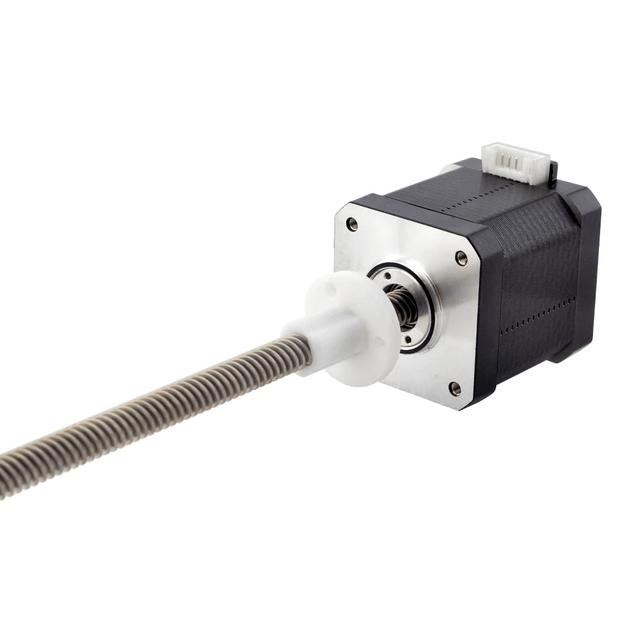
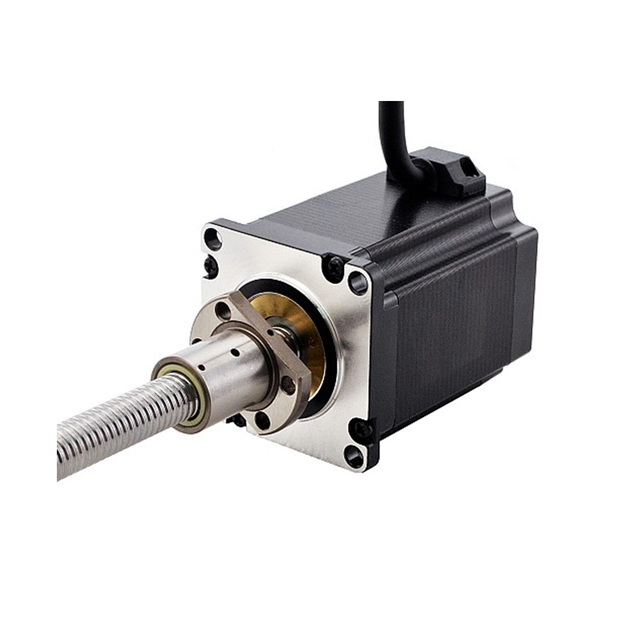
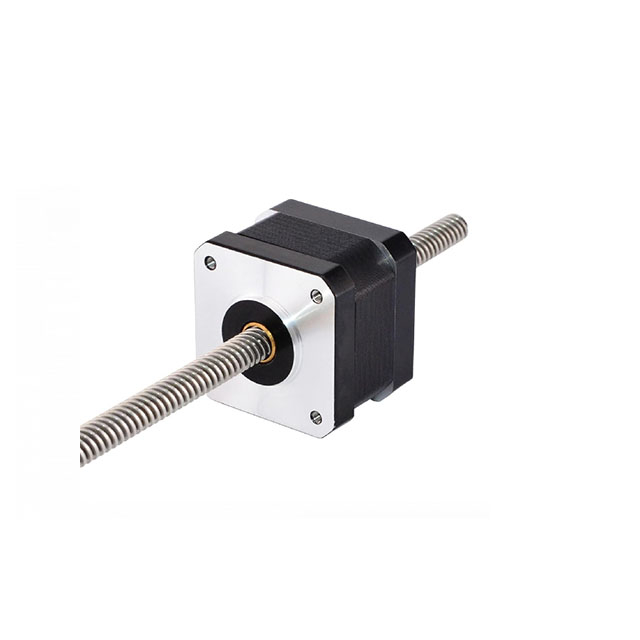
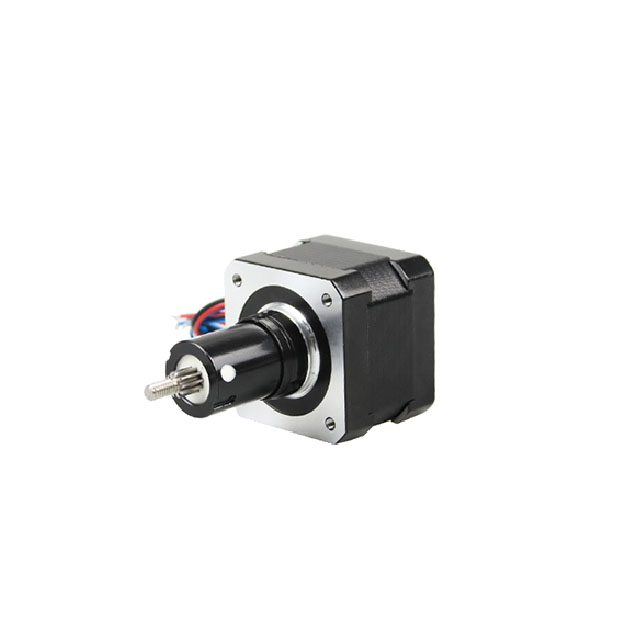
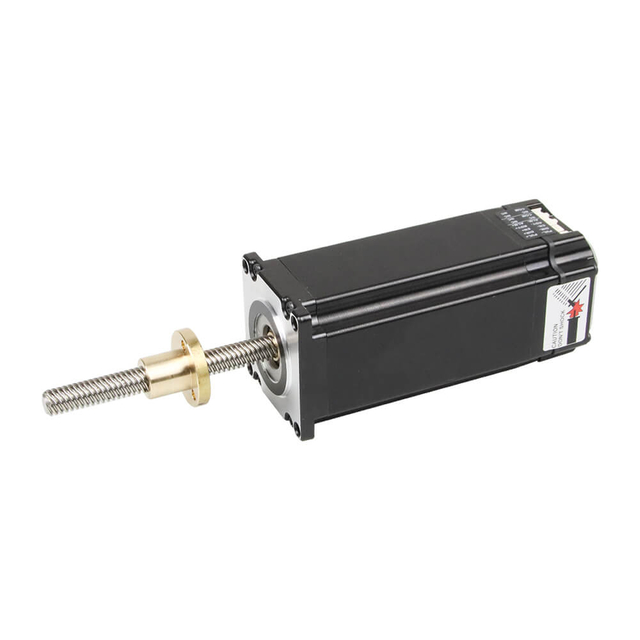
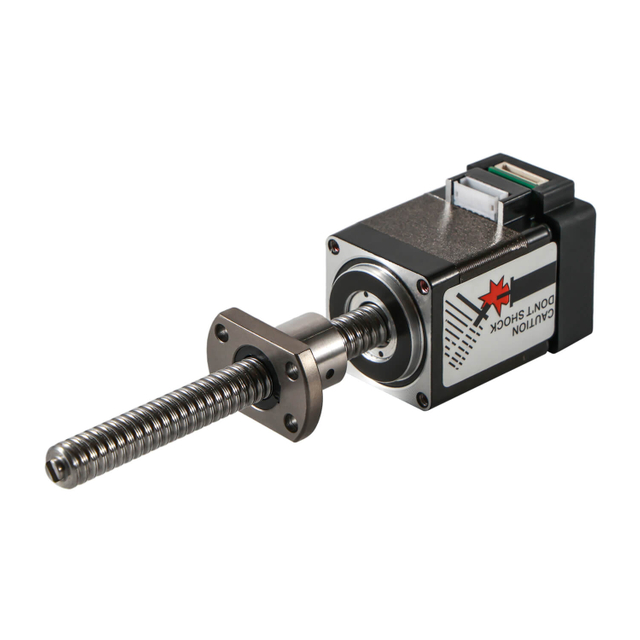
The screw mechanism for linear motion is one of the most important and widely used mechanical systems in modern engineering. It converts rotational motion into precise linear displacement, providing controlled movement for machinery, automation, robotics, CNC equipment, medical devices, aerospace systems, and more. In this article, we explore the underlying principles, types of mechanisms, performance characteristics, and industrial applications in deep detail—allowing you to fully understand how these mechanisms deliver high accuracy, controllability, and mechanical advantage.
Understanding the Fundamentals of Screw-Based Linear Motion Systems
Screw-based linear motion systems are mechanical devices designed to convert rotational motion into controlled linear movement. They are essential components in countless applications where precision, force, and repeatability are required. From manufacturing equipment to medical devices, these systems provide the accuracy and control necessary for modern automation and engineering.
At the heart of every screw-based linear motion system are two primary elements:
A screw shaft with a helical thread
A mating nut that translates along the screw when rotation is applied
When the screw or nut rotates, the helical shape of the thread forces the other component to move in a straight line. This principle—known as helical motion conversion—is what enables screw mechanisms to deliver highly predictable linear displacement.
Why Screw-Based Systems Are So Widely Used
1. High Precision and Accuracy
Screw mechanisms offer excellent positioning accuracy due to their tight geometrical tolerances. This is why they are widely used in CNC machines, 3D printers, and robotic systems that require precise motion control.
2. Strong Mechanical Advantage
Because of the inclined-plane geometry of the threads, screw systems can convert small rotational torque into large linear force. This makes them ideal for lifting, pressing, or clamping loads.
3. Repeatability and Stability
The predictable movement of threaded systems ensures consistent results during repeated cycles. Applications requiring tight tolerance control rely heavily on this stability.
4. Wide Range of Performance Options
Different screw types—lead screws, ball screws, and roller screws—offer customizable levels of:
Efficiency
Load capacity
Speed
Backlash
Wear resistance
This makes screw systems adaptable to everything from light-duty automation to high-load industrial machinery.
The Core Principle: Converting Rotational Motion Into Linear Motion
The key to screw-based systems lies in the thread geometry. When torque is applied:
The screw rotates around its axis.
The nut tracks the helical groove.
The nut moves forward or backward depending on the rotation direction.
This means the linear travel per revolution is defined by the screw's lead (the distance the nut moves with one full turn).
Larger lead → faster travel, less force
Smaller lead → slower travel, more force
This precise relationship allows engineers to fine-tune speed and force based on application requirements.
Types of Screw Mechanisms Used for Linear Motion
Lead Screws
These rely on sliding friction between screw and nut materials. They are:
Ideal for light to medium load precision systems.
Ball Screws
These contain internal ball bearings to reduce friction dramatically.
They offer:
High efficiency
High speed
Long lifespan
Excellent accuracy
Widely used in automation and CNC machinery.
Roller Screws
Using threaded rollers instead of balls, roller screws provide:
Common in aerospace, robotics, and heavy-duty industrial applications.
Key Performance Factors That Define Screw Mechanism Behavior
Efficiency
Determines how much energy is lost to friction.
Backlash
The small clearance between the nut and screw threads affects accuracy.
Precision systems use:
Preloaded nuts
Anti-backlash mechanisms
Load Capacity
Dependent on screw diameter, thread design, and material properties.
Heavier loads often require ball or roller screws.
Speed Limit (Critical Speed)
High rotation speeds can cause vibrations.
Ball screws are generally the fastest choice.
Where Screw-Based Linear Motion Systems Are Used
Because of their precision and reliability, screw mechanisms power a wide range of technologies:
CNC machines and industrial automation
Robotics and pick-and-place systems
Medical and laboratory equipment
Aerospace and defense actuators
Packaging machinery
3D printers and office equipment
Their versatility makes them essential in nearly every engineering field requiring controlled linear movement.
Types of Screw Mechanisms for Linear Motion
There are multiple screw mechanisms, each designed for specific applications and performance demands. Understanding their differences is crucial for selecting the right solution.
1. Lead Screws: Simple and Cost-Effective Precision Motion
Lead screws use a sliding contact between the screw and nut. Their threads are usually trapezoidal (such as ACME threads).
Key Advantages:
Quiet operation
Low maintenance
Self-locking capability
Smooth and stable motion
Best suited for:
Because of their friction-based operation, lead screws typically have lower efficiency (20–40%) but provide natural braking and excellent stability.
2. Ball Screws: High Efficiency and High Precision Performance
Ball screws use ball bearings recirculating inside the nut, significantly reducing friction. This enables up to 95% mechanical efficiency.
Key Advantages:
Typical applications:
Ball screws deliver consistent precision even under heavy loads, making them the preferred choice for advanced motion systems.
3. Roller Screws: Ultra-High Load and Long-Life Solutions
Roller screws use threaded rollers instead of balls, providing incredibly dense contact points.
Performance highlights:
Extremely high load capacity
Superior durability
High stiffness and low backlash
Capable of continuous heavy-duty operation
Used in:
Aerospace actuators
Heavy industrial automation
Military-grade linear actuators
Medical robotic surgery machines
Roller screws outperform ball screws where loads, duty cycles, or lifespan requirements exceed standard industrial norms.
4. Planetary Roller Screws: The Most Advanced Motion Conversion Technology
Planetary roller screws represent the pinnacle of screw-based linear motion, offering unmatched performance for demanding environments.
Benefits include:
Maximum load density
Highest precision of all screw mechanisms
Extremely efficient energy transfer
Exceptional reliability under long duty cycles
These mechanisms are common in electric vehicle actuators, aviation control systems, and high-force robotics.
How Screw Mechanisms Convert Rotary Motion to Linear Motion
Screw mechanisms are widely used in engineering because they efficiently and precisely translate rotational motion into linear displacement. This conversion is made possible by the geometry of the screw thread and the interaction between the screw and the nut. Understanding this process is essential for selecting or designing motion systems used in automation, robotics, CNC equipment, and countless mechanical applications.
The Core Principle: Helical Motion Conversion
At the heart of every screw mechanism is a helical thread, an inclined plane wrapped around a cylindrical shaft. When the screw rotates, the nut follows this helical groove, causing linear movement along the screw's axis.
There are two basic operating modes:
Rotating screw, fixed nut – the nut moves linearly
Rotating nut, fixed screw – the nut still moves linearly
Counter-rotation – used in specialized actuators for doubling travel
No matter the configuration, the helical geometry translates circular motion into a predictable linear path.
Lead and Pitch: The Key Motion Parameters
Two thread characteristics determine how much linear motion is produced:
1. Pitch
The distance between adjacent threads on a screw.
2. Lead
The distance the nut moves along the screw with one full rotation.
For single-start screws, lead = pitch.
For multi-start screws, lead = pitch × number of starts.
A larger lead means:
A smaller lead means:
Slower travel
Greater force generation
Thus, lead defines the motion output per revolution and directly impacts speed and force capability.
Mechanical Advantage: Turning Torque Into Linear Force
Screw mechanisms amplify force because the thread acts like a long, shallow inclined plane. When rotational torque is applied:
The nut resists axial load
The thread angle converts torque into thrust
The nut advances linearly
The system produces a large axial force with relatively small input torque
This mechanical advantage is why screws are used in presses, vises, jacks, and actuators.
Friction and Efficiency in Motion Conversion
Friction plays a major role in how effectively rotary motion becomes linear motion.
Lead screws
Use sliding contact → higher friction → lower efficiency (20–40%).
Pros: self-locking capability, smooth operation.
Ball screws
Use rolling ball bearings → very low friction → high efficiency (up to 95%).
Pros: fast, low heat, high repeatability.
Roller screws
Use threaded rollers → extremely low friction → very high efficiency.
Pros: ultrahigh load capacity and very long life.
The type of screw mechanism drastically affects how smoothly torque translates into linear displacement.
Direction of Motion: Clockwise vs Counterclockwise
Threading direction (right-hand or left-hand) determines the relationship between rotation and movement.
This allows engineers to design assemblies that move in precise directions based on control system requirements.
Relationship Between Rotation Speed and Linear Speed
Linear speed is calculated by:
Linear Speed = Rotational Speed (RPM) × Lead
For example:
A screw with a 5 mm lead rotating at 3000 RPM →
Linear speed = 15,000 mm/min (or 15 m/min)
This predictable relationship allows for tight control in automation and CNC systems.
Backlash and Motion Accuracy
Backlash is the small gap between the nut and screw threads.
It affects:
Positioning precision
Repeatability
Motion smoothness
To improve accuracy, engineers use:
Preloaded nuts
Double nuts
Anti-backlash devices
Precision-ground threads
Minimizing backlash ensures exact linear translation of rotary input.
Dynamic Behavior and Critical Speed
When rotating at high speeds, screws can bend or vibrate due to critical speed limits. Exceeding this limit can cause:
Whipping
Noise
Wear
Accuracy loss
Catastrophic failure
Therefore, the screw diameter, length, end support configuration, and material stiffness determine safe rotational speed for reliable linear motion.
Why Screw Mechanisms Are Ideal for Precision Linear Control
Screw mechanisms provide:
Predictable linear displacement per revolution
High mechanical advantage
Excellent accuracy and repeatability
Smooth, stable motion
Compatibility with servomotors and stepper motors
This makes them essential for applications requiring controlled and precise linear movement.
Performance Factors That Define Screw Mechanism Quality
Choosing the right screw mechanism requires understanding the factors that influence performance.
1. Efficiency
Lead screws: moderate
Ball screws: high
Roller screws: very high
Higher efficiency reduces heat, energy loss, and motor load.
2. Backlash
Backlash (play between nut and screw) affects positioning accuracy.
Solutions include:
Preloaded nuts
Anti-backlash systems
Precision-ground threads
3. Friction and Wear
Low-friction mechanisms (ball & roller screws) offer:
Higher speeds
Increased lifespan
Lower maintenance
Lead screws, while higher friction, benefit from self-locking properties.
4. Load Capacity
Screw mechanisms must withstand:
Axial loads
Dynamic loads
Shock and vibration
Roller screws provide the highest load-bearing capability.
5. Travel Speed
This depends on:
Ball screws typically operate fastest due to reduced friction and heat.
Applications That Rely on Screw-Based Linear Motion
Screw mechanisms drive countless industries, powering systems that demand accuracy and reliability.
Industrial Automation
Robotics, pick-and-place machines, conveyors, and factory automation all rely on screw mechanisms for precise, controlled motion.
CNC Machinery
High-performance ball screws provide the accuracy required for:
Milling machines
Lathes
Laser cutters
Grinding machines
Medical Technology
Lead and roller screws are used in:
Aerospace and Defense
Applications include:
Consumer and Office Equipment
Even everyday systems benefit from screw-based motion:
Why Screw Mechanisms Remain the Gold Standard for Linear Motion
Despite the rise of linear motors and pneumatic systems, screw mechanisms offer unique advantages:
Predictable, accurate positioning
High mechanical advantage
Wide load range
Stable, smooth movement
Compatibility with modern control systems
Their versatility ensures they remain essential across nearly all industries requiring precise linear movement.
Conclusion: The Screw Mechanism Is the Backbone of Precision Linear Motion
The screw mechanism is a foundational technology in modern engineering, enabling reliable, precise, and efficient linear motion across countless applications. From simple lead screws to highly advanced planetary roller screws, these mechanisms provide unmatched controllability and performance. Understanding their types, characteristics, and applications is essential for designing high-efficiency mechanical systems that deliver superior results.

 English
 العربية
 Français
 Русский
 Español
 Português
 Deutsch
 italiano
 日本語
日本語 한국어
한국어 Nederlands
 Tiếng Việt
 ไทย
ไทย Polski
 Türkçe
 ພາສາລາວ
 ភាសាខ្មែរ
 Bahasa Melayu
 ဗမာစာ
ဗမာစာ Filipino
 Bahasa Indonesia
 magyar
 Română
 Čeština
 Монгол
 қазақ
қазақ Српски
 हिन्दी
 فارسی
فارسی Slovenčina
 Slovenščina
 Norsk
Norsk Svenska
 українська
 Ελληνικά
 Suomi
Suomi Հայերեն
 עברית
עברית Latine
 Dansk
Dansk Shqip
Shqip বাংলা
বাংলা Hrvatski
 Afrikaans
 Gaeilge
 Eesti keel
 Oʻzbekcha
 latviešu
 Azərbaycan dili
 Български
 Català