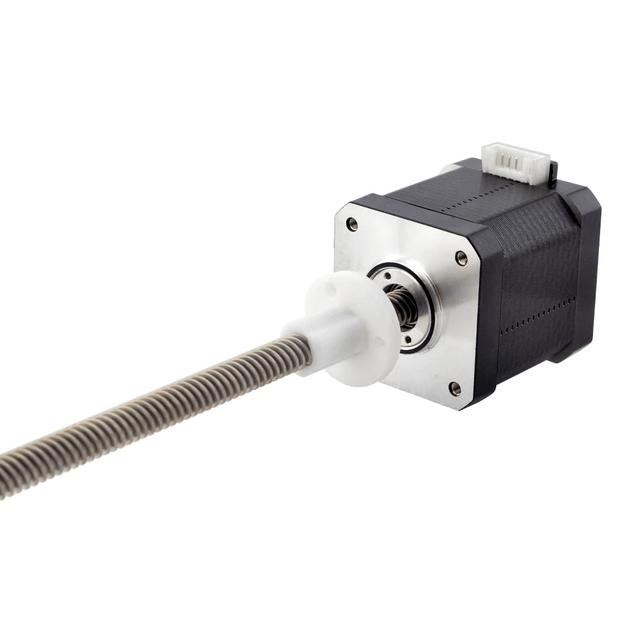
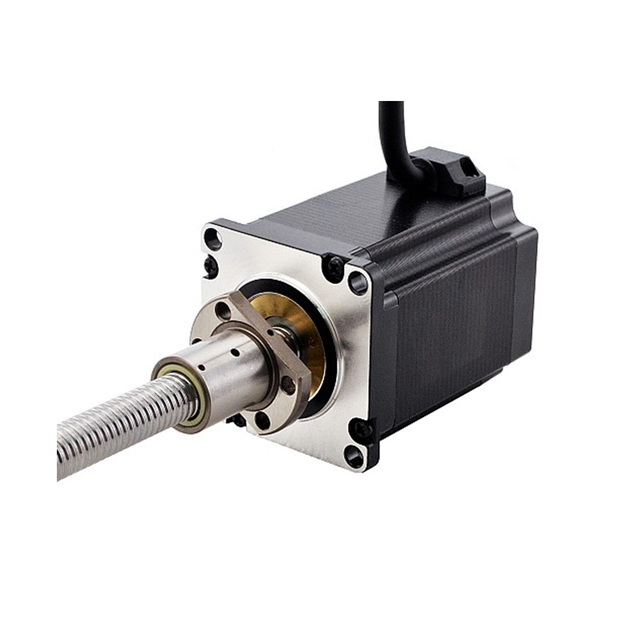
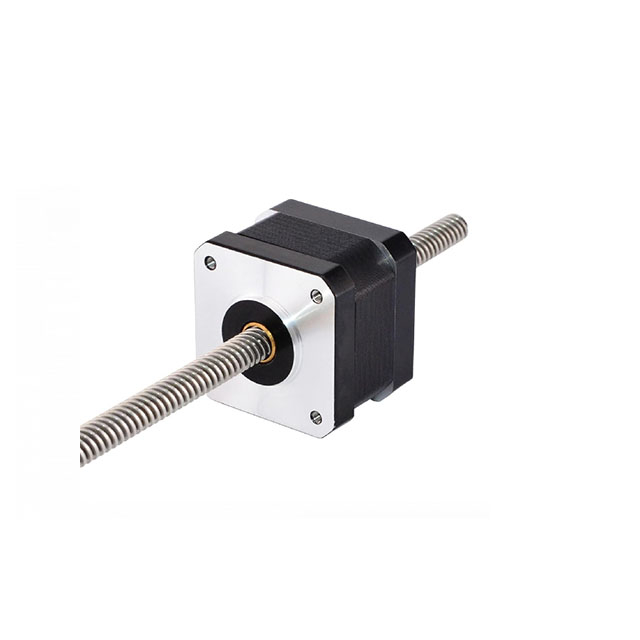
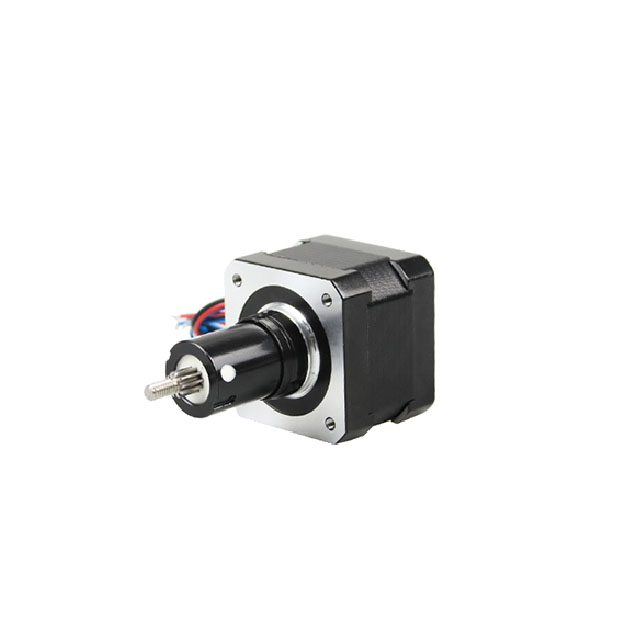
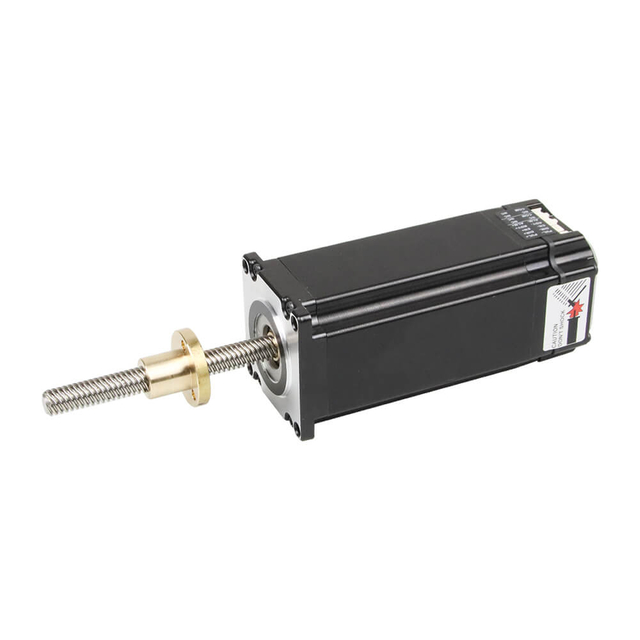
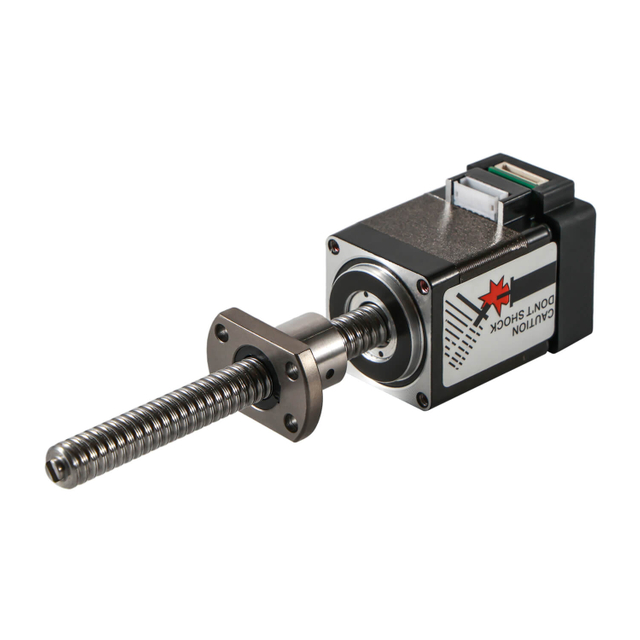
Understanding the linear force of a ball screw is essential for designing high-performance, high-precision motion systems. Ball screws are widely used in CNC machines, automation equipment, robotics, semiconductor manufacturing, and aerospace applications because of their ability to efficiently convert rotary motion into highly accurate linear motion. In this comprehensive guide, we explain what linear force is, how to calculate it, and the critical factors that influence it so you can confidently select or size a ball screw for any application.
Understanding Linear Force in a Ball Screw System
In a ball screw assembly, linear force refers to the amount of usable thrust the mechanism can generate along its axis when converting rotary input into linear motion. This force determines how effectively the system can lift, push, pull, or position a load under real operating conditions. Because ball screws operate through rolling contact between precision-machined grooves and hardened steel balls, they achieve exceptionally high mechanical efficiency—typically between 85% and 95%. This high efficiency enables a relatively small amount of motor torque to produce substantial linear thrust.
Ball screw linear force depends primarily on three core factors: input torque, mechanical efficiency, and the lead of the screw. The relationship between these parameters is expressed through the standard thrust equation:
F = (2 × π × η × T) / L
Where:
A smaller lead provides a higher mechanical advantage, resulting in increased linear force, while a larger lead allows faster travel but reduces available thrust. Additionally, performance variables such as ball screw diameter, preload, lubrication, and support configuration also influence how efficiently torque is transferred into usable linear motion.
Understanding linear force is essential for selecting the right screw size and predicting real-world system behavior. Proper force evaluation ensures adequate rigidity, safe operation under load, and long-term reliability in applications ranging from CNC machinery to industrial automation and robotics.
How Linear Force Is Generated in a Ball Screw
Linear force in a ball screw is produced through the efficient conversion of rotary motion into linear motion using a system of precisely machined grooves and recirculating steel balls. When torque is applied to either the screw shaft or the ball nut, the balls roll between the helical raceways, transmitting motion with minimal friction. This rolling contact is the key to the ball screw’s ability to generate high linear force from relatively low input torque.
As the screw rotates, the balls act as intermediaries between the nut and the shaft, eliminating sliding friction and replacing it with smooth rolling motion. This dramatically reduces energy loss, allowing a high percentage of the applied torque—often more than 90%—to be transformed directly into thrust along the axis of the screw. Because of this, ball screws deliver far greater linear force than other lead-mechanism designs such as acme or trapezoidal screws, which rely on sliding friction and therefore lose much more power to heat and wear.
The amount of linear force produced depends on the screw’s lead, mechanical efficiency, and the torque supplied by the motor or drive system. A lower lead increases mechanical advantage, amplifying the force output, while a higher lead favors speed but reduces thrust. Additionally, preload levels, lubrication quality, and the stiffness of support bearings influence how effectively the screw can translate rotational energy into linear force.
In summary, linear force is generated in a ball screw when the rolling motion of the ball bearings converts the applied torque into axial thrust with exceptional efficiency, enabling precise, powerful, and reliable linear motion for demanding industrial applications.
Formula for Calculating Linear Force of a Ball Screw
To determine the linear force a ball screw can generate, engineers use the standard ball screw thrust equation:
F = (2 × π × η × T) / L
Where:
F = Linear force (N or lb)
η = Ball screw efficiency (0.85–0.95 typically)
T = Input torque (Nm or in-lb)
L = Lead of the screw (mm or inch per revolution)
Why Lead Matters
The lead, or distance the nut moves per revolution, strongly affects linear force.
This tradeoff is fundamental in motion system design.
Real-World Example: Calculating Linear Force
Assume:
Torque: 1.5 Nm
Efficiency: 0.92
Lead: 5 mm
Plugging into the formula:
F = (2 × 3.1416 × 0.92 × 1.5) / 0.005
F ≈ 1733 N
This means a small motor generating only 1.5 Nm of torque can output nearly 1.7 kN of linear force through a high-efficiency ball screw.
Static vs Dynamic Force Ratings
Understanding force output is only one part of ball screw sizing. Engineers must also consider how much force the screw can safely withstand.
Static Load Rating (C₀)
This is the maximum axial load the screw can handle without permanent deformation. Exceeding this causes brinelling, ball damage, and reduced accuracy.
Dynamic Load Rating (C)
This measures how much load the ball screw can handle while operating over its expected life. Higher dynamic ratings mean longer service life under load.
Static capacity tends to be higher than dynamic capacity, but both must be evaluated to ensure system longevity and safety.
Factors That Influence Ball Screw Linear Force
The linear force generated by a ball screw is not determined by torque and lead alone. Several mechanical, geometric, and operational factors directly influence how effectively the screw can convert rotational energy into usable thrust. Understanding these factors is essential for accurate sizing, long-term reliability, and optimal system performance.
1. Screw Diameter
The diameter of the screw shaft plays a major role in load capacity and stiffness.
Larger diameters support higher axial loads and resist deformation under compression or tension.
They also improve buckling resistance, which is critical in long-stroke or vertically loaded applications.
A greater diameter generally enables higher linear force capability and longer fatigue life.
2. Lead (Pitch)
Lead is the distance the nut travels per revolution of the screw.
Smaller leads increase mechanical advantage, resulting in higher linear force for a given torque.
Larger leads support high-speed motion but reduce available thrust.
Selecting the correct lead is a balance between required speed and force output.
3. Mechanical Efficiency
Ball screw efficiency typically ranges from 85% to 95%, depending on quality and design.
Efficiency is influenced by:
Higher efficiency means more of the input torque is converted into linear force.
4. Preload
Preload is applied to eliminate backlash and increase rigidity.
However, preload also:
Increases internal friction
Raises the torque required to move the nut
Reduces effective efficiency
Higher preload classes improve accuracy and stiffness but reduce available thrust.
5. Support Bearing Configuration
End support bearings determine system stiffness and allowable thrust. Common configurations include:
Fixed–Free
Fixed–Supported
Supported–Supported
Fixed–Fixed
Stronger support arrangements increase critical speed, reduce deflection, and improve force transmission.
6. Lubrication Quality
Proper lubrication reduces rolling friction and heat generation.
Poor lubrication can:
Using the correct lubricant and maintaining clean raceways are essential for consistent performance.
7. Operating Speed
At high speeds, ball screws approach their critical speed, where vibration and shaft deflection occur. Operating near this limit can reduce stability and restrict usable force output.
8. Buckling and Column Strength
In compression-loaded applications—especially vertical systems—buckling is a concern.
The maximum linear force must always remain below the calculated buckling load, which depends on:
Screw length
Diameter
End support type
Material properties
Exceeding buckling limits leads to deformation and failure.
9. Ball Screw Material and Precision Grade
Higher-quality materials and tighter tolerances reduce friction and increase stiffness.
Precision-ground ball screws have higher efficiency and load ratings compared to rolled versions.
10. Environmental Conditions
Contaminants such as dust, chips, moisture, or chemicals increase friction and reduce load capacity.
Seals, wipers, or protective bellows are often required to maintain optimal force generation.
How to Increase Linear Force in a Ball Screw System
Increasing the linear force of a ball screw system involves optimizing both the mechanical design of the screw and the performance of the drive system. Because linear force is directly tied to torque, efficiency, and lead, improvements in any of these areas can significantly enhance overall thrust. Below are the most effective strategies for maximizing linear force output in a ball screw-driven mechanism.
1. Reduce the Lead of the Ball Screw
Lead has the strongest influence on force generation.
For applications requiring high force and slower speeds—such as pressing, lifting, or clamping—a smaller lead is often the most efficient solution.
2. Increase the Available Motor Torque
Linear force increases proportionally with torque.
To achieve higher torque:
Use a more powerful motor
Increase the current or voltage within safe operating limits
Switch to a geared motor or add a gearbox to amplify torque
Improve motor cooling to allow higher continuous load
More input torque always results in more linear output force.
3. Use a Larger Diameter Ball Screw
A larger diameter improves:
Load capacity
Stiffness
Resistance to buckling
By minimizing shaft deflection, a larger diameter screw can safely support higher thrust without bending or premature wear.
4. Increase Ball Screw Efficiency
Efficiency determines how much of the applied torque is turned into useful force.
To raise efficiency, consider:
High-precision ground screws
Low-friction ball return systems
Proper preload selection
High-quality lubrication
Reduced contamination in the raceway
Even a small efficiency improvement significantly boosts force output.
5. Optimize Preload Levels
Preload improves stiffness but increases friction.
To increase linear force:
The right preload balance enhances both force performance and lifespan.
6. Upgrade End Support Bearings
The bearing configuration affects force transfer and rigidity.
Higher-performance bearing arrangements—especially fixed–fixed or fixed–supported—provide:
With stronger support, the system can safely produce greater linear force.
7. Improve Lubrication and Contamination Control
Friction significantly reduces usable thrust.
Increasing linear force can be achieved by:
Using proper grease or oil for speed and load conditions
Ensuring consistent lubrication intervals
Preventing dust, chips, or moisture from entering the ball nut
Installing wipers, seals, or bellows for harsh environments
Cleaner, well-lubricated ball screws generate higher force and operate more efficiently.
8. Shorten the Unsupported Length
A shorter screw or better support reduces bending and increases allowable thrust.
This can be achieved by:
Shorter spans enable higher force without risking buckling.
9. Use Stronger Materials or Higher Precision Grades
High-quality materials and tighter machining tolerances reduce friction and deformation under load, enabling:
Precision-ground screws and high-grade nuts typically support greater force.
10. Implement Dual-Nut or High-Preload Systems
Dual-nut setups or higher-preload nuts increase system stiffness and reduce backlash.
This allows the system to withstand and transmit higher forces without deflection or loss of accuracy.
Applications Where High Linear Force Matters Most
High linear force ball screws are critical in:
CNC machine Z-axes
Servo-driven presses
Industrial automation actuators
Injection molding machines
Metal stamping and forming equipment
Semiconductor wafer handling
Precision robotics
Aerospace test benches
Each of these applications demands reliable force, precision, and durability—qualities ball screws are built to deliver.
Final Thoughts
The linear force of a ball screw is one of the most essential parameters when selecting or designing a motion system. By understanding the relationship between torque, efficiency, lead, preload, and mechanical configuration, engineers can optimize performance and ensure maximum reliability. Proper calculation and selection lead to higher efficiency, greater precision, and longer equipment lifespan.

 English
 العربية
 Français
 Русский
 Español
 Português
 Deutsch
 italiano
 日本語
日本語 한국어
한국어 Nederlands
 Tiếng Việt
 ไทย
ไทย Polski
 Türkçe
 ພາສາລາວ
 ភាសាខ្មែរ
 Bahasa Melayu
 ဗမာစာ
ဗမာစာ Filipino
 Bahasa Indonesia
 magyar
 Română
 Čeština
 Монгол
 қазақ
қазақ Српски
 हिन्दी
 فارسی
فارسی Slovenčina
 Slovenščina
 Norsk
Norsk Svenska
 українська
 Ελληνικά
 Suomi
Suomi Հայերեն
 עברית
עברית Latine
 Dansk
Dansk Shqip
Shqip বাংলা
বাংলা Hrvatski
 Afrikaans
 Gaeilge
 Eesti keel
 Oʻzbekcha
 latviešu
 Azərbaycan dili
 Български
 Català