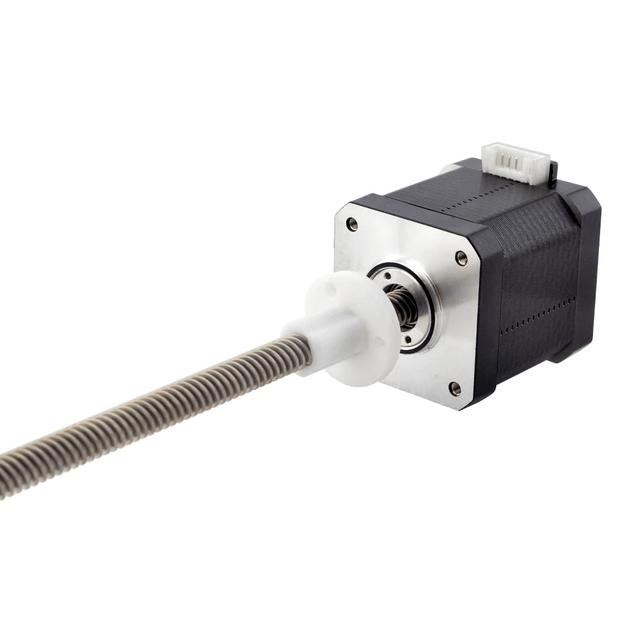
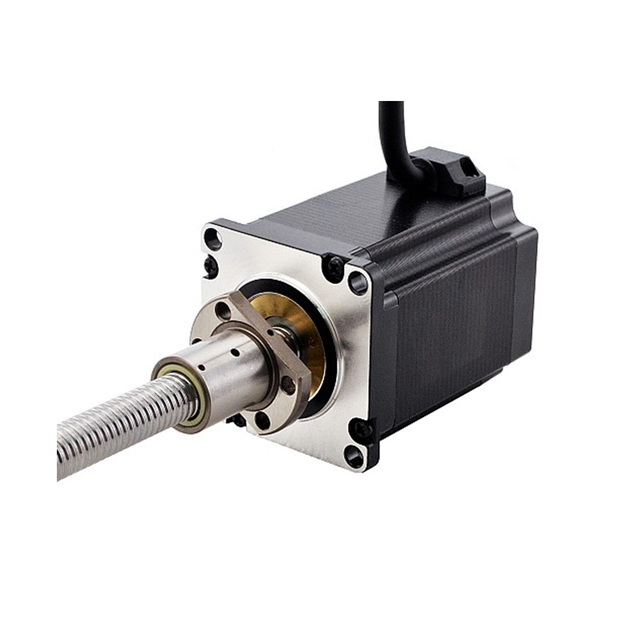
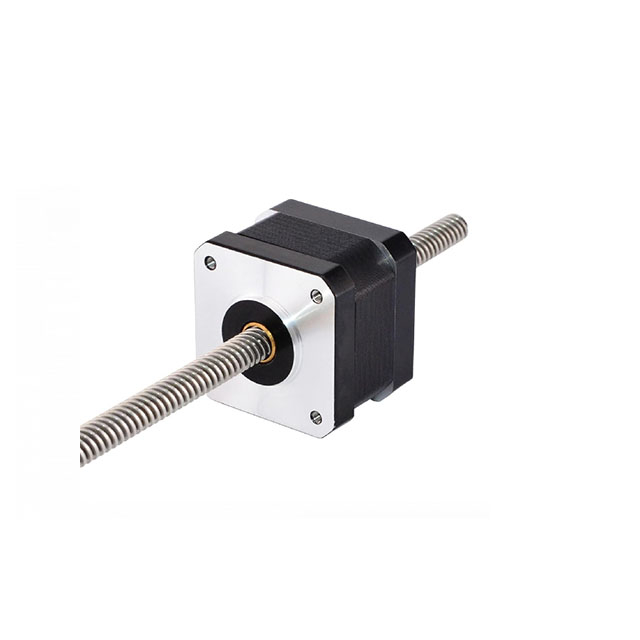
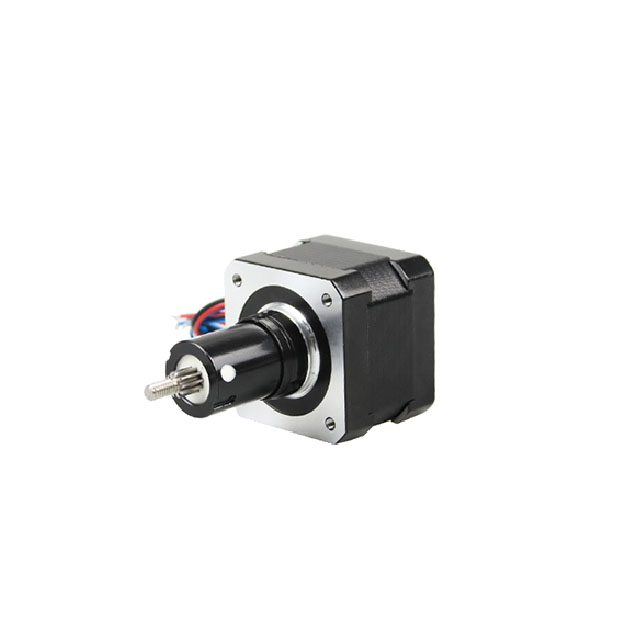
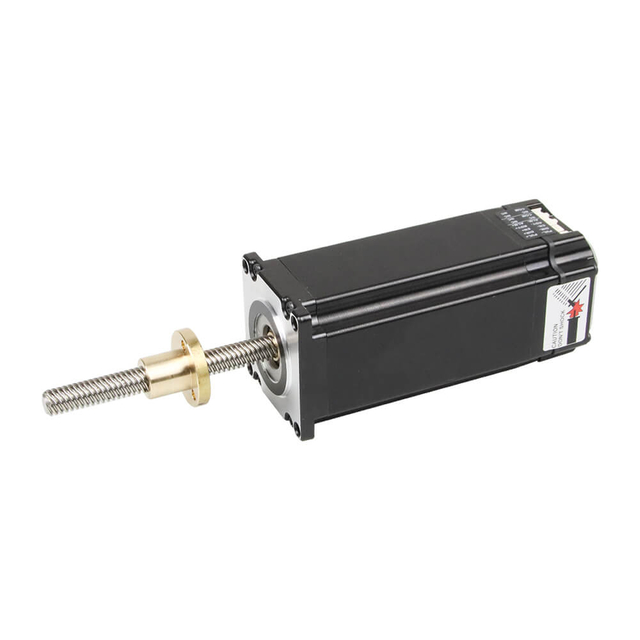
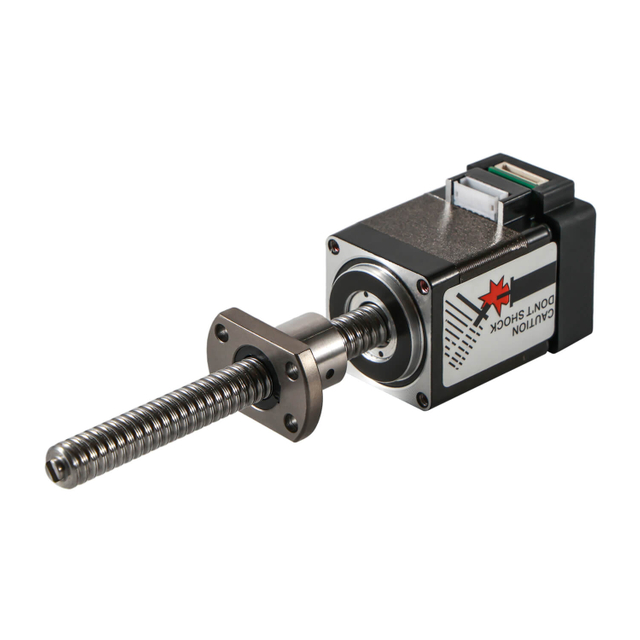
Ball screws are among the most precise and efficient linear motion solutions used in automation, CNC machinery, robotics, aerospace systems, and high-performance industrial equipment. Their standout characteristic is exceptionally high mechanical efficiency, which directly influences speed, accuracy, energy consumption, and overall system performance.
In this comprehensive guide, we explore what ball screw efficiency truly means, how it compares to other mechanical systems, the engineering factors that influence performance, and how to maximize efficiency in real-world applications.
Understanding Ball Screw Efficiency: The Core Principle
Ball screw efficiency refers to how effectively the mechanism converts rotary motion from a motor into usable linear motion. Unlike lead screws, which rely on sliding friction, ball screws use recirculating steel balls that roll between the nut and the screw shaft. This rolling contact drastically reduces friction, allowing a ball screw to achieve remarkably high efficiency levels.
In most applications, a well-designed and properly lubricated ball screw operates at 85% to 98% efficiency. This means that nearly all the input torque is converted into linear force, with very little energy lost as heat. This high efficiency makes ball screws ideal for applications that demand:
At the core, ball screw efficiency is governed by the rolling friction mechanism and the highly polished raceways that allow the steel balls to move with minimal resistance. The ball nut’s recirculation system keeps the balls rotating continuously, ensuring consistent and efficient performance across the entire travel stroke.
Because ball screws lose so little energy during motion, they deliver powerful linear force using smaller motors compared to other linear drive systems. This makes them one of the most efficient and reliable motion solutions in CNC machinery, robotics, semiconductor equipment, aerospace systems, and precision automation.
Why Ball Screws Achieve Such High Mechanical Efficiency
Ball screws are engineered to deliver superior performance because of structural and mechanical advantages that minimize internal friction. Several factors contribute to exceptionally high efficiency:
1. Rolling Contact Mechanism
The defining feature of a ball screw is the use of precision-ground steel balls that roll between the screw shaft and nut. Because rolling friction is significantly lower than sliding friction, the energy losses are minimal.
This difference explains why ball screws can transmit more power and more linear force using smaller motors.
2. Smooth Surface Finishes and Tight Tolerances
Ball screws are manufactured with:
These characteristics reduce micro-friction at all points of contact, further elevating system efficiency.
3. High-Quality Ball Recirculation Systems
Ball nuts feature recirculation channels that allow balls to move continuously without jamming or excessive wear. Modern designs include:
Each of these approaches reduces resistance during motion, contributing to efficiency levels exceeding 90% even under load.
4. Superior Materials and Heat Treatment
Materials used in ball screws typically include:
These materials provide:
All of which support sustained high-efficiency performance.
Efficiency of Ball Screws vs Other Linear Motion Systems
Understanding the efficiency advantage of ball screws becomes clearer when compared with other systems.
Ball Screw Efficiency: 85% – 98%
Lead Screw Efficiency: 20% – 70%
Lead screws rely on sliding friction, which drastically limits efficiency. They are often chosen when:
Rack and Pinion Efficiency: 90% – 96% (but lower accuracy)
Rack and pinion systems may have high efficiency, but:
They produce more backlash
They cannot match ball screw precision
They require more lubrication and maintenance
Belt Drive Efficiency: 95% – 98% (but limited stiffness)
While belt drives can be extremely efficient, they cannot handle:
How to Calculate Ball Screw Efficiency
Calculating ball screw efficiency is essential for determining how much of the motor’s input torque is converted into usable linear thrust. Ball screw efficiency is defined as the ratio between output linear power and input rotational power, taking frictional losses into account.
Because ball screws use rolling elements, their efficiency is high—typically 85% to 98%. Below are the formulas and steps used to calculate efficiency in practical engineering applications.
1. Basic Efficiency Formula
Ball screw efficiency (η) is expressed as:
η = (Linear Output Power) / (Rotational Input Power)
Where:
However, because speed terms cancel out, engineers usually calculate efficiency using thrust, torque, and lead.
2. Efficiency Using Torque, Thrust, and Lead
A more practical formula for efficiency is:
η = (2π × T) / (F × L)
Where:
This equation defines how effectively torque is converted into linear pushing or pulling force.
3. Calculating Required Motor Torque
If you know the desired thrust and ball screw efficiency, torque can be calculated as:
T = (F × L) / (2π × η)
This helps determine whether the chosen motor has sufficient torque to achieve the desired linear force.
4. Calculating Thrust from Torque
If motor torque is known, thrust can be calculated as:
F = (2π × T × η) / L
This is commonly used to estimate how much linear force a ball screw system can generate.
5. Example Calculation
Suppose:
Required torque:
T = (1500 × 0.01) / (2π × 0.92)
T ≈ 2.59 N·m
This means a motor capable of at least 2.6 N·m is required to produce 1500 N of linear force with a 10 mm lead ball screw.
6. Understanding Back-Driving Efficiency
Ball screws can back-drive due to their high efficiency. The back-driving efficiency is typically similar to forward efficiency, but slightly lower due to additional friction under reversed loading.
Back-driving torque can be calculated with:
T_back = (F × L) / (2π × η_back)
Where η_back is usually 2–5% lower than forward efficiency.
7. Factors That Affect Calculated Efficiency
Even if theoretical efficiency is high, real efficiency depends on:
These variables can slightly increase friction, reducing actual efficiency.
Summary
Ball screw efficiency calculations revolve around the relationship between:
With efficiencies typically between 85% and 98%, ball screws provide extremely effective linear motion with minimal power loss.
Factors That Influence Real-World Ball Screw Efficiency
Although ball screws have high theoretical efficiency, several conditions can influence real-world performance.
1. Lubrication Quality
Proper lubrication is essential to maintain low friction. Poor lubrication causes:
Increased wear
Higher friction
Decreased efficiency
Shorter lifespan
Using the correct type and volume of lubricant dramatically increases performance.
2. Load Magnitude and Direction
Ball screws typically maintain efficiency even under substantial load, but:
Excessive axial load
Misalignment
Moment loading
…can all negatively impact efficiency.
3. Screw Lead and Geometry
Ball screws with larger leads (faster travel) often show slightly higher efficiency because the ball circulation path is less restrictive.
4. Speed and Duty Cycle
At high speeds, efficiency may drop slightly due to:
Proper cooling and lubrication strategies minimize these effects.
5. Preload Level
Preloading eliminates backlash, but higher preload increases friction. Typical preload effects:
Light preload: minimal efficiency loss
Medium preload: small efficiency drop
Heavy preload: more significant reduction
Optimizing preload is essential for balancing precision and efficiency.
Advantages of High-Efficiency Ball Screws in Machinery
High efficiency provides several engineering advantages:
Reduced Power Consumption
High efficiency means the drive motor requires less torque, reducing:
Motor size
Energy cost
Heat generation
Higher Speeds and Acceleration
Ball screws offer smooth, near-frictionless operation, supporting:
Precise and Repeatable Motion
High efficiency contributes directly to:
Positioning accuracy
Minimal backlash
Superior rigidity
Longer Service Life
Less friction means less wear, extending:
Nut life
Screw life
Bearing life
Maximizing Ball Screw Efficiency in Your System
Achieving the highest possible efficiency from a ball screw requires optimizing the mechanical design, lubrication strategy, loading conditions, and alignment of the entire linear motion system. Although ball screws inherently offer high efficiency—typically between 85% and 98%—real-world performance can decline if the system is not engineered and maintained correctly. The following practices ensure maximum efficiency, durability, and reliability across a wide range of operating conditions.
1. Maintain Proper Lubrication at All Times
Lubrication is the single most important factor affecting ball screw efficiency. Without a stable lubrication film, friction increases sharply, decreasing performance and accelerating wear.
Best practices:
Use the manufacturer-recommended grease or oil.
Choose lubrication based on speed, load intensity, and operating environment.
Reapply lubrication at regular intervals, especially in high-duty or high-speed applications.
Ensure the lubricant spreads uniformly across the raceways and balls.
Proper lubrication reduces rolling resistance, minimizes heat generation, and preserves the smooth motion required for high efficiency.
2. Eliminate Misalignment and Side Loading
Ball screws are designed to support pure axial loads. Any radial or moment loads introduce unwanted friction and drastically reduce efficiency.
To prevent misalignment:
Use precision linear guides to carry side loads.
Ensure the screw and nut are perfectly aligned during installation.
Validate alignment after thermal expansion or structural changes.
Keep mounting surfaces clean, flat, and rigid.
Even small misalignments can cause micro-binding, which leads to energy loss and early failure.
3. Optimize Preload for Accuracy Without Excessive Friction
Preload eliminates backlash and enhances rigidity, but too much preload increases friction inside the ball nut.
Guidelines for preload selection:
Light preload → minimal efficiency loss; ideal for general automation.
Medium preload → slight efficiency reduction; suitable for CNC accuracy.
Heavy preload → noticeable efficiency drop; used only when high rigidity is essential.
Choose the lowest preload that still meets accuracy requirements to balance performance and efficiency.
4. Choose the Appropriate Lead for the Application
Ball screw lead (distance traveled per screw revolution) affects efficiency and power transmission.
General lead guidelines:
High lead screws
Faster travel
Lower friction
Higher efficiency
Low lead screws
Selecting the correct lead ensures the best compromise between speed, force, and energy use.
5. Control Operating Temperature
Temperature rise inside the ball nut increases friction, reduces lubrication viscosity, and accelerates wear.
Temperature management tips:
Use proper lubrication intervals to reduce heat.
Avoid continuous operation near maximum speed limits.
Add cooling systems for high-speed or heavy-duty machines.
Monitor temperature changes during long duty cycles.
Keeping temperature stable helps maintain consistent efficiency.
6. Prevent Contamination and Wear
Dust, chips, moisture, and chemical contaminants can obstruct ball recirculation, increasing drag and friction.
Preventive measures:
Install bellows or protective covers.
Use seals or wipers integrated into the ball nut.
Regularly clean exposed areas of the screw.
Replace seals before they deteriorate.
A clean operating environment ensures smooth ball movement and high efficiency.
7. Use Rigid Support Bearings and Proper Mounting
Rigid and correctly mounted support bearings reduce unwanted vibration, misalignment, and mechanical resistance.
Important considerations:
Select matched angular contact bearings for screw support.
Preload thrust bearings according to manufacturer guidance.
Maintain proper end-bearing alignment to minimize drag.
Avoid over-tightening mounts, which can warp the screw.
A stable support system provides consistent, low-friction operation.
8. Conduct Periodic Maintenance and Efficiency Tracking
Regular inspection helps detect early signs of reduced efficiency before they cause system downtime.
Maintenance routine:
Check lubrication condition and replenish as needed.
Inspect ball nut smoothness by manually turning the screw.
Measure torque changes—higher torque indicates rising friction.
Monitor repeatability and backlash to detect wear.
Proactive maintenance extends screw life and ensures optimal efficiency.
Summary
Maximizing ball screw efficiency requires attention to lubrication, alignment, preload, temperature, cleanliness, and support system rigidity. By optimizing these factors, you ensure:
Conclusion: Ball Screws Deliver Superior Efficiency and Precision
Ball screws offer some of the highest mechanical efficiency of any linear motion system, typically ranging from 85% to 98% depending on design, preload, lubrication, and operating conditions. Their low friction, precise motion, and long lifespan make them indispensable in industries that demand accuracy, speed, and reliability.
Engineers choosing a ball screw system benefit from:
With proper selection, installation, and maintenance, Ball screws deliver world-class performance across a broad range of applications.

 English
 العربية
 Français
 Русский
 Español
 Português
 Deutsch
 italiano
 日本語
日本語 한국어
한국어 Nederlands
 Tiếng Việt
 ไทย
ไทย Polski
 Türkçe
 ພາສາລາວ
 ភាសាខ្មែរ
 Bahasa Melayu
 ဗမာစာ
ဗမာစာ Filipino
 Bahasa Indonesia
 magyar
 Română
 Čeština
 Монгол
 қазақ
қазақ Српски
 हिन्दी
 فارسی
فارسی Slovenčina
 Slovenščina
 Norsk
Norsk Svenska
 українська
 Ελληνικά
 Suomi
Suomi Հայերեն
 עברית
עברית Latine
 Dansk
Dansk Shqip
Shqip বাংলা
বাংলা Hrvatski
 Afrikaans
 Gaeilge
 Eesti keel
 Oʻzbekcha
 latviešu
 Azərbaycan dili
 Български
 Català