Modern robotic arms require a combination of high torque, precise positioning, compact dimensions, energy efficiency, and long service life. Whether used in industrial automation, collaborative robots, medical equipment, laboratory systems, or autonomous service robots, the motor selected for each joint directly affects overall performance.
Among various motion solutions, Geared Brushless DC Motors (Geared BLDC Motors) have become one of the most widely adopted choices because they combine the efficiency of a brushless motor with the torque multiplication of a precision gearbox.
This guide explains how engineers and purchasing professionals can select the right geared BLDC motor for robotic arm applications while highlighting the key technical specifications that influence performance, reliability, and system integration.
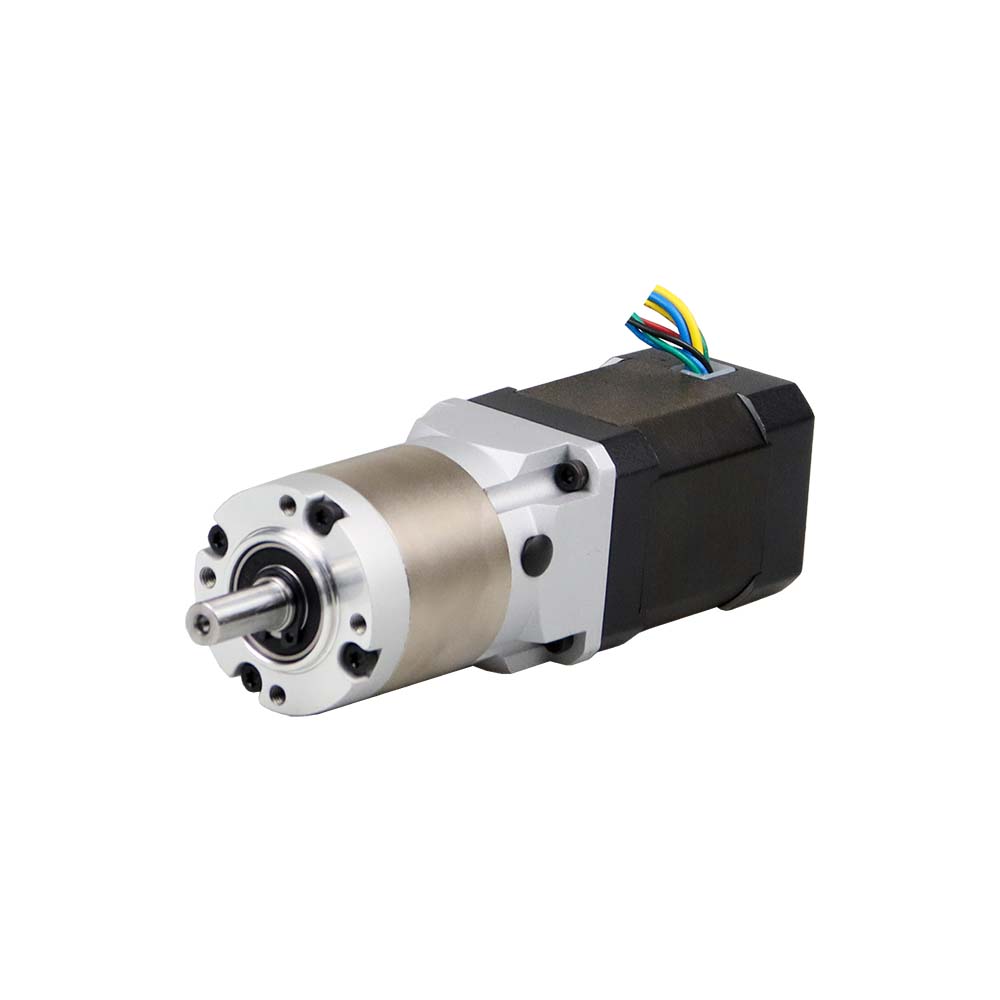
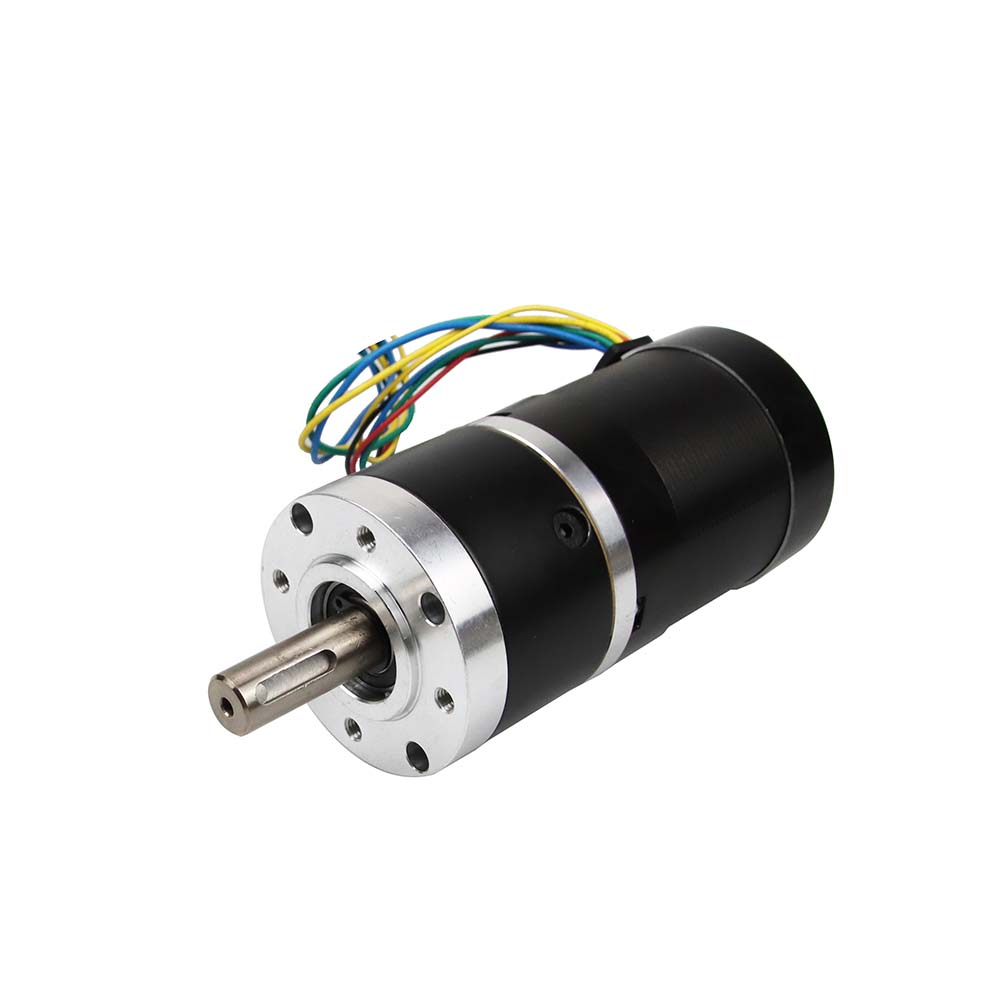
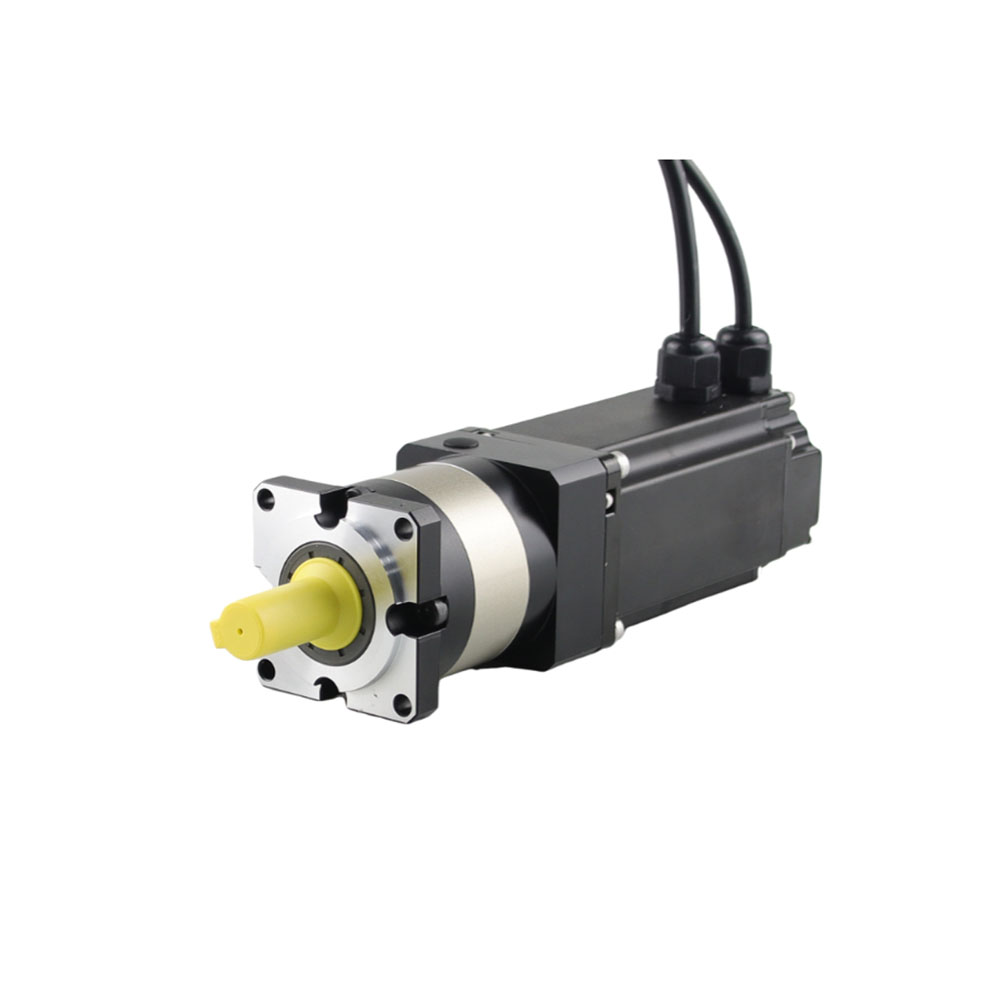
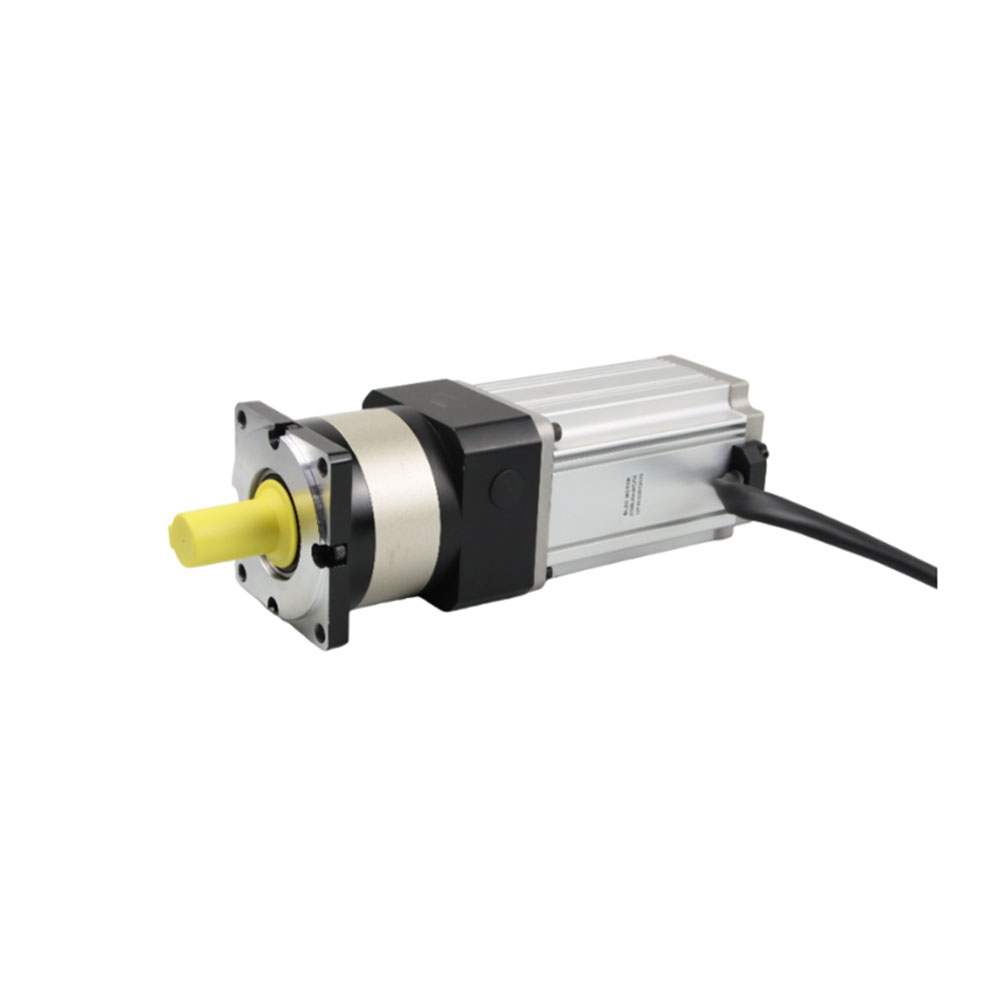
A Geared BLDC Motor integrates a brushless motor with a gearbox, enabling the system to deliver significantly higher torque while maintaining excellent efficiency and controllability.
Compared with traditional brushed motors, geared BLDC motors offer:
Feature
Geared BLDC Motor
Brushed DC Motor
Efficiency
High
Moderate
Maintenance
Minimal
Frequent
Service Life
Long
Shorter
Noise
Low
Higher
Position Control
Excellent
Limited
Reliability
High
Moderate
These advantages make geared BLDC motors particularly suitable for robotic arm joints that must perform thousands of repetitive movements every day.
Torque is the most critical parameter when selecting a motor for a robotic arm.
The required torque depends on:
Payload weight
Arm length
Joint position
Acceleration profile
Motion trajectory
Safety factor
Different joints have different torque requirements.
Base Joint
The base joint supports the entire robotic structure and usually requires the highest torque.
Shoulder Joint
The shoulder often experiences significant dynamic loads and requires strong torque output.
Elbow Joint
The elbow balances torque and speed requirements.
Wrist Joint
The wrist typically prioritizes precision, responsiveness, and compact size over maximum torque.
Engineers generally include a safety margin of 30%–50% above calculated continuous torque requirements to ensure reliable operation.
Step 2: Match Motor Speed to Application Requirements
Robotic arm applications vary significantly in their speed requirements.
High-Speed Applications
Examples include:
Pick-and-place robots
Packaging automation
Sorting systems
These applications require rapid acceleration and high output speeds.
Precision Applications
Examples include:
Medical robotics
Semiconductor equipment
Laboratory automation
These systems prioritize positioning accuracy and motion stability over maximum speed.
The motor and gearbox combination must provide the appropriate balance between speed and torque.
Step 3: Select the Appropriate Gear Reduction Ratio
The gearbox determines how motor speed is converted into usable output torque.
Common gear ratios include:
3:1
5:1
10:1
20:1
30:1
50:1
100:1
Lower Gear Ratios
Benefits:
Higher speed
Faster response
Better for lightweight robotic arms
Higher Gear Ratios
Benefits:
Higher torque output
Improved load capacity
Enhanced positioning control
For robotic arm joints, selecting the correct reduction ratio is often more important than simply choosing a larger motor.
Step 4: Choose the Right Gearbox Type
The gearbox plays a critical role in determining a robotic arm's torque, precision, efficiency, and overall performance. Selecting the appropriate gearbox type helps ensure smooth motion and reliable operation.
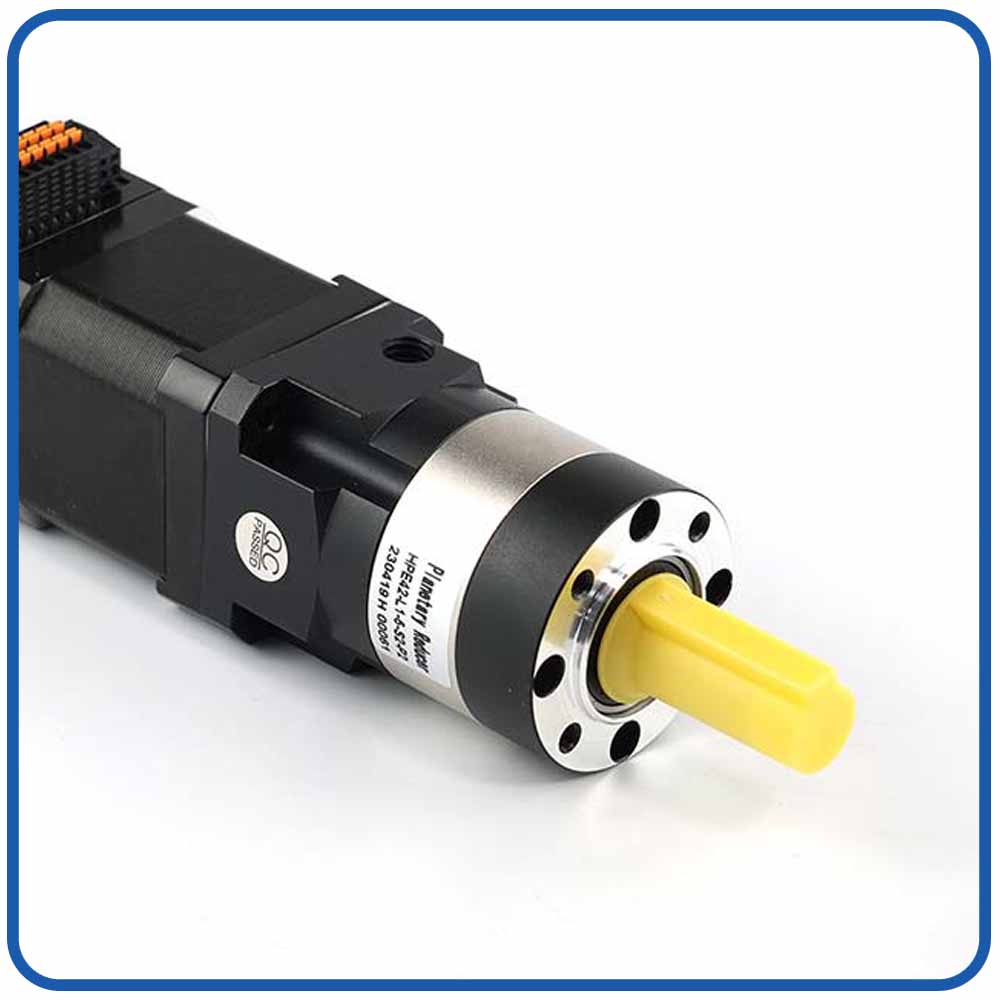
Planetary Gearboxes
Planetary gearboxes are widely used in robotic arms due to their compact design and high torque capacity.
Advantages:
High torque density
Compact size
High efficiency
Low backlash options
Long service life
Suitable for:
Industrial robots
Collaborative robots
Automated equipment
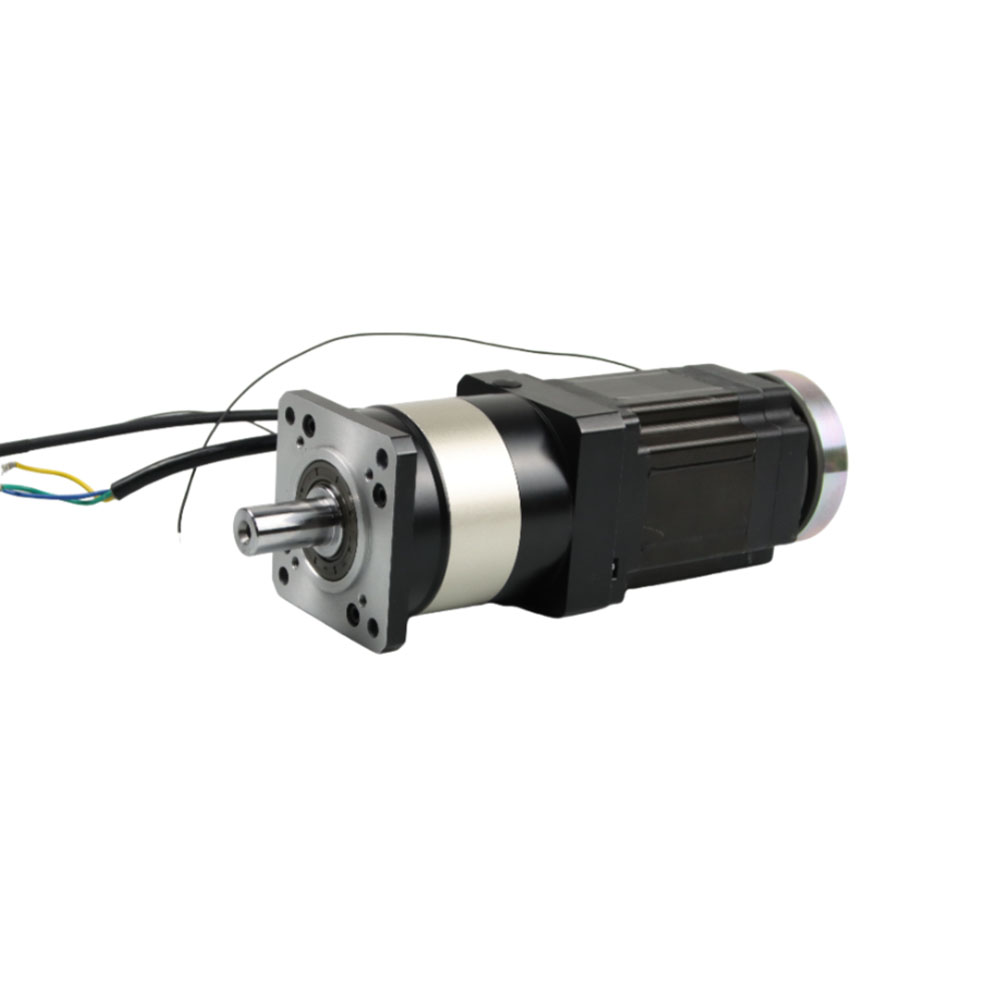
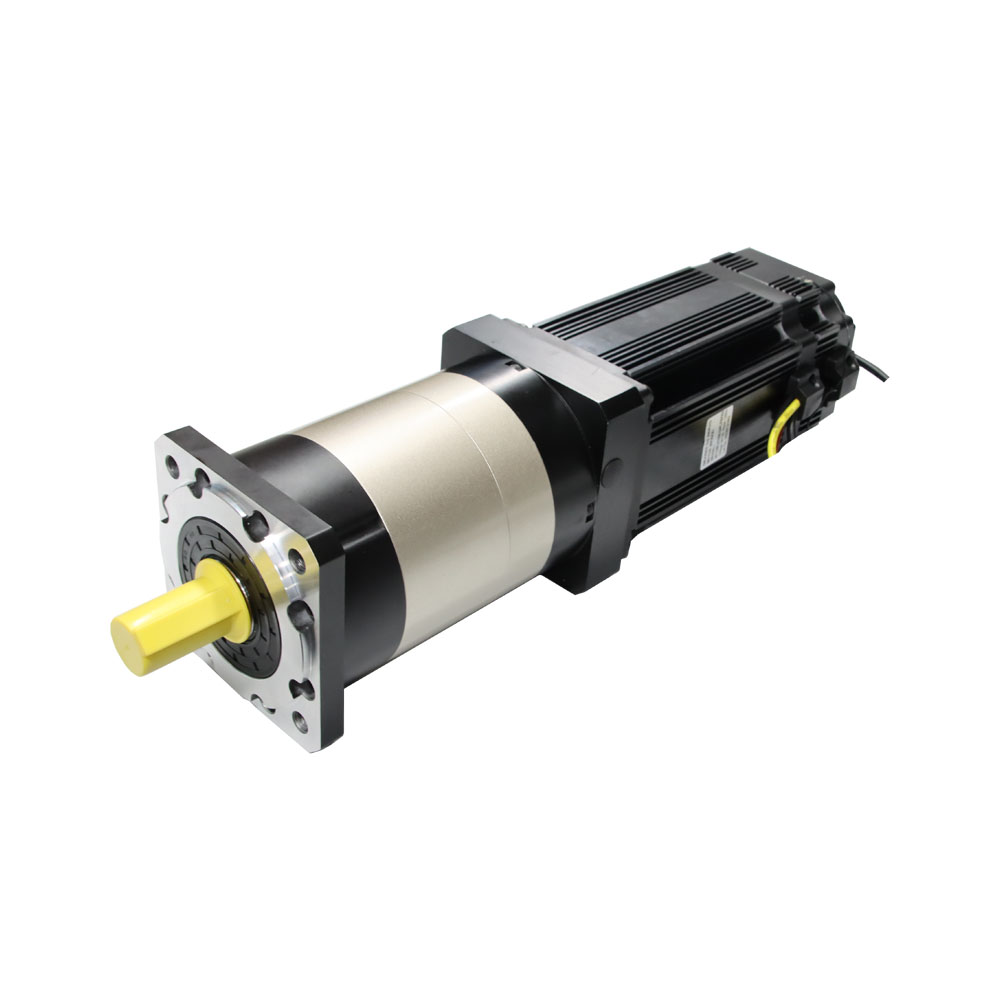
Many geared BLDC motors, including solutions offered by BesFoc, can be paired with planetary gearboxes to provide a balance of torque, precision, and durability for robotic joint applications.
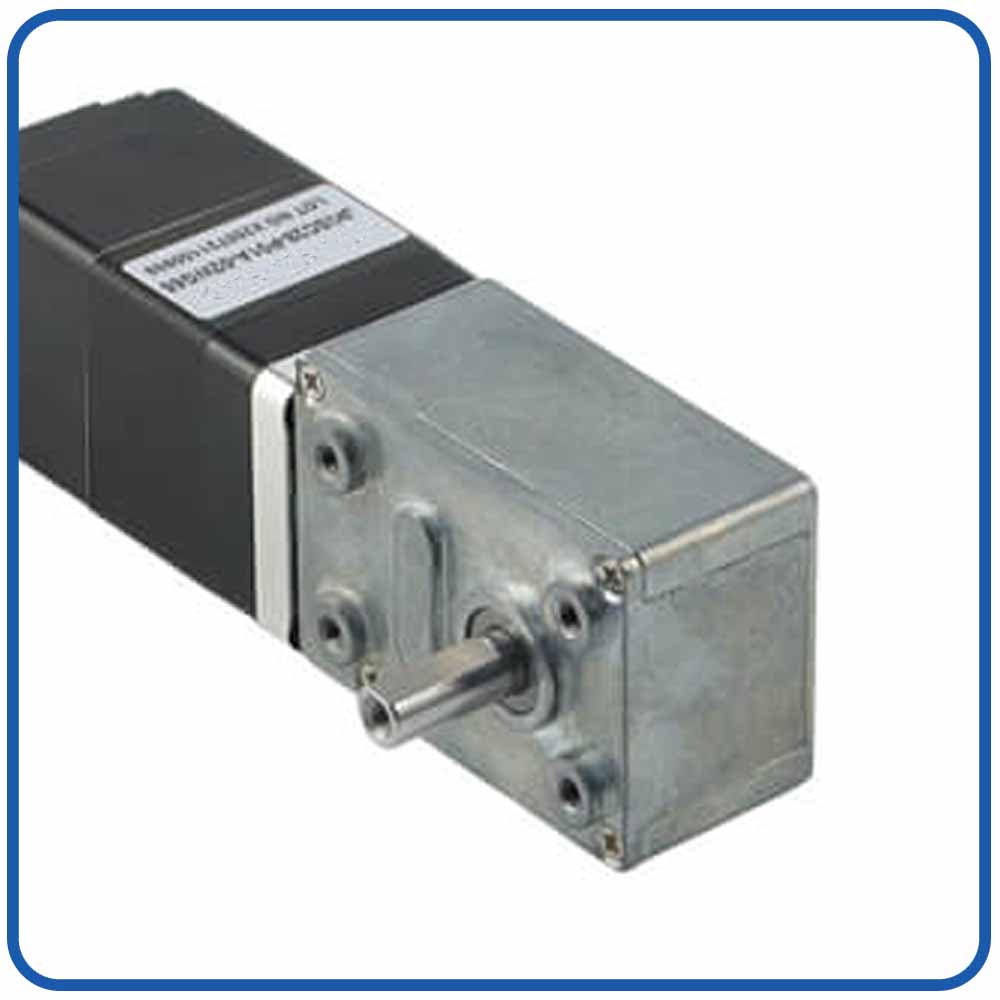
Spur Gearboxes
Spur gearboxes feature a simple and cost-effective design.
Advantages:
Economical
Easy to maintain
Suitable for light-duty applications
Suitable for:
Educational robots
Service robots
Basic automation systems
Harmonic Gearboxes
Harmonic gearboxes are designed for applications requiring extremely high positioning accuracy.
Advantages:
Very low backlash
High precision
Compact structure
Suitable for:
Medical robots
Precision automation
High-end robotic arms
The gearbox type should be selected according to the robotic arm's required torque, speed, accuracy, and budget. For most industrial and collaborative robotic applications, planetary geared BLDC motors offer an excellent combination of performance and reliability.
Step 5: Consider Backlash Requirements
Backlash directly influences robotic arm positioning accuracy.
Excessive backlash can cause:
Positioning errors
Reduced repeatability
Motion instability
Lower assembly precision
Recommended backlash values:
Application
Recommended Backlash
General Automation
<20 arcmin
Industrial Robotics
<15 arcmin
Collaborative Robots
<10 arcmin
Precision Robotics
<5 arcmin
For robotic joints that require smooth and accurate movement, low-backlash planetary gearboxes are often preferred.
Step 6: Evaluate Encoder and Feedback Requirements
Accurate feedback is essential for robotic arms that require precise positioning, smooth motion, and reliable repeatability. Encoders provide real-time information about motor position and speed, enabling closed-loop control and speed, enabling closed-loop control.
Common Encoder Options
Hall Sensors – Basic speed and commutation feedback.
Incremental Encoders – Suitable for precise position and speed control.
Magnetic Encoders – Compact, durable, and resistant to dust and vibration.
Absolute Encoders – Provide exact position information even after power loss.
Why Encoder Feedback Matters
Encoder-equipped geared BLDC motors help improve:
Positioning accuracy
Motion stability
Repeatability
Speed regulation
Multi-axis synchronization
These benefits are especially important in robotic arms used for assembly, inspection, medical devices, and collaborative robotics.
Choosing the Right Feedback Solution
The required encoder type depends on the application's precision requirements. Basic handling tasks may only need simple feedback, while high-precision robotic joints often require high-resolution encoders for accurate motion control.
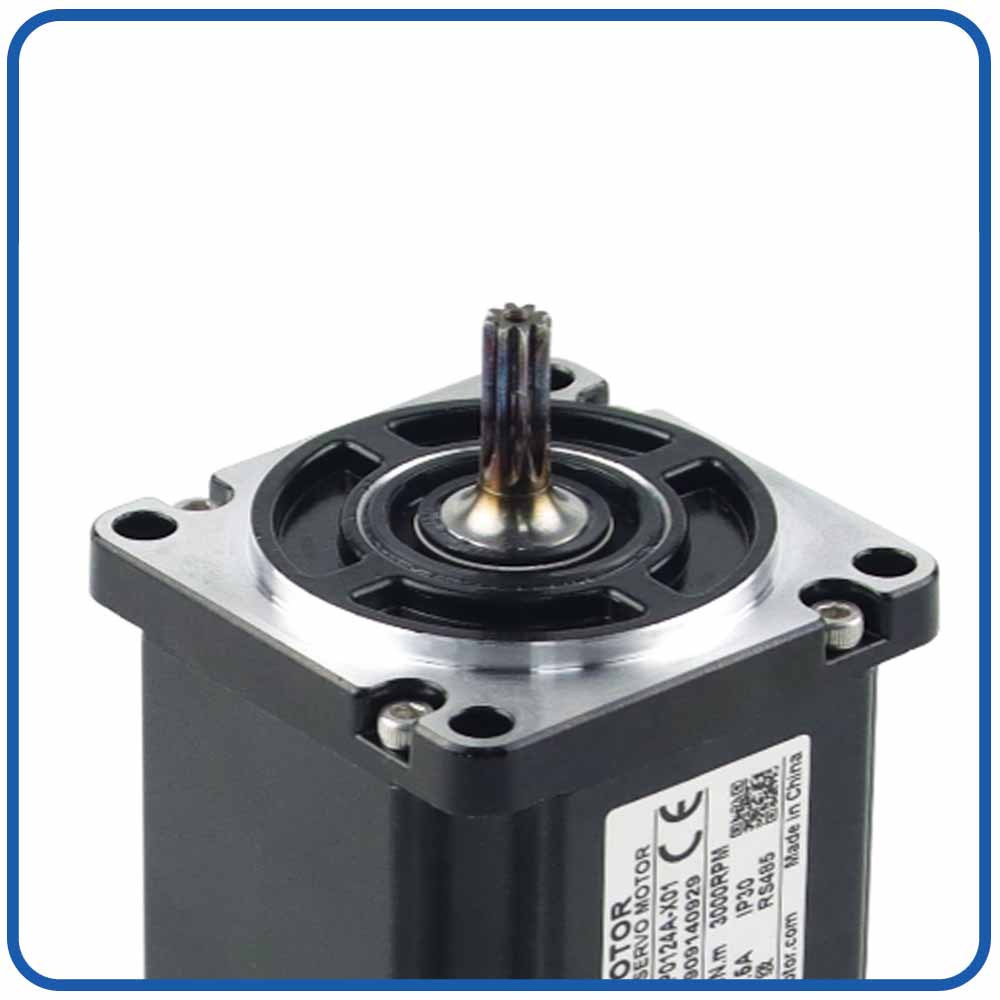
Many BesFoc geared BLDC motors support encoder integration, allowing robotic system designers to achieve the level of control and positioning performance required for different robotic arm applications.
Step 7: Prioritize Efficiency and Energy Consumption
Efficiency affects both operational costs and thermal performance.
High-efficiency geared BLDC motors provide:
Lower energy consumption
Reduced heat generation
Longer operating life
Improved battery performance in mobile robots
This is particularly important for:
Autonomous mobile robots
Service robots
Collaborative robots
Continuous-production systems
Step 8: Evaluate Thermal Performance
Robotic arms often operate continuously in demanding environments.
Motor overheating can lead to:
Reduced efficiency
Premature component wear
Unexpected downtime
Important considerations include:
Continuous current rating
Peak current rating
Ambient operating temperature
Cooling capability
A properly sized motor should maintain stable performance under maximum expected operating conditions.
Step 9: Consider Space and Weight Constraints
Robotic arm design increasingly focuses on reducing overall system weight.
Benefits of compact motor designs include:
Faster acceleration
Reduced inertia
Lower energy consumption
Improved dynamic performance
This is particularly important for:
Collaborative robots
Service robots
Medical robotic systems
Multi-axis robotic arms
What Features Should You Look for in a Geared BLDC Motor Supplier?
When selecting a geared BLDC motor, it is important to evaluate not only the motor specifications but also the available customization options.
For robotic arm projects, manufacturers that offer a wide range of motor and gearbox configurations can simplify system development.
Typical options may include:
Multiple frame sizes
Planetary gearbox configurations
Spur gearbox options
Various gear reduction ratios
Integrated encoder solutions
Custom shaft designs
Voltage customization
Application-specific winding designs
For example, manufacturers such as BesFoc provide geared brushless DC motor solutions covering multiple motor diameters, gearbox configurations, and reduction ratios. These options allow engineers to match motor performance to the specific torque, speed, and space requirements of robotic arm joints without significantly increasing system complexity.
Rather than selecting a one-size-fits-all motor, many robotics developers benefit from choosing configurable geared BLDC platforms that can be optimized for different axes within the same robotic arm.
How BesFoc Geared BLDC Motors Can Support Robotic Arm Applications
When evaluating geared BLDC motors for robotic systems, engineers typically focus on four key requirements:
High torque output
Compact dimensions
Precise motion control
Long-term reliability
BesFoc's geared brushless DC motor portfolio addresses these requirements through:
Compact motor designs suitable for space-constrained robotic joints
Multiple planetary gearbox options for torque optimization
Various reduction ratios to match speed and load requirements
Low-noise operation for collaborative and service robots
Long-life brushless motor technology
Encoder compatibility for closed-loop positioning applications
Customizable electrical and mechanical configurations
These characteristics make geared BLDC motors suitable for robotic applications such as:
Industrial robotic arms
Collaborative robots (Cobots)
Medical automation systems
Laboratory robotics
Inspection robots
Educational robotics platforms
Service and delivery robots
The exact motor selection should always be based on application-specific calculations involving torque, speed, duty cycle, and positioning requirements.
Common Robotic Arm Applications for Geared BLDC Motors
Industrial Automation
Assembly robots
Welding robots
Packaging equipment
Material handling systems
Collaborative Robotics
Human-machine collaboration
Flexible manufacturing cells
Medical Equipment
Surgical assistance systems
Rehabilitation robots
Diagnostic automation devices
Laboratory Automation
Sample handling robots
Precision dispensing systems
Service Robotics
Delivery robots
Hospitality robots
Retail automation systems
Geared BLDC Motor Selection Checklist
Before finalizing a motor choice, verify the following:
✔ Required continuous torque
✔ Peak torque requirements
✔ Output speed requirements
✔ Gearbox reduction ratio
✔ Gearbox type
✔ Backlash specification
✔ Encoder resolution
✔ Motor efficiency
✔ Thermal performance
✔ Duty cycle compatibility
✔ Installation space limitations
✔ Weight constraints
✔ Communication and control requirements
✔ Reliability expectations
✔ Environmental operating conditions
Conclusion
Choosing the right Geared BLDC Motor for a robotic arm requires a careful evaluation of torque, speed, gearbox ratio, backlash, positioning accuracy, efficiency, thermal performance, and mechanical integration. A well-matched motor and gearbox combination can significantly improve robotic arm precision, productivity, and long-term reliability.
For engineers developing industrial, collaborative, medical, or service robots, configurable solutions such as planetary geared BLDC motors with encoder feedback and multiple reduction ratios provide the flexibility needed to optimize each robotic joint. Manufacturers like BesFoc offer a broad range of geared brushless DC motor options that can be adapted to different robotic arm architectures, helping designers achieve the desired balance of torque, speed, compactness, and precision without unnecessary complexity.
By selecting a geared BLDC motor based on actual application requirements rather than simply maximizing power ratings, robotic arm systems can achieve smoother motion, greater accuracy, improved energy efficiency, and a longer operational lifespan.
FAQs:
1. What is a geared BLDC motor, and why is it used in robotic arms?
BesFoc Answer: A geared BLDC motor combines a brushless DC motor with a gearbox to deliver higher torque at lower speeds. In robotic arms, this combination provides smooth motion, precise control, compact size, and long service life, making it ideal for joint actuation and positioning tasks.
2. How do I determine the required torque for a robotic arm joint?
BesFoc Answer: The required torque depends on factors such as payload weight, arm length, joint location, acceleration, and operating conditions. Engineers should calculate both continuous and peak torque requirements and include an appropriate safety margin to ensure reliable operation.
3. What gearbox ratio is best for robotic arm applications?
BesFoc Answer: The ideal gear ratio depends on the desired balance between speed and torque. Lower ratios provide faster movement, while higher ratios increase torque and load-handling capability. BesFoc offers multiple gearbox ratios to help match motor performance to specific robotic arm requirements.
4. Why is low backlash important in robotic arms?
BesFoc Answer: Low backlash minimizes lost motion between gear teeth, improving positioning accuracy and repeatability. This is especially important in robotic applications such as assembly, inspection, and precision handling, where accurate movement directly affects performance.
5. What type of gearbox is commonly used with robotic arm motors?
BesFoc Answer: Planetary gearboxes are among the most common choices because they offer high torque density, compact dimensions, high efficiency, and low backlash. They are well-suited for industrial robots, collaborative robots, and automated equipment.
6. How important is encoder feedback in robotic arm systems?
BesFoc Answer: Encoder feedback is essential for closed-loop motion control. It enables accurate positioning, speed regulation, and repeatable movement. Depending on application requirements, BesFoc geared BLDC motors can support various encoder options for enhanced control performance.
7. What voltage options are typically available for geared BLDC motors?
BesFoc Answer: Geared BLDC motors are commonly available in multiple voltage ratings, including 12V, 24V, 36V, and 48V configurations. The appropriate voltage depends on the robotic system's power architecture and performance requirements.
8. How does motor efficiency affect robotic arm performance?
BesFoc Answer: Higher motor efficiency reduces energy consumption and heat generation while improving overall system reliability. This is particularly important for robotic arms that operate continuously or are powered by batteries in mobile robotic platforms.
9. Can geared BLDC motors be customized for different robotic arm designs?
BesFoc Answer: Yes. BesFoc provides various motor sizes, gearbox configurations, reduction ratios, encoder options, and mechanical customizations. These options allow engineers to optimize performance for different robotic arm joints and application requirements.
10. What should be considered when selecting a geared BLDC motor supplier?
BesFoc Answer: Key considerations include product quality, gearbox options, customization capabilities, technical support, production consistency, and long-term reliability. A supplier with extensive motor and gearbox configurations can simplify robotic system development and integration.

 English
 العربية
 Français
 Русский
 Español
 Português
 Deutsch
 italiano
 日本語
日本語 한국어
한국어 Nederlands
 Tiếng Việt
 ไทย
ไทย Polski
 Türkçe
 ພາສາລາວ
 ភាសាខ្មែរ
 Bahasa Melayu
 ဗမာစာ
ဗမာစာ Filipino
 Bahasa Indonesia
 magyar
 Română
 Čeština
 Монгол
 қазақ
қазақ Српски
 हिन्दी
 فارسی
فارسی Slovenčina
 Slovenščina
 Norsk
Norsk Svenska
 українська
 Ελληνικά
 Suomi
Suomi Հայերեն
 עברית
עברית Latine
 Dansk
Dansk Shqip
Shqip বাংলা
বাংলা Hrvatski
 Afrikaans
 Gaeilge
 Eesti keel
 Oʻzbekcha
 latviešu
 Azərbaycan dili
 Български
 Català