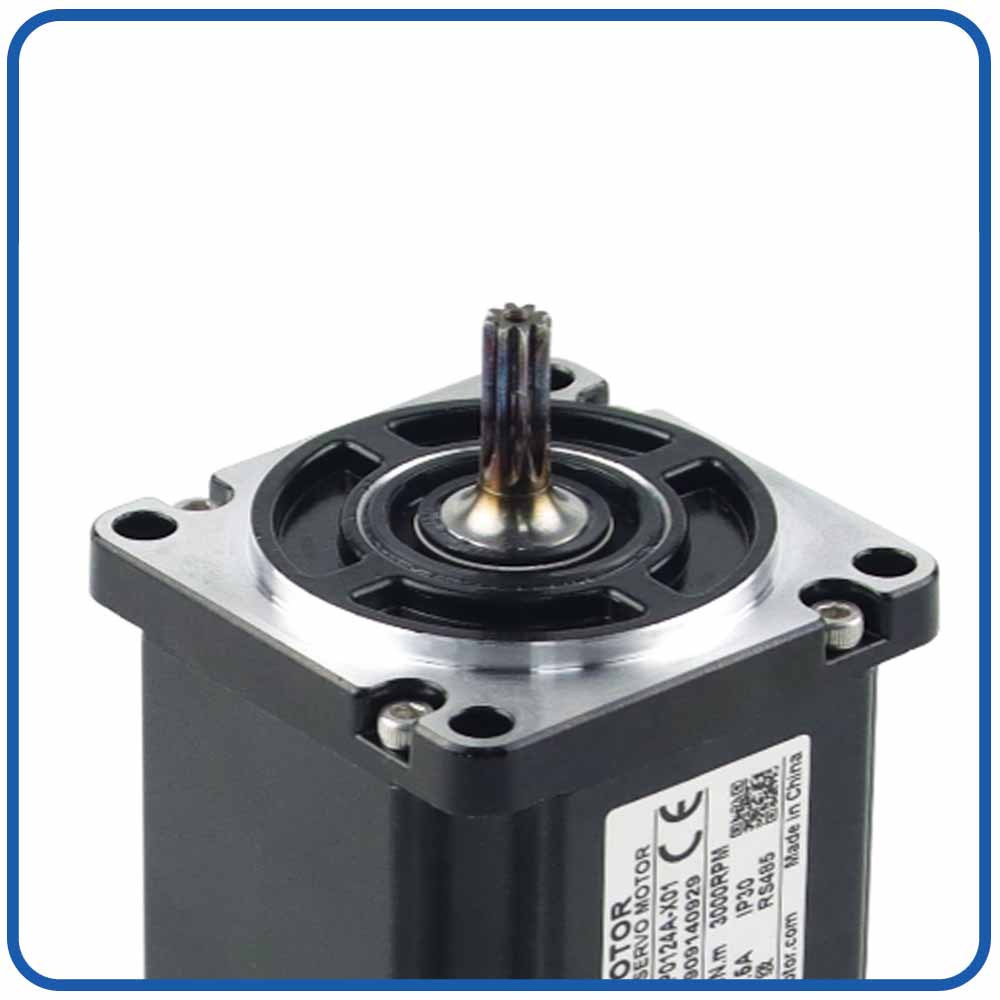
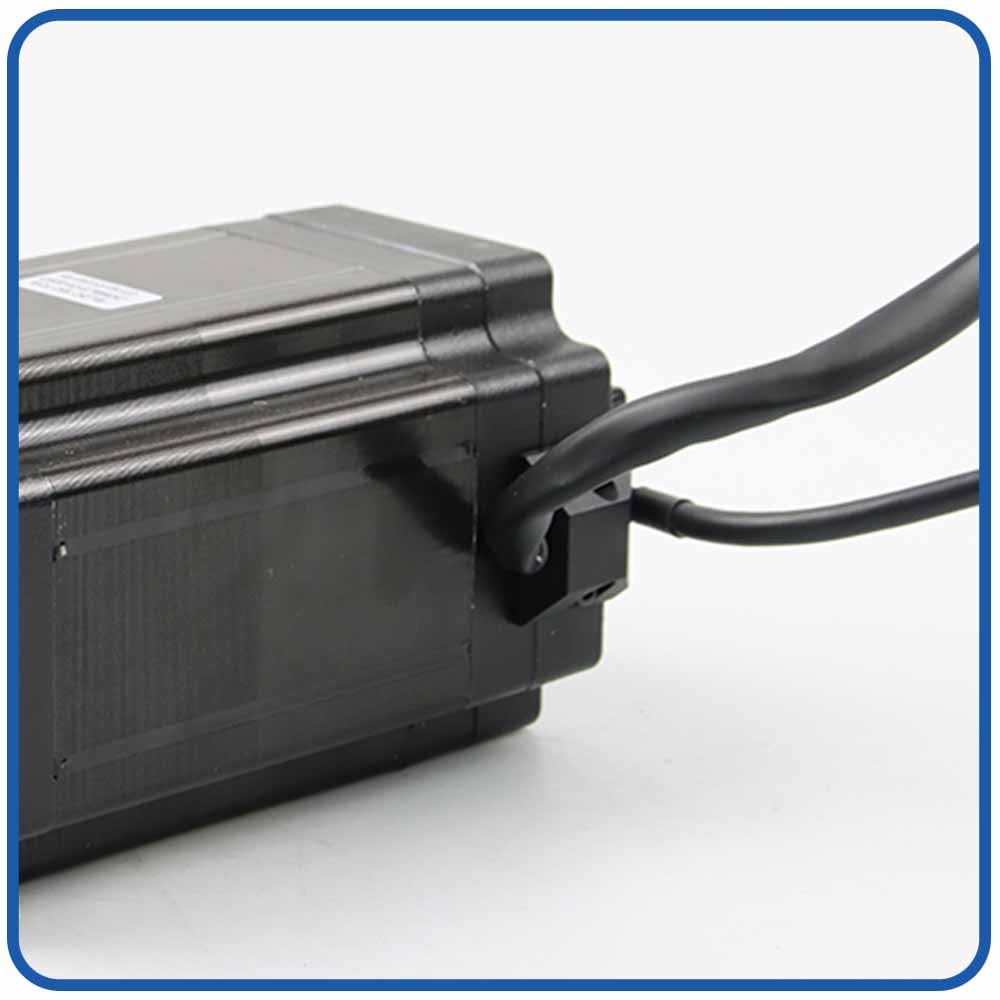
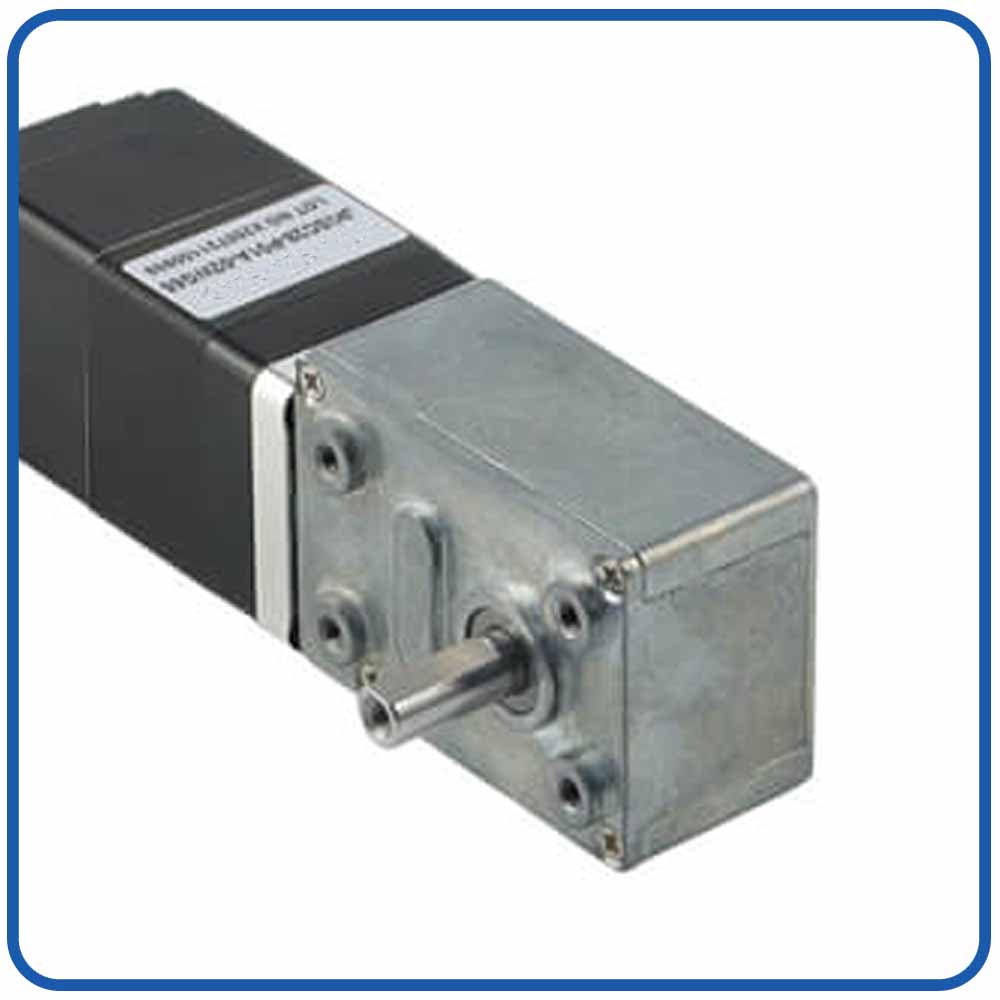
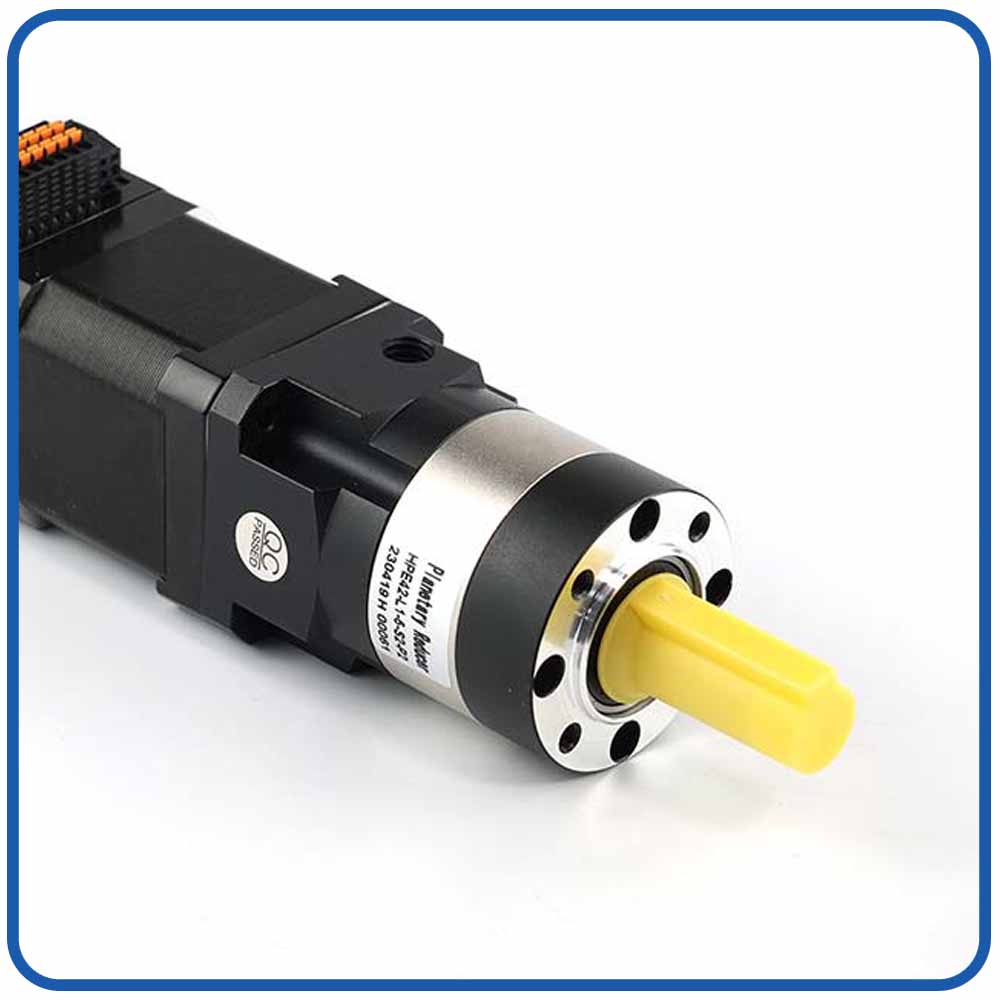
As intelligent manufacturing and warehouse automation continue accelerating worldwide, AGVs (Automated Guided Vehicles) and AMRs (Autonomous Mobile Robots) have become essential for material transport, automated logistics, and smart factory operations. The efficiency of these robotic systems depends heavily on the accuracy, stability, and reliability of their motion control systems.
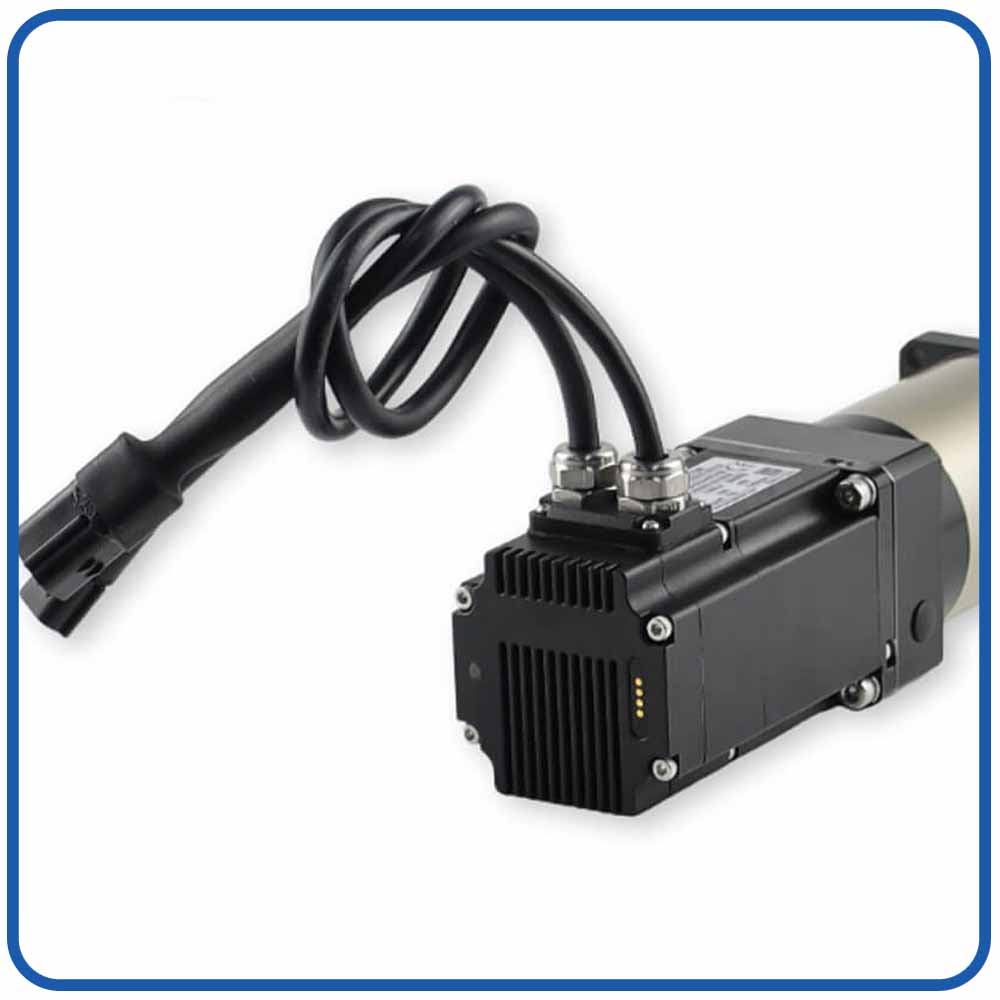
Among the most effective drive solutions for modern robotic mobility are high precision planetary gearbox stepper motors. By combining the precise positioning capability of stepper motors with the torque amplification and efficiency of planetary gearboxes, these integrated drive systems deliver exceptional performance for AGV and AMR applications requiring smooth low-speed movement, accurate navigation, and stable load handling.
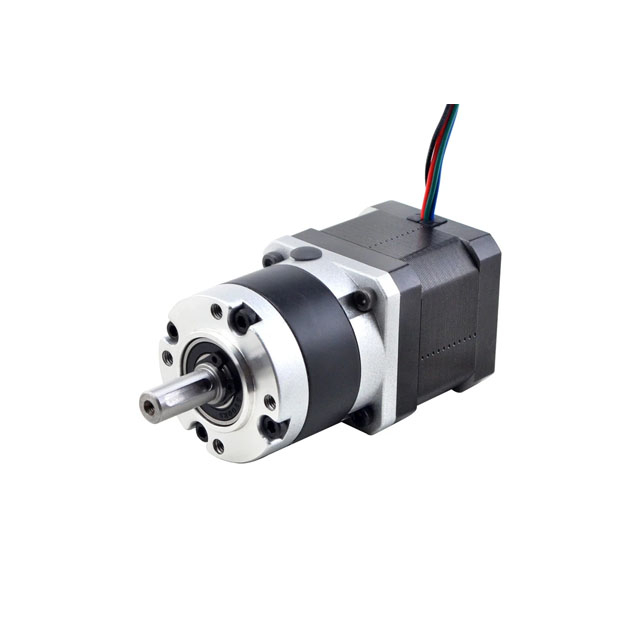
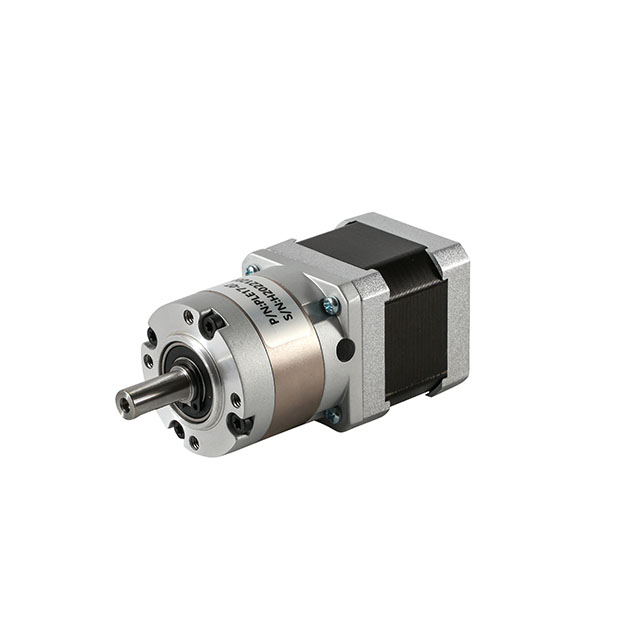
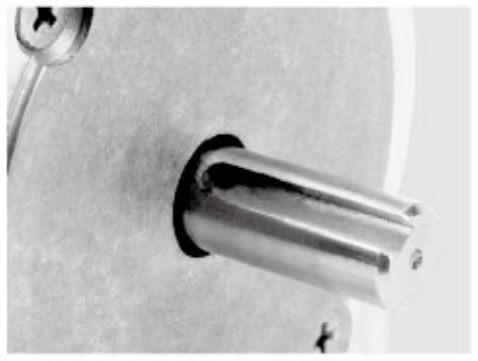
BESFOC high precision planetary gearbox stepper motors are specifically designed for industrial automation environments where compact size, high torque density, low backlash, and reliable positioning are critical.
Why AGVs and AMRs Need High Precision Motion Control
Modern AGVs (Automated Guided Vehicles) and AMRs (Autonomous Mobile Robots) rely on highly accurate motion control systems to achieve safe, efficient, and reliable autonomous operation. In intelligent warehouses, manufacturing plants, hospitals, and logistics centers, these robotic systems must continuously perform complex navigation and transportation tasks with minimal positioning error.
Unlike traditional manual transport equipment, AGVs and AMRs operate in dynamic environments where even small motion deviations can lead to workflow interruptions, collision risks, or product handling failures. For this reason, high precision motion control has become one of the most critical technologies in autonomous mobile robotics.
Accurate Navigation in Dynamic Environments
AGVs and AMRs frequently move through:
Narrow warehouse aisles
High-density storage areas
Automated production lines
Shared workspaces with personnel
Multi-robot operating zones
To maintain safe and efficient movement, robots must precisely control:
Wheel speed
Steering angle
Acceleration and deceleration
Turning radius
Stopping position
High precision motion control allows robots to follow programmed paths accurately while avoiding obstacles and maintaining operational stability.
Precise Positioning for Automated Docking
One of the most important requirements in AGV and AMR systems is repeatable positioning accuracy. Autonomous robots often need to:
Dock at charging stations
Align with conveyors
Stop at pallet transfer points
Interface with robotic arms
Position accurately for loading and unloading
Even minor positioning errors can cause:
Failed docking
Material transfer misalignment
Production delays
Increased mechanical wear
High precision motion control systems minimize these errors by delivering consistent and repeatable motor movement.
Stable Low-Speed Operation
Most AGVs and AMRs operate at relatively low speeds, especially when transporting heavy or fragile materials. Smooth low-speed movement is essential for:
Maintaining load stability
Preventing vibration
Protecting sensitive products
Improving navigation accuracy
High precision motors such as planetary gearbox stepper motors provide stable low-speed torque and smooth motion characteristics that conventional motors may struggle to achieve.
This is especially important in:
Semiconductor manufacturing
Medical automation
Electronics assembly
Pharmaceutical logistics
Improved Safety in Human-Robot Collaboration
Modern AMRs increasingly operate alongside human workers in collaborative environments. Precise motion control improves safety by enabling:
Controlled acceleration
Accurate obstacle avoidance
Smooth emergency stopping
Predictable robot movement
Advanced motion systems also reduce sudden jerks or unstable movement that could endanger nearby personnel or damage transported goods.
Better Multi-Axis Synchronization
Many AGVs and AMRs require synchronized movement between multiple motors for:
Differential wheel driving
Steering systems
Lifting platforms
Conveyor modules
High precision motion control ensures all drive components operate in coordination, improving:
Straight-line accuracy
Turning consistency
Load balancing
Mechanical reliability
This synchronization is critical for autonomous robots carrying heavy payloads over long operating cycles.
Higher Operational Efficiency
Accurate motion control directly impacts robot productivity. Precision drive systems help AGVs and AMRs:
Complete tasks faster
Reduce navigation errors
Improve route efficiency
Minimize downtime
Lower maintenance costs
Efficient motion control also contributes to better battery utilization by reducing unnecessary motor corrections and energy waste.
Support for Advanced Autonomous Technologies
Modern AGVs and AMRs integrate advanced technologies such as:
LiDAR navigation
Vision systems
AI path planning
Real-time obstacle detection
Smart fleet management
These technologies require highly responsive and precise motion systems capable of executing complex movement commands accurately.
High precision motion control ensures the robot can fully utilize intelligent navigation and automation algorithms.
Summary
High precision motion control is essential for AGV and AMR systems because it enables accurate navigation, stable low-speed operation, precise docking, improved safety, and efficient autonomous movement. As warehouse automation, smart manufacturing, and intelligent logistics continue evolving, advanced motion control technologies such as planetary gearbox stepper motors will remain fundamental to achieving reliable and high-performance robotic mobility.
How Planetary Gearbox Stepper Motors Improve AGV Performance
1. Higher Output Torque for Heavy Payload Handling
One of the biggest advantages of planetary gearbox stepper motors is their ability to generate high output torque while maintaining precise control.
BESFOC planetary gearbox stepper motors use precision gear reduction systems to multiply motor torque efficiently. This allows AGVs and AMRs to:
Carry heavier loads
Improve climbing capability on ramps
Reduce wheel slippage
Maintain stable acceleration
Operate smoothly at low speeds
For example, a NEMA 23 planetary gearbox stepper motor with a high reduction ratio can provide significantly increased torque output compared with a direct-drive stepper motor, making it ideal for warehouse transport robots carrying heavy inventory shelves.
In industrial AGV systems, gear ratios such as:
5:1
10:1
20:1
50:1
are commonly selected to balance robot speed and traction performance.
2. Low Backlash Improves Navigation Accuracy
Accurate positioning is critical for autonomous robots operating in automated logistics environments.
BESFOC high precision planetary gearboxes are designed with:
Low backlash structure
High gear meshing accuracy
Stable transmission efficiency
Low backlash significantly improves:
Path tracking accuracy
Docking precision
Steering response
Repeatable positioning
For AGVs that repeatedly stop at charging stations or loading platforms, low backlash helps eliminate cumulative positioning errors.
This becomes particularly important in:
Semiconductor manufacturing
Automated warehouse picking systems
Robotic assembly lines
Pharmaceutical automation
3. Smooth Low-Speed Operation Enhances Stability
AGVs and AMRs frequently operate at low speeds while carrying sensitive loads. Smooth motion is essential to prevent vibration, cargo instability, or navigation deviation.
Planetary gearbox stepper motors deliver:
Stable low-speed torque
Controlled rotational movement
Smooth acceleration
Precise deceleration
Compared with conventional geared DC motors, stepper motors provide much finer movement control through pulse-based positioning.
When paired with microstepping drivers, BESFOC motors achieve:
Reduced vibration
Lower operational noise
Improved movement smoothness
Better motion consistency
This is highly beneficial for:
Medical robots
Laboratory automation
Electronics handling equipment
Precision material transport
4. Compact Structure Supports AGV Space Optimization
Modern AMRs require compact internal layouts to accommodate:
Batteries
LiDAR systems
Navigation controllers
Wireless communication modules
Safety sensors
BESFOC planetary gearbox stepper motors combine the motor and precision gearbox into a compact integrated structure, helping manufacturers reduce installation space while maintaining high torque output.
Common motor frame sizes used in AGV and AMR systems include:
NEMA 17 planetary gearbox stepper motor
NEMA 23 planetary gearbox stepper motor
NEMA 24 planetary gearbox stepper motor
NEMA 34 planetary gearbox stepper motor
Smaller robots often use NEMA 17 configurations for lightweight delivery applications, while heavy-duty industrial AGVs typically use NEMA 23 or NEMA 34 models.
5. High Transmission Efficiency Improves Energy Utilization
Battery runtime directly affects AGV productivity. Efficient drive systems help reduce charging frequency and increase operational uptime.
Planetary gearboxes offer:
High transmission efficiency
Reduced energy loss
Stable torque transfer
Improved mechanical durability
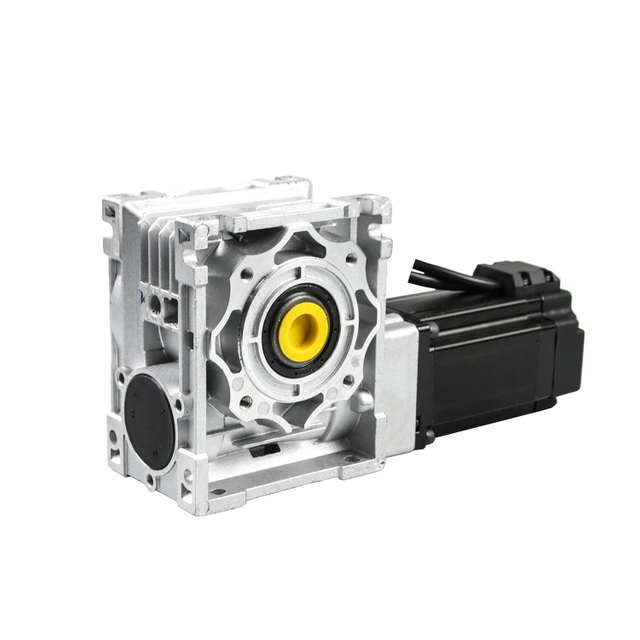
Compared with worm gear systems, planetary gearboxes generally provide:
Better efficiency
Lower heat generation
Higher mechanical lifespan
This allows AGVs to operate longer while maintaining consistent performance.
Typical BESFOC Planetary Gearbox Stepper Motor Models for AGV and AMR Applications
42mm NEMA 17 Planetary Gearbox Stepper Motor
The 42mm NEMA 17 planetary gearbox stepper motor is widely used in compact AGV and AMR systems where installation space is limited but accurate motion control is still required. This model is suitable for:
Small AMRs
Service robots
Mobile inspection robots
Medical delivery systems
Compact indoor logistics robots
Typical Motor Parameters
Step angle: 1.8°
Holding torque: 0.4–0.68 N·m
Rated current: 1.5–2.0A
Motor length options: 40mm–48mm
Planetary Gearbox Parameters
Gear ratios: 3:1, 5:1, 10:1, 20:1, 50:1
Rated output torque: up to 15 N·m
Backlash: as low as 15 arcmin
Transmission efficiency: up to 90%
AGV/AMR Advantages
Compact structure for lightweight robot platforms
Smooth low-speed operation
Improved positioning accuracy
Reduced vibration during navigation
Suitable for precision indoor movement
For small autonomous robots requiring stable movement in narrow environments, the NEMA 17 planetary gearbox stepper motor offers an ideal balance between precision and compact size.
57mm NEMA 23 Planetary Gearbox Stepper Motor
The 57mm NEMA 23 planetary gearbox stepper motor is one of the most commonly used drive solutions in warehouse AGVs and industrial AMRs. It provides higher torque output while maintaining excellent motion accuracy.
Typical applications include:
Warehouse transport AGVs
Conveyor transfer robots
Autonomous mobile platforms
Smart logistics robots
Automated material handling systems
Typical Motor Parameters
Step angle: 1.8°
Holding torque: 1.2–3.0 N·m
Rated current: 2.8–4.2A
Motor body length: 56mm–112mm
Planetary Gearbox Parameters
Gear ratios: 5:1, 10:1, 20:1, 30:1, 50:1, 100:1
Rated output torque: up to 60 N·m
Maximum permissible torque: higher overload capability
Backlash: 10–15 arcmin
Gearbox efficiency: up to 95%
AGV/AMR Advantages
Strong low-speed torque for heavy load transport
Excellent acceleration and deceleration stability
Precise docking and path tracking
Reduced wheel slippage under high payload conditions
Reliable continuous-duty operation
This motor size is highly suitable for medium-duty AGVs operating in smart warehouses and factory automation systems.
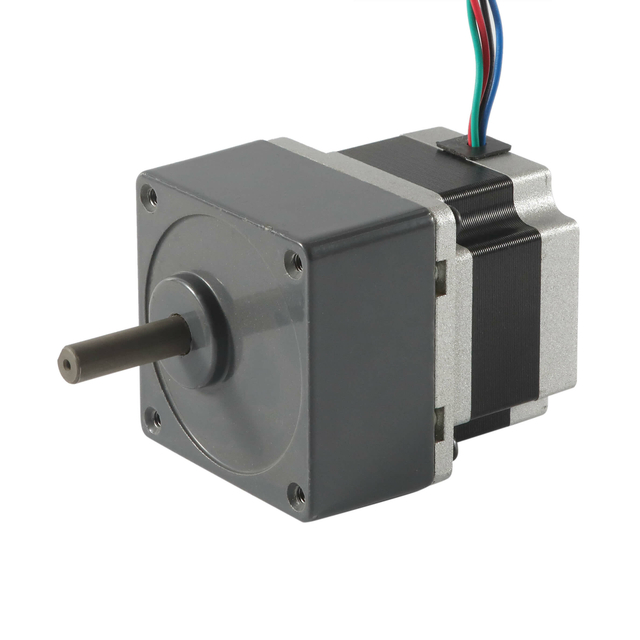
60mm NEMA 24 Planetary Gearbox Stepper Motor
The 60mm NEMA 24 planetary gearbox stepper motor is designed for AGV and AMR applications requiring higher torque density and improved dynamic performance.
It is commonly used in:
Industrial transport robots
Automated towing vehicles
Heavy-duty conveyor robots
Mobile lifting systems
Typical Motor Parameters
Step angle: 1.8°
Holding torque: 2.0–4.5 N·m
Rated current: 3.0–5.0A
Planetary Gearbox Parameters
Gear ratios: 5:1 to 100:1
Output torque capacity: up to 80 N·m
Low backlash precision design
High radial and axial load capacity
AGV/AMR Advantages
Improved traction performance
Higher payload capability
Enhanced motion stability
Better low-speed precision control
Suitable for continuous industrial operation
The NEMA 24 platform provides an excellent compromise between compactness and heavy-load performance.
86mm NEMA 34 Planetary Gearbox Stepper Motor
The 86mm NEMA 34 planetary gearbox stepper motor is designed for heavy-duty AGV and AMR systems requiring maximum torque output and long-term operational reliability.
Typical applications include:
Autonomous forklifts
Heavy-load transport AGVs
Industrial towing robots
Automated pallet carriers
Large autonomous logistics systems
Typical Motor Parameters
Step angle: 1.8°
Holding torque: 4.5–12 N·m
Rated current: 4.0–6.0A
Large frame structure for high mechanical rigidity
Planetary Gearbox Parameters
Gear ratios: 5:1, 10:1, 20:1, 50:1, 100:1
Rated output torque: up to 200 N·m
Low backlash: approximately 10 arcmin
High-strength alloy steel gears
High durability under continuous load conditions
AGV/AMR Advantages
Extremely high torque output
Excellent climbing capability
Stable movement under heavy payloads
Superior continuous-duty performance
Reliable operation in harsh industrial environments
For large autonomous robotic platforms requiring maximum traction and precision, the NEMA 34 planetary gearbox stepper motor delivers outstanding motion control performance.
Planetary Gearboxes vs Traditional Gear Reduction Systems
Planetary gearboxes offer several advantages over conventional gear systems in AGV applications.
Feature
Planetary Gearbox
Worm Gearbox
Transmission Efficiency
High
Moderate
Backlash
Low
Higher
Torque Density
High
Moderate
Motion Precision
Excellent
Average
Service Life
Long
Moderate
Compactness
Excellent
Larger
Because of these advantages, planetary gearbox stepper motors are increasingly preferred in modern autonomous robotics.
Applications of Planetary Gearbox Stepper Motors in AGVs and AMRs
Warehouse Automation
Shelf transport robots
Intelligent picking systems
Pallet transfer AGVs
Manufacturing Automation
Material handling vehicles
Assembly transport robots
Smart conveyor systems
Medical Robotics
Autonomous medicine carts
Sterilization robots
Laboratory transport systems
Commercial Robotics
Hotel delivery robots
Cleaning robots
Security patrol robots
Agricultural Automation
Autonomous spraying robots
Smart harvesting equipment
Mobile planting systems
Geared Stepper Motors vs Servo Motors in AGV Applications
While servo motors are widely used in advanced robotics, geared stepper motors remain highly competitive for many AGV and AMR applications.
Key advantages include:
Feature
Geared Stepper Motor
Servo Motor
Cost Efficiency
Excellent
Higher Cost
Positioning Accuracy
High
Very High
Low-Speed Torque
Excellent
Good
Control Simplicity
Simple
Complex
Maintenance
Low
Moderate
Compact Design
Excellent
Good
For medium-load autonomous robots requiring reliable precision without excessive system complexity, geared stepper motors provide an ideal solution.
Why Planetary Gearbox Stepper Motors Are Ideal for Intelligent Robotics
Intelligent robotics systems demand motion solutions that combine high precision, compact size, strong torque output, and long-term reliability. In applications such as AGVs, AMRs, collaborative robots, medical automation, warehouse logistics, and industrial handling equipment, the motor system directly determines the robot’s operational stability and positioning accuracy.
Planetary gearbox stepper motors have become one of the preferred drive solutions for modern intelligent robotics because they provide an ideal balance between precision control, torque amplification, energy efficiency, and cost-effectiveness.
High Precision Positioning Capability
Robotic systems require extremely accurate motion control to perform:
Autonomous navigation
Repeated positioning
Precision docking
Pick-and-place operations
Coordinated multi-axis movement
Stepper motors naturally operate through discrete pulse movements, allowing highly accurate rotational positioning without complex control structures. When combined with a precision planetary gearbox, the output motion becomes even more refined.
The gearbox reduction improves:
Positioning resolution
Motion smoothness
Low-speed controllability
Repeatable accuracy
For intelligent robots operating in automated warehouses or production lines, this precision is essential for maintaining stable and predictable movement.
High Torque Density in Compact Designs
Space optimization is a critical challenge in robotics engineering. Intelligent robots must integrate:
Navigation systems
Sensors
Batteries
Controllers
Wireless communication modules
within compact mechanical structures.
Planetary gearbox stepper motors provide:
High torque output
Compact integrated construction
Excellent torque-to-size ratio
Compared with traditional gear systems, planetary gearboxes distribute load evenly across multiple gears, enabling higher torque transmission in smaller dimensions.
For example:
42mm NEMA 17 planetary gearbox stepper motors are ideal for compact service robots and small AMRs.
57mm NEMA 23 models are widely used in warehouse AGVs and industrial logistics robots.
86mm NEMA 34 planetary gearbox stepper motors support heavy-load autonomous platforms and robotic towing systems.
This flexibility allows robotic manufacturers to optimize both robot size and payload capacity.
Low Backlash Improves Robotic Accuracy
Backlash is one of the most important factors affecting robotic motion accuracy. Excessive backlash can lead to:
Position deviation
Steering inaccuracy
Vibration
Unstable movement
Reduced navigation precision
High precision planetary gearboxes are designed with:
Tight gear meshing
Precision-machined gears
Optimized transmission structures
This minimizes backlash and improves:
Motion repeatability
Directional consistency
Docking precision
Multi-axis synchronization
In intelligent robotics applications such as semiconductor handling or automated inspection systems, low backlash directly improves operational reliability.
Excellent Low-Speed Stability
Most intelligent robots operate at controlled low speeds, especially when transporting sensitive or heavy loads. Planetary gearbox stepper motors provide:
Stable low-speed torque
Smooth acceleration
Controlled deceleration
Reduced vibration
Unlike conventional DC motors, stepper motors maintain highly controlled incremental movement even at very low rotational speeds.
This smooth motion performance is particularly valuable in:
Medical robotics
Laboratory automation
Precision assembly robots
Automated transport systems
Microstepping driver technology further enhances movement smoothness and reduces operational noise.
High Transmission Efficiency
Planetary gearboxes are widely recognized for their excellent transmission efficiency. Compared with worm gear systems, they offer:
Lower energy loss
Reduced heat generation
Higher torque transfer efficiency
Better overall mechanical performance
High efficiency is especially important for battery-powered robots such as AGVs and AMRs because it helps:
Extend operating time
Reduce battery consumption
Improve energy utilization
Lower thermal stress
Efficient motion systems contribute directly to higher productivity and lower operational costs.
Strong Load Capacity and Durability
Intelligent robots often operate continuously in demanding industrial environments. Planetary gearbox stepper motors are engineered for:
Long service life
High radial load capacity
Stable continuous-duty operation
Excellent mechanical durability
The planetary gear structure distributes force across multiple gears simultaneously, reducing stress concentration and improving gearbox lifespan.
This makes them highly suitable for:
Warehouse automation
Industrial transport robots
Autonomous forklifts
Factory logistics systems
High-strength alloy steel gears and precision bearings further improve durability under heavy-load conditions.
Flexible Gear Ratios for Different Robotic Applications
Different robotic applications require different speed and torque characteristics. Planetary gearbox stepper motors are available with multiple reduction ratios such as:
3:1
5:1
10:1
20:1
50:1
100:1
Lower gear ratios provide:
Faster movement speed
Better dynamic response
Higher gear ratios deliver:
Greater output torque
Improved positioning precision
Enhanced load handling capability
This flexibility allows engineers to optimize robotic motion systems for specific application requirements.
Simplified Motion Control Integration
Planetary gearbox stepper motors integrate easily with modern robotic control systems, including:
PLC controllers
CANopen networks
EtherCAT systems
Closed-loop stepper drivers
Intelligent motion controllers
Because stepper motors use pulse control, they simplify:
Position control
Speed synchronization
Multi-axis coordination
This reduces system complexity while maintaining high motion accuracy.
Cost-Effective Solution for Intelligent Automation
Compared with servo motor systems, planetary gearbox stepper motors offer:
Lower system cost
Simpler control architecture
Reduced maintenance requirements
High positioning performance
For many intelligent robotic applications, they provide an ideal balance between performance and cost efficiency.
This makes them highly attractive for:
AGV manufacturers
AMR developers
Smart factory integrators
Robotics equipment suppliers
Summary
Planetary gearbox stepper motors are ideal for intelligent robotics because they combine high precision positioning, compact size, low backlash, strong torque output, smooth low-speed operation, and excellent reliability within a highly efficient motion control solution.
From compact service robots to heavy-duty industrial AGVs, these motors provide the performance and flexibility required for advanced autonomous systems. With multiple frame sizes, customizable gear ratios, and excellent integration capability, planetary gearbox stepper motors continue to play a critical role in the future of intelligent robotics and industrial automation.
Conclusion
High precision planetary gearbox stepper motors play a critical role in improving AGV and AMR motion control performance. By combining accurate stepper motor positioning with the torque amplification and efficiency of planetary gearboxes, these systems deliver superior navigation accuracy, stable low-speed movement, and reliable heavy-load handling.
BESFOC planetary gearbox stepper motors, including popular models such as NEMA 17, NEMA 23, and NEMA 34 series, provide flexible and efficient solutions for warehouse automation, industrial logistics, healthcare robotics, and smart manufacturing systems.
As AGV and AMR technologies continue advancing toward higher intelligence and automation, planetary gearbox stepper motors will remain one of the most reliable and cost-effective motion control solutions for precision robotic mobility.
FAQs:
1. Why are geared stepper motors widely used in AGV and AMR systems?
Besfoc Answer: Geared stepper motors are widely used in AGV and AMR systems because they provide high torque output, accurate positioning, stable low-speed performance, and reliable motion control. By combining a stepper motor with a precision gearbox, these motors improve payload handling, navigation accuracy, and movement stability in autonomous mobile robots.
2. How do planetary gearboxes improve AGV motion performance?
Besfoc Answer: Planetary gearboxes increase torque output while reducing motor speed, allowing AGVs to move heavy loads more efficiently. Their compact structure, high transmission efficiency, and low backlash design also improve acceleration control, docking precision, and overall robotic stability.
3. What are the advantages of low backlash in AMR applications?
Besfoc Answer: Low backlash helps AMRs achieve more accurate positioning and smoother directional changes. It reduces motion deviation during navigation, improves docking consistency, and enhances the repeatability required for warehouse automation, medical robotics, and intelligent logistics systems.
4. Which BESFOC motor models are suitable for AGVs and AMRs?
Besfoc Answer: BESFOC offers multiple planetary gearbox stepper motor models for AGV and AMR applications, including:
42mm NEMA 17 planetary gearbox stepper motors
57mm NEMA 23 planetary gearbox stepper motors
60mm NEMA 24 planetary gearbox stepper motors
86mm NEMA 34 planetary gearbox stepper motors
These models support different payload capacities, speed requirements, and installation environments.
5. Why is low-speed stability important for autonomous mobile robots?
Besfoc Answer: AGVs and AMRs often operate at low speeds while carrying sensitive or heavy loads. Stable low-speed motion helps reduce vibration, improve navigation accuracy, prevent cargo shifting, and ensure smooth operation in automated warehouses and manufacturing environments.
6. What gearbox ratios are commonly used in AGV stepper motor systems?
Besfoc Answer: Common gearbox ratios include:
3:1
5:1
10:1
20:1
50:1
100:1
Lower ratios provide higher speed, while higher ratios increase output torque and positioning precision. The optimal ratio depends on the AGV’s payload, wheel size, speed, and motion requirements.
7. How do geared stepper motors improve AGV positioning accuracy?
Besfoc Answer: Geared stepper motors improve positioning accuracy through precise pulse control and gearbox reduction. The gearbox increases output resolution while minimizing positioning errors, allowing AGVs and AMRs to achieve accurate path tracking, precise docking, and repeatable movement.
8. Are planetary gearbox stepper motors energy efficient for battery-powered robots?
Besfoc Answer: Yes. Planetary gearbox stepper motors offer high transmission efficiency and optimized torque utilization, which helps reduce power consumption. Their efficient mechanical design supports longer battery runtime and improves operational efficiency in battery-powered AGVs and AMRs.
9. What industries commonly use AGVs and AMRs with geared stepper motors?
Besfoc Answer: Industries commonly using geared stepper motor-driven AGVs and AMRs include:
Warehouse automation
Smart manufacturing
Medical and pharmaceutical automation
Electronics production
Food and beverage logistics
Agricultural robotics
Commercial service robotics
These industries require precise, reliable, and continuous robotic motion control.
10. Why are planetary gearbox stepper motors preferred over traditional gear systems in robotics?
Besfoc Answer: Planetary gearbox stepper motors offer higher torque density, lower backlash, better transmission efficiency, compact size, and improved positioning accuracy compared with many traditional gear systems. These advantages make them ideal for intelligent robotic applications requiring precise and stable motion control.

 English
 العربية
 Français
 Русский
 Español
 Português
 Deutsch
 italiano
 日本語
日本語 한국어
한국어 Nederlands
 Tiếng Việt
 ไทย
ไทย Polski
 Türkçe
 ພາສາລາວ
 ភាសាខ្មែរ
 Bahasa Melayu
 ဗမာစာ
ဗမာစာ Filipino
 Bahasa Indonesia
 magyar
 Română
 Čeština
 Монгол
 қазақ
қазақ Српски
 हिन्दी
 فارسی
فارسی Slovenčina
 Slovenščina
 Norsk
Norsk Svenska
 українська
 Ελληνικά
 Suomi
Suomi Հայերեն
 עברית
עברית Latine
 Dansk
Dansk Shqip
Shqip বাংলা
বাংলা Hrvatski
 Afrikaans
 Gaeilge
 Eesti keel
 Oʻzbekcha
 latviešu
 Azərbaycan dili
 Български
 Català