Introduction: Choosing the Right Communication Protocol for AGV Motor Control
As Automated Guided Vehicles (AGVs) and Autonomous Mobile Robots (AMRs) continue to evolve toward higher intelligence, faster response, and more precise motion control, the communication protocol used between the controller and motor system has become a critical design consideration.
The motor is one of the most important components in an AGV drive system. It directly affects travel accuracy, acceleration performance, energy efficiency, load capacity, positioning precision, and operational reliability. However, the motor itself cannot achieve optimal performance without a reliable communication interface that enables real-time data exchange between the motion controller, servo drive, and motor.
Two widely used industrial communication protocols in AGV motor applications are CANopen and EtherCAT. Both protocols provide reliable communication between controllers and intelligent motor drives, but they have significant differences in terms of communication speed, synchronization capability, network architecture, cost, scalability, and application suitability.
Understanding the differences between CANopen and EtherCAT for AGV motors helps engineers select the most suitable motor control solution for warehouse robots, logistics vehicles, mobile platforms, and industrial automation systems.
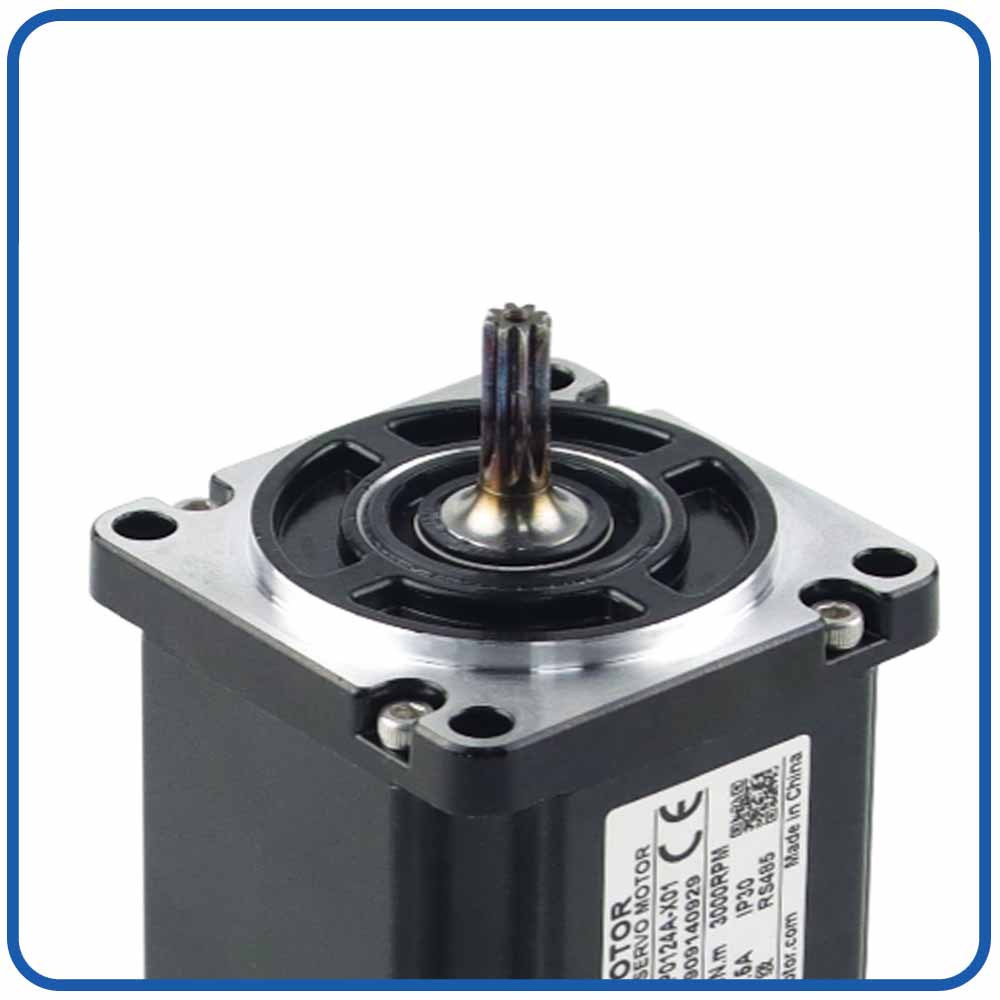
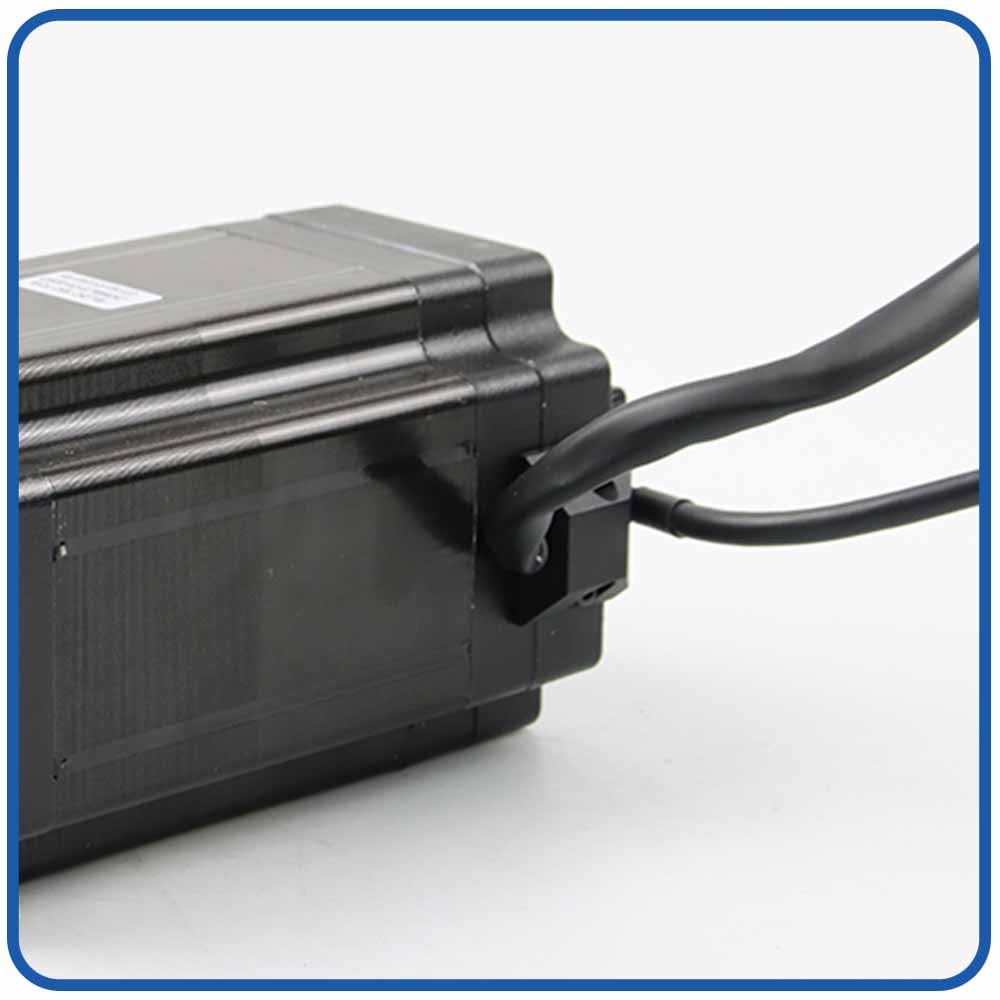
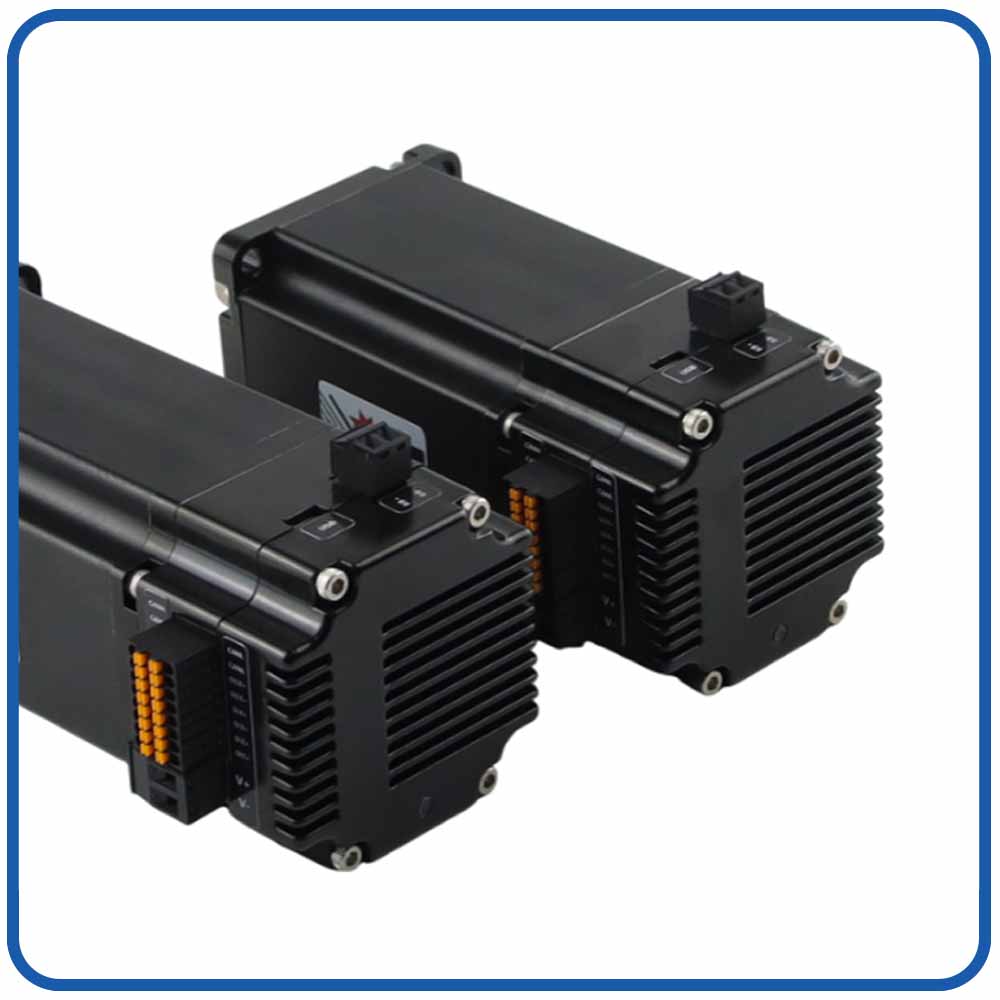
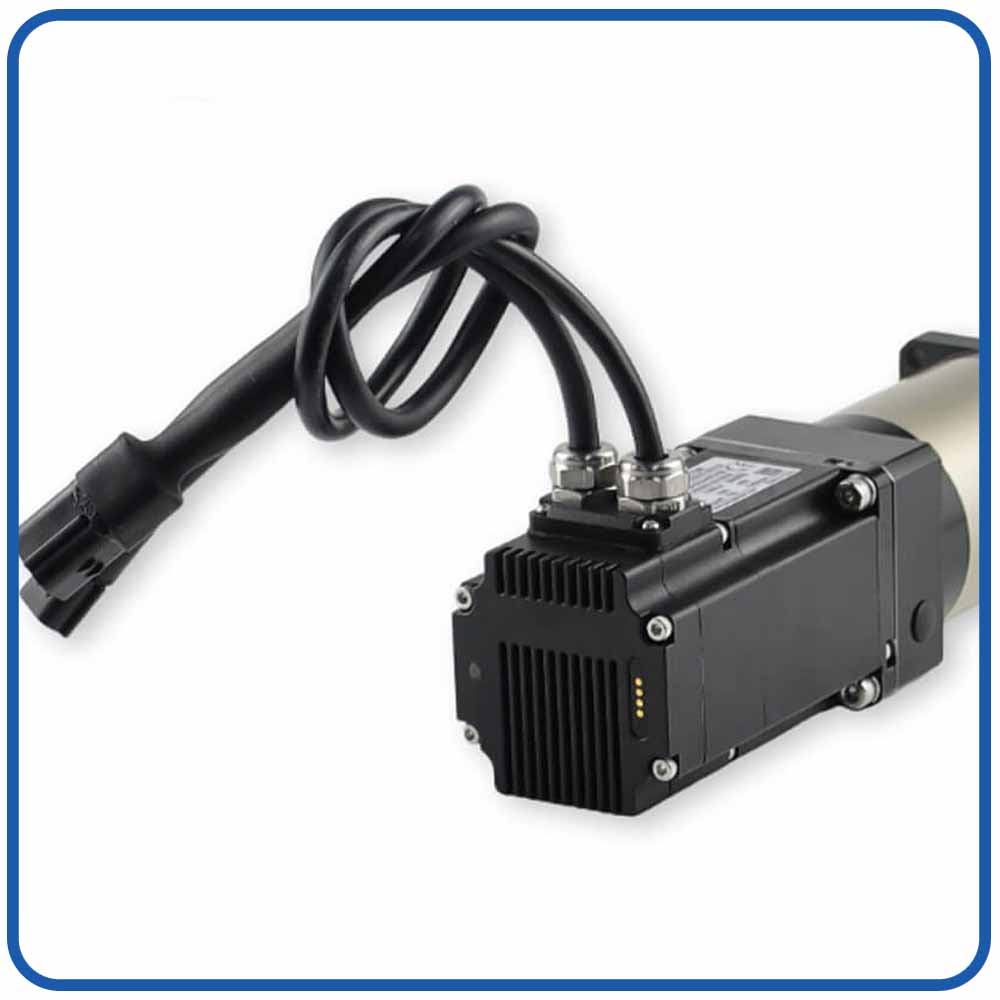
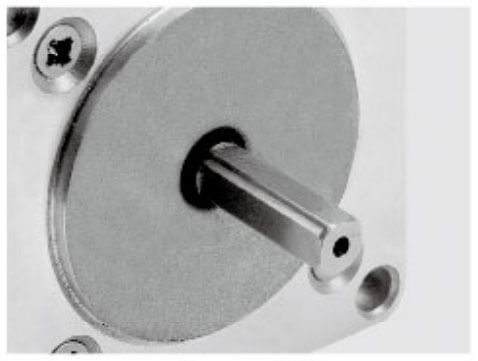
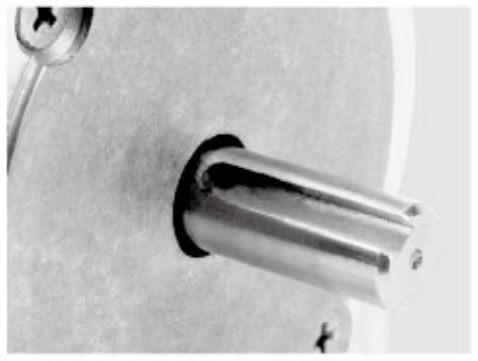
IDC60 Integrated BLDC Servo Motor — High-Efficiency, Compact, and Smart Closed-Loop Motion Control Solution
Product Overview:The IDC60 integrated BLDC servo motor from Besfoc is a compact NEMA 24 solution combining motor, drive, and encoder in one unit. It provides precise closed-loop control, stable torque, and fast response. Its integrated design reduces wiring, saves space.
Key Technical Highlights
Integrated All-in-One Design Combines BLDC motor, servo drive, and encoder in a compact unit, reducing wiring complexity and improving installation efficiency.
High-Precision Closed-Loop Control Ensures accurate position, speed, and torque regulation with real-time feedback for stable and smooth motion performance.
Powerful Modular Customization (OEM/ODM) Supports flexible customization options, including voltage, torque, communication protocols, and encoder resolution to meet diverse application requirements.
High Efficiency & Compact Structure Delivers strong torque density with optimized thermal performance, making it ideal for space-limited automation and robotics systems.
Typical Applications
Pipeline Inspection Robots Provides stable low-speed torque and precise motion control for navigating narrow, curved, and complex pipeline environments.
Automated Guided Vehicles (AGVs) Ensures smooth acceleration, accurate positioning, and reliable operation in logistics and smart warehouse systems.
Robotic Automation Systems Ideal for robotic arms, grippers, and compact motion modules requiring high precision and fast response.
Smart Manufacturing Equipment Supports high-accuracy motion control in assembly lines, packaging machines, and precision industrial automation devices.
IDC60 Series Key Specifications for AGV Applications
Understanding CANopen Communication Protocol for AGV Motors
What Is CANopen?
CANopen is a higher-layer communication protocol based on the Controller Area Network (CAN) bus. It was originally developed for embedded control systems and later became widely adopted in industrial automation, robotics, medical equipment, and motion control applications.
In AGV systems, CANopen is commonly used for communication between:
AGV main controllers
BLDC motor drivers
Servo motor controllers
Steering systems
Battery management systems
Safety modules
I/O expansion devices
CANopen defines standardized communication objects, allowing different devices from different manufacturers to communicate efficiently.
The most common CANopen standards used in motion control applications include:
CiA 301 – Application layer and communication profile
CiA 402 – Device profile for motion control drives
The CiA 402 profile is especially important for AGV motor applications because it provides standardized control commands for servo motors and brushless DC motors.
Advantages of CANopen for AGV Motor Applications
1. Cost-Effective Motor Control Solution
One of the biggest advantages of CANopen is its low implementation cost.
CAN communication hardware is relatively inexpensive, and many embedded controllers already include CAN interfaces. For AGVs that require multiple motors but do not need extremely high-speed motion synchronization, CANopen provides a practical and economical solution.
Typical AGV applications using CANopen motors include:
Small warehouse AGVs
Delivery robots
Inspection robots
Autonomous carts
Low-speed transport vehicles
For these applications, CANopen can provide sufficient performance while reducing overall system costs.
2. High Reliability in Industrial Environments
CANopen was designed for harsh industrial environments where communication reliability is essential.
Its advantages include:
Strong noise immunity
Error detection mechanisms
Automatic retransmission
Message prioritization
Robust physical layer
AGVs often operate in environments with:
Motor electromagnetic interference
Long cable distances
Metal structures
Industrial machinery nearby
CANopen remains stable under these conditions, making it suitable for many mobile robot applications.
3. Simple Network Architecture
CANopen networks are relatively simple to configure.
An AGV system can typically include:
One master controller
Multiple motor nodes
Additional sensors and modules
Each device has a unique node ID, and communication is organized through standardized object dictionaries.
This simplicity reduces development time and makes maintenance easier.
Limitations of CANopen in Advanced AGV Applications
Although CANopen is reliable and affordable, it has limitations when used in high-performance AGV systems.
1. Limited Communication Speed
Traditional CANopen operates at speeds up to:
1 Mbps
Compared with modern industrial Ethernet protocols, this bandwidth is limited.
For AGVs requiring:
Multiple synchronized servo motors
High-speed trajectory control
Real-time feedback
Complex motion coordination
CANopen may become a bottleneck.
2. Limited Real-Time Synchronization
AGV drive systems often require precise synchronization between:
Left and right driving motors
Steering motors
Lifting motors
Rotating mechanisms
CANopen provides synchronization functions, but its performance is limited compared with EtherCAT.
For example, in a differential-drive AGV, small timing differences between two motors may affect:
Straight-line accuracy
Turning precision
Navigation stability
Understanding EtherCAT Communication Protocol for AGV Motors
What Is EtherCAT?
EtherCAT (Ethernet Control Automation Technology) is a high-performance industrial Ethernet communication protocol developed for real-time automation systems.
Unlike traditional Ethernet communication methods, EtherCAT uses a unique processing approach where data packets pass through each device and are processed directly during transmission.
This enables extremely fast communication with very low latency.
EtherCAT is widely used in:
Industrial robots
CNC machines
Semiconductor equipment
High-speed automation systems
Advanced AGVs and AMRs
For modern AGV motor applications, EtherCAT has become one of the preferred communication technologies.
Advantages of EtherCAT for AGV Motor Applications
1. Extremely Fast Communication Speed
EtherCAT provides significantly higher bandwidth compared with CANopen.
Key advantages include:
100 Mbps Ethernet-based communication
Microsecond-level synchronization
High data transmission efficiency
Low communication delay
This allows AGVs to achieve:
Faster acceleration response
More accurate positioning
Smoother motion control
Better multi-axis coordination
For high-performance AMRs operating in dynamic warehouse environments, EtherCAT provides a major advantage.
2. Superior Multi-Motor Synchronization
One of the most important benefits of EtherCAT is its precise synchronization capability.
Modern AGVs often include multiple motion axes:
Two or four drive motors
Steering motors
Lifting mechanisms
Conveyor motors
Robotic arms
EtherCAT enables all motors to operate with synchronized timing.
This improves:
Path tracking accuracy
Turning stability
Load handling precision
Energy efficiency
For autonomous robots that require centimeter-level navigation accuracy, synchronized motor control is essential.
3. Excellent Scalability for Advanced AGV Systems
EtherCAT networks can support complex AGV architectures.
A single network can connect:
Multiple servo motors
Sensors
Encoders
Safety devices
Vision systems
Motion controllers
As AGV designs become more intelligent, EtherCAT provides sufficient bandwidth for future expansion.
4. Real-Time Feedback and Closed-Loop Control
High-end AGVs require continuous feedback from motors.
EtherCAT supports rapid transmission of:
Position feedback
Velocity feedback
Torque feedback
Current monitoring
Error diagnostics
This allows advanced closed-loop control algorithms to optimize motor performance.
For example, an EtherCAT servo motor can immediately adjust torque output when:
Floor conditions change
Load weight varies
Obstacles affect movement
Battery voltage fluctuates
CANopen vs EtherCAT: Key Differences for AGV Motors
Feature
CANopen
EtherCAT
Communication Type
CAN Bus
Industrial Ethernet
Maximum Speed
Up to 1 Mbps
100 Mbps
Synchronization Accuracy
Millisecond level
Microsecond level
Network Capacity
Limited nodes
Large-scale systems
Hardware Cost
Lower
Higher
Implementation Complexity
Simple
More advanced
Real-Time Performance
Moderate
Excellent
Suitable AGV Type
Basic and medium AGVs
High-performance AGVs and AMRs
Which Protocol Is Better for AGV Motor Applications?
Choosing between CANopen and EtherCAT for AGV motor applications depends on the AGV system requirements, including motion accuracy, communication speed, synchronization needs, system complexity, and cost considerations.
Both protocols are widely used for controlling BLDC motors, servo motors, and integrated servo motors in AGVs and AMRs, but they are designed for different performance levels.
When CANopen Is Better for AGV Motors
CANopen is a cost-effective and reliable communication protocol suitable for basic and medium-performance AGV systems.
It is commonly used in:
Warehouse transport AGVs
Delivery robots
Inspection robots
Autonomous carts
Low-speed mobile platforms
The main advantages of CANopen include:
Low hardware cost
Simple network configuration
High reliability in industrial environments
Easy integration with motor controllers
For AGVs that mainly require basic functions such as speed control, direction control, and standard positioning, CANopen can provide sufficient performance while keeping the system economical.
However, CANopen has limitations in high-performance applications due to its lower communication speed and weaker synchronization capability compared with industrial Ethernet solutions.
When EtherCAT Is Better for AGV Motors
EtherCAT is designed for high-performance real-time motion control and is increasingly used in advanced AGV and AMR systems.
It is suitable for:
High-speed warehouse robots
Heavy-duty AGVs
Multi-axis mobile robots
Precision logistics automation systems
The main advantages of EtherCAT include:
High communication speed (100 Mbps)
Microsecond-level synchronization
Real-time feedback control
Excellent multi-motor coordination
EtherCAT enables precise synchronization between multiple motors, such as:
Left and right drive motors
Steering motors
Lifting motors
Robotic mechanisms
This improves AGV performance in terms of:
Positioning accuracy
Motion smoothness
Navigation stability
Energy efficiency
CANopen vs EtherCAT: Which One Should AGV Manufacturers Choose?
The best protocol depends on the application requirements.
Choose CANopen when:
The AGV has simple motion requirements
Cost reduction is important
Only a few motors are involved
High-speed synchronization is not required
Choose EtherCAT when:
The AGV requires precise motion control
Multiple motors need synchronization
Fast response and real-time communication are required
Future system expansion is expected
Conclusion
For basic AGV applications, CANopen provides a reliable and economical motor communication solution.
For advanced AGVs and AMRs requiring high precision, fast response, and synchronized multi-axis control, EtherCAT is the better choice.
As AGV technology moves toward higher intelligence and automation, EtherCAT servo motors and integrated servo motors are becoming increasingly popular due to their superior real-time performance and scalability.
How to Select the Right Communication Protocol for AGV Motors
When choosing between CANopen and EtherCAT, engineers should evaluate several factors.
1. Motion Accuracy Requirements
If the AGV requires precise positioning and smooth trajectory control, EtherCAT is usually the better option.
For basic transportation tasks, CANopen may be sufficient.
2. Number of Motors and Axes
A simple AGV with two drive motors may work well with CANopen.
A complex AMR with:
Four-wheel independent drive
Steering control
Lifting modules
Robotic attachments
will benefit from EtherCAT.
3. System Cost Requirements
CANopen generally offers:
Lower motor driver cost
Simpler wiring
Easier integration
EtherCAT provides higher performance but requires:
More advanced controllers
EtherCAT-compatible drives
More complex development
4. Future Expansion Plans
AGV technology is rapidly developing toward:
Artificial intelligence navigation
Cloud connectivity
Fleet management
Autonomous decision-making
Systems expected to expand in the future should consider EtherCAT for better scalability.
Integrated Servo Motors with CANopen and EtherCAT for AGV Applications
Modern AGV (Automated Guided Vehicle) and AMR (Autonomous Mobile Robot) systems require compact, efficient, and intelligent motion solutions. Integrated servo motors combine the motor, servo drive, encoder, and communication interface into one compact unit, reducing wiring complexity and improving system reliability.
For AGV applications, integrated servo motors are commonly equipped with CANopen or EtherCAT communication protocols to achieve precise motor control and real-time data exchange.
What Are Integrated Servo Motors for AGVs?
An integrated servo motor integrates multiple components into a single motor assembly, including:
Brushless DC motor (BLDC motor)
Servo controller
Encoder feedback system
Communication interface
Motor protection functions
Compared with traditional motor and external drive systems, integrated servo motors offer:
Reduced installation space
Simplified wiring
Faster system integration
Improved reliability
Easier maintenance
These advantages make them ideal for AGVs where space, efficiency, and reliability are critical.
CANopen Integrated Servo Motors for AGV Applications
CANopen integrated servo motors are widely used in cost-sensitive AGV systems that require reliable communication and standard motion control.
Typical applications include:
Warehouse transport robots
Delivery AGVs
Inspection robots
Small autonomous vehicles
Advantages of CANopen Servo Motors
Low system cost
Simple communication structure
High industrial reliability
Easy integration with PLC and controllers
CANopen allows the AGV controller to monitor and control motor parameters such as:
Speed
Position
Torque
Motor status
Fault information
For AGVs with basic navigation and moderate positioning requirements, CANopen provides an efficient motor control solution.
EtherCAT Integrated Servo Motors for AGV Applications
EtherCAT integrated servo motors are designed for advanced AGVs and AMRs requiring high-speed and highly synchronized motion control.
They are commonly used in:
Intelligent warehouse robots
Heavy-duty AGVs
Multi-axis mobile robots
Precision automation platforms
Advantages of EtherCAT Servo Motors
High-speed communication
Real-time motion control
Accurate multi-motor synchronization
Fast feedback response
EtherCAT enables multiple motors to work together precisely, improving:
AGV positioning accuracy
Turning performance
Load handling capability
Motion stability
This makes EtherCAT an ideal choice for complex AGV systems with multiple drive axes.
CANopen vs EtherCAT Integrated Servo Motors for AGVs
Feature
CANopen Servo Motor
EtherCAT Servo Motor
Communication Speed
Moderate
Very High
Cost
Lower
Higher
Synchronization
Basic
Excellent
Application Level
Standard AGVs
Advanced AGVs/AMRs
System Complexity
Simple
More Advanced
Real-Time Control
Limited
Excellent
How to Choose the Right Integrated Servo Motor for AGV Systems
The selection depends on AGV performance requirements:
Choose CANopen Integrated Servo Motors When:
The AGV has simple movement requirements
System cost is a priority
Only a few motors are used
Basic speed and position control are needed
Choose EtherCAT Integrated Servo Motors When:
High positioning accuracy is required
Multiple motors need synchronization
Fast response is important
The AGV requires future expansion capability
Conclusion
Integrated servo motors with CANopen and EtherCAT communication provide efficient motion solutions for modern AGV systems.
CANopen integrated servo motors are suitable for cost-effective and standard AGV applications, while EtherCAT integrated servo motors are better suited for high-performance AMRs and advanced automation systems requiring precise, synchronized, and real-time motor control.
As AGVs continue to evolve toward greater intelligence and automation, EtherCAT-based integrated servo motors are becoming increasingly popular for demanding industrial applications.
Future Trend: EtherCAT Becoming More Common in Intelligent AGVs
As AGVs evolve into highly intelligent AMRs, communication requirements continue increasing.
Future AGV systems will require:
Faster response times
More intelligent control algorithms
Better synchronization
Higher data throughput
Although CANopen remains valuable for cost-effective applications, EtherCAT is becoming increasingly popular in advanced AGV motor systems because of its superior real-time performance and scalability.
Conclusion: CANopen or EtherCAT for AGV Motor Applications?
Both CANopen and EtherCAT have important roles in AGV motor control systems.
CANopen offers:
Lower cost
High reliability
Simple implementation
and is suitable for basic and medium-level AGVs.
EtherCAT provides:
Higher communication speed
Better synchronization
Superior real-time control
making it ideal for advanced AGVs and AMRs requiring precision motion control.
For modern intelligent logistics robots, warehouse automation systems, and high-performance mobile platforms, EtherCAT servo motors are becoming the preferred solution. However, for cost-sensitive AGV designs with moderate performance requirements, CANopen motor systems remain an efficient and reliable choice.
Selecting the correct communication protocol ensures that AGV motors achieve the best balance between performance, reliability, scalability, and overall system cost. FAQ Section: CANopen vs EtherCAT for AGV Motor Applications
FAQ 1: What is the difference between CANopen and EtherCAT for AGV motor applications?
Answer:
CANopen and EtherCAT are industrial communication protocols used for controlling AGV motors, but they differ significantly in performance and application range. CANopen is based on the CAN bus and provides reliable, low-cost communication for standard AGV systems. EtherCAT is an industrial Ethernet protocol designed for high-speed, real-time motion control with better synchronization performance, making it suitable for advanced AGVs and AMRs.
FAQ 2: Is CANopen suitable for AGV motor control?
Answer:
Yes, CANopen is suitable for many AGV motor applications, especially cost-sensitive systems that require reliable speed, position, and torque control. CANopen servo motors and BLDC motors are commonly used in warehouse carts, delivery robots, inspection vehicles, and small autonomous platforms where extremely high synchronization accuracy is not required.
FAQ 3: Why do advanced AGVs use EtherCAT servo motors?
Answer:
Advanced AGVs use EtherCAT servo motors because EtherCAT provides higher communication speed, lower latency, and more accurate synchronization compared with CANopen. It enables multiple motors to operate together with precise timing, which improves AGV navigation accuracy, turning performance, load handling, and overall motion stability.
FAQ 4: Which communication protocol has better real-time performance for AGV motors?
Answer:
EtherCAT has better real-time performance than CANopen. EtherCAT supports high-speed data transmission and microsecond-level synchronization, allowing real-time feedback between the AGV controller and motor drives. This makes it ideal for applications requiring precise motion control, multi-axis coordination, and fast response.
FAQ 5: Can CANopen and EtherCAT be used with integrated servo motors?
Answer:
Yes, both CANopen and EtherCAT can be integrated into servo motor systems. Integrated servo motors combine the motor, encoder, servo drive, and communication interface into one compact unit. CANopen integrated servo motors are commonly used for simple AGV systems, while EtherCAT integrated servo motors are preferred for high-performance AGVs and AMRs.
FAQ 6: Which is more cost-effective, CANopen or EtherCAT for AGV motors?
Answer:
CANopen is generally more cost-effective because it requires simpler hardware and has lower implementation costs. It is suitable for AGVs with basic motion requirements. EtherCAT usually requires more advanced controllers and servo drives, but it provides higher performance and scalability for complex automation applications.
FAQ 7: Which protocol is better for multi-motor synchronization in AGVs?
Answer:
EtherCAT is better for multi-motor synchronization because it provides highly accurate timing control between multiple servo motors. This is important for AGVs with independent wheel drives, steering systems, lifting mechanisms, or robotic modules that require coordinated movement.
FAQ 8: How do I choose between CANopen and EtherCAT for an AGV motor system?
Answer:
The choice depends on AGV requirements. CANopen is recommended for applications requiring reliable and affordable motor control with moderate performance needs. EtherCAT is recommended for high-speed AGVs, AMRs, and robotic systems requiring precise positioning, fast response, and future expansion capability.
FAQ 9: Are EtherCAT motors faster than CANopen motors in AGV applications?
Answer:
EtherCAT motors generally provide faster communication response rather than higher motor rotation speed. The motor speed depends mainly on motor design, voltage, torque requirements, and control parameters. However, EtherCAT improves motion response, synchronization accuracy, and dynamic performance during AGV operation.
FAQ 10: What type of AGV applications benefit most from EtherCAT communication?
Answer:
EtherCAT communication is especially beneficial for intelligent AGV and AMR applications, including automated warehouses, precision logistics robots, heavy-load transport vehicles, and mobile robots with multiple motion axes. These systems require fast communication, accurate positioning, and coordinated motor control.

 English
 العربية
 Français
 Русский
 Español
 Português
 Deutsch
 italiano
 日本語
日本語 한국어
한국어 Nederlands
 Tiếng Việt
 ไทย
ไทย Polski
 Türkçe
 ພາສາລາວ
 ភាសាខ្មែរ
 Bahasa Melayu
 ဗမာစာ
ဗမာစာ Filipino
 Bahasa Indonesia
 magyar
 Română
 Čeština
 Монгол
 қазақ
қазақ Српски
 हिन्दी
 فارسی
فارسی Slovenčina
 Slovenščina
 Norsk
Norsk Svenska
 українська
 Ελληνικά
 Suomi
Suomi Հայերեն
 עברית
עברית Latine
 Dansk
Dansk Shqip
Shqip বাংলা
বাংলা Hrvatski
 Afrikaans
 Gaeilge
 Eesti keel
 Oʻzbekcha
 latviešu
 Azərbaycan dili
 Български
 Català