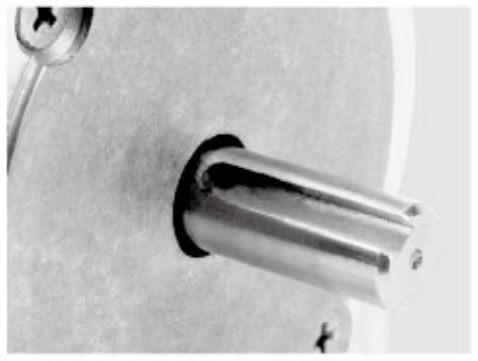
Understanding Overheating in Geared Stepper Motors
Geared stepper motor overheating is mainly caused by excessive current, continuous holding torque, gearbox friction, poor ventilation, and overload conditions. Proper driver settings, cooling, lubrication, and motor sizing are essential for stable continuous-duty performance and longer service life.
Geared stepper motors are widely used in industrial automation, robotics, CNC machinery, medical equipment, packaging systems, and precision positioning applications because of their excellent torque output and accurate motion control. However, one of the most common operational challenges in long-duration applications is overheating during continuous duty cycles.
When a geared stepper motor operates continuously without proper thermal management, excessive heat accumulation can reduce efficiency, shorten motor lifespan, damage insulation materials, degrade lubrication inside the gearbox, and eventually cause complete system failure. Understanding the root causes of overheating is essential for improving reliability and maintaining consistent performance.
How Continuous Duty Cycles Affect Geared Stepper Motors
Continuous duty cycles place significant thermal and mechanical stress on geared stepper motors, especially in industrial automation systems that require uninterrupted operation for long periods. Unlike intermittent applications where motors have time to cool between operating cycles, continuous-duty operation keeps the motor energized almost constantly, causing heat to accumulate inside both the motor and gearbox assembly.
A geared stepper motor operating under continuous load must repeatedly maintain torque, positioning accuracy, and rotational stability without sufficient cooling intervals. Over time, this continuous electrical and mechanical activity can reduce efficiency, accelerate component wear, and increase the risk of overheating-related failures.
Constant Current Draw and Heat Generation
One of the defining characteristics of stepper motors is that they consume current continuously, even when holding a fixed position. During continuous duty cycles, the motor windings remain energized for extended periods, producing a constant flow of heat through electrical resistance.
This heat primarily originates from:
Copper losses in the motor windings
Magnetic core losses
Driver switching losses
Mechanical friction inside the gearbox
As operating time increases, internal temperatures gradually rise if the generated heat cannot dissipate efficiently.
Increased Thermal Stress on Motor Windings
Continuous operation subjects the motor coils to long-term thermal stress. Elevated winding temperatures can weaken insulation materials and reduce electrical efficiency.
Common Effects of Excessive Winding Temperature
Reduced torque stability
Increased resistance in coils
Higher power consumption
Insulation degradation
Shortened motor lifespan
If winding temperatures exceed the insulation class rating, permanent electrical damage may occur.
Gearbox Friction During Continuous Operation
In geared stepper motors, the gearbox introduces additional mechanical heat sources that are not present in standard stepper motors.
Sources of Gearbox Heat
Gear tooth contact friction
Bearing resistance
Lubricant shear
Shaft misalignment
Backlash-related vibration
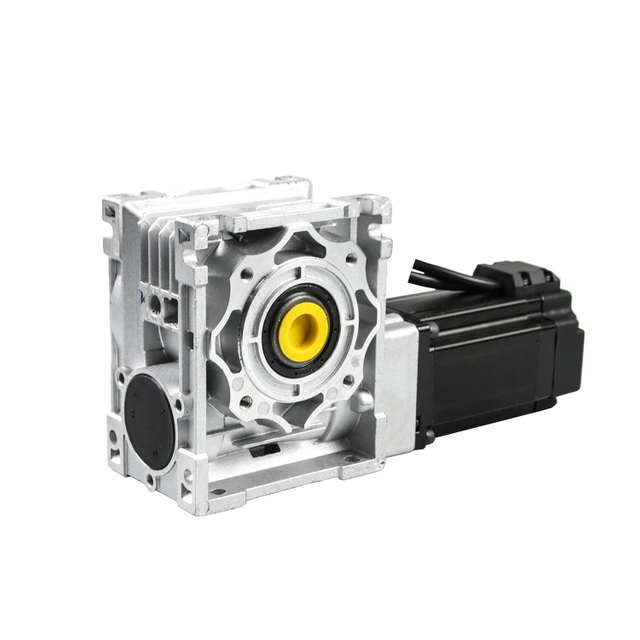
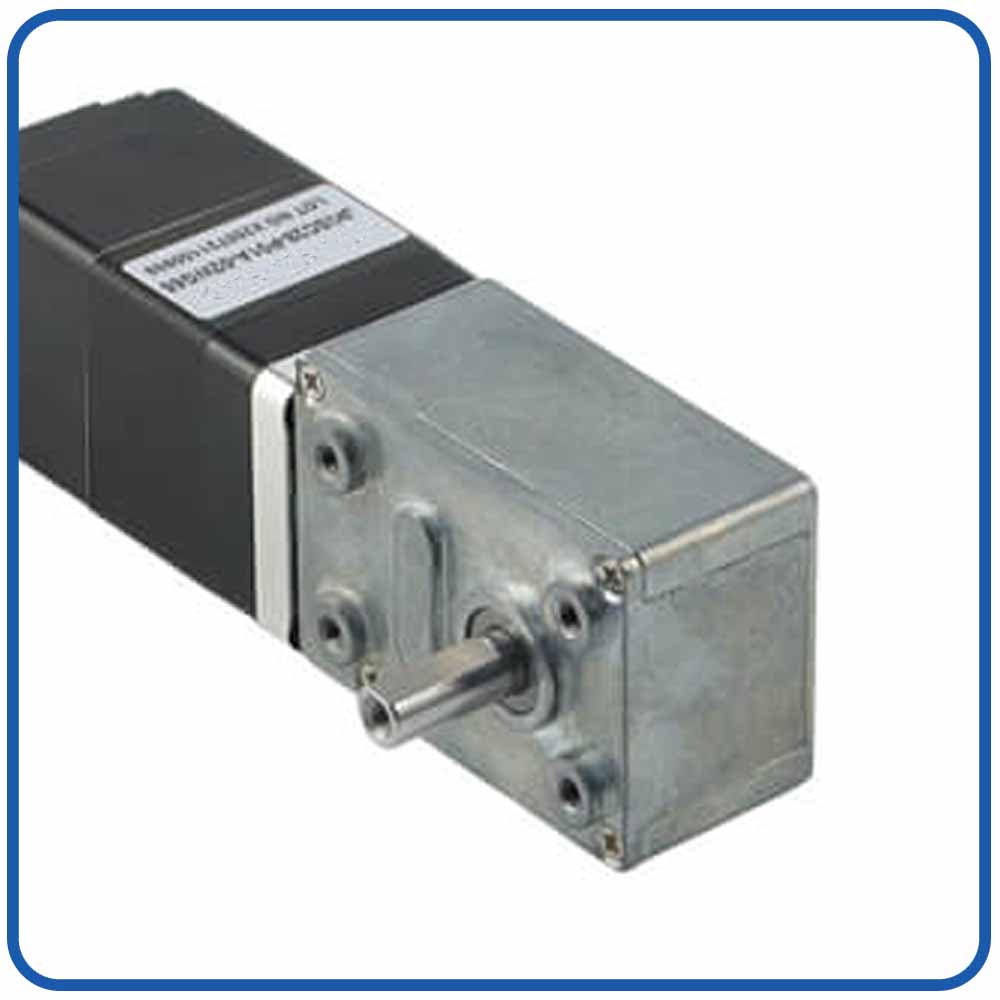
Under continuous duty cycles, these frictional forces remain active for long periods, causing thermal buildup inside the gearbox housing. Worm gear systems are particularly prone to higher operating temperatures because of their sliding contact mechanism.
Continuous Holding Torque Requirements
Many industrial applications require the motor to maintain position under load continuously. In these situations, the motor remains fully energized even when no motion occurs.
Applications with Constant Holding Torque
Vertical lifting equipment
Robotic arm positioning
Conveyor indexing systems
Medical automation devices
Precision assembly machinery
Maintaining holding torque continuously increases current consumption and heat generation significantly.
Reduced Cooling Efficiency Over Time
As the motor temperature rises during continuous operation, cooling efficiency may decrease. Heat dissipation depends heavily on environmental conditions, airflow, and mounting structure design.
Factors That Reduce Cooling Performance
Enclosed installations
Poor ventilation
High ambient temperatures
Dust accumulation
Nearby heat-producing equipment
Without proper airflow or heat transfer surfaces, thermal energy becomes trapped around the motor body and gearbox.
Impact on Motor Performance
Continuous duty cycles can gradually affect overall motor performance and motion accuracy.
Common Performance Issues
Missed steps
Reduced positioning precision
Increased vibration
Torque instability
Driver thermal shutdown
Reduced acceleration capability
As temperatures increase, magnetic efficiency inside the motor can decrease, reducing available torque output.
Effect on Gearbox Lubrication
Extended operating temperatures can also affect gearbox lubrication quality. Excessive heat causes lubricants to lose viscosity and protective properties.
Lubrication Problems Caused by Heat
Increased gear wear
Higher friction
Bearing damage
Noise increase
Reduced gearbox efficiency
In severe cases, lubricant breakdown can lead to premature gearbox failure.
Electrical Driver Stress in Continuous Operation
Continuous-duty applications place heavy demands on the motor driver as well.
Driver-Related Thermal Challenges
Continuous current regulation
High switching frequency
Increased internal component temperature
Thermal overload conditions
Modern digital drivers often include thermal protection systems to prevent damage during prolonged operation.
How Load Conditions Influence Heat Buildup
The amount of heat generated during continuous operation depends heavily on load conditions.
High-Load Applications
Motors operating near maximum torque capacity generate significantly more heat because higher current is required.
High-Speed Applications
At elevated speeds, internal switching losses and gearbox friction increase, further raising operating temperatures.
Frequent Start-Stop Motion
Rapid acceleration and deceleration cycles create additional thermal stress due to repeated current spikes.
Preventing Overheating During Continuous Duty Cycles
To improve reliability and reduce thermal buildup, several preventive measures should be implemented.
Recommended Solutions
Properly size the motor for the application
Optimize gear reduction ratios
Use current reduction during idle periods
Improve ventilation and airflow
Install external cooling systems if necessary
Select high-efficiency gearboxes
Use advanced digital stepper drivers
Monitor temperature continuously
Proper system design is essential for maintaining safe operating temperatures during continuous-duty applications.
Importance of Thermal Monitoring
Temperature monitoring is critical in systems operating continuously.
Common Monitoring Methods
Embedded thermistors
Thermal sensors
Infrared temperature measurement
Smart driver diagnostics
Thermal imaging inspections
Early detection of abnormal temperature rise helps prevent costly downtime and component failure.
Conclusion
Continuous duty cycles significantly affect geared stepper motors by increasing heat generation, mechanical friction, and long-term thermal stress. Because the motor remains energized continuously, both the electrical windings and gearbox components experience ongoing thermal buildup that can reduce efficiency and shorten service life.
Proper motor sizing, optimized driver settings, efficient cooling, and regular maintenance are essential for maintaining reliable operation in continuous-duty environments. By controlling heat effectively, geared stepper motors can deliver stable torque, accurate positioning, and long-term durability even in demanding industrial applications.
Primary Causes of Geared Stepper Motor Overheating
1. Excessive Current Supply
One of the leading causes of overheating is supplying more current than the motor’s rated specification.
Stepper motors naturally draw current continuously, even when holding position. If the driver current is set too high, copper losses inside the windings increase dramatically.
Effects of Excessive Current
Increased winding temperature
Insulation breakdown
Magnetic saturation
Reduced motor lifespan
Increased power consumption
Prevention Methods
Match driver current to motor ratings
Use current-limiting drivers
Enable idle current reduction features
Monitor winding temperature regularly
Modern digital stepper drivers often include automatic current reduction during holding states, significantly reducing heat generation.
2. High Holding Torque Requirements
In many automation systems, geared stepper motors must maintain holding torque continuously to prevent movement under load.
Maintaining holding torque requires continuous energization of the motor coils, which produces constant heat.
Typical Applications
Vertical lifting systems
Positioning tables
Conveyor indexing systems
Robotic joints
Solutions
Use electromagnetic brakes when possible
Reduce holding current during idle periods
Select higher gear ratios to reduce motor load
Optimize mechanical balancing
A properly selected gear ratio can dramatically lower required motor torque, reducing thermal stress.
3. Poor Ventilation and Heat Dissipation
Continuous operation requires efficient heat transfer away from the motor body. Poor airflow or confined installation spaces often trap heat around the motor and gearbox assembly.
Common Installation Problems
Enclosed control cabinets
High ambient temperatures
Lack of cooling fans
Mounting near heat-generating equipment
Thermal Management Improvements
Add forced-air cooling
Use aluminum mounting plates as heat sinks
Increase spacing between components
Improve cabinet ventilation
Install external cooling systems
Proper ventilation alone can reduce motor operating temperatures significantly.
The Role of Gearboxes in Motor Overheating
Mechanical Friction Inside the Gearbox
Unlike standard stepper motors, geared stepper motors contain additional moving components such as:
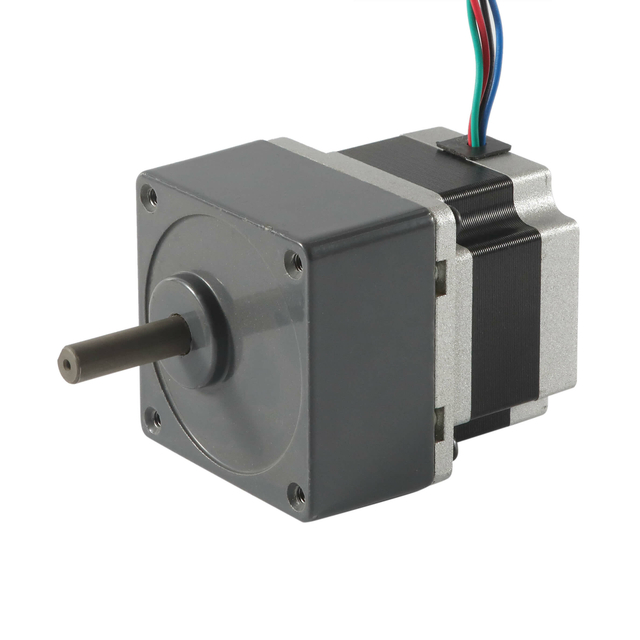
Spur gears
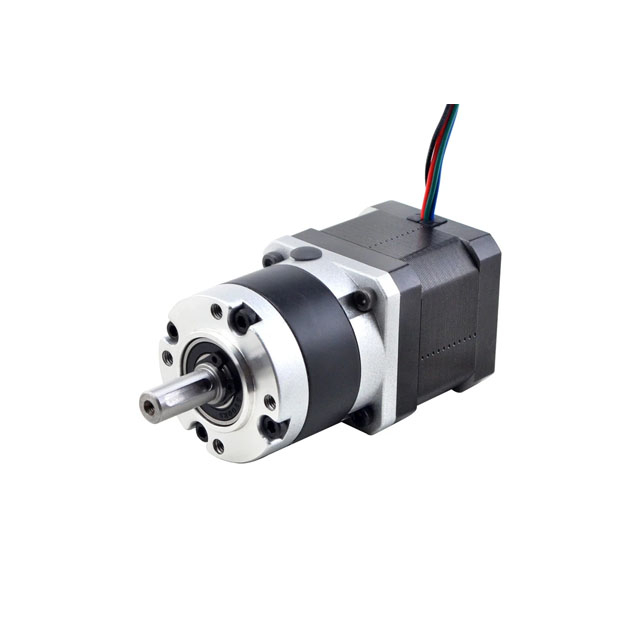
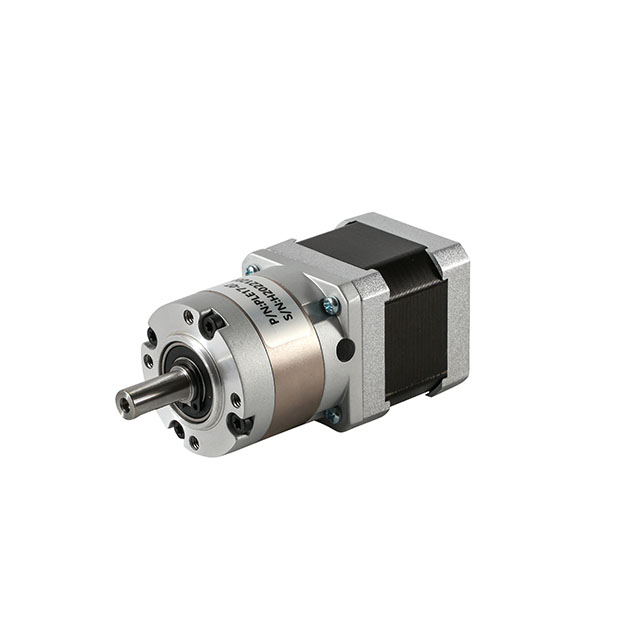
Planetary gears
Worm gears
Bearings
Shafts
These components generate mechanical friction during operation.
Friction-Related Heat Sources
Gear tooth contact
Bearing resistance
Lubricant shear
Misalignment
Gear backlash
Low-quality gearboxes often produce more heat because of poor machining tolerances and inefficient lubrication systems.
Improper Lubrication
Gearbox lubrication is essential for minimizing friction and thermal buildup.
Problems Caused by Poor Lubrication
Increased wear
Gear tooth damage
Excessive friction
Noise and vibration
Elevated operating temperature
Best Practices
Use manufacturer-recommended lubricants
Replace grease periodically
Avoid over-lubrication
Monitor lubricant contamination
In high-temperature environments, synthetic lubricants generally perform better than standard grease formulations.
Load-Related Causes of Overheating
Oversized Mechanical Loads
Continuous operation under excessive load forces the motor to consume more current to maintain torque.
Consequences
Increased winding heat
Gear stress
Reduced efficiency
Higher energy consumption
Corrective Actions
Verify torque calculations
Reduce load inertia
Use larger motor frames
Increase gearbox reduction ratio
Selecting the proper motor size is critical for long-term thermal stability.
Frequent Acceleration and Deceleration
Rapid start-stop cycles generate additional heat because the motor must repeatedly overcome inertia.
Heat Sources During Dynamic Motion
Peak current spikes
Mechanical shock
Increased copper losses
Rotor instability
Optimization Methods
Use smoother acceleration profiles
Reduce jerk settings
Optimize motion control parameters
Employ microstepping drivers
Advanced motion tuning can significantly reduce operating temperatures.
Electrical Factors Behind Overheating
Incorrect Driver Configuration
Improper driver settings are among the most overlooked causes of stepper motor overheating.
Common Driver Errors
Excessive current settings
Incorrect microstepping configuration
Poor voltage matching
Inadequate decay mode settings
Recommended Practices
Match driver voltage carefully
Tune current settings accurately
Use anti-resonance drivers
Enable standby current reduction
Digital drivers generally provide better thermal efficiency than older analog models.
High Supply Voltage
Using excessively high voltage increases switching losses and internal heating.
Although higher voltage can improve high-speed performance, it must remain within safe operating limits.
Safe Voltage Selection
Follow manufacturer recommendations
Balance speed and thermal performance
Monitor driver temperatures
Use regulated power supplies
Environmental Conditions That Increase Motor Temperature
High Ambient Temperatures
Industrial environments often expose motors to elevated ambient temperatures.
Challenging Environments
Steel mills
Packaging facilities
Textile machinery
Semiconductor production lines
When ambient temperature rises, the motor’s ability to dissipate heat decreases substantially.
Solutions
Add cooling systems
Relocate heat-sensitive components
Use motors with higher thermal ratings
Monitor operating temperature continuously
Dust and Contamination
Dust buildup acts as thermal insulation, trapping heat inside the motor housing and gearbox.
Common Contaminants
Metal particles
Textile fibers
Wood dust
Oil residue
Maintenance Recommendations
Clean motors regularly
Use sealed motor housings
Install protective covers
Perform preventive inspections
How Gear Ratio Impacts Heat Generation
The gear ratio directly affects motor speed, torque output, and efficiency.
Low Gear Ratios
Low reduction ratios force the motor to produce higher torque directly, increasing current consumption and heat generation.
High Gear Ratios
Higher ratios reduce motor workload but may increase gearbox friction if improperly designed.
Ideal Selection Strategy
Balance torque and efficiency
Avoid excessive mechanical resistance
Match ratio to application load characteristics
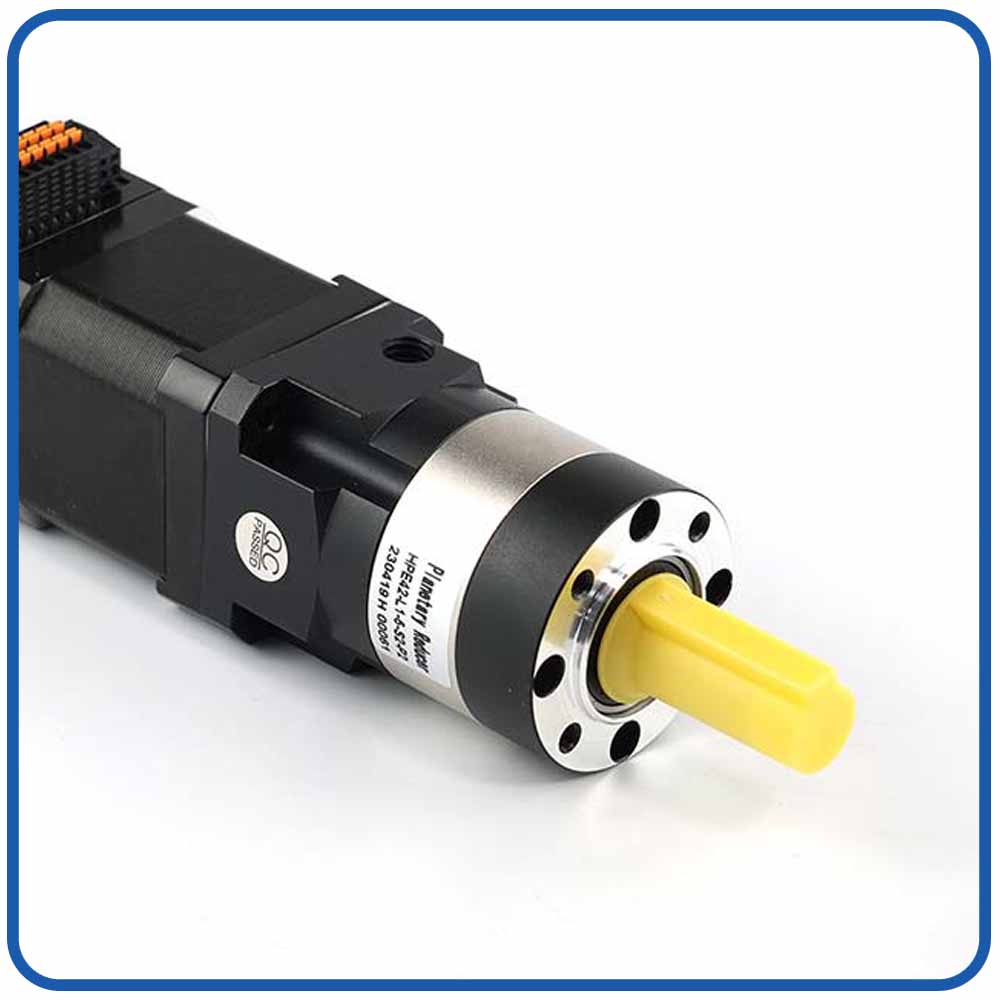
Planetary gearboxes generally provide better efficiency and lower heat generation than worm gear systems.
The Importance of Motor Sizing
Undersized motors are far more likely to overheat during continuous operation.
Symptoms of Undersized Motors
Constant high current draw
Excessive surface temperature
Torque instability
Frequent missed steps
Proper Motor Sizing Includes
Load torque analysis
Duty cycle evaluation
Thermal safety margin calculation
Speed-torque curve verification
A properly sized geared stepper motor operates more efficiently and maintains lower temperatures.
Advanced Cooling Solutions for Continuous Duty Applications
Passive Cooling
Passive cooling methods improve heat dissipation without additional power consumption.
Common Passive Solutions
Aluminum heat sinks
Thermal interface materials
Finned motor housings
Conductive mounting structures
Active Cooling
For demanding applications, active cooling becomes necessary.
Active Cooling Options
Cooling fans
Liquid cooling systems
Forced-air ventilation
Thermoelectric cooling modules
Large industrial automation systems often rely on active thermal management for reliable continuous operation.
How to Monitor Geared Stepper Motor Temperature
Temperature monitoring helps prevent unexpected failures.
Monitoring Methods
Thermistors
Embedded temperature sensors provide real-time thermal feedback.
Infrared Thermometers
Useful for quick surface temperature inspections.
Thermal Cameras
Identify localized hotspots and airflow problems.
Smart Drivers
Modern drivers can monitor current, voltage, and thermal conditions automatically.
Best Practices to Prevent Overheating
Preventing overheating in geared stepper motors is essential for maintaining stable performance, improving efficiency, and extending service life. Proper thermal management reduces the risk of missed steps, insulation damage, gearbox wear, and unexpected downtime.
1. Select the Correct Motor Size
Using an undersized motor forces it to operate near maximum capacity continuously, generating excessive heat.
Best Practice:
Choose a motor with adequate torque margin
Match the motor to the application load and duty cycle
Verify speed-torque requirements before installation
2. Optimize Driver Current Settings
Excessive current is one of the main causes of overheating.
Best Practice:
Set driver current according to the motor’s rated specifications
Enable idle current reduction features
Avoid unnecessary overcurrent settings
Proper current control reduces winding temperature significantly.
3. Improve Ventilation and Cooling
Efficient heat dissipation is critical during continuous operation.
Best Practice:
Install cooling fans or ventilation systems
Avoid confined installation spaces
Use aluminum mounting surfaces as heat sinks
Maintain airflow around the motor and gearbox
4. Reduce Continuous Holding Torque
Holding torque requires constant coil energization, which increases heat generation.
Best Practice:
Lower holding current when possible
Use mechanical brakes in vertical applications
Optimize load balancing
5. Maintain Proper Gearbox Lubrication
Poor lubrication increases friction and thermal buildup.
Best Practice:
Use recommended lubricants
Replace grease periodically
Inspect gearbox components regularly
Avoid lubricant contamination
6. Monitor Operating Temperature
Temperature monitoring helps detect problems before failure occurs.
Best Practice:
Use thermal sensors or thermistors
Perform regular temperature inspections
Monitor driver thermal alarms
Check for abnormal heat increases
7. Optimize Motion Profiles
Aggressive acceleration and deceleration create additional heat.
Best Practice:
Use smoother acceleration curves
Reduce unnecessary start-stop cycles
Optimize speed and load parameters
Preventing overheating in geared stepper motors requires proper motor sizing, accurate current control, effective cooling, regular maintenance, and optimized operating conditions. With the right thermal management strategies, geared stepper motors can deliver reliable performance and longer operational life in continuous-duty industrial applications.
Conclusion
Geared stepper motor overheating in continuous duty cycles is typically caused by a combination of excessive current, poor cooling, mechanical friction, incorrect driver settings, oversized loads, and inadequate thermal management. Because these motors operate under constant electrical excitation, heat generation is unavoidable, but it can be controlled effectively through proper system design and maintenance.
Selecting the correct motor size, optimizing gear ratios, improving airflow, reducing holding current, and maintaining gearbox lubrication are critical for reliable long-term operation. By addressing both electrical and mechanical heat sources, industrial systems can achieve higher efficiency, longer service life, and stable precision performance even under demanding continuous-duty conditions.
FAQs
Q: Why do geared stepper motors overheat during continuous operation?
A:Geared stepper motors overheat during continuous duty cycles because the motor coils remain energized for long periods, generating constant electrical heat. Additional heat is remain energized for long periods, generating constant electrical heat. Additional heat is also produced by gearbox friction, high load conditions, insufficient cooling, and incorrect driver current settings. Without proper heat dissipation, temperature gradually builds up inside the motor and gearbox assembly.
Q: Does excessive current cause geared stepper motor overheating?
A:Yes. Excessive driver current is one of the most common causes of overheating. When the supplied current exceeds the motor’s rated value, copper losses inside the windings increase significantly, leading to higher operating temperatures, reduced efficiency, and shorter motor lifespan.
Q: How does holding torque affect motor temperature?
A:Stepper motors consume current even when stationary in order to maintain holding torque. In continuous holding applications, the motor coils stay energized constantly, creating continuous heat buildup. Reducing holding current during idle periods can effectively lower motor temperature.
Q: Can poor ventilation increase the temperature of geared stepper motors?
A:Yes. Poor airflow prevents heat from dissipating efficiently. Motors installed inside enclosed cabinets, compact machinery, or high-temperature environments are more likely to overheat. Proper ventilation and cooling systems help maintain stable operating temperatures.
Q: Does gearbox friction contribute to overheating?
A:Absolutely. Gearboxes generate mechanical heat through gear meshing, bearing resistance, and lubricant friction. Low-quality lubrication, excessive backlash, or misalignment can increase friction and cause additional thermal buildup during continuous operation.
Q: How does overloading affect geared stepper motor temperature?
A:When a motor operates under excessive load, it requires higher current to maintain torque output. This increases winding heat and mechanical stress inside the gearbox. Proper motor sizing and gear ratio selection are essential for preventing overload-related overheating.
Q: Can incorrect driver settings cause overheating?
A:Yes. Incorrect current settings, improper microstepping configuration, and unsuitable voltage selection can all increase heat generation. Using a properly matched digital driver with current reduction functions helps improve thermal performance.
Q:What are the warning signs of an overheating geared stepper motor?
A:Common warning signs include excessively hot motor surfaces, reduced torque, missed steps, unusual vibration, gearbox noise, driver thermal shutdown, and declining positioning accuracy. Early detection helps prevent permanent motor damage.
Q: How can overheating in continuous-duty applications be prevented?
A:Overheating can be minimized by selecting the correct motor size, optimizing current settings, improving airflow, maintaining proper lubrication, reducing unnecessary holding current, and monitoring motor temperature regularly during operation.
Q: Are planetary gearboxes better for reducing heat generation?
A:In many applications, yes. Planetary gearboxes generally offer higher transmission efficiency and lower friction compared to worm gear systems. This helps reduce thermal buildup and improves overall motor efficiency during continuous operation.

 English
 العربية
 Français
 Русский
 Español
 Português
 Deutsch
 italiano
 日本語
日本語 한국어
한국어 Nederlands
 Tiếng Việt
 ไทย
ไทย Polski
 Türkçe
 ພາສາລາວ
 ភាសាខ្មែរ
 Bahasa Melayu
 ဗမာစာ
ဗမာစာ Filipino
 Bahasa Indonesia
 magyar
 Română
 Čeština
 Монгол
 қазақ
қазақ Српски
 हिन्दी
 فارسی
فارسی Slovenčina
 Slovenščina
 Norsk
Norsk Svenska
 українська
 Ελληνικά
 Suomi
Suomi Հայերեն
 עברית
עברית Latine
 Dansk
Dansk Shqip
Shqip বাংলা
বাংলা Hrvatski
 Afrikaans
 Gaeilge
 Eesti keel
 Oʻzbekcha
 latviešu
 Azərbaycan dili
 Български
 Català