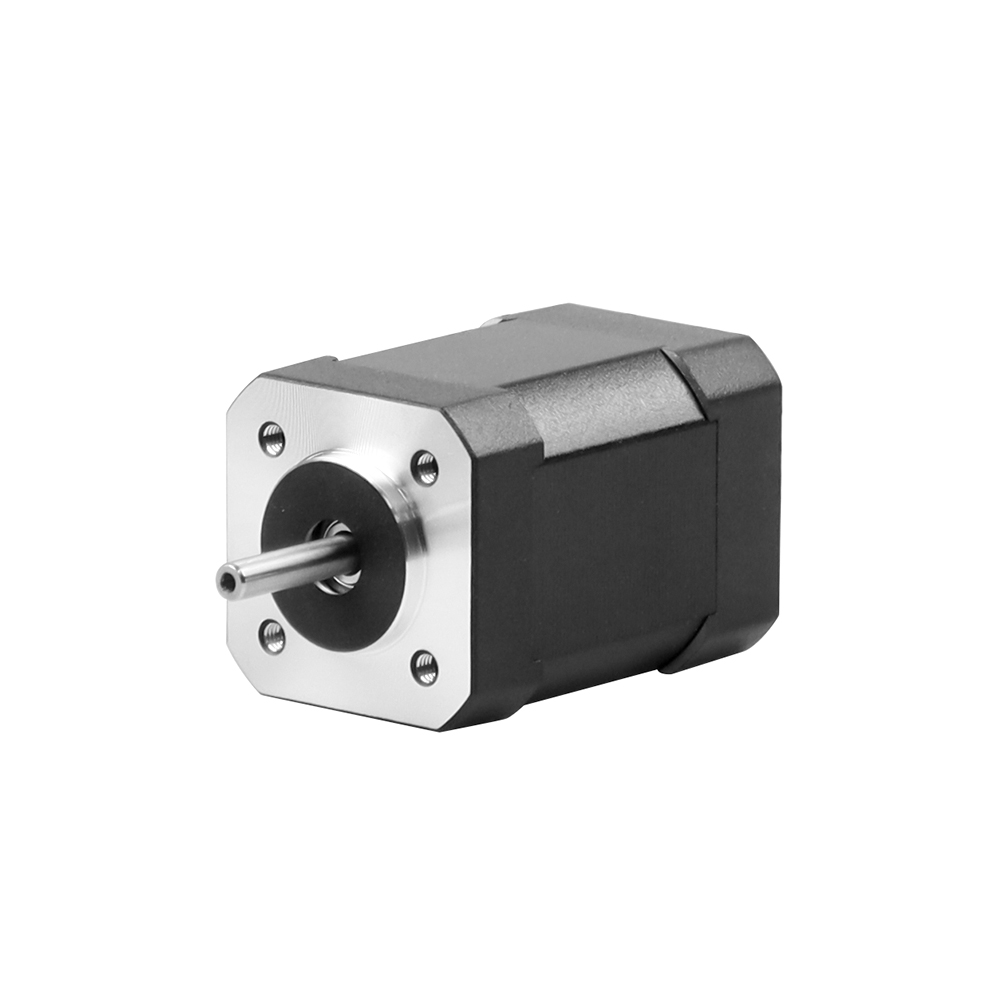
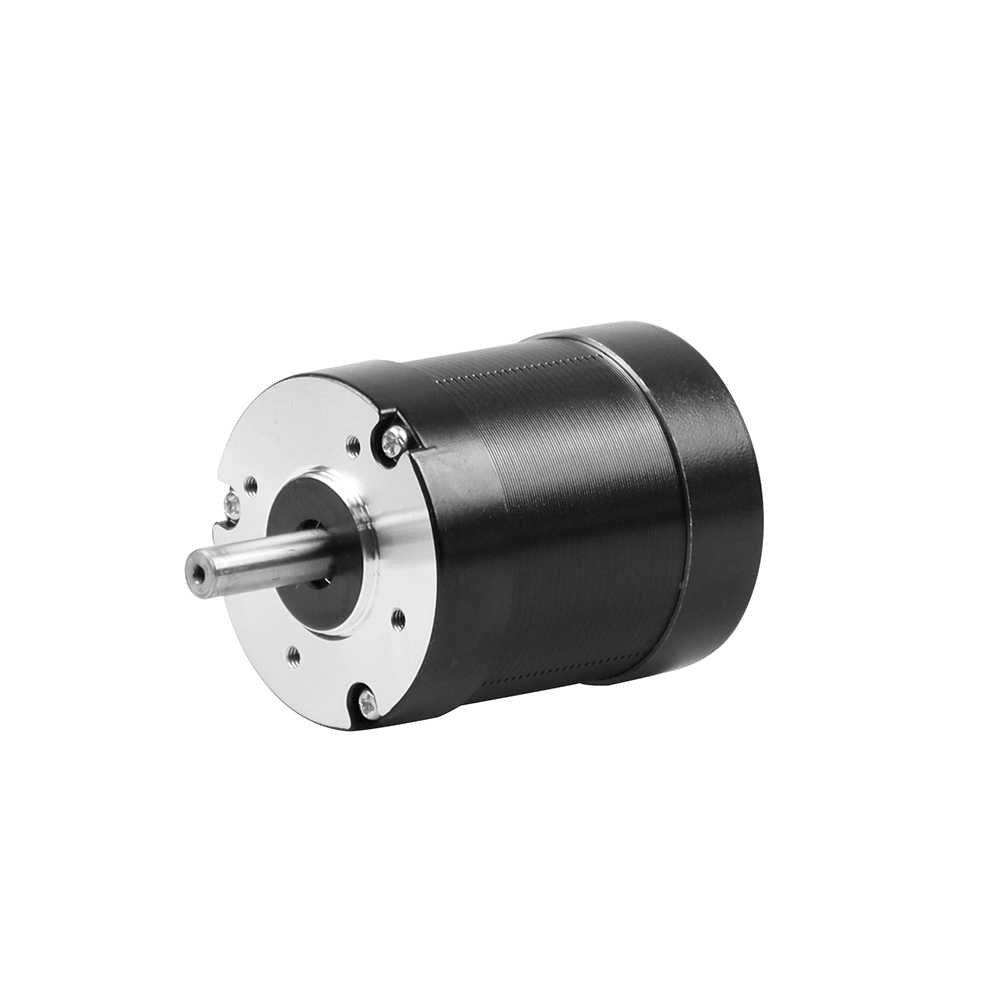
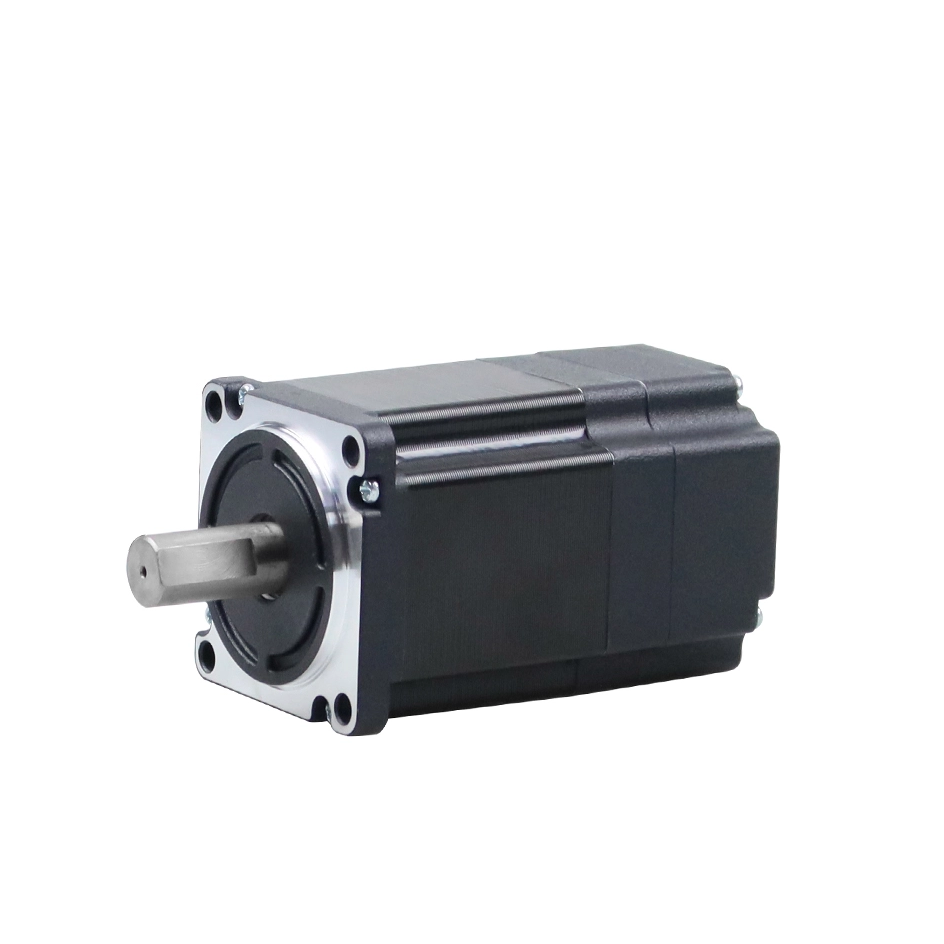
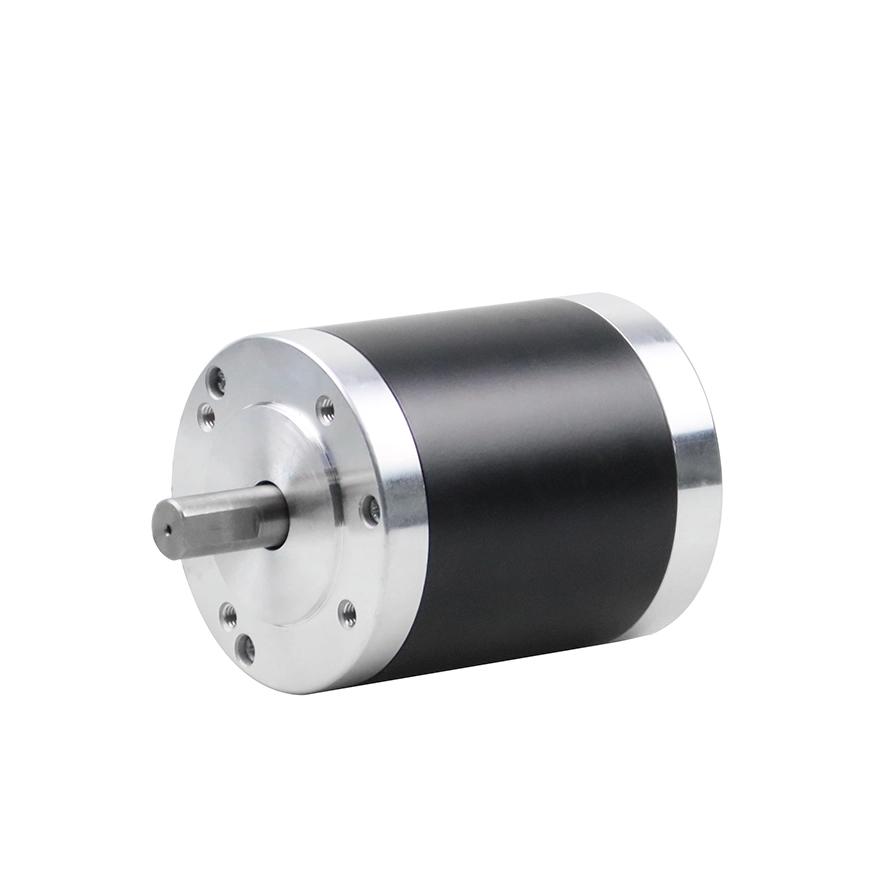
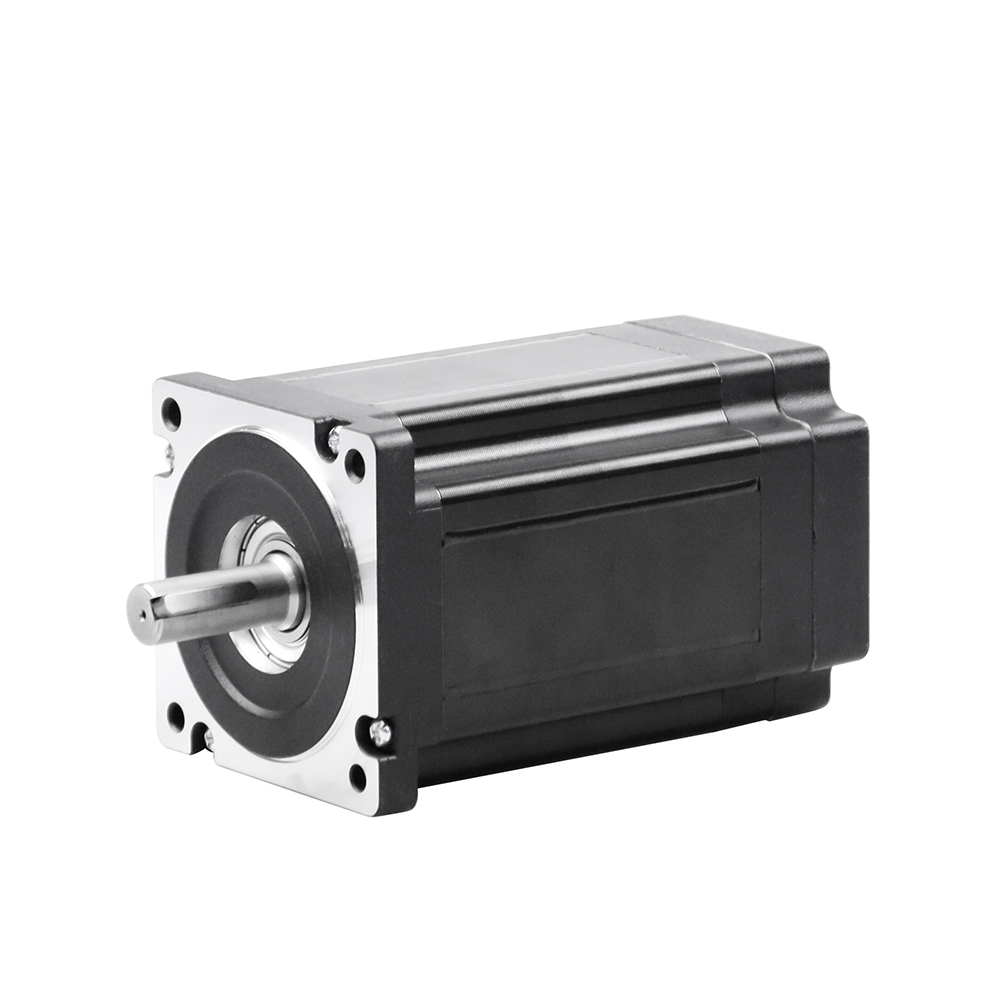
Brushless DC (BLDC) motors are widely recognized for their high efficiency, compact size, and excellent controllability. However, achieving optimal efficiency at low speed remains a technical challenge in many industrial, automotive, medical, and appliance applications. In low-speed conditions, torque ripple, copper losses, switching losses, and magnetic inefficiencies can significantly reduce overall performance.
In this comprehensive guide, we present advanced engineering strategies, design optimizations, and control techniques to dramatically improve BLDC motor efficiency at low speed, ensuring stable torque output, minimized energy loss, and enhanced thermal performance.
Understanding Low-Speed Efficiency Challenges in BLDC Motors
BLDC motors are engineered for high efficiency and dynamic performance, yet their behavior at low speed operation presents unique technical constraints that directly affect overall energy efficiency, torque stability, and thermal performance. When operating at reduced RPM, several electrical, magnetic, and mechanical factors interact in ways that increase losses and reduce system effectiveness. A detailed understanding of these low-speed efficiency challenges is essential for designing and optimizing high-performance motor systems.
1. Increased Copper Losses at High Torque Demand
At low rotational speed, a BLDC motor must generate the required torque primarily through higher phase current, since back electromotive force (back-EMF) is minimal. Torque in a BLDC motor is proportional to current, not speed. As a result:
Higher current leads to increased I⊃2;R copper losses
Winding temperature rises rapidly
Electrical efficiency drops significantly
Because copper loss increases with the square of current, even a moderate increase in current demand can dramatically reduce efficiency. This is one of the most dominant loss mechanisms during low-speed, high-torque operation.
2. Reduced Back-EMF and Poor Energy Conversion Efficiency
Back-EMF plays a critical role in balancing applied voltage and regulating current flow. At low speed:
Back-EMF amplitude is significantly reduced
The controller cannot rely on natural voltage opposition
Current regulation becomes more aggressive
With lower back-EMF, the motor draws more current from the power supply to maintain torque. This leads to reduced electrical-to-mechanical conversion efficiency and increases thermal stress on both the motor and the driver electronics.
3. Torque Ripple and Cogging Torque Effects
Low-speed operation amplifies the impact of torque ripple and cogging torque, which can significantly affect efficiency and smoothness.
Torque ripple causes micro-accelerations and decelerations
Mechanical vibration increases energy dissipation
Acoustic noise becomes more noticeable
Cogging torque, generated by magnetic interaction between rotor magnets and stator slots, becomes especially problematic at low RPM because it creates resistance to smooth rotation. The motor must overcome this magnetic locking effect, consuming additional current and lowering efficiency.
4. Switching Losses in Power Electronics
Although switching losses are often associated with high-speed operation, they remain relevant at low speed due to PWM modulation:
Frequent switching generates heat in MOSFETs
Gate drive inefficiencies increase total energy loss
Current ripple may become more pronounced
At low RPM, improper PWM frequency selection can cause unnecessary switching activity relative to mechanical output power. This reduces overall system efficiency and increases thermal load in the motor driver circuitry.
5. Magnetic Core Losses Under PWM Control
Even at low mechanical speed, the stator core is exposed to high-frequency magnetic flux variations due to PWM switching. This leads to:
Core losses do not disappear at low RPM because they are tied to electrical frequency and switching behavior rather than purely mechanical rotation. If the control strategy is not optimized, magnetic inefficiency becomes a hidden source of energy loss.
6. Inefficient Current Waveform at Low Speed
In trapezoidal commutation systems, current waveforms are not perfectly current waveforms are not perfectly aligned with rotor magnetic fields. At low speed, this misalignment becomes more impactful:
Non-sinusoidal current increases harmonic losses
Torque production per ampere decreases
Electrical losses accumulate in windings
Without advanced control techniques such as Field-Oriented Control (FOC), low-speed efficiency suffers due to suboptimal current vector positioning relative to rotor flux.
7. Rotor Position Detection Limitations
Accurate rotor position feedback is essential for efficient commutation. At low speed:
Back-EMF signals are weak
Sensorless control becomes less reliable
Phase timing errors may occur
Incorrect commutation timing results in phase current spikes and inefficient torque production. Even minor phase misalignment can significantly increase losses and reduce smoothness at low RPM.
8. Thermal Sensitivity and Resistance Increase
Temperature rise has a compounding effect on efficiency. As copper windings heat up:
Electrical resistance increases
Additional copper losses are generated
Efficiency declines further
Low-speed operation often involves sustained high torque, which accelerates heat buildup. Without proper thermal management, this creates a negative feedback loop where rising temperature reduces efficiency even more.
9. Mechanical Friction and Bearing Losses
At low speed, mechanical losses represent a larger percentage of total output power because mechanical output is relatively small. Key contributors include:
Bearing friction
Shaft misalignment
Lubrication resistance
Seal drag
Although these losses may be small in absolute terms, they are proportionally significant during low-speed operation, reducing net efficiency.
10. Power Supply and Voltage Instability
Low-speed BLDC performance is highly sensitive to voltage fluctuations:
Voltage ripple increases current ripple
Torque stability is affected
Energy conversion efficiency decreases
Inadequate DC bus regulation or insufficient filtering can worsen low-speed inefficiencies, especially in battery-powered systems.
System-Level Impact of Low-Speed Inefficiencies
When these factors combine, the result is:
Higher input current for the same torque
Increased heat generation
Reduced battery life in portable systems
Lower overall motor lifespan
Poor torque smoothness and vibration issues
Efficiency at low speed is not determined by a single parameter. It is the result of interaction between motor design, magnetic materials, control strategy, power electronics, and mechanical precision.
Strategic Importance of Addressing Low-Speed Efficiency
Many critical applications rely heavily on low-speed operation, including:
Robotics and automation systems
Electric vehicles during startup
Medical equipment
Conveyor systems
Precision positioning platforms
In these applications, low-speed efficiency directly affects energy consumption, system reliability, acoustic performance, and long-term durability.
Understanding the root causes of low-speed efficiency challenges in BLDC motors provides the foundation for targeted optimization strategies that reduce losses, stabilize torque output, and maximize overall performance.
Optimize Winding Design for Low-Speed Performance
High Slot Fill Factor and Low Resistance Windings
Improving efficiency at low speed starts with minimizing copper losses. We achieve this by:
Increasing the slot fill factor
Using high-conductivity copper windings
Optimizing wire gauge to balance resistance and thermal rise
Implementing litz wire in high-frequency switching applications
Lower winding resistance directly reduces I⊃2;R losses, which are dominant in low-speed, high-torque conditions.
Optimized Turns Ratio
Designing the motor with a higher number of turns per phase can enhance torque constant (Kt), allowing the motor to generate required torque at lower current levels. This significantly improves efficiency in applications such as robotics, conveyors, and precision positioning systems.
Reduce Cogging Torque for Smooth Low-Speed Operation
Cogging torque is one of the primary contributors to inefficiency at low speed.
Skewed Stator or Rotor Design
We implement:
Skewed stator slots
Skewed rotor magnets
This reduces magnetic alignment locking between rotor magnets and stator teeth, resulting in smoother rotation and less mechanical resistance.
Optimized Magnet Pole Arc
Adjusting the magnet pole arc to pole pitch ratio minimizes flux concentration peaks, reducing torque ripple and enhancing overall efficiency.
Advanced FOC Control for Maximum Low-Speed Efficiency
Field-Oriented Control (FOC) Implementation
For low-speed BLDC operation, FOC (Field-Oriented Control) dramatically outperforms trapezoidal commutation.
FOC advantages include:
By aligning stator current vector with rotor magnetic flux, we ensure maximum torque per ampere (MTPA), reducing unnecessary current draw.
Maximum Torque Per Ampere (MTPA) Strategy
Implementing MTPA algorithms ensures that the motor produces required torque with minimal current input, improving efficiency especially in battery-powered systems.
Optimize PWM Frequency and Switching Strategy
Adaptive PWM Frequency Control
At low speed, inappropriate PWM frequency increases switching losses and iron losses.
We enhance efficiency by:
Using adaptive PWM frequency scaling
Lowering switching frequency at low RPM
Implementing space vector PWM (SVPWM)
SVPWM reduces harmonic distortion and improves DC bus utilization, leading to lower current ripple and improved efficiency.
Improve Magnetic Circuit Design
High-Grade Magnetic Materials
Using high-energy-density NdFeB magnets improves magnetic flux density, allowing higher torque generation without excessive current draw.
Low-Loss Electrical Steel Laminations
Selecting premium silicon steel with low hysteresis and eddy current losses significantly enhances efficiency, particularly in PWM-driven systems.
Thinner lamination stacks further reduce core losses, improving low-speed magnetic performance.
Thermal Management for Sustained Efficiency
Efficiency is directly influenced by temperature rise. Higher temperature increases winding resistance, reducing performance.
Enhanced Cooling Architecture
We implement:
Optimized ventilation paths
Aluminum housing for better heat dissipation
Liquid cooling for high-performance applications
Thermal interface materials (TIMs)
Maintaining lower operating temperatures preserves copper conductivity and magnetic strength, ensuring consistent low-speed efficiency.
Sensor Precision and Low-Speed Stability
At low RPM, rotor position detection becomes critical.
High-Resolution Encoders
Using high-resolution magnetic or optical encoders improves commutation accuracy, eliminating phase misalignment and unnecessary current spikes.
Sensorless Control Optimization
For sensorless BLDC systems, we apply:
Back-EMF observer refinement
Low-speed startup algorithms
High-frequency signal injection techniques
These methods ensure stable torque production even when back-EMF is minimal.
Gear Reduction for Optimal Operating Zone
Sometimes improving low-speed efficiency involves mechanical system optimization.
Planetary Gear Integration
By integrating a planetary gearbox, we allow the motor to operate in a higher, more efficient RPM range while delivering required output torque at low speed.
This approach:
Gear optimization is especially effective in electric vehicles, automation equipment, and medical devices.
Optimize Power Electronics and Driver Efficiency
Low RDS(on) MOSFETs
Selecting MOSFETs with ultra-low on-resistance reduces conduction losses during high-current low-speed operation.
Synchronous Rectification
Using synchronous rectification minimizes diode conduction losses, enhancing controller efficiency.
Efficient Gate Drive Design
Proper dead-time control prevents cross-conduction losses and improves switching efficiency.
Implement Intelligent Current Limiting
At low speed, overcurrent conditions are common when high torque is demanded.
Dynamic Current Control Algorithms
Smart controllers use:
This prevents energy waste and protects the motor from thermal overload.
Rotor Inertia and Mechanical Optimization
Mechanical inefficiencies directly affect low-speed performance.
Lightweight Rotor Construction
Reducing rotor inertia:
Decreases startup current demand
Enhances dynamic response
Improves overall efficiency
Precision Bearing Selection
Using low-friction, high-quality bearings reduces mechanical drag, contributing to higher low-speed efficiency.
Power Supply Stability and Voltage Optimization
Voltage fluctuations significantly impact BLDC efficiency at low speed.
Stable DC Bus Regulation
Maintaining clean and stable voltage ensures:
Using high-quality capacitors and EMI filtering further enhances system stability.
Application-Specific Motor Customization
Standard motors may not deliver optimal low-speed efficiency for specialized applications.
Custom BLDC Motor Design
We optimize:
Pole-slot combination
Stack length
Winding configuration
Magnet thickness
Air gap precision
Custom engineering ensures the motor is designed specifically for low-speed torque efficiency rather than high-speed output.
Efficiency Testing and Validation at Low RPM
Laboratory validation is essential.
Dynamometer Testing
Testing torque vs. current curves at low RPM helps identify:
Copper loss trends
Core loss distribution
Thermal rise patterns
Efficiency Mapping
We generate detailed efficiency maps across speed and load ranges to precisely tune control algorithms and hardware parameters.
Integrated Approach to Low-Speed BLDC Efficiency
Achieving high efficiency in BLDC motors at low speed cannot be accomplished through isolated design changes or controller adjustments alone. Low-speed operation exposes inefficiencies across electrical, magnetic, thermal, mechanical, and control domains. Only an integrated, system-level approach—where motor design, power electronics, control algorithms, and application mechanics are optimized together—can deliver stable torque, reduced losses, and long-term reliability.
1. Holistic Motor Design Optimization
Low-speed efficiency begins at the motor's electromagnetic foundation. Designing a BLDC motor specifically for low-speed operation requires balancing torque density, current utilization, and magnetic stability.
Key design considerations include:
Optimized pole-slot combinations to reduce cogging torque
Higher torque constant (Kt) to minimize current demand
Narrow air gap control for improved magnetic coupling
Appropriate stack length to maximize torque without increasing losses
Rather than maximizing top-speed capability, low-speed–optimized motors prioritize torque per ampere, which is the primary determinant of efficiency in this operating region.
2. Winding Architecture and Copper Loss Reduction
Copper losses dominate low-speed inefficiency. An integrated approach focuses on reducing electrical resistance while maintaining thermal stability.
Effective strategies include:
Increasing slot fill factor using precision winding techniques
Selecting optimal conductor diameter to balance resistance and heat dissipation
Applying parallel winding paths to reduce phase resistance
Utilizing high-purity copper to improve conductivity
By minimizing I⊃2;R losses, the motor can deliver high torque at low speed with significantly reduced energy waste.
3. Magnetic Circuit Refinement for Stable Torque
Magnetic inefficiencies become more pronounced at low speed due to torque ripple and flux harmonics.
Integrated magnetic optimization involves:
Using high-energy-density permanent magnets to maintain flux at low RPM
Optimizing magnet pole arc to smooth air-gap flux distribution
Applying skewed stator slots or rotor magnets to suppress cogging torque
Selecting low-loss electrical steel laminations to reduce hysteresis and eddy current losses
These measures ensure smooth, continuous torque output with minimal magnetic resistance.
4. Advanced Control Algorithms for Low-Speed Operation
Control strategy is one of the most influential factors in low-speed BLDC efficiency.
Field-Oriented Control (FOC)
FOC enables precise current vector alignment with rotor flux, delivering:
By decoupling torque and flux control, FOC ensures efficient operation even when back-EMF is weak.
Maximum Torque Per Ampere (MTPA)
MTPA algorithms dynamically adjust current vectors to generate required torque with the lowest possible current, significantly improving efficiency under low-speed, high-load conditions.
5. Power Electronics Optimization as Part of the System
Motor efficiency cannot exceed the efficiency of its drive electronics. At low speed, power electronics losses become proportionally significant.
Integrated optimization includes:
Selecting low RDS(on) MOSFETs to minimize conduction losses
Implementing adaptive PWM frequency control to reduce switching losses
Using space vector PWM (SVPWM) for smoother voltage and current waveforms
Applying accurate dead-time compensation to prevent cross-conduction
A well-matched motor-drive pair ensures that electrical energy is converted into mechanical output with minimal loss.
6. Rotor Position Feedback and Low-Speed Stability
Precise commutation is essential for low-speed efficiency.
An integrated feedback strategy may include:
High-resolution encoders for accurate rotor position detection
Optimized Hall sensor placement for consistent phase timing
Advanced sensorless algorithms such as high-frequency signal injection
Accurate position feedback prevents phase misalignment, reduces current spikes, and ensures consistent torque generation.
7. Thermal Management Embedded into Efficiency Design
Thermal behavior directly influences electrical efficiency. Rising temperature increases winding resistance, leading to higher losses.
Integrated thermal strategies include:
Aluminum or finned motor housings for improved heat dissipation
Optimized airflow paths or forced cooling
High-performance thermal interface materials
Continuous thermal monitoring and current derating algorithms
Maintaining stable operating temperature preserves copper conductivity and magnetic integrity, sustaining efficiency over long duty cycles.
8. Mechanical System Alignment and Friction Reduction
Mechanical losses become disproportionately impactful at low speed.
Efficiency-driven mechanical integration involves:
Low-friction, high-precision bearings
Accurate shaft alignment to reduce radial load
Optimized lubrication to minimize viscous losses
Lightweight rotor construction to reduce inertia
Reducing mechanical drag ensures that generated torque is converted into usable output rather than dissipated as heat.
9. Gear Reduction as an Efficiency Enabler
In many applications, low output speed does not require low motor speed.
Integrating a precision gearbox, such as a planetary reducer, allows the BLDC motor to operate in a higher-efficiency RPM range while delivering high output torque at low speed.
Benefits include:
Gear optimization must be treated as part of the motor system, not an afterthought.
10. Power Supply Stability and Energy Quality
Stable electrical input is essential for efficient low-speed operation.
An integrated power strategy includes:
Well-regulated DC bus voltage
High-quality capacitors for ripple suppression
EMI filtering to protect control signals
Battery management coordination in portable systems
Clean, stable power reduces current ripple, enhances torque smoothness, and prevents unnecessary losses.
11. Application-Specific Customization
Standard BLDC motors are rarely ideal for demanding low-speed applications.
An integrated efficiency approach often requires:
Custom pole-slot geometry
Tailored winding configuration
Optimized magnet grade and thickness
Application-specific control firmware
Customization ensures that every design decision supports the target operating speed, load profile, and duty cycle.
12. Efficiency Validation and Continuous Optimization
Integrated efficiency design must be validated through testing.
This includes:
Low-speed dynamometer efficiency mapping
Torque vs. current characterization
Thermal rise analysis under sustained load
Control parameter fine-tuning
Data-driven validation ensures that theoretical efficiency gains translate into real-world performance.
Conclusion: System Integration as the Key to Low-Speed BLDC Efficiency
Low-speed BLDC efficiency is not the result of a single improvement but the outcome of coordinated optimization across the entire system. By integrating motor design, magnetic engineering, control algorithms, power electronics, thermal management, and mechanical components, it is possible to achieve:
An integrated approach transforms low-speed operation from an efficiency bottleneck into a performance advantage, enabling BLDC motors to excel in precision, high-torque, and energy-sensitive applications.
FAQs: How to Improve Efficiency in BLDC Motors at Low Speed
I. Product Perspective: Low-Speed Performance & Efficiency Optimization
1. Why does a standard BLDC motor lose efficiency at low speed?
A standard BLDC motor may experience reduced efficiency at low speed due to higher copper losses, torque ripple, and non-optimized commutation timing.
2. Is low-speed BLDC motor efficiency important for energy-saving systems?
Yes, improving low-speed BLDC motor efficiency is critical in applications such as robotics, medical devices, conveyors, and HVAC systems.
3. How does torque ripple affect efficiency at low speed?
Torque ripple increases vibration and energy loss, reducing the efficiency of a BLDC motor operating at low RPM.
4. Can driver tuning improve low-speed performance?
Yes, proper current control and optimized PWM settings significantly enhance low-speed BLDC motor efficiency.
5. Does winding design impact efficiency at low speed?
Yes, optimized winding configuration from a professional BLDC motor manufacturer can reduce resistance losses.
6. How does magnetic design influence low-speed efficiency?
High-quality magnets and optimized stator design reduce core losses and improve torque output at low speed.
7. Is field-oriented control (FOC) beneficial for low-speed operation?
Yes, FOC improves smooth torque delivery and enhances low-speed BLDC motor efficiency.
8. Can gearing improve efficiency in low-speed applications?
Using a gearbox allows the BLDC motor to operate closer to its optimal efficiency range while delivering required output torque.
9. Does oversizing a standard BLDC motor reduce low-speed efficiency?
Yes, an oversized motor may operate far below its optimal load point, reducing efficiency.
10. What applications require high low-speed BLDC motor efficiency?
Applications include medical pumps, automation systems, robotics joints, electric valves, and precision positioning systems.
II. Factory Customization Capability: Engineering for Low-Speed Optimization
11. Can a BLDC motor manufacturer design motors specifically for low-speed efficiency?
Yes, a professional BLDC motor manufacturer can optimize electromagnetic design to maximize torque at low RPM.
12. What customization options are available beyond a standard BLDC motor?
Custom BLDC motors may include specialized windings, high-torque magnetic circuits, and optimized slot/pole configurations.
13. Can BLDC motors be customized to reduce copper losses?
Yes, manufacturers can increase copper fill factor and adjust winding resistance to improve low-speed BLDC motor efficiency.
14. Is it possible to integrate advanced drivers for low-speed control?
Yes, integrated motor-driver systems with FOC improve torque smoothness and efficiency.
15. Can a custom BLDC motor reduce torque ripple at low speed?
Yes, precision design and advanced manufacturing techniques help minimize torque ripple.
16. What is the typical MOQ for a custom low-speed BLDC motor?
MOQ depends on the complexity of customization, but many manufacturers support prototyping.
17. How does customization affect lead time?
A standard BLDC motor has shorter lead time, while a custom BLDC motor optimized for low-speed efficiency requires additional testing.
18. Can manufacturers provide efficiency testing data at low speed?
Yes, reputable BLDC motor manufacturers offer detailed efficiency curves and torque-speed performance reports.
19. Are high-pole-count motors better for low-speed efficiency?
Yes, higher pole count designs can improve torque output and efficiency in low-speed applications.
20. Why choose a professional BLDC motor manufacturer for low-speed projects?
A professional BLDC motor manufacturer provides engineering expertise, performance optimization, and reliable production quality for demanding low-speed applications.

 English
 العربية
 Français
 Русский
 Español
 Português
 Deutsch
 italiano
 日本語
日本語 한국어
한국어 Nederlands
 Tiếng Việt
 ไทย
ไทย Polski
 Türkçe
 ພາສາລາວ
 ភាសាខ្មែរ
 Bahasa Melayu
 ဗမာစာ
ဗမာစာ Filipino
 Bahasa Indonesia
 magyar
 Română
 Čeština
 Монгол
 қазақ
қазақ Српски
 हिन्दी
 فارسی
فارسی Slovenčina
 Slovenščina
 Norsk
Norsk Svenska
 українська
 Ελληνικά
 Suomi
Suomi Հայերեն
 עברית
עברית Latine
 Dansk
Dansk Shqip
Shqip বাংলা
বাংলা Hrvatski
 Afrikaans
 Gaeilge
 Eesti keel
 Oʻzbekcha
 latviešu
 Azərbaycan dili
 Български
 Català