Why Do Automated Warehouse Robots Use Integrated Servo Motors?
The rapid development of smart manufacturing and intelligent logistics has transformed traditional warehouses into highly automated environments. Modern automated warehouse robots, including autonomous mobile robots (AMRs), automated guided vehicles (AGVs), robotic picking systems, and pallet transportation robots, require highly precise, reliable, and efficient motion systems to operate continuously in complex environments.
Among the many drive technologies available, integrated servo motors have become a preferred solution for automated warehouse robots because they combine a high-performance motor, servo drive, encoder, and control electronics into a compact unit. This integrated design helps robot manufacturers achieve better motion control, simplified wiring, reduced installation time, and improved overall system reliability.
As warehouse automation continues to demand faster response, higher positioning accuracy, and lower maintenance costs, integrated servo motors provide the performance advantages required for next-generation robotic systems.
What Are Integrated Servo Motors Used in Automated Warehouse Robots?
Integrated servo motors are advanced motion control components widely used in automated warehouse robots, including autonomous mobile robots (AMRs), automated guided vehicles (AGVs), robotic picking systems, and automated storage and retrieval systems (AS/RS). They combine a servo motor, servo drive, encoder, and communication interface into a single compact unit, providing precise and efficient motion control for robotic applications.
In automated warehouses, integrated servo motors are mainly used to control the robot’s movement, positioning, lifting, and material handling operations. Their compact design and built-in control capabilities make them ideal for robots that require high accuracy, fast response, and reliable continuous operation.
1. Robot Wheel Drive Systems
One of the most common applications of integrated servo motors in warehouse robots is the wheel drive system of AMRs and AGVs.
The servo motor provides precise control of:
Wheel speed
Driving torque
Acceleration and deceleration
Robot positioning
With encoder feedback, the motor can continuously detect its actual position and speed, allowing the robot to maintain accurate navigation and stop precisely at designated locations.
For example, an AMR transporting goods between storage areas can use integrated servo motors to achieve smooth movement, accurate path tracking, and stable operation even under different payload conditions.
2. Lifting and Vertical Motion Mechanisms
Many warehouse robots require vertical movement to pick up, transport, or place goods. Integrated servo motors are commonly installed in lifting mechanisms to control:
Fork lifting platforms
Cargo lifting modules
Vertical storage systems
Robotic shelves
The closed-loop control of servo motors ensures precise height positioning and prevents errors during lifting operations.
Compared with traditional motors, integrated servo motors provide better control of heavy loads, smoother movement, and improved safety during repeated lifting cycles.
3. Robotic Picking and Handling Systems
In automated picking robots, integrated servo motors are used to control robotic mechanisms that require accurate movement.
Typical applications include:
Robotic arms
Grippers
Conveyor transfer modules
Product sorting mechanisms
The high positioning accuracy of servo motors allows robots to handle products of different sizes and weights while maintaining consistent performance.
For example, in an e-commerce warehouse, robotic arms equipped with integrated servo motors can precisely move to product locations, pick items, and place them into containers with high repeatability.
4. Conveyor and Sorting Modules
Automated warehouse systems often include conveyor lines and sorting equipment. Integrated servo motors can drive these mechanisms to achieve accurate speed and position control.
They are used for:
Package sorting systems
Transfer conveyors
Roller drive units
Automated loading platforms
The servo system can adjust motor speed according to real-time production requirements, improving sorting efficiency and reducing product handling errors.
5. Automated Storage and Retrieval Systems (AS/RS)
AS/RS equipment requires highly accurate movement along horizontal and vertical axes to store and retrieve goods.
Integrated servo motors are applied in:
Storage cranes
Traveling mechanisms
Lifting axes
Positioning platforms
Their high precision helps ensure that storage robots can quickly locate and access goods while minimizing positioning errors.
6. Robot Navigation and Motion Control Systems
Modern warehouse robots rely on intelligent navigation systems that require accurate motor feedback.
Integrated servo motors support advanced control systems through communication protocols such as:
CANopen
RS485
Modbus
EtherCAT
This allows warehouse robots to receive motion commands and provide real-time feedback to the central control system.
As a result, multiple robots can coordinate their movements efficiently while avoiding collisions and optimizing transportation routes.
Compared with conventional motor-drive solutions, integrated servo motors provide several advantages:
Compact structure: Reduces robot size and saves internal installation space.
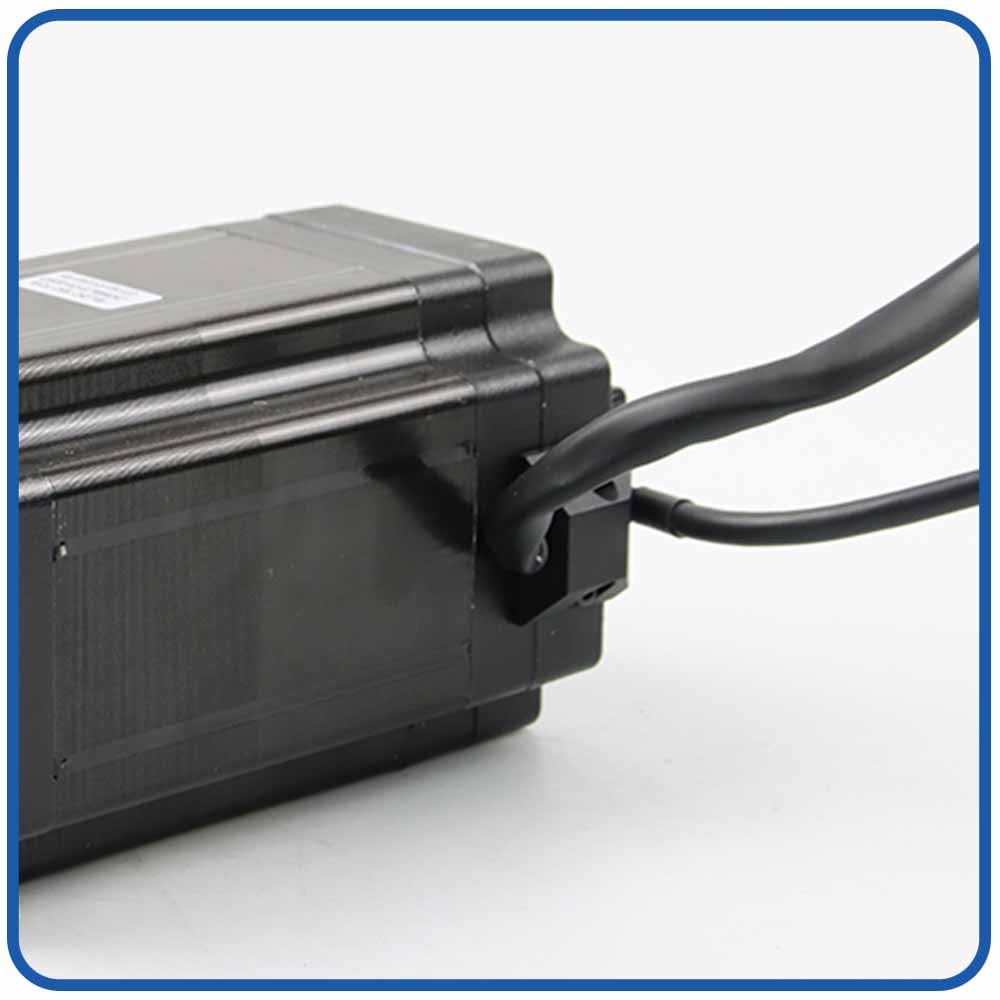
Simplified wiring: Combines multiple components into one unit, reducing cables and installation complexity.
High positioning accuracy: Encoder feedback enables precise closed-loop control.
Fast response: Provides quick acceleration, braking, and direction changes.
Energy efficiency: Optimizes power consumption for battery-operated robots.
Easy integration: Supports communication with intelligent warehouse management systems.
Improved reliability: Reduces external components and potential failure points.
Conclusion
Integrated servo motors are essential motion components in automated warehouse robots, providing accurate and reliable control for driving, lifting, positioning, picking, and material handling operations. By integrating the motor, drive, feedback system, and communication functions into a single compact solution, they help robot manufacturers develop smaller, smarter, and more efficient automation systems.
As warehouses continue moving toward intelligent and fully automated operations, integrated servo motors will play an increasingly important role in improving robotic performance, productivity, and reliability.
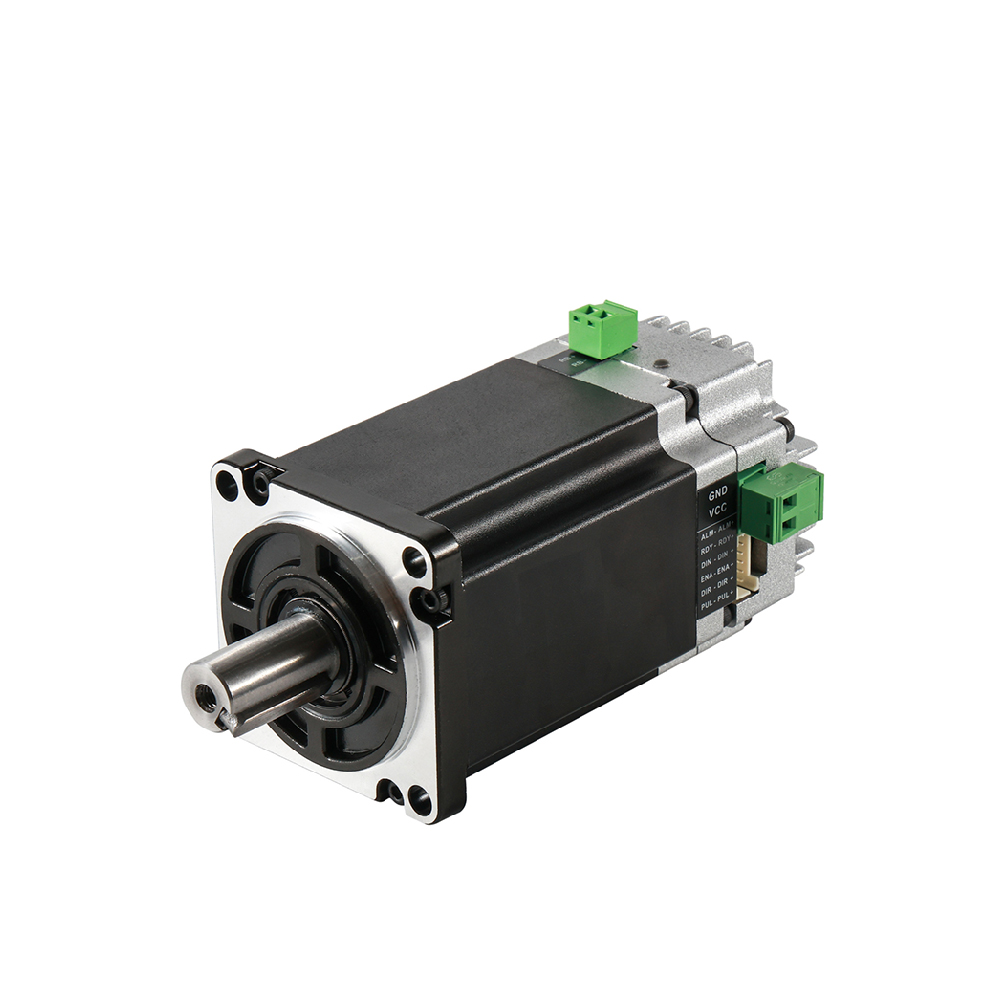
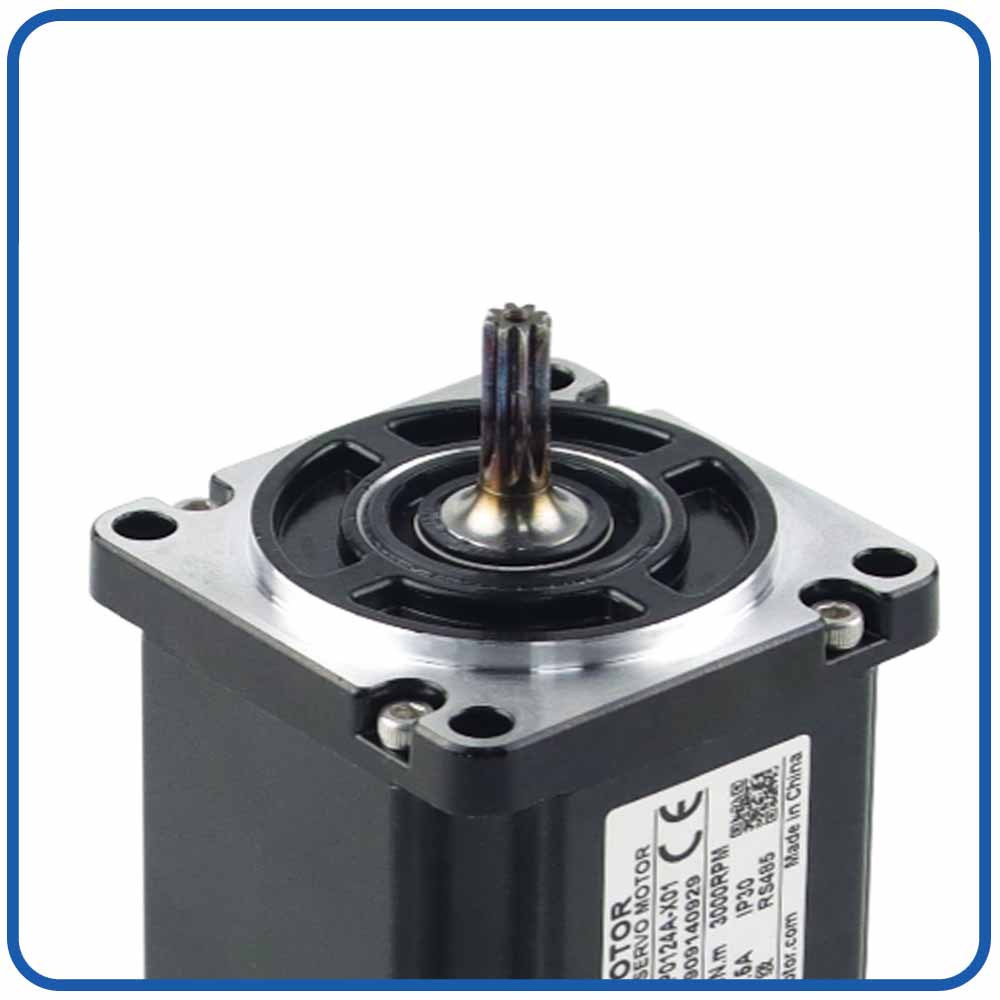
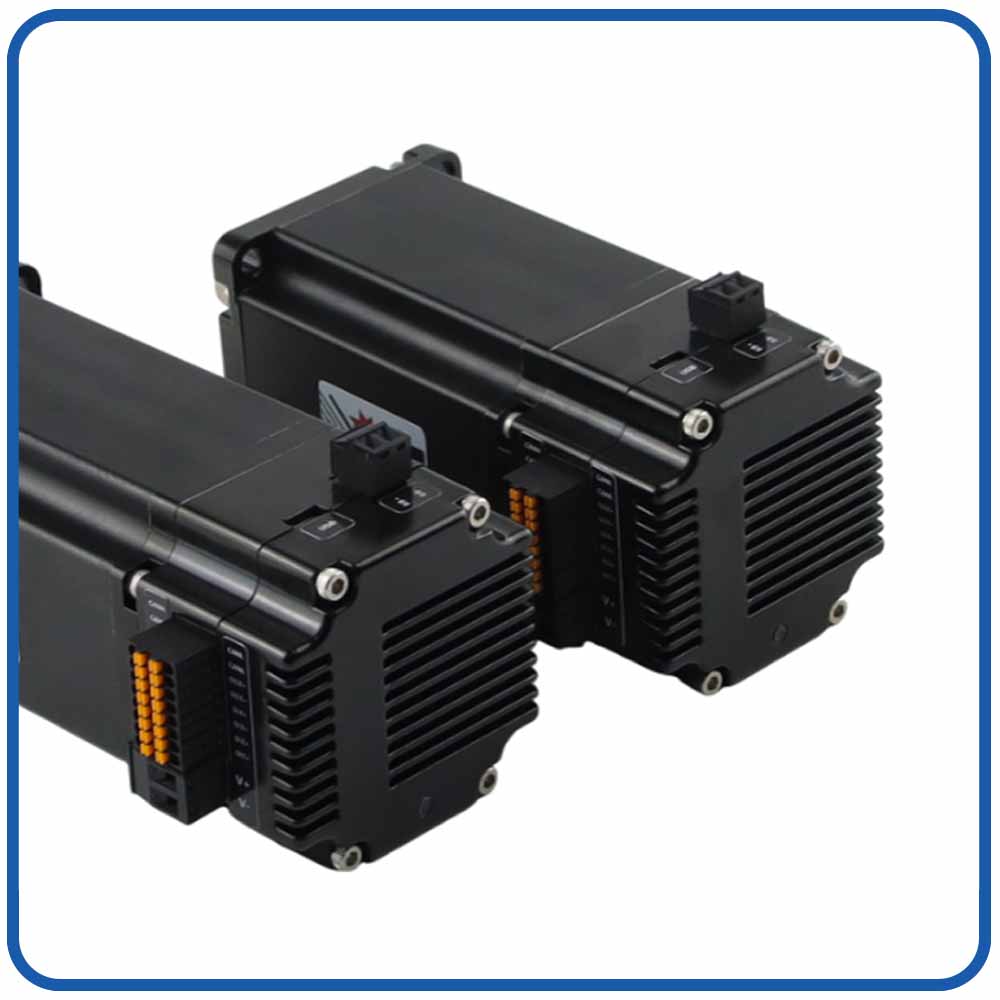
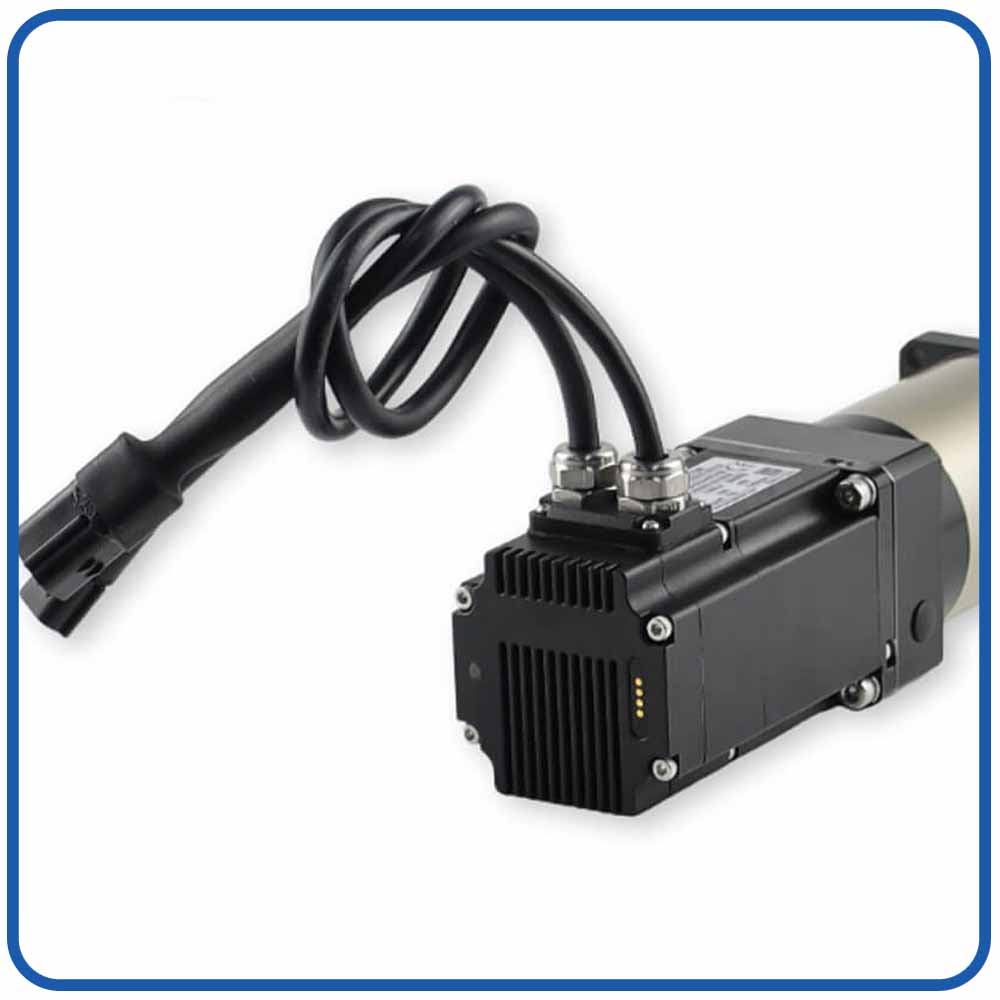
IDC60 Integrated BLDC Servo Motor — High-Efficiency, Compact, and Smart Closed-Loop Motion Control Solution
Product Overview:The IDS60 integrated BLDC servo motor from Besfoc is a compact NEMA 24 solution combining motor, drive, and encoder in one unit. It provides precise closed-loop control, stable torque, and fast response. Its integrated design reduces wiring, saves space.
Key Technical Highlights
Integrated All-in-One Design Combines BLDC motor, servo drive, and encoder in a compact unit, reducing wiring complexity and improving installation efficiency.
High-Precision Closed-Loop Control Ensures accurate position, speed, and torque regulation with real-time feedback for stable and smooth motion performance.
Powerful Modular Customization (OEM/ODM) Supports flexible customization options, including voltage, torque, communication protocols, and encoder resolution to meet diverse application requirements.
High Efficiency & Compact Structure Delivers strong torque density with optimized thermal performance, making it ideal for space-limited automation and robotics systems.
Typical Applications
Pipeline Inspection Robots Provides stable low-speed torque and precise motion control for navigating narrow, curved, and complex pipeline environments.
Automated Guided Vehicles (AGVs) Ensures smooth acceleration, accurate positioning, and reliable operation in logistics and smart warehouse systems.
Robotic Automation Systems Ideal for robotic arms, grippers, and compact motion modules requiring high precision and fast response.
Smart Manufacturing Equipment Supports high-accuracy motion control in assembly lines, packaging machines, and precision industrial automation devices.
IDS60 Series Integrated Brushless Dc Motor Parameters
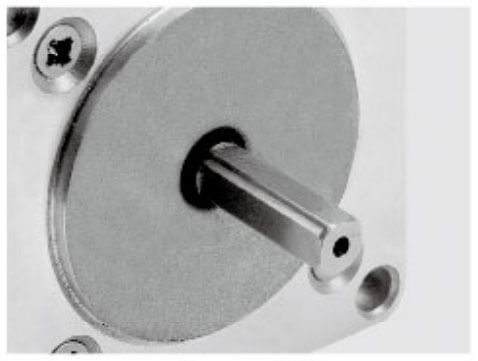
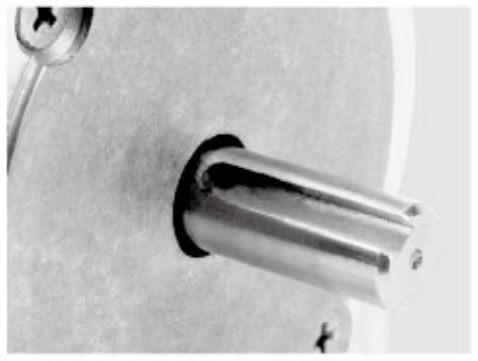
KeywayWhy Do Automated Warehouse Robots Need Servo Motors?
Automated warehouse robots operate in environments where accuracy, speed, and reliability are critical. Unlike simple transportation equipment, modern warehouse robots must navigate crowded spaces, carry different loads, stop precisely, and operate continuously.
Servo motors provide several key advantages for these applications.
1. High Positioning Accuracy for Precise Robot Movement
One of the most important requirements for warehouse robots is accurate positioning.
For example, an autonomous mobile robot transporting goods between storage areas must stop at an exact location to complete tasks such as:
Picking products
Loading materials
Connecting with conveyors
Aligning with charging stations
Integrated servo motors use encoder feedback to continuously monitor motor position and speed. The controller can automatically adjust motor operation according to real-time feedback, ensuring accurate movement even under changing loads.
This closed-loop control capability makes integrated servo motors much more precise than traditional open-loop stepper motor systems.
2. Compact Design Saves Space Inside Warehouse Robots
Space is extremely valuable in robotic equipment design. Automated warehouse robots require compact mechanical structures to move efficiently through narrow aisles and maximize storage density.
Traditional servo systems require separate installation of:
Motors
Servo drives
Control cabinets
Communication cables
This increases system size and makes robot integration more complicated.
Integrated servo motors combine these components into a single compact unit, allowing robot manufacturers to:
Reduce electrical cabinet size
Simplify internal layouts
Reduce wiring requirements
Create smaller and lighter robots
For AMRs and AGVs, a compact drive system allows more space for batteries, payload capacity, and additional sensors.
3. Simplified Wiring and Faster Robot Assembly
Wiring complexity is a major challenge in automated equipment.
A traditional motion system may require multiple cables between the motor and controller, including:
Power cables
Encoder cables
Communication cables
These additional connections increase installation time and create more potential failure points.
Integrated servo motors significantly simplify system wiring because the drive electronics are built directly into the motor assembly.
Benefits include:
Faster robot assembly
Reduced wiring errors
Easier maintenance
Lower installation costs
For warehouse automation companies producing large numbers of robots, simplified installation can significantly improve manufacturing efficiency.
4. Better Energy Efficiency for Continuous Warehouse Operation
Automated warehouse robots often operate 24 hours a day, making energy efficiency an important factor.
Integrated servo motors improve energy utilization through:
High-efficiency brushless motor technology
Intelligent current control
Real-time load adjustment
Reduced energy loss during operation
When the robot accelerates, slows down, or carries different loads, the servo system automatically adjusts power output according to actual requirements.
This reduces unnecessary energy consumption and extends battery operating time, which is especially important for battery-powered AMRs and AGVs.
5. High Dynamic Response for Fast Robotic Operations
Warehouse automation requires robots to respond quickly to changing commands.
During operation, robots frequently need to:
Start and stop rapidly
Change direction
Adjust speed
Maintain stable movement on different surfaces
Integrated servo motors provide excellent dynamic response because the controller receives continuous feedback from the encoder and immediately adjusts motor output.
This enables:
Faster acceleration
Smoother movement
Improved load handling
More stable operation
For robotic sorting systems and high-speed logistics applications, fast response directly improves overall productivity.
6. Improved Reliability in Industrial Environments
Warehouse robots often operate in demanding industrial conditions where equipment reliability is essential.
Integrated servo motors improve reliability by reducing the number of external components and connection points.
Compared with conventional systems, integrated servo motors offer:
Fewer cables
Reduced connector failures
Better protection against dust and vibration
Easier system diagnostics
Many integrated servo motors are designed with industrial communication protocols and protection features, making them suitable for long-term operation in automated warehouses.
7. Easy Integration with Smart Warehouse Control Systems
Modern warehouses rely on intelligent control platforms, including:
Warehouse Management Systems (WMS)
Warehouse Control Systems (WCS)
Robot Fleet Management Systems
Integrated servo motors support communication protocols that allow robots to exchange real-time motion data with higher-level control systems.
Common communication options include:
CANopen
RS485
Modbus
EtherCAT
Industrial Ethernet
This allows automated warehouse robots to achieve:
Coordinated multi-robot operation
Real-time status monitoring
Predictive maintenance
Intelligent motion scheduling
Applications of Integrated Servo Motors in Automated Warehouse Robots
AMR (Autonomous Mobile Robot) Drive Systems
AMRs are widely used for material transportation in smart warehouses.
Integrated servo motors are installed in the robot's drive wheels to provide:
Accurate speed control
Smooth movement
Precise positioning
Efficient battery usage
The closed-loop servo system helps AMRs navigate safely while carrying different payloads.
AGV (Automated Guided Vehicle) Motion Systems
AGVs require reliable drive systems for transporting goods between fixed locations.
Integrated servo motors provide:
Stable traction control
High torque output
Accurate stopping
Long operational lifespan
They are especially suitable for warehouse environments requiring continuous transportation.
Warehouse Picking Robots
Robotic picking systems require precise movement to handle different products.
Integrated servo motors can control:
Robotic joints
Conveyor mechanisms
Lifting modules
Gripper systems
The high positioning accuracy helps robots complete complex picking tasks efficiently.
Automated Storage and Retrieval Systems (AS/RS)
AS/RS equipment requires precise vertical and horizontal movement to store and retrieve products.
Integrated servo motors provide accurate control for:
Lifting platforms
Horizontal traveling mechanisms
Rack positioning systems
Their compact size and high reliability make them ideal for space-efficient warehouse automation.
Integrated Servo Motors vs Traditional Servo Systems for Warehouse Robots
Feature
Integrated Servo Motor
Traditional Servo System
Installation
Simple installation
Complex installation
Wiring
Reduced wiring
More cables required
Size
Compact design
Larger system structure
Maintenance
Easier troubleshooting
More components to maintain
Integration
High integration level
Requires additional components
Efficiency
Optimized energy control
Higher system losses
For modern automated warehouse robots, integrated servo motors provide a more efficient and flexible motion solution.
How Integrated Servo Motors Improve the Future of Warehouse Automation
The future of warehouse automation is moving toward higher intelligence, greater efficiency, and fully autonomous operation. As e-commerce growth, labor shortages, and increasing demand for faster logistics continue to reshape the industry, warehouses are adopting advanced robotic systems such as autonomous mobile robots (AMRs), automated guided vehicles (AGVs), robotic picking systems, and automated storage and retrieval systems (AS/RS).
At the core of these automated systems, integrated servo motors provide the precise motion control required for next-generation warehouse robots. By combining the motor, servo drive, encoder, and communication functions into one compact unit, integrated servo motors help automation equipment achieve better performance, simpler system design, and higher operational reliability.
1. Enabling Smaller and More Flexible Warehouse Robots
Modern warehouses require robots that can operate efficiently in limited spaces while handling increasingly complex tasks. Traditional motion systems often require separate motors, drives, controllers, and additional wiring, making robotic structures larger and more complicated.
Integrated servo motors reduce system size by combining multiple components into a single compact solution.
This allows warehouse robot manufacturers to design:
Smaller autonomous mobile robots
More flexible AGVs
Compact robotic arms
Space-saving storage systems
A smaller robot footprint provides several advantages, including easier navigation through narrow aisles, increased storage density, and improved flexibility when warehouse layouts change.
As warehouses move toward dynamic automation environments, compact integrated motion solutions will become increasingly important.
2. Improving Robot Precision and Operational Accuracy
Accuracy is one of the most critical requirements for automated warehouse systems. Robots must precisely locate shelves, pick products, transport materials, and complete repetitive tasks without errors.
Integrated servo motors improve accuracy through closed-loop control technology. Built-in encoders continuously monitor:
Motor position
Rotation speed
Load changes
Movement errors
The servo controller analyzes feedback data and automatically adjusts motor output to maintain accurate movement.
This enables warehouse robots to achieve:
Precise positioning
Smooth acceleration and deceleration
Reliable stopping performance
Consistent repetitive operation
For applications such as robotic picking and automated storage systems, improved accuracy directly enhances productivity and reduces product handling errors.
3. Increasing Energy Efficiency in Autonomous Robots
Energy efficiency is becoming increasingly important as more warehouses adopt battery-powered robots.
AMRs and AGVs depend on efficient power management to maximize operating time between charging cycles. Integrated servo motors help improve energy efficiency through intelligent motor control and optimized power usage.
They can automatically adjust energy output according to:
Robot speed requirements
Payload weight
Operating conditions
Movement patterns
Compared with traditional drive systems, integrated servo motors reduce unnecessary energy consumption while maintaining high performance.
For large-scale warehouses operating hundreds or thousands of robots, improved energy efficiency can significantly reduce operating costs.
4. Supporting Faster and More Responsive Robotic Operations
Future warehouses require robots that can respond quickly to changing workloads and real-time scheduling commands.
Integrated servo motors provide excellent dynamic performance because they combine high-speed control electronics with accurate feedback systems.
This allows robots to:
Accelerate quickly
Change direction smoothly
Adjust speed instantly
Handle variable loads efficiently
For example, sorting robots in high-speed logistics centers must rapidly move between different locations while maintaining precise control. Integrated servo motors provide the responsiveness required for these demanding applications.
5. Simplifying Robot Design and Manufacturing
The development of warehouse automation requires manufacturers to produce reliable robotic systems faster and more efficiently.
Traditional servo systems require complex integration between:
Motors
Servo drives
Controllers
Communication cables
This increases engineering time and creates additional installation challenges.
Integrated servo motors simplify robot development by reducing:
Component quantity
Wiring complexity
Installation time
Maintenance requirements
For robot manufacturers, this means faster product development cycles and easier customization for different warehouse applications.
Integrated Servo Motors Drive the Future of Smart Warehouses
Integrated servo motors are becoming a key technology in the future development of warehouse automation. Their combination of compact design, precise control, energy efficiency, intelligent communication, and high reliability enables automated robots to operate faster, smarter, and more efficiently.
From AMRs and AGVs to robotic picking systems and automated storage solutions, integrated servo motors provide the advanced motion control required for modern logistics.
As warehouses continue transitioning toward fully automated and intelligent operations, integrated servo motors will remain an essential component in building the next generation of high-performance robotic systems.
Automated warehouse robots use integrated servo motors because they provide the combination of precision control, compact structure, high efficiency, simplified integration, and reliable performance required for modern logistics automation.
By integrating the motor, drive, encoder, and communication functions into one unit, integrated servo motors reduce system complexity while improving robot performance. Whether used in AMRs, AGVs, picking robots, or automated storage systems, they help warehouses achieve faster operation, higher productivity, and smarter automation.
As intelligent warehouses continue to expand globally, integrated servo motors will remain a key motion technology supporting the evolution of automated logistics systems.
FAQs
1. What are integrated servo motors used in automated warehouse robots?
Answer: Integrated servo motors are used in automated warehouse robots to provide precise motion control for applications such as robot wheel drives, lifting systems, robotic arms, conveyor modules, and automated storage and retrieval systems (AS/RS). By integrating the motor, servo drive, encoder, and communication interface into one compact unit, they help warehouse robots achieve accurate positioning, faster response, simplified wiring, and improved reliability.
2. Why do automated warehouse robots need integrated servo motors?
Answer: Automated warehouse robots require integrated servo motors because they need high precision, fast response, compact design, and reliable operation. Integrated servo motors provide closed-loop control with encoder feedback, allowing robots to accurately control speed, position, and torque. This enables AMRs, AGVs, and robotic handling systems to perform continuous operations with greater efficiency and stability.
3. How do integrated servo motors improve the performance of warehouse robots?
Answer: Integrated servo motors improve warehouse robot performance by providing accurate motion control, higher energy efficiency, and faster dynamic response. The built-in servo drive and feedback system allow robots to adjust movement in real time according to changing loads and operating conditions. This results in smoother acceleration, precise positioning, reduced energy consumption, and improved overall productivity.
4. What are the advantages of using integrated servo motors in AMRs and AGVs?
Answer: Integrated servo motors offer several advantages for autonomous mobile robots (AMRs) and automated guided vehicles (AGVs), including a compact structure, reduced wiring complexity, easier installation, and improved system reliability. They help AMRs and AGVs achieve accurate navigation, stable driving performance, and efficient battery usage, making them ideal for modern smart warehouse applications.
5. How do integrated servo motors support the future development of warehouse automation?
Answer: Integrated servo motors support the future of warehouse automation by enabling smaller, smarter, and more efficient robotic systems. Their high integration level, intelligent communication capability, and precise motion control make them suitable for next-generation automation technologies, including AI-powered robots, intelligent logistics systems, and fully automated warehouses.

 English
 العربية
 Français
 Русский
 Español
 Português
 Deutsch
 italiano
 日本語
日本語 한국어
한국어 Nederlands
 Tiếng Việt
 ไทย
ไทย Polski
 Türkçe
 ພາສາລາວ
 ភាសាខ្មែរ
 Bahasa Melayu
 ဗမာစာ
ဗမာစာ Filipino
 Bahasa Indonesia
 magyar
 Română
 Čeština
 Монгол
 қазақ
қазақ Српски
 हिन्दी
 فارسی
فارسی Slovenčina
 Slovenščina
 Norsk
Norsk Svenska
 українська
 Ελληνικά
 Suomi
Suomi Հայերեն
 עברית
עברית Latine
 Dansk
Dansk Shqip
Shqip বাংলা
বাংলা Hrvatski
 Afrikaans
 Gaeilge
 Eesti keel
 Oʻzbekcha
 latviešu
 Azərbaycan dili
 Български
 Català