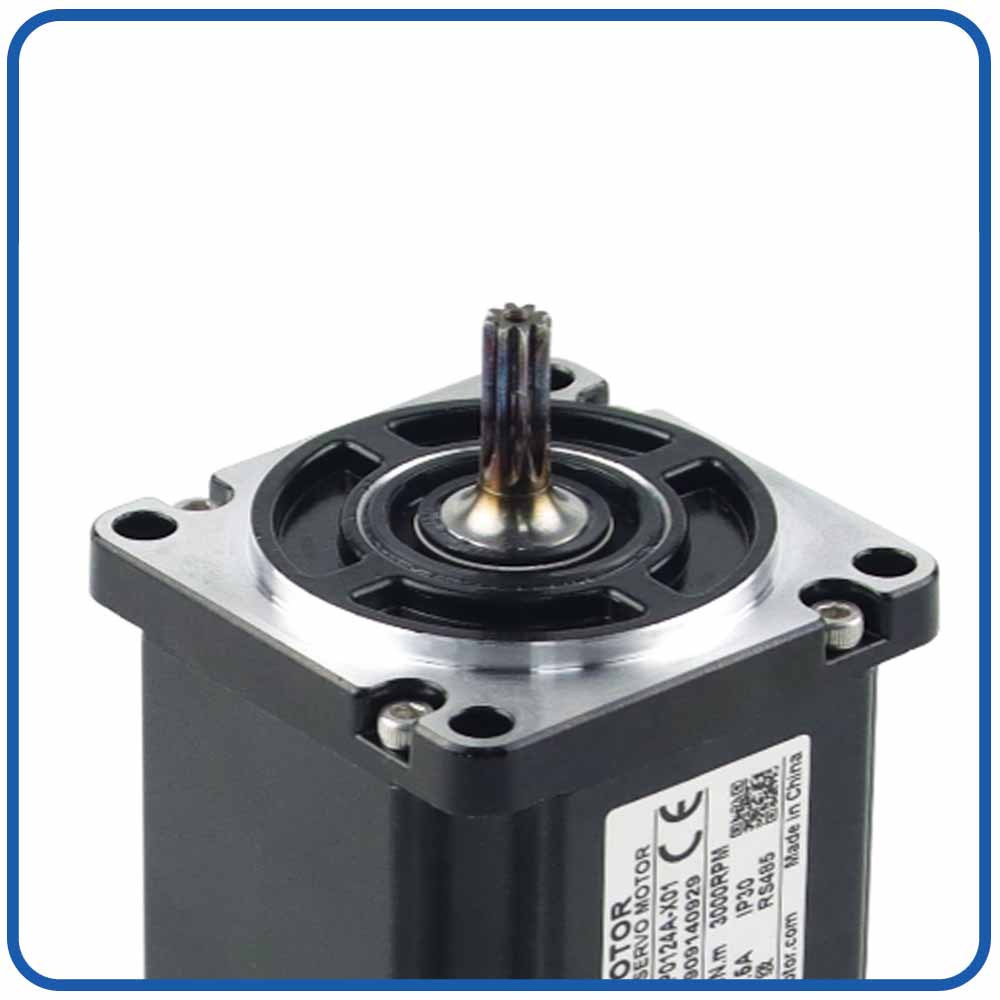
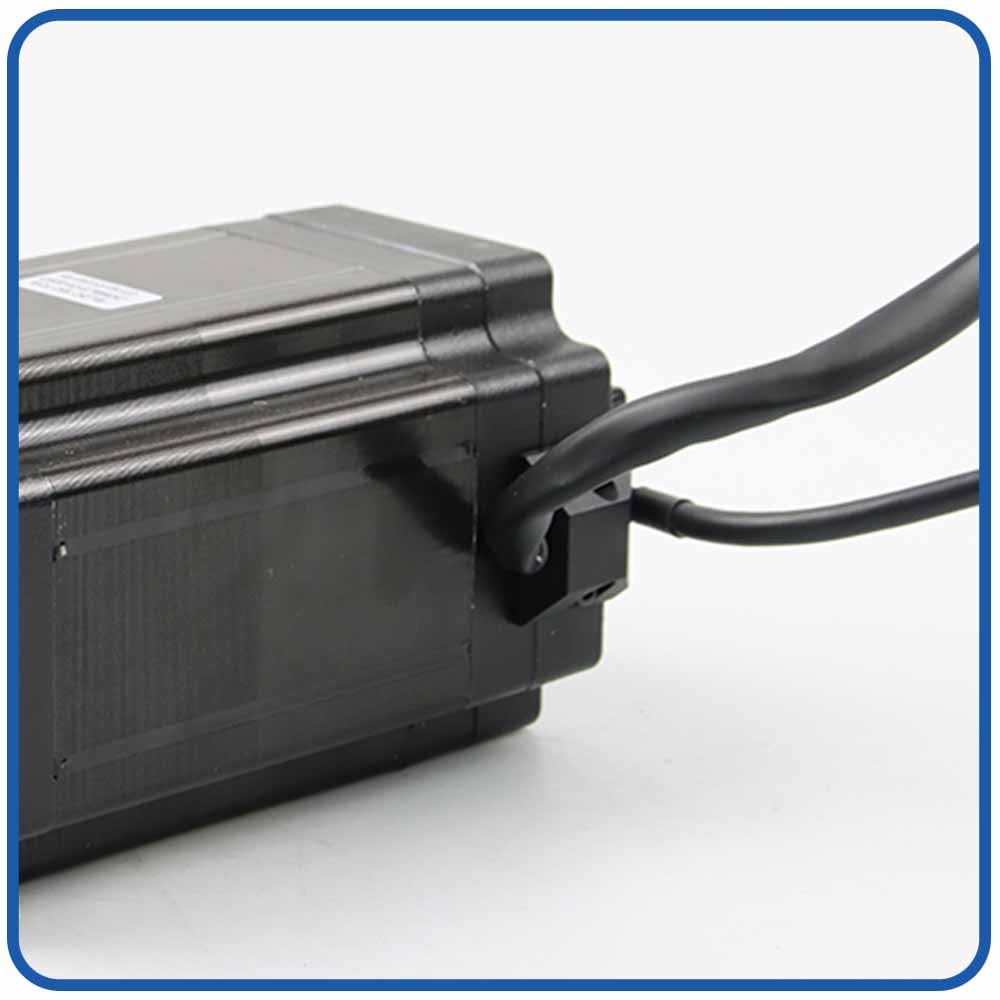
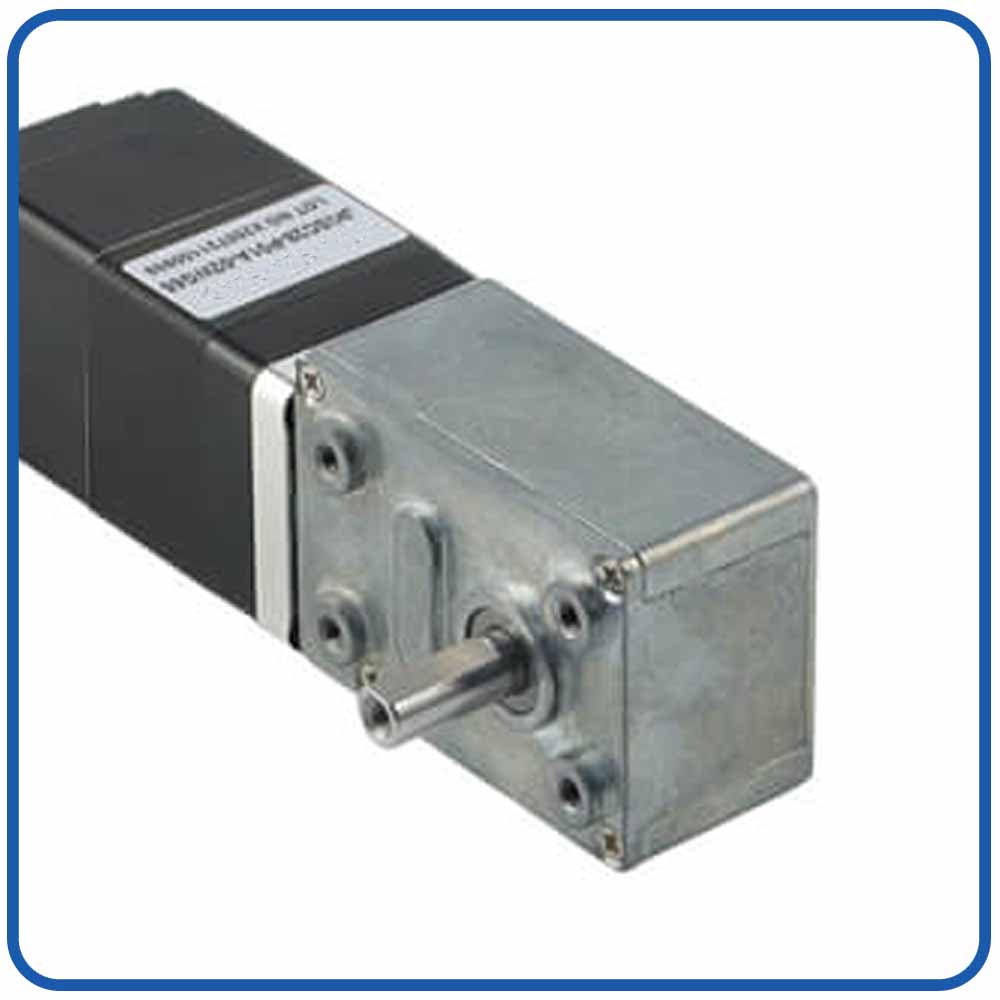
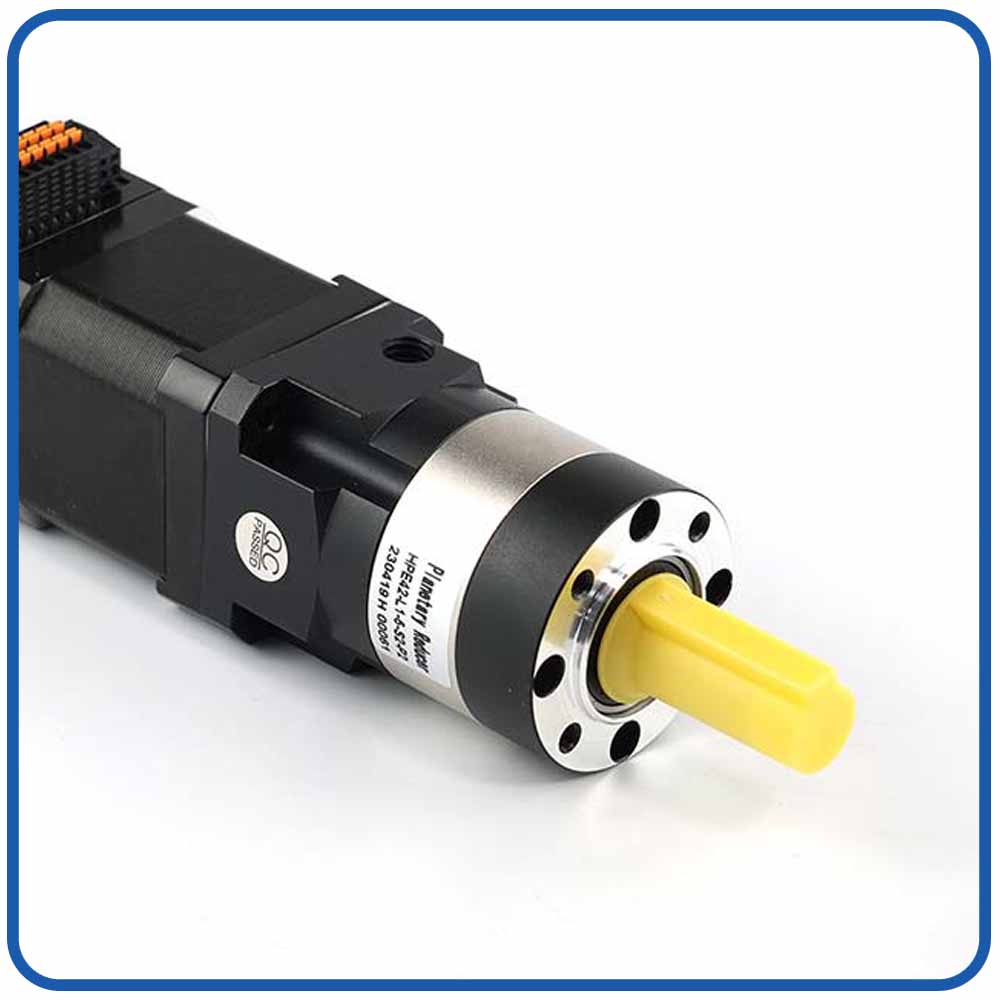
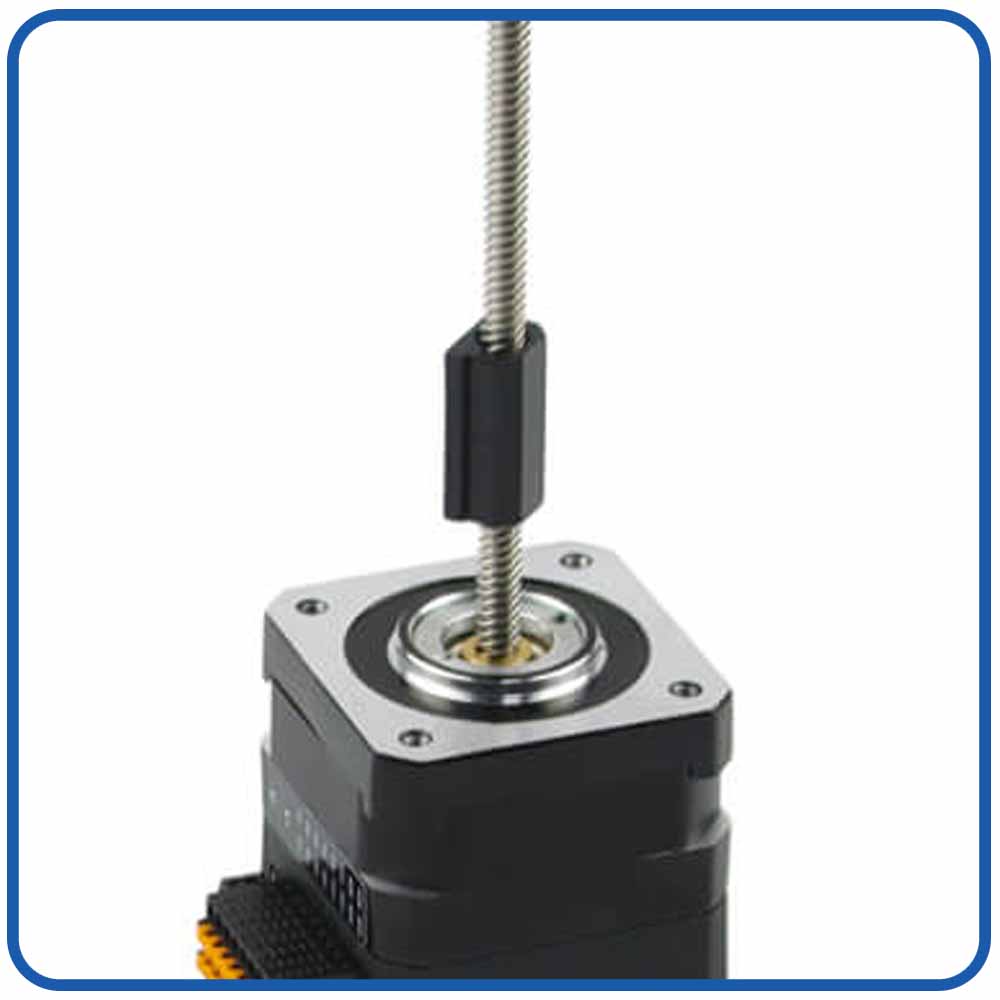
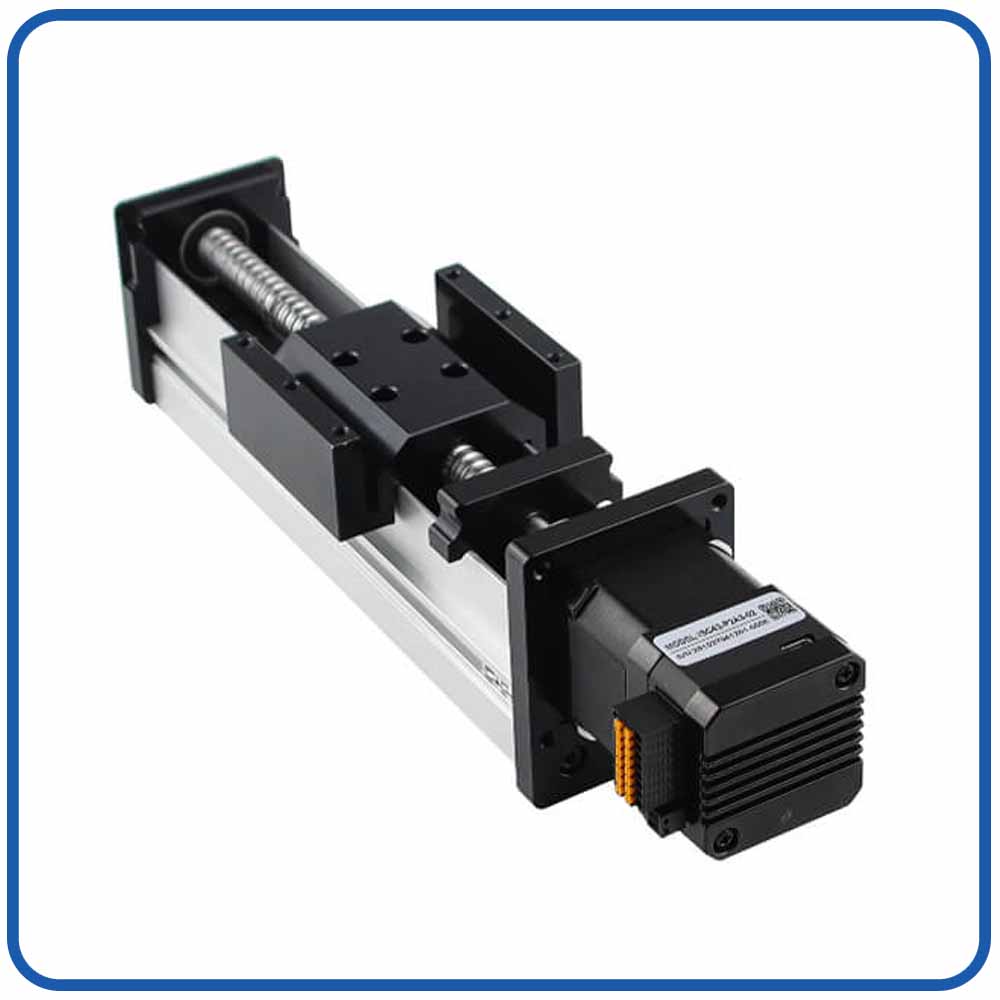
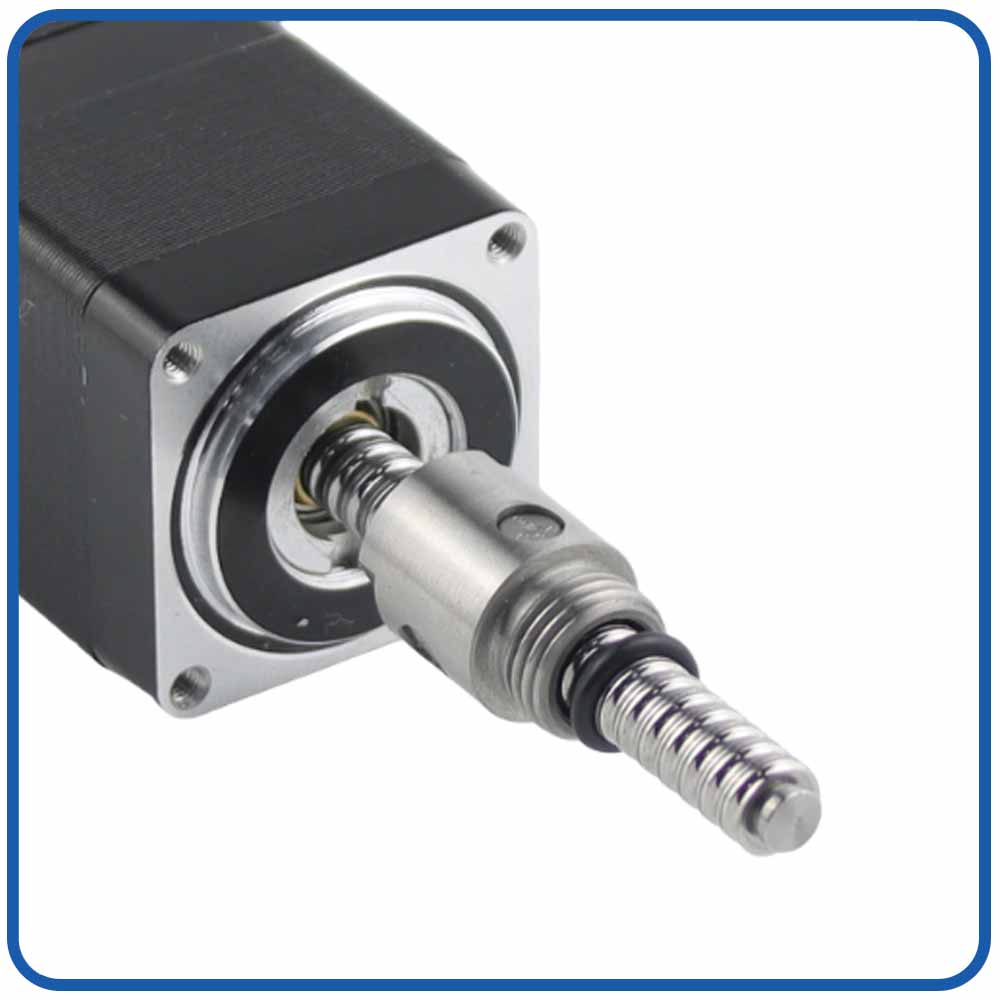
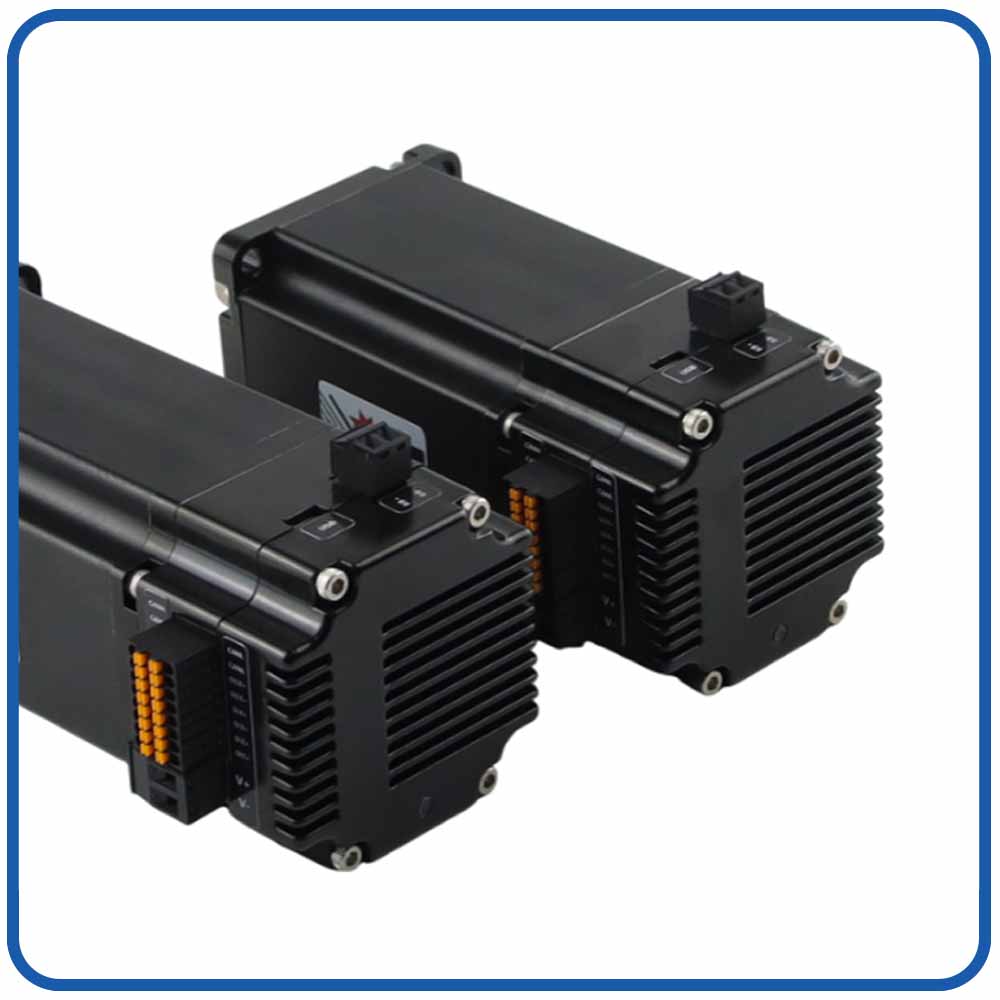
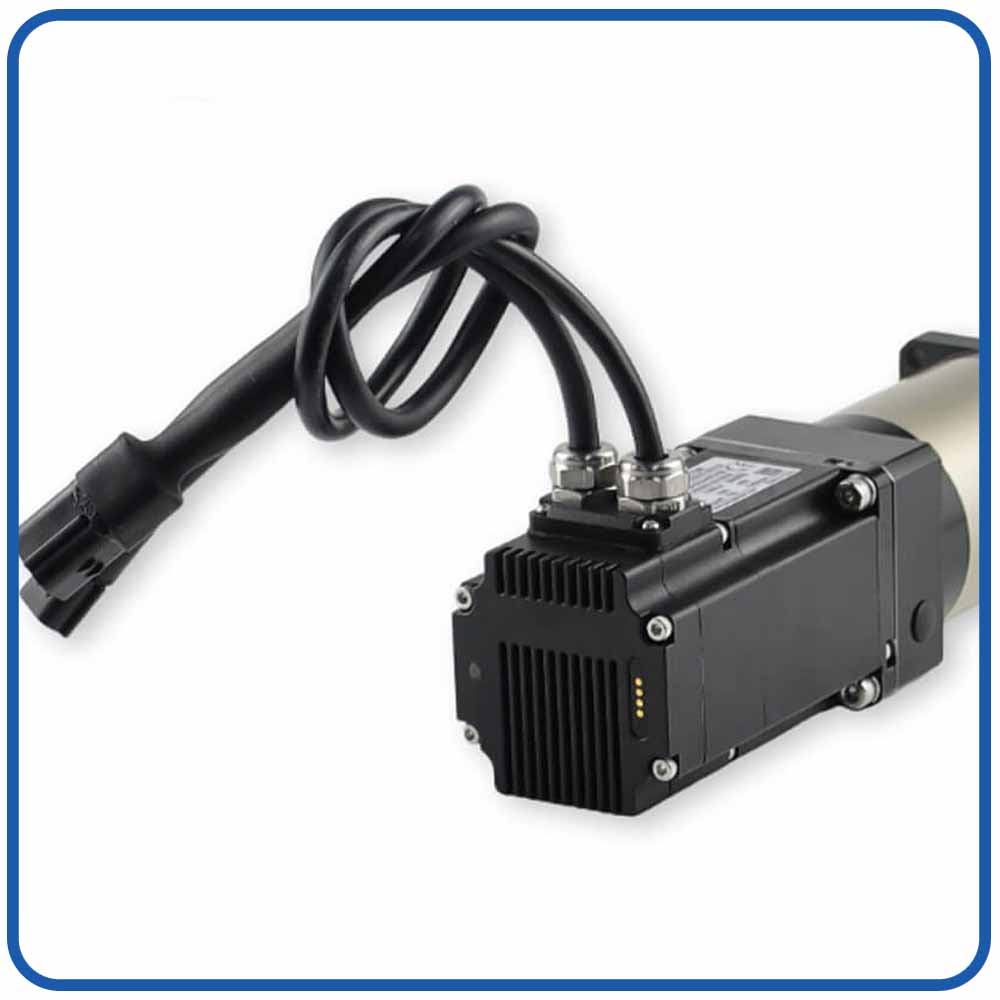
Modern warehouse automation is evolving rapidly, driven by the need for higher efficiency, faster throughput, and intelligent material handling. At the center of this transformation, integrated servo motors have become a critical component powering warehouse robots, including AGVs, AMRs, palletizing robots, sorting robots, and picking systems.
We increasingly see manufacturers and automation integrators adopting integrated servo motor solutions because they provide compact design, simplified wiring, improved performance, and enhanced reliability. These advantages directly impact warehouse operations by improving productivity while reducing maintenance costs and system complexity.
In this article, we explore in detail why integrated servo motors are widely used in warehouse robots, and how they deliver superior performance compared to traditional servo systems.
What Are Integrated Servo Motors?
Integrated servo motors combine multiple components into a single compact unit, including:
Servo motor
Servo drive
Encoder
Controller (optional)
Communication interface
Power electronics
Unlike traditional servo systems that require separate motor, driver, and controller, integrated servo motors reduce system complexity and enable faster deployment.
For warehouse robots, where space optimization and reliability are essential, integrated servo motors offer a high-performance, plug-and-play motion control solution.
Warehouse robots often operate in tight aisles, dense storage systems, and narrow pathways. Compact hardware is essential for maximizing maneuverability and operational efficiency.
Integrated servo motors significantly reduce system footprint by eliminating:
External servo drives
Long motor cables
Control cabinets
Additional wiring harnesses
This compact architecture allows robot manufacturers to:
Design smaller and lighter robots
Increase payload capacity
Improve energy efficiency
Enhance movement flexibility
For example, Autonomous Mobile Robots (AMRs) benefit from integrated servo motors because they allow low-profile designs, enabling robots to navigate under shelves and conveyors efficiently.
Warehouse robots operate in fast-paced, high-demand environments where reliability is critical to maintaining continuous operations. One of the most significant advantages of integrated servo motors is their ability to simplify wiring architecture, which directly improves system stability and reduces potential failure points.
Traditional servo motor systems typically require multiple cables connecting separate components such as the servo motor, drive, encoder, and controller. These cables often include:
Motor power cables
Encoder feedback cables
Brake cables
Communication cables
Grounding cables
This complex wiring structure increases installation time and introduces more opportunities for connection errors, cable wear, and signal interference. In warehouse environments where robots frequently move, vibrate, and operate continuously, these risks become even more pronounced.
Integrated servo motors combine the motor, drive, encoder, and controller into a single compact unit, dramatically reducing wiring complexity. Instead of multiple connections, most integrated servo motors only require:
One power cable
One communication cable
This simplified design provides several key benefits for warehouse robots:
Reduced Installation Time
With fewer cables and connections, automation engineers can install and commission warehouse robots faster. This is especially valuable in large-scale warehouse deployments where hundreds of robots may be installed simultaneously. Faster installation also reduces labor costs and accelerates project timelines.
Lower Risk of Wiring Errors
Complex wiring systems increase the risk of incorrect connections, which can lead to system malfunctions or downtime. integrated servo motors minimize this risk by reducing the number of connection points, ensuring more reliable setup and operation.
Improved Signal Stability
Shorter cable lengths and fewer connections help reduce electromagnetic interference (EMI) and signal degradation. This improves communication accuracy and motion control precision, which is essential for warehouse robots performing high-speed sorting, picking, and navigation tasks.
Enhanced Durability in Harsh Environments
Warehouse robots often operate in dusty, high-vibration, or temperature-variable environments. Simplified wiring reduces mechanical stress on cables, lowering the chance of wear, disconnection, or cable damage over time.
Easier Maintenance and Troubleshooting
When maintenance is required, simplified wiring makes troubleshooting faster and more efficient. Technicians can quickly identify issues and perform repairs with minimal downtime, improving overall warehouse productivity.
Improved System Reliability for 24/7 Operations
Warehouse automation systems frequently run 24 hours a day, 7 days a week. Integrated servo motors with simplified wiring reduce potential failure points, ensuring consistent and uninterrupted operation. This reliability is crucial for logistics centers, e-commerce warehouses, and distribution hubs that rely on continuous automation.
By minimizing wiring complexity and enhancing system stability, integrated servo motorssignificantly improve the reliability of warehouse robots, making them a preferred solution for modern automated logistics systems.
High Precision Motion Control for Warehouse Automation
Warehouse robots must perform accurate positioning and smooth motion control to handle goods safely and efficiently.
Integrated servo motors deliver:
High-resolution encoder feedback
Closed-loop control
Precise positioning
Smooth acceleration and deceleration
High dynamic response
These capabilities are critical for applications such as:
Picking robots
Sorting systems
Palletizing robots
Conveyor tracking systems
For example, in automated picking systems, integrated servo motors allow robots to accurately locate items, reducing picking errors and improving operational efficiency.
Improved Energy Efficiency Reduces Operating Costs
Energy efficiency is a major consideration in warehouse automation. Integrated servo motors provide:
Optimized power consumption
Regenerative braking
Smart energy management
Reduced heat generation
Compared to traditional motors, integrated servo motors consume less power while delivering higher performance.
This is especially important in large warehouses with hundreds of robots operating simultaneously, where energy savings translate into significant cost reductions.
Faster Installation and Deployment
Warehouse automation projects often require fast implementation to meet growing demand. integrated servo motors support rapid deployment due to:
Plug-and-play design
Pre-configured motion control
Reduced wiring complexity
Simplified commissioning
Automation integrators can reduce installation time by up to 50%, allowing faster project completion.
This makes integrated servo motors ideal for:
New warehouse construction
Automation upgrades
Retrofit projects
Enhanced Communication for Smart Warehouse Systems
Modern warehouse robots rely on advanced communication protocols for coordination and control.
Integrated servo motors support various industrial communication protocols such as:
EtherCAT
CANopen
Modbus
Ethernet/IP
PROFINET
These communication options enable:
Real-time motion control
Multi-axis synchronization
Predictive maintenance
Remote monitoring
This connectivity allows warehouse robots to operate as part of a fully integrated smart warehouse ecosystem.
Reduced Maintenance Requirements
Maintenance costs are a major concern for warehouse automation systems. Integrated servo motors offer:
Fewer components
Reduced cable wear
Improved thermal management
Built-in diagnostics
These features reduce:
Maintenance frequency
Spare parts inventory
System downtime
Additionally, many integrated servo motors include predictive maintenance features, enabling operators to identify potential issues before failures occur.
Scalability for Growing Warehouse Automation
Warehouse automation requirements often evolve over time. Integrated servo motors support scalable robotic systems, allowing:
Easy robot expansion
Modular system design
Flexible configuration
Manufacturers can deploy small automation systems initially, then expand as demand increases.
This scalability makes integrated servo motors ideal for:
E-commerce warehouses
Logistics centers
Distribution hubs
Manufacturing warehouses
Improved Safety for Warehouse Operations
Safety is essential in warehouse environments where robots operate alongside human workers.
Future Trends of Integrated Servo Motors in Warehouse Robotics
As warehouse automation continues to accelerate, integrated servo motors are evolving rapidly to meet the growing demands for higher efficiency, smarter control, and greater flexibility. The next generation of warehouse robots will rely heavily on advanced integrated servo motor technologies that enhance performance, reduce operational costs, and support intelligent logistics systems.
Below are the key future trends of integrated servo motors in warehouse robotics that are shaping the next phase of automation.
AI-Driven Motion Control for Smarter Warehouse Robots
Artificial intelligence is becoming an essential part of modern warehouse automation. Future integrated servo motors will increasingly incorporate AI-driven motion control algorithms to optimize robot performance in real time.
AI-powered integrated servo motors will enable:
Adaptive motion optimization
Dynamic load adjustment
Predictive positioning accuracy
Collision avoidance improvements
Energy consumption optimization
For example, Autonomous Mobile Robots (AMRs) equipped with AI-enabled integrated servo motors can automatically adjust speed and torque based on load conditions, floor surfaces, and traffic patterns. This results in smoother movement, reduced wear, and improved operational efficiency.
Edge Computing Integration for Real-Time Decision Making
Future integrated servo motors will include edge computing capabilities, allowing warehouse robots to process data locally rather than relying solely on centralized control systems.
Edge computing integration provides:
Faster response times
Reduced network latency
Improved real-time control
Enhanced robot autonomy
Lower network bandwidth usage
With built-in edge intelligence, Integrated servo motors can analyze motion performance, detect anomalies, and optimize operations without requiring constant communication with central servers. This capability is especially valuable in large-scale warehouse environments.
Advanced Communication Protocols for Smart Warehouses
Warehouse robots are becoming more connected as part of Industry 4.0 ecosystems. Future integrated servo motors will support next-generation communication technologies, including:
Time-Sensitive Networking (TSN)
5G connectivity
Wireless industrial communication
Enhanced EtherCAT performance
Cloud connectivity
These communication advancements will allow warehouse robots to coordinate more efficiently, improve fleet management, and enable real-time monitoring across entire warehouse operations.
Compact High-Torque Designs for Smaller Robots
As warehouses aim to maximize storage density, robots must become smaller, lighter, and more agile. Future integrated servo motors will feature:
Higher torque density
Compact housing designs
Lightweight materials
Integrated gear options
Improved thermal management
These innovations allow manufacturers to design compact warehouse robots capable of handling heavier payloads while operating in narrow spaces.
Compact integrated servo motors are particularly beneficial for:
Autonomous mobile robots
Sorting robots
Shelf-climbing robots
Micro-fulfillment robots
Energy-Efficient and Sustainable Motor Technologies
Energy efficiency is becoming increasingly important in warehouse automation. Future integrated servo motors will focus on reducing power consumption and improving sustainability.
Key developments include:
Advanced motor winding technologies
High-efficiency magnetic materials
Regenerative braking systems
Smart energy management algorithms
Low heat generation designs
These energy-efficient features help warehouse operators reduce operational costs and support sustainable logistics operations.
Built-In Predictive Maintenance and Smart Diagnostics
Future Integrated servo motors will include advanced predictive maintenance capabilities powered by sensors and analytics.
Smart diagnostic features will include:
Temperature monitoring
Vibration analysis
Load monitoring
Performance tracking
Real-time health diagnostics
These features allow warehouse operators to detect potential failures before they occur, minimizing downtime and reducing maintenance costs.
Predictive maintenance is particularly valuable in large automated warehouses where robot downtime can significantly impact productivity.
Modular and Scalable Servo Motor Architectures
Warehouse automation systems must remain flexible to accommodate changing operational requirements. Future integrated servo motors will adopt modular designs that allow easy scalability.
Benefits of modular architectures include:
Easy system expansion
Flexible robot configurations
Simplified upgrades
Reduced development time
Manufacturers will be able to quickly adapt robots for different warehouse tasks without redesigning entire systems.
Enhanced Safety Features for Human-Robot Collaboration
Collaborative robots are becoming more common in warehouse environments. Future integrated servo motors will include advanced safety features such as:
Safe torque off (STO)
Safe speed monitoring
Collision detection
Torque limiting
Functional safety certifications
These features enable safe human-robot collaboration, allowing robots to operate efficiently alongside warehouse workers.
Customization for Specialized Warehouse Applications
Future integrated servo motor solutions will offer greater customization capabilities for specialized warehouse applications.
Customization options may include:
Custom voltage configurations
Integrated brakes
Hollow shaft designs
High IP protection ratings
Specialized mounting configurations
This flexibility allows warehouse robot manufacturers to optimize performance for specific operational needs.
Integration with Digital Twin Technology
Digital twin technology is emerging as a powerful tool in warehouse automation. Future Integrated servo motors will support digital twin integration, allowing operators to:
Simulate robot performance
Optimize motion parameters
Predict maintenance needs
Improve system efficiency
Digital twin capabilities will help warehouse operators optimize automation systems before deployment, reducing risks and improving performance.
Summary
The future of integrated servo motors in warehouse robotics is defined by intelligence, efficiency, and flexibility. With advancements in AI-driven motion control, edge computing, smart communication, compact high-torque designs, and predictive maintenance, integrated servo motors will continue to play a central role in next-generation warehouse automation.
As warehouse operations become more complex and demand faster throughput, integrated servo motors will enable smarter, more reliable, and highly efficient warehouse robots, driving the evolution of fully automated smart logistics systems.
Why Integrated Servo Motors Are the Best Choice for Warehouse Robots
Warehouse automation demands high precision, compact design, reliability, and efficient performance. Integrated servo motors combine the motor, drive, and control electronics into a single unit, making them an ideal solution for modern warehouse robots. By reducing system complexity and improving motion control, these motors help optimize robotic operations such as picking, sorting, transporting, and palletizing.
Integrated servo motors eliminate the need for external drives and excessive wiring, allowing warehouse robots to maintain a compact and lightweight structure. This design advantage improves maneuverability in narrow aisles, dense storage systems, and dynamic warehouse environments. Smaller hardware also enables manufacturers to increase payload capacity and improve overall robot efficiency.
Key Benefits:
Reduced installation space
Lightweight robot architecture
Improved mobility and navigation
Better payload-to-size ratio
Simplified Wiring Improves System Reliability
Traditional servo systems require multiple cables between the motor, drive, and controller. Integrated servo motors significantly reduce wiring complexity, which lowers the risk of connection failures and signal interference. This is particularly important for warehouse robots operating continuously in 24/7 logistics environments.
Reliability Advantages:
Fewer connection points
Reduced wiring errors
Improved signal stability
Easier maintenance and troubleshooting
High Precision Motion Control for Efficient Operations
Warehouse robots require accurate positioning and smooth motion to handle goods safely. Integrated servo motors provide high-resolution feedback and closed-loop control, enabling precise and consistent performance across various applications such as picking robots, AMRs, and sorting systems.
Performance Features:
Precise positioning accuracy
Smooth acceleration and deceleration
High dynamic response
Stable low-speed control
Comparison: Integrated Servo Motors vs Traditional Servo Systems
Feature
Integrated Servo Motors
Traditional Servo Systems
Installation
Simple and fast
Complex and time-consuming
Wiring
Minimal cables
Multiple cables required
Space Requirement
Compact
Larger Multiple cables required
Space Requirement
Compact
Larger footprint
Reliability
High
Moderate
Maintenance
Low
Higher
Deployment Speed
Quick commissioning
Longer setup time
Energy Efficiency and Lower Operating Costs
Integrated servo motors are designed with optimized power management and reduced energy consumption. These motors generate less heat and support efficient operation, which is crucial for warehouses operating large fleets of robots. Lower energy usage translates directly into reduced operating costs and improved sustainability.
By combining compact design, simplified wiring, high precision, and energy efficiency, Integrated servo motors provide a reliable and scalable solution for warehouse robots, making them the preferred choice for modern automated logistics systems.
Conclusion
Integrated servo motors have become an essential technology in warehouse robotics, offering compact structure, superior motion control, enhanced reliability, and scalable performance. By adopting integrated servo motor solutions, warehouse automation providers can maximize efficiency, reduce operational costs, and achieve intelligent material handling systems.

 English
 العربية
 Français
 Русский
 Español
 Português
 Deutsch
 italiano
 日本語
日本語 한국어
한국어 Nederlands
 Tiếng Việt
 ไทย
ไทย Polski
 Türkçe
 ພາສາລາວ
 ភាសាខ្មែរ
 Bahasa Melayu
 ဗမာစာ
ဗမာစာ Filipino
 Bahasa Indonesia
 magyar
 Română
 Čeština
 Монгол
 қазақ
қазақ Српски
 हिन्दी
 فارسی
فارسی Slovenčina
 Slovenščina
 Norsk
Norsk Svenska
 українська
 Ελληνικά
 Suomi
Suomi Հայերեն
 עברית
עברית Latine
 Dansk
Dansk Shqip
Shqip বাংলা
বাংলা Hrvatski
 Afrikaans
 Gaeilge
 Eesti keel
 Oʻzbekcha
 latviešu
 Azərbaycan dili
 Български
 Català