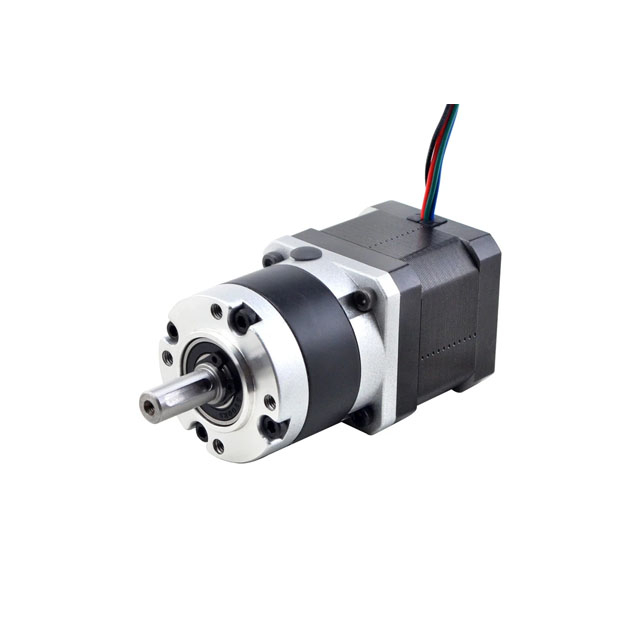
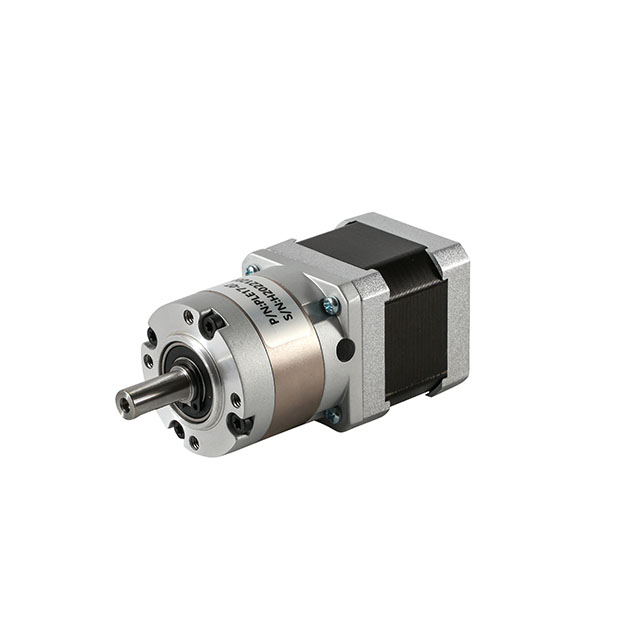
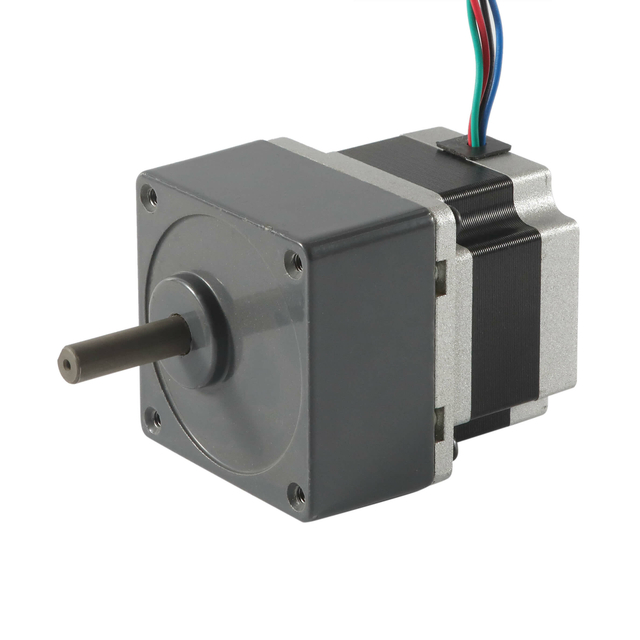
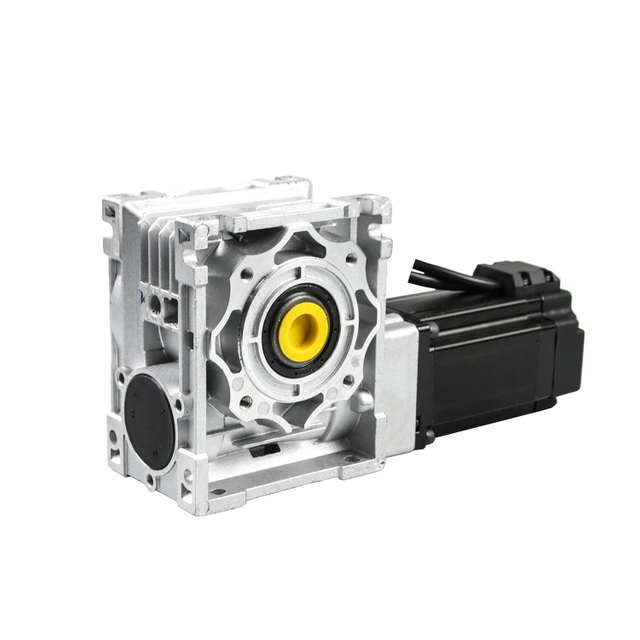
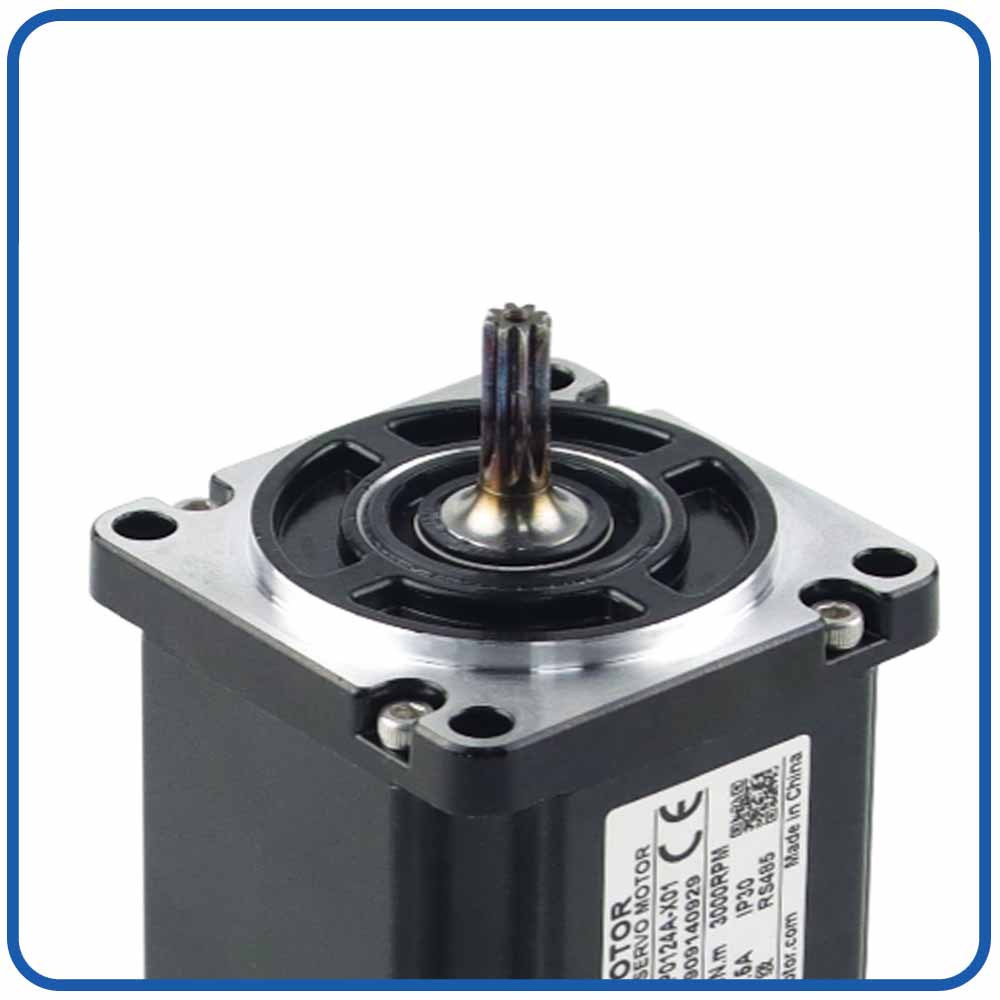
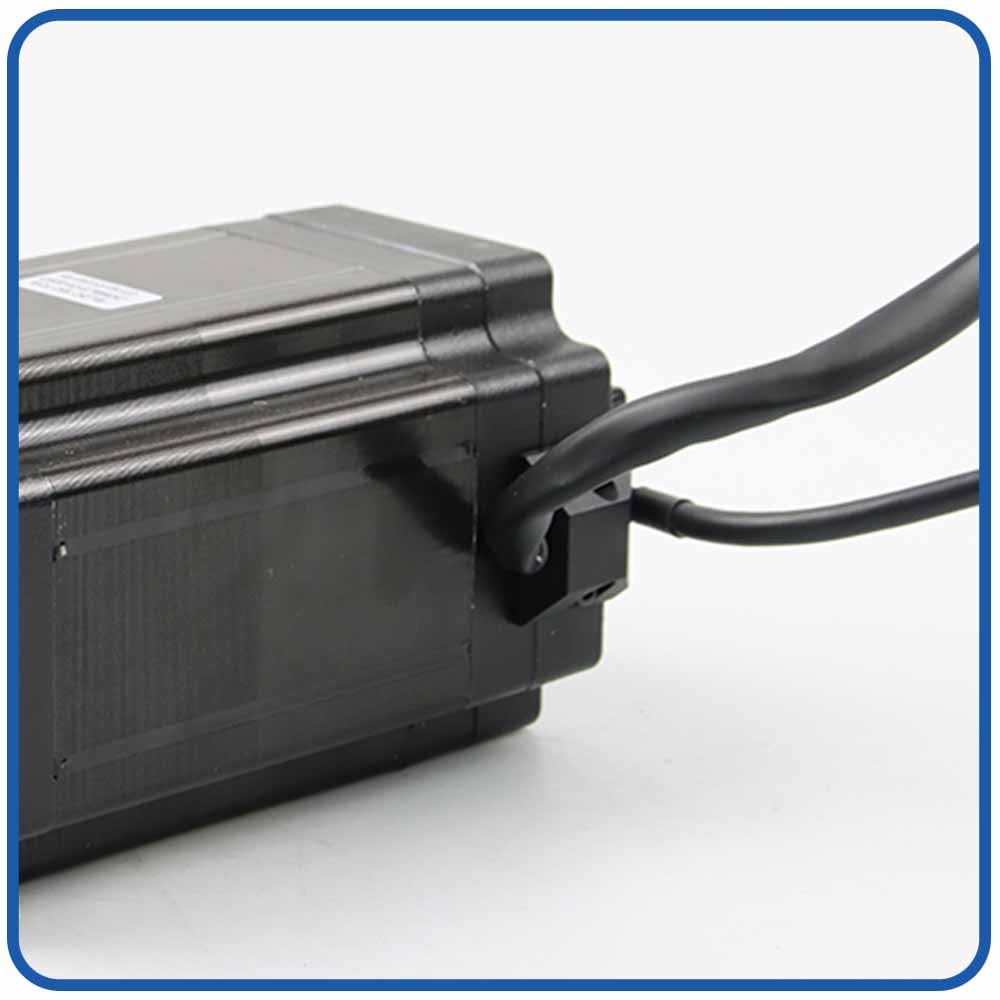
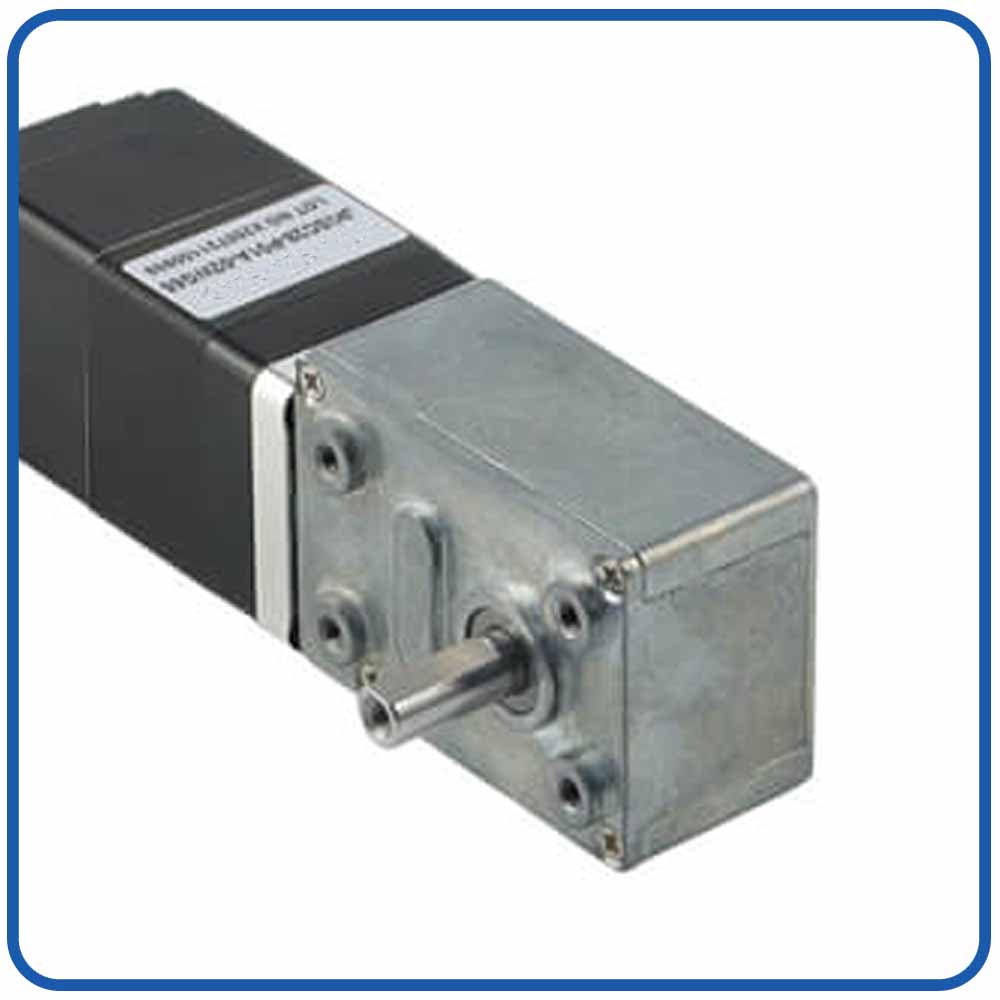
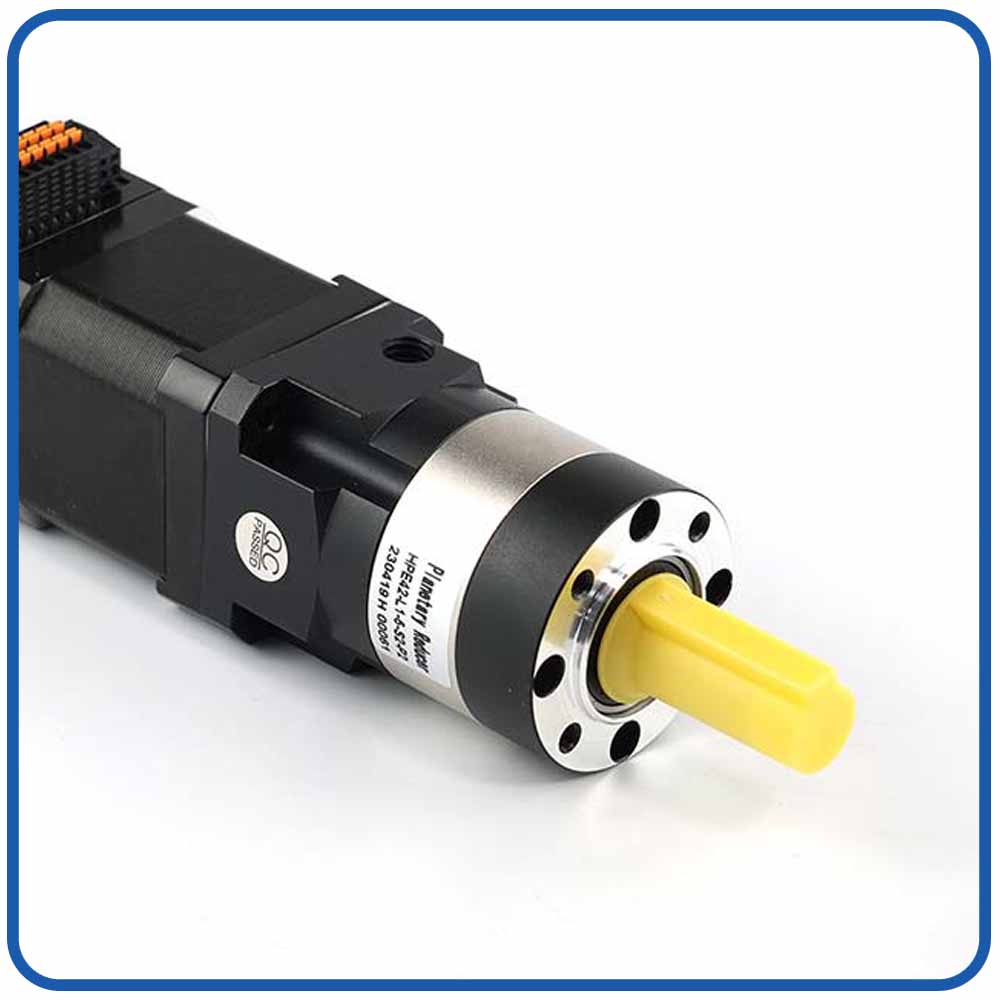
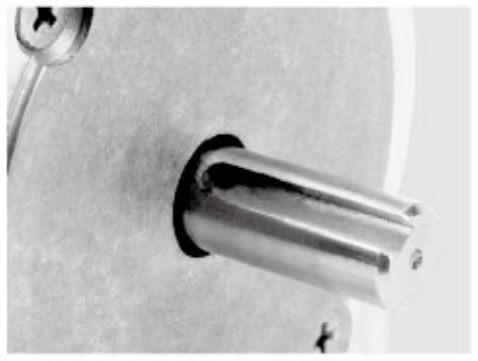
Geared stepper motors are increasingly replacing DC gear motors in precision automation applications due to their superior positioning accuracy, low-speed torque, repeatability, and intelligent closed-loop control capabilities. The ideal motor choice depends on speed, load characteristics, efficiency requirements, and motion precision demands.
In modern automation systems, motion control performance directly affects equipment efficiency, positioning accuracy, reliability, and long-term operating costs. As industries increasingly demand higher precision, smarter control, and lower maintenance, engineers are reevaluating traditional drive solutions.
One of the most common questions in industrial motion design is:
The answer depends on multiple engineering factors rather than a simple yes or no. While both motor types provide speed reduction and torque amplification through gearboxes, their operating principles, control methods, dynamic characteristics, and application suitability differ significantly.
This article provides a comprehensive technical analysis of the factors that determine whether a geared stepper motor can successfully replace a DC gear motor in real-world applications.
Although geared stepper motors offer excellent positioning accuracy, holding torque, and simplified motion control, there are still many applications where a DC gear motor remains the more practical and efficient solution. Selecting the right motor depends on the actual operating conditions, speed requirements, load characteristics, and system cost targets.
Below are the key situations where a DC gear motor continues to outperform a geared stepper motor.
1. High-Speed Continuous Rotation Applications
DC gear motors are ideal for systems that require smooth, uninterrupted rotation over long operating periods.
Unlike stepper motors, whose torque decreases significantly at higher RPMs, DC motors maintain stable efficiency and smoother performance at elevated speeds.
Typical Applications
Conveyor systems
Cooling fans
Electric tools
Automated rollers
Pump systems
Mobility platforms
Why DC Gear Motors Perform Better
Higher operating speed range
Better efficiency at continuous RPM
Reduced torque drop at high speed
Lower risk of resonance
For applications requiring constant rotational movement rather than precise positioning, DC gear motors are usually the better choice.
2. Applications Requiring Smooth Motion
DC gear motors naturally produce smoother rotational movement compared to stepper motors.
Stepper motors move in discrete steps, which can create:
Vibration
Audible noise
Resonance
Micro-pulsation
Even with microstepping technology, stepper motors may still not achieve the same fluid motion quality as DC motors.
Best Use Cases
Medical devices
Consumer electronics
Camera systems
Office automation equipment
Precision dispensing machines
When low vibration and quiet operation are critical, DC gear motors typically offer superior performance.
3. Battery-Powered and Energy-Efficient Systems
Energy efficiency is one of the strongest advantages of DC gear motors.
Traditional stepper motors continuously draw current even when holding position, which can lead to:
Higher power consumption
Increased heat generation
Reduced battery life
DC motors consume power according to actual load demand, making them far more efficient in portable or mobile equipment.
Common Battery-Powered Applications
Electric wheelchairs
AGV drive wheels
Mobile robots
Portable medical equipment
Smart home devices
For energy-sensitive designs, DC gear motors usually provide longer operating time and better thermal efficiency.
4. Applications with Rapidly Changing Loads
DC motors respond dynamically to changing loads and speed variations.
In contrast, stepper motors may:
Lose steps
Stall under overload
Experience synchronization loss
This makes DC gear motors more reliable in applications with unpredictable or rapidly fluctuating mechanical loads.
Suitable Applications
Vehicle drive systems
Automated transport equipment
Traction systems
Electric carts
Dynamic robotic platforms
DC motors can absorb sudden load changes more naturally without requiring large torque safety margins.
5. Cost-Sensitive Mass Production Projects
In many low-precision applications, DC gear motors offer lower overall system cost.
Simple DC motor systems may only require:
Basic speed control
Minimal electronics
Low-cost drivers
Meanwhile, stepper systems may require:
Specialized drivers
Current control
Heat management
More complex tuning
Industries Favoring Low-Cost DC Gear Motors
Household appliances
Consumer products
Basic automation devices
Toys and hobby equipment
Automotive accessories
For large-volume manufacturing where positioning precision is unnecessary, DC gear motors are often more economical.
Final Comparison
Requirement
Better Choice
Precise positioning
Geared Stepper Motor
Continuous high-speed rotation
DC Gear Motor
Smooth and quiet motion
DC Gear Motor
Strong holding torque
Geared Stepper Motor
Battery efficiency
DC Gear Motor
Simple positioning control
Geared Stepper Motor
Dynamic load handling
DC Gear Motor
Low-cost continuous motion
DC Gear Motor
Repeatable indexing
Geared Stepper Motor
Minimal maintenance
Depends on motor type
Conclusion
DC gear motors remain the preferred solution in applications that prioritize:
Continuous rotation
Smooth motion
Energy efficiency
Dynamic load adaptability
Low acoustic noise
Cost-effective large-scale production
While geared stepper motors dominate many precision automation applications, DC gear motors continue to offer outstanding advantages in mobility systems, conveyors, consumer products, and continuous-duty machinery.
The optimal motor selection always depends on balancing precision, speed, efficiency, control complexity, operating environment, and total system cost.
The Rise of Closed-Loop Geared Stepper Motors
The motion control industry is undergoing a major transformation as manufacturers demand higher precision, greater efficiency, lower maintenance, and smarter automation systems. In response to these evolving requirements, closed-loop geared stepper motors have rapidly emerged as one of the most important innovations in industrial motion technology.
Combining the precision of traditional stepper motors with the intelligent feedback capabilities of servo systems, closed-loop geared stepper motors are bridging the gap between conventional open-loop steppers and expensive servo-driven solutions.
Why Closed-Loop Technology Is Growing Rapidly
Several industrial trends are accelerating the adoption of closed-loop geared stepper motors.
1. Increasing Demand for Precision Automation
Modern automation systems require:
Higher positioning accuracy
Repeatable motion control
Reduced cumulative error
Better synchronization
Traditional DC gear motors often require complex feedback systems to achieve similar accuracy levels.
Closed-loop stepper systems provide:
Precise positioning
Automatic correction
Stable repeatability
while maintaining relatively simple control architecture.
2. Rising Need for Energy Efficiency
Traditional open-loop stepper motors continuously draw full current, even when lightly loaded.
This leads to:
Excessive heat
Higher energy consumption
Reduced efficiency
Closed-loop systems solve this problem through dynamic current adjustment.
The driver automatically reduces current when full torque is unnecessary, significantly improving:
Energy efficiency
Thermal management
Overall system reliability
3. Demand for Lower Maintenance Costs
Industrial facilities increasingly prioritize:
Reduced downtime
Longer service intervals
Lower maintenance costs
Closed-loop geared stepper motors are typically brushless and highly reliable.
Compared to brushed DC gear motors, they eliminate:
Brush wear
Frequent servicing
Electrical sparking issues
This makes them highly suitable for:
24/7 automation
Remote installations
High-duty-cycle environments
Major Advantages of Closed-Loop Geared Stepper Motors
1. Elimination of Step Loss
One of the biggest weaknesses of traditional stepper motors is the risk of missed steps during overload or sudden acceleration.
Closed-loop systems continuously monitor motor position and instantly compensate for deviations.
Benefits Include
Improved reliability
Accurate positioning under varying loads
Reduced synchronization errors
Better operational stability
This is especially critical in:
CNC systems
Pick-and-place machines
Medical automation
Semiconductor equipment
2. Higher Torque Output with Gear Reduction
The integrated gearbox multiplies motor torque while reducing output speed.
This combination provides:
High low-speed torque
Improved load handling
Better mechanical advantage
Stable precision movement
Common gearbox types include:
Planetary gearboxes
Worm gear reducers
Spur gear systems
Harmonic drives
The result is compact yet powerful motion control.
3. Servo-Like Performance at Lower Cost
Servo systems provide excellent performance but are often expensive and complex.
Closed-loop geared stepper motors deliver many servo advantages, including:
Encoder feedback
Automatic correction
High precision
Smooth motion control
while maintaining:
Lower hardware cost
Simpler tuning
Easier integration
This makes them highly attractive for OEM equipment manufacturers.
4. Reduced Heat Generation
Open-loop stepper motors often generate excessive heat because they maintain constant current regardless of load.
Closed-loop systems intelligently regulate current according to actual torque demand.
Advantages include:
Lower operating temperature
Extended motor lifespan
Improved driver reliability
Better thermal efficiency
This is especially valuable in compact machinery and enclosed automation systems.
Comparison with Traditional Motor Technologies
Feature
Open-Loop Stepper
Closed-Loop Geared Stepper
DC Gear Motor
Position Accuracy
High
Very High
Moderate
Feedback System
No
Yes
Optional
Step Loss Risk
Possible
Minimal
N/A
Low-Speed Torque
Excellent
Excellent
Moderate
High-Speed Performance
Moderate
Improved
Excellent
Energy Efficiency
Moderate
High
High
Motion Smoothness
Moderate
High
High
Control Complexity
Simple
Moderate
Moderate
Maintenance
Low
Low
Higher for brushed types
The Shift Toward Integrated Smart Motion Systems
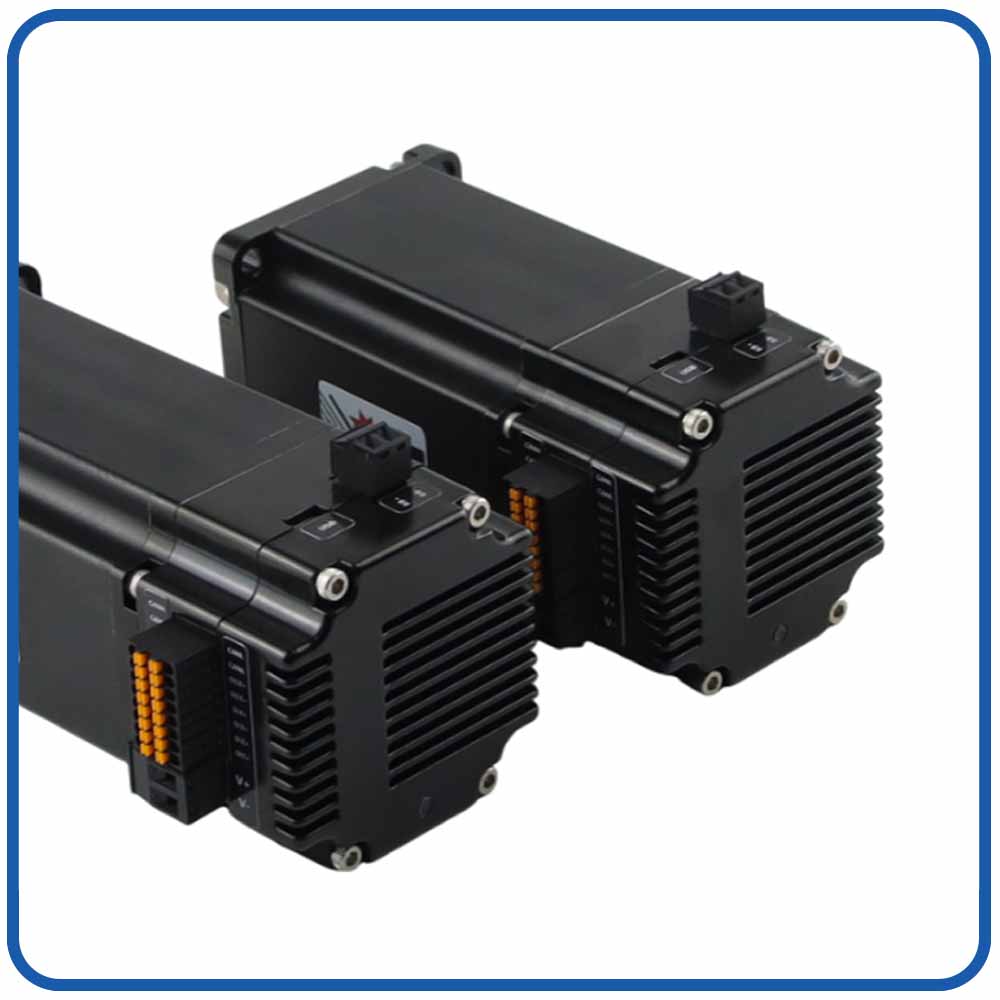
Modern closed-loop geared stepper motors increasingly integrate:
Drivers
Controllers
Encoders
Communication protocols
into compact all-in-one systems.
Integrated smart motors simplify:
Wiring
Installation
Commissioning
Maintenance
Popular industrial communication protocols include:
CANopen
EtherCAT
Modbus
RS485
PROFINET
This integration supports Industry 4.0 and intelligent factory automation.Future Trends in Closed-Loop Geared Stepper Technology
Why Engineers Are Transitioning to Closed-Loop Geared Stepper Motors
Engineers increasingly select closed-loop geared stepper motors because they provide an excellent balance between:
Precision
Cost
Reliability
Simplicity
Efficiency
They eliminate many weaknesses of traditional open-loop steppers while avoiding the high cost and tuning complexity associated with servo systems.
For many automation applications, they now represent the optimal middle-ground solution.
Summary
The rise of closed-loop geared stepper motors reflects the growing demand for intelligent, efficient, and highly precise motion control systems.
By combining:
Accurate positioning
Encoder feedback
High torque output
Reduced heat generation
Improved energy efficiency
these advanced systems are transforming industrial automation across multiple sectors.
As motion control technology continues evolving, closed-loop geared stepper motors are expected to play an even larger role in robotics, medical equipment, semiconductor manufacturing, smart factories, and next-generation automation platforms.
How to Determine the Best Replacement Strategy
Engineers should evaluate the following parameters before replacing a DC gear motor:
Critical Selection Checklist
Mechanical Factors
Required torque
Speed range
Load inertia
Duty cycle
Backlash requirements
Electrical Factors
Supply voltage
Current limits
Driver compatibility
Control architecture
Motion Factors
Positioning accuracy
Repeatability
Acceleration profile
Synchronization requirements
Environmental Factors
Operating temperature
Noise limits
Vibration conditions
Maintenance accessibility
Conclusion
Whether a geared stepper motor can replace a DC gear motor depends entirely on the application’s motion control requirements.
In systems demanding:
Precise positioning
High holding torque
Repeatable indexing
Simplified control
Low maintenance
Geared stepper motors often provide a superior solution.
In applications focused on:
Continuous rotation
High-speed efficiency
Smooth motion
Dynamic load adaptability
DC gear motors may still remain the preferred option.
As integrated motion technology continues advancing, modern geared stepper motors are becoming increasingly capable of replacing traditional DC gear motors across industrial automation, robotics, medical devices, and precision machinery.
FAQs
Q: Can a geared stepper motor fully replace a DC gear motor?
A:Yes, in many precision automation applications, a geared stepper motor can successfully replace a DC gear motor. Geared stepper motors provide superior positioning accuracy, repeatability, holding torque, and low-speed control. However, for high-speed continuous rotation or highly dynamic load applications, DC gear motors may still be the better choice.
Q: What are the main advantages of geared stepper motors over DC gear motors?
A:Geared stepper motors offer several advantages, including precise positioning, strong low-speed torque, excellent repeatability, open-loop control capability, and simplified motion synchronization. They are especially suitable for CNC systems, robotics, packaging machinery, and medical equipment requiring accurate motion control.
Q: In which applications are DC gear motors still preferable?
A:DC gear motors remain ideal for applications requiring continuous high-speed rotation, smooth motion, low acoustic noise, and efficient battery-powered operation. Common examples include conveyors, electric vehicles, cooling systems, and mobile robotic drive wheels.
Q: Why do geared stepper motors perform better at low speeds?
A:Stepper motors naturally generate high holding torque and stable output at low RPMs. When combined with a gearbox, they deliver excellent low-speed precision and torque multiplication, making them highly effective for indexing, positioning, and controlled motion systems.
Q: Do geared stepper motors require encoder feedback?
A:Traditional open-loop geared stepper motors often operate without encoders because movement is controlled through precise step pulses. However, closed-loop geared stepper systems use encoder feedback to improve positioning accuracy, eliminate step loss, and enhance reliability under varying loads.
Q: What factors should engineers evaluate before replacing a DC gear motor?
A:Engineers should carefully analyze torque requirements, operating speed, positioning accuracy, duty cycle, load inertia, power consumption, environmental conditions, backlash tolerance, and system integration requirements before selecting a replacement solution.
Q:Are geared stepper motors more energy efficient than DC gear motors?
A:It depends on the application. DC gear motors are generally more efficient during continuous rotation and variable-speed operation. However, modern closed-loop geared stepper motors with intelligent current control significantly improve energy efficiency and reduce heat generation compared to traditional open-loop systems.
Q: Can a geared stepper motor provide smooth motion like a DC gear motor?
A:Modern geared stepper motors equipped with microstepping drivers and closed-loop control technology can achieve much smoother motion than conventional stepper systems. While DC gear motors may still provide slightly smoother continuous rotation, advanced stepper systems now meet the motion quality requirements of many industrial applications.
Q: What industries commonly use geared stepper motors instead of DC gear motors?
A:Geared stepper motors are widely used in industrial automation, robotics, medical devices, packaging machinery, semiconductor equipment, textile machinery, AGV steering systems, and laboratory automation where precise positioning and repeatable motion are essential.
Q:Why are closed-loop geared stepper motors becoming more popular?
A:Closed-loop geared stepper motors combine the precision of stepper technology with encoder feedback and intelligent control. They offer higher efficiency, reduced heat, anti-stall protection, improved reliability, and servo-like performance at a lower cost, making them increasingly popular in modern automation systems.

 English
 العربية
 Français
 Русский
 Español
 Português
 Deutsch
 italiano
 日本語
日本語 한국어
한국어 Nederlands
 Tiếng Việt
 ไทย
ไทย Polski
 Türkçe
 ພາສາລາວ
 ភាសាខ្មែរ
 Bahasa Melayu
 ဗမာစာ
ဗမာစာ Filipino
 Bahasa Indonesia
 magyar
 Română
 Čeština
 Монгол
 қазақ
қазақ Српски
 हिन्दी
 فارسی
فارسی Slovenčina
 Slovenščina
 Norsk
Norsk Svenska
 українська
 Ελληνικά
 Suomi
Suomi Հայերեն
 עברית
עברית Latine
 Dansk
Dansk Shqip
Shqip বাংলা
বাংলা Hrvatski
 Afrikaans
 Gaeilge
 Eesti keel
 Oʻzbekcha
 latviešu
 Azərbaycan dili
 Български
 Català