Autonomous Robotic Security Patrol Vehicles (RSPVs) are becoming an essential part of modern security operations across industrial parks, warehouses, campuses, airports, logistics centers, shopping malls, and smart cities. These robots are expected to patrol continuously, navigate complex environments, avoid obstacles, climb slopes, and carry cameras, LiDAR, thermal imaging systems, and communication equipment while maintaining exceptional reliability.
At the heart of every successful patrol robot is its Brushless DC (BLDC) motor. Selecting the right BLDC motor directly impacts vehicle speed, climbing ability, battery life, positioning accuracy, stability, maintenance costs, and overall operational efficiency.
This guide explains how to choose the ideal BLDC motor for a Robotic Security Patrol Vehicle, the critical specifications to evaluate, and why integrated servo technology is becoming the preferred solution for next-generation autonomous patrol robots.
Why BLDC Motors Are Ideal for Robotic Security Patrol Vehicles
Unlike traditional brushed motors, BLDC motors eliminate mechanical brushes and commutators, offering significantly higher efficiency and longer service life.
Their advantages include:
High efficiency with lower energy consumption
Long operational lifespan
Quiet operation for unobtrusive security patrols
Low maintenance requirements
Excellent speed regulation
Fast dynamic response
Compact and lightweight design
Reliable performance under continuous duty cycles
These characteristics perfectly match the demanding operating conditions of autonomous security robots that often run 24/7.
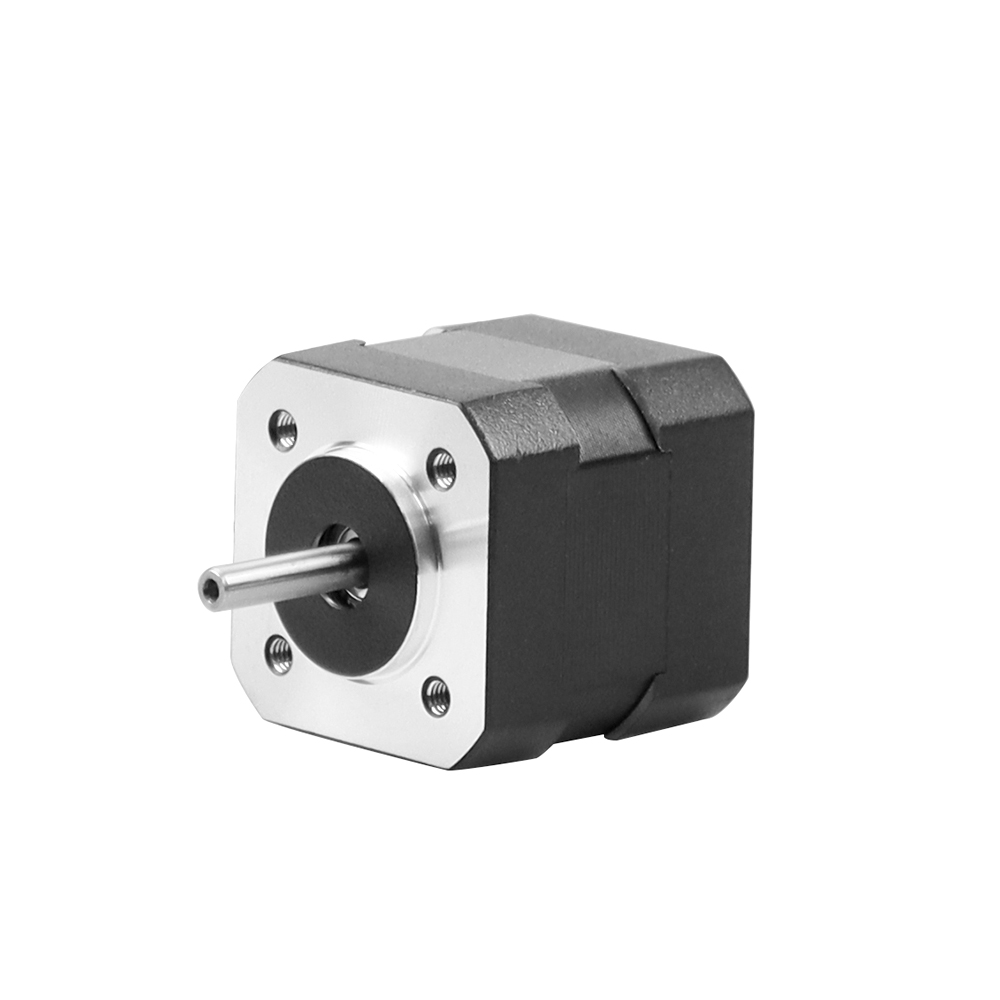
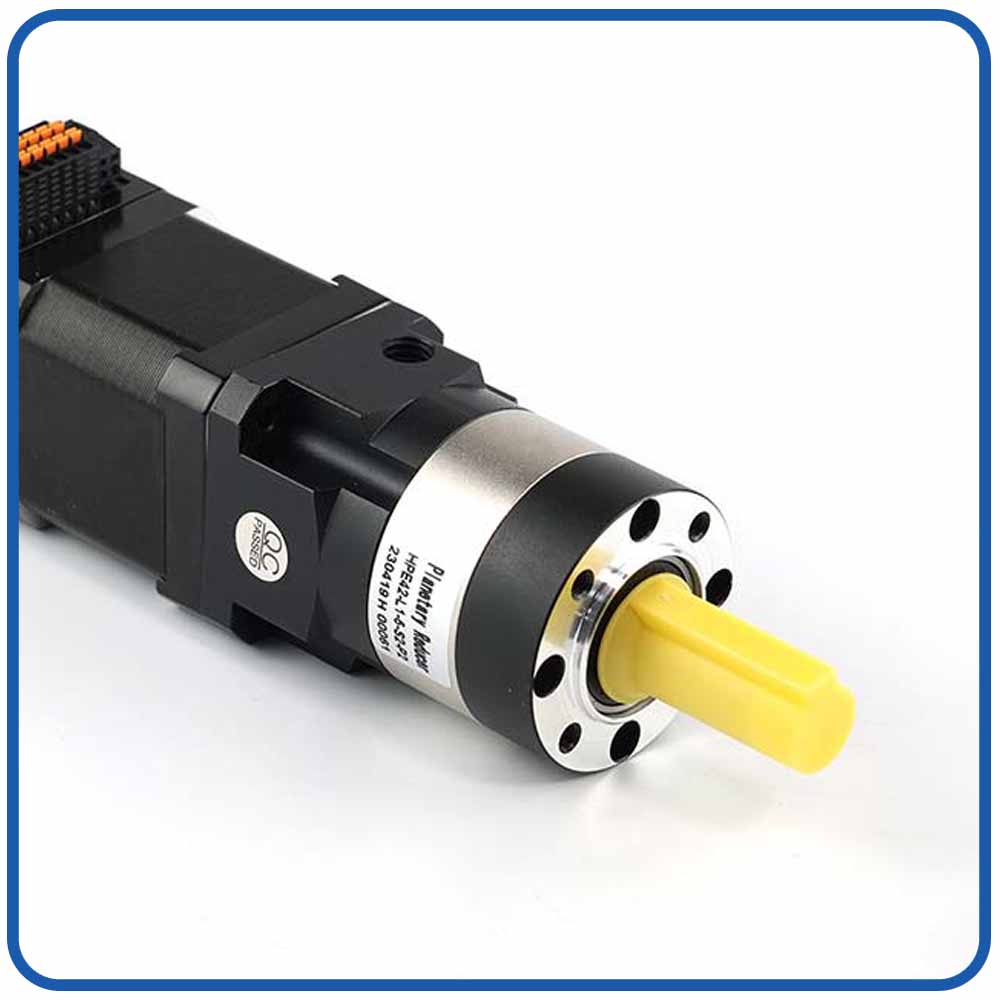
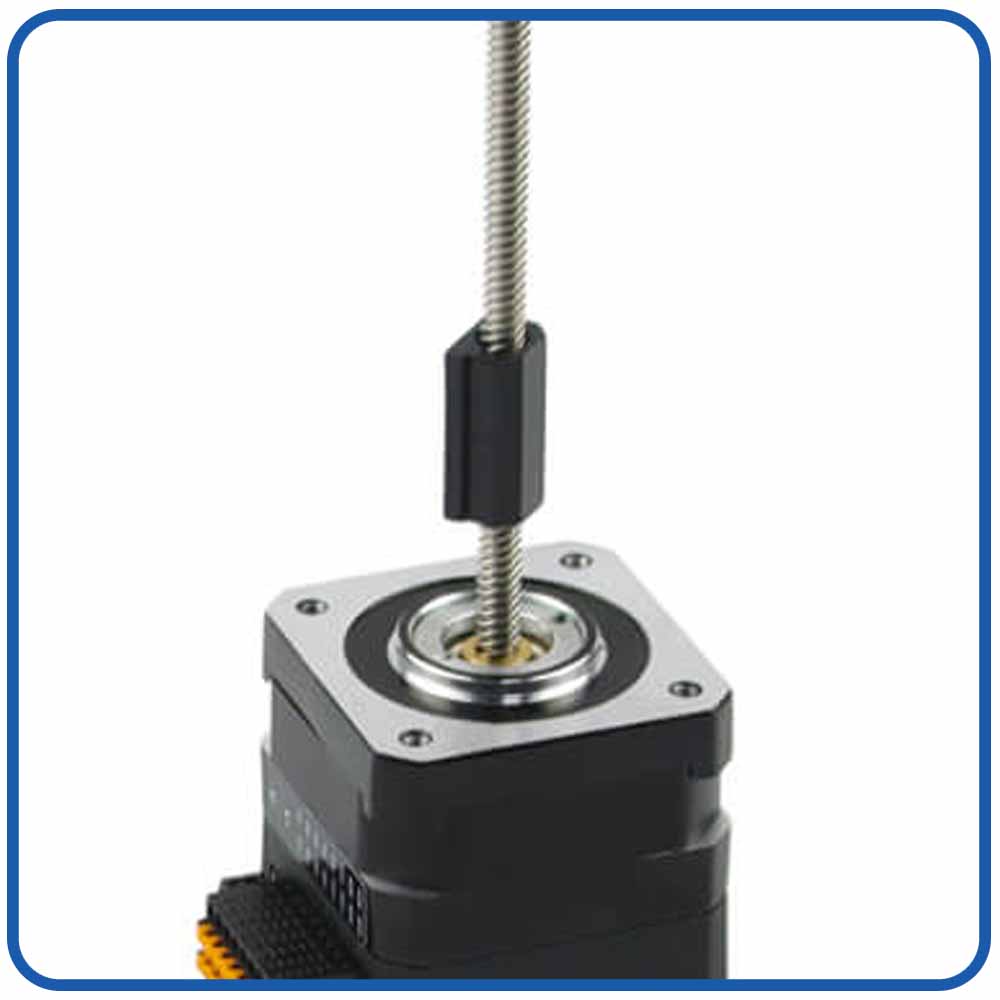
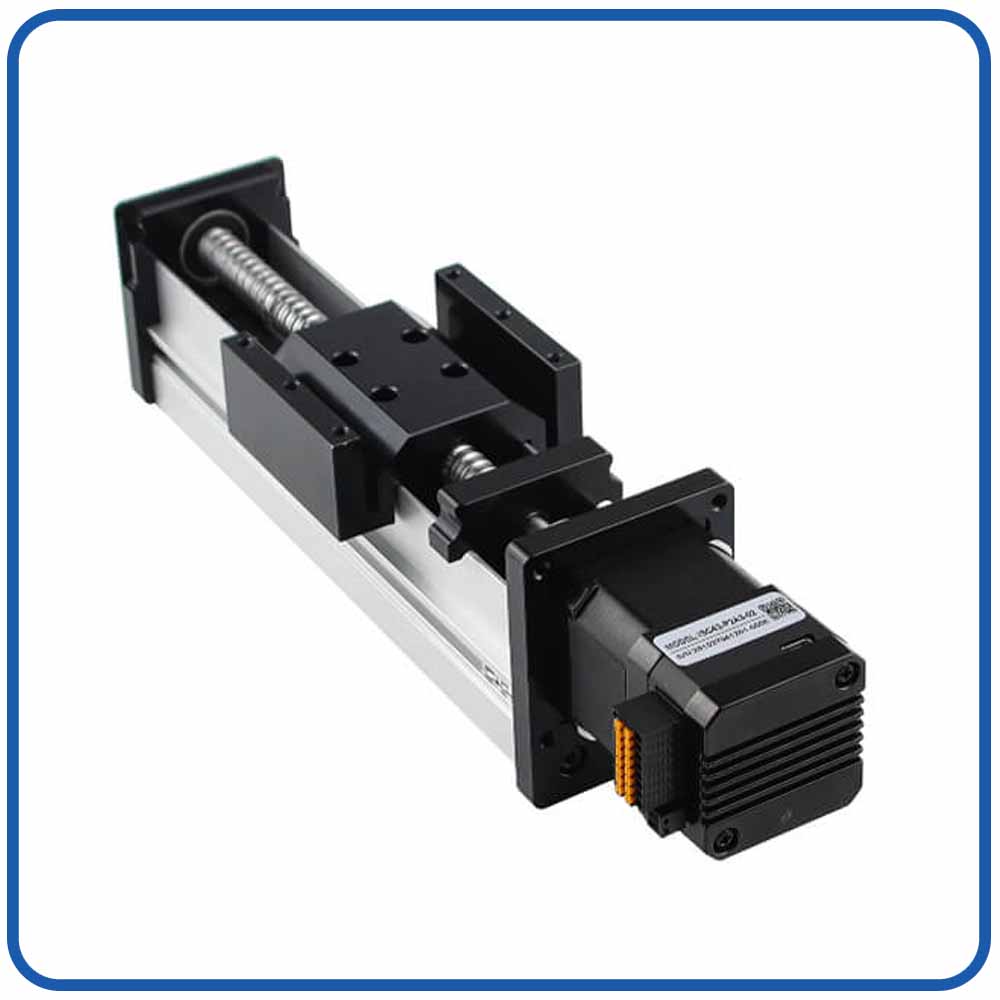
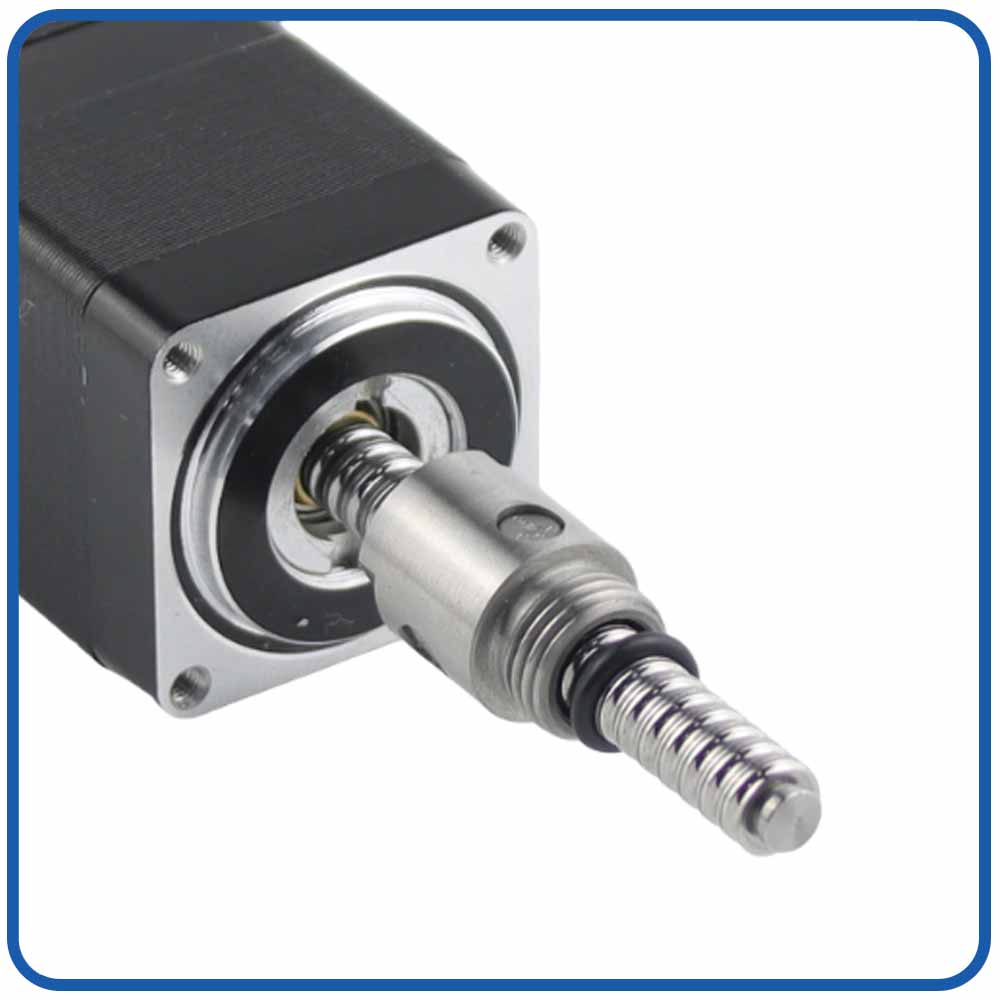
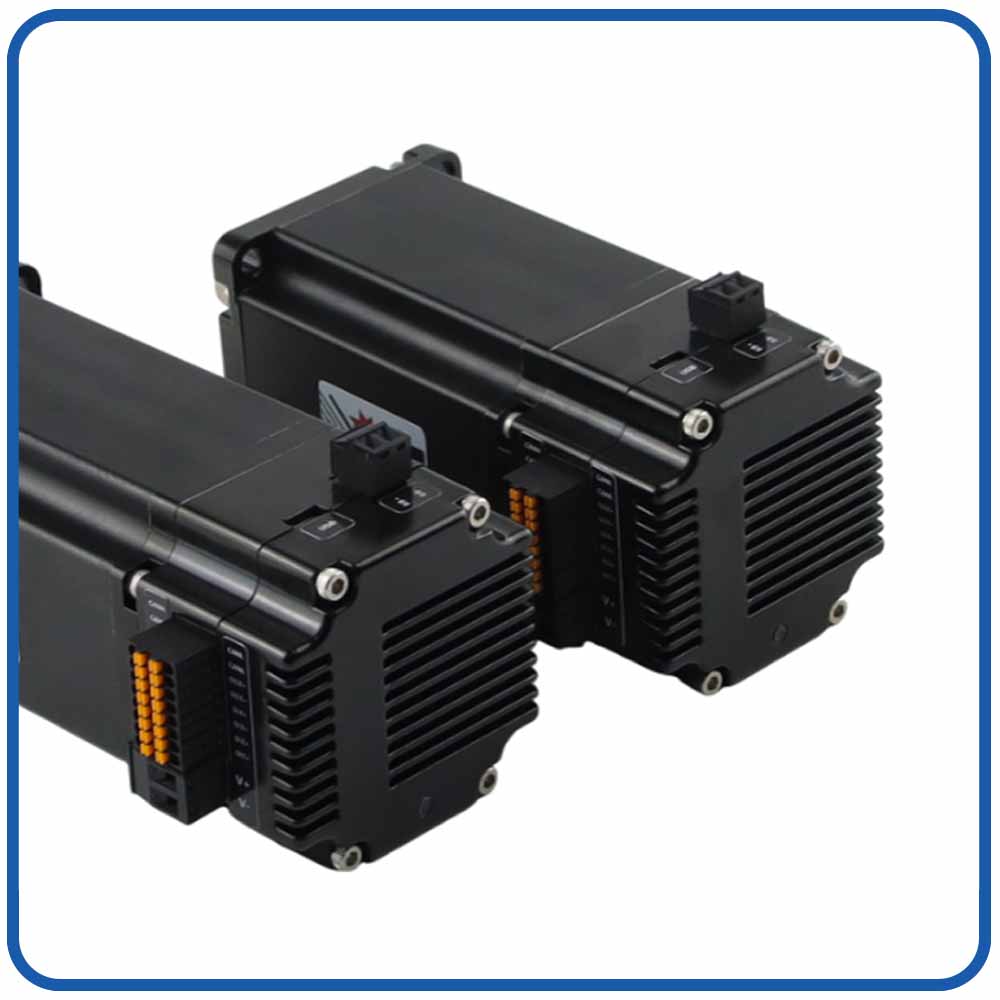
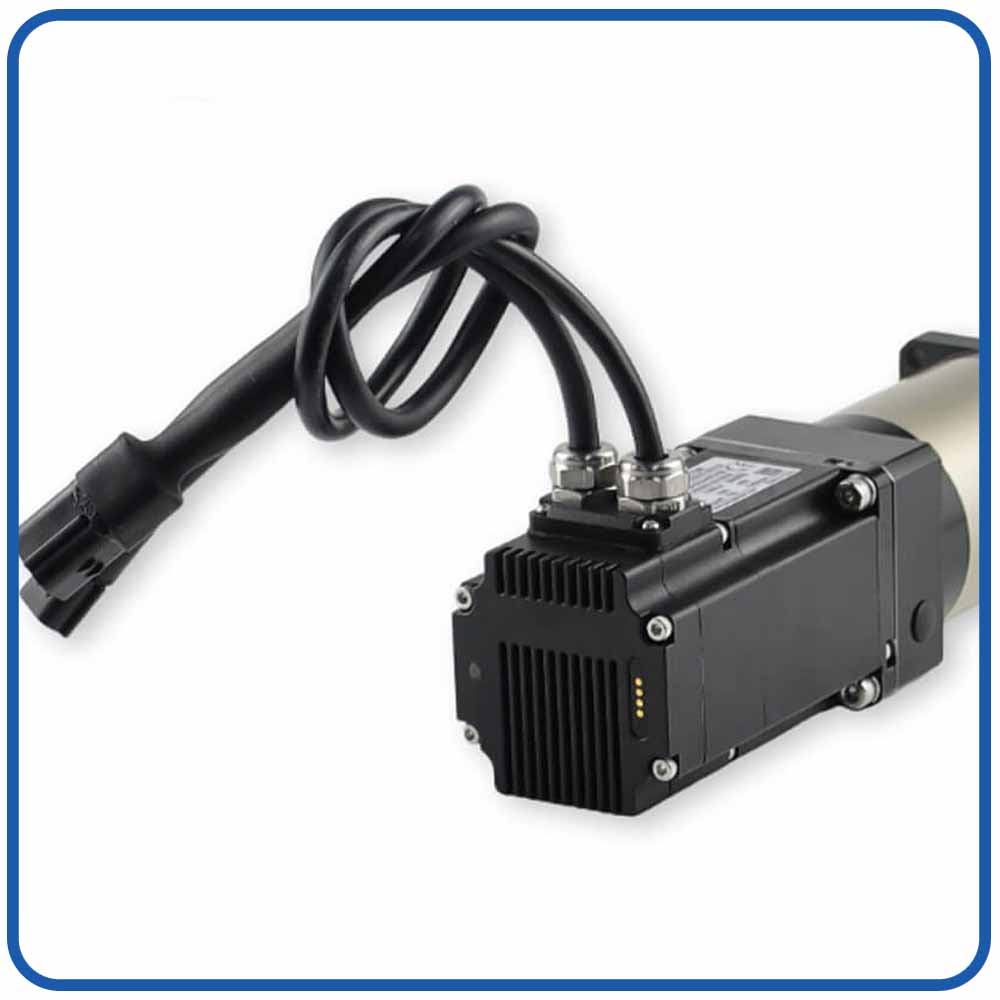
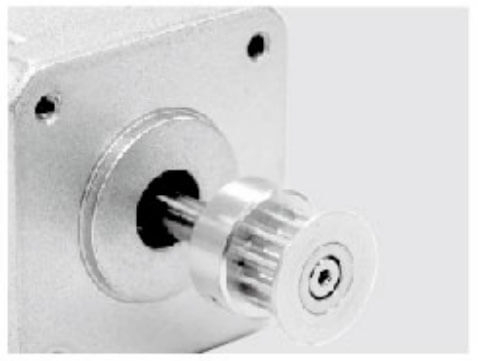
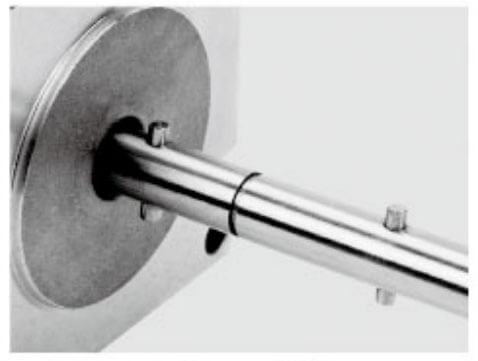
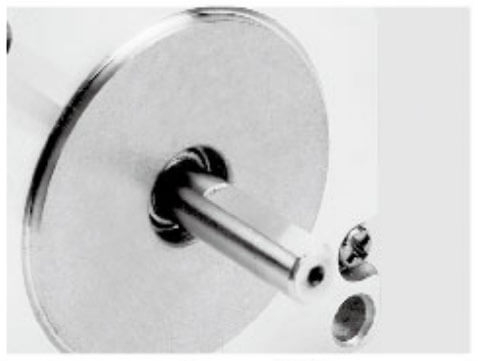
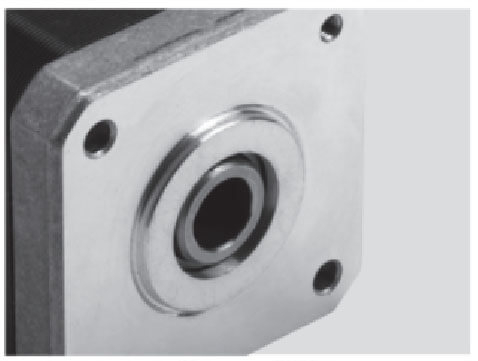
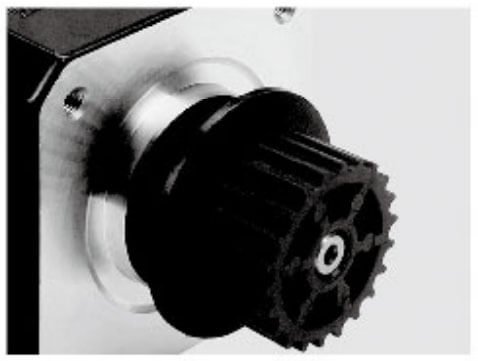
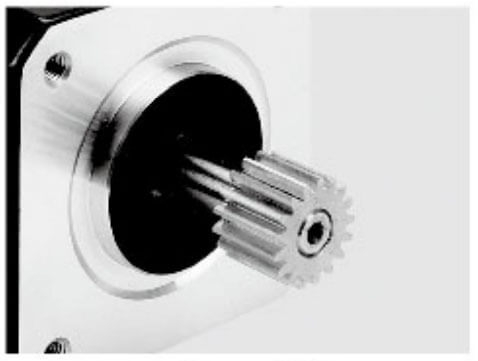
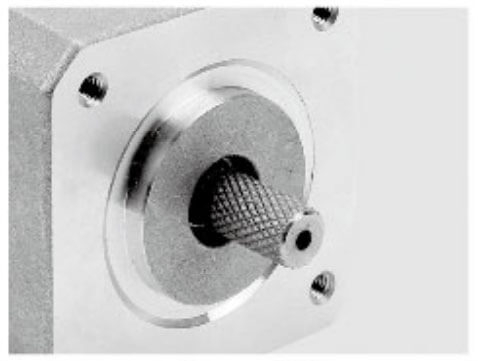
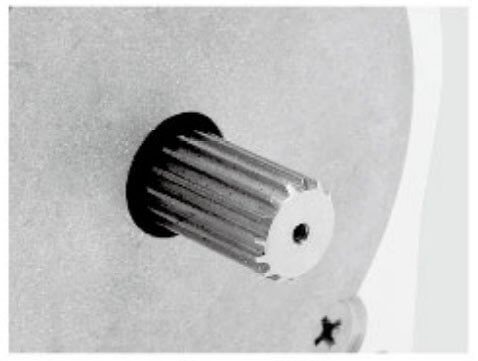
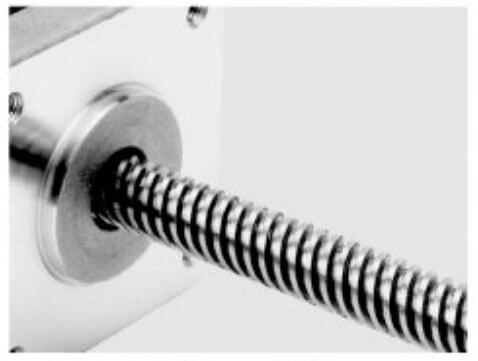
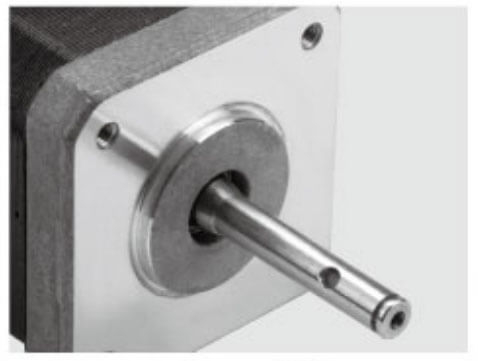
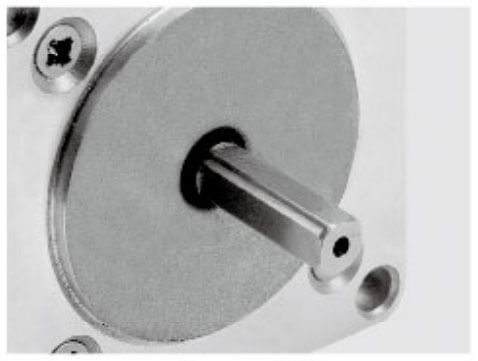
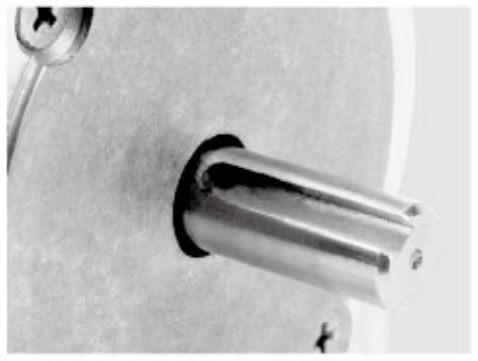
42BLS01 BLDC Motor — Compact, Intelligent, and Reliable Brushless Motor Drive System
Product Overview:The NEMA 17 BF42BLS Brushless DC Motor is a compact, high-efficiency motor designed for precision motion applications. Featuring reliable performance, low noise operation, and excellent speed control, it provides stable power output for automation equipment, robotics, medical devices, and other space-constrained systems requiring efficient and durable motion solutions.
Key Technical Highlights
Compact NEMA 17 Frame Size: Provides a space-saving design while delivering reliable torque output for compact automation and motion systems.
High Efficiency Brushless Design: Ensures low energy consumption, reduced heat generation, and longer service life compared with traditional brushed motors.
Low Noise & Smooth Operation: Optimized electromagnetic design enables stable rotation and quiet performance for precision applications.
Excellent Speed Control Capability: Supports accurate speed regulation and responsive dynamic performance for various motion requirements.
Durable & Maintenance-Free Operation: The brushless structure eliminates brush wear, improving reliability and reducing maintenance needs.
Wide Application Flexibility: Suitable for robotics, automation equipment, medical devices, and other compact motion control systems.
Typical Applications
Robotics and Automation Equipment – Provides precise and stable driving power for robotic mechanisms and automated systems.
Medical Devices – Suitable for compact medical instruments requiring quiet, reliable, and maintenance-free operation.
Laboratory and Testing Equipment – Delivers smooth speed control and consistent performance for precision motion applications.
3D Printers and CNC Equipment – Supports efficient and stable movement in compact manufacturing systems.
BF42BLS Series Integrated Brushless Dc Motor Parameters
Modern robotic systems, including robotic security patrol vehicles, autonomous mobile robots (AMRs), inspection robots, and service robots, require increasingly compact, reliable, and intelligent motion solutions. Traditional motor systems often involve multiple separate components, including motors, drivers, encoders, controllers, and complex wiring networks, which increase design complexity and limit the flexibility of robot development.
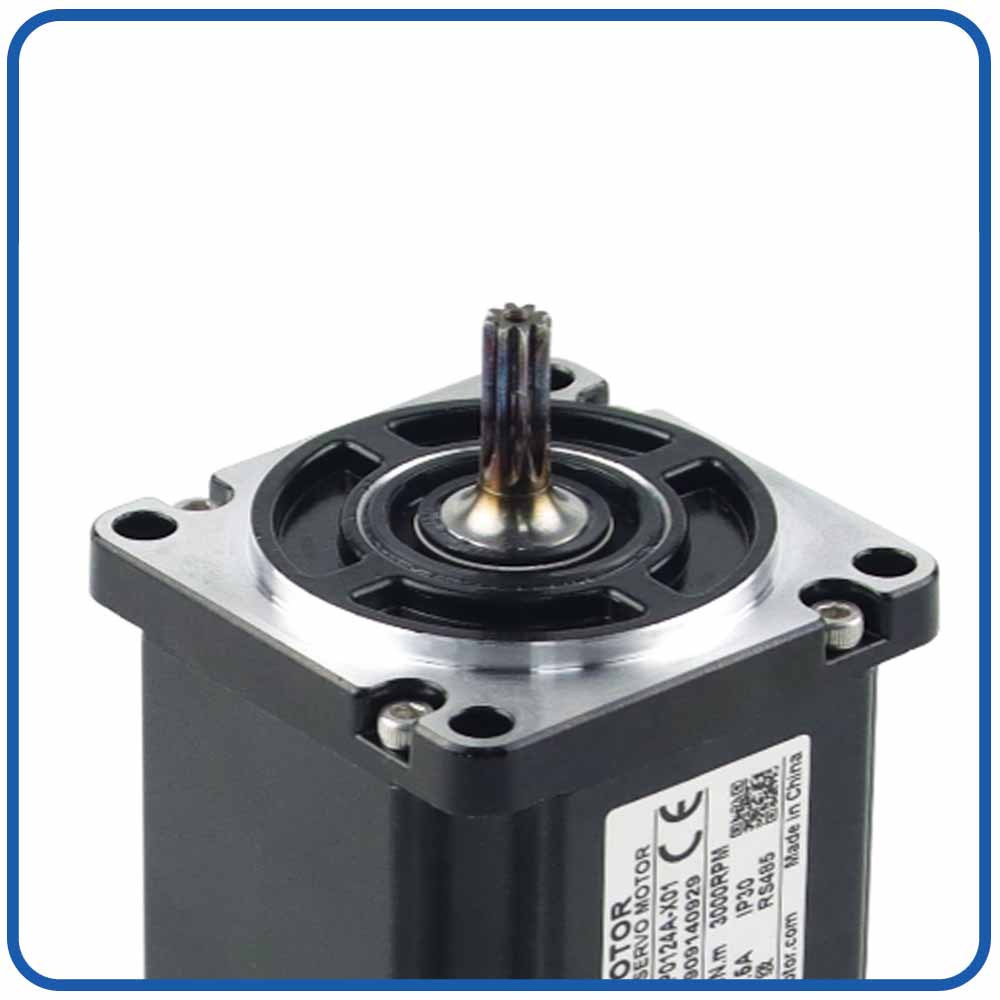
Integrated BLDC servo motors simplify robot design by combining the motor, servo driver, encoder, and control electronics into a single compact unit. This all-in-one architecture reduces system complexity, improves motion performance, and enables robot manufacturers to develop smaller, more efficient, and more reliable robotic platforms.
Reduced System Complexity with All-in-One Integration
In conventional robotic motion systems, engineers need to integrate multiple independent components:
BLDC motor
External motor driver
Encoder feedback device
Power supply wiring
Communication cables
Control cabinet
Each component requires additional installation space, electrical connections, and system configuration.
With an integrated BLDC servo motor, these components are combined into one solution. The built-in servo drive and feedback system allow the motor to directly receive commands from the robot controller and execute precise motion control.
This integrated architecture simplifies:
Mechanical design
Electrical layout
Control system development
Wiring management
Product assembly
As a result, robot manufacturers can shorten development cycles and bring products to market faster.
Space-Saving Design for Compact Robots
Space is a critical factor in modern robotics. Autonomous robots must accommodate multiple systems, including:
Batteries
LiDAR sensors
Cameras
Industrial computers
Wireless communication modules
Safety sensors
Traditional motor systems require additional space for external controllers and electrical cabinets, increasing the overall robot size.
Integrated BLDC servo motors eliminate the need for separate drive components, providing a much more compact motion solution.
The advantages include:
Smaller robot dimensions
Higher component density
More flexible mechanical layouts
Reduced overall system weight
For applications such as security patrol robots and warehouse AMRs, compact motor integration enables more agile movement and easier navigation in limited spaces.
Simplified Wiring Improves Reliability
Complex wiring is one of the common challenges in robotic system development. Multiple cables between motors, drivers, and controllers can create potential problems, including:
Increased installation difficulty
Signal interference
Wiring errors
Higher maintenance requirements
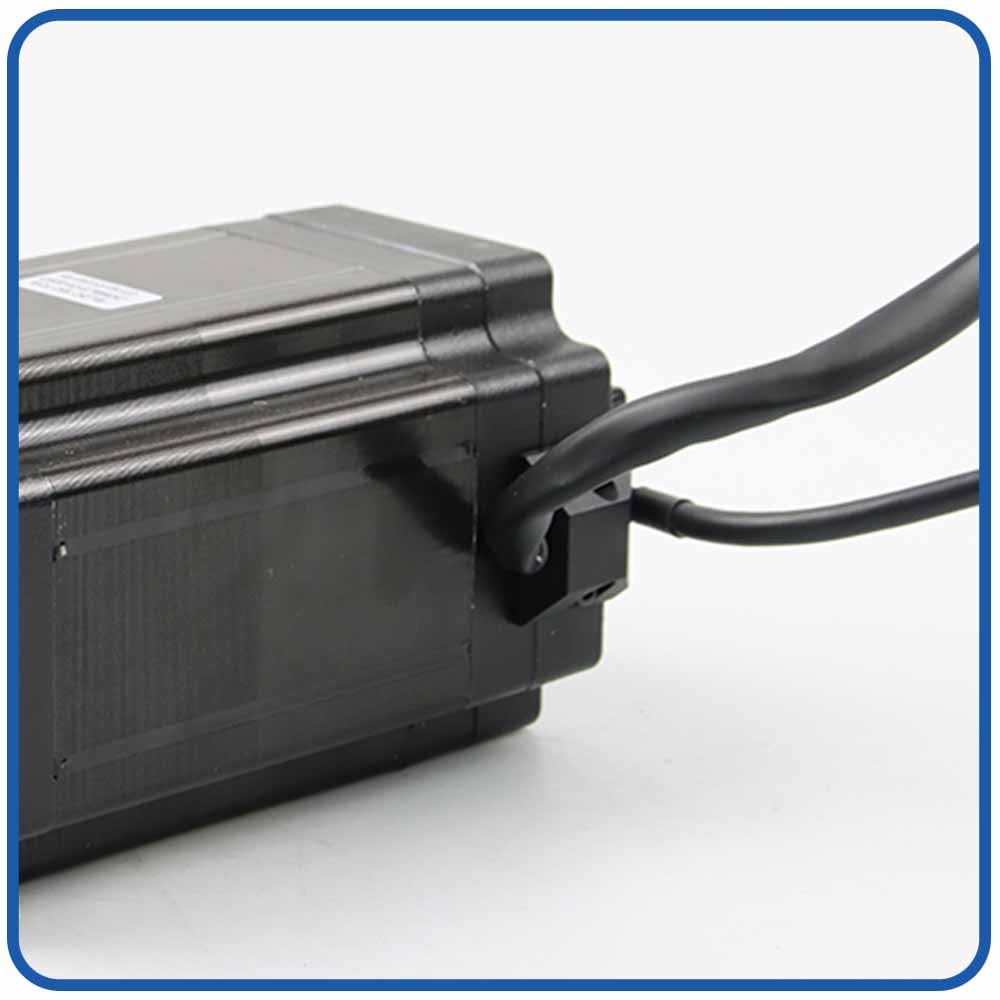
Integrated BLDC servo motors significantly reduce the number of cables required by combining control electronics directly with the motor.
A simplified wiring structure provides:
Faster installation
Cleaner robot architecture
Reduced electromagnetic interference
Easier troubleshooting
Improved system reliability
For robots operating continuously in industrial environments, fewer connection points also mean fewer potential failure points.
Built-In Feedback Enables Precise Motion Control
Accurate movement is essential for autonomous robots. Whether navigating a warehouse, patrolling a facility, or performing inspection tasks, robots need precise control of speed, position, and torque.
Integrated BLDC servo motors typically include high-resolution encoder feedback, enabling closed-loop control.
The system continuously monitors motor operation and automatically adjusts performance based on real-time feedback.
This provides:
Accurate positioning
Stable speed control
Smooth acceleration and deceleration
Improved load adaptability
Reduced motion errors
Compared with open-loop motor solutions, integrated servo motors deliver significantly higher motion accuracy and stability.
Faster Robot Development and Easier Integration
Developing a robotic platform requires coordination between mechanical engineers, electrical engineers, and control engineers. Traditional motor systems require extensive integration work to match motors, drivers, and feedback devices.
Integrated BLDC servo motors simplify this process by providing a pre-configured motion module.
Engineers can focus more on:
Robot structure design
Navigation algorithms
Application functions
User experience improvements
Instead of spending excessive time on motor-driver compatibility and wiring optimization.
This makes integrated servo motors especially valuable for companies developing customized robotic solutions with shorter development timelines.
Improved Communication Between Motion Components
Modern robots rely on real-time communication between multiple motion axes and the main controller.
Integrated BLDC servo motors support industrial communication protocols such as:
CANopen
CAN Bus
RS485
Modbus RTU
EtherCAT
Pulse & Direction
These communication options allow multiple motors to work together efficiently.
For example, a robotic security patrol vehicle may require coordinated control of:
Left and right drive wheels
Steering mechanisms
Camera rotation systems
Auxiliary motion modules
Integrated servo motors simplify communication architecture and improve synchronization between different motion systems.
Lower Heat Generation and Better Thermal Management
Traditional motor systems generate heat in both the motor and external driver, requiring additional cooling solutions.
By integrating the driver electronics with the motor, manufacturers can optimize thermal management through:
Improved component matching
Compact heat dissipation design
Intelligent current control
Reduced energy losses
Better thermal performance helps maintain stable operation during long working cycles, which is especially important for robots performing continuous security patrol or industrial inspection tasks.
Easy Maintenance and Reduced Downtime
For commercial and industrial robots, maintenance efficiency directly affects operational costs.
Many integrated servo motors provide diagnostic information through communication interfaces, allowing engineers to quickly identify problems and reduce downtime.
Ideal Motion Solution for Next-Generation Robotics
As robots become more intelligent and compact, integrated motion solutions are becoming increasingly important. Integrated BLDC servo motors provide the combination of:
Compact structure
High efficiency
Precise closed-loop control
Simple installation
Reliable operation
Flexible communication
These advantages make them suitable for a wide range of robotic applications, including:
Robotic Security Patrol Vehicles
Autonomous Mobile Robots (AMRs)
Warehouse Robots
Inspection Robots
Delivery Robots
Service Robots
Final
Integrated BLDC servo motors simplify robot design by combining the motor, driver, encoder, and control system into one compact and intelligent motion solution. This integration reduces system complexity, minimizes wiring requirements, saves installation space, and improves overall robot reliability.
For manufacturers developing advanced robotic platforms, integrated BLDC servo motors provide a more efficient way to achieve precise motion control while reducing development time and improving long-term performance. As robotics continues moving toward greater intelligence and automation, integrated servo technology will play an increasingly important role in building the next generation of compact, reliable, and high-performance robots.
Outdoor robots must continue operating reliably in rain, dust, and varying weather conditions.
Low Noise Operation Is Essential
One advantage of robotic security patrol vehicles is discreet monitoring.
Low-noise BLDC motors enable:
Silent night patrols
Reduced disturbance
Better surveillance quality
Improved user acceptance
Brushless motors naturally produce significantly less mechanical noise than brushed alternatives.
Communication Interfaces for Intelligent Robots
Modern patrol robots integrate multiple control systems.
Motor communication interfaces may include:
CANopen
CAN Bus
RS485
Modbus RTU
EtherCAT
Pulse & Direction
Analog Control
Selecting compatible communication protocols simplifies system integration and improves real-time performance.
Safety Features to Consider
Reliable motors should include built-in protection functions:
Overcurrent protection
Overvoltage protection
Undervoltage protection
Overtemperature protection
Stall protection
Encoder fault detection
Short-circuit protection
These features improve overall robot reliability while minimizing downtime.
Why Integrated Low-Voltage BLDC Servo Motors Are the Preferred Choice
As robotic security patrol vehicles, autonomous mobile robots (AMRs), and intelligent inspection platforms become more advanced, traditional motor systems are increasingly unable to meet the demands for compact design, precise control, and high reliability. Integrated low-voltage BLDC servo motors have become a preferred motion solution because they combine the advantages of a brushless DC motor, servo driver, encoder, and control electronics into a single compact unit.
Compared with conventional BLDC motor systems that require separate controllers, wiring harnesses, and feedback devices, integrated servo motors simplify system architecture while delivering higher efficiency, better motion control, and improved reliability.
1. Compact Design and Space-Saving Integration
Modern robotic platforms have strict space limitations. Security patrol robots need to reserve internal space for batteries, cameras, LiDAR sensors, communication modules, and computing systems.
A traditional motor solution usually requires multiple components:
BLDC motor
External motor driver
Encoder module
Power cables
Signal cables
Control cabinet
This increases the overall system size and installation complexity.
An integrated low-voltage BLDC servo motor combines these components into one compact package, significantly reducing the footprint of the drive system. This compact structure allows robot manufacturers to create smaller, lighter, and more flexible robotic platforms while improving internal space utilization.
2. High-Efficiency Operation for Longer Battery Life
Battery endurance is one of the most important factors for autonomous security patrol vehicles. Robots used in industrial facilities, campuses, and public areas often need to operate continuously for extended periods.
Low-voltage BLDC servo motors provide excellent energy efficiency through:
Brushless electromagnetic design
Optimized motor control algorithms
Closed-loop current regulation
Reduced mechanical losses
Higher efficiency means:
Longer operating time per charge
Lower battery requirements
Reduced heat generation
Improved overall system performance
For mobile robots that perform long-duration patrol missions, energy-efficient motor technology directly improves operational reliability.
3. Precise Closed-Loop Motion Control
Security patrol robots require accurate and stable movement when navigating complex environments. Open-loop motors cannot detect position errors caused by external disturbances such as uneven surfaces, obstacles, or changing loads.
Integrated BLDC servo motors use encoder feedback to achieve closed-loop control, continuously monitoring:
Motor position
Speed
Current
Torque output
This enables:
Precise speed regulation
Smooth acceleration and deceleration
Accurate positioning
Better obstacle handling
Improved navigation stability
For autonomous robots requiring accurate path tracking and repeatable movement, closed-loop servo control provides a significant advantage.
4. Reduced Wiring and Easier System Integration
Traditional motor systems often require complicated wiring between motors, drivers, controllers, and feedback devices. Excessive wiring can increase:
Installation time
System complexity
Failure risks
Maintenance difficulties
Integrated BLDC servo motors reduce wiring requirements by placing the driver and control electronics directly on the motor.
Benefits include:
Faster robot assembly
Cleaner mechanical design
Reduced electrical interference
Easier troubleshooting
Higher system reliability
This makes integrated servo motors especially suitable for compact robotic systems where installation simplicity is critical.
5. Excellent Low-Speed Stability and Smooth Motion
Robotic security vehicles often need to move slowly while monitoring surroundings, approaching targets, or operating in crowded areas.
A high-quality integrated BLDC servo motor provides:
Stable low-speed operation
Smooth torque output
Reduced vibration
Accurate speed adjustment
Unlike conventional motors that may experience unstable movement at low speeds, servo-controlled BLDC motors maintain precise motion even during slow patrol operations.
This is essential for applications such as:
Indoor security robots
Warehouse patrol robots
Campus surveillance robots
Industrial inspection robots
6. High Reliability for Continuous Operation
Security robots are designed for long-term autonomous operation. Motor failures can interrupt patrol tasks and increase maintenance costs.
These functions help ensure stable operation even under demanding working conditions.
Summary
Integrated low-voltage BLDC servo motors are becoming the preferred choice for robotic security patrol vehicles because they provide a complete motion solution with high efficiency, precise control, compact structure, and long-term reliability.
By integrating the motor, driver, encoder, and communication interface into one unit, these servo motors simplify robotic design while improving performance. For autonomous patrol robots that require continuous operation, accurate navigation, and efficient energy usage, integrated BLDC servo technology provides the ideal balance between power, intelligence, and reliability.
Recommended Integrated BLDC Servo Solutions for Robotic Security Patrol Vehicles
For manufacturers developing advanced security robots, Leanmotor Integrated Low-Voltage BLDC Servo Motors provide an ideal combination of compact size, precise control, and dependable performance.
Popular options include the IDC42, IDC57, IDC60, IDC80, and IDC86 Integrated BLDC Servo Motor Series, each designed to meet different payload capacities and mobility requirements.
Key features include:
Integrated motor, driver, and encoder
24V–60V low-voltage operation
High torque density
Closed-loop servo control
High-resolution encoder feedback
Smooth low-speed performance
Compact all-in-one construction
CANopen, RS485, EtherCAT, and Pulse Control options
Reduced wiring and installation time
Reliable continuous-duty operation
Energy-efficient brushless technology
Whether powering drive wheels, steering modules, pan-tilt camera systems, or auxiliary motion mechanisms, these integrated servo motors help simplify robot architecture while delivering the precision and durability required for intelligent patrol applications.
Common Mistakes When Selecting a BLDC Motor
Many designers encounter performance issues because they overlook critical selection factors.
Common mistakes include:
Choosing motors based only on rated power
Ignoring peak torque requirements
Underestimating climbing resistance
Selecting insufficient encoder resolution
Overlooking communication compatibility
Neglecting environmental protection ratings
Using open-loop control where closed-loop precision is required
Choosing oversized motors that waste battery capacity
A comprehensive evaluation of mechanical, electrical, and control requirements leads to a more reliable and efficient robotic platform.
Conclusion
Selecting the right BLDC motor for a Robotic Security Patrol Vehicle requires balancing torque, speed, efficiency, precision, communication, environmental durability, and system integration. As autonomous patrol robots become more intelligent and operate in increasingly demanding environments, integrated low-voltage BLDC servo motors offer clear advantages over conventional motor solutions by combining compact design, closed-loop control, simplified wiring, and exceptional reliability.
By carefully matching motor specifications to the robot's drive system, payload, battery platform, and control architecture, manufacturers can build security patrol vehicles that deliver smoother navigation, longer operating time, higher positioning accuracy, and reduced maintenance throughout their service life.
FAQs
1. What type of motor is best for a robotic security patrol vehicle?
BesFoc Answer: A low-voltage BLDC servo motor is an ideal choice for robotic security patrol vehicles because it provides high efficiency, precise control, and reliable operation. BesFoc integrated BLDC servo motors combine the motor, driver, encoder, and controller into one compact unit, making them suitable for drive systems and autonomous mobile robots.
2. Why are BLDC motors preferred for robotic security patrol vehicles?
BesFoc Answer: BLDC motors are preferred because they offer high efficiency, low noise, long lifespan, and stable speed control. BesFoc BLDC servo motors eliminate brush wear and provide closed-loop control, ensuring smoother operation, lower maintenance, and reliable performance for continuous patrol and outdoor robotic applications.
3. How do you choose the right BLDC motor for a robotic security patrol vehicle?
BesFoc Answer: Selecting the right BLDC motor requires considering vehicle weight, speed, torque, voltage, environment, and control requirements. BesFoc provides customized integrated BLDC servo motor solutions with suitable power, torque, encoder, and communication options to meet different robotic security patrol vehicle needs.
4. What are the key factors to consider when selecting a motor for an autonomous patrol robot?
BesFoc Answer: Key factors include torque, speed range, efficiency, size, environmental protection, and control accuracy. BesFoc integrated servo motors provide compact design, high torque density, and closed-loop control, helping autonomous patrol robots achieve stable movement, precise navigation, and efficient operation.
5. Can BLDC servo motors improve the performance of robotic security patrol vehicles?
BesFoc Answer: Yes. BLDC servo motors improve robotic security patrol vehicle performance through precise motion control, fast response, and high energy efficiency. BesFoc integrated BLDC servo motors simplify installation, enhance system reliability, and support smoother movement, accurate navigation, and longer operating time.

 English
 العربية
 Français
 Русский
 Español
 Português
 Deutsch
 italiano
 日本語
日本語 한국어
한국어 Nederlands
 Tiếng Việt
 ไทย
ไทย Polski
 Türkçe
 ພາສາລາວ
 ភាសាខ្មែរ
 Bahasa Melayu
 ဗမာစာ
ဗမာစာ Filipino
 Bahasa Indonesia
 magyar
 Română
 Čeština
 Монгол
 қазақ
қазақ Српски
 हिन्दी
 فارسی
فارسی Slovenčina
 Slovenščina
 Norsk
Norsk Svenska
 українська
 Ελληνικά
 Suomi
Suomi Հայերեն
 עברית
עברית Latine
 Dansk
Dansk Shqip
Shqip বাংলা
বাংলা Hrvatski
 Afrikaans
 Gaeilge
 Eesti keel
 Oʻzbekcha
 latviešu
 Azərbaycan dili
 Български
 Català