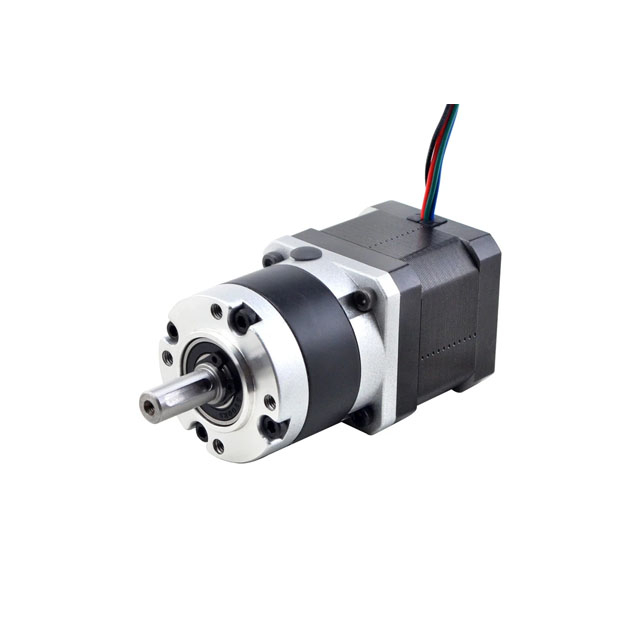
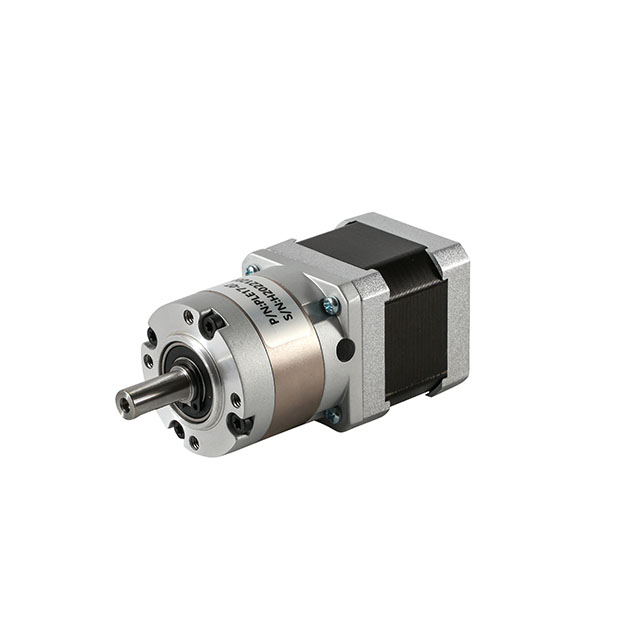
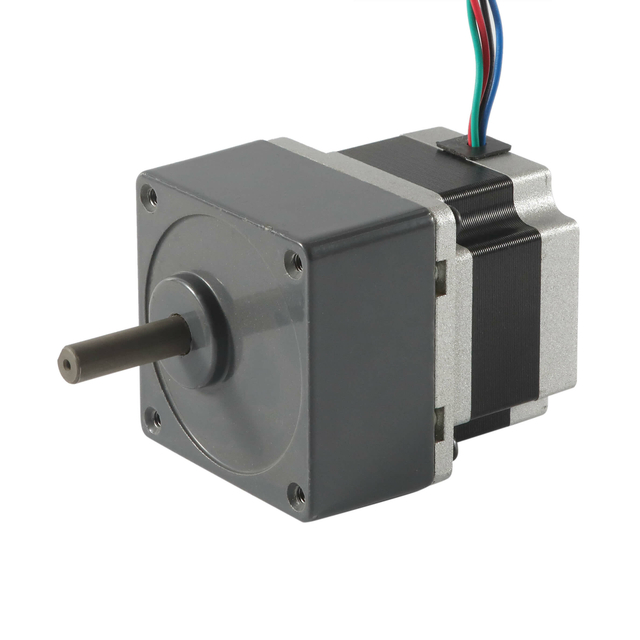
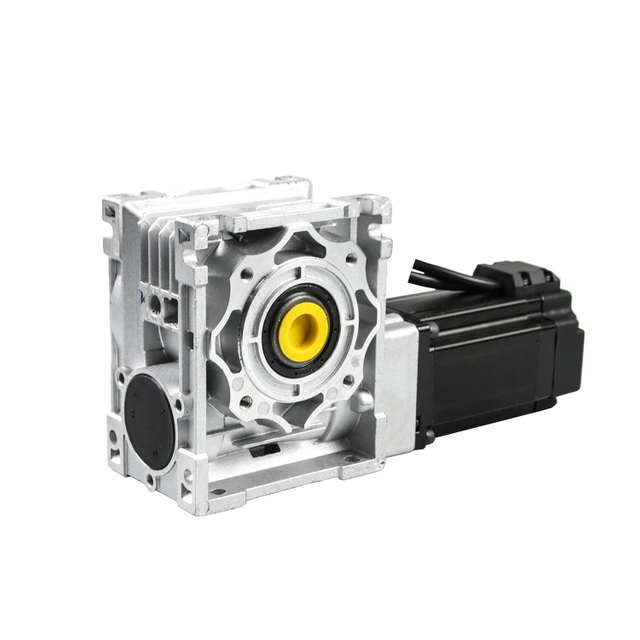
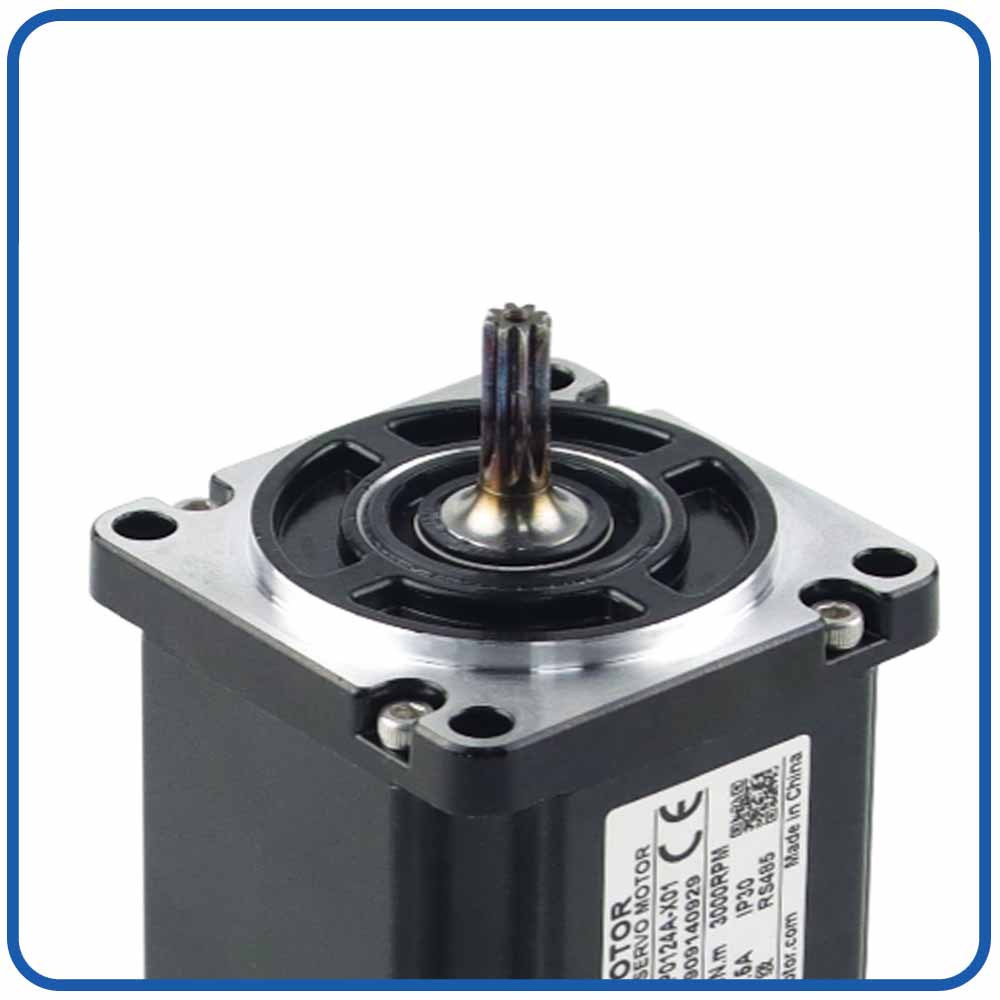
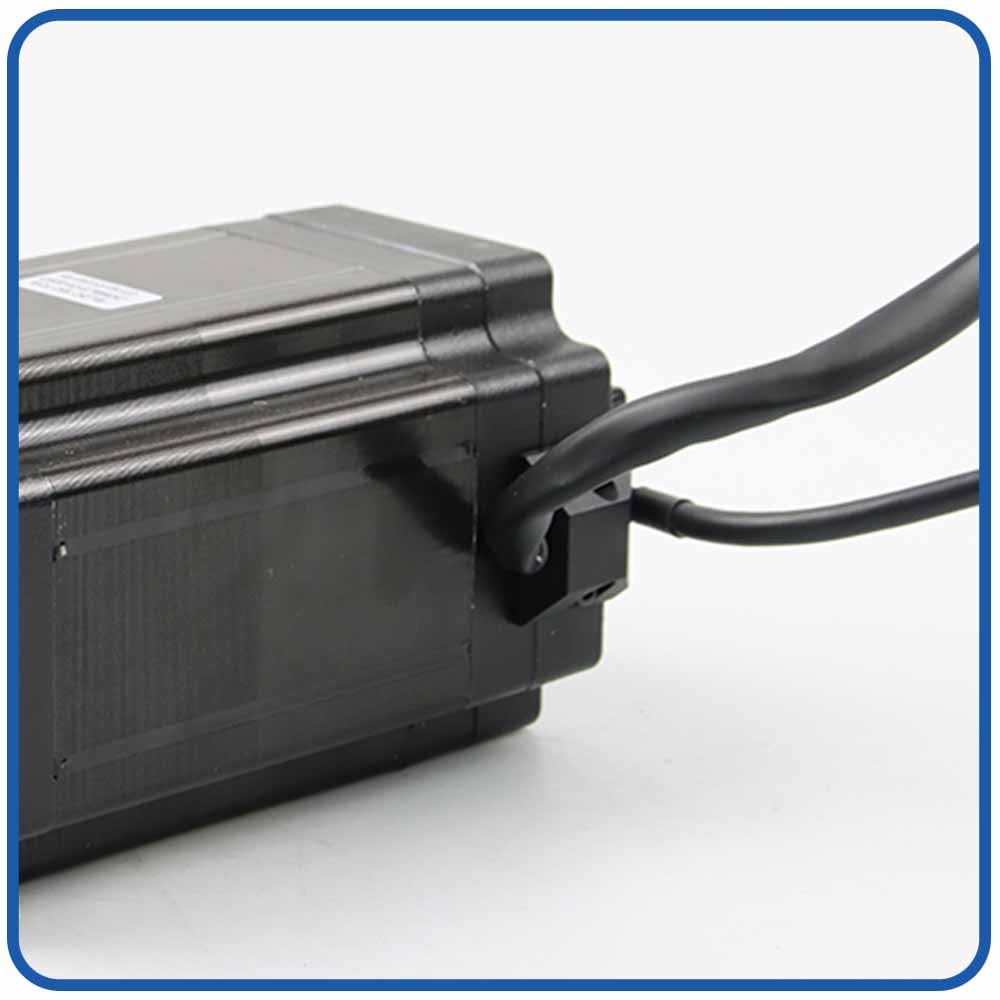
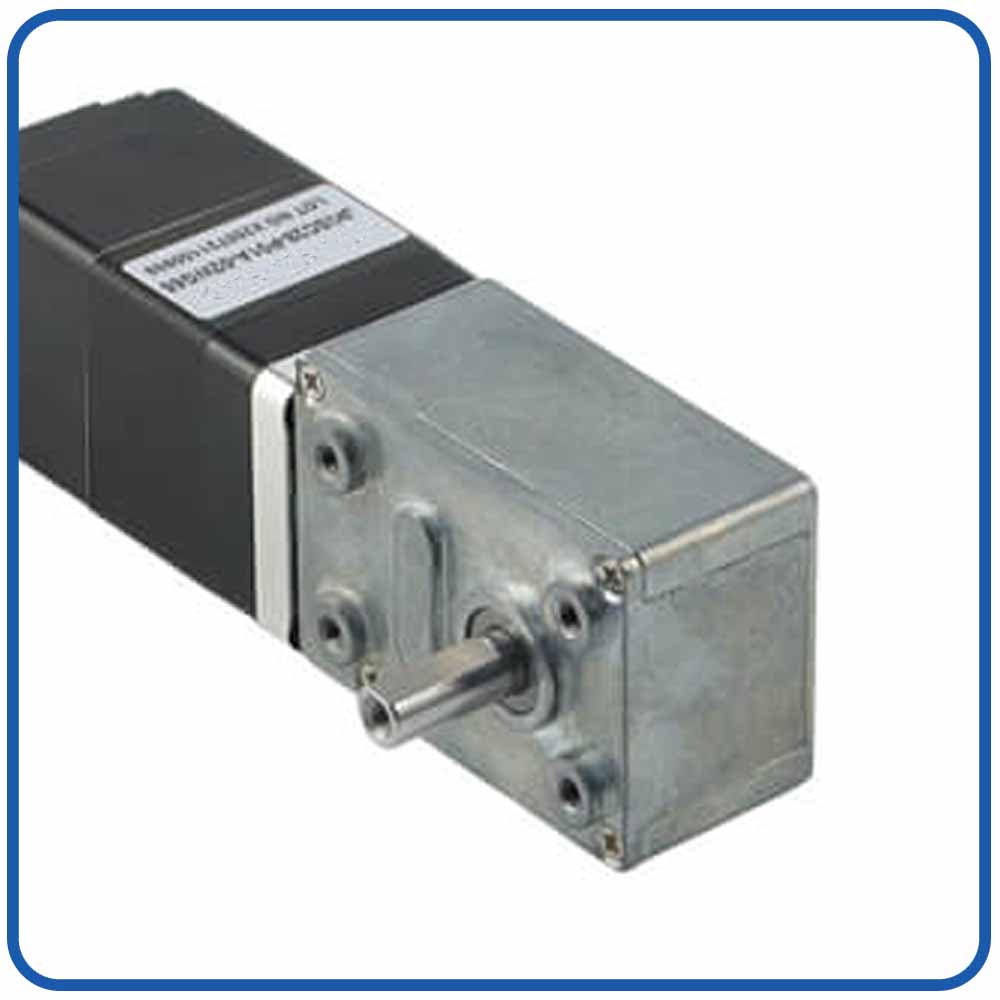
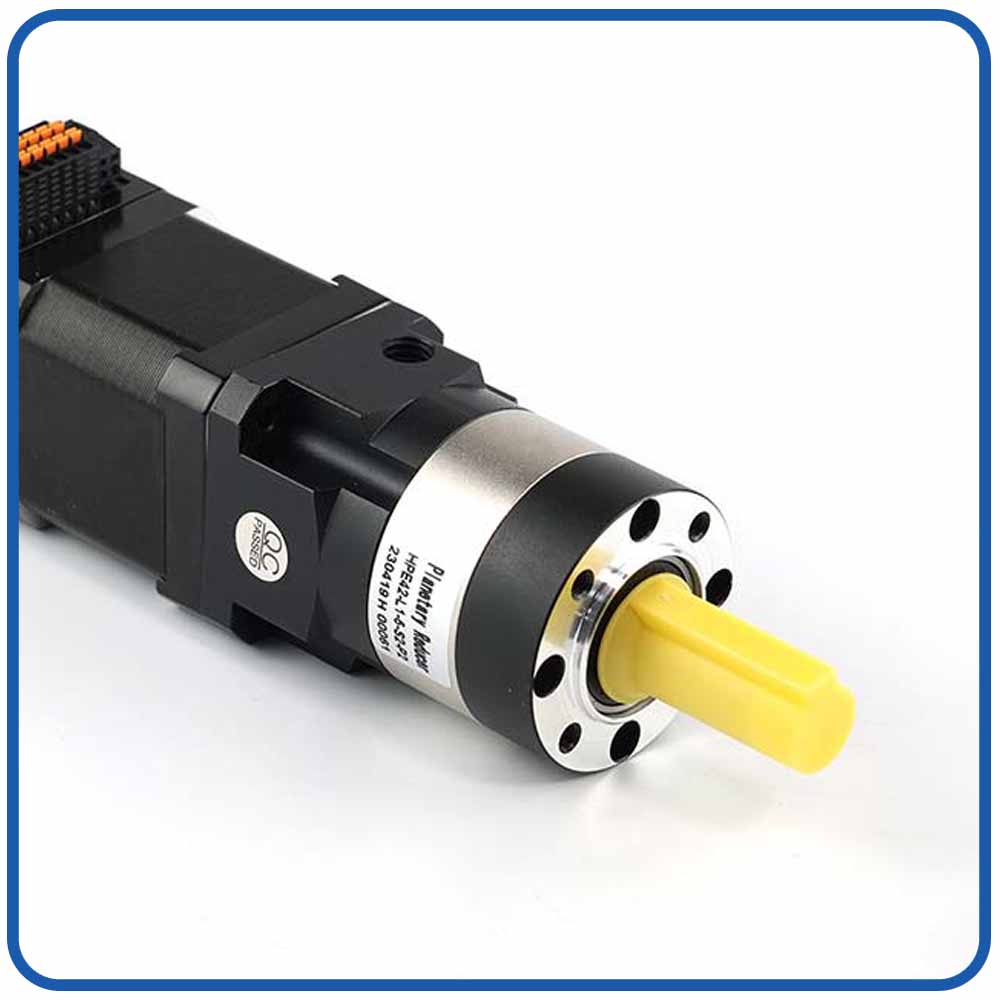
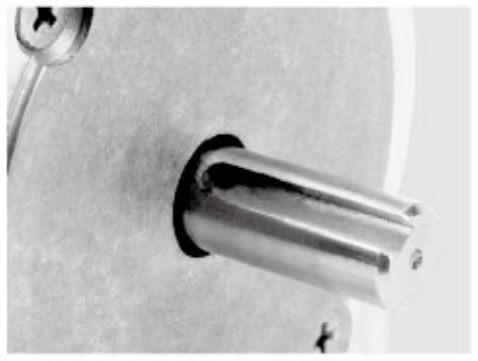
High torque geared stepper motors are widely used in industrial automation, CNC systems, robotic arms, medical devices, textile machinery, packaging equipment, and precision positioning platforms. Their ability to deliver accurate motion control with enhanced torque output makes them ideal for demanding motion applications. However, one of the most critical issues affecting performance and reliability is step loss.
When a geared stepper motor loses steps, the motor shaft no longer follows the commanded position accurately. This causes positioning errors, vibration, reduced efficiency, product defects, and even complete system failure in automated production environments. Preventing step loss is essential for ensuring long-term operational stability, precision, and equipment safety.
This article explores the major causes of step loss in high torque geared stepper motor systems and provides practical engineering solutions to eliminate or significantly reduce the risk.
What Is Step Loss in a Geared Stepper Motor?
Step loss in a geared stepper motor occurs when the motor fails to move the exact number of commanded steps from the controller. In normal operation, a stepper motor rotates in precise step increments based on input pulse signals. When the motor cannot keep up with these pulse commands, it “loses steps,” causing the actual shaft position to differ from the intended position.
In a geared stepper motor, this issue becomes more critical because the gearbox multiplies output torque while also increasing system inertia and mechanical resistance. Even a small step deviation at the motor side can create noticeable positioning errors at the output mechanism.
How Step Loss Happens
A stepper motor operates by synchronizing rotor movement with electrical pulse signals. If the required torque exceeds the motor’s available torque during acceleration, deceleration, or load changes, the rotor falls out of synchronization.
Common triggers include:
Excessive mechanical load
Sudden acceleration or stopping
Insufficient driver current
High operating speeds
Poor motor sizing
Resonance and vibration
Power supply instability
Gearbox friction or backlash
Once synchronization is lost, the motor no longer reaches the commanded position accurately.
In precision applications such as CNC machinery, robotics, medical devices, and packaging equipment, even minor step loss can reduce system accuracy and product quality.
Why Geared Stepper Motors Are Sensitive to Step Loss
Gearboxes increase torque output, but they also introduce additional factors that can contribute to missed steps:
Gearbox Effect
Impact on Step Loss
Increased inertia
Higher acceleration torque required
Mechanical backlash
Reduced positioning precision
Internal friction
Additional motor load
Efficiency losses
Reduced usable output torque
This is why proper gearbox matching is essential for stable operation.
Difference Between Open-Loop and Closed-Loop Systems
Open-Loop Geared Stepper Motors
Traditional stepper systems do not verify whether the commanded movement was completed. If step loss occurs, the controller cannot detect it.
Closed-loop systems use encoder feedback to monitor actual motor position in real time. If the motor deviates from the target position, the driver automatically compensates, significantly reducing the risk of lost steps.
How to Prevent Step Loss
Effective prevention methods include:
Proper motor and gearbox sizing
Using smooth acceleration and deceleration profiles
Avoiding overload conditions
Selecting correct driver current settings
Reducing vibration and resonance
Improving cooling and thermal management
Using stable power supplies
Implementing closed-loop control systems when high precision is required
Conclusion
Step loss in a geared stepper motor refers to the loss of synchronization between the motor’s commanded steps and its actual movement. It is commonly caused by overload, excessive speed, poor tuning, or mechanical inefficiencies. Preventing step loss is essential for maintaining positioning accuracy, operational stability,, or mechanical inefficiencies. Preventing step loss is essential for maintaining positioning accuracy, operational stability, and long-term reliability in industrial automation systems.
Main Causes of Step Loss in High Torque Geared Stepper Motors
1. Excessive Load Torque
The most common reason for step loss is operating beyond the motor’s available torque capacity.
Even though geared stepper motors provide amplified torque through reduction ratios, every motor still has a maximum torque limit. When the external load exceeds this limit, the rotor cannot maintain synchronization with the pulse commands.
Common overload situations:
Heavy vertical loads
Sudden load changes
Improper gearbox ratio selection
High friction mechanical systems
Oversized driven equipment
Prevention Methods:
Maintain a torque safety margin of 30%–50%
Calculate dynamic torque instead of relying only on holding torque
Choose appropriate reduction ratios
Reduce unnecessary mechanical resistance
2. Acceleration and Deceleration Are Too Aggressive
Rapid acceleration requires extremely high instantaneous torque. If the motor cannot produce enough torque during startup or stopping, synchronization is lost.
High torque geared stepper motors often drive systems with large inertia loads. Sudden speed changes can easily trigger missed steps.
Prevention Methods:
Use smooth acceleration/deceleration ramps
Implement S-curve motion profiles
Reduce startup frequency
Increase ramp-up time for heavy loads
Use motion controllers with advanced trajectory algorithms
Proper ramp control dramatically improves operational stability.
3. Incorrect Motor Speed Selection
Stepper motors naturally lose torque as speed increases. Operating outside the optimal speed range significantly raises the risk of step loss.
In geared systems, the relationship between gearbox ratio and motor RPM becomes especially important.
Prevention Methods:
Operate within the motor’s optimal torque-speed curve
Avoid motor RPM becomes especially important.
Prevention Methods:
Operate within the motor’s optimal torque-speed curve
Avoid continuous operation near maximum speed
Use higher voltage drivers to improve high-speed torque
Match gearbox ratios carefully to application speed requirements
Importance of Proper Driver Configuration
4. Insufficient Drive Current
Stepper motors require adequate current to generate magnetic field strength. If the driver current is too low, available torque decreases substantially.
Symptoms:
Weak motor output
Unstable motion
Frequent stalling under load
Prevention Methods:
Set current according to motor rated specifications
Use drivers with automatic current adjustment
Avoid undercurrent settings intended only to reduce heating
5. Incorrect Microstepping Settings
Microstepping improves smoothness and reduces vibration, but excessive microstepping can reduce usable torque.
Very high microstep resolutions may create insufficient incremental torque for demanding loads.
Prevention Methods:
Use balanced microstepping settings
Select practical resolutions such as 8x, 16x, or 32x
Avoid unnecessarily high subdivisions in high-load applications
6. Inadequate Power Supply Capacity
An undersized power supply can cause voltage drops during acceleration or peak load conditions.
This reduces driver output performance and increases the likelihood of step loss.
Prevention Methods:
Use stable industrial-grade power supplies
Ensure sufficient current reserves
Select higher voltage systems when appropriate
Minimize voltage fluctuations
Mechanical Factors That Cause Step Loss
7. Excessive Mechanical Inertia
Large inertia loads require more torque during acceleration and deceleration. Gearboxes amplify torque but cannot fully compensate for poor inertia matching.
Prevention Methods:
Match rotor inertia with load inertia
Use planetary gearboxes for better efficiency
Reduce unnecessary rotating mass
Increase acceleration gradually
8. Poor Gearbox Quality or Backlash
Low-quality gearboxes introduce:
Backlash
Internal friction
Efficiency loss
Torque instability
These issues negatively affect motion precision and synchronization.
Prevention Methods:
Use precision planetary gearboxes
Select low-backlash gear reducers
Ensure proper gearbox lubrication
Avoid overloaded gearbox operation
9. Resonance and Vibration Problems
Stepper motors naturally experience resonance at certain speed ranges. Resonance can cause instability, noise, and missed steps.
Geared stepper motors may amplify vibration under certain mechanical conditions.
Prevention Methods:
Avoid resonance speed ranges
Use dampers
Implement microstepping
Increase structural rigidity
Optimize mounting methods
Thermal Management and Environmental Considerations
10. Motor Overheating
Excessive heat reduces motor efficiency and magnetic performance. Overheated motors generate less torque, increasing the risk of synchronization failure.
Common causes:
Continuous overload
Poor ventilation
Excessive ambient temperatures
Improper current settings
Prevention Methods:
Add cooling fans or heat sinks
Improve airflow
Reduce continuous duty load
Monitor motor temperature regularly
11. Electrical Noise and Signal Interference
Industrial environments often contain high electromagnetic interference (EMI), which can corrupt pulse signals and create positioning errors.
Closed-loop systems use encoders to monitor actual motor position in real time. If positional deviation occurs, the controller automatically compensates.
Advantages Include:
Elimination of missed steps
Higher operational reliability
Reduced heat generation
Improved efficiency
Better high-speed performance
Lower vibration and noise
Closed-loop technology combines the simplicity of stepper systems with some advantages traditionally associated with servo systems.
Best Practices for Preventing Step Loss
Preventing step loss in geared stepper motor applications requires a combination of proper motor selection, optimized motion control, stable electrical design, and reliable mechanical integration. By applying the following best practices, engineers can improve positioning accuracy, reduce downtime, and extend system lifespan in industrial automation environments.
1. Properly Size the Motor and Gearbox
One of the most important steps in preventing step loss is selecting the correct motor and gearbox combination for the application.
An undersized motor may not generate enough torque during acceleration or peak load conditions, while an oversized gearbox ratio can increase inertia and reduce responsiveness.
Recommended Practices
Calculate both static and dynamic torque requirements
Maintain a 30%–50% torque safety margin
Match gearbox ratio to application speed and load demands
Consider load inertia during system design
Avoid operating continuously near maximum torque limits
Correct sizing ensures the motor can maintain synchronization under all operating conditions.
2. Use Smooth Acceleration and Deceleration Profiles
Sudden starts and stops place excessive stress on the motor and can easily cause missed steps.
Stepper motors perform best when acceleration and deceleration are controlled gradually.
Recommended Practices
Use S-curve acceleration profiles
Reduce abrupt speed changes
Increase acceleration time for heavy loads
Minimize shock loading during motion transitions
Use advanced motion controllers for trajectory optimization
Smooth motion profiles reduce mechanical stress and improve operational stability.
3. Operate Within the Optimal Speed Range
Stepper motors lose torque as speed increases. Running the motor beyond its effective torque-speed range significantly increases the risk of synchronization failure.
Recommended Practices
Review the motor’s torque-speed curve carefully
Avoid continuous high-speed operation near torque limits
Use appropriate gearbox reduction ratios
Increase supply voltage when higher-speed performance is required
Select motors designed for high-speed applications if necessary
Maintaining operation within the optimal speed zone improves torque consistency and positioning reliability.
4. Configure Driver Current Correctly
Insufficient drive current reduces available torque, while excessive current increases heat generation and may damage the motor.
Recommended Practices
Set driver current according to manufacturer specifications
Use drivers with automatic current adjustment features
Avoid aggressive current reduction settings
Monitor motor temperature during operation
Verify current settings after installation
Proper current tuning allows the motor to deliver stable torque without overheating.
5. Choose Appropriate Microstepping Settings
Microstepping improves motion smoothness and reduces vibration, but excessive microstepping can reduce effective incremental torque.
Recommended Practices
Use balanced microstepping resolutions such as:
8 microsteps
16 microsteps
32 microsteps
Avoid unnecessarily high microstep settings in high-load applications
Test torque performance under real operating conditions
The goal is to balance smoothness, accuracy, and torque output.
6. Use a Stable and Adequately Sized Power Supply
Power supply instability can cause voltage drops during acceleration or heavy load conditions, reducing driver performance and increasing the risk of missed steps.
Recommended Practices
Use industrial-grade switching power supplies
Ensure adequate current reserves
Select appropriate voltage levels for the motor system
Minimize long cable runs when possible
Prevent power fluctuations and electrical noise
A reliable power supply ensures consistent motor performance.
7. Minimize Mechanical Resistance and Friction
Mechanical resistance increases load torque and reduces system efficiency.
Recommended Practices
Maintain proper lubrication
Align shafts and couplings accurately
Reduce unnecessary mechanical drag
Use high-efficiency bearings and transmission components
Inspect moving components regularly
Reducing friction allows the motor to operate more efficiently and smoothly.
8. Reduce Resonance and Vibration
Stepper motors naturally experience resonance at certain speeds, which can lead to instability and lost steps.
Recommended Practices
Avoid operating continuously at resonance frequencies
Use vibration dampers
Increase system rigidity
Implement microstepping
Optimize motor mounting structures
Use closed-loop control if resonance persists
Reducing vibration improves both precision and motor lifespan.
9. Control Operating Temperature
Overheating reduces magnetic efficiency and decreases available motor torque.
Preventing step loss in geared stepper motor systems requires a complete optimization strategy involving motor sizing, driver configuration, motion control tuning, mechanical design, thermal management, and electrical stability. By applying these best practices, manufacturers and engineers can achieve higher positioning accuracy, smoother operation, improved reliability, and longer equipment service life in demanding industrial applications.
How Gear Ratio Affects Step Loss
Gear ratio plays a critical role in the performance, stability, and positioning accuracy of a geared stepper motor system. Selecting the correct gear ratio directly affects torque output, acceleration capability, speed performance, load handling, inertia matching, and the likelihood of step loss.
An improperly selected gear ratio can cause the motor to lose synchronization under load, while an optimized ratio can significantly improve motion stability and system reliability.
What Is Gear Ratio in a Geared Stepper Motor?
Gear ratio refers to the relationship between the motor shaft rotation and the gearbox output rotation.
For example:
A 5:1 gear ratio means the motor rotates 5 times for every 1 output shaft rotation.
A 10:1 gear ratio means the motor rotates 10 times for one output revolution.
Higher gear ratios reduce output speed while increasing output torque.
How Gear Ratio Influences Step Loss
1. Higher Gear Ratios Increase Output Torque
One of the primary benefits of a gearbox is torque multiplication.
Example:
If a stepper motor produces:
2 N·m motor torque
With a 10:1 gearbox
The theoretical output torque becomes approximately:
20 N·m (before efficiency losses)
This increased torque helps the motor handle heavier loads without losing synchronization.
Benefits:
Improved load carrying capability
Better low-speed stability
Reduced risk of stalling
Enhanced holding force
In high-load applications, a properly selected gear ratio can significantly reduce step loss.
2. Higher Gear Ratios Reduce Output Speed
As torque increases, output speed decreases.
This reduction in speed can actually help prevent step loss because stepper motors generally perform more reliably at lower speeds where torque availability is higher.
Advantages of Lower Output Speed
Smoother motion control
Reduced mechanical shock
Better positioning accuracy
Improved startup stability
Lower vibration levels
Applications requiring precise positioning often benefit from moderate gear reduction.
3. Gear Ratio Improves Resolution and Positioning Accuracy
A gearbox effectively increases output resolution.
Example:
A standard 1.8° stepper motor:
Requires 200 steps per revolution
With a 10:1 gearbox:
Output shaft effectively requires 2000 motor steps per output revolution
This improves:
Positioning precision
Motion smoothness
Fine incremental control
Higher resolution can help reduce positioning errors associated with minor synchronization fluctuations.
4. Excessively High Gear Ratios Can Increase Reflected Inertia
Although higher ratios increase torque, they also affect inertia characteristics.
Large gear reductions may increase:
Reflected inertia
System response delay
Mechanical resistance
If inertia matching becomes poor, acceleration torque demand may rise sharply, increasing the possibility of missed steps during rapid motion changes.
Common Symptoms:
Delayed response
Oscillation during acceleration
Increased vibration
Unstable stopping behavior
Proper inertia matching is essential for stable motion performance.
5. High Gear Ratios Can Introduce Backlash
Gearboxes are mechanical systems, and excessive reduction ratios can increase backlash if low-quality gear reducers are used.
Backlash creates:
Positioning inaccuracies
Motion lag
Reversal errors
Reduced synchronization stability
In precision automation systems, backlash may contribute indirectly to apparent step loss.
Prevention Methods
Use precision planetary gearboxes
Select low-backlash gear reducers
Maintain proper gearbox lubrication
Avoid overloading the transmission system
6. Gearbox Efficiency Affects Available Torque
Not all gearbox torque multiplication is fully efficient.
Mechanical losses from:
Friction
Heat
Gear contact resistance
reduce actual output torque.
Typical Gearbox Efficiencies:
Gearbox Type
Typical Efficiency
Planetary Gearbox
90%–97%
Spur Gearbox
85%–95%
Worm Gearbox
50%–90%
Low-efficiency gearboxes may reduce the torque reserve needed to prevent step loss.
7. Incorrect Gear Ratio Selection Can Overload the Motor
Choosing an improper gear ratio may force the motor to operate outside its optimal torque-speed range.
If the Ratio Is Too Low:
Insufficient torque
Higher motor stress
Increased risk of stalling
If the Ratio Is Too High:
Excessive inertia
Reduced responsiveness
Lower dynamic performance
The ideal ratio balances:
Torque
Speed
Accuracy
Acceleration
System efficiency
How to Select the Correct Gear Ratio
Proper gear ratio selection requires evaluating the complete motion system.
Key Factors to Consider
Factor
Importance
Load Torque
Determines required output force
Operating Speed
Affects motor RPM
Acceleration Requirements
Influences dynamic torque
Load Inertia
Impacts synchronization stability
Positioning Accuracy
Determines resolution needs
Duty Cycle
Affects thermal performance
Recommended Engineering Practices
Use Moderate Gear Ratios
Extremely high reductions are not always better. Moderate ratios often provide the best balance between torque and responsiveness.
Maintain Torque Safety Margins
Keep sufficient torque reserve to handle:
Load fluctuations
Acceleration peaks
Mechanical resistance changes
A safety margin of 30%–50% is commonly recommended.
Match Motor Speed to Optimal Torque Range
Operate the motor within the speed range where torque output remains stable.
Use High-Quality Gearboxes
Precision gear reducers reduce:
Backlash
Vibration
Torque instability
Mechanical wear
Test Under Real Operating Conditions
Theoretical calculations alone are not enough. Real-world testing helps identify:
Resonance zones
Acceleration issues
Load instability
Thermal problems
Applications Where Gear Ratio Optimization Is Critical
Proper gear ratio selection is especially important in:
CNC machines
Robotic arms
Pick-and-place systems
Packaging machinery
Textile automation
Semiconductor equipment
Medical positioning devices
Camera motion systems
In these industries, even minor step loss can affect product quality and production efficiency.
Summary
Gear ratio has a major influence on step loss in geared stepper motor systems. A properly selected ratio improves torque output, positioning accuracy, and motion stability while reducing overload risk and synchronization failure. However, excessively high or poorly matched gear ratios can increase inertia, backlash, and mechanical inefficiencies that contribute to missed steps.
By carefully balancing torque requirements, speed demands, load inertia, and gearbox quality, engineers can optimize geared stepper motor performance and achieve reliable, high-precision motion control in demanding industrial applications.
Selecting the Right High Torque Geared Stepper Motor
Proper motor selection is critical.
Important Selection Factors
Parameter
Importance
Holding Torque
Determines static load capability
Dynamic Torque
Affects acceleration performance
Gearbox Efficiency
Influences real output torque
Backlash
Impacts positioning accuracy
Voltage Rating
Affects high-speed capability
Current Rating
Determines torque generation
Thermal Performance
Influences long-term reliability
Industrial Applications Most Vulnerable to Step Loss
Certain applications are especially sensitive to missed steps:
CNC machining
Semiconductor equipment
Pick-and-place robots
Textile machinery
Automated packaging systems
Medical automation devices
Camera positioning systems
Laboratory instruments
In these applications, even minor positioning deviations can lead to product defects or equipment downtime.
Conclusion
Preventing step loss in high torque geared stepper motor applications requires a comprehensive approach involving correct motor sizing, optimized acceleration profiles, proper driver configuration, stable power supply design, effective thermal management, and high-quality mechanical transmission systems.
By carefully balancing torque requirements, speed demands, gearbox selection, and motion control strategies, engineers can achieve highly reliable and accurate motion performance even under demanding industrial conditions.
Modern closed-loop geared stepper motor systems further improve reliability by eliminating synchronization errors and enhancing positioning precision in advanced automation environments.
FAQs
Q: What is step loss in a high torque geared stepper motor?
A:Step loss occurs when a geared stepper motor fails to execute the exact commanded steps from the controller, causing the actual position to differ from the target position. This issue is commonly caused by overload, excessive acceleration, improper driver settings, or mechanical resistance. Preventing step loss is critical for maintaining positioning accuracy and stable automation performance.
Q:What are the most common causes of step loss in geared stepper motors?
A:The most common causes include excessive load torque, aggressive acceleration or deceleration, insufficient driver current, unstable power supply, resonance, gearbox backlash, overheating, and incorrect motor sizing. Proper system matching and motion tuning are essential for reliable operation.
Q: How does acceleration affect step loss?
A:Rapid acceleration and sudden stopping require high instantaneous torque. If the motor cannot generate enough torque during these transitions, synchronization may be lost. Besfoc recommends using smooth acceleration and deceleration curves, such as S-curve profiles, to improve motion stability.
Q: Can incorrect gear ratio selection increase step loss risk?
A:Yes. An incorrect gear ratio may force the motor to operate outside its optimal torque-speed range. Ratios that are too low may provide insufficient torque, while excessively high ratios can increase inertia and reduce responsiveness. Proper gear ratio matching helps balance torque, speed, and stability.
Q:Why does high-speed operation increase the chance of missed steps?
A:Stepper motors naturally lose torque as speed increases. Operating beyond the motor’s effective torque range reduces synchronization capability and increases the possibility of step loss. Using higher voltage drivers and optimized gear reduction can improve high-speed performance.
Q: How can driver current settings help prevent step loss?
A:Correct driver current settings ensure the motor receives sufficient current to generate the required torque. Low current settings reduce torque output, while excessive current can increase heat. Besfoc recommends configuring the driver according to the motor’s rated specifications.
Q: Does microstepping reduce step loss?
A:Microstepping can improve motion smoothness and reduce vibration, which helps minimize resonance-related step loss. However, extremely high microstepping settings may reduce effective incremental torque. Balanced microstepping configurations provide the best overall stability.
Q: How does overheating affect geared stepper motor performance?
A:Excessive heat reduces magnetic efficiency and available motor torque, making the system more vulnerable to synchronization failure. Proper cooling, ventilation, and current control are important for maintaining reliable operation in continuous-duty applications.
Q: Can closed-loop stepper systems eliminate step loss?
A:Closed-loop stepper systems significantly reduce or eliminate step loss by using encoder feedback to monitor actual motor position. If positional deviation occurs, the controller automatically corrects the error, improving precision and operational reliability.
Q: What are the best practices for preventing step loss in industrial applications?
A:Best practices include selecting the correct motor and gearbox, maintaining sufficient torque margin, using smooth acceleration profiles, optimizing driver parameters, minimizing mechanical resistance, controlling temperature, reducing vibration, and ensuring stable power supply conditions.

 English
 العربية
 Français
 Русский
 Español
 Português
 Deutsch
 italiano
 日本語
日本語 한국어
한국어 Nederlands
 Tiếng Việt
 ไทย
ไทย Polski
 Türkçe
 ພາສາລາວ
 ភាសាខ្មែរ
 Bahasa Melayu
 ဗမာစာ
ဗမာစာ Filipino
 Bahasa Indonesia
 magyar
 Română
 Čeština
 Монгол
 қазақ
қазақ Српски
 हिन्दी
 فارسی
فارسی Slovenčina
 Slovenščina
 Norsk
Norsk Svenska
 українська
 Ελληνικά
 Suomi
Suomi Հայերեն
 עברית
עברית Latine
 Dansk
Dansk Shqip
Shqip বাংলা
বাংলা Hrvatski
 Afrikaans
 Gaeilge
 Eesti keel
 Oʻzbekcha
 latviešu
 Azərbaycan dili
 Български
 Català