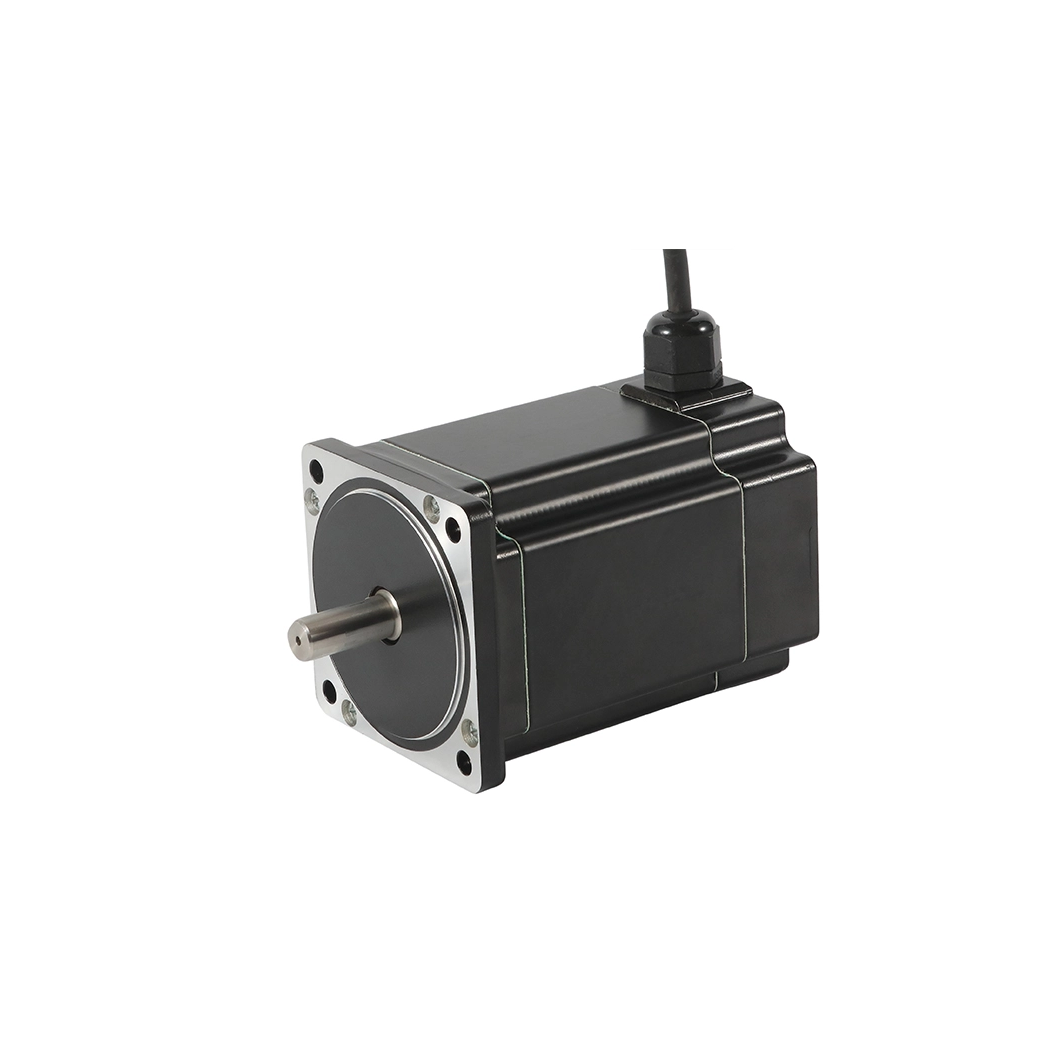
Japan is one of the world's leading countries in precision motion control and industrial automation. Japanese manufacturers are particularly well known for developing high-performance stepper motors, closed-loop positioning systems, compact motor drives, and integrated motion control solutions.
Closed-loop stepper motors combine the positioning advantages of traditional stepper motors with encoder feedback. By monitoring the actual motor position and correcting positioning errors, these systems can reduce the risk of lost steps, improve positioning reliability, and provide more stable operation under changing loads.
For equipment manufacturers, automation engineers, and industrial buyers, choosing a reliable closed-loop stepper motor manufacturer is essential for achieving accurate positioning, stable torque output, and long-term operational reliability.
Below is an overview of 15 Japanese companies involved in stepper motors, closed-loop motion systems, precision motors, and related motion control technologies.
Selection note: This is an industry-oriented supplier overview, not a verified market-share ranking. Not every company listed manufactures a dedicated encoder-equipped closed-loop stepper motor. Companies offering conventional stepper motors or related motion-control solutions are identified accordingly.
What Is a Closed Loop Stepper Motor?
A closed loop stepper motor is a type of stepper motor equipped with an encoder or other position feedback device that continuously monitors the motor's actual position and sends feedback to the driver. Unlike a traditional open-loop stepper motor, which operates mainly through preset electrical pulse commands, a closed-loop stepper motor uses real-time feedback to detect position errors and adjust motor operation accordingly.
By combining the precise positioning characteristics of a stepper motor with feedback control technology, closed-loop stepper motors offer improved positioning reliability, better load adaptability, and reduced risk of lost steps.
They are widely used in CNC machines, industrial automation equipment, 3D printers, packaging machinery, medical devices, robotics, and other applications requiring accurate motion control.
1. How Does a Closed Loop Stepper Motor Work?
A closed-loop stepper motor system typically consists of three main components:
Stepper Motor: Converts electrical pulses into precise mechanical rotation.
Encoder: Detects the motor shaft's actual position and provides feedback signals.
Motor Driver: Compares the commanded position with the actual position and adjusts motor current to correct positioning errors.
The working process can be divided into five steps:
Step 1: Position Command
The controller sends pulse and direction signals to the motor driver, specifying the required movement.
Step 2: Motor Rotation
The driver energizes the motor windings according to the input commands, causing the rotor to rotate.
Step 3: Position Feedback
The encoder continuously detects the actual rotor or motor shaft position and sends feedback to the driver.
Step 4: Position Comparison
The driver compares the commanded position with the actual position to calculate the position error.
Step 5: Automatic Correction
If a position error occurs, the driver adjusts the motor current and control output to help the motor reach the commanded position.
This feedback mechanism allows a closed-loop stepper motor to maintain more reliable positioning under changing loads and operating conditions.
2. What Are the Main Components of a Closed Loop Stepper Motor
Component | Function |
Stator | Generates the electromagnetic field that drives the rotor. |
Rotor | Rotates in response to electromagnetic excitation. |
Encoder | Measures actual motor position and provides feedback. |
Motor Driver | Controls winding current and corrects position errors. |
Controller | Sends movement commands and coordinates motor operation. |
Feedback Cable | Transmits encoder signals to the driver. |
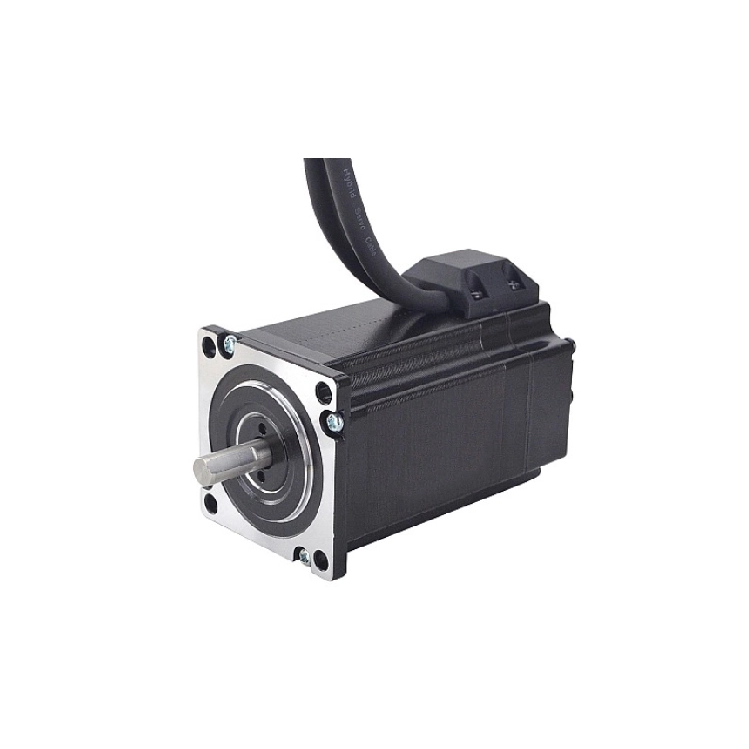
Some modern closed-loop stepper motors use an integrated design that combines the motor, encoder, and driver into one compact unit. This reduces external wiring and simplifies installation.
3. Closed Loop Stepper Motor vs. Open Loop Stepper Motor
The main difference between closed-loop and open-loop stepper motors is whether the system uses position feedback to monitor actual motor movement.
Open-Loop Stepper Motor
No encoder feedback
Closed-Loop Stepper Motor
Encoder feedback control
Comparison | Open-Loop Stepper Motor | Closed-Loop Stepper Motor |
Encoder | Usually not required | Required |
Position feedback | No | Yes |
Lost-step detection | Generally unavailable | Available |
Position correction | No automatic feedback correction | Feedback-based correction |
Energy consumption | May consume holding current continuously | Can optimize current according to load |
Heat generation | Can be relatively high | Can be reduced in suitable operating conditions |
Load adaptability | Limited | Better |
System cost | Lower | Higher |
Control complexity | Simpler | More sophisticated |
Key takeaway: Open-loop stepper motors are suitable for cost-sensitive applications with predictable loads, while closed-loop stepper motors are better suited to applications requiring higher positioning reliability and more adaptable motor performance.
Conclusion
A closed-loop stepper motor is an advanced motion control solution that combines the advantages of stepper motor technology with encoder-based feedback. By continuously monitoring actual motor movement and correcting positioning errors, it provides improved positioning reliability, better load adaptability, and more efficient motor operation.
For manufacturers of CNC machines, packaging equipment, robotics, medical instruments, and industrial automation systems, closed-loop stepper motors offer an effective balance between precision, performance, and cost.
When choosing a supplier, it is important to evaluate encoder accuracy, torque characteristics, driver compatibility, product reliability, and customization capabilities to ensure the motor meets the requirements of the intended application.
Besfoc Customized Stepper Motor Motions
Key Features of Closed Loop Stepper Motors
Closed-loop stepper motors are advanced motion control devices that combine the precise positioning capabilities of traditional stepper motors with encoder-based feedback technology. By continuously monitoring actual motor movement and adjusting operation according to feedback signals, they provide improved positioning accuracy, torque utilization, and operating reliability.
They are widely used in CNC machines, industrial automation equipment, packaging machinery, robotics, medical devices, and other precision positioning applications.
Here are the 10 key features of closed-loop stepper motors.
1. Real-Time Encoder Feedback
One of the most important features of a closed-loop stepper motor is its encoder feedback system.
The encoder continuously monitors the actual position of the motor shaft and sends feedback signals to the driver. The driver compares the actual position with the commanded position and identifies any deviations.
Key benefits:
Monitors actual motor position.
Detects positioning errors.
Enables feedback-based corrections.
Improves motion control reliability.
2. Lost-Step Detection and Correction
Traditional open-loop stepper motors cannot independently detect whether the rotor has followed the commanded steps.
Closed-loop stepper motors use encoder feedback to identify positioning deviations and allow the driver to compensate for them within the available torque and control limits.
Key benefits:
Reduces the risk of lost-step problems.
Improves positioning consistency.
Helps maintain reliable machine operation.
Provides better protection against unexpected load changes.
3. High Positioning Accuracy
Closed-loop stepper motors combine precise stepper motor control with actual position feedback.
This allows the system to monitor movement deviations and adjust motor operation to achieve the commanded position.
Key benefits:
Improved positioning reliability.
Better repeatability.
More consistent motion control.
Suitable for precision automation applications.
Note: Actual positioning accuracy depends on encoder resolution, mechanical backlash, control algorithms, and the overall machine structure.
4. High Torque Utilization
Closed-loop stepper motors can adjust winding current according to operating conditions and load requirements.
Unlike conventional open-loop systems that may maintain relatively high current regardless of the actual load, closed-loop drivers can optimize current to provide the required torque.
Key benefits:
Better utilization of available motor torque.
Improved load adaptability.
Reduced unnecessary current consumption.
More stable operation under changing loads.
5. Reduced Heat Generation
Because closed-loop drivers can regulate motor current according to actual operating requirements, they can reduce unnecessary power consumption and heat generation.
This is particularly useful in equipment operating for extended periods or installed in environments with limited cooling space.
Key benefits:
Lower motor temperature under suitable operating conditions.
Reduced energy waste.
Improved thermal management.
Potentially longer component service life.
Closed-loop stepper motors use feedback control to monitor rotor movement and help maintain synchronization between commanded and actual positions.
With an appropriately designed motor and driver, they can provide reliable performance across a wider range of operating conditions.
Key benefits:
Improved operation under dynamic loads.
Better positioning control during acceleration and deceleration.
Reduced risk of synchronization errors.
Suitable for applications requiring relatively high operating speeds.
7. Overload and Stall Protection
Many closed-loop stepper motor drivers include protection and monitoring functions.
When the motor encounters excessive load, mechanical obstruction, or abnormal operating conditions, the system can detect the resulting position error and trigger an alarm or protective response.
Key benefits:
Detects abnormal motor operation.
Provides overload or following-error alarms.
Helps prevent equipment damage.
Improves machine safety and operational reliability.
The specific protection functions depend on the driver model.
8. Low Vibration and Smooth Operation
Closed-loop stepper motor systems can use optimized current control and feedback algorithms to improve motor operation.
These technologies can help reduce vibration, resonance, and mechanical noise, depending on the motor and driver design.
Key benefits:
Smoother motor operation.
Reduced mechanical vibration.
Lower operating noise.
Improved motion consistency.
9. Flexible Installation and Integration
Closed-loop stepper motors are available in different frame sizes, power ratings, and configurations.
Some models feature separate motors and drivers, while integrated models combine the motor, encoder, and driver into a compact assembly.
Key benefits:
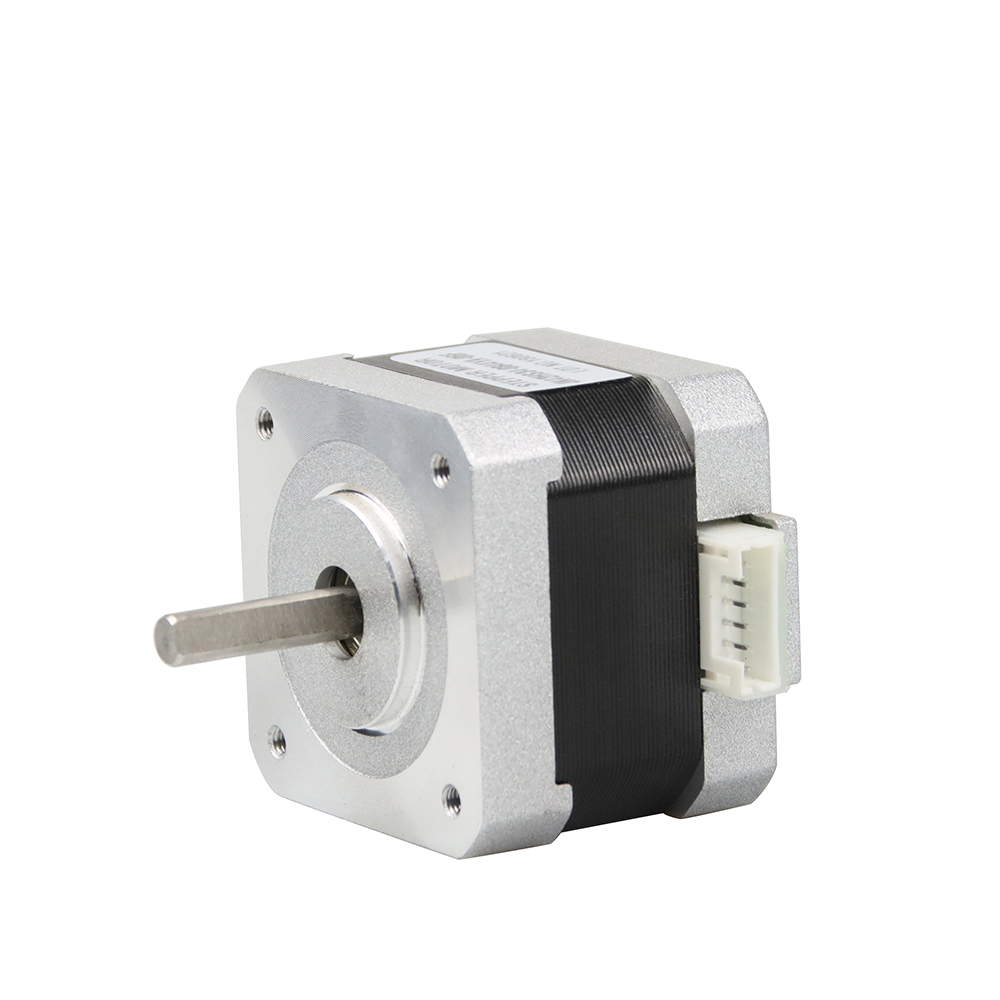
Multiple frame sizes, including NEMA 17, NEMA 23, and NEMA 34.
Integrated and separate driver configurations.
Optional gearboxes and customized shafts.
Compatibility with different automation control systems.
10. Cost-Effective Precision Motion Control
Closed-loop stepper motors provide a balance between stepper motor simplicity and feedback-based motion control.
For many applications, they offer an attractive alternative when conventional open-loop stepper motors cannot provide sufficient positioning reliability, but a full servo system may be unnecessary.
Key benefits:
More reliable positioning than conventional open-loop systems.
Competitive motion control performance.
Relatively straightforward installation.
Lower system complexity than some servo solutions.
Summary: 10 Key Features of Closed Loop Stepper Motors
No. | Key Feature | Main Benefit |
1 | Real-Time Encoder Feedback | Monitors actual motor position |
2 | Lost-Step Detection and Correction | Reduces positioning errors |
3 | High Positioning Accuracy | Improves positioning reliability |
4 | High Torque Utilization | Adapts to changing loads |
5 | Reduced Heat Generation | Improves thermal efficiency |
6 | Improved High-Speed Performance | Supports dynamic motion |
7 | Overload and Stall Protection | Detects abnormal operation |
8 | Low Vibration and Smooth Operation | Improves motion quality |
9 | Flexible Installation and Integration | Simplifies equipment design |
10 | Cost-Effective Precision Motion Control | Balances performance and cost |
Summary
The key features of closed-loop stepper motors include encoder feedback, lost-step detection, high positioning reliability, optimized torque utilization, reduced heat generation, and overload monitoring.
These advantages make them suitable for modern industrial equipment requiring accurate positioning, stable operation, and reliable motion control.
When selecting a closed-loop stepper motor, manufacturers should consider encoder resolution, holding torque, operating speed, driver functionality, and customization options to achieve the best performance for their applications.
Types of Closed Loop Stepper Motors
Closed-loop stepper motors are available in several types and configurations to meet different industrial motion control requirements. By combining stepper motor technology with encoder feedback, these motors provide improved positioning reliability, torque utilization, and motion control performance.
Depending on their motor construction, mechanical structure, encoder configuration, and integration method, closed-loop stepper motors can be divided into several major categories.
Below are the most common types of closed-loop stepper motors and their characteristics.
1. Closed Loop Hybrid Stepper Motors
Closed-loop hybrid stepper motors are among the most widely used types of closed-loop stepper motors. They combine the operating principles of permanent magnet and variable reluctance stepper motors with an encoder feedback system.
The encoder monitors rotor position and sends feedback signals to the driver, allowing the system to detect and correct positioning deviations.
Main Features:
High holding torque.
High positioning resolution.
Encoder-based position feedback.
Reliable low-speed operation.
Available in various frame sizes, including NEMA 17, NEMA 23, and NEMA 34.
Typical Applications:
2. Closed Loop Two-Phase Stepper Motors
Two-phase closed-loop stepper motors use two motor phases to generate electromagnetic torque. They are commonly designed with bipolar winding configurations and are widely used in industrial automation.
An encoder provides real-time position feedback, while the driver controls phase current according to the motor's operating conditions.
Main Features:
Simple and widely supported drive architecture.
Good positioning performance.
Flexible microstepping control.
Broad compatibility with motion controllers.
Suitable for compact and medium-sized automation systems.
Typical Applications:
3. Closed Loop Three-Phase Stepper Motors
Three-phase closed-loop stepper motors use three stator winding phases to generate a rotating magnetic field.
Compared with conventional two-phase designs, three-phase systems can offer different torque ripple, vibration, and operating characteristics. Their actual performance depends on motor construction and driver control algorithms.
Main Features:
Three-phase winding configuration.
Potentially smoother torque output.
Reduced torque ripple in appropriately designed systems.
Encoder feedback for position monitoring.
Suitable for specialized motion control applications.
Typical Applications:
Precision industrial machinery.
Automated production lines.
Specialized positioning equipment.
Motion systems requiring smooth operation.
4. Closed Loop Brushed or Permanent Magnet Stepper Motors
Permanent magnet stepper motors use a permanent magnet rotor and electromagnetic stator poles to produce step-by-step movement.
When equipped with an encoder and a compatible closed-loop driver, they can operate as closed-loop stepper systems.
Main Features:
Permanent magnet rotor construction.
Relatively simple motor structure.
Available in compact sizes.
Encoder-based position monitoring.
Suitable for certain low-power positioning applications.
Typical Applications:
Note: Permanent magnet stepper motors are less common in industrial closed-loop systems than hybrid stepper motors.
5. Integrated Closed Loop Stepper Motors
Integrated closed-loop stepper motors combine the motor, encoder, and driver into one compact unit.
This design reduces external wiring and simplifies installation, making it attractive for equipment manufacturers seeking compact motion control solutions.
Main Features:
Integrated motor and driver design.
Built-in encoder feedback.
Reduced external wiring.
Compact installation structure.
Simplified system integration.
Typical Applications:
6. Closed Loop Stepper Motors with Gearboxes
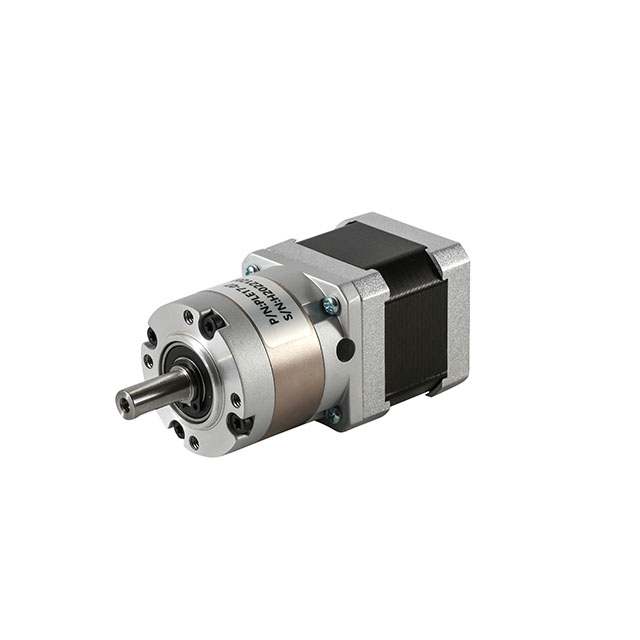
Closed-loop stepper motors can be combined with planetary, worm, or other gearboxes to increase output torque and reduce output speed.
The encoder may be installed on the motor shaft or, in some designs, on the gearbox output shaft. This distinction affects whether the system directly measures motor position or actual output position.
Main Features:
Increased output torque through gear reduction.
Lower output speed.
Improved load-handling capability.
Flexible gear ratios.
Encoder feedback for motion monitoring.
Typical Applications:
Robotic joints.
Rotary positioning tables.
Conveyor systems.
Automated lifting equipment.
Heavy-load positioning mechanisms.
7. Closed Loop Linear Stepper Motors
Closed-loop linear stepper motors are designed to generate direct linear movement instead of rotary motion.
They can use a lead screw, ball screw, or linear motor structure. A suitable feedback sensor measures linear position or motor movement to support closed-loop control.
Main Features:
Direct linear positioning.
High repeatability.
Precise displacement control.
Reduced need for additional rotary-to-linear transmission in direct-drive designs.
Suitable for automated linear motion systems.
Typical Applications:
Precision dispensing machines.
Semiconductor equipment.
Automated testing systems.
Optical inspection equipment.
Laboratory positioning platforms.
Note: A linear stepper actuator with only a motor-shaft encoder does not necessarily provide direct feedback of the actual linear output position. For direct linear position control, an appropriate linear feedback sensor may be required.
8. Closed Loop Hollow Shaft Stepper Motors
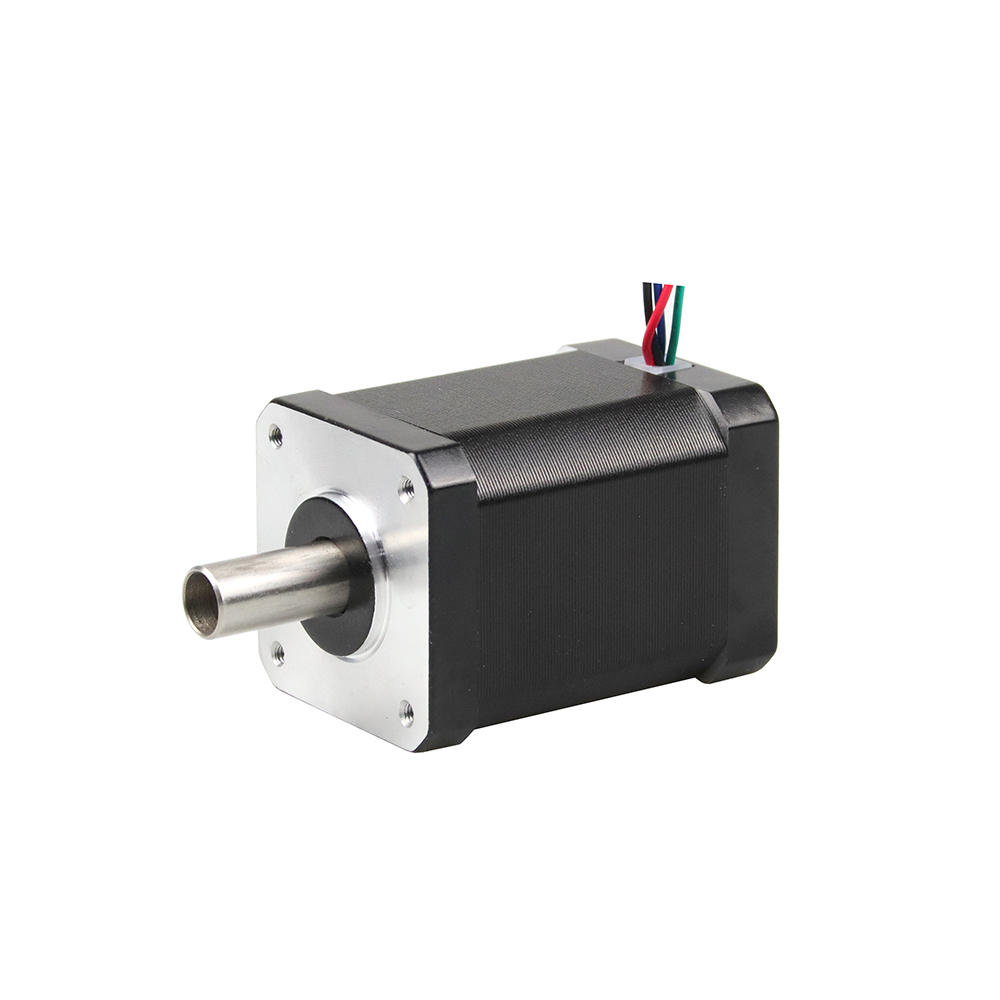
Hollow shaft closed-loop stepper motors feature a central opening through the motor shaft, allowing cables, tubes, or mechanical components to pass through.
When combined with an encoder and closed-loop driver, they provide feedback-based positioning in applications where space and cable routing are important.
Main Features:
Hollow shaft structure.
Convenient cable and component routing.
Compact mechanical integration.
Encoder-based position monitoring.
Flexible installation options.
Typical Applications:
Rotary inspection systems.
Robotic equipment.
Optical positioning devices.
Automated assembly machinery.
Rotary indexing platforms.
Comparison of Different Types of Closed Loop Stepper Motors
Motor Type | Main Characteristic | Typical Application |
Closed Loop Hybrid Stepper Motor | High torque and positioning reliability | CNC machines and automation |
Two-Phase Closed Loop Stepper Motor | Widely supported drive architecture | Industrial equipment |
Three-Phase Closed Loop Stepper Motor | Different torque ripple and vibration characteristics | Specialized machinery |
Permanent Magnet Closed Loop Stepper Motor | Compact permanent magnet construction | Small instruments |
Integrated Closed Loop Stepper Motor | Motor, encoder, and driver combined | Compact automation |
Geared Closed Loop Stepper Motor | Higher output torque and lower speed | Robotics and lifting systems |
Linear Closed Loop Stepper Motor | Direct linear movement | Precision positioning |
Hollow Shaft Closed Loop Stepper Motor | Central shaft opening | Rotary automation |
Final
Closed-loop stepper motors come in various configurations, including hybrid, two-phase, three-phase, integrated, geared, linear, and hollow shaft designs. Each type offers different mechanical and control characteristics for specific motion control applications.
Among these options, closed-loop hybrid stepper motors and integrated closed-loop stepper motors are particularly useful for industrial automation because they combine reliable positioning, practical torque performance, and flexible installation options.
Understanding the differences between these types helps equipment manufacturers select the right motion control solution for their machines.
Main Applications of Closed Loop Stepper Motors in Japan
Japan is one of the world's leading markets for industrial automation, precision machinery, robotics, semiconductor manufacturing, and advanced medical equipment. Japanese manufacturers place high demands on positioning accuracy, production efficiency, equipment reliability, and compact machine design.
Against this background, closed-loop stepper motors are increasingly useful in motion control applications that require accurate positioning, stable torque, and reliable operation under changing loads.
Unlike open-loop stepper motors, closed-loop stepper motors use encoder feedback to monitor rotor position and detect position errors. When paired with a compatible driver, they can correct positioning deviations and reduce the risk of losing synchronization.
The following are some of the major application areas for closed-loop stepper motors in Japan.
1. Semiconductor and Electronics Manufacturing
Japan has a strong semiconductor and electronic components industry. Semiconductor manufacturing and inspection equipment require precise positioning, repeatable movement, and stable operation.
Closed-loop stepper motors can be used in:
Wafer handling and positioning mechanisms.
Semiconductor inspection equipment.
Chip testing and measurement systems.
PCB assembly and component placement machines.
Precision optical alignment platforms.
Why they are suitable: Encoder feedback helps detect positioning errors, while their compact size and precise motion control make them suitable for auxiliary positioning axes in semiconductor equipment.
2. Industrial Robots and Collaborative Robots
Japan is a major global center for industrial robotics. Robots used in assembly, material handling, inspection, and precision manufacturing require reliable motion control across multiple axes.
Closed-loop stepper motors can be used in:
Small robotic joints.
Robotic grippers.
End-of-arm positioning mechanisms.
Automated inspection robots.
Compact collaborative robot subsystems.
Why they are suitable: Closed-loop feedback improves positioning reliability under changing loads. Geared closed-loop stepper motors can also provide higher output torque for compact robotic mechanisms.
For high-speed, high-dynamic industrial robot joints, servo motors are often more appropriate. Closed-loop stepper motors are particularly useful for auxiliary axes and cost-sensitive positioning applications.
3. Factory Automation and Assembly Equipment
Japanese manufacturers place considerable emphasis on production efficiency, consistency, and automation. Closed-loop stepper motors are suitable for automated machines that require controlled movement and repeatable positioning.
Typical applications include:
Automatic screw fastening machines.
Component feeding systems.
Pick-and-place equipment.
Automated assembly platforms.
Material positioning mechanisms.
Precision indexing tables.
Why they are suitable: Encoder feedback helps reduce missed-step problems and supports consistent positioning during repeated production cycles.
Japan has a well-established machine tool industry, including CNC machining centers, engraving equipment, and precision cutting machines.
Closed-loop stepper motors can be applied to:
CNC X, Y, and Z axis positioning.
Tool-changing mechanisms.
Auxiliary feed axes.
Engraving and cutting systems.
Small precision machining equipment.
Why they are suitable: They offer a combination of stepper motor positioning characteristics and encoder-based feedback, making them useful in applications where the required speed and dynamic performance do not justify a full servo system.
For demanding high-speed CNC axes, servo motors are generally preferred.
5. Packaging and Food Processing Machinery
Japan's food, beverage, pharmaceutical, and consumer goods industries rely on automated packaging equipment to maintain production speed and product consistency.
Closed-loop stepper motors can be used in:
Automatic filling machines.
Labeling equipment.
Bottle capping machines.
Film feeding mechanisms.
Sealing and cutting systems.
Packaging indexing platforms.
Why they are suitable: They provide controlled positioning for repetitive operations and can help maintain motion accuracy when machine loads change.
6. Medical Equipment and Laboratory Instruments
Medical equipment and laboratory instruments often require compact, quiet, and reliable motion systems. Positioning errors can affect the consistency of sample handling, measurement, and diagnostic procedures.
Common applications include:
Automated sample handling systems.
Laboratory analyzers.
Diagnostic testing instruments.
Medical fluid dispensing equipment.
Optical inspection mechanisms.
Motorized adjustment platforms.
Why they are suitable: Their compact construction and encoder feedback make closed-loop stepper motors useful for precise, repeated movements in laboratory and medical automation equipment.
Medical device manufacturers must also evaluate applicable safety, reliability, and regulatory requirements for the complete equipment.
7. Optical Inspection and Measurement Equipment
Japan has a strong industrial base in optical instruments, cameras, sensors, and precision measurement technologies.
Optical inspection systems often require accurate movement of cameras, lenses, lighting modules, and workpieces.
Closed-loop stepper motors can be used in:
Camera positioning systems.
Lens adjustment mechanisms.
Optical focusing platforms.
Automated measurement stages.
Machine vision inspection equipment.
Why they are suitable: Encoder feedback supports repeatable positioning, while fine-step motion control can help achieve the precise adjustments required by optical equipment.
8. 3D Printers and Additive Manufacturing Equipment
The Japanese 3D printing market includes applications in prototyping, industrial product development, dental manufacturing, and specialized production.
Closed-loop stepper motors can be used in:
Extruder drive systems.
X, Y, and Z axis movement.
Build platform adjustment.
Filament feeding mechanisms.
Precision positioning stages.
Why they are suitable: They help reduce the risk of undetected position loss and maintain more reliable motion during long printing processes.
9. Agricultural Machinery and Smart Agriculture Equipment
Japan's agricultural sector increasingly uses automation to address labor shortages and improve operational efficiency.
Closed-loop stepper motors can be used in:
Automated greenhouse ventilation systems.
Irrigation control mechanisms.
Agricultural spraying equipment.
Seed dispensing systems.
Camera positioning units for agricultural robots.
Adjustable mechanisms in autonomous agricultural machinery.
Why they are suitable: Their feedback-based positioning can improve the reliability of repeated adjustments and help control mechanisms operating under variable loads.
For outdoor applications, motor protection against dust, moisture, vibration, and temperature changes is especially important.
10. Logistics, Warehousing, and Automated Guided Vehicles
Japan's logistics industry is adopting automation to improve warehouse efficiency and address labor shortages.
Closed-loop stepper motors can be used in:
Automated sorting equipment.
Conveyor positioning mechanisms.
Small automated guided vehicles.
Robotic warehouse handling systems.
Lifting and adjustment platforms.
Automated storage equipment.
Why they are suitable: They provide controlled positioning and can be combined with gearboxes to achieve the output torque required by compact handling mechanisms.
For vehicle traction and high-speed navigation, dedicated servo or BLDC drive systems may be more suitable, depending on the load and performance requirements.
Comparison of Main Applications in Japan
Industry | Typical Equipment | Main Motor Requirements |
Semiconductor | Wafer handling and inspection systems | Precise positioning and repeatability |
Robotics | Robotic grippers and auxiliary joints | Compact design and reliable feedback |
Factory automation | Assembly and feeding machines | Repeated positioning and stable operation |
CNC machinery | Auxiliary feed and positioning axes | Position accuracy and torque |
Packaging | Filling, labeling, and capping machines | Consistent repetitive motion |
Medical and laboratory | Analyzers and sample handling systems | Compactness and positioning reliability |
Optical inspection | Camera and lens positioning stages | Fine adjustment and repeatability |
3D printing | Extruder and motion axes | Position control and continuous operation |
Smart agriculture | Greenhouse and spraying mechanisms | Load adaptability and environmental protection |
Logistics | Sorting and handling equipment | Controlled movement and output torque |
Why Japanese Manufacturers Choose Closed Loop Stepper Motors
Several characteristics make closed-loop stepper motors attractive to Japanese machinery manufacturers.
1. Improved Positioning Reliability
Encoder feedback allows the driver to monitor actual motor position and identify deviations from commanded movement. This helps reduce the risk of undetected step loss.
2. Better Torque Utilization
A closed-loop driver can adjust motor current according to the control strategy and operating conditions. This can improve motor utilization compared with conventional open-loop operation, although the result depends on the specific motor and driver.
3. Reduced Risk of Lost Synchronization
Open-loop stepper motors cannot independently confirm whether the rotor has followed the commanded position. Closed-loop systems use feedback to detect position errors and respond accordingly.
4. Compact Machine Integration
Closed-loop stepper motors are available in different frame sizes and configurations, including integrated designs. This helps equipment manufacturers develop compact automation systems.
5. Cost-Effective Motion Control
For applications that require more positioning reliability than an open-loop stepper system but do not require the full dynamic performance of a servo system, closed-loop stepper motors can offer a practical alternative.
Conclusion
The main applications of closed-loop stepper motors in Japan are concentrated in semiconductor equipment, industrial robotics, factory automation, CNC machinery, packaging systems, medical instruments, optical inspection, 3D printing, smart agriculture, and automated logistics.
As Japanese manufacturers continue to improve production automation and precision equipment, closed-loop stepper motors can play an important role in applications requiring reliable positioning, compact construction, and cost-effective motion control.
For equipment manufacturers, selecting the right motor requires evaluating torque, speed, encoder resolution, load inertia, mechanical transmission, and operating environment. The best solution is not necessarily the motor with the highest rated torque, but the one that meets the machine's actual motion requirements.
How to Choose a Reliable Closed-Loop Stepper Motor Manufacturer
Choosing a reliable closed-loop stepper motor manufacturer is essential for ensuring the performance, accuracy, and long-term stability of industrial automation equipment. Closed-loop stepper motors combine the positioning advantages of stepper motors with encoder feedback, allowing the control system to monitor motor movement and detect position errors. However, motor performance depends not only on the product itself but also on the manufacturer's engineering capabilities, quality control processes, customization services, and technical support.
With many motor suppliers available worldwide, buyers need to evaluate more than product prices and catalog specifications. A manufacturer that offers suitable motor designs, consistent production quality, and dependable technical assistance can help reduce equipment failures, shorten development cycles, and lower long-term operating costs.
This article explains the key factors to consider when selecting a reliable closed-loop stepper motor manufacturer.
1. Evaluate the Manufacturer's Industry Experience
Industry experience is one of the first factors to consider when choosing a closed-loop stepper motor manufacturer. Companies with extensive experience in motion control and motor manufacturing are generally better equipped to understand different application requirements and solve technical problems.
A manufacturer with a strong engineering background should understand the relationship between motor torque, speed, encoder feedback, driver performance, and mechanical load characteristics.
When evaluating a manufacturer's experience, consider the following factors:
Years of manufacturing experience: Check how long the company has been producing stepper motors and closed-loop motion control products.
Industry specialization: Determine whether the manufacturer focuses on industrial automation, robotics, CNC equipment, medical devices, packaging machinery, or other relevant applications.
Engineering expertise: Look for experience in electromagnetic design, motor optimization, encoder integration, and drive system development.
Application experience: Ask whether the manufacturer has supplied motors for equipment with requirements similar to yours.
Product development capabilities: Evaluate whether the company continuously improves its motor designs and introduces new product configurations.
A manufacturer with relevant industry experience can often provide more practical recommendations than a supplier that simply sells standard motor products.
2. Check the Closed-Loop Stepper Motor Product Range
A reliable manufacturer should offer a comprehensive product range to accommodate different machine designs and operating conditions.
Closed-loop stepper motors are available in different frame sizes, torque ratings, voltage configurations, encoder types, and structural designs. Selecting a manufacturer with multiple product options makes it easier to find a suitable solution without compromising machine performance.
Common product categories include:
Motor Type | Typical Characteristics | Common Applications |
NEMA 17 Closed-Loop Stepper Motor | Compact size and moderate torque | 3D printers, laboratory equipment, small automation systems |
NEMA 23 Closed-Loop Stepper Motor | Balanced torque and size | CNC machines, packaging equipment, robotic mechanisms |
NEMA 24 Closed-Loop Stepper Motor | Intermediate frame size and torque options | Industrial positioning systems and automation machinery |
NEMA 34 Closed-Loop Stepper Motor | Higher torque capability | Large CNC equipment, lifting systems, heavy-duty positioning |
Integrated Closed-Loop Stepper Motor | Motor, encoder, and drive integrated into one assembly | Compact automation systems and distributed motion control |
When reviewing a product catalog, pay attention to whether the manufacturer provides complete technical specifications, including:
Holding torque and torque-speed curves
Rated current and operating voltage
Encoder type and resolution
Motor inductance and resistance
Maximum operating speed
Shaft dimensions and mounting specifications
Compatible drivers and controllers
Available protection ratings and customization options
A broad product range is useful, but product suitability and verified performance are more important than the number of models available.
3. Verify Manufacturing Capabilities and Quality Control
A manufacturer's production capabilities directly influence product consistency and reliability. Even a well-designed closed-loop stepper motor may experience performance problems if its components are poorly manufactured or assembly processes are inconsistent.
Before placing an order, investigate the manufacturer's production and quality management processes.
Important manufacturing capabilities include:
Stator and rotor manufacturing: Accurate machining and assembly help maintain consistent electromagnetic performance.
Winding processes: Controlled winding quality helps ensure stable electrical characteristics and thermal performance.
Encoder installation: Accurate encoder mounting and alignment are important for reliable feedback signals.
Mechanical assembly: Consistent bearing installation, shaft alignment, and structural assembly help reduce vibration and mechanical errors.
Electrical testing: Insulation resistance, winding resistance, and electrical performance should be checked.
Performance testing: Torque, speed, temperature rise, and operating stability should be evaluated according to the product specifications.
Ask whether the manufacturer performs routine inspections during production and final testing before shipment.
You can also request relevant quality management certificates, such as ISO 9001. However, certification alone does not guarantee product quality. Actual inspection procedures, traceability, and test records are equally important.
The encoder is one of the most important components of a closed-loop stepper motor. It provides position feedback to the control system, allowing the drive to compare commanded movement with actual motor position.
When evaluating a manufacturer, examine the following encoder characteristics:
Encoder resolution
Encoder resolution determines how finely the motor's rotational position can be measured. However, higher encoder resolution does not automatically guarantee higher system positioning accuracy. Mechanical backlash, shaft coupling, structural stiffness, encoder alignment, and control algorithms also affect actual positioning performance.
Encoder type
Common encoder technologies include:
Incremental optical encoders
Incremental magnetic encoders
Absolute encoders, where supported by the motor and drive system
Each technology has different characteristics in terms of cost, environmental resistance, signal processing, and position information.
Feedback stability
The encoder should provide reliable signals under the expected operating conditions. Electrical noise, vibration, temperature changes, and incorrect installation can affect feedback quality.
Encoder and driver compatibility
The encoder's signal format, resolution, voltage levels, and wiring requirements must be compatible with the selected driver.
A professional manufacturer should clearly explain its encoder specifications and help customers choose an appropriate feedback configuration.
5. Assess Engineering and Customization Capabilities
Not every automation project can use a standard closed-loop stepper motor. Different machines may require specific shaft dimensions, mounting structures, electrical characteristics, encoder configurations, or integrated drive solutions.
A reliable manufacturer should have the engineering resources to support reasonable customization requirements.
Typical customization services include:
Customization Type | Description | Application Benefits |
Shaft Customization | Special shaft diameter, length, keyway, or flat | Simplifies mechanical integration |
Electrical Customization | Different voltage, current, winding, or connection configurations | Matches specific drive requirements |
Encoder Customization | Different encoder resolutions or feedback configurations | Meets control system requirements |
Mechanical Customization | Special mounting flanges or structural designs | Supports non-standard machine layouts |
Integrated Drive Design | Motor, encoder, and driver combined into one unit | Reduces wiring and installation complexity |
Cable and Connector Customization | Specific cable lengths and connector types | Improves installation convenience |
Before choosing a supplier, ask whether it can provide engineering drawings, sample development, prototype testing, and technical confirmation before mass production.
The ability to customize products is particularly valuable for equipment manufacturers developing specialized automation systems.
6. Confirm Driver and Controller Compatibility
A closed-loop stepper motor should not be evaluated independently of its driver and motion controller. The motor, encoder, driver, and controller must work together as a coordinated motion control system.
A professional manufacturer should provide clear information about compatible drive systems, including:
Supported motor current and voltage
Encoder signal compatibility
Pulse and direction control
Communication interfaces, if available
Position, speed, and torque control functions supported by the drive
Alarm outputs and protection functions
Software configuration and tuning tools
Some manufacturers offer integrated closed-loop stepper motors with built-in drivers. These products can reduce wiring complexity and installation space, particularly in compact machinery.
However, buyers should check whether the integrated system supports the required control interface, operating modes, communication protocols, and motion profiles.
It is also important to confirm whether the manufacturer provides wiring diagrams, configuration instructions, and troubleshooting documentation.
7. Review Product Testing and Reliability Data
A reliable manufacturer should be able to demonstrate product performance through documented testing rather than relying entirely on general marketing claims.
Before purchasing, ask for relevant test reports or product validation information.
Testing Item | What It Evaluates | Why It Matters |
Torque Testing | Actual torque output under specified conditions | Confirms whether the motor meets load requirements |
Speed Testing | Motor operation across different speeds | Helps verify operating range |
Temperature Rise Testing | Thermal behavior during operation | Reduces overheating risks |
Insulation Testing | Electrical insulation performance | Supports electrical safety |
Encoder Feedback Testing | Feedback signal stability and accuracy | Helps ensure reliable closed-loop operation |
Vibration and Noise Testing | Mechanical operating characteristics | Improves machine stability |
Endurance Testing | Performance over extended operation | Provides evidence of long-term reliability |
For demanding applications, additional testing may be necessary, such as environmental testing, vibration testing, or validation under representative load conditions.
Remember that a test report is most useful when it specifies the test conditions, measurement methods, acceptance criteria, and actual results.
8. Evaluate Technical Support and After-Sales Service
Technical support is an important consideration, particularly when closed-loop stepper motors are integrated into complex machinery.
Even high-quality motors may require troubleshooting, parameter adjustments, or application-specific optimization during installation and operation.
A dependable manufacturer should offer support in areas such as:
Motor selection based on load and operating conditions
Torque-speed curve interpretation
Driver configuration and parameter adjustment
Encoder wiring and signal troubleshooting
Mechanical installation guidance
Motion control optimization
Product replacement and warranty services
Response speed is another important factor. Delayed technical assistance can interrupt equipment development, installation, and production.
Before choosing a manufacturer, clarify its communication channels, technical response process, warranty terms, spare parts availability, and after-sales service arrangements.
9. Compare Pricing, Minimum Order Quantities, and Delivery Time
Price is an important purchasing consideration, but selecting a manufacturer based only on the lowest quotation can create additional costs later.
A very inexpensive closed-loop stepper motor may have limitations in component quality, encoder performance, testing procedures, or technical support.
When comparing suppliers, evaluate the total purchasing cost.
Evaluation Factor | Questions to Ask |
Unit Price | Does the quotation include the encoder and driver, or only the motor? |
Minimum Order Quantity | Can the manufacturer support prototype orders and small batches? |
Sample Cost | Are samples available for testing before mass production? |
Production Lead Time | How long does standard and customized production take? |
Delivery Reliability | Can the supplier maintain consistent delivery schedules? |
Warranty | What warranty period and replacement conditions are offered? |
Long-Term Supply | Can the manufacturer maintain product consistency for repeat orders? |
For equipment manufacturers, stable supply is especially important. Changes in motor specifications or mechanical dimensions between batches can affect machine assembly and product quality.
A supplier that offers reasonable pricing, consistent production, and reliable delivery may provide better long-term value than one offering the lowest initial price.
10. Check Certifications, Customer References, and Industry Reputation
A manufacturer's reputation can provide additional evidence of its reliability, especially when supported by verifiable customer references and quality documentation.
Consider checking:
ISO 9001 quality management certification
Applicable product safety and regulatory documentation
CE or other conformity documentation where relevant
Customer references in similar industries
Export experience and international service capabilities
Product reviews and documented application cases
Company history and manufacturing facility information
Not every certificate applies to every motor or market. Buyers should verify that the documentation covers the specific product model and destination market rather than assuming that a company-level certificate guarantees product compliance.
If possible, request references from customers using similar motors in comparable operating environments.
11. Request Samples and Conduct Application Testing
One of the most effective ways to evaluate a closed-loop stepper motor manufacturer is to test its products under realistic operating conditions.
Catalog specifications provide useful reference information, but actual performance depends on the complete mechanical and electrical system.
Before placing a large order, consider purchasing samples and conducting the following tests:
Load testing: Verify that the motor can drive the actual mechanical load.
Positioning testing: Measure repeatability and positioning performance across the required travel range.
Speed testing: Check whether the motor maintains stable operation at the required speed.
Acceleration testing: Evaluate performance during frequent starting, stopping, and direction changes.
Temperature testing: Monitor motor and driver temperatures during continuous operation.
Noise and vibration testing: Check whether mechanical vibration affects the equipment.
Continuous operation testing: Run the motor for an extended period under representative conditions.
For applications involving linear movement, remember that motor-shaft encoder feedback does not directly measure the final linear position. If output accuracy is critical, the complete transmission system should also be evaluated, or a direct linear feedback device may be required.
Testing samples before mass production helps identify potential compatibility issues and reduces the risk of costly equipment modifications.
12. Common Mistakes to Avoid When Choosing a Manufacturer
Even experienced purchasing teams can make mistakes when evaluating closed-loop stepper motor suppliers.
Here are several common problems to avoid:
1. Choosing a manufacturer based only on price
Low prices do not necessarily indicate good value. Consider product quality, testing procedures, technical support, and long-term supply stability.
2. Focusing only on holding torque
Holding torque is not the same as available torque at operating speed. Always review the torque-speed curve and evaluate the motor under the actual load conditions.
3. Ignoring encoder specifications
Different encoder resolutions, signal types, and feedback technologies can affect system compatibility and performance.
4. Overlooking driver compatibility
A motor and encoder may not operate correctly with an incompatible driver. Confirm the complete system configuration before purchasing.
5. Assuming certifications guarantee performance
Certificates are useful evidence of management or product compliance, but they do not replace product testing and application validation.
6. Failing to test samples
A motor that performs well under laboratory conditions may behave differently when installed in the actual machine.
7. Ignoring after-sales support
Lack of technical assistance can increase downtime and make troubleshooting more difficult.
13. Manufacturer Evaluation Checklist
The following checklist can help purchasing managers and engineers compare multiple closed-loop stepper motor manufacturers systematically.
Evaluation Category | Key Questions | Importance |
Industry Experience | Does the manufacturer have relevant motor production experience? | High |
Product Range | Does it offer suitable frame sizes and torque options? | High |
Manufacturing Capability | Does it have controlled production and inspection processes? | High |
Encoder Technology | Are encoder specifications and feedback characteristics clearly documented? | High |
Customization | Can it provide special mechanical and electrical configurations? | Medium–High |
Driver Compatibility | Are compatible drivers and control solutions available? | High |
Quality Testing | Are test reports and reliability data available? | High |
Technical Support | Can engineers provide timely application assistance? | High |
Pricing | Is the quotation competitive for the specified configuration? | Medium |
Delivery | Can the manufacturer meet sample and mass-production schedules? | High |
Certifications | Are relevant certificates and product documents available? | Medium–High |
Customer Reputation | Are there verifiable references and application cases? | Medium–High |
For a more objective comparison, buyers can assign scores to each category and apply greater weight to the factors most important to their application.
Conclusion
Choosing a reliable closed-loop stepper motor manufacturer requires a comprehensive evaluation of engineering experience, product quality, encoder technology, manufacturing capabilities, customization services, and technical support.
A dependable manufacturer should do more than supply motors. It should help customers select suitable products, verify system compatibility, provide technical documentation, and maintain consistent product quality throughout the supply relationship.
For industrial automation equipment manufacturers, the best supplier is not necessarily the one with the lowest quotation or the largest catalog. It is the one that can consistently deliver motors that meet application requirements while providing dependable engineering support and long-term supply stability.
Before making a final decision, request technical datasheets, torque-speed curves, encoder specifications, sample products, and relevant test reports. Testing the complete motor-drive system under actual operating conditions is one of the most effective ways to confirm whether a manufacturer is suitable for your project.
Top 15 Closed Loop Stepper Motor Manufacturers in Japan
1. Besfoc
Company Profile
Besfoc is a motion control products manufacturer specializing in the development and supply of stepper motors, servo motors, brushless DC motors, and related automation components. Its product portfolio serves a variety of industrial automation and precision positioning applications. Through its range of motor products and drive solutions, Besfoc provides options for equipment manufacturers seeking reliable motion control components for different machine configurations.
Main Products
Closed-loop stepper motors
Open-loop stepper motors
Integrated stepper servo motors
Hybrid stepper motors
Brushless DC motors
Servo motors and drives
Linear stepper motors
Stepper motor drivers and controllers
Gear motors and related motion control products
Advantages
Comprehensive Product Portfolio: Offers multiple motor technologies and motion control components, allowing customers to select solutions for different automation requirements.
Closed-Loop Motion Control Solutions: Provides encoder-equipped stepper motor options designed to monitor motor position and help reduce the risk of lost steps.
Integrated Motor Options: Integrated motor and drive configurations can simplify wiring, reduce installation complexity, and save space in automation equipment.
Application Versatility: Its motor product range can support applications such as CNC equipment, packaging machinery, robotics, medical equipment, and industrial automation.
Multiple Configuration Options: Different motor sizes, performance specifications, and structural configurations provide flexibility for equipment design.
Website: https://www.besfoc.com/**15. Nabtesco Corporation**
2. JKONGMOTOR
Company Profile
JKONGMOTOR is a motor manufacturer and motion control solutions supplier offering a range of products for industrial automation. Its product portfolio covers stepper motors, brushless DC motors, servo motors, integrated motor systems, and related drive components. The company serves equipment manufacturers and automation integrators looking for motor solutions for positioning, speed control, and mechanical movement applications.
With products covering different motor technologies and configurations, JKONGMOTOR provides options for both conventional motor-driven systems and more integrated motion control designs.
Main Products
Closed-loop stepper motors
Open-loop stepper motors
Integrated closed-loop stepper motors
Hybrid stepper motors
Brushless DC motors
AC servo motors and drives
Integrated servo motors
Linear actuators
Planetary gear motors
Stepper motor drivers and controllers
Advantages
Diverse Motor Technologies: Offers stepper, brushless DC, and servo motor products, making it possible to compare different motion control solutions within one product portfolio.
Integrated Motion Control Options: Integrated motor products combine multiple components into compact assemblies, helping reduce wiring and installation requirements.
Flexible Product Configurations: Different motor sizes, torque ratings, and mechanical configurations provide options for various equipment designs.
Industrial Application Coverage: Its product range is suitable for exploring solutions for robotics, CNC machinery, packaging equipment, automated production lines, and other industrial applications.
Motion Control Product Integration: The availability of motors and associated drive components can simplify product selection and system matching for automation projects.
Website: https://www.jkongmotor.com/
3. LEANMOTOR
Company Profile
LEANMOTOR specializes in motion control products for industrial automation, with a product range covering stepper motors, closed-loop stepper motors, integrated stepper servo motors, and other motor-driven solutions. Its products are designed for applications requiring controlled positioning, repeatable movement, and coordinated operation of mechanical systems.
LEANMOTOR's product portfolio addresses the needs of equipment manufacturers developing automated machinery, robotic systems, packaging equipment, and precision positioning devices. Its focus on integrated motion control products also provides options for customers seeking compact motor-and-drive configurations.
Main Products
Closed-loop stepper motors
Open-loop stepper motors
Integrated stepper servo motors
Integrated closed-loop stepper motors
Hybrid stepper motors
NEMA 17, NEMA 23, and NEMA 34 stepper motors
Brushless DC motors
Linear actuators
Stepper motor drivers
Integrated motor and drive systems
Advantages
Focus on Stepper Motor Technology: Offers a range of stepper motor products for applications requiring controlled rotation and positioning.
Closed-Loop Positioning Solutions: Encoder-equipped stepper motor products provide feedback to the drive system, helping detect position deviations and improve motion reliability.
Integrated Stepper Servo Solutions: Integrated motor designs combine motor and drive components, helping simplify system installation and reduce wiring complexity.
Flexible Application Options: Different frame sizes and motor configurations support equipment with varying torque, speed, and installation requirements.
Automation Application Experience: Its product range can be considered for applications such as automated packaging machines, CNC equipment, robotics, lifting platforms, and precision positioning systems.
System Design Convenience: Providing motors and related drive products gives equipment developers more options when configuring complete motion control systems.
Website: https://www.leanmotor.com/
4. Tsukasa Electric Co., Ltd.
Company Profile
Tsukasa Electric specializes in small motors, geared motors, and precision drive solutions. Its products are designed for compact equipment and applications requiring controlled rotational movement.
The company is worth investigating for specialized stepping motor and customized motor applications.
Main Products
Advantages
Experience in compact motor manufacturing.
Solutions for space-constrained equipment.
Flexible motor and gearbox configurations.
Suitable for OEM equipment development.
Website: https://www.tsukasa-d.co.jp/
5. Nidec Sankyo Corporation
Company Profile
Nidec Sankyo develops precision motors, mechatronic products, and automation components. The company serves industrial and consumer equipment markets.
Its motor and positioning technologies make it a potential supplier to investigate for specialized stepper motor applications.
Main Products
Precision motors
Stepping motor-related technologies
Mechatronic components
Industrial automation equipment
Precision positioning mechanisms
Advantages
Strong precision manufacturing background.
Experience in electromechanical integration.
Advanced manufacturing capabilities.
Suitable for customized industrial equipment.
6. NIDEC ADVANCED MOTOR CORPORATION
Company Profile
NIDEC ADVANCED MOTOR is associated with Nidec's small motor business and develops compact motor solutions for various equipment manufacturers.
Its experience in motor engineering and mass production makes it relevant to buyers researching alternative Japanese motor suppliers.
Main Products
Advantages
Compact motor engineering.
Established production capabilities.
Experience with high-volume applications.
Potential for customized motor integration.
7. Citizen Chiba Precision Co., Lt
Company Profile
Citizen Chiba Precision specializes in precision motor-related products and mechanical drive components.
Its compact motor and gearhead technologies are relevant to applications requiring controlled movement, space efficiency, and accurate mechanical transmission.
Main Products
Advantages
Expertise in precision mechanical components.
Compact drive configurations.
Suitable for specialized equipment.
Experience in precision manufacturing.
8. KSS Co., Ltd.
Company Profile
KSS is a specialized Japanese manufacturer of miniature ball screws and precision motion components.
Although it is not primarily a stepper motor manufacturer, its products are frequently relevant to linear positioning systems driven by stepper motors.
Main Products
Advantages
Expertise in miniature linear motion.
Compact mechanical transmission solutions.
Suitable for precision positioning equipment.
Useful for integrating motors with linear mechanisms.
9. Nippon Bearing Co., Ltd. (NB)
Company Profile
Nippon Bearing is a Japanese manufacturer specializing in linear motion products and precision mechanical components.
Its products are used in automation equipment, semiconductor manufacturing, inspection machinery, and precision positioning systems.
Main Products
Advantages
Specialized linear motion engineering.
High-precision mechanical components.
Compact solutions for automated equipment.
Suitable for stepper motor-driven positioning systems.
10. Kuroda Precision Industries Ltd.
Company Profile
Kuroda Precision Industries is a Japanese manufacturer specializing in precision mechanical components and motion transmission technologies.
Its precision ball screws and related products can be incorporated into motor-driven positioning systems.
Main Products
Advantages
Strong precision machining expertise.
High-accuracy transmission components.
Suitable for industrial positioning applications.
Experience in demanding machinery markets.
11. Koyo Electronics Industries Co., Ltd.
Company Profile
Koyo Electronics Industries develops industrial electronic equipment, programmable controllers, and automation-related products.
Its control technologies are relevant to stepper motor applications requiring programmable positioning and coordinated machine operation.
Main Products
Programmable logic controllers
Industrial controllers
Automation control equipment
Electronic control systems
Machine control components
Advantages
Industrial automation expertise.
Experience in programmable control systems.
Suitable for machine integration.
Useful for developing customized motion control architectures.
12. Miki Pulley Co., Ltd.
Company Profile
Miki Pulley specializes in power transmission components and motion control products.
Although it does not primarily manufacture closed-loop stepper motors, its components are important for building reliable motor-driven mechanical systems.
Main Products
Advantages
Strong mechanical transmission expertise.
Precision coupling solutions.
Wide range of industrial motion components.
Useful for improving the mechanical performance of motor systems.
13. Sankyo Seisakusho Co., Ltd.
Company Profile
Sankyo Seisakusho is known for precision indexing systems, automation machinery, and mechanical positioning technologies.
Its expertise is relevant to automated production lines and machinery requiring repeatable positioning.
Main Products
Precision indexing drives
Cam indexers
Automated positioning equipment
Industrial automation machinery
Precision mechanical systems
Advantages
Specialized indexing technology.
High-repeatability mechanical positioning.
Suitable for automated production equipment.
Strong mechanical motion engineering.
14. Nitta Corporation
Company Profile
Nitta Corporation is a Japanese manufacturer of industrial belts, hoses, and related products.
Its transmission technologies are relevant to stepper motor-driven machinery, particularly systems using belt-driven linear positioning mechanisms.
Main Products
Advantages
Extensive transmission engineering experience.
Solutions for belt-driven positioning systems.
Wide range of industrial applications.
Suitable for automated machinery and material handling.
15. Nabtesco Corporation
Company Profile
Nabtesco is a Japanese manufacturer specializing in precision reduction gears, motion control components, and industrial automation technologies.
Its precision reducers are used in robotics and automated machinery where accurate positioning and high torque transmission are important.
Main Products
Precision reduction gears
Robotics gearboxes
Motion control components
Industrial automation products
Precision mechanical transmission systems
Advantages
Advanced precision reduction technology.
High torque transmission capabilities.
Suitable for robotic positioning systems.
Extensive industrial application experience.
What Should OEM Buyers Ask Before Purchasing Closed-Loop Stepper Motors in Japan?
For OEM manufacturers in Japan, selecting the right closed-loop stepper motor is an important decision that directly affects machine positioning accuracy, production efficiency, equipment reliability, and long-term maintenance costs. Closed-loop stepper motors combine the controlled movement of stepper motors with encoder feedback, allowing the drive system to monitor motor position and respond to detected deviations.
However, purchasing a closed-loop stepper motor involves more than comparing torque ratings and unit prices. OEM buyers need to evaluate motor specifications, encoder performance, driver compatibility, customization capabilities, quality standards, delivery schedules, and after-sales support.
Whether you are developing CNC equipment, industrial robots, semiconductor machinery, packaging systems, or automated production lines, asking the right questions before placing an order can help prevent compatibility problems and reduce procurement risks.
This article outlines the most important questions Japanese OEM buyers should ask closed-loop stepper motor manufacturers and suppliers before making a purchasing decision.
1. Does the Manufacturer Offer Closed-Loop Stepper Motors Suitable for Our Application?
The first question should focus on product suitability. Different OEM applications have different requirements for torque, speed, acceleration, positioning performance, installation space, and operating conditions.
A motor suitable for a compact inspection device may not provide sufficient torque for a large lifting mechanism or industrial CNC machine.
Questions to ask:
What frame sizes are available, such as NEMA 17, NEMA 23, NEMA 24, and NEMA 34?
What are the holding torque and rated current of each model?
Can the motor maintain sufficient torque at our required operating speed?
Are there models suitable for frequent starting, stopping, and reversing?
Does the manufacturer offer integrated closed-loop stepper motors?
Can the motor operate continuously under our expected load conditions?
OEM buyers should request complete technical datasheets and torque-speed curves rather than relying exclusively on holding torque specifications.
For example, a motor with high holding torque may still have insufficient dynamic torque at the speed required by the machine.
2. What Encoder Technology and Feedback Resolution Does the Motor Use?
Encoder performance is a critical consideration when purchasing closed-loop stepper motors. The encoder provides feedback about motor position, allowing the drive to compare the commanded position with the actual motor position.
Japanese OEM applications involving precision positioning, semiconductor equipment, optical inspection, and automated assembly may require carefully selected encoder configurations.
Questions to ask:
Does the motor use an incremental or absolute encoder?
What is the encoder resolution?
What signal format does the encoder support?
Is the encoder optical or magnetic?
How stable is the feedback signal under vibration and electrical noise?
Is the encoder integrated into the motor or installed externally?
Can the encoder configuration be customized?
It is important to distinguish encoder resolution from actual positioning accuracy. A higher encoder resolution does not automatically guarantee higher machine accuracy. Mechanical backlash, coupling alignment, transmission stiffness, motor characteristics, and control algorithms also influence the final positioning result.
OEM buyers should therefore ask manufacturers to explain the complete feedback and positioning performance of the motor-drive system.
3. Is the Motor Compatible with Our Existing Driver and Control System?
Compatibility is another essential issue, particularly for Japanese equipment manufacturers integrating motors into existing automation platforms.
A closed-loop stepper motor must work correctly with its driver, controller, power supply, and communication architecture.
Questions to ask:
Is the motor compatible with our existing stepper motor driver?
What encoder signal types and electrical interfaces are supported?
Does the driver support pulse-and-direction control?
Are communication protocols such as EtherCAT, CANopen, or Modbus available in the proposed system?
Can the motor work with our PLC or motion controller?
Are parameter configuration software and wiring diagrams available?
Does the manufacturer provide technical support during system integration?
Not every closed-loop stepper motor supports every communication protocol. OEM buyers should confirm the exact supported interfaces of the selected driver rather than assuming compatibility based on the motor model alone.
For projects requiring simplified wiring and compact installation, integrated closed-loop stepper motors may also be worth considering.
4. Can the Manufacturer Customize the Motor for Our Equipment?
Standard motor specifications do not always match the mechanical and electrical requirements of specialized OEM machinery.
For Japanese equipment manufacturers, customization can be particularly important when developing compact machines, precision automation equipment, or production systems with limited installation space.
Questions to ask:
Can the shaft diameter and length be customized?
Are special mounting flanges or installation structures available?
Can the winding specifications be adjusted?
Are different encoder resolutions available?
Can cable lengths and connector types be customized?
Can the motor be supplied with a brake or gearbox if required?
Does the manufacturer support OEM and ODM projects?
Can engineering drawings and prototypes be provided before mass production?
A manufacturer with strong customization capabilities can help OEM buyers reduce mechanical redesign work and improve integration efficiency.
Before approving a customized motor, request drawings and confirm all critical dimensions, electrical parameters, and interface requirements.
5. What Quality Control and Testing Procedures Does the Manufacturer Follow?
Product quality is directly related to machine reliability and long-term operating costs. For Japanese OEM buyers, consistency between production batches is especially important because motor variations can affect machine assembly, positioning performance, and maintenance schedules.
Questions to ask:
Does the manufacturer operate under an ISO 9001 quality management system?
Are stator windings and rotor assemblies inspected during production?
Is encoder alignment checked during assembly?
Does every motor undergo final electrical testing?
Are torque and speed performance tested?
Are temperature rise and insulation tests conducted?
Are test reports available for each production batch?
Can the manufacturer provide product traceability?
The following table summarizes important testing procedures.
Testing Procedure | Main Evaluation | OEM Purchasing Benefit |
Torque Testing | Actual torque output under specified conditions | Confirms load-driving capability |
Encoder Testing | Feedback signal and position measurement performance | Supports reliable closed-loop operation |
Temperature Rise Testing | Thermal performance during operation | Helps prevent overheating |
Insulation Testing | Electrical insulation condition | Supports electrical safety |
Vibration Testing | Mechanical vibration during operation | Helps improve machine stability |
Endurance Testing | Performance during extended operation | Provides evidence of operational durability |
OEM buyers should request actual test data and testing conditions instead of relying only on general quality statements or certificates.
Many Japanese OEM machines operate for long production cycles, sometimes requiring continuous operation across multiple shifts.
Therefore, buyers should evaluate whether the selected motor can maintain stable performance under realistic working conditions.
Questions to ask:
What is the recommended continuous operating current?
What is the motor's allowable temperature rise?
What cooling conditions are required?
How does the motor perform under frequent acceleration and deceleration?
What protection functions are provided by the driver?
Is the motor suitable for high-vibration environments?
What is the expected service life of key components, and under what test conditions?
Are maintenance instructions and recommended replacement intervals available?
For applications involving dust, oil mist, moisture, or high temperatures, OEM buyers should also confirm the motor's protection rating and allowable environmental conditions.
A motor should be selected according to the actual operating environment rather than its nominal specifications alone.
7. What Is the Manufacturer's Experience in the Japanese Industrial Market?
When purchasing motors for Japanese OEM projects, local market experience can be valuable. Manufacturers familiar with Japanese industrial requirements may better understand documentation expectations, communication practices, quality consistency, and integration requirements.
Questions to ask:
Has the manufacturer supplied motors to Japanese equipment manufacturers?
Does it have experience with Japanese automation applications?
Can it provide English or Japanese technical documentation?
Are product specifications and drawings available in the required format?
Can technical engineers communicate effectively during development?
Does the supplier understand the relevant Japanese market requirements?
Can it provide support for product compliance documentation?
For products entering the Japanese market, buyers should verify applicable requirements based on the machine, motor, driver, and intended use. Depending on the application, relevant considerations may include electrical safety, electromagnetic compatibility, and machine-level compliance.
Experience in the Japanese market is useful, but it should be supported by actual documentation and customer references.
8. What Are the Minimum Order Quantity, Lead Time, and Delivery Conditions?
For OEM manufacturers, purchasing decisions must also consider production planning and supply chain stability.
A motor supplier may offer competitive pricing but still create problems if it cannot maintain reliable delivery schedules or support repeat orders.
Questions to ask:
What is the minimum order quantity?
Can the manufacturer supply samples for prototype testing?
What is the standard production lead time?
How long does customized motor development take?
Can the supplier support regular monthly or quarterly orders?
Are important components maintained in inventory?
Can the manufacturer provide consistent specifications across different batches?
What shipping and delivery options are available for Japan?
OEM buyers should also clarify whether the quoted lead time includes production, inspection, packaging, and international shipping.
For long-term projects, it is advisable to establish a supply agreement covering product specifications, forecast planning, delivery expectations, and procedures for handling engineering changes.
9. What Are the Total Purchasing Costs Beyond the Unit Price?
The lowest motor price does not necessarily represent the lowest total cost.
For OEM equipment manufacturers, the actual purchasing cost may include motor drivers, power supplies, wiring accessories, installation components, engineering support, testing, and future maintenance.
Questions to ask:
Does the quotation include the encoder?
Is the driver included or sold separately?
Are cables and connectors included?
Are customization and sample development charged separately?
What are the warranty terms?
Are spare parts available?
What are the estimated maintenance requirements?
Can the supplier maintain stable pricing for repeat orders?
Cost Factor | What OEM Buyers Should Check |
Motor Price | Confirm the exact motor configuration |
Encoder Cost | Check whether encoder feedback is included |
Driver Cost | Compare compatible drive solutions |
Customization Cost | Confirm additional engineering and tooling charges |
Shipping Cost | Include international transportation and import-related expenses |
Maintenance Cost | Consider replacement parts and technical support |
Development Cost | Evaluate sample testing and integration expenses |
A supplier offering a slightly higher unit price may deliver better long-term value through stable quality, easier integration, and dependable technical assistance.
10. What Warranty and After-Sales Technical Support Are Available?
Technical support is especially important when a closed-loop stepper motor is integrated into a newly developed machine.
If a motor experiences positioning errors, encoder signal interruptions, overheating, or unexpected shutdowns, the manufacturer should be able to help identify the cause.
Questions to ask:
What is the standard product warranty period?
How are defective products handled?
Can engineers assist with motor and driver tuning?
Is remote troubleshooting available?
Are replacement motors and spare parts readily available?
Can the manufacturer support troubleshooting during machine commissioning?
What is the expected technical response time?
Are updated manuals and configuration software provided?
For OEM buyers, a reliable technical support process can reduce commissioning delays and minimize production downtime.
11. Can the Manufacturer Provide Samples for Real Application Testing?
Before placing a mass-production order, OEM buyers should request samples and test them under actual operating conditions.
A motor that performs well on a test bench may behave differently when connected to the machine's transmission, load, and control system.
Recommended sample evaluation procedures include:
Load testing: Confirm that the motor can drive the actual mechanical load.
Positioning testing: Measure positioning accuracy and repeatability under defined test conditions.
Speed testing: Verify stable operation across the required speed range.
Acceleration testing: Evaluate performance during rapid starting, stopping, and reversing.
Thermal testing: Monitor motor and driver temperatures during continuous operation.
Noise and vibration testing: Check whether mechanical vibration affects machine performance.
System compatibility testing: Confirm communication, encoder feedback, and driver operation.
Endurance testing: Run the motor for an extended period under representative operating conditions.
For linear positioning applications, remember that a motor-shaft encoder measures motor rotation rather than directly measuring the final linear output. If the equipment requires highly accurate linear positioning, the complete transmission system or an additional linear feedback device may need to be evaluated.
12. OEM Purchasing Checklist: 15 Questions to Ask Before Ordering
The following checklist can help Japanese purchasing managers and engineering teams evaluate potential closed-loop stepper motor suppliers.
No. | Key Question | Main Evaluation Area |
1 | What motor frame sizes and torque ratings are available? | Product selection |
2 | What is the motor's torque-speed performance? | Dynamic performance |
3 | What encoder technology and resolution are used? | Feedback performance |
4 | Is the motor compatible with our existing driver and PLC? | System compatibility |
5 | Are integrated motor-drive configurations available? | Installation |
6 | Can shaft dimensions and mounting structures be customized? | OEM customization |
7 | What quality management certifications are available? | Quality assurance |
8 | What tests are conducted before shipment? | Product reliability |
9 | Can the manufacturer provide batch test reports? | Quality consistency |
10 | Is the motor suitable for our operating environment? | Environmental suitability |
11 | Does the manufacturer have experience with Japanese OEM projects? | Supplier experience |
12 | What are the MOQ and sample availability? | Purchasing flexibility |
13 | What are the standard and customized lead times? | Delivery planning |
14 | What warranty and technical support are provided? | After-sales service |
15 | Can the manufacturer maintain consistent specifications for repeat orders? | Long-term supply |
For Japanese OEM buyers, purchasing closed-loop stepper motors requires a systematic evaluation of product specifications, encoder feedback, driver compatibility, manufacturing quality, customization capabilities, and supplier reliability.
The most important questions are not simply how much torque a motor can produce or how much it costs. Buyers should also understand how the motor performs under actual operating conditions, whether it integrates with the existing control system, and whether the manufacturer can provide consistent products and technical support throughout the equipment's service life.
Before making a final purchasing decision, OEM manufacturers should request technical datasheets, torque-speed curves, encoder specifications, quality documentation, and product samples.
A reliable closed-loop stepper motor supplier should be more than a component vendor. It should be a long-term engineering partner capable of supporting product development, system integration, and stable mass production.
Conclusion
Japan has a strong industrial ecosystem for precision motors, stepping motors, encoders, and motion control systems. Among the companies discussed, Oriental Motor, SANYO DENKI, MinebeaMitsumi, Nippon Pulse Motor, and Shinano Kenshi are particularly relevant starting points for buyers researching Japanese stepper motor manufacturers.
However, companies specializing in encoders, actuators, and industrial automation should not automatically be considered dedicated closed-loop stepper motor manufacturers. Buyers should verify the actual motor model, encoder configuration, and feedback control functionality before making purchasing decisions.
For industrial equipment manufacturers seeking reliable positioning, high torque, compact installation, and flexible customization, comparing Japanese suppliers with other international closed-loop stepper motor manufacturers can also help identify the most suitable solution.
FAQ:
FAQ 1: Who are the top closed-loop stepper motor manufacturers in Japan?
Japan has several established motion-control and automation manufacturers offering stepper motors, closed-loop positioning solutions, and precision motion systems. When comparing manufacturers, buyers should evaluate product specifications, encoder technology, torque performance, technical support, customization capabilities, and industrial application experience.
FAQ 2: What is a closed-loop stepper motor, and how does it work?
A closed-loop stepper motor combines a stepper motor with an encoder that continuously monitors the motor's position. The feedback signal allows the controller to detect position errors and adjust motor operation accordingly. This improves positioning reliability and helps prevent missed-step problems compared with conventional open-loop stepper motors.
FAQ 3: Why are closed-loop stepper motors widely used in Japanese industrial automation?
Closed-loop stepper motors are suitable for Japanese industrial automation because they provide accurate positioning, stable operation, and reliable motion control. They are commonly considered for CNC equipment, robotics, semiconductor manufacturing, packaging machinery, and automated production systems where repeatability and operational efficiency are important.
FAQ 4: What should buyers consider when selecting a closed-loop stepper motor manufacturer in Japan?
Buyers should evaluate several technical and commercial factors:
Motor torque and speed characteristics
Encoder resolution and feedback accuracy
Positioning repeatability
Driver compatibility and communication interfaces
Motor dimensions and mounting configurations
Customization and OEM/ODM capabilities
Quality control and technical support
Lead times and international delivery capabilities
These factors help determine whether a manufacturer can meet specific equipment requirements.
FAQ 5: What is the difference between open-loop and closed-loop stepper motors?
The primary difference is the feedback system. Open-loop stepper motors operate without position feedback, relying on the controller's input pulses. Closed-loop stepper motors use encoders to monitor actual motor position and detect deviations.
Closed-loop systems generally provide better motion reliability, improved resistance to missed steps, and more effective performance monitoring, particularly under changing loads.
FAQ 6: Are Japanese closed-loop stepper motors suitable for OEM equipment manufacturers?
Yes. Closed-loop stepper motors are suitable for OEM equipment manufacturers developing precision automation machinery, robotics, medical equipment, inspection systems, and industrial positioning devices. However, suitability depends on torque requirements, mechanical design, encoder specifications, driver compatibility, and the manufacturer's customization capabilities.
FAQ 7: How do I choose between a Japanese stepper motor manufacturer and an overseas supplier?
The decision should be based on technical compatibility, product quality, engineering support, total procurement cost, delivery time, and customization requirements.
Japanese manufacturers may offer advantages in certain established industrial automation applications. Overseas suppliers may provide competitive pricing, flexible OEM/ODM services, and a wider range of integrated motor solutions. Buyers should compare actual specifications and service capabilities rather than relying solely on manufacturing location.
FAQ 8: Can closed-loop stepper motors replace servo motors in industrial automation?
In some applications, yes. Closed-loop stepper motors can be an economical alternative to servo motors when moderate-to-high positioning accuracy, reliable torque output, and controlled motion are required.
However, servo motors are generally more suitable for applications requiring very high speeds, rapid acceleration, wide operating ranges, or demanding dynamic performance. The final choice depends on the machine's motion profile and load characteristics.
FAQ 9: What industries commonly use closed-loop stepper motors in Japan?
Closed-loop stepper motors are commonly used or considered in:
Industrial robotics and automation
CNC machinery and precision equipment
Semiconductor manufacturing
Electronic assembly and SMT equipment
Packaging and labeling machinery
Medical and laboratory automation
Automated inspection systems
Agricultural and mobile robotic equipment
Their feedback-based positioning makes them useful in applications requiring consistent and controlled movement.
FAQ 10: Can international buyers purchase customized closed-loop stepper motors from manufacturers such as BESFOC?
International buyers can work with manufacturers such as BESFOC to evaluate customized closed-loop stepper motor solutions for specific equipment requirements. Depending on the manufacturer's available capabilities, customization may involve motor dimensions, torque specifications, encoder configurations, integrated drivers, wiring, and other application-related requirements.
Buyers should provide their operating conditions, mechanical drawings, load requirements, and control system specifications to obtain an appropriate technical recommendation.

 English
 العربية
 Français
 Русский
 Español
 Português
 Deutsch
 italiano
 日本語
 한국어
 Nederlands
 Tiếng Việt
 ไทย
 Polski
 Türkçe
 ພາສາລາວ
 ភាសាខ្មែរ
 Bahasa Melayu
 ဗမာစာ
 Filipino
 Bahasa Indonesia
 magyar
 Română
 Čeština
 Монгол
 қазақ
 Српски
 हिन्दी
 فارسی
 Slovenčina
 Slovenščina
 Norsk
 Svenska
 українська
 Ελληνικά
 Suomi
 Հայերեն
 עברית
 Latine
 Dansk
 Shqip
 বাংলা
 Hrvatski
 Afrikaans
 Gaeilge
 Eesti keel
 Oʻzbekcha
 latviešu
 Azərbaycan dili
 Български
 Català