
Integrated Servo Motors & Linear Motions Supplier
- All
- Product Name
- Product Keyword
- Product Model
- Product Summary
- Product Description
- Multi Field Search
Views: 0 Author: Site Editor Publish Time: 2026-10-09 Origin: Site


Automated Storage and Retrieval Systems (AS/RS) rely on precise motion control, coordinated material handling, and reliable communication between motors, drives, programmable logic controllers (PLCs), and warehouse management systems. As warehouse automation becomes more sophisticated, integrated stepper servo motors are increasingly valuable for controlling positioning mechanisms, vertical lifting units, shuttle systems, conveyor modules, and other automated storage equipment.
Selecting the right communication protocol is essential for ensuring accurate positioning, synchronized movement, real-time status monitoring, and efficient system integration. Different protocols offer different advantages in terms of communication speed, network topology, wiring complexity, interoperability, and diagnostic capabilities.
For integrated stepper servo motors used in AS/RS storage systems, the most relevant communication protocols include Modbus RTU, Modbus TCP, CANopen, EtherCAT, PROFINET, EtherNet/IP, and pulse-and-direction control. The optimal choice depends on the control architecture, motion synchronization requirements, system scale, and compatibility with the host controller.
In this article, we examine how these communication protocols operate, where they are most suitable, and how to select the right interface for integrated stepper servo motors in modern AS/RS applications.
An AS/RS typically consists of storage racks, stacker cranes, horizontal travel mechanisms, vertical lifting axes, telescopic forks, conveyors, and transfer devices. Each mechanism must operate according to a coordinated control sequence to ensure accurate storage and retrieval.
An integrated stepper servo motor combines a stepper motor, drive electronics, and, depending on the model, feedback components and communication interfaces in a compact unit. This integration can reduce cabinet space, simplify wiring, and make distributed motion control easier to implement.
However, the benefits depend on the communication method selected.
AS/RS equipment must position loads accurately at designated storage locations. Horizontal travel axes need to align with rack positions, while lifting mechanisms must reach the correct storage levels.
Communication protocols allow the controller to transmit motion commands, configure operating parameters, and monitor motor status. Depending on the motor and control architecture, commands may specify target positions, velocities, acceleration profiles, or operating modes.
For applications requiring precise positioning, the complete control system must account for motor resolution, mechanical backlash, load variation, acceleration, braking distance, and feedback capability.
A communication protocol does not independently guarantee positioning accuracy. Accuracy depends on the motor, feedback system, mechanical structure, motion controller, and control strategy working together.
A typical AS/RS stacker crane may require simultaneous control of horizontal travel, vertical lifting, and fork extension. These axes must operate in a coordinated sequence to avoid unnecessary movement and reduce cycle time.
Protocols designed for coordinated motion can support synchronized command delivery, cyclic data exchange, and centralized or distributed motion control.
For example, a controller may coordinate horizontal movement with vertical positioning so that the crane reaches the correct rack column and storage level before extending its fork.
Where multiple axes must maintain precise timing relationships, deterministic communication and controller-level motion synchronization become important selection criteria.
Automated warehouses often operate for extended periods with limited opportunities for manual intervention. Unexpected motor faults, communication interruptions, overheating, or following errors can interrupt storage and retrieval operations.
A suitable communication protocol can provide access to motor status, alarms, operating parameters, and diagnostic information.
Depending on the implementation, operators may monitor:
Motor enable and operating states
Actual and commanded positions
Speed and direction
Following errors and positioning deviations
Overcurrent, overvoltage, and overtemperature alarms
Communication faults
Homing and limit-switch states
These capabilities help maintenance teams identify problems more quickly and reduce unnecessary downtime.
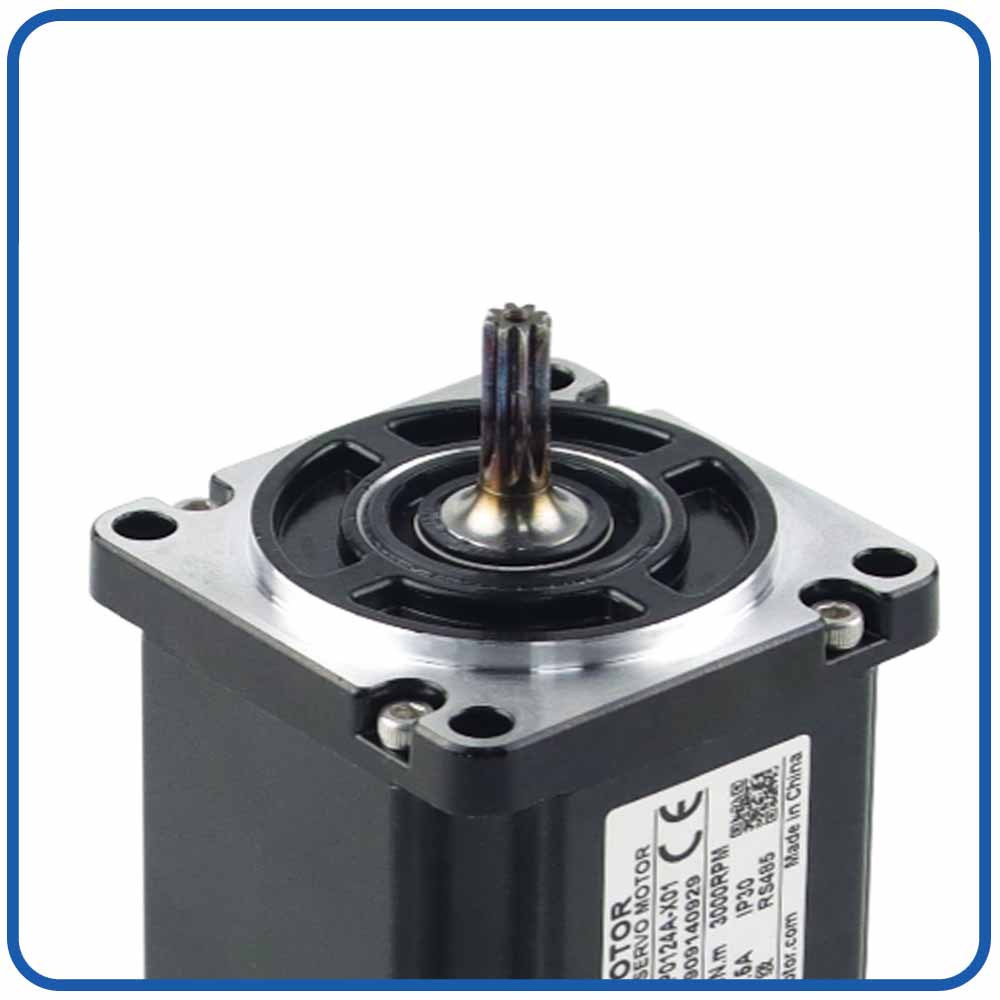
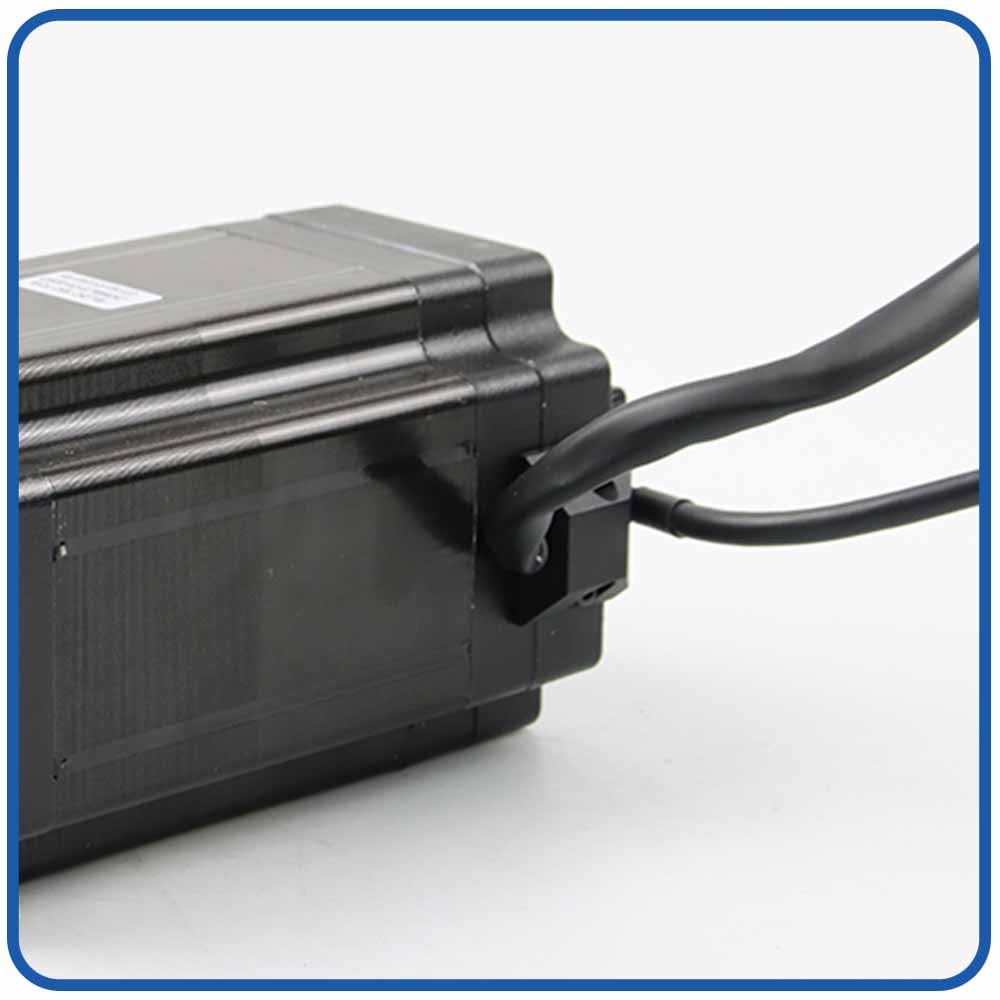
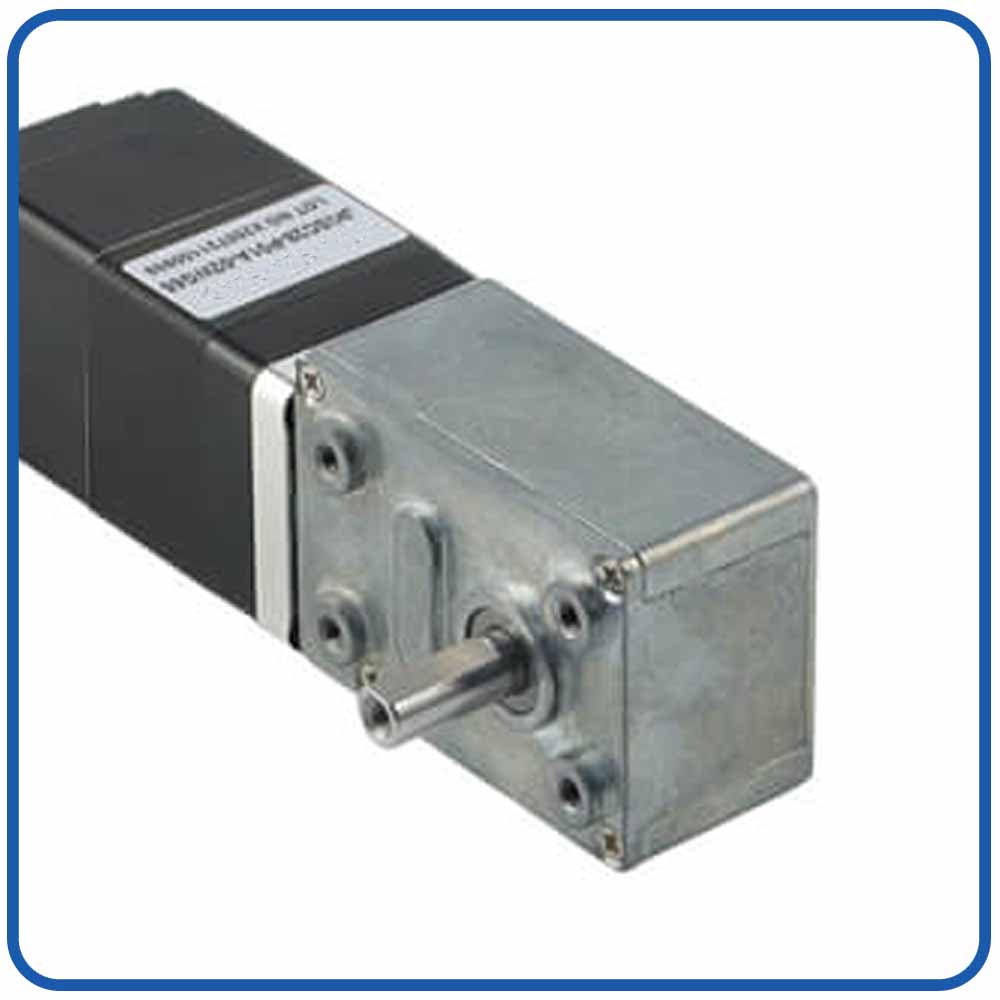
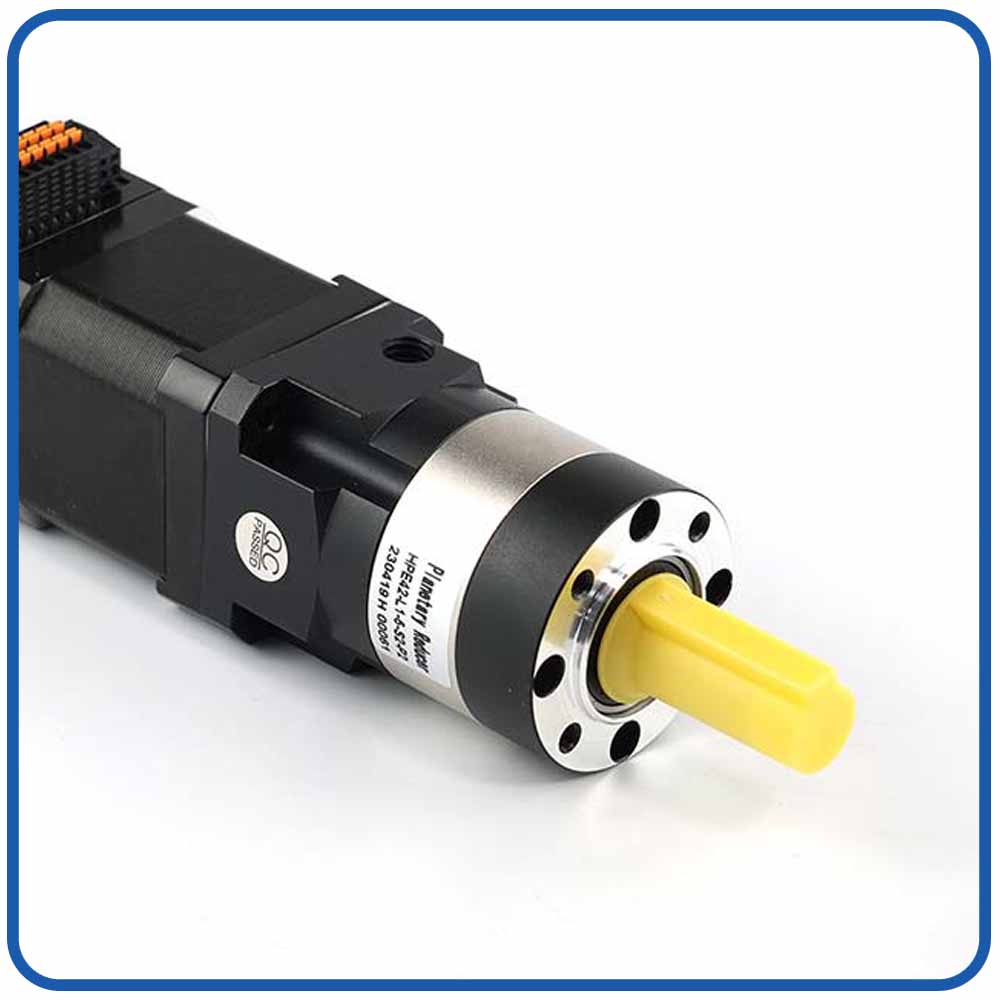
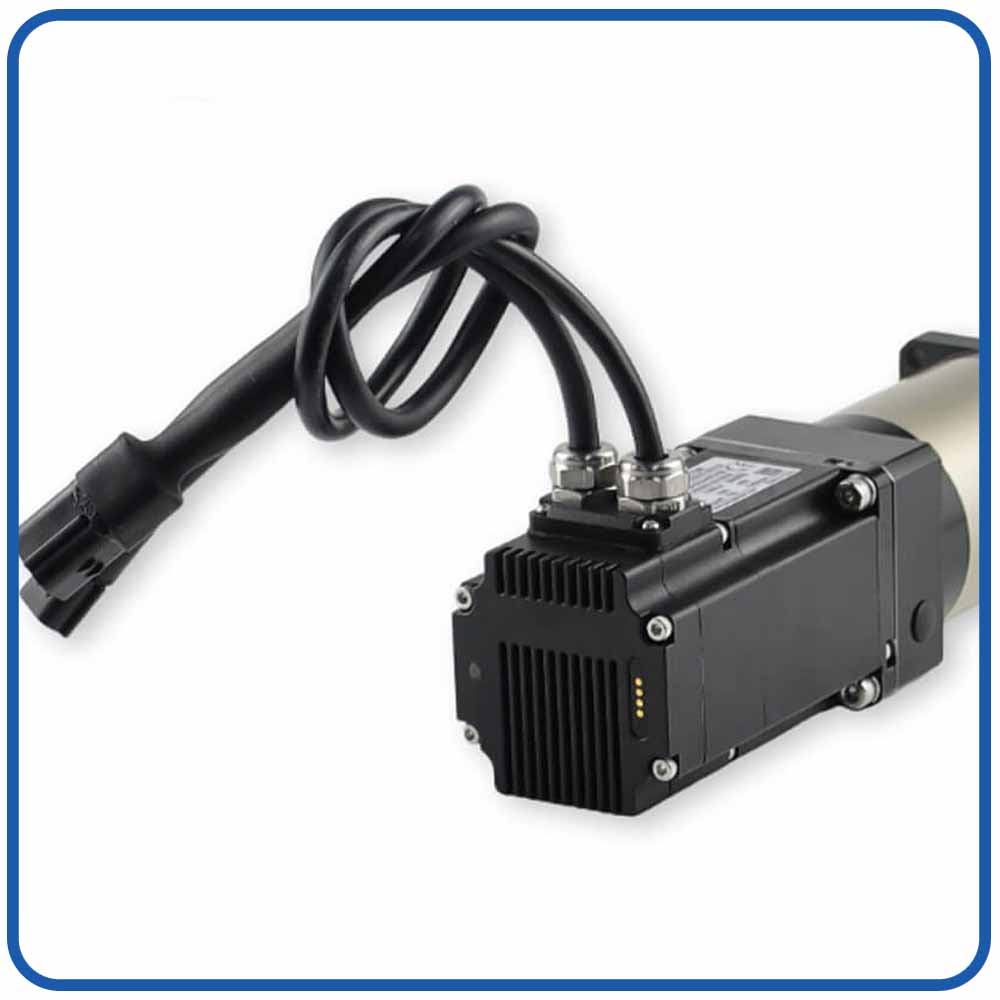
BESFOC Integrated Stepper servo Motors Products
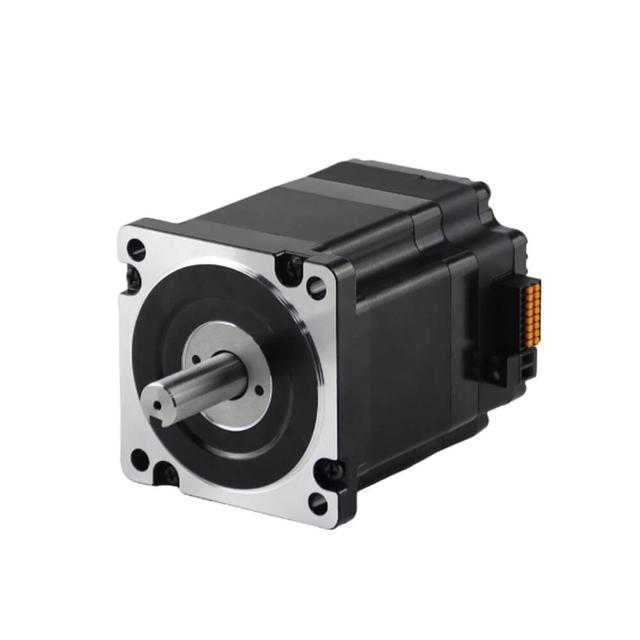 | 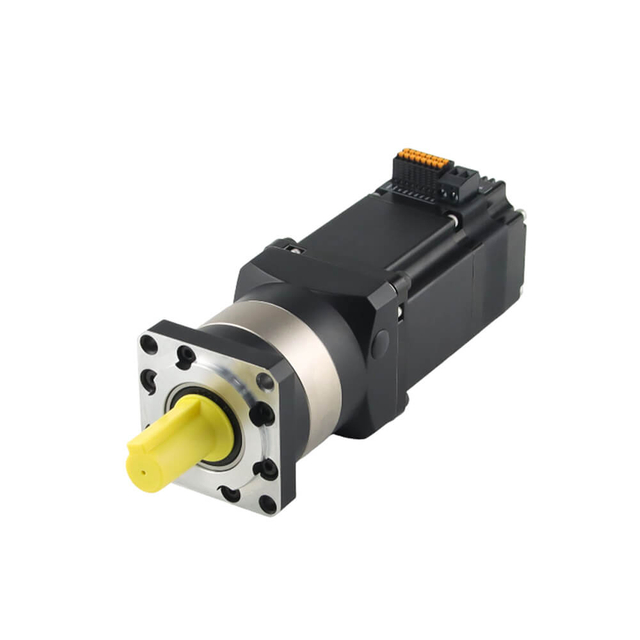 | 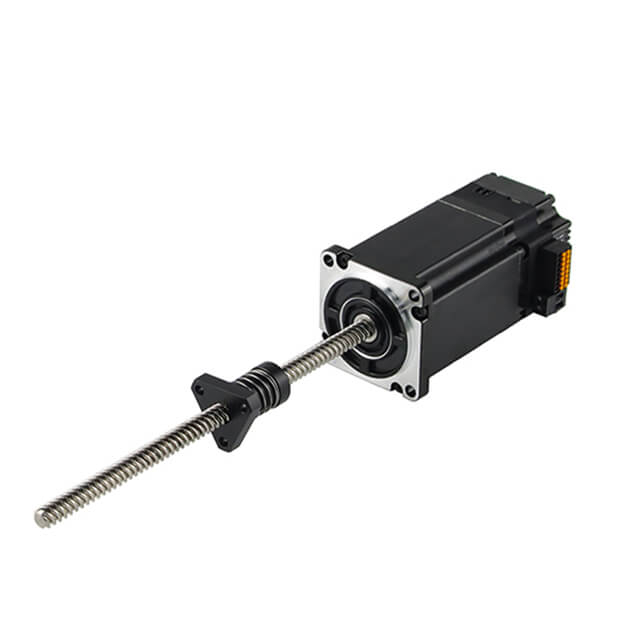 | 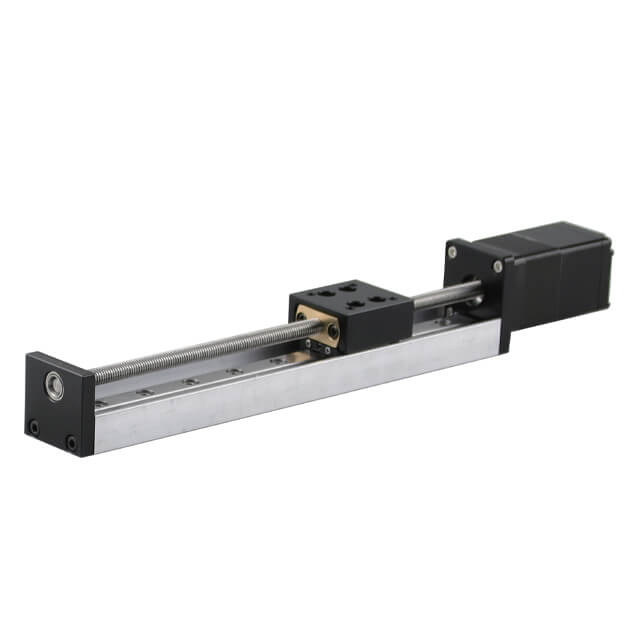 |
 |  |  |  |  |
|---|---|---|---|---|
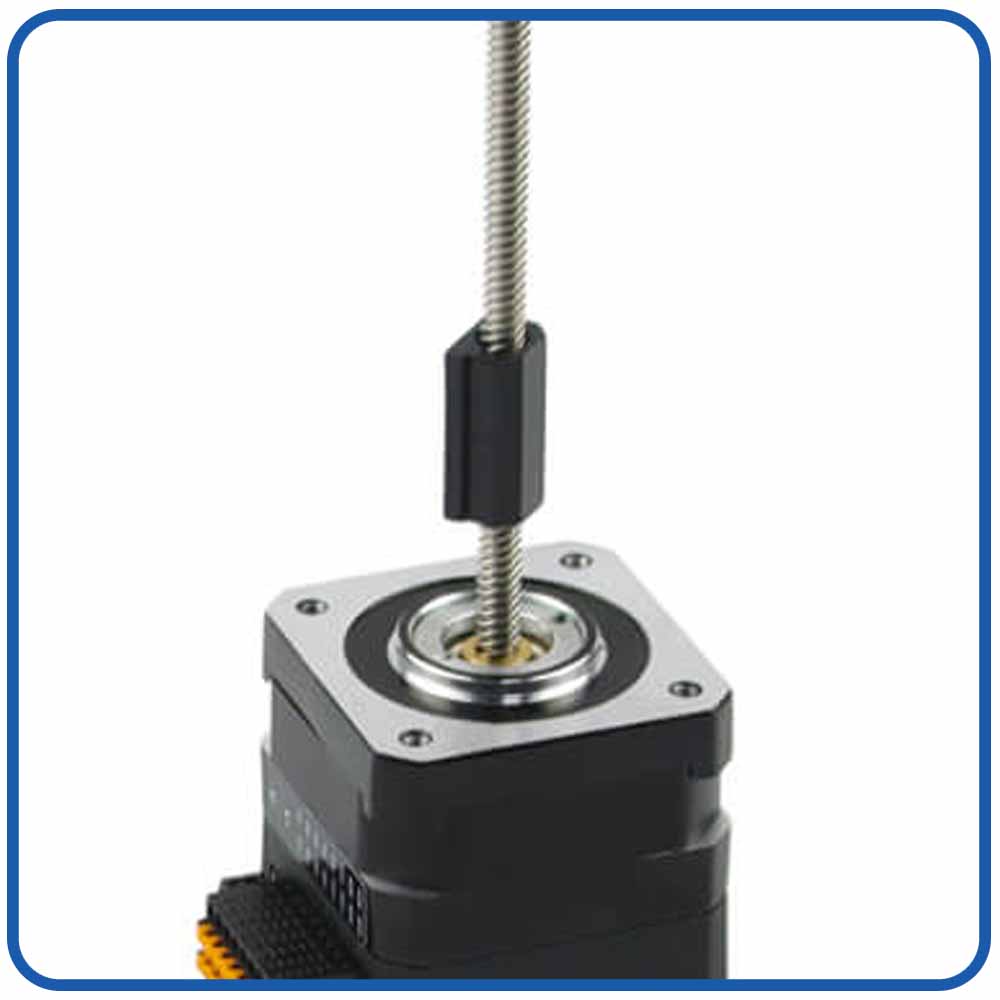
Shaft | Terminal housing | Worm Gearbox | Planetary Gearbox | Lead Screw |
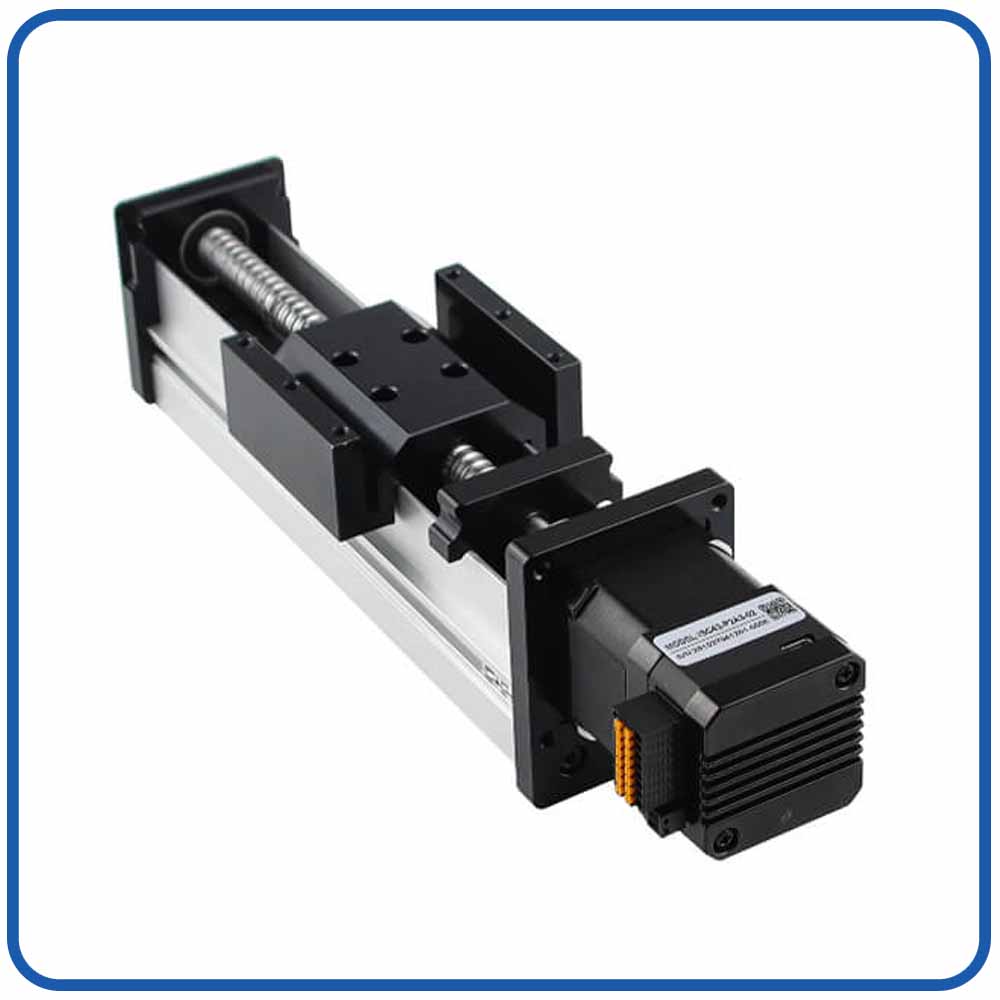 | 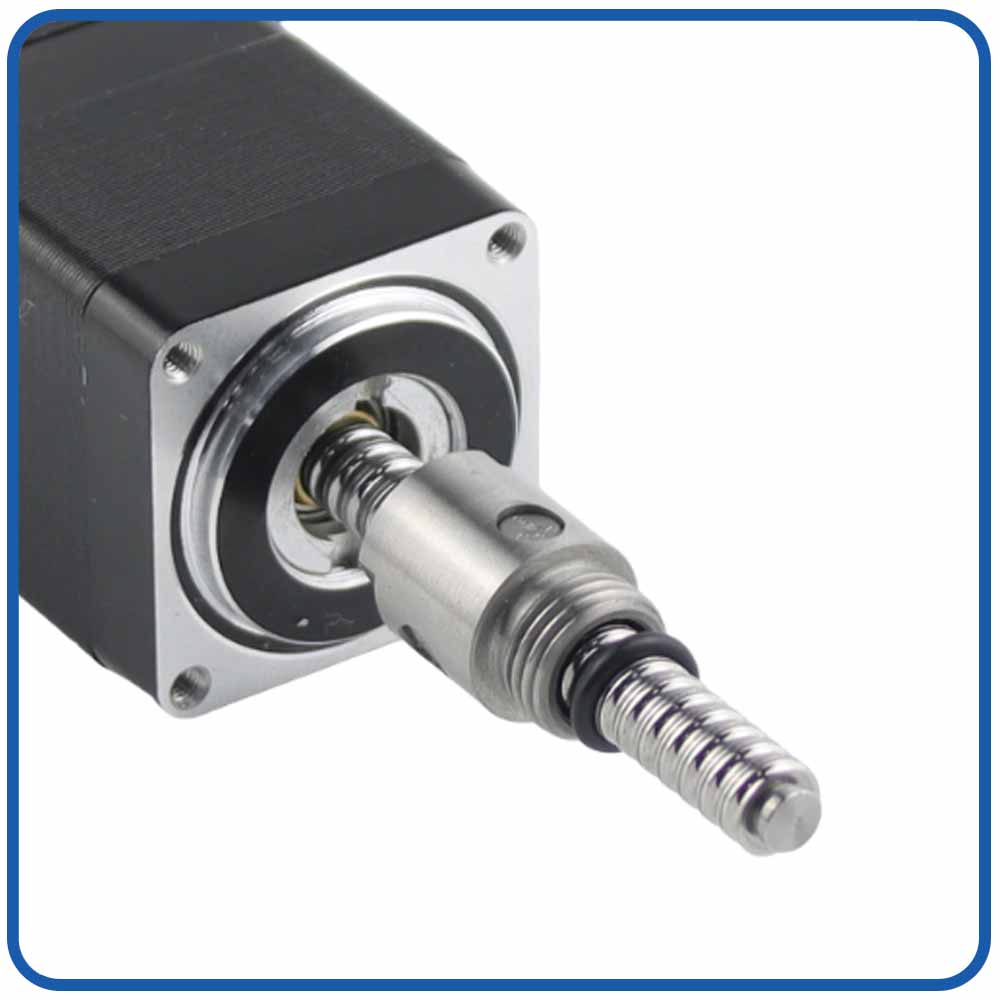 |  |  |  |
Linear Motion | Ball Screw | Brake | IP-Level |
 |  |  |  |  |  |
|---|---|---|---|---|---|
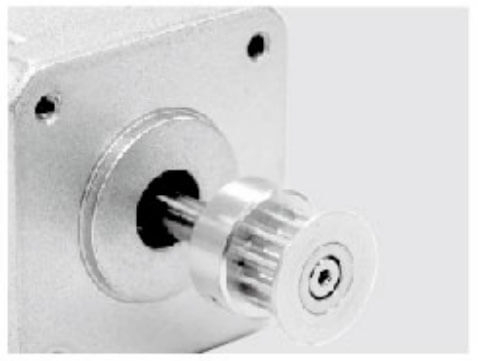
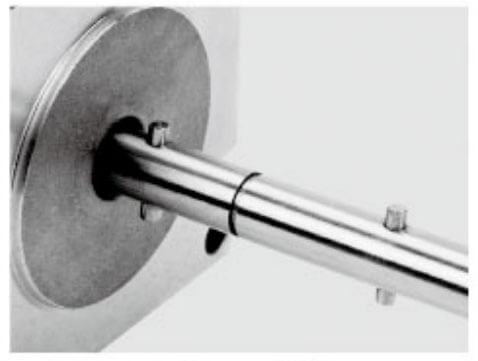
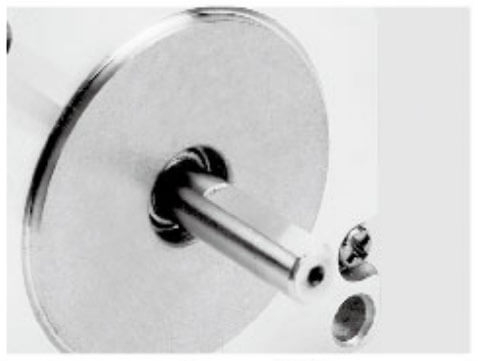
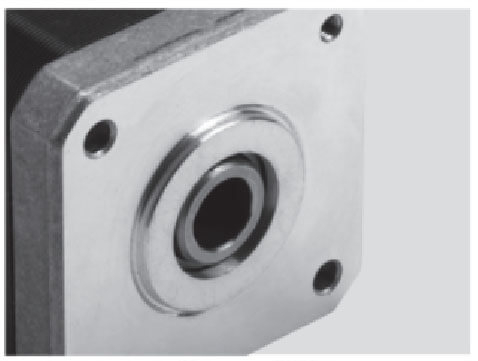
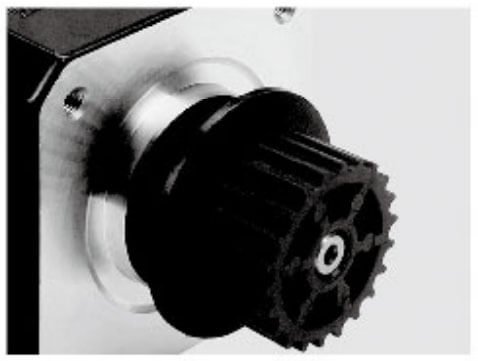
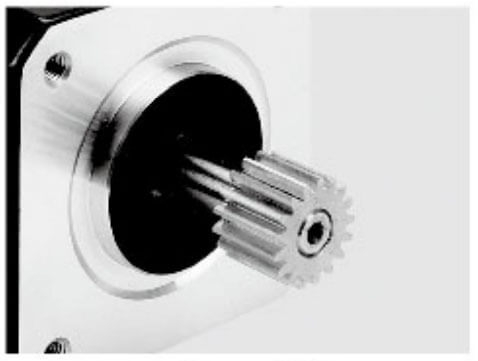
Aluminum Pulley | Shaft Pin | Single D Shaft | Hollow Shaft | Plastic Pulley | Gear |
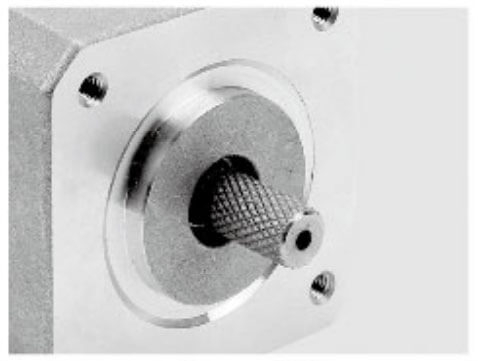 | 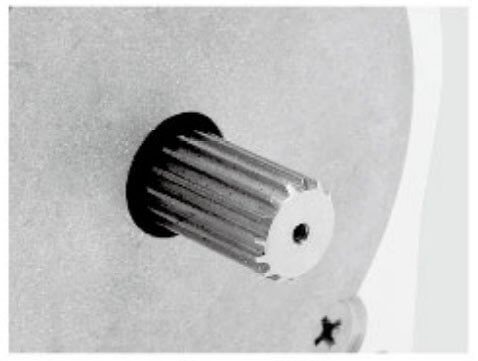 | 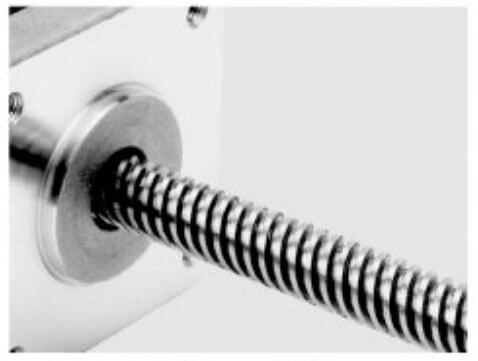 | 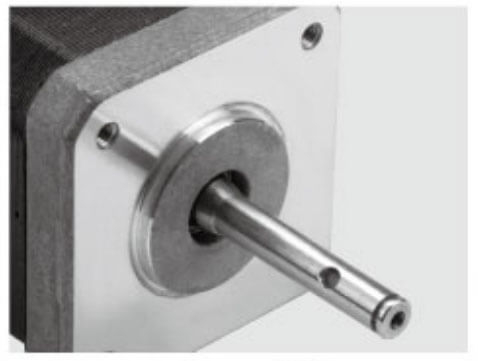 | 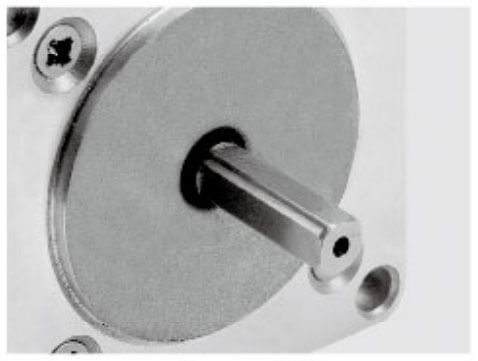 | 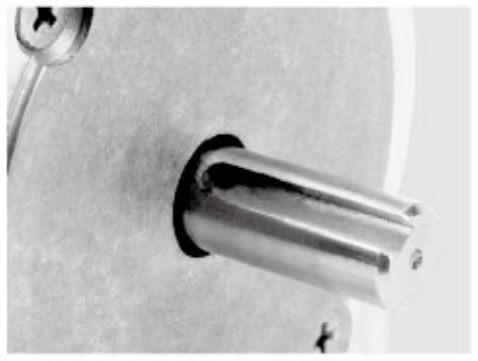 |
Knurling | Hobbing Shaft | Screw Shaft | Hollow Shaft | Double D Shaft | Keyway |
Modbus RTU is a serial communication protocol commonly used in industrial automation. It typically operates over an RS-485 physical interface and uses a master-client or request-response communication model, depending on the terminology of the implementation.
For integrated stepper servo motors in AS/RS systems, Modbus RTU can provide a straightforward method for configuring motor parameters, issuing supported commands, and retrieving status information.
In a typical architecture, a PLC or motion controller communicates with one or more motor drives over an RS-485 network.
The controller sends requests containing a device address, function code, register address, and associated data. The motor drive processes the request and returns a response when appropriate.
Depending on the manufacturer's register map, Modbus RTU may support functions such as:
Reading motor status registers
Writing target position or speed values
Configuring acceleration and deceleration
Selecting supported operating modes
Enabling or disabling the motor
Reading fault codes and diagnostic parameters
The available functions vary by product. Therefore, engineers must confirm the integrated stepper servo motor's register map, supported Modbus function codes, and command execution behavior before designing the control system.
Modbus RTU offers several practical benefits:
Low implementation cost: RS-485 interfaces and Modbus-capable controllers are widely available, making this protocol attractive for cost-sensitive equipment.
Simple wiring: Multiple devices can share an RS-485 bus, reducing the need for individual communication cables between every motor and controller.
Broad compatibility: Modbus RTU is supported by many industrial controllers, HMIs, and automation devices.
Convenient parameter access: Register-based communication is useful for configuration, diagnostics, and relatively straightforward motion commands.
Modbus RTU is not inherently designed for tightly synchronized, high-frequency multi-axis motion. Its request-response architecture, serial data rate, message overhead, and device response times can limit the speed at which multiple motors receive updated commands.
In AS/RS equipment requiring rapid crane acceleration, coordinated multi-axis movement, or tightly timed motion profiles, these limitations may become significant.
Modbus RTU is generally more suitable for parameter configuration, supervisory commands, status monitoring, and less time-critical positioning tasks than for demanding synchronized motion.
Before using it for a particular application, engineers should evaluate the number of connected motors, required update frequency, bus loading, and acceptable response latency.
CANopen is a higher-layer communication protocol built on Controller Area Network (CAN). It is widely used in embedded control and industrial automation, particularly where compact devices need structured configuration, process data exchange, and standardized device behavior.
For integrated stepper servo motors in AS/RS systems, CANopen can offer an effective balance between communication functionality, wiring requirements, and distributed control.
CANopen defines communication mechanisms for exchanging process data, configuring devices, and managing network states.
Its main communication mechanisms include:
Process Data Objects (PDOs): Used for efficient exchange of time-sensitive process data.
Service Data Objects (SDOs): Used for configuration and access to object-dictionary entries.
Network Management (NMT): Used to manage device communication states.
Emergency messages (EMCY): Used by supporting devices to report certain error conditions.
Heartbeat and node guarding mechanisms: Used, where implemented, to monitor node availability.
The CANopen object dictionary organizes parameters and control information into standardized entries. Compatible motor drives can expose supported operating modes, motion parameters, and status information through this structure.
Consider an AS/RS stacker crane with horizontal travel, vertical lifting, and telescopic fork extension.
A CANopen-compatible controller can exchange control commands and status information with each motor drive. PDOs may be configured to carry cyclic control and feedback data, while SDOs can be used to configure motion parameters.
If the motor drive supports relevant CiA 402 drive-profile functions, engineers may be able to use standardized state transitions, control words, status words, and supported positioning modes.
However, CANopen support alone does not guarantee full CiA 402 compatibility or identical motion functions across products. Engineers should verify the supported profile, operating modes, and object dictionary.
CANopen is particularly useful when an AS/RS design requires distributed device control without the cost or complexity of a high-performance industrial Ethernet network.
Its principal advantages include:
Structured device configuration: The object dictionary provides a defined way to access supported parameters.
Efficient process data exchange: PDO communication can reduce the overhead associated with repeatedly accessing individual configuration parameters.
Multi-device networking: Multiple motor drives can communicate over a shared CAN network within the limits of the selected CAN implementation.
Diagnostic capabilities: Network management and supported error-reporting mechanisms help controllers detect communication and device problems.
Compact integration: CAN interfaces are commonly suitable for embedded motor-drive electronics.
CANopen performance depends on the underlying CAN bit rate, message priority, bus length, device count, message configuration, and traffic load.
Because CAN uses prioritized message arbitration, communication latency can vary with network traffic. Engineers must evaluate worst-case message timing rather than relying only on nominal bus speed.
CANopen may be a good choice for moderate-complexity AS/RS equipment, compact shuttle systems, and distributed positioning mechanisms. For applications requiring tightly synchronized motion across numerous axes at high update rates, a real-time industrial Ethernet solution may offer more appropriate capabilities.
EtherCAT is an industrial Ethernet technology designed for efficient, deterministic data exchange. It is especially relevant to automation systems that require frequent communication updates and precise coordination among multiple drives.
For high-performance AS/RS equipment, EtherCAT can support centralized motion control, synchronized cyclic communication, and advanced multi-axis applications when the complete system is designed to use its real-time capabilities.
In an EtherCAT network, the master controller sends Ethernet frames through the network, and compatible slave devices process their assigned data as frames pass through them.
This architecture enables efficient exchange of process data with multiple devices.
Depending on the motor drive and controller implementation, EtherCAT can support cyclic transmission of control commands, target positions, status information, and feedback values.
Distributed Clocks can provide synchronized timing across compatible network devices. When properly configured and supported by the drive, controller, and application, this synchronization can help coordinate multi-axis motion.
An automated storage and retrieval machine may need to coordinate several operations:
Accelerate horizontally toward a designated storage column.
Synchronize vertical lifting with the planned motion profile.
Decelerate accurately near the target position.
Extend the telescopic fork to transfer the load.
Confirm the operation and prepare for the next movement.
EtherCAT can support this type of architecture by providing frequent cyclic exchange of motion data and synchronized timing.
For high-speed shuttle systems, multi-axis positioning equipment, and complex stacker cranes, these capabilities can help improve control responsiveness and motion coordination.
The actual performance still depends on controller cycle time, drive capabilities, motor dynamics, mechanical design, and motion-planning algorithms.
High communication efficiency: EtherCAT processes data efficiently across multiple devices in a network.
Deterministic cyclic communication: Properly engineered systems can achieve predictable communication timing.
Distributed clock synchronization: Compatible devices can align their local timing for coordinated operations.
Scalable multi-axis control: EtherCAT can connect multiple motor drives and other supported automation devices.
Advanced motion-control integration: Compatible drives may support standardized CiA 402 functions or other defined motion interfaces over EtherCAT.
An integrated stepper servo motor must explicitly support EtherCAT to communicate as an EtherCAT device. An Ethernet connector alone is insufficient.
Engineers should verify:
EtherCAT slave compatibility
Supported drive profile and operating modes
Electronic data sheet (ESI) availability
Controller and engineering-tool compatibility
Distributed Clock support, if required
Supported cycle times and synchronization performance
Fault handling and network recovery behavior
EtherCAT is often a strong candidate for high-performance AS/RS applications requiring coordinated motion, rapid command updates, and predictable communication timing.
Although pulse-and-direction control is not a network communication protocol in the same sense as Modbus, CANopen, or industrial Ethernet, it remains an important command interface for integrated stepper servo motors.
In this method, the controller sends pulse signals to determine movement increments and a direction signal to specify the direction of rotation or linear travel.
Depending on the drive, the pulse interface may support additional command modes and electrical configurations.
The controller generates a series of pulses corresponding to the required motor movement. The direction signal determines the movement direction.
For a system with a known command scaling, the number of pulses determines the commanded displacement, while pulse frequency determines the commanded step rate.
The relationship between pulse count and mechanical movement depends on the drive's electronic gearing, motor configuration, microstepping settings, and mechanical transmission.
A controller may use pulse-and-direction control for a motorized transfer mechanism, a simple lift axis, or an auxiliary positioning stage.
Simple command structure: The interface is straightforward to implement.
Broad controller support: Many PLCs and motion controllers provide pulse outputs.
Low communication overhead: No network protocol stack is required for the command interface itself.
Direct motion commands: Pulse frequency and count can represent movement rate and displacement.
Pulse-and-direction control typically does not provide the same standardized network-based parameter access, diagnostics, and status exchange available through more comprehensive communication interfaces.
Additional signals or communication channels may be required for fault reporting, homing sensors, limit switches, and motor status.
Furthermore, coordinated multi-axis motion depends on the controller generating appropriately timed pulse trains for each axis. The interface alone does not provide network-level synchronization or comprehensive device diagnostics.
Pulse-and-direction control is therefore best considered for simpler axes or applications where the controller already handles motion generation and the required functionality is limited.
The following table summarizes the main characteristics of common communication options.
Protocol or interface | Primary strengths | Main considerations | Typical AS/RS suitability |
|---|---|---|---|
Modbus RTU | Low cost, simple serial communication | Limited suitability for demanding synchronized motion | Auxiliary axes, parameter access, basic positioning |
CANopen | Structured device profiles, PDO communication, compact networking | CAN bandwidth and message timing must be evaluated | Distributed motor control and moderate-complexity machinery |
EtherCAT | Efficient cyclic data exchange, synchronization capabilities | Requires compatible master and slave devices | High-performance stackers, shuttle systems, multi-axis control |
Pulse-and-direction | Simple command interface, broad controller availability | Limited native network diagnostics and device management | Basic positioning axes and simple motion applications |
The comparison should be interpreted at the system level. A protocol's theoretical capabilities do not guarantee a particular motor's performance, and a more advanced network is not automatically the best choice for every machine.
Selecting a communication protocol requires an evaluation of motion requirements, control architecture, device compatibility, and long-term maintenance needs.
First, determine the required positioning accuracy, repeatability, maximum speed, acceleration, and cycle time.
A simple transfer mechanism may need only straightforward positioning commands. A high-speed stacker crane, by contrast, may require synchronized movement across several axes.
For applications with demanding synchronization requirements, prioritize a controller and communication architecture that explicitly support the required motion functions.
EtherCAT may be a strong candidate for high-performance multi-axis control, while CANopen, PROFINET, and EtherNet/IP may be appropriate depending on the required capabilities and implementation.
The communication interface must be compatible with the controller already installed or planned for the AS/RS.
Before selecting a motor, verify:
Available communication ports and supported protocols
Required controller hardware and software
Device configuration tools
Supported drive profiles
Network cycle-time requirements
Availability of device-description files
Diagnostic and commissioning procedures
For example, an AS/RS using an EtherCAT motion controller may benefit from compatible EtherCAT integrated stepper servo motors. Selecting a Modbus-only motor would require a different architecture or an appropriate gateway, potentially adding integration complexity.
The number of motor axes affects network traffic, controller workload, wiring, and maintenance.
A system controlling a few independent axes may operate effectively with a simple communication architecture. A larger installation with multiple stacker cranes, shuttles, conveyors, and transfer mechanisms may benefit from a more structured network design.
Evaluate the expected device count, cyclic data volume, update frequency, network topology, and behavior during communication failures.
Maintenance requirements are particularly important for warehouses that operate continuously or have limited access to equipment during operation.
A suitable interface should provide access to the information needed to identify faults, verify motion states, and restore operation.
Review whether the motor drive exposes:
Fault and warning codes
Operating and enable states
Actual position and velocity
Following-error information, if supported
Temperature and electrical protection status
Homing and limit-switch status, where available
Communication-loss detection and recovery behavior
The usefulness of these functions depends on both the communication protocol and the motor manufacturer's implementation.
AS/RS equipment may include moving cable carriers, long machine travel paths, electrical noise sources, and densely installed motor drives.
Engineers should consider the electrical interface, cable specifications, grounding, shielding, network topology, connector protection, and environmental ratings.
RS-485 and CAN-based networks have different physical-layer requirements from industrial Ethernet networks. Each must be installed according to its applicable specifications and the manufacturer's recommendations.
For moving equipment, cable flex life and connector retention may be just as important as nominal communication speed.
An AS/RS installation may eventually require additional storage aisles, shuttle vehicles, conveyor sections, or motorized mechanisms.
Selecting a protocol that fits the existing controller platform and future system architecture can reduce later integration work.
However, scalability should be evaluated using real engineering limits rather than protocol names alone. Controller capacity, network loading, addressing, device support, and commissioning complexity all influence the ability to expand.
Different Automated Storage and Retrieval System (AS/RS) applications have different motion-control requirements. Selecting the right communication protocol for integrated stepper servo motors depends on positioning accuracy, motion synchronization, communication speed, controller compatibility, and system complexity.
High-speed stacker cranes: EtherCAT is a strong choice for synchronized multi-axis motion and real-time control.
Shuttle-based storage systems: EtherCAT or CANopen may be suitable, depending on motion performance and network requirements.
Conveyor modules and transfer mechanisms: Modbus RTU, Modbus TCP, PROFINET, or EtherNet/IP can support motor control and status monitoring, depending on system architecture.
Vertical lifting and positioning axes: Select a protocol that supports the required motion commands, feedback, and fault monitoring, alongside appropriate braking and safety functions.
Auxiliary positioning mechanisms: Pulse-and-direction control or Modbus RTU may be sufficient for simpler motion tasks.
When selecting an integrated stepper servo motor for AS/RS applications, engineers should verify the motor's supported protocol, drive profile, controller compatibility, and required communication cycle time. For high-performance multi-axis systems, EtherCAT is often worth evaluating first; for simpler applications, a less complex interface may provide a more cost-effective solution.
Selecting the wrong communication protocol for integrated stepper servo motors in Automated Storage and Retrieval Systems (AS/RS) can lead to communication delays, positioning errors, integration difficulties, and unexpected downtime. To ensure reliable motion control, engineers should evaluate protocol compatibility, network performance, and application requirements before choosing a motor drive.
Integrated stepper servo motors differ in their communication interfaces, supported drive profiles, and control functions. Some models support Modbus RTU or CANopen, while others offer EtherCAT, PROFINET, or pulse-and-direction control.
How to avoid this mistake: Verify the exact motor model's communication specifications, supported operating modes, and compatibility with the AS/RS controller before purchasing.
A high-speed communication network does not automatically guarantee accurate motor positioning. Actual performance also depends on encoder feedback, motor torque, mechanical backlash, control-loop tuning, and load conditions.
How to avoid this mistake: Evaluate communication timing alongside motor resolution, feedback capabilities, acceleration requirements, and mechanical positioning accuracy.
An AS/RS may contain multiple stacker cranes, shuttle mechanisms, conveyors, and lifting axes. As the number of connected devices increases, communication traffic and controller workload can affect response times.
How to avoid this mistake: Calculate network loading, required update frequency, and worst-case communication latency. For tightly synchronized multi-axis applications, consider EtherCAT or another suitable real-time motion-control solution.
Two integrated stepper servo motors may support the same protocol but implement different command structures, parameter mappings, or motion-control functions. Protocol compatibility alone does not guarantee seamless integration.
How to avoid this mistake: Confirm controller compatibility, supported drive profiles, device-description files, configuration tools, and available motion commands before integrating the motor into the AS/RS system.
Standard communication protocols do not automatically provide safety-rated emergency stopping, safe torque off, or personnel protection. This is particularly important for vertical lifting axes and automated equipment operating near personnel.
How to avoid this mistake: Design appropriate safety circuits and validated safety functions independently of ordinary motor communication. Where network-based safety is required, use compatible, certified safety technology.
By avoiding these common mistakes, engineers can select an integrated stepper servo motor communication protocol that matches AS/RS motion requirements, simplifies system integration, improves diagnostic capabilities, and supports reliable warehouse automation.
Communication is only one part of selecting an integrated stepper servo motor for AS/RS equipment. Motor and drive characteristics must match the mechanical and operational requirements.
The motor must provide sufficient torque throughout the operating speed range, including acceleration and deceleration.
For horizontal travel, engineers should account for moving mass, rolling resistance, transmission efficiency, and acceleration requirements. For vertical lifting, they must also consider gravitational load and the required braking strategy.
The communication protocol cannot compensate for insufficient torque or an unsuitable motor size.
Some integrated stepper servo motors use encoder feedback to monitor rotor position and improve motion control.
Depending on the implementation, feedback can help the drive detect position deviations and adjust motor current or report faults.
Engineers should verify encoder resolution, feedback architecture, supported closed-loop functions, and the availability of actual-position data through the selected communication interface.
A product described as an integrated stepper servo motor does not necessarily provide the same feedback features as every other model in this category.
An appropriate communication interface should make it practical to configure motor parameters, test motion commands, monitor status, and troubleshoot faults.
Commissioning tools, software support, documented registers or object dictionaries, and clear alarm definitions can substantially affect integration time.
When evaluating motors, engineers should review the complete commissioning workflow rather than focusing exclusively on protocol availability.
The motor must also match the available supply voltage, current requirements, mounting dimensions, shaft or coupling design, and environmental conditions.
For compact AS/RS equipment, integrated electronics may reduce cabinet space and simplify wiring. However, thermal management, cable routing, vibration, and service access must still be evaluated.
The best solution combines an appropriate motor, compatible controller, suitable communication interface, and correctly designed mechanics.
Before finalizing a motor and communication protocol, use the following checklist.
Define the required travel distance, speed, acceleration, and positioning accuracy.
Determine whether the application requires synchronized multi-axis motion.
Confirm the PLC or motion controller's supported protocols.
Verify the exact communication interface available on the motor model.
Review the supported drive profile and operating modes.
Check available position, velocity, status, and diagnostic data.
Evaluate device count, network loading, and required update frequency.
Confirm cable, connector, grounding, and shielding requirements.
Review communication-loss behavior and fault-recovery procedures.
Verify mechanical braking and safety functions for lifting or hazardous axes.
Confirm commissioning software, documentation, and long-term maintenance support.
Test the complete system under realistic payload and operating conditions.
This checklist helps ensure that protocol selection is based on verified requirements rather than general product descriptions.
Choosing the right communication protocol for integrated stepper servo motors in AS/RS storage systems requires balancing motion performance, network architecture, controller compatibility, diagnostic capabilities, and implementation cost.
EtherCAT is a strong option for demanding multi-axis motion control, particularly in high-speed stacker cranes and shuttle systems requiring predictable cyclic communication and synchronized operation. CANopen offers structured device communication for distributed motor control, while Modbus RTU and Modbus TCP provide practical solutions for simpler positioning, parameter access, and monitoring. PROFINET and EtherNet/IP can be effective choices for AS/RS installations built around compatible industrial automation platforms. Pulse-and-direction control remains useful for basic motion commands when advanced network functionality is unnecessary.
Ultimately, the most suitable solution is the one that meets the machine's verified motion requirements and integrates reliably with the complete automation system. By evaluating communication timing, drive compatibility, feedback capabilities, network loading, fault handling, and mechanical requirements together, engineers can develop an AS/RS motion-control architecture that supports accurate positioning, reliable operation, efficient maintenance, and future expansion.
The most suitable communication protocols for integrated stepper servo motors in Automated Storage and Retrieval Systems (AS/RS) include EtherCAT, CANopen, Modbus RTU, Modbus TCP, PROFINET, and EtherNet/IP. EtherCAT is well suited to high-performance multi-axis motion control, while CANopen supports distributed motor communication. Modbus is practical for basic control and monitoring, and PROFINET or EtherNet/IP can simplify integration with compatible industrial PLCs.
EtherCAT supports efficient cyclic data exchange and synchronized communication between compatible controllers and motor drives. These capabilities make it suitable for AS/RS applications requiring coordinated horizontal travel, vertical lifting, and shuttle positioning. Actual motion performance depends on controller cycle time, drive capabilities, network configuration, and mechanical design.
Yes. CANopen supports structured communication between compatible motor drives and controllers through Process Data Objects (PDOs), Service Data Objects (SDOs), and network management functions. When supported by the drive, CiA 402 functions can provide standardized motion-control interfaces. Engineers should evaluate network loading, update rates, and synchronization requirements before selecting CANopen for multi-axis applications.
Modbus RTU typically communicates over serial interfaces such as RS-485, whereas Modbus TCP exchanges Modbus messages over TCP/IP networks, commonly using Ethernet. Modbus RTU can offer a cost-effective solution for basic motor control and monitoring, while Modbus TCP supports Ethernet-based integration. Neither protocol inherently provides the specialized synchronized motion-control capabilities of a real-time motion network.
Communication protocols allow controllers to transmit motion commands and receive motor status or feedback data. Predictable communication timing and coordinated command execution can support accurate positioning. However, overall accuracy also depends on encoder feedback, motor resolution, control-loop tuning, mechanical backlash, load conditions, and the motion controller.
EtherCAT is a strong candidate for high-speed stacker cranes that require frequent cyclic updates and synchronized multi-axis motion. PROFINET or EtherNet/IP may also be appropriate when compatible real-time motion-control functions are available. The final selection should consider the PLC, motor drive, required cycle time, payload, positioning accuracy, and overall system architecture.
Yes, provided the motor drive supports a communication protocol compatible with the PLC or motion controller. Depending on the product, communication may use CANopen, Modbus RTU, Modbus TCP, EtherCAT, PROFINET, or EtherNet/IP. Before integration, engineers should verify the supported protocol, drive profile, communication parameters, and available configuration tools.
Engineers should evaluate positioning accuracy, maximum speed, acceleration, multi-axis synchronization, communication cycle time, network loading, PLC compatibility, diagnostic functions, wiring requirements, and future expansion. For lifting axes, braking and safety functions must also be addressed independently of ordinary motor communication.
No. An Ethernet connector does not guarantee support for EtherCAT, PROFINET, or another industrial communication protocol. Each motor drive must explicitly implement the required protocol and compatible device functions. Engineers should confirm the exact model specifications, device-description files, supported drive profiles, and controller compatibility before purchasing.
A suitable communication protocol can improve access to motor status, alarms, operating parameters, and diagnostic information. These capabilities help maintenance teams identify communication failures, positioning deviations, and drive faults. Selecting compatible equipment and implementing appropriate fault monitoring, network diagnostics, and recovery procedures can simplify troubleshooting and help reduce unplanned downtime.


