
Integrated Servo Motors & Linear Motions Supplier
- All
- Product Name
- Product Keyword
- Product Model
- Product Summary
- Product Description
- Multi Field Search
Views: 0 Author: Site Editor Publish Time: 2026-10-23 Origin: Site


Precision spraying systems are widely used in agricultural machinery, industrial coating equipment, automated chemical dispensing, and precision liquid application systems. These applications require accurate flow control, consistent spray patterns, repeatable positioning, and reliable operation under changing workloads. As automation technology advances, conventional motor solutions may struggle to meet increasingly demanding requirements for dynamic response, compact installation, and coordinated motion control.
Integrated DC servo motors provide an effective solution by combining a DC servo motor, drive electronics, and feedback control components into a compact motion control unit. This integrated design helps simplify system architecture while enabling precise speed regulation, torque control, and position adjustment. When properly selected and configured, integrated DC servo motors can improve the responsiveness and consistency of precision spraying equipment.
In this article, we examine how integrated DC servo motors support precision spraying systems, which technical advantages matter most, and how equipment manufacturers can select the right motor for their applications.
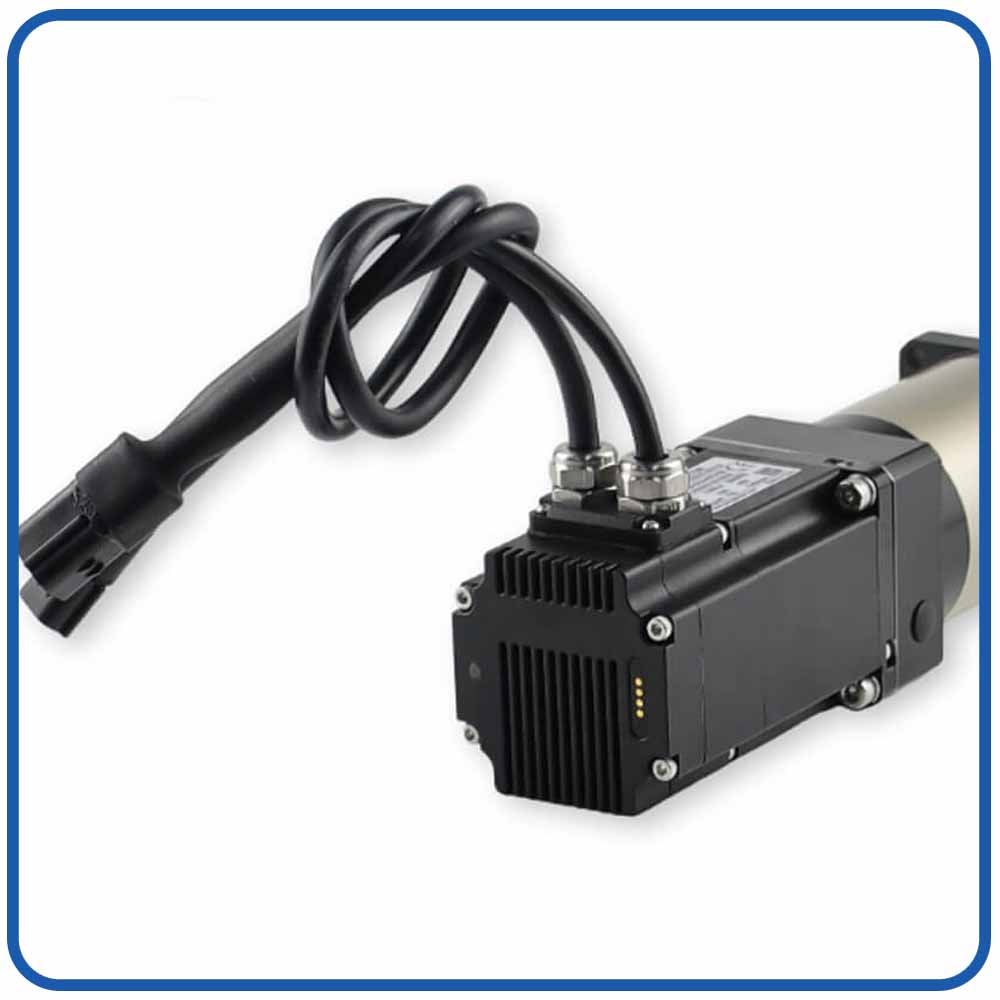
An integrated DC servo motor combines the motor and essential control electronics within a single assembly. Depending on the design, the unit may include a servo drive, encoder, current sensing, communication interfaces, and motion control functions. This configuration reduces the need for separately installed control components and simplifies electrical integration.
In precision spraying systems, integrated DC servo motors can drive several critical mechanisms, including:
Spray nozzle positioning mechanisms that adjust the direction and location of liquid application.
Liquid metering pumps that regulate the volume of fluid delivered to the spraying assembly.
Automated valve actuators that control the opening and closing of fluid passages.
Rotary and linear positioning systems that coordinate spraying with moving workpieces or agricultural equipment.
Robotic spraying mechanisms that require repeatable motion along programmed trajectories.
The motor's role depends on the mechanical architecture of the equipment. For example, a motor driving a metering pump directly influences fluid delivery, while a motor controlling nozzle positioning primarily affects spray coverage and application accuracy.
By integrating motion control components into one unit, manufacturers can reduce wiring complexity, save installation space, and establish more consistent control over the mechanical functions of the spraying system.
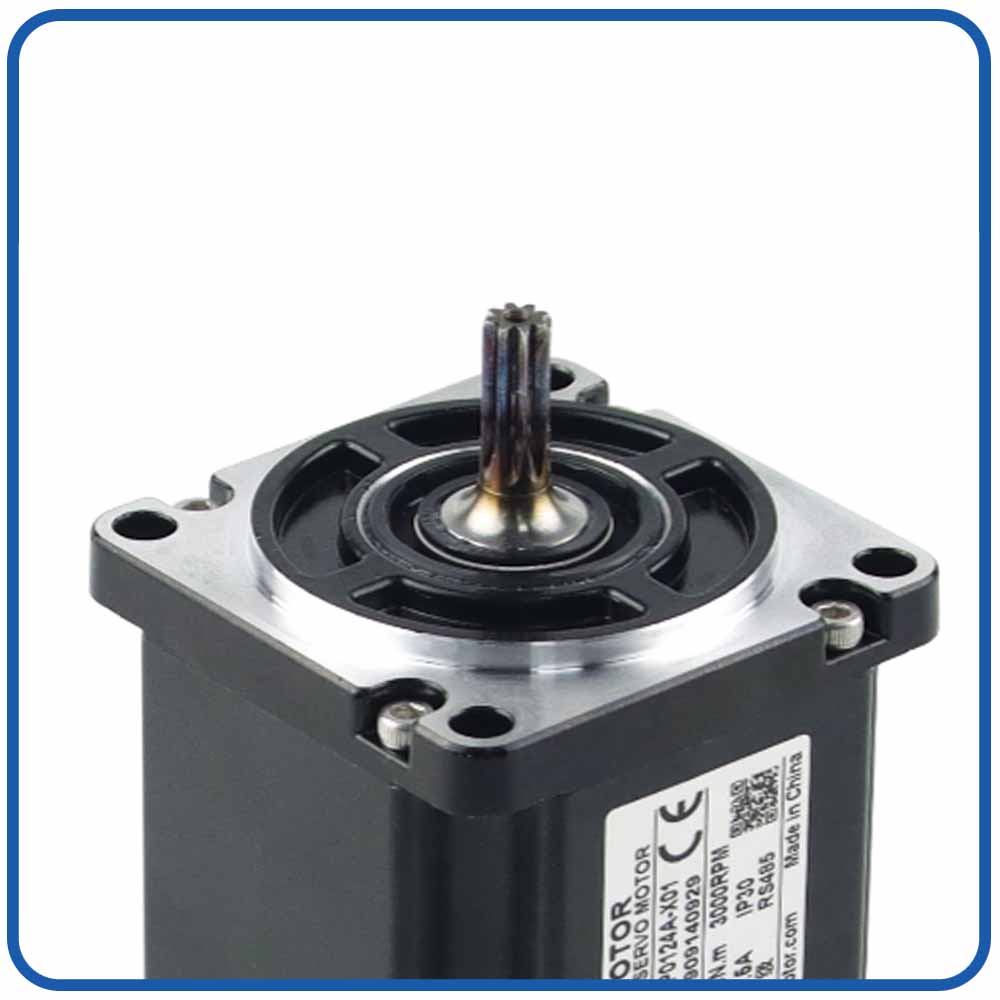
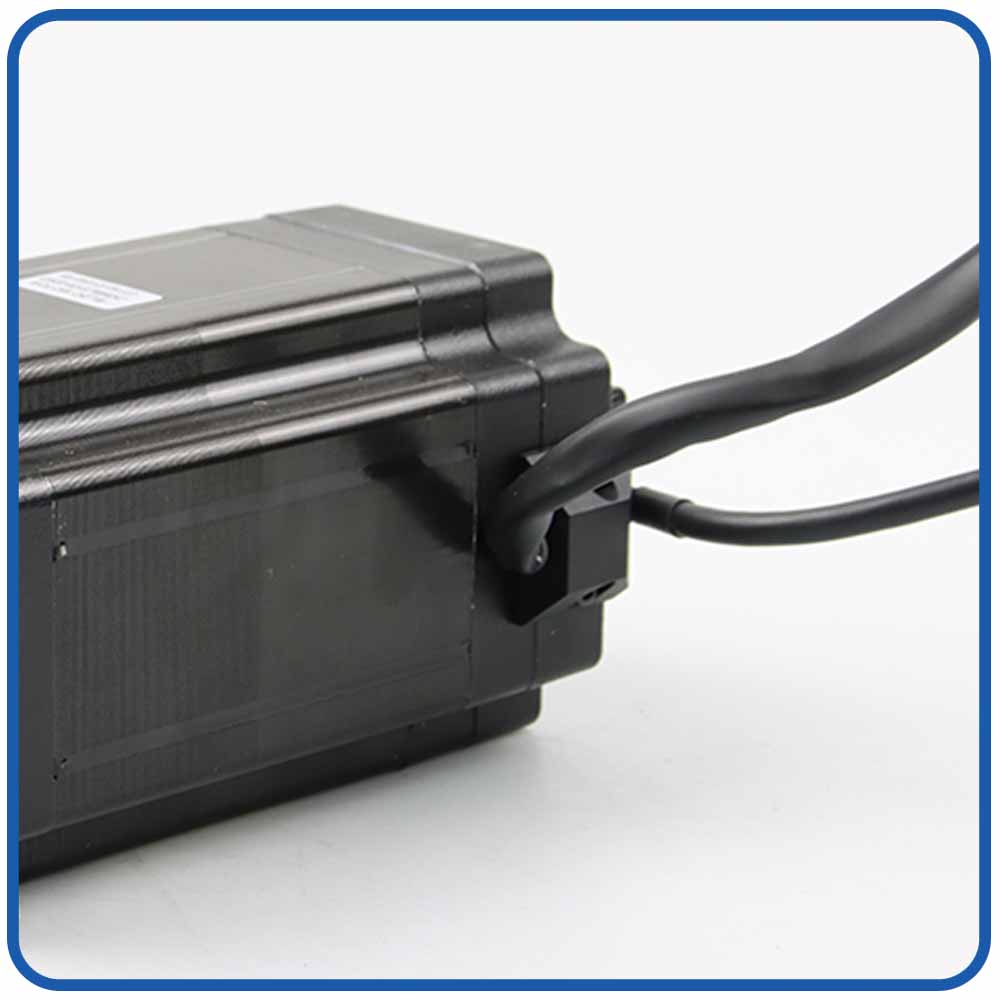
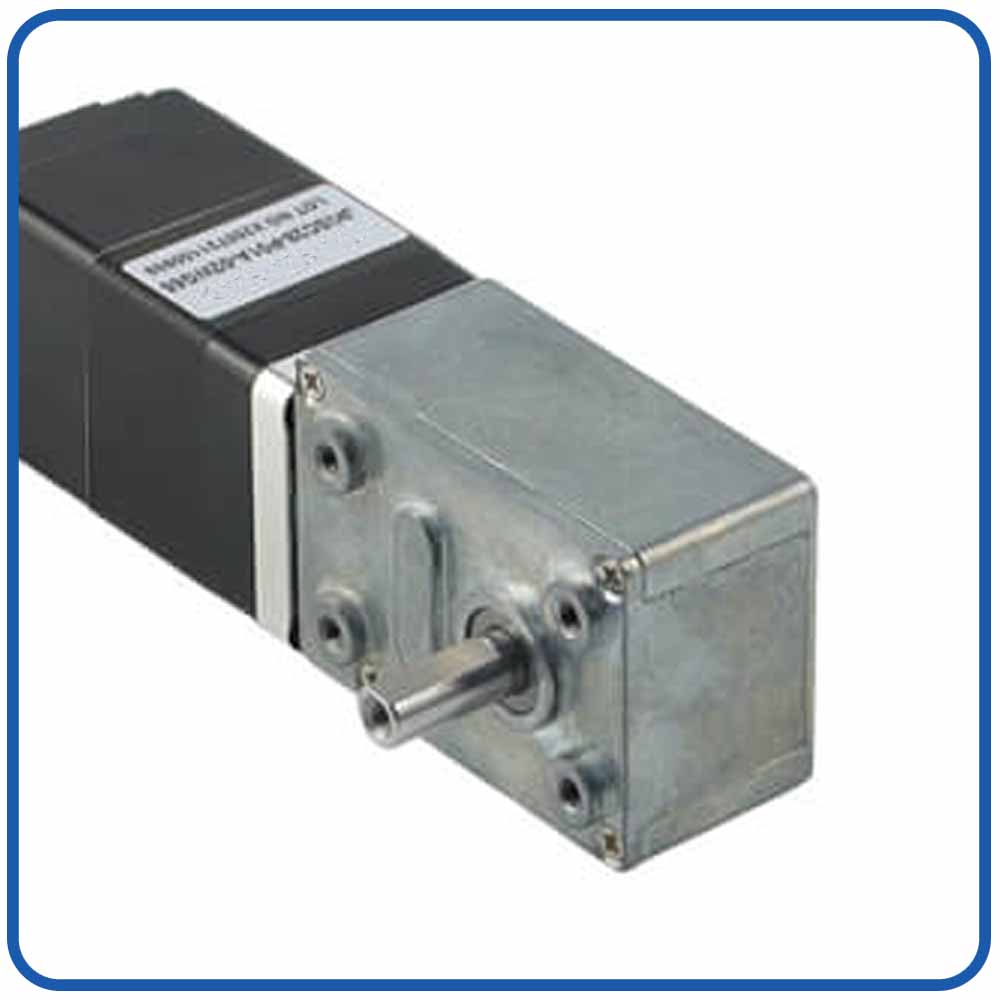
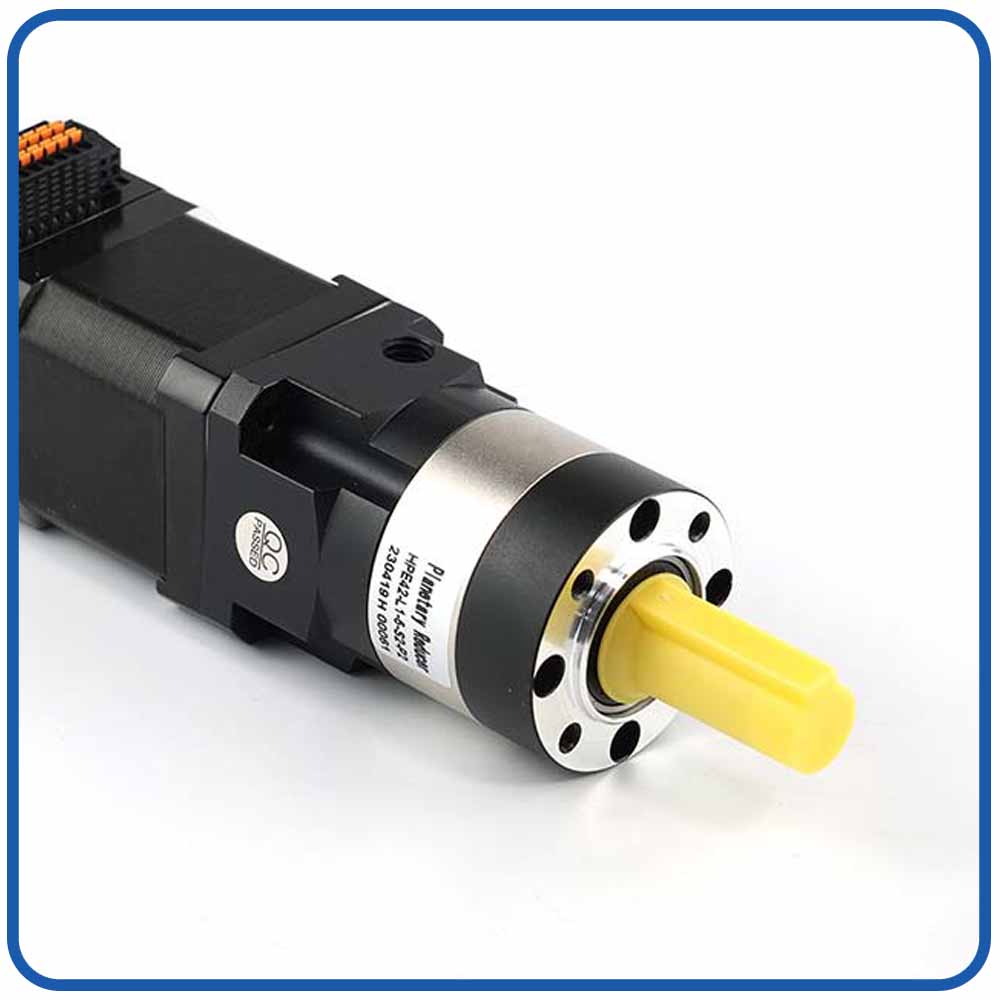
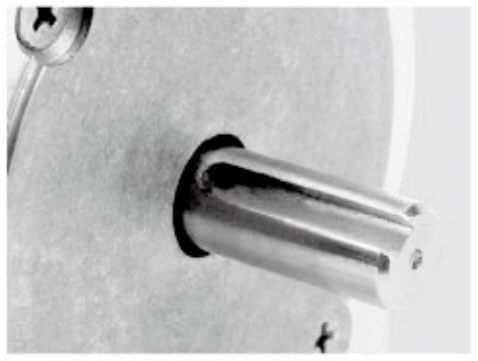
BESFOC Integrated DC servo Motors Products
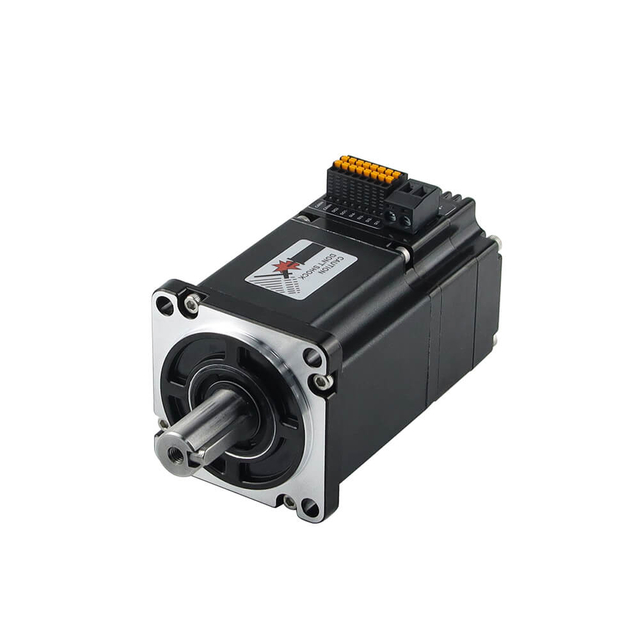 | 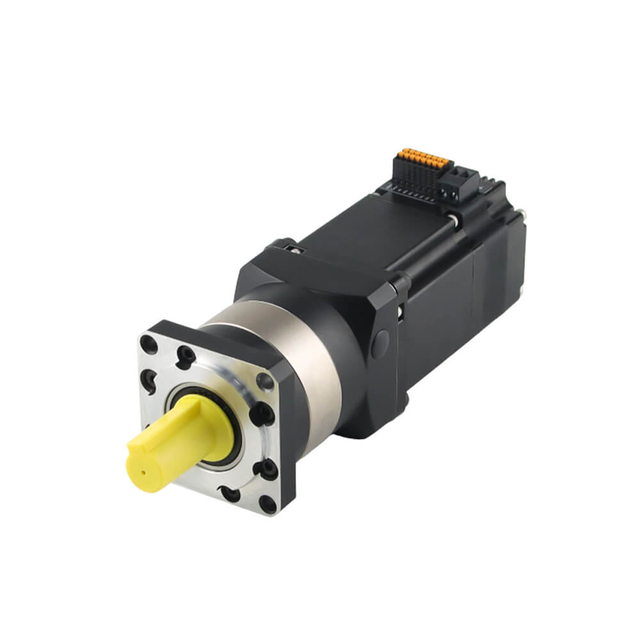 | 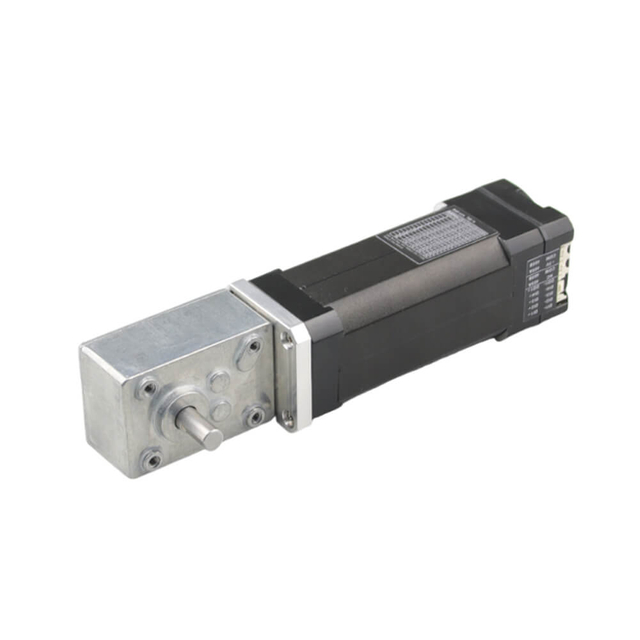 | 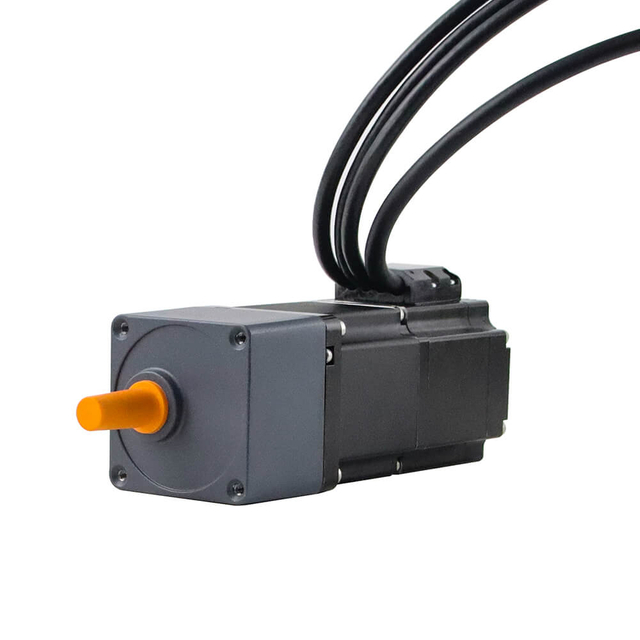 |
 |  |  |  |  |
|---|---|---|---|---|
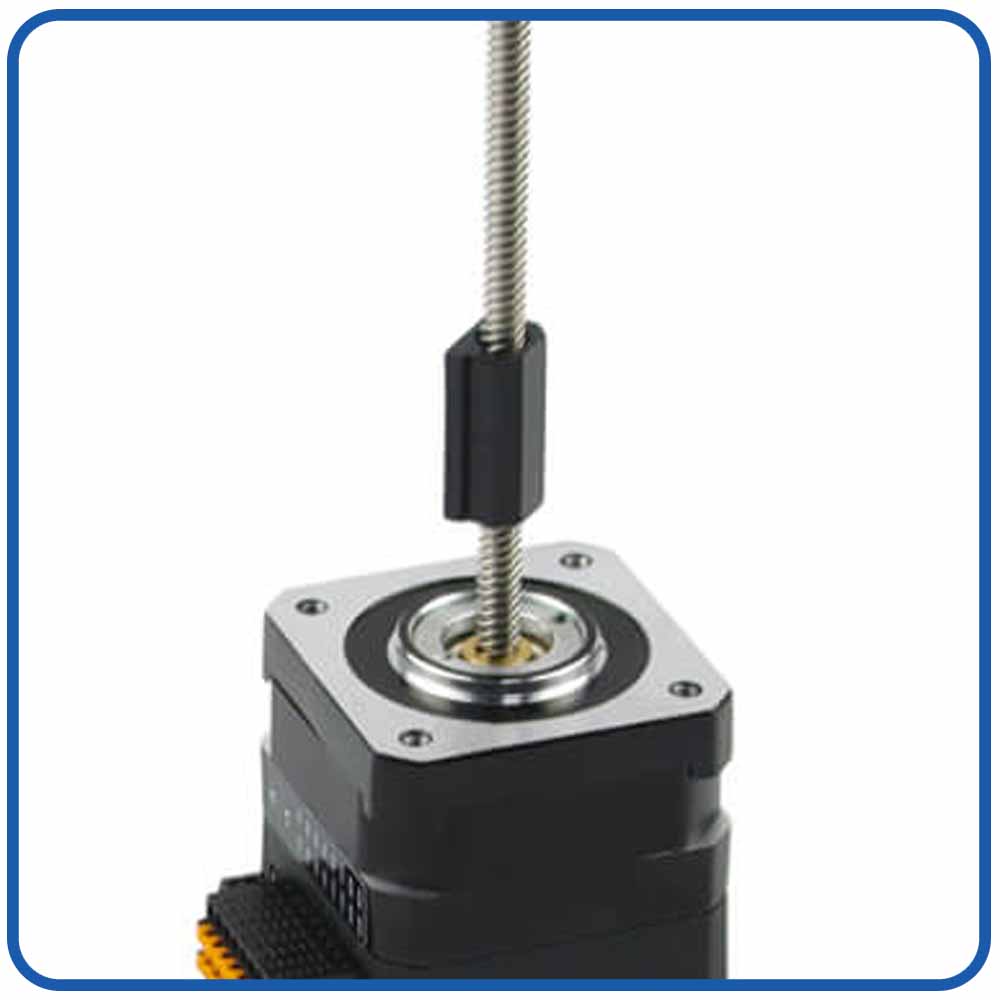
Shaft | Terminal housing | Worm Gearbox | Planetary Gearbox | Lead Screw |
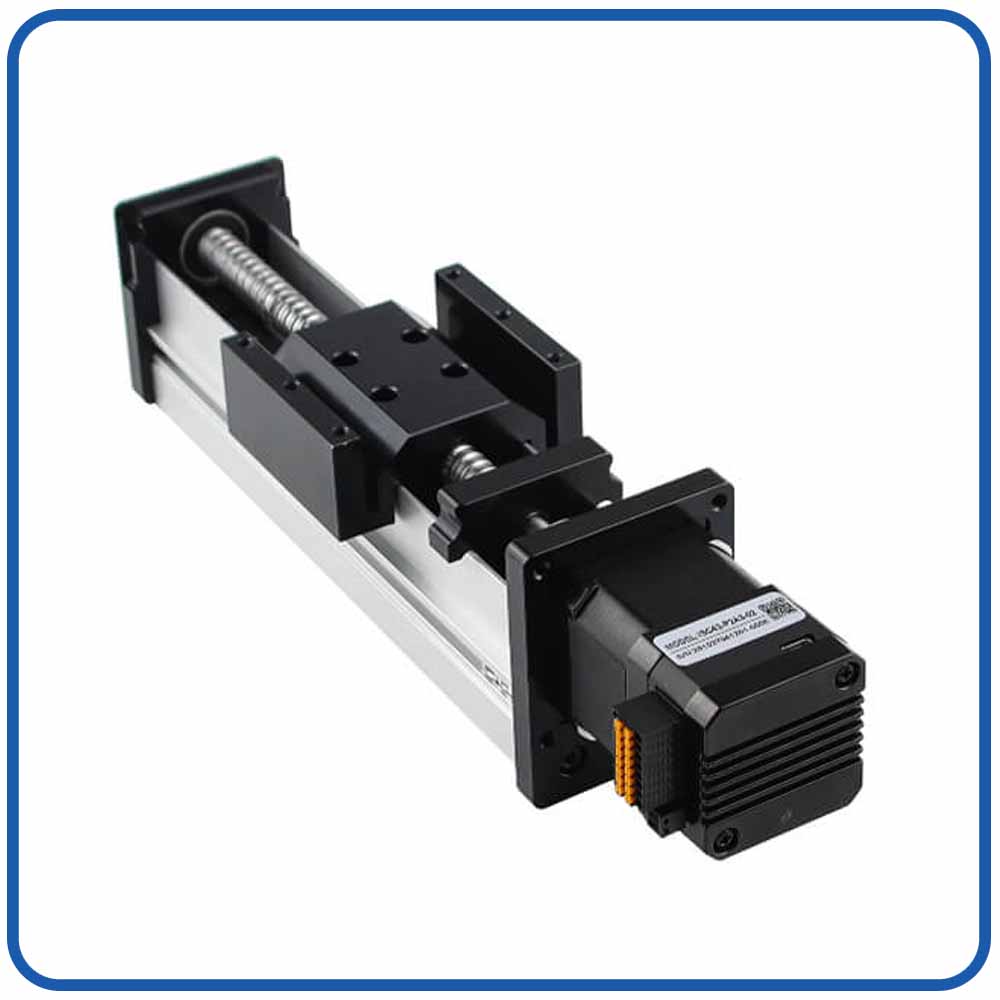 | 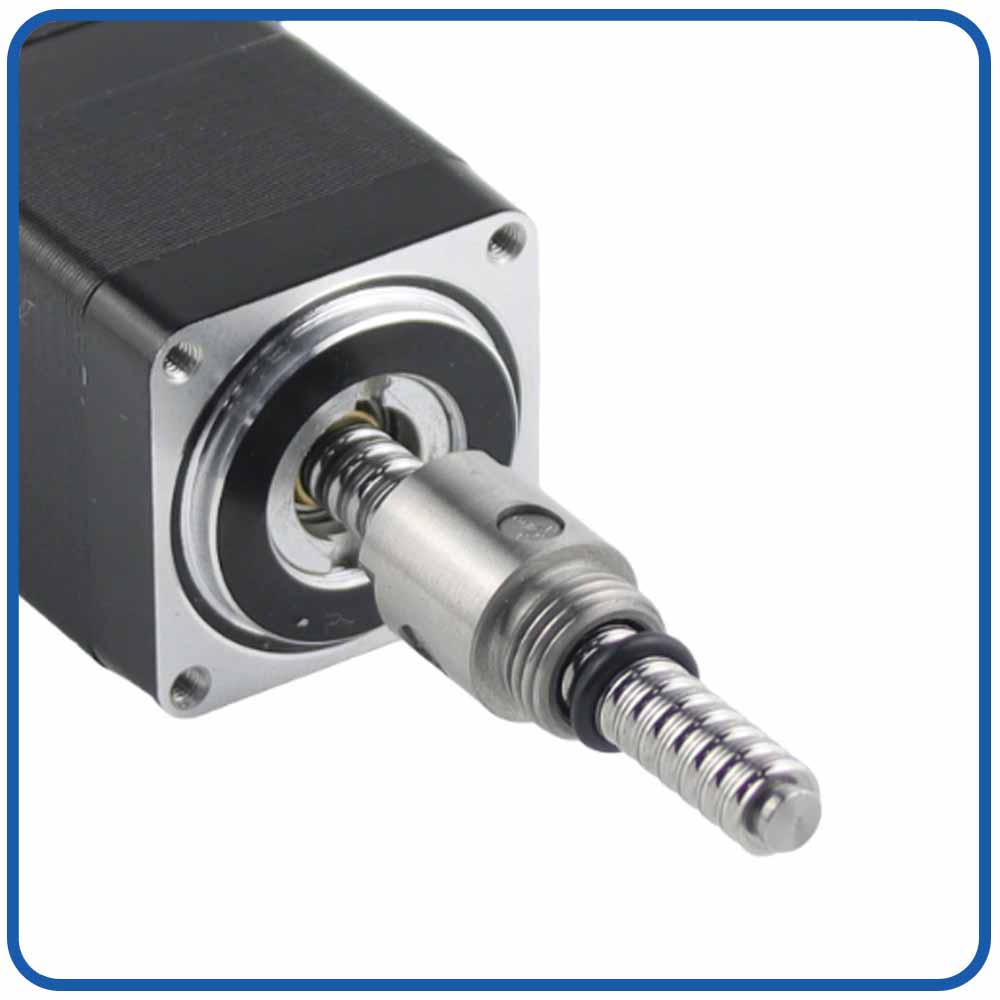 | 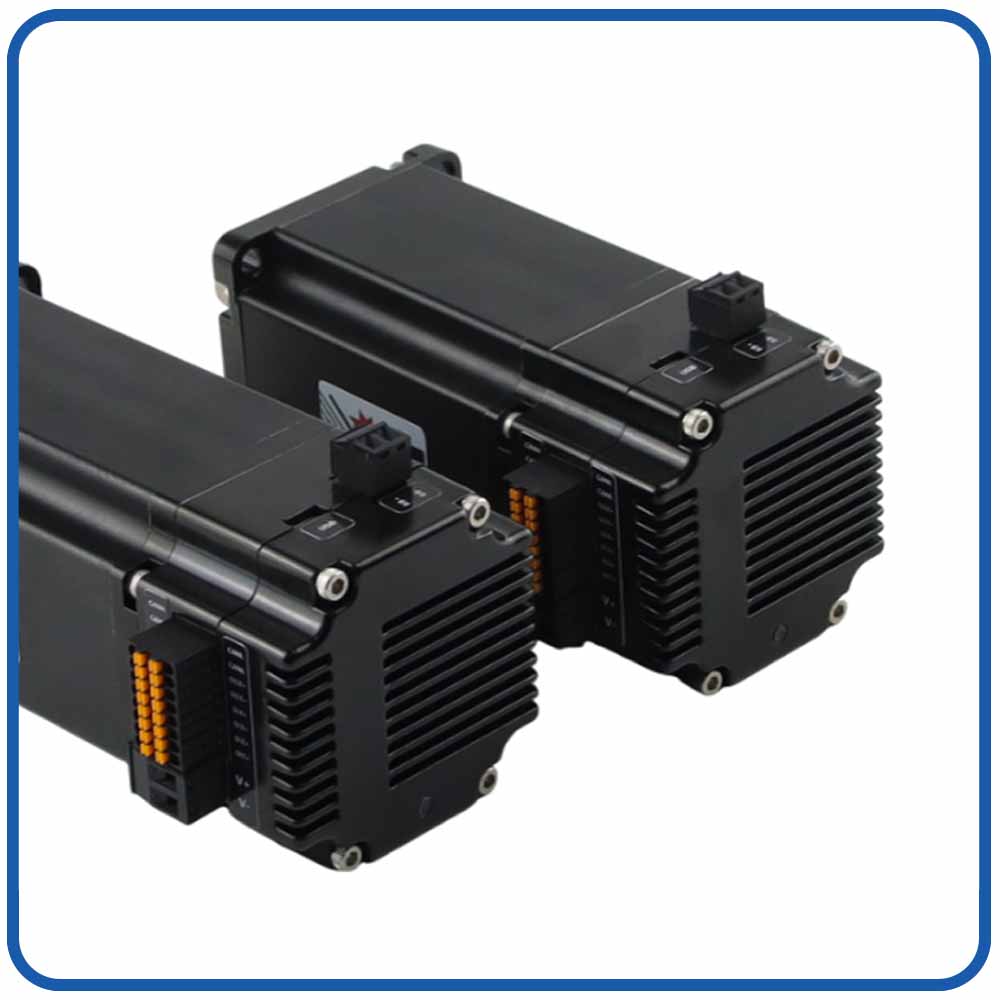 |  |  |
Linear Motion | Ball Screw | Brake | IP-Level |
 |  |  |  |  |  |
|---|---|---|---|---|---|
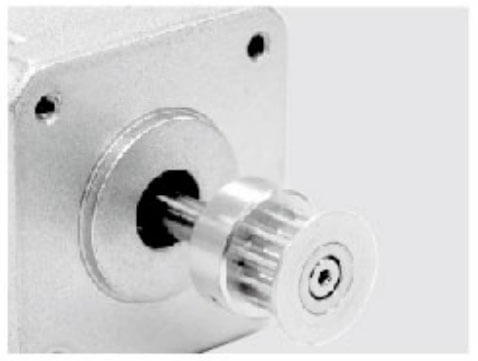
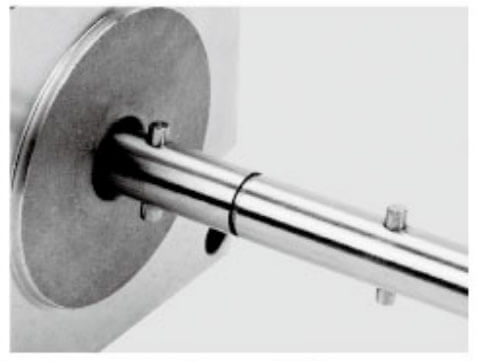
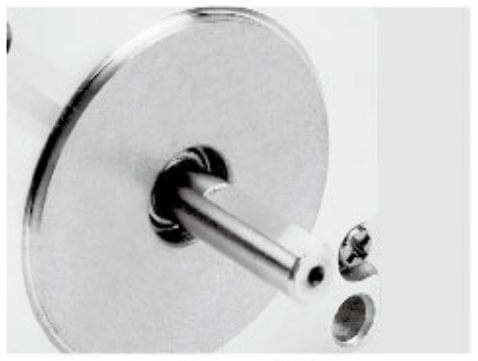
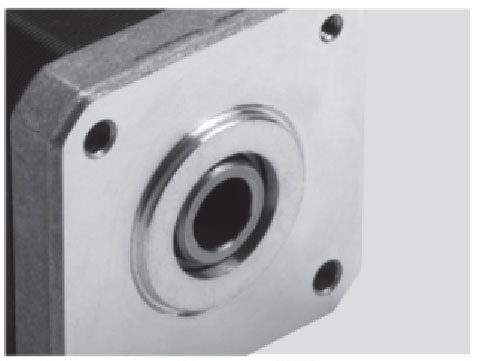
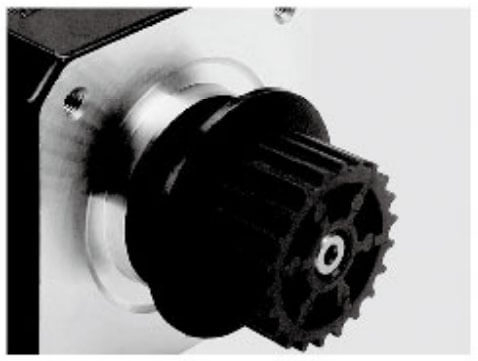
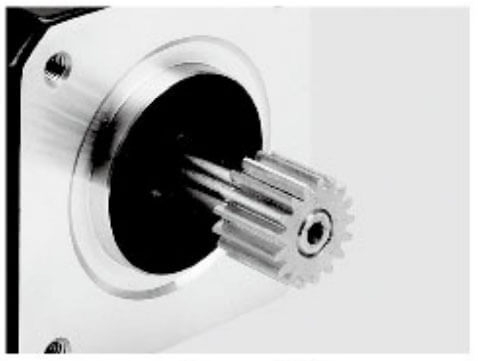
Aluminum Pulley | Shaft Pin | Single D Shaft | Hollow Shaft | Plastic Pulley | Gear |
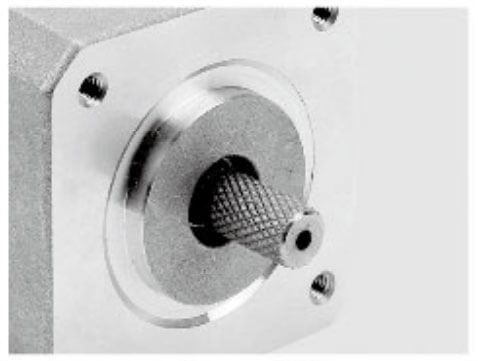 | 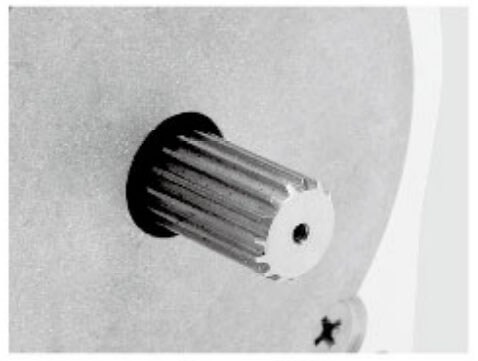 | 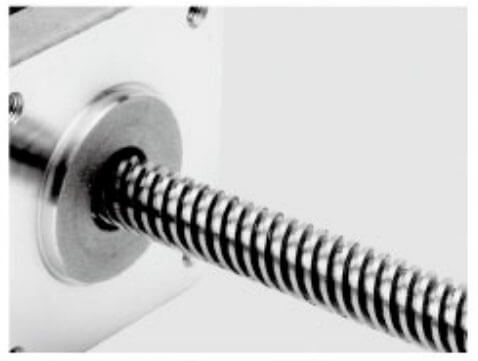 | 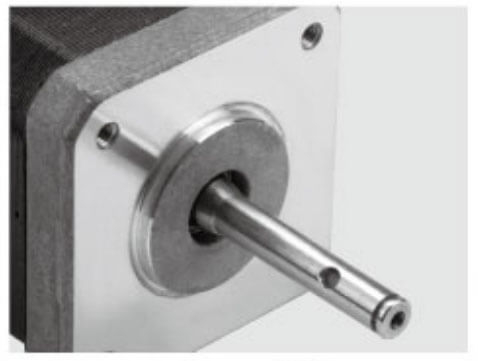 | 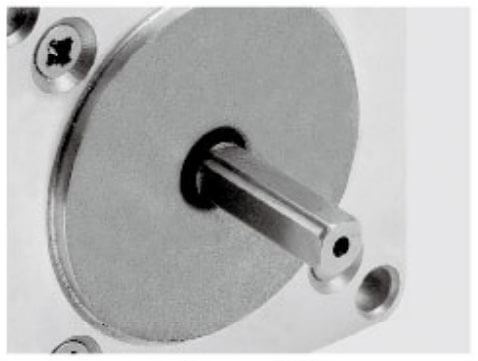 |  |
Knurling | Hobbing Shaft | Screw Shaft | Hollow Shaft | Double D Shaft | Keyway |
Spraying accuracy depends on more than the nozzle itself. Motor speed, positioning precision, mechanical response, fluid pressure, nozzle characteristics, and control algorithms all contribute to the final application result.
Integrated DC servo motors help improve spraying accuracy through several key capabilities.
Many integrated DC servo motors use encoder feedback to monitor motor position and speed. The controller compares the measured motion with the commanded target and adjusts motor output to reduce the error.
This closed-loop control allows the motor to compensate for changing mechanical loads and disturbances within its operating limits.
For precision spraying equipment, this capability supports:
More repeatable nozzle positioning.
More stable pump speed under changing loads.
Improved synchronization between spraying motion and conveyor or vehicle movement.
Reduced positioning errors during repeated spraying cycles.
More consistent operation when the system accelerates or decelerates.
For example, an automated coating machine may need to maintain a defined distance and movement speed between the spray nozzle and a workpiece. A servo-controlled positioning mechanism can follow programmed motion profiles more consistently than a system relying solely on open-loop motor commands.
However, encoder feedback controls motor motion rather than directly measuring the amount of liquid sprayed. Applications requiring precise dosing should also consider flow sensors, pressure sensors, or other process feedback devices.
When an integrated DC servo motor drives a metering pump, motor speed can influence the rate of liquid delivery. Maintaining stable speed helps reduce variations caused by motor load changes, provided the pump's displacement, fluid properties, and operating conditions remain suitable.
The actual flow rate may be lower because of internal leakage, pressure-dependent losses, fluid viscosity, and other operating factors.
With accurate speed control, the motor can help the pump maintain a predictable delivery rate. When combined with flow feedback, the system can adjust motor speed to compensate for process variations and achieve more precise liquid metering.
This is particularly useful in agricultural spraying, laboratory dispensing, industrial surface treatment, and automated chemical application, where excessive or insufficient liquid delivery can affect product quality, material consumption, or application uniformity.
Precision spraying equipment frequently operates in cycles. The motor may need to accelerate rapidly, maintain a constant speed, decelerate, and stop at a specific position.
Integrated DC servo motors can provide responsive motion control when properly sized and tuned. Their ability to regulate torque and speed helps the equipment execute these transitions with greater repeatability.
For example, a robotic spraying system may need to activate spraying only while the nozzle moves across a target area. Coordinated motor control can help synchronize nozzle movement with the spraying sequence, reducing unnecessary application outside the intended region.
Actual response performance depends on motor inertia, drive current limits, available voltage, load inertia, control-loop settings, and mechanical transmission characteristics.
In precision spraying systems, installation space, wiring complexity, motion control accuracy, and system reliability all influence equipment performance. Traditional motor solutions often require separate drives, feedback devices, and additional electrical connections, increasing the complexity of machine integration. Integrated DC servo motors combine the motor and drive electronics in a compact assembly, helping equipment manufacturers simplify system architecture while maintaining precise control over critical motion functions.
For agricultural sprayers, industrial coating machines, and automated liquid dispensing equipment, this integrated design can improve installation flexibility, simplify commissioning, and support coordinated operation between pumps, positioning mechanisms, and supervisory controllers.
Conventional servo systems typically use separate motor and drive units, requiring additional motor cables, feedback connections, and control wiring. In contrast, integrated DC servo motors consolidate essential motion control components into one assembly, reducing the number of connections required between the motor and its drive.
For precision spraying equipment, this configuration offers several practical advantages:
Simplified electrical installation: Fewer external connections can reduce wiring complexity and potential installation errors.
Reduced control cabinet requirements: Depending on the system architecture, integrating drive electronics into the motor can free up valuable cabinet space.
Streamlined machine assembly: A more compact motor-control unit can simplify mounting and electrical integration.
Easier multi-axis expansion: Equipment manufacturers can incorporate additional controlled axes without necessarily installing a separate drive for every motor.
For example, an automated spraying machine may use individual motors to drive a metering pump and adjust nozzle positioning. Integrated motor solutions can simplify the installation of these motion axes, provided the selected models support the required control modes and interfaces.
Space limitations are common in mobile agricultural machinery, compact industrial coating equipment, and robotic spraying systems. Motors must often be installed close to pumps, valves, or movable spray heads, leaving limited room for separate drive electronics.
The integrated architecture reduces the need to mount the motor and its drive as separate components, offering greater flexibility when designing compact equipment.
This arrangement can be particularly beneficial for:
Agricultural spraying machines with limited mounting space.
Automated dispensing systems requiring compact pump-drive assemblies.
Robotic spraying equipment with restricted space around moving joints.
Industrial coating machines incorporating multiple independently controlled mechanisms.
However, a compact design still requires adequate heat dissipation, suitable mounting clearance, and protection against moisture, dust, and chemical exposure. The motor's enclosure rating and thermal specifications should be evaluated according to the actual operating environment.
Integrated DC servo motors can combine motor drive electronics with feedback-based control functions, depending on the product configuration. This arrangement helps equipment manufacturers implement speed, position, or torque control without assembling every motion control component separately.
In precision spraying systems, these capabilities support coordinated operation between different mechanisms.
For example, a pump motor can adjust rotational speed according to the commanded liquid delivery rate, while a separate servo-controlled axis positions the spray nozzle. A PLC or motion controller can coordinate these functions using the available communication interfaces.
When the system must maintain a consistent application rate as a vehicle or conveyor changes speed, the controller can adjust pump commands according to speed sensor data or other process inputs.
Integrated motor control simplifies motion implementation, but precise liquid delivery may also require flow sensors, pressure feedback, and application-specific control algorithms. The available control modes, communication protocols, and feedback functions should therefore be verified before selecting a motor.
Precision spraying applications frequently require rapid acceleration, controlled deceleration, and repeatable positioning. Integrated DC servo motors with suitable feedback and drive performance can respond to changing motion commands while regulating speed or position within their operating limits.
This capability is useful when a spraying system must:
Maintain consistent pump speed under changing mechanical loads.
Position spray nozzles repeatedly along programmed paths.
Synchronize nozzle movement with conveyor or vehicle speed.
Execute frequent start-stop cycles.
Coordinate multiple motion axes during automated spraying operations.
For industrial coating applications, repeatable nozzle movement can help maintain a consistent relationship between spray-head travel speed and material delivery. In agricultural spraying, coordinated motor control can support adjustments to pump output as operating speed changes.
Actual performance depends on motor sizing, load inertia, feedback resolution, drive current limits, mechanical transmission characteristics, and controller tuning. Manufacturers should evaluate the complete system rather than relying solely on the motor's nominal specifications.
Combining the motor and drive electronics can reduce the number of separately installed components and simplify the overall electrical layout. This may shorten assembly time and make machine wiring easier to inspect.
Integrated solutions can also provide diagnostic functions, depending on the model, allowing technicians to identify issues such as overcurrent, overheating, communication faults, or feedback errors.
For spraying equipment operating in demanding industrial or agricultural environments, these functions can help streamline troubleshooting and reduce unnecessary downtime.
However, integration also means that certain electronic or motor faults may require servicing or replacing the complete unit rather than an individual drive component. Equipment manufacturers should assess replacement procedures, spare-part availability, diagnostic capabilities, and the supplier's technical support before finalizing the design.
Design consideration | Integrated DC servo motor | Separate servo motor and drive |
|---|---|---|
Installation | Compact, combined assembly | Motor and drive mounted separately |
Wiring | Generally fewer connections between motor and drive | Requires separate motor and feedback connections |
Cabinet space | May reduce drive cabinet requirements | Requires space for separate drives |
System flexibility | Depends on integrated drive features | Often allows greater freedom in drive placement |
Maintenance | May require unit-level replacement | Motor and drive can often be serviced separately |
Application suitability | Compact machines and distributed motion axes | Systems requiring flexible drive architecture or specialized configurations |
Neither architecture is universally superior. Integrated DC servo motors are particularly attractive when installation space, wiring simplicity, and distributed motion control are priorities. Separate servo systems may be preferable when drive accessibility, centralized thermal management, or advanced customization is more important.
The integrated design of DC servo motors offers practical advantages for precision spraying equipment by reducing wiring complexity, supporting compact installation, and simplifying motion control integration. When correctly selected, these motors can help equipment manufacturers develop more streamlined systems for agricultural spraying, industrial coating, automated dispensing, and robotic liquid application.
To achieve reliable results, engineers should evaluate motor performance, communication compatibility, thermal management, and environmental protection alongside the mechanical and fluid delivery requirements. A well-integrated motion control system provides the foundation for repeatable positioning, controllable pump operation, and consistent spraying performance.
Integrated DC servo motors are suitable for a range of spraying applications in which controlled motion and repeatable operation are important.
Agricultural spraying equipment must distribute pesticides, herbicides, fertilizers, or other liquids across crops while accounting for operating speed, field conditions, and application requirements.
Integrated DC servo motors can support variable-rate spraying by driving metering pumps or other adjustable mechanisms. When combined with suitable sensors and control algorithms, motor speed can be adjusted to match the required application rate.
Potential benefits include:
More controllable pump output.
Improved coordination with vehicle speed.
More flexible adjustment of application rates.
Better integration with automated agricultural control systems.
Reduced unnecessary application when supported by appropriate sensing and shutoff controls.
For instance, an agricultural sprayer operating at different ground speeds may need to adjust liquid delivery to maintain a target application volume per unit area.
The units must be consistent for the result to represent a valid application rate. In practical systems, calibration must also account for nozzle spacing, spray overlap, pressure, and the actual distribution pattern.
Industrial coating systems apply paint, protective coatings, adhesives, lubricants, and other materials to products with specific coverage and thickness requirements.
Integrated DC servo motors can control the movement of spray heads, positioning arms, rotating workpieces, or metering pumps. Their programmable motion profiles support repeatable trajectories and coordinated movement across multiple axes.
In automated coating equipment, consistent motor speed can help maintain a stable relationship between nozzle travel speed and material delivery. This relationship is important because excessive flow or inconsistent movement can contribute to uneven coating thickness, overspray, or material waste.
For complex components, servo-controlled positioning also enables the spraying mechanism to follow predefined paths around edges, contours, and recessed surfaces.
The final coating quality still depends on fluid viscosity, atomization pressure, nozzle geometry, spray distance, curing conditions, and process calibration.
Chemical dispensing systems may need to deliver controlled quantities of cleaning agents, industrial chemicals, additives, or treatment solutions.
Integrated DC servo motors can drive compatible metering pumps to support adjustable flow rates and repeatable dosing sequences. When the application requires a specific volume rather than simply a target motor speed, the system can combine motor control with flow measurement or calibrated pump displacement.
For applications involving corrosive, hazardous, or high-purity fluids, the pump head, seals, tubing, and wetted components must be selected according to the chemical properties and relevant safety requirements. The motor assembly should also be installed in an environment suitable for its enclosure rating and temperature limits.
Robotic spraying systems require coordinated motion across multiple axes to maintain suitable nozzle orientation, working distance, and travel speed.
Integrated DC servo motors can provide local motion control for compact positioning axes, rotary mechanisms, or auxiliary actuators. With appropriate feedback and trajectory planning, they help robots repeat programmed movements and adapt to different workpiece geometries.
For example, a multi-axis coating machine may use one motor to move a spray head horizontally, another to adjust its vertical position, and a separate drive to control a metering pump.
Coordinating these functions allows the machine controller to synchronize motion with fluid delivery and process timing. The resulting performance depends on the complete control system, including mechanical rigidity, trajectory planning, sensor accuracy, and communication latency.
Choosing the right motor architecture requires balancing performance, complexity, cost, and application requirements.
Comparison factor | Integrated DC servo motor | Conventional DC motor | Separate servo motor and drive |
|---|---|---|---|
System architecture | Motor and drive integrated | Typically requires external control electronics | Motor and drive installed separately |
Motion feedback | Commonly supports closed-loop feedback | Depends on the added control and sensing system | Commonly supports encoder-based feedback |
Speed regulation | Precise when properly configured | Depends on controller and feedback | Precise when properly configured |
Installation | Compact and simplified | May require additional components | Requires more installation space and wiring |
System customization | Depends on integrated drive capabilities | Can be flexible with suitable external electronics | Often offers broad drive and controller options |
Maintenance | Integrated components may simplify wiring but require unit-level diagnosis | Depends on the system design | Individual components may be easier to replace separately |
Best fit | Compact automated equipment with controlled motion requirements | Applications with simpler motion requirements | Complex systems requiring flexible drive placement or advanced control |
Integrated DC servo motors are not automatically superior in every application. A simple spraying mechanism that only requires basic rotation may operate adequately with a conventional DC motor. A large industrial machine with extensive drive customization requirements may benefit from a separate servo motor and drive.
The most suitable solution depends on required precision, dynamic performance, installation constraints, environmental conditions, and total system cost.
Selecting a motor based solely on rated power or physical size can lead to poor performance. Engineers should evaluate the complete mechanical and control requirements of the spraying application.
Start by identifying the operating speed range and the torque required by the pump, nozzle mechanism, or positioning axis.
These equations provide a starting point for sizing. Engineers must also account for acceleration torque, friction, transmission losses, pump pressure, and peak operating loads.
A motor should be selected based on both continuous operating requirements and transient demands. Repeated acceleration cycles may require a motor with sufficient peak torque and an acceptable thermal duty cycle.
The required accuracy depends on the motor's function.
A pump drive may prioritize stable rotational speed and repeatable flow delivery, while a nozzle positioning axis may require accurate position control and low settling time.
Check the following specifications:
Encoder resolution and feedback performance.
Speed regulation characteristics.
Positioning repeatability.
Maximum acceleration and deceleration.
Control-loop response.
Available position, speed, and torque control modes.
Encoder resolution alone does not guarantee overall system accuracy. Backlash, mechanical compliance, mounting tolerances, and control tuning can all affect the final result.
Integrated DC servo motors are available with different voltage ratings, power ranges, and communication options.
Before selecting a model, confirm:
The available DC supply voltage.
Continuous and peak current requirements.
Compatibility with the machine controller.
Supported communication protocols.
Command interfaces and feedback options.
Electrical protection and grounding requirements.
For multi-axis spraying systems, communication compatibility can simplify coordination among pumps, positioning mechanisms, and supervisory controllers.
The motor's protocol, electrical interface, and supported operating modes should be verified against the actual controller specifications rather than assumed from the product category.
Spraying equipment may operate in environments containing moisture, dust, chemicals, vibration, or temperature fluctuations. Motors installed close to spraying nozzles may be exposed to liquid splashes or airborne droplets.
Engineers should evaluate:
Enclosure protection and connector sealing.
Ambient and motor operating temperatures.
Heat dissipation under continuous operation.
Resistance to vibration and mechanical shock.
Chemical compatibility of exposed materials.
Cable routing and strain relief.
Corrosion protection where required.
An appropriate IP rating can help define protection against solid objects and water ingress, but it does not establish resistance to every chemical, cleaning process, or operating condition. The complete assembly must be suitable for the actual installation environment.
Bench testing at a constant speed is not sufficient to validate every precision spraying application.
Before mass production, equipment manufacturers should evaluate the motor under representative operating conditions, including:
Load testing: Verify continuous torque, peak torque, and speed stability under expected mechanical loads.
Dynamic response testing: Measure acceleration, deceleration, settling time, and repeated start-stop performance.
Control integration testing: Confirm command execution, feedback accuracy, communication stability, and fault handling.
Thermal testing: Monitor motor and drive temperatures during representative duty cycles.
Spraying performance testing: Measure flow rate, pressure stability, positioning repeatability, and application consistency.
Environmental testing: Assess performance under expected moisture, dust, vibration, and temperature conditions.
Endurance testing: Run repeated operating cycles to identify potential mechanical, electrical, or thermal issues.
Testing should use measurable acceptance criteria based on the equipment's requirements. For example, a pump-driven spraying system may specify allowable flow variation, while a robotic coating system may focus on trajectory repeatability and coating uniformity.
Although integrated DC servo motors offer several advantages, successful implementation requires attention to the complete spraying system.
A stable motor speed does not necessarily guarantee an identical liquid flow rate under all conditions. Pump wear, pressure variations, fluid viscosity, trapped air, and leakage can influence delivery.
For demanding applications, engineers should consider closed-loop flow regulation using an appropriate flow sensor and a controller that adjusts motor commands based on measured process performance.
An undersized motor may overheat, lose speed under load, or fail to meet acceleration requirements. An oversized motor can increase cost, installation space, and power consumption without providing meaningful benefits.
Accurate sizing should consider the load profile, transmission ratio, inertia, operating cycle, and thermal limits.
Moisture, corrosive liquids, dust, and vibration may damage unsuitable motors or connectors. Selecting an appropriate enclosure and mounting arrangement is essential, especially in agricultural and industrial spraying environments.
Protective housings, suitable cable glands, and preventive maintenance can improve reliability when designed around the actual operating conditions.
Incorrect control parameters may produce overshoot, oscillation, slow settling, or excessive current demand. These problems can affect nozzle positioning and create inconsistencies during spraying transitions.
Commissioning should include tuning under realistic loads and verification across the full operating speed range.
Choosing the right integrated DC servo motor manufacturer is essential for developing reliable, precise, and cost-effective spraying systems. Beyond motor performance, equipment manufacturers need a supplier that understands motion control requirements, offers suitable product configurations, and provides technical support throughout product development and integration.
For OEMs developing agricultural sprayers, industrial coating equipment, automated dispensing machines, and precision fluid control systems, Besfoc is a potential partner to evaluate for integrated motor and motion control solutions. Selecting the right motor configuration requires careful consideration of torque, speed, control interfaces, installation dimensions, and operating conditions to ensure compatibility with the target application.
Besfoc offers a range of integrated motor and motion control products designed for applications requiring compact construction and coordinated motor operation. For precision spraying equipment manufacturers, selecting an appropriate integrated motor solution can help simplify system architecture and support reliable automated motion.
Depending on the specific product configuration, integrated motor solutions may be considered for pump drives, nozzle positioning mechanisms, automated dispensing equipment, and other motion-controlled components. Engineers should verify the motor's rated torque, operating speed, feedback configuration, and control functions against the actual requirements of the spraying system.
Different spraying applications have different mechanical and electrical requirements. A compact agricultural sprayer, for example, may prioritize installation space and vibration resistance, while an industrial coating machine may require precise positioning, repeatable speed control, and integration with a PLC.
When evaluating Besfoc as a potential motor supplier, OEM engineers should confirm the availability of suitable motor dimensions, shaft configurations, voltage ratings, communication interfaces, and control options. Matching these specifications to the equipment design helps reduce integration challenges and supports a more efficient product development process.
Reliable spraying performance depends on coordinated operation between the motor, pump, sensors, controller, and fluid delivery components. An integrated motor can simplify the motion control architecture by combining the motor and drive electronics into a compact unit.
Before selecting a Besfoc integrated DC servo motor, equipment manufacturers should confirm compatibility with their existing control systems, including supported communication protocols, command modes, feedback functions, and fault diagnostics.
For applications requiring precise liquid dosing, engineers should also determine whether additional flow or pressure sensors are necessary. Combining appropriate motor control with process feedback can help maintain consistent liquid delivery under changing operating conditions.
Choosing a motor based only on rated power may result in insufficient torque, excessive temperature rise, or inadequate dynamic response. A systematic selection process should account for the complete load profile and operating environment.
When discussing an application with Besfoc, manufacturers should prepare the following technical information:
Required torque and speed: Define continuous operating requirements and peak demands during acceleration.
Power supply: Specify the available DC voltage and current capacity.
Control requirements: Identify position, speed, or torque control needs and the intended communication interface.
Mechanical specifications: Provide mounting dimensions, shaft requirements, and available installation space.
Operating environment: Describe exposure to moisture, dust, chemicals, vibration, and temperature variations.
Duty cycle: Indicate operating hours, start-stop frequency, and expected load changes.
Providing these details helps establish whether a particular integrated motor configuration is suitable for the application and identifies any additional control or environmental requirements before mass production.
Before incorporating an integrated DC servo motor into a production spraying system, manufacturers should conduct application-specific validation. This process helps confirm that the selected motor performs as expected under actual operating conditions.
Recommended tests include load and thermal evaluation, speed stability measurement, positioning repeatability checks, communication verification, and endurance testing. For pump-driven applications, additional tests should measure flow rate and pressure stability across the expected operating range.
For Besfoc motor solutions, OEM buyers should confirm the availability of relevant product specifications, technical documentation, and testing information during the evaluation process.
By combining appropriate motor selection, system compatibility checks, and application-level testing, manufacturers can reduce integration risks and develop more reliable precision spraying equipment.
Integrated DC servo motors provide a compact and practical motion control solution for precision spraying systems that require repeatable movement, adjustable speed, and coordinated operation. By combining the motor and drive electronics, they can simplify installation, reduce wiring complexity, and support flexible integration into automated agricultural, industrial coating, and chemical dispensing equipment.
Their greatest value comes from matching motor performance to the actual application. Engineers should evaluate torque, speed, feedback accuracy, dynamic response, communication compatibility, thermal performance, and environmental protection before selecting a model.
For applications requiring consistent liquid delivery, integrated DC servo motors work most effectively as part of a complete control system that combines accurate motion control with suitable pumps, sensors, nozzles, and application-specific software. With appropriate sizing, integration, and validation, they can help equipment manufacturers develop more reliable, efficient, and precise spraying solutions.
An integrated DC servo motor combines a DC servo motor with a drive and, depending on the design, feedback and control electronics in one compact unit. It enables controlled speed, torque, and position for spraying equipment that requires accurate movement and repeatable operation.
Integrated DC servo motors can improve spraying accuracy by providing precise motion control and responsive adjustments to speed and position. When properly sized and configured, they help maintain consistent nozzle movement, spraying paths, and application timing, reducing the risk of uneven coverage.
Integrated DC servo motors are suitable for automated spraying equipment because they combine motion components in a compact assembly and support coordinated control. They can be used in applications such as automated coating machines, robotic spraying systems, and precision liquid application equipment.
The main advantages include reduced wiring complexity, compact installation, fewer external components, and simplified system integration. Actual benefits depend on the motor design, controller architecture, communication interface, and requirements of the spraying equipment.
Yes. An appropriately configured integrated DC servo motor can support variable-speed operation, allowing equipment designers to adjust motion according to the spraying process. Stable performance depends on motor sizing, load characteristics, feedback configuration, and the selected control method.
Select an integrated DC servo motor based on required torque, speed range, acceleration, positioning accuracy, duty cycle, supply voltage, communication protocol, and installation space. Also consider environmental protection, operating temperature, mounting requirements, and compatibility with the machine controller.
The appropriate interface depends on the automation system. Common options may include pulse and direction, analog control, RS-485, CANopen, and industrial Ethernet protocols, depending on the motor model. Confirm compatibility with the machine controller and required command, feedback, and diagnostic functions.
Integrated DC servo motors can reduce wiring connections and the number of separately mounted components, potentially simplifying installation and troubleshooting. Maintenance requirements still depend on motor construction, bearings, operating conditions, contamination exposure, and the manufacturer's service recommendations.
Consider exposure to liquids, chemicals, overspray, dust, humidity, vibration, and temperature changes. Verify the motor's IP rating, material compatibility, sealing, cooling method, and mounting orientation to ensure the motor is suitable for the actual operating environment.
An experienced manufacturer can help evaluate torque and speed requirements, control interfaces, installation constraints, and environmental conditions. OEM engineering support and application testing can also help verify motor compatibility and performance before the spraying equipment enters mass production.


